Category: Comment

  • OPINION: To Porn Or Not To Porn

    Manstreaming – The Inevitable Mainstreaming of (Gay) Porn

    Who doesn’t have sex? Everyone has it – but maybe not every session is pretty enough to watch – does that make it better? If one’s personal style of fornication is good enough to capture on film should one be punished for it? And if someone does decide to film themselves ‘at it’ does that undermine them so much that they lose all the skills, talents, credibility they had before?

    Should they be disqualified, expelled or fired?
    To all these questions I say no – and you will too in a few years I bet! Why? Because porn is not such a big deal anymore – everyone is dabbling with a cheeky photo or two; a furtive flexing of pectorals, cheeky flashing of the bum or a full on close-up of your cock in all its glory (shot from below to make it look bigger). We’ve all had a go at some amateur pornography.

    Celebrities, like everyday human beings are also at it. The difference is we hear about it and see it. Everyone knows that One Night in Paris is more than a blog on trip advisor. Eric Dane, of Grey’s Anatomy fame, has had a go (with his girlfriend and a beauty queen no less) and of course dear old Colin Farrell. Dustin Lance Black, Oscar winning screenwriter for Milk, thrilled us with his homemade movie, brokebacking with his then-boyfriend. Everyone’s had a go and it’s turned out ok for most of them right? Ok, ignore Tulisa for now…


    But who really cares?

    Some people clearly still do.


    It emerged this week that Jeppe Hansen, the Danish ballet dancer otherwise known as Jett Black, was dismissed by his Royal Ballet school in Canada, when he was outted as a cute, toned, blonde twink who gets penetrated on the side – duh! Their excuse that he didn’t declare his sideline income is weak at best. How else is a starving artist meant to eat? Indeed Keppe/Jett argued that the school’s interpretation of art was limited and they didn’t see the artistic qualities of spreading your legs if not wearing ballet shoes. But what about the rest of us? I’d go and see a ballet dancer perform, especially if I can watch the naked encore at home! What other ballet offers that?

    What about porn which is already in the mainstream? Twitter’s Naked Sunday is fast becoming as traditional as avoiding church or slaving over a roast. TOWIE’s Kirk Norcross also engaged in a bit of homemade, manstreaming nudity and we would be none the wiser if it hadn’t been snapped and leaked – shame (and thank you). He was slightly embarrassed but questioned – who hasn’t? Once again I return to my prior point – he looked good, so we watched. If he didn’t would we have even bothered to?

    Paddy O’Brien, the irrepressible, cockney porn star, models for banglads.com, an underwear retailer – makes sense to me! Or how about the former marine who turned to gay porn and then made it into mainstream Hollywood? David Bradberry has gone from shaking Bill Clinton’s hand, to shaking a few other things and will soon be going Below Deck (seriously) on Bravo TV. Brent Corrigan cameos, Francoise Sagat in arthouse film Man at Bath, the list is a long one.

    Porn is sexy and sex sells. So what is the problem about? Everyone’s doing it – it’s mainstream. Go out and make some (safe, legal) porn – just don’t be too good at it and don’t email it to your boss.

    So what do you think? Would you ever do gay porn?


    Opinions expressed in this article may not reflect those of THEGAYUK, its management or editorial teams. If you’d like to comment or write a comment, opinion or blog piece, please click here.
  • COLUMN | Happy Birthday To You

    So, TheGayUK has hit a memorable birthday and what a fantastic year it has been. I’ve interviewed choreographers, writers, poets, cabaret artists, actors, painters and singers, reviewed theatre, film, dance and even a book where a poodle showed me the sights of London.

    The site is also going from strength to strength. I just hope that the site has a better track record with celebrating birthdays than I have.

    1976: I’m five years old and have the one and only birthday party of my childhood. My mum organises a treasure hunt and hides sweets all round the house. For the next year we find melted Blackjacks in extraordinary places. The food is fancy for the 70s (i.e. the tomatoes are cut into little crown shapes). The party goes seriously wrong when over-excited, I lean in too close to ‘Pop-up Pirate’ and the little plastic pirate hits my forehead with velocity. Being a trainee diva, I order the party terminated and ask everyone to leave, before flouncing upstairs to my room in a huff born of indignity.

    1989: My 18th was less than monumental. I remember having bad 80s hair and trawling round bars with my partner, drinking gin. That’s where the memory ends. There was a lot of gin. I don’t like being 18 much. I feel gauche and am horribly shy and am hopeful that this will improve with age. It does, mostly.

    1992: I’m 21 and having another tantrum. I’m stuck in an overheated restaurant, which has an American diner theme, drinking cocktails and eating over cooked greasy food with a group of friends and my partner. I feel terribly old and wise (I’m actually neither) and also very unhappy with the life I have and I’m taking it out on everyone around me. The mature option would have been to change the bad things and move forward (e.g. ditch the abusive partner) but I’m not able to visualise that one. My Brandy Alexander (see how sophisticated the 90s were!) isn’t the right drink and I get some hideous banana thing. I do the mature thing and deflect my unhappiness on to the waiter and embarrass everyone around me with a drunken rant.

    2001: I hit 30 and am officially dead in gay terms. I actually don’t mind though. I’ve finally got a partner who is treating me well and we hit London for the occasion. A trip to the theatre, a whiz round the London Eye and a night clubbing in Heaven with a lot of drinks bought for me are all followed by my birthday itself where I feel each and every day of my 30 years as I spend a hung over day clinging to the rim of the marble toilet in the plush hotel, crying in pain and praying for oblivion. I get bought a T-shirt which says: ‘Big Dicks and Vodka’. Although these are valid hobbies, I never wear it.

    2011: After spending the last few years having nocturnal sweats thinking about being 40, I actually love it. I have a new partner, who makes me happier than I’ve ever been, I have a great circle of friends who I love and am more comfortable with myself than I’ve ever been. I hire a local arts cinema and screen a film for my friends and the day is fantastic. I no longer drink vodka, although I still quite admire the big dicks, but from afar now. What’s not to love about being 40? Bring on more birthdays.

    Have a happy birthday GayUK x

  • OPINION | Out of line, online; Racism and gay dating

    No Blacks. No Asians. No Queens.

    I bet you already know where these quotes come from. I am also pretty sure you’ve seen them. Yes, these are common quotes from Grindr profiles. What’s worse is that I imagine you can think of more grindr, gaydar, gayromeo profiles with further offensive and racist remarks on them.

    But surely we can discriminate on who we fancy? Of course.

    We must have the right to decide what shape, size and colour the dick is we choose to squeeze, suck or sit on? Without a doubt.

    And if I want to say what I don’t like then it saves time doesn’t it? Perhaps.

    So if I don’t fancy a black or white guy then I have the right to say so don’t I? Maybe.

    But there are ways of saying things.

    If you in fact only like Arabic men, regardless of your own racial or ethnic identity then why not say so rather than banishing other minorities outright. Equality and Diversity principles do not dictate that you have to be tokenistic in your relationships or sexual exploits but it does support a community where everyone feels included. With the social battles fought by the LGBT community in the past sixty to six hundred years surely we can be slightly more embracing of difference.

    Not into camp. Not in fairies, sorry.

    This is another angle of exclusion on ‘social networking’ apps frequented by the predominantly gay and bisexual male. Campness is labelled as undesirable, separated from the profile holder. He isn’t into it, he doesn’t like it. If you are camp he doesn’t like you – it’s there for you to read. How does it make you feel?

    Maybe you do sprout wings and poop glitter? But that’s who you are – should you change it for the faceless, headless body? No, but it makes you feel badly about yourself and he still hasn’t found himself a date because the butch bull he is looking for actually doesn’t like guys who bully and discriminate.

    So in summary, let’s start with the basics: How not to be a racist in five easy steps.

    1) Do not use racist language. We all know what they are. No one thinks you’re big or smart or edgy for using them. And being practical, not many guys invite racists round to their houses.

    2) Put what you like, what you ARE into. It’s more positive and inclusive and appealing to a wider range of people. Saying you like something, or love something is much more attractive than associating you with ‘No this’, ‘No that’ or other negative concepts.

    3) Be polite. If someone messages you that doesn’t give you butterflies in your stomach (or lower) then just say thanks but no thanks. Most people will get the hint, and if they don’t just block them. It’s easier than resorting to a racist rant.

    4) Be inclusive. Try not to see people as one dimensional. Not all ethnicities are the same. Look at your arm – it everyone with that similar shade the same as you? Do they eat the same food, socialise in the same way, believe the same as you do just because your skin matches? Of course not, so don’t apply this ignorance to other arm shades.

    5) Challenge yourself. How many of your friends are the same as you? Do they all look the same, come from similar backgrounds? Most are probably the same age. How about bringing some diversity to your life? Speak to someone new, someone with maybe a different experience, a different outlook, a different skin colour – they might be able to shed new light on life. How does your coming out experience compare to the Asian guy 200 meters away or the polish guy four roads away, or the twink smiling at you at the bottom of your screen?

    Opinions expressed in this article may not reflect those of THEGAYUK, its management or editorial teams. If you’d like to comment or write a comment, opinion or blog piece, please click here.

  • OPINION: Going Gay For Pay

    With the release of Behind the Candelabra, Michael Douglas and Matt Damon are playing Liberace and his Lover. So is it right that straight actors are portraying gay characters in film? Does it say anything about the diversity of the cinema industry?

    Hollywood has a long history of straight actors playing gay characters; Philadelphia, Milk and Brokeback Mountain all have Hollywood A Listers portraying gay characters. All of these films were hugely successful and nominated for multiple awards. Maybe it’s cynical to suggest that portraying a gay role in a serious drama is a guarantee for an Oscar nod. It’s par for the course now in Hollywood, to play gay is to show your acting versatility and ability to inhabit a characters space that is different from your own. There are cases of openly gay actors playing gay characters. In Gods and Monster’s Sir Ian McEwan portrays James Whale, the Frankenstein creator from the golden age of Hollywood. Rupert Everett has spent most of his career as the gay side kick comedy relief.
    But is this any different to able-bodied actors playing disabled characters? Glee has a character using a wheelchair user portrayed by an able-bodied actor. How is this different? Looking further back, is this the modern day equivalent of the black and white minstrel band? , where white men would “black up” in order to portray black performers. This practice is now longer thought to be politically correct and is racially insensitive.
    Of course, gay for pay is an established part of the porn industry, hitting a Google search reveals literally thousands of hits and literally thousands of straight guys willing to go “gay” for the first time. Of course, this is all construct, it’s a known fact that that gay porn pays more than straight porn it can be an attractive prospect to a broke young guy. Of course, there is the issue of exploitation, everybody involved are consenting adults and they have been paid for their involvement. Are the viewers’ being exploited in their desire to seek straight guys having sex, Yes, but that again comes down to personal choice. The beautiful thing about capitalism is that people are able to show how they feel about a commercial product by either purchasing it, and it looks like business is booming.
    With porn, gay for pay is more problematic, the term implies that there is only straight or gay. It leaves no allowance for bi-sexuality, guys maybe willing to have sex with other men on screen for money but might not do so in their private lives. I personally feel that people’s sexual orientation is irrelevant when it comes to performance. The person is not representing himself or herself any more than someone in a film or a soap opera is. The sex for is there as spectacle and simulation. When watching two guys having sex it can be that there is no chemistry between the guys and they are going through the motions with only the paycheck in mind. Does it matter what someone is up too off screen or who they go home to?
    So should we be offended by all of this? I think realistically if we are we’re not going about it in the right way, the best power against the entertainment industry is to vote with your money. If you believe that going gay for pay is morally wrong then don’t watch any of the films that mainstream Hollywood puts out. It may be the case that the best actor for the job is cast. The involvement of Marque names is to ensure the film is financed and made. For me it feels like a dangerous statement to say that only gay actors are allowed to play gay characters. What’s more important to the fans of Liberace that his story is told in an entertaining way by the best actors suitable to the role or that the actor playing him happens to be gay.

    Opinions expressed in this article may not reflect those of THEGAYUK, its management or editorial teams. If you’d like to comment or write a comment, opinion or blog piece, please click here.

  • EDITOR’S LETTER | Look who’s one!

    I can barely believe it’s been a year since Graham and I officially started THEGAYUK. What started, as a reviewing site for music and film has turned into something we’re both so incredibly proud of and something we’re completely addicted to.

    I don’t think there’s been a day when something hasn’t been posted for our wonderful readers, even if we’re driving up and down the country, dipping into Internet cafes and buying a dongle – when Wi-Fi wasn’t available.

    We’ve managed to speak to some incredible people and celebrities over the year:

    Julian Clary, Gareth Thomas, Rylan Clark, Ben Cohen, Peter Tatchell, Doctor Christian Jessen, Scott Mills, Margaret Cho, Elvira, Steps, Heather Small and Pam Ann are just some of the wonderful people we’ve managed to interview in the last 12 months. Our readership has grown from 2,000 in the first few months to over 130,000 every month.

    We’ve seen some phenomenal stories develop from MPs voting on gay marriage to Russia’s frightening anti-gay agenda to the hideous way in which the traditional press treated the late Lucy Meadows.

    We have over 50 contributors who bring you the best in opinion, reviews, interviews and news. We’re so proud of everyone who has made TheGayUK possible – and we’re still open for anyone to write or contribute to us.

    In the year we’ve been official, TheGayUK created a free legal clinic and online sexual health clinic (with our special partners 56 Dean Street) and released our first App, which will help you find any gay business in the UK as well as free access to all our articles. We’re still thinking of ways we can help, like the introduction of our No Excuse Project – which will see us deliver free condoms to your door – anywhere in the UK.

    Recently Graham and I have been to a number of Prides up and down the country and have been meeting with some wonderful people. It’s been amazing to speak with the UK’s gay community from Scotland to Brighton. We’re proud and what’s more when we speak to our readers, they’re proud too.

    For as long as we have each other we’ll continue to be THEGAYUK.

    Ok gush over, let get back to being gay.

    Jake and Graham

    Co-founders


    Opinions expressed in this article may not reflect those of THEGAYUK, its management or editorial teams. If you’d like to comment or write a comment, opinion or blog piece, please click here.

  • COMMENT | Pride Why Stop There?

    As Pride month comes to a close at thegayuk.com, it doesn’t mean that Pride has to come to an end for the year.

    Pride has become many things to many people. It is a celebration of diversity, a political statement, a protest, a party and a way to bring together the community. It invites and welcomes everyone, regardless of gender or sexuality. What is always surprising about Pride is how it brings out people from all corners of the LGBT community who wouldn’t normally come together. For those who are not out or struggling with their sexuality, Pride is a way to feel empowered, by being surrounded by a huge amount of people proving that you are not alone. For others who enjoy going out on the scene, it is a chance to meet new and old friends, go to different towns and cities and a chance to simply have a great time. But what Pride does do very well is bring to the attention of the general public just how many LGBT people are out there and shows them that, actually, those marching or partying in the park are really not that different to them.

    Breaking down stereotypes that have long been established is part of what Pride is about. Whilst some people may argue that Pride reinforces stereotypes given the number of pink feather boas on display at times, what it also does is show that there are other sections within the gay community – the armed forces, rugby teams, the emergency services and lawyers to name a few – and shows just how diverse gay people can be. There is still, unfortunately, that old fashioned view held by some people that gay men are effeminate whereas lesbians are not. Pride shows them that the LGBT community are also doing jobs and activities which are or have been traditionally occupied by manly men and straight women.

    That is one of the most important things about Pride. It shows that gay men, gay women, transgender men and women and bisexual men and women are actually no different from anyone else. They work in factories, in laboratories, in offices, in shops and in the public services. They do the same leisure activities as everyone else, from scuba diving to baking, football to gardening. It is this breaking down of preconceptions which is one of the most important aspects of Pride and helps to reduce prejudice.

    But why should this be limited to one day or one weekend per year? Surely every day can be Pride day? There are those who are very open about their sexuality, those who are out in their place of employment or at the clubs and groups that they attend and those who are very vocal about their sexuality. But then there are those who are open and honest about their sexuality but go about their business without much fuss or constant references to the fact that they are gay. Both of these approaches are equally as important.

    There are ways to show pride every day. Sometimes, a rainbow flag sticker on the rear window of the car, a pink triangle on your coffee mug at work, a red ribbon on your lapel or even just a casual mention of your partner can do just as much for breaking down stereotypes, reducing prejudice and showing how those that are often seen as “different” can actually fit quite easily into the world. This is not about a huge party, it is not about taking over the local park and it is not about coming together in huge numbers for pride to be prevalent. It is showing pride in your sexuality every day. It is breaking down those prejudices on a daily basis. It is normalising the fact that your sexuality does not place limits on your abilities at work or influence your leisure activities.

    There is a Pride event taking place every single day of the year – and the venue is your desk, your club, your group, your factory floor, your supermarket and everywhere else that you go to either for work or for leisure.

    Isn’t that real Pride?

    Opinions expressed in this article may not reflect those of THEGAYUK, its management or editorial teams. If you’d like to comment or write a comment, opinion or blog piece, please click here.

  • COLUMN | What a drag

    I can remember being fascinated by Danny LaRue. I was a child of six and sat transfixed in front of the TV at this strange looking lady who was actually a man.

    I accepted it as a commonplace, ordinary thing and a totally acceptable lifestyle choice. It was on the TV after all. My main ambition was to grow up to be Wonder Woman but growing up to be a drag queen seemed a close second. Of course, I now realise that I could have combined the two options, although my knees are a bit knobbly for satin tights.

    I experimented with my mother’s make-up as a teenager and quite liked how strangely androgynous I looked in a full face of badly applied slap. I didn’t graduate any further and resisted trying on her clothes. This was for no other reason apart from the fact that she had terrible taste in frocks. It was the 80s; everyone had terrible taste in everything. As I grew older I became seduced by the Goth culture and by androgynous gender defying singers. It was the perfect excuse for black nail polish and the odd touch of ghostly pale make-up to make me look like a resurrected corpse. I never considered dragging up though. My drag queen ambitions of early childhood went out of the window and with the advent of puberty and the masses of body hair that accompanied this, i just couldn’t have afforded the razors anyway.

    As I got older and ventured onto the gay scene, I grew to love a bit of classy drag. I adored David Dale, Lily Savage and Lizzy Drip with their witty repartee and clever routines. I even liked the tacky acts with their cheap innuendo and their caterwauling along to ‘It Should Have Been Me’ whilst wearing an ill fitting yellowing wedding dress and swinging a dildo. I’d watch the drag queens and think: ‘I could do that!’ This ill placed confidence in my abilities surfaces whenever I watch any kind of show, whether its a trapeze artist, frenetic tap dancer, ballet or a heartfelt Shakespearean performance; I always think that given a couple of hours tuition I could master that too. I suppose that’s the mark of a skilled performer; making it look easy.

    I didn’t drag up until I was in my late 30s that is very late for a gay, I suspect. Straight men drag up even earlier. They grab every chance they can to pull on a bra and wriggle into a frock, whether it’s pub-crawls, stag nights or just the night the wife is out. My first outing in drag was not at all glamorous. I decided to go as Barbara Woodhouse. For those too young to recall, she was a famous dog breeder who appeared on TV being brusque in tweeds and yanking on poor little pooches leads. I thought it would be absolutely hilarious to tweed up and have a toy dog on elastic that I could vigorously yank around whilst shouting ‘Walkies!’

    Finding the clothes was a nightmare. I trawled the charity shops and eventually found a tweed two-piece in one shop. I asked to try it on, explaining it was for fancy dress. The woman shouted down the shop: “Enid! Can you get the changing room key? This man wants to try a skirt on. He’s going to dress as a transvestite.’

    It didn’t fit. All I could find in my size was an array of foul frumpy dresses. I thought laterally. Which celebrity looked frumpy? I went as Susan Boyle. There was no depilation involved. One cheap wig, sturdy court shoes and a nylon dress plus a pair of stick on eyebrows and a handlebar moustache and I was SuBo.

    My next attempt was a little bit more glamorous. I went to an 80s themed party. As you may have guessed, I loathe the 80s and call it the decade that taste forgot. I really did not want to wear the hideous fashions that make me shudder and recall my unhappy childhood. Again I thought laterally. I wanted a cheap outfit and wanted to go as someone or something I liked. I fired up YouTube and watched Debbie Harry singing along to Atomic in a bin bag. My outfit was born.

    The bin bag proved a bit sweaty and the huge blonde wig was heavy. Worst of all was the heels. I almost broke my neck in the heels. I think I may stick to my brogues for now and leave the dragging up to those who have the gene of utter fabulousness. I seem to only have half of that gene.

  • OPINION | Somethings Change, And Some Things Stay The Same

    In recent time we have seen through various media channels, the march for equal marriage seems to be marching globally and at an ever increasing pace.

    I don’t know about anyone else but when I look at each news announcement I feel a sense of excitement and joy that the world takes another step towards a more fair and just world.

    But at the same time, how big are our steps forward? What do they realistically mean to us on the ground that lives each day with the problems and issues that (currently) come with being LGBT? Have things changed that dramatically over the past 40 years? I’ll confess at this point that I am 26 so my accounts of what occurred in the 70s and 80s are based on history and what friends who lived through those periods have told me.

    In the last 50 or so years the LGBT community has seen many ups and downs. Starting with the Stonewall clashes in 1969 right the way through to the bombing of the Admiral Duncan in 1999 and the “Straight Alliance” marches of today. During the 70’s and 80’s homophobia was widespread and very much an ‘accepted’ legitimate view by most governments. And that isn’t just in this country, but all over the world. ‘Coming out’ was very much a life or death decision for many in the LGBT community. Most chose not to and either buried their feelings or lived a “double life”. There was very little in the way of support and counselling and even less in the way of public support and promotion.

    Having said that, during all this darkness and struggle the LGBT community was exactly that; a community. From stories that I have been told and recollections from others who lived in London and Manchester at those times, the communities there stuck together to help each other out. If there was an assault they would rally round each other or if a “gay-friendly” bar or pub was under threat of closure they would come to support and boost numbers. By all accounts, the community was so underground but at the same time so close-knit that it even gave rise to the infamous “hanky code”. (For those that don’t know if it, I highly recommend you Google it. It’s very… interesting!).

    So in the 21st century, the age of information and connection where are we? Are we any closer to that Holy Grail that is equality? Well, let’s start with the last point; the hanky code and ‘underground’ culture. On the whole, I think this has died out or is dying out. With the establishment of “gay bars” or gay-friendly bars, there is more choice and selection for venues to attend and for the community to meet in. Social media and the wonder that is Grindr has made interacting with each other far easier and in some ways more open. Although social media isn’t everyone’s cup of tea you have to give it credit for opening up the community even further.

    Social media has also meant that the confused teenager or middle aged father of 2 now has an outlet to explore or vent what feelings or inklings they may have. Where would they have gone before to find out more about their feelings? A public toilet? Their local gay bar (if they have one) where they are watched as they go in and out? Not exactly options that fill you with safety and reassurance. However social media offers an outlet where they can explore their feelings, relatively safely and in their own time and terms. Surely that is a step forward?

    How about the sense of community and togetherness? Has the LGBT community gelled together or are we growing further apart? In my experience, I think we are growing further apart. In hard times (financial or otherwise) I have seen several different cases where local bars, businesses or organisations have had to close because the local community hasn’t been there to support them. The old community are still there and still have those principles (myself included) but the new age community don’t seem to have or share those principles. (I apologise if I am doing them an injustice).

    Pride seems like an opportunity to get drunk and sleep with people you otherwise wouldn’t have been able to; well that at least was my experience of it. Pride should be about the community coming together and taking pride in who we are and what we stand for. I could bet any money that at any pride in any part of the world will be at least 2 people dressed in attire that would suit “Madame Helga’s House of Pain”. When did that become part of being gay? And when did that become making a stand for equality? Children attend these pride events… they shouldn’t be exposed to “backless chaps”. But I digress… the point is, what has pride become? I don’t think it’s about pride in who we are and our community anymore, which is a great shame.

    Nationwide and even globally the equality movement is picking up pace and the message seems to be taking hold. This is something to be grateful of and continue to support (and I do) but always be aware of what is happening on the ground. Prejudice, inequality and homophobia are still rampant in this country and we should take pride in all those that work to stamp it out and hope that that message never changes.

    For those of you with a keen film mind, the title of this entry comes from a quote from the Matrix movies. I was watching them the other day and the phrase stuck in my head as something fairly apt. No matter what the age or period, the notion that some things change and some things stay the same still holds true.


    Opinions expressed in this article may not reflect those of THEGAYUK, its management or editorial teams. If you’d like to comment or write a comment, opinion or blog piece, please click here.

  • OPINION | Has pride lost its way?

    Pride events have been happening in the UK since the 70s, with new ones currently popping up every year. But have they lost their original meaning? Are they now just about getting drunk and partying?

    I think so.

    For me Pride events are essential. They provide an opportunity for the LGBT community to be visible and show the world that they exist in many forms. However I do feel that over the years the original meaning of Pride has been lost. When the first Prides started taking place all those years ago it was a human rights and political movement aimed at showing we exist and want the same rights and freedoms as everyone else. Cut to 2013 and it seems to be a big party and the activism slant appears to now be a small part of the wider occasion, certainly from the Pride events that I have been to. They are now huge commercial events and people only seem interested in what performers there will be and which club to go to in the evening. It really saddens me because I believe there is so much more to Pride.

    This year I went to Birmingham Pride with the LGBTQ youth support charity that I run. We marched in the Pride parade with placards referencing comments made by MP’s in the marriage equality debate. It was slightly tongue in cheek but the meaning was clear. It was about politics and the rights of LGBT people. It was a protest. It was also probably the best Pride experience I have had. I felt like I was spreading an important message and doing my bit for our rights and freedoms. Admittedly I did then party a bit and watched the Cheeky Girls (to my slight embarrassment I am a huge fan), but the day wasn’t all about the party.

    With all of those things in mind, I began setting about organising my county’s first ever Pride event, Warwickshire Pride. There’s a growing buzz around it and many people are asking who will be performing (Chica Latina from Britain’s Got Talent if you must know), but the emphasis of this Pride is on celebrating diversity and highlighting what Pride events were originally about. The strap line for Warwickshire Pride is ‘celebrating diversity in the community’ and that’s what it’s all about; bringing people from different communities together and demonstrating the struggle that LGBT people have had whilst also showing the massive progress there has been. Yes, there will be performers and entertainment through the day. Yes there will be a huge after-party when the sun sets. But Warwickshire Pride will primarily be a peaceful protest with a message.

    Warwickshire lags behind many parts of the country, with much homophobia and opposition to the progression of our rights (I’ve personally been beaten, abused and barred from a pub for being gay), so perhaps that is a reason why I feel the need for this Pride to have a big element of activism as part of it, but I truly feel that it is an element that Prides up and down the country would benefit from introducing more of.

    Pride started off as a protest. It still should be.


    Opinions expressed in this article may not reflect those of THEGAYUK, its management or editorial teams. If you’d like to comment or write a comment, opinion or blog piece, please click here.

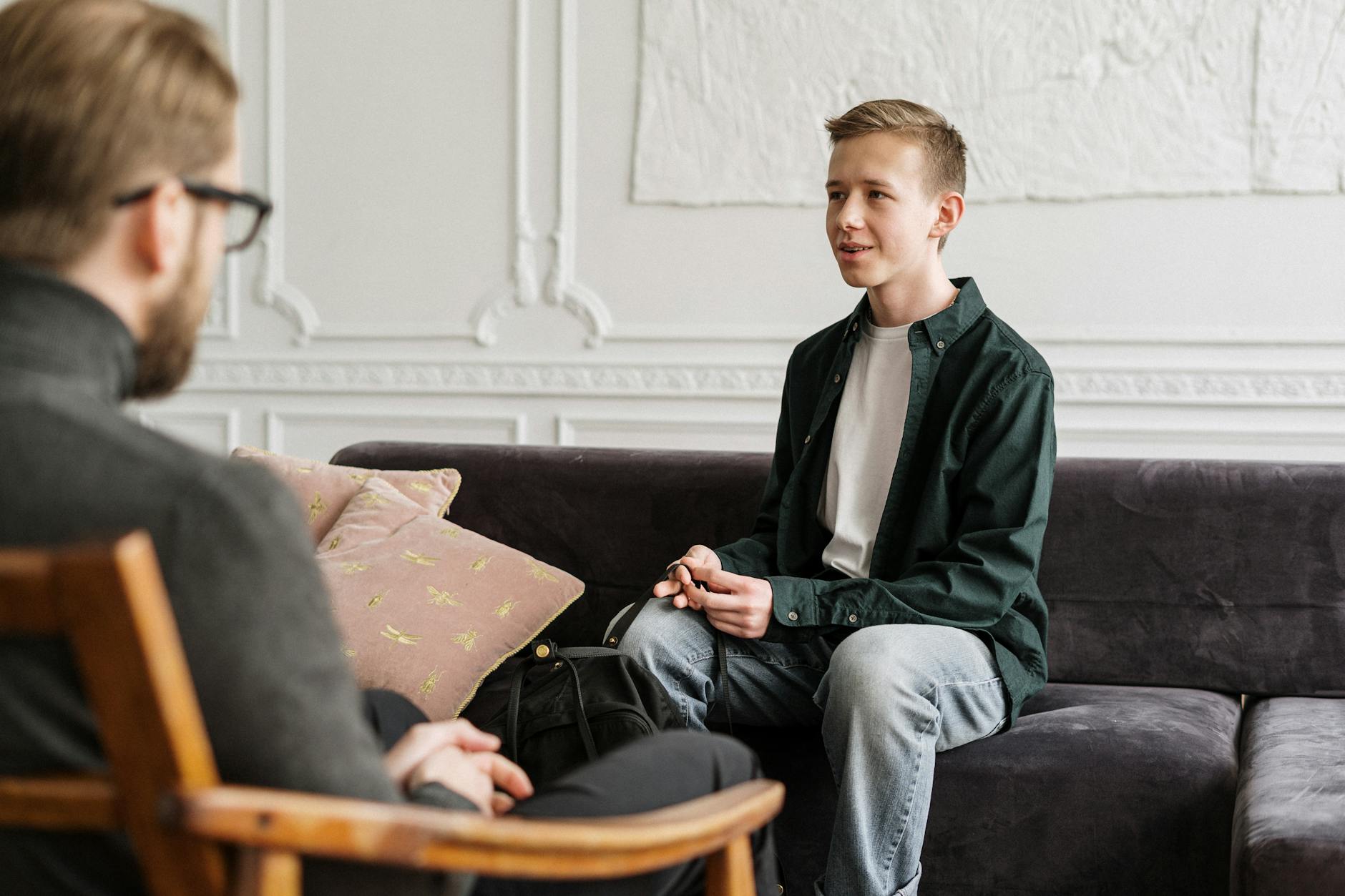
  • OPINION | Out In The Therapy Room

    OPINION | Out In The Therapy Room

    I know what you may be thinking about; you have your own secrets and your own reasons for coming to counselling. Things that you’ve bottled up and repressed for years. Ashamed to talk or speak of who you secretly you’re attracted to.

    You feel that to express these fears they become real, no longer to be ignored. That I’ll judge you on some level. You’ll be less of a man. I won’t value you the same as human being.

    Of course I’m a man as well; maybe I remind you of your father, brother or the boy who used to pick on you at school. You’re nervous about being raw and vulnerable with me, afraid of my response. What you may not have considered is that I am gay too.

    I am the counsellor that you see sat before you. Confident. Calm and friendly. However before I became this person I was sat in the same chair that you are, worrying about the same things. I understand because like many gay therapists, I was a client first. I will also have been in the position of speaking to a therapist about my sexuality – positive or negative- and appreciate how much courage it can take to have this conversation.

    If I told you that I was gay would the worry about telling me about yourself disappear? If you knew about my coming out experiences, would you believe that I could empathise with the struggles you are facing?

    If you stopped caring about my reactions and judgement, Would you begin to care for yourself? You might not have come into counselling to talk about your sexuality but does it feel different to feel that it is not off the cards if you want to. I accept that counsellors do not need to be a man or gay to be able to work with you but knowing that I have walked the same roads as you may bring a different kind of assurance and the feeling that when I say “I understand” that my response is more heartfelt. Unlike talking to your father, brother or friend, there will be no judgment on the things that have happened to you that you still carry today.

    If I told you that I was a member of an ethical body that has concluded that gay “conversion” therapies are unethical and anyone practising them would face disciplinary action. Does that help to assure you of the men and women that have chosen to stand together with regardless of sexuality?

    Of course the questions that are asked here are only for you; I don’t need or expect an answer. But there are Gay Counsellors out there who are proud of their sexuality and confident enough to recognise the power it holds in the counselling relationship. We use the term “Gay affirmative” to show that we embrace the positive aspect of being true to yourself and value the power it holds in the counselling relationship.

    The power comes from letting you know that I can relate to some of the experiences you may choose to bring to the time we share together. I can understand the power in being able to express freely, who I love, how I live and who I am.

    Opinions expressed in this article may not reflect those of THEGAYUK, it’s management or editorial teams. If you’d like to comment or write a comment, opinion or blog piece, please click here.

  • COMMENT | Why It’s Important To Be Proud

    The year was 1993.

    I remember it because it was the year the Gay Slayer, Colin Ireland was embarked on his killing spree, and there had been many warnings for us to take special care while he was still at large. Even so, it had been a perfect day, and as the sun started to set on Brockwell Park with Jimmy Somerville singing the words, “As I watch the sun go down, watching the world fade away”, I had never felt so content, never felt so much that at last, I belonged. This was my first ever Pride and, unbelievably, I was 41.

    Not that I had been closeted till then. Far from it, but I had never really fitted in with what I perceived to be gay life or the scene. I had come out as gay fairly late I suppose, at about 27, and, having fallen madly in love with my first boyfriend, whom I had met through work, went straight into a domestic, monogamous relationship. We never went out on the scene and most of our friends were straight. When that relationship finished, I went straight into another that was much the same, and then when that finished, I hardly dare go anywhere at all. AIDS was taking hold and sex became something to fear rather than enjoy. The gay scene terrified me and so I took refuge amongst my straight friends. My life became monastic and I practically gave up sex altogether. Looking back, this could well be the reason I am still around today, but it’s certainly not a time I’d like to live through again. In a way I was denying who I was, denying myself the right to be happy, to be considered the equal of my straight peers; and, actually, I was no better than the likes of David Starkey, who believes the owners of a B&B should be able to deny a room to a gay couple, and Andrew Pierce, who believes that we don’t need equal marriage. Urged on by my ultra Conservative mother, I am ashamed to admit I joined with those who condemned the opening of GLC’s London Lesbian and Gay Centre, which opened in 1985, another waste of rate payers’ money by Red Ken. This was not my finest hour. I was no doubt suffering from the kind of internalised homophobia I detailed in my article for TheGayUK earlier this year.

    You’d think that as I worked in an environment where it was ok to be gay (the theatre), I’d have happily embraced my sexuality, and to an extent I did, but I never felt I fitted in with the majority of gay guys in a company, those ultra flamboyant, often screamingly queeny dancers, with their hilariously witty, but often bitchy, repartee, and consequently I distanced myself from them. To be honest, they scared the living daylights out of me, and I tended to mix instead with the straight guys and girls in the company. It was safer to stick with what I knew, even if it meant sometimes tacitly colluding with the occasional unintentional homophobic remark. I wasn’t like other gays, so that made it ok. But of course it didn’t.

    I’m not quite sure when all that changed, but, over time, I realised that something was missing from my life. I didn’t truly fit in with any of the people I mixed with. So it was that in 1993 I found myself marching through the streets of London with thousands of other gay men and women, with their families, and with their friends. I was surrounded by men and women from all walks of life, from the flamboyant to the ordinary, from drag queens to soldiers. I couldn’t believe the size of the crowd, and as I looked back down Piccadilly from Hyde Park Corner, my heart swelled with a pride I’d never felt before. I was not alone. At least for one day I could walk through the streets without being afraid of who I was.

    I think that was the turning point for me. From that day on I became more involved in the scene and more fully embraced the gay community. I think I’ve attended every London Pride since, and been to a few more around the country. I’ve been involved in Pride in various ways too, from stewarding, to dancing on a float in leather, to gogo dancing in a shop window in Soho and then gogoing in the clubs afterwards. I’ve had a lot of fun, and of course Pride should be fun, but it is also a lot more than that. It is a chance for us to show the world that we are a diverse bunch of people, that we exist in all corners of life. We might be drag queens and leather guys, disco bunnies and dykes on bikes, muscle guys and formation dancers, but we are also policemen and firemen, soldiers and office workers, doctors, politicians and nurses. It is a chance for us to show the world that we are not going away.

    As London is one of the busiest, most multi-cultural cities in the world, it makes London Pride important on an international level, so that those living in countries less tolerant than ours can see what can be achieved. Urged on by anti-gay religious groups, gay rights are going backwards in most countries in Africa and the Middle East. Hardly a week goes by without some new anti-gay law being passed or some new atrocity against the gay community. Things are no better in many Eastern European countries. Russia has just passed more anti-gay legislation, precipitating a wave of anti-gay violence. Even in seemingly enlightened France, there has been an outbreak of violence against gay people since the passing of the equal marriage act. The Catholic Church’s roots obviously go down deeper there than most would have imagined; and if the recent House of Commons and House of Lords debates on equal marriage are anything to go by, there are still plenty of bigoted homophobes in this country, who will go to extraordinary lengths to deny us our basic human rights. There could not be a time when it is more important to stand up and be proud of whom we are.

    I’ve always believed that Pride should be both a celebration and a political statement, and have never had any truck with those who say all the excessive flamboyance at Pride makes them feel ashamed, the gay homophobes who believe we should play down our differences, who believe that only by attempting to blend in with the straight world will we get the rights we are asking for. Well I don’t hold with that. We should not deny that a large part of our community is made up of wonderfully flamboyant, inventive, artistic, talented and sometimes wacky people. When better to show off our fabulousness? When the gay community stood up against police brutality at the Stonewall Bar back in 1969, were those drag queens trying to blend in? No. They were demanding their rights as individuals. So the media tends to concentrate on the drag queens and the scantily clad muscle boys. So what? Being different is not a reason for withholding human rights.

    If, like me, you have been to so many Pride events now, that they all start to blend into each other. If you are feeling jaded, or feel that it has nothing to do with you anymore, perhaps you should remember the reasons that Pride is still important, and that each Pride will always be the first Pride for someone somewhere, that first moment when that person, whatever their age, can feel that they can be who they really are. Take part in the march, or just come down and watch, but, be part of it and be Proud!

    Opinions expressed in this article may not reflect those of THEGAYUK, its management or editorial teams. If you’d like to comment or write a comment, opinion or blog piece, please click here.