Category: Review

  • THEATRE REVIEW | The Woman In Black – West Yorkshire Playhouse & National Tour

    THEATRE REVIEW | The Woman In Black – West Yorkshire Playhouse & National Tour

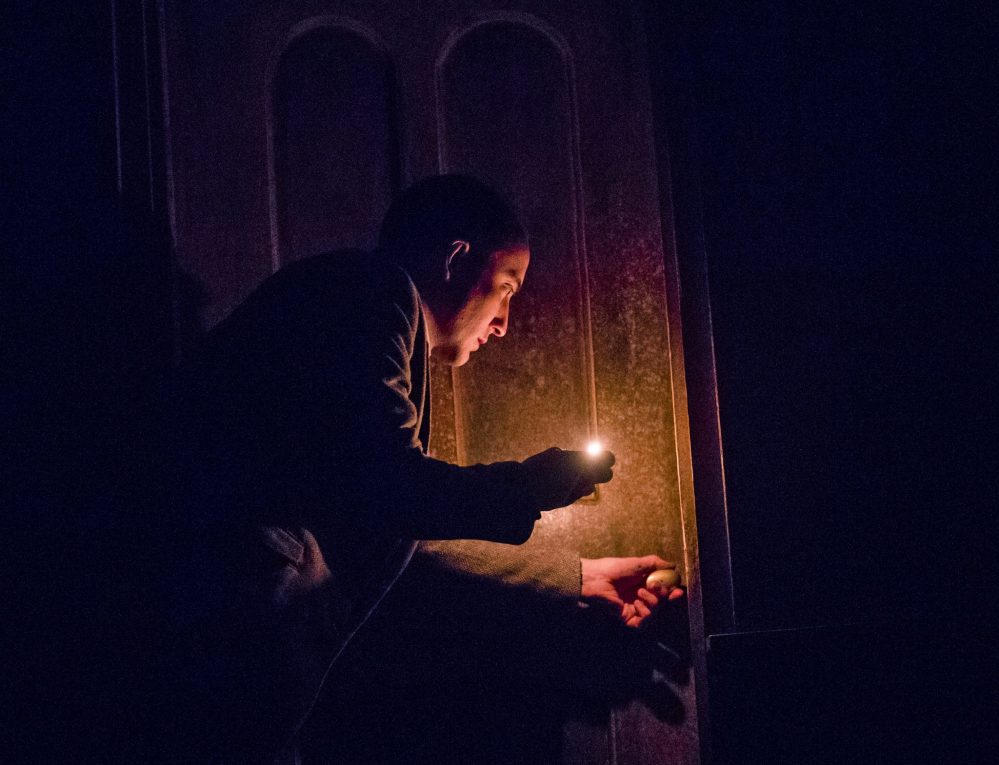
    ★★★★ | Set in an old theatre in the late 1950’s, a solicitor, Arthur Kipps, enlists the assistance of a young actor to tell his story. His tale revolves around a terrifying incident when he was younger, when he travelled to Eel Marsh House to settle the estate of a long standing deceased client. Initially finding a conspiracy of secrecy from the locals, he makes his way across the Nine Lives Causeway, which is cut off at high tide. Alone in the mansion, he is plagued by the sound of a pony and trap, an unexplained banging noise and a door which appears to be locked from the inside. What secrets does the estate hold? What lurks in the swirling mist…? And who is the woman in black he keeps seeing?

    Photo Credit - Tristram Kenton (PR supplied Photograph)
    Photo Credit – Tristram Kenton (PR supplied Photograph)

    This chilling and effective ghost story is beautifully crafted and uses simple techniques to create a very taught atmosphere in the theatre. The lighting design in particular was incredibly well done – who would have thought that a dark stage with just a door highlighted would draw worried mumblings from those around you?

    The production slowly cranks up the tension, which quite literally draws you to the edge of your seat and then throws you back into it with “cattle prod” jolts that elicited genuine screams of fright from the audience. The narrative of the piece draws you in; and the production avoids spoon feeding you the story, leaving you as the audience to create your own horrors in your imagination. The set, staging and props were remarkably effective in their simplicity and created an atmosphere where you held your breath with the central character as he explored the darkness. Setting the show in a theatre made you feel very much part of the story and the dark atmosphere and low level lighting only add to the gloominess and intimacy of the piece.

    The performances from the two leads were both very good, with Matthew Spencer playing the part of The Actor and Young Kipps, and David Acton providing the elderly Kipps and the other characters he comes across. It’s a production which shows just how effective a simply staged double hander could be; and the way in which the audience is manipulated via the events unfolding on stage is testament to the quality of writing behind the show.

    This show is faithful to its original source material, the book by Susan Hill, rather than the 2012 film; and The Woman In Black is well crafted fireside ghost story which proves that there is more to what is unseen than what is seen. This show is a chilling pre-Halloween treat and a perfect way to spend a dark, stormy winter evening.

    The Woman In Black is currently at West Yorkshire Playhouse until 29th October 2016 (www.wyp.org.uk) before continuing on its national tour until June 2017 (http://www.thewomaninblack.com/).

  • THEATRE REVIEW | THE EXORCIST, THE BIRMINGHAM REP

    ★★★★★ | The Exorcist was a frightening occasion with jumps, bumps, and lights were left on in my home.

    Robert Day


    The original ‘The Exorcist’ written by William Peter Blatty brought horror to U.K. cinemas in the 1970’s being banned in most of them, for people fainted, were sick and were left immobilised from the terror. The Birmingham Repertory Theatre developed the play version alongside Bill Kenwright, and playwright John Pielmeier for a U.K. premiere which happened on the 21st October.

    I was stunned immediately by the ambition of the set design and special effects used throughout the play. I previously thought it would be a play that was going to be hard to get a scared out of as you knew what was going to happen, as well as you are not manipulated by the sounds and editing that you normally experience in a film. However, The Birmingham Rep’s ‘The Exorcist’ took you by surprise and you daren’t bat an eyelid. The illusionist setting and apparition of the evil spirit were special effects you would see in a film now. The illusion design was masterfully developed by Ben Hart. The way the walls appeared to move and the dark cloud traveling along the set as the demon were just otherworldly!

    Robert Day


    The performance, delivered by the cast, matched the effects with equal conviction with Regan, in particular, played by Clare Louise Connoly, shining brilliantly. Clare’s multifaceted portrayal of Regan was sublime, and delivered every ounce with dexterity. She surpassed herself when becoming possessed with ambitious physicality and movement that contributed to the eerie ambience of the production.   Jenny Seagrove played Chris, Regan’s mother, and played her emotions very authentically as well as showcasing anger and fear very intelligently.

    Peter Bowl’s Father Merrin stole the show for me. He played the Father quietly, confidently, and made the audience feel at ease as the one who was going to solve the puzzle. An incredibly gifted actor whose short time on stage provided entertainment to the last second, and the audience hung onto every word he said. The flamboyant character Burke, played by Tristram Wymark, had genial comedic timing. A couple of times leaving some audience members in hysterics. Adam Garcia contributed to the sombre mood of the play with his portrayal of Father Karras, whose mother had been ‘taken by the devil’, and had died from the event.

    It was a well-accomplished production, with effects that could not be believed were possible, acting that was on point, with all characters providing an air of mystery and suspense; and the effects that made the audience jump, which to me was a treat that I won’t be forgetting any time soon.


  • THEATRE REVIEW | Sunny Afternoon – Sheffield Lyceum Theatre & National Tour

    ★★★ | Sunny Afternoon

    In this musical biopic, the swinging sixties are brought back to life as Sunny Afternoon tells the story of the early days of the classic British band, The Kinks, as they fight with their management and with each other on the road to fame. Featuring a slew of classic songs, including “Waterloo Sunset“, “You Really Got Me”, “Lola”, “Dedicated Follower of Fashion” and “Sunny Afternoon”, the show charts the on-stage antics, backroom bickering and personal lives of one of Britain’s seminal rock and roll bands.

    Picture Credit : Kevin Cummins

    Whilst the production gives a flavour of the band’s history, the narrative is stripped back to allow for the soundtrack to take pride of place. The show never really provides any detailed  or thorough insight into the band, their relationships or into the music industry of the 60s, but instead offers a show brimming with musical numbers which sit fairly comfortably within the story and remind you just how many great songs the band have done. The musical numbers veer from the tender ballads to some raw and energetic performances, with one of the musical highlights of the show being an acapella version of “Days“.

    Using a wall of speakers, the recording studio style set was visually striking; and a runway from the stage leading out into the audience added gravitas to the concert style feel of the piece and drew the audience in. The costumes accurately reflected the stunning sixties style and period detail littered the set; whilst the lighting design fitted the bill without ever being intrusive.

    Ryan O’Donnell provided a charismatic performance as Ray Davies, bringing with it an air of a thoughtful, reflective and somewhat fame-resistant individual to whom music was the most important thing, which was juxtaposed nicely with Mark Newnham’s confident performance as pill popping, hard drinking and cross-dressing Dave Davies. But what impressed most was the musical talent on display with the cast playing a variety of musical instruments; and in a play which holds the musical numbers out as its key feature, live performances like these really bring the show to life.

    Sunny Afternoon presents as a nostalgic slice of the sixties which benefits from a soundtrack comprising of more hits from the band than you thought you knew; and an interesting, if light, insight into the band which helped define the era.

    Sunny Afternoon is currently on tour around the UK until May 2017 (visit www.sunnyafternoonthemusical.com for details) and is currently playing at Sheffield Lyceum Theatre (www.sheffieldtheatres.co.uk) until 29th October 2016.

  • FILM REVIEW | I, Daniel Blake

    FILM REVIEW | I, Daniel Blake

    ★★★★ | I, DANIEL BLAKE

    I Daniel Blake

    A middle-aged man is down on his luck. He can’t work because he’s got a heart condition while at the same time he’s having trouble navigating the UK’s benefits system. He is I, Daniel Blake and it’s a film that opened this weekend.

    I, Daniel Blake, which won the Palme d’Or at this year’s Cannes Film Festival, and directed by Ken Loach, is the story of one man, in Newcastle, and the trials and tribulations, and the humiliation and despair, he goes through in an attempt to receive benefits he thinks he’s entitled to. Stand-up comedian Dave Johns eloquently plays Blake, a man with so much heartbreak and despair where nothing goes his way.

    We first meet Blake after he’s had a heart attack and can’t work anymore. So he applies for Employment and Support Allowance, but first, he must go through a rigorous telephone assessment by a health care professional who asks him some very intrusive questions. He then heads to the Jobcentre where he meets single mum Katie (Hayley Squires). She’s got two kids and has just been moved from London to Newcastle by the system because Newcastle is a cheaper place to house people on benefits. She barely has two pence to rub together, and she and Blake form a special bond. He’s there to help her around her house, he’s there to support her in any way possible, even after she shoplifts. And he’s there at her side when she makes a wrong decision to earn money. But it’s Blake who is spiralling down a hole; he can’t apply for benefits online because he’s never used a computer. Then he’s been judged fit to work, so his benefits stop, however, he doesn’t have a CV to look for work so he handwrites one. More despair comes his way when he is told that he doesn’t qualify for any benefit so he has to wait for a ‘decision-maker’ to decide his fate, while Katie has to rely on the local food bank in order to feed her family. It’s one thing after another for both in this very bleak film that shows how life really must be for people on benefits.

    Johns, who has very few acting credits, is superb as Blake. He beautifully portrays a man down on luck who keeps losing his optimism and will to live along the way. Squires is just as good trying to survive in a town where she doesn’t know anyone with two kids who need to eat and have new clothes for school. Loach, who is British born, harshly displays the reality of the UK’s benefits system for people who are really in need, people who lose their dignity, navigating a system that works against them and not for them.

    As Blake says in the film, “When you lost your self-respect, you’re done for.”

    This film is a wake-up call with a strong message that this could happen to anyone of us.

  • THEATRE REVIEW | Moby Dick! The Musical

    ★★★★ | You don’t have to be a fan of aquatic placental spout-squirting marine mammals to appreciate Andrew Wright’s take on Moby Dick – but a penchant for choreography that could power a fleet of trawlers, an affection for Glee-style musical numbers and an esteem for the male form, in two beautiful varieties, will help you stay afloat.

    St. Godley’s Academy for Young Ladies are in a bit of financial bother. Headmistress (X Factor’s Anton Stephans) decides to stage a musical version of Herman Melville’s classic novel Moby Dick to keep the shark from the porthole. Think St. Trinian’s meets Peter Pan with a wave of Carry on Cruising – Ofsted would have an algae-ridden-seabed day.

    In amongst the spot-light rivalry, over-the-blouse gropes, double entendres, an inappropriate use of a ruler, African jigs, amateur projector marine displays, dark angel trolly dashes, Sinitta (probably just because it was press night), the occasional can-can and a male striptease – in amongst the pandemonium of jollity is a cast humpbacked-full of enthusiasm, each sperming their own individual clicks, pulses and whistles.

    Ishmael (Rachel Anne Rayham) would give a chorus of orcas a swim for their money with her compelling vocal cords. Anton’s animated boat-race did him no favours with Mr Cowell but worked superbly spurting life into the Headmistress and Ahab. And Glen Facey’s pirouettes, fouettés and fish dives were executed without so much as a splash.

    School uniform isn’t mandatory, and you may be encouraged to dance with the Head, but there’s no Moby about enjoying this Dick – it’s a sure thing.

    Wednesday 12th October – Saturday 12th November 2016 Tuesday to Sunday, 7.30pm
Saturday and Sunday matinees, 2.30pm

    Union Theatre, 204 Union Street, London SE1 0LX – phone: 020 7261 9876

    Tickets are available starting at £15

    Book: www.uniontheatre.biz

  • CAR REVIEW | Volkswagen’s Golf GTi

    ★★★★ | Volkswagen’s Golf GTi redefined the go faster car in the 70s. With its hatchback styling, it started the Hot Hatch trend that we have seen go from strength to strength. It was then seen as the benchmark for all GTi’s in the 80s and thanks to high insurance premiums and a lack of love GTi’s felt in the 90s, it lost its way.

    It tried to bounce back with lacklustre attempts in its Mk4 guise but then love for the GTi returned. Volkswagen saw the errors of their ways and addressed the situation.

    Now in its 7th generation, the Golf has stayed true to form. Its design is simple both inside and out. While some manufactures have opted for garish add-ons and bulges in places, VW have not. Likewise, they have not tried to redesign the hatchback with pointless styling that can date very quickly. Outside they have ironed out a few lines, placed emphasis on simplistic looks and then added some Golf GTi design touches.

    © VW

    The red line along the grill blending into the front lights is a nice touch. Inside it is all very Golf. There is no mistaking that you are in anything else other than a Golf. This Mk7, like my own Mk2, is like slipping into comfy slippers and that is why the Golf is still ahead of the game with a philosophy VW had perfected from the days of the Beetle. Make changes only where needed and do no more other than to make it better.

    Anyway enough of the old and more of the new. On the road, this is one quick car. 0-60 comes up in just over 6 seconds and reaches legal speed limits before you realise. Add to this the almost sumptuous comfort and you soon lose sense of what fast actually feels like. Standing starts feel quick but soon blend into a senseless wonder of how fast you are actually going.

    What aids this is the 5 road settings. There are soft settings, hard settings and mixture settings where you can choose the damping rates, gear changes and steering feel. This Golf doesn’t compromise you in any way. You can have a fast Golf with comfort or a fast Golf with a spine-jarring sporty ride.


    © VW

    The economy is a marvel too. Father in the passenger seat, we managed around 40 mpg on the way to Bognor. After l had kicked him out, l managed 17 mpg according to the computer. With fuel figures like these, you could be hard pressed to find a car that has so many life skills. Todays GTi is to all men and women a satisfying car to pilot if you want a Golf that will take you places without fuss or a full on GTi with excitement to match that red stripe in the grill. It doesn’t scream at you that it is can be a flat out fast machine. It’s identity is the GTi badge. Subtle and discreet.

    All this fun from a Golf that now has a faster model in the range coming out soon is to the GTi’s benefit. The GTi has a crossed over identity. It’s not the fast thrills and frills GTi it used to be. Then again it isn’t a GTi that you can’t live with if it is to be your only car. 3 or 5 doors, space for 1 to 5 and luggage space to match. It’s practical. It is put together well.  Above all, it’s a Volkswagen.

    VW’s philosophy just gets better and better. It doesn’t age either. You could be forgiven for having a mind blank when trying to figure out if this is the mk7 or 6 or is it a 5? It’s not a 5. You know it isn’t a 5. However, the shape isn’t too dissimilar to the Golf 2 generations ago. This time they have made it look sharper. Squared off those rounded shapes, flattened a few lines. Golf doesn’t have swoops and curves. It remains crisp and sharp for an entire production run and continues to do so when it is replaced. The major contributing factor is that Golf is so on the money all of the time. Others fail to emulate it. It’s almost like VW’s design team have a crystal ball.

    I still marvel at its on-road ability. I can’t actually place it as an out and out performer because it is everything you could want. So we shall set it to comfort and drive it. You can drive it fast. The DSG auto box changes smoothly. The ride is compliant. It glides along. It’s very Golf.

    © VW

    Change the settings and add a little magic and Golf becomes more GTi. Changes are sharper, steering becomes more communicative requiring increased input. The gliding becomes more ‘Jack Rabbit’ and this time it darts around the road.

    Roundabouts become playgrounds. Entries and exits are now flatter and quicker. Using the steering wheel paddles for gear changing allows you to now choose when the changes happen. This allows full access to the 227bhp available at 4500rpm. Stretch it further and it’ll reward you even though you are well past the peak torque at a lowly 1500rpm.

    Inside it remains Golf. The retro check GTi fabric on the seats is also another nice touch. At night there are red lights that appear within the red strip of the front doors. It’s a shame this doesn’t stretch to the rear doors.

    It’s still expensive and on paper at least, it seems a little behind the times. 40 years on it is still the GTi king. There is no getting away from that fact. You cannot deny the Golf GTi that title.

    In a time where excessive add-ons are the norm, the subtlety of the Golf rewards you with a competent car that to drive is both rewarding or comfortable or both. It’s just that l don’t know which one of the two rewards is the better?

    Likes 
    Retro GTi touches
    Ride
    Performance

    Loathes 
    Generic VW dashboard
    Red lighting not in the rear doors
    Price

    The Lowdown 
    Car – Volkswagen Golf GTi DSG
    Price – £30,925
    MPG – 44.1(combined)
    Power – 227bhp @ 4500rpm
    0-62mph – 6.4 seconds
    Top Speed – 154 mph
    Co2 – 149 (g/km)

  • THEATRE REVIEW | RAGTIME

    ★★★ | RAGTIME, London Theatre

    The US is in turmoil: racial discrimination is rife while immigrants arrive by the boatload to escape feast and famine in their own countries. This could describe present-day US but it’s actually the early 20th century in the new production of Ragtime now playing at The Charing Cross Theatre.

    Ragtime the novel was originally written in 1975 and had its London stage debut in 2003, after it had debuted on Broadway in 1998. The revival of the show was brought back to London’s Regent’s Park Open Air Theatre in 2012. This new version, directed by Thom Southerland, is very ambitious, with a very crowded cast of 24 on a stage barely able to fit in their singing, dancing and acting.

    It’s the turn of the 20th century in New York and we are sung the story of three different groups; an upper class family, African Americans, and Eastern European immigrants, and eventually all their lives will cross in a show that packs a lot in its over two hour running time in a theatre that was too hot and a bit too uncomfortable.

    The upper-class family takes from and centre. It’s the wife, who’s called Mother (Anita Louise Combe) with a young son and a husband who leaves the family behind to go on an exhibition to the North Pole. Then there’s the African Americans, fronted by Coalhouse Walker Jr. (Ako Mitchell), a Harlem musician whose girlfriend Sarah (Jennifer Saayeng) leaves her baby on Mother’s doorstep, but eventually moves in with Mother and is found living there by Coalhouse. Then there’s the immigrants – Tateh (Gary Tushaw) and his daughter (Alana Hinge) – who arrive in the big city with nothing to their name. However they don’t find their American dream in New York so Tateh decides they should go to Boston but right before their trip they meet Mother and her son. And trouble is in store for Coalhouse and Sarah who get harassed by unfriendly locals and it’s at this point when the first half ends.

    The second fails to match the first half’s intensity and drama. It neatly wraps up the storylines, with themes of reunions and acceptance but it’s all a bit of a letdown after the energetic and frantic first half. The cast are all fine, with the excellent vocal chords of Saayeng and Bernadette Bangura. And Combe and Tushaw provide much dramatic acting in their roles, while Samuel Peterson is adorable and perfect as the son on the night I saw it.

    If there ever was a musical that’s full of music, this is the one. It’s a good old classic American story that’s pure red, white and blue – there’s nothing as American as this show. And what a pertinent time to have on display this show of Americana, when the U.S. is going through a most unusual election, and where black men are continuously getting killed, and immigrants from all over the world wanting to live to live there. What took place in the early 20th century is still taking place today.

    Ragtime is now playing at the Charing Cross Theatre until Dec. 10th.


  • REVIEW: Red Dwarf XI Episode 5 – KRYSIS

    Red Dwarf has used various styles this series and this new episode is no different. After a fast paced big cast episode, a filmic flashback, a horror time travel episode and a body horror technology based episode we have another first for the series: cute and fuzzy friendship feels!!

    ★★★★

    Red Dwarf – Series 11 – Ep05 – “Krysis” –

    This episode proves just how much the characters have grown and developed over the years. The bickering foursome have developed into a dysfunctional but caring family. Sure they might bicker and grumble, but after so many centuries together, they do care.

    Kryten (Robert Llewellyn) is feeling depressed and the guys fear he might suffer from a midlife crisis and they are soon proven right. As Kryten goes through various stages of midlife crisis at an alarming speeds and feels increasingly low about himself and his accomplishments, Dave Lister (Craig Charles) thinks it’s time for an intervention. Of course things do not go completely to plan.

    Red Dwarf – Series 11 – Ep05 – “Krysis”


    What makes this an interesting episode is seeing Arnold Rimmer (Chris Barrie) and the Cat (Danny John-Jules) as part of the team, trying to help out but with their characteristics still in tact. This is very clever writing. It’s good to see characters grow up and learn and it shows that the show works even without constant clashes and insults. The heart of the show is these characters being there for each other despite their differences.

  • THEATRE REVIEW | Safe, London Theatre

    THEATRE REVIEW | Safe, London Theatre

    ★★★ Safe, London Theatre

    The statistics about homelessness people are alarming. 25% of homeless and at risk youth in the UK identify as LGBT, a shockingly high proportion.  Alexis Gregory has made a verbatim theatre piece looking at the subject. He interviewed a group of young adults who had been at risk or homeless and created a powerful set of interwoven monologues.

    CREDIT: Jane Hobson
    CREDIT: Jane Hobson

    Alicia started stealing her family’s painkillers to self-medicate against her confusion and worries about her sexuality.  Spiralling into a cycle of alcohol addiction she hurtles towards homelessness and hits rock bottom. Jack is confused by his gender, growing up as a boy in a girl’s body, suffering anxiety attacks and verbal abuse from his family who refuse to call him by his correct gender or use the right pronouns. Samuel realises that he’s gay at a young age but his ultra-religious Nigerian parents aren’t sympathetic to his sexuality. When he’s outed by his sister he ends up facing a volley of abuse and barrage of prayers along with plans to send him to Africa to ‘cure’ him. Understandably he flees. Alicia (same name, different character) is rejected by her mother and ends up in children’s homes and foster care. Trapped in the wrong body she works as a rent boy to get cash to get by.

    The stories are a mix of pathos, humour and horror. Samuel’s story (told by the talented Michael Fatogun) is laden with wry humour and the vibrant wit of his character comes through. Riley Carter Millington is among the cast and plays Jack. Better known for his portrayal of Kyle Slater in ‘Eastenders’; Riley was the first transgendered actor to play a transgender character in a T.V. soap opera. It’s a strong cast and they’re gifted a beautiful script (or transcript, even). There’s a hint of music with alternating singers at the start of the show (Rudi Douglas did a spine-tingling acapella version of ‘Smalltown Boy’ on the show I saw). There’s also a series of thought provoking 15 minute curated talks each night after the hour-long performance.

    The interspersing of the monologues with interactions of other actors playing subsidiary roles stalls the action and reduces the impact a little but it’s otherwise pitch perfect.

    Troubling and painful as the stories can be there’s ultimately something redemptive about them too. The Albert Kennedy Trust’s work figures highly in their support of young LGBT people in crisis. This is a performance worth catching. There can’t be many LGBT people out there who don’t find something to identify with here, too. These are exceptional stories in one sense but not in another. These are ‘everyman/woman’ stories that are sure to resonate.

    Follow Chris Bridges on Twitter

  • THEATRE REVIEW | Breakfast At Tiffany’s – Sheffield Theatres and National Tour

    ★★ | Based on the classic novel by Truman Capote; which was famously immortalised on the big screen by the 1961 film, Breakfast at Tiffany’s tells the story of an unnamed writer’s obsession with his faux-socialite neighbour, Holly Golightly, as she optimistically flirts, romances and blags her way through life via a series of romantic interludes with a number of well to do men.

    Photo Credit – Sean Ebsworth Barnes

    Based more on the book than on the film, this adaptation by Richard Greenberg has its moments. Firstly, the script, whilst wordy, carries with it an essence of Capote’s work, with rhythmically delivered passages of lengthy text which maintain the feeling of a novella rather than a play. Returning the time frame to the original 1940’s setting, the costumes were both glamorous, and, in the case of Holly Golightly, numerous. The set design was beautifully done, sturdily constructed, versatile and filled with period detail; and the lighting design by Ben Cracknell effectively transported the audience between New York downpours and hazy summer days.

    Matt Barber (Downton Abbey) delivers his role as Fred with enthusiasm and an element of innocence as his character falls for his neighbour’s charms; despite the hint of Fred’s closeted homosexuality running through the piece. Georgia May Foote (Coronation Street) is functional and steady as Holly Golightly. Stepping into such an iconic role was always going to be a tough call for any actress and Foote holds her own, never really excelling, but never falling flat either, although she doesn’t quite pull off the charisma and allure of the character entirely.

    The difficulty with this production is that is it, sadly, just plain dull. Golightly comes across as a self-absorbed, egocentric and, quite frankly, dislikeable character, which makes you wonder just why anyone would become so infatuated with someone so narcissistic. The play is heavy, slow going and overlong, which lacks any of the whimsical lightness and charm of the film version; and whilst the play is more reliant on the novella than the film, comparisons are unavoidable. The pacing and momentum of the piece is patchy; it is clumsy at times, there are a number of unnecessarily loud and messy scenes filled with a variety of unlikeable characters; and the audience warmed more to the scene stealing cat, Bob, than most of the actors on stage.

    For those enamoured with the book, this is a relatively good adaptation, and they will not doubt find much to enjoy within this production, which is a grittier and darker adaptation in keeping with Capote’s writing. For those who are smitten with the film, and despite the publicity shots for the play which are tantalisingly reminiscent of the iconic imagery associated with the movie, there is likely to be some disappointment.

    Breakfast at Tiffany’s is on national tour (see www.breakfastattiffanys.co.uk/ for details) and is currently playing at Sheffield Lyceum Theatre (www.sheffieldtheatres.co.uk) until 22nd October 2016.


  • RESTAURANT REVIEW | Roma

    In a part of London where there’s not a whole lot going on cuisinewise, Roma is a nice breathe of fresh air.

    CREDIT: Supplied

    Situated right next to Fenchurch Street Station, past a Pizza Express and The Windsor Pub, Roma brings a unique and very elegant dining experience to a part of London that desperately needs it. If you walk quickly past the ugly station and try not to inhale any of the train fumes, Roma, located down a flight of stairs from the square is the elegant Roma and it’s an absolute find. A bar with ample tables for drinks, and beautifully situated tables alongside the large windows – tables that seat two, four, six, and perhaps more, with large windows that gives the restaurant its Italian style.

    Roma claims that it brings 2000-year-old flavours and passions of ancient Rome to its rich menu full of Roman-inspired dishes. Well, no one I know was around 2000 years ago so we will have to take their word for it! Luckily the menu is not overwhelming – it’s simple yet and uncomplicated. Recommended as a beginning dish while you relax and read the menu are the requisite olives, bread and dips, a selection of crudités as well as bruschetta – all priced below £8.00. There are eight small plates to choose from, all very simple and knowing. Oxtail Soup, Mussels and Clams, Cod Loin Fish Cake, Hay smoked mackerel fillet, Hare & pistachio terrine, all excellently priced at below £9.00. The Mediterranean lentil salad served with ricotta salata, with lite vinegarette sauce, was absolutely wonderful – a snip at £7.00. The Salumi dish of cured meats & antipasti, priced at £15.00, was worth every pound because of its large size and excellent presentation of an array of meats served with bread and olives. In fact, this is a chance for Roma to present its own charcuterie – which is in their kitchen – so you know you’re getting fresh meat.

    CREDIT: Supplied

    Roma offers Large Plates and plates cooked in Hay. First off, the large plates include Mussels & Clams, Tiger prawns, Wild mushroom gnocchi, Honey & Mustard pork, and 16th-century cotechino (an Italian charcuterie dish). You might ask, what is hay? This is where Roma bakes it’s meat on hay – which is how the ancients Romans cooked. So the hay menu included the Crispy pork belly, accompanied by Borlotti beans, ham & tomato casserole. It was a bit disappointing for its £19.00 price as the pork was not that big, and it was awfully hard to chew, served with a small portion of the casserole. Luckily I ordered the Gnocchi to accompany it, but it was basic, scattered in butter and basil. The Vine wrapped tuna, leeks & olives dish, with Risotto Bianco, was the piece de resistance. Two pieces of tuna, covered in a vine leaf, with a massive portion of risotto, was very nice, and the risotto and tuna complemented each other. At £22.00, it was worth the money. Other ‘cooked in hay’ dishes on offer include slow cooked leg of lamb for 2 (I will have this next time), lamb rump, and half roasted chicken.

    This being an Italian restaurant you can bet that the desserts would be perfect, and they were. The Torata del nonna (a pastry shell covered with pine nuts and sugar to the veil that hides a delicious cream filling pasticcera) with pine nuts and peanuts needs to be eaten to be believed. The Apricot and ratafia sweet-beverage cake, coupled with Rose water créme Anglaise, was also heavenly, sweet, and a perfect ending to a filling meal, both at a very sweet price of £6.50.

    CREDIT: Supplied

    There’s a lot of wine on offer at Roma (just like in the days of the Roman empire), and Sarah the wine sommelier will offer you an excellent selection to go with each of your dishes. They were all very excellent and excellently accompanied the dishes we had. The Northern Rome GEWURZTRAMINER, ALOIS LAGEDER, Alto Adige 2015 and the TEMPRANILLO, 6 MESAS EN BARRICA, FINCA LA ESTACADA, Ucles 2015 were perfect with the starters. With the mains, the CABERNET, MERLOT, PUKLAVEC FAMILY HERITAGE, GOMILLA, Macedonia 2015 and the PINOT NOIR, KRAFUSS, ALOIS LAGEDER, Alto Adige 2012 complemented the fool. Roma also offers wines from the South of Rome, France, and Spain & Portugal making their list one of the most comprehensive north of the Roman ruins!

    Roma is the perfect place to go if you want to impress your clients, co-workers, loved ones or perhaps even your boss. It’s an elegant nicely tucked away restaurant where the food is impressive, with impeccable service.


    Reviewed by: Tim Baros

    Telephone: 0207 488 2807

    Address: 14 New London Street, London, EC3R 7NA

    PRICE: ££££ (explained)

    STAR: ✮✮✮ (explained)