I am a white man from Birmingham who has lived in Devon for the last 26 years. What could I possibly teach you about making a curry… well…
I have been fortunate through friends to know people who lived in India at the time of the Raj, in Burma and have friends who are Indian. What I cook is a melting pot of what I have been taught, what I have read, and what works for me.
These are the basics
In most of the curries I cook, there is a trinity of essential fresh ingredients that add flavour. They are Ginger, garlic, and Chilli.
Many sauces have a base of onion and tomato. Flavour is enhanced with the use of fresh Coriander leaves at the end of cooking.
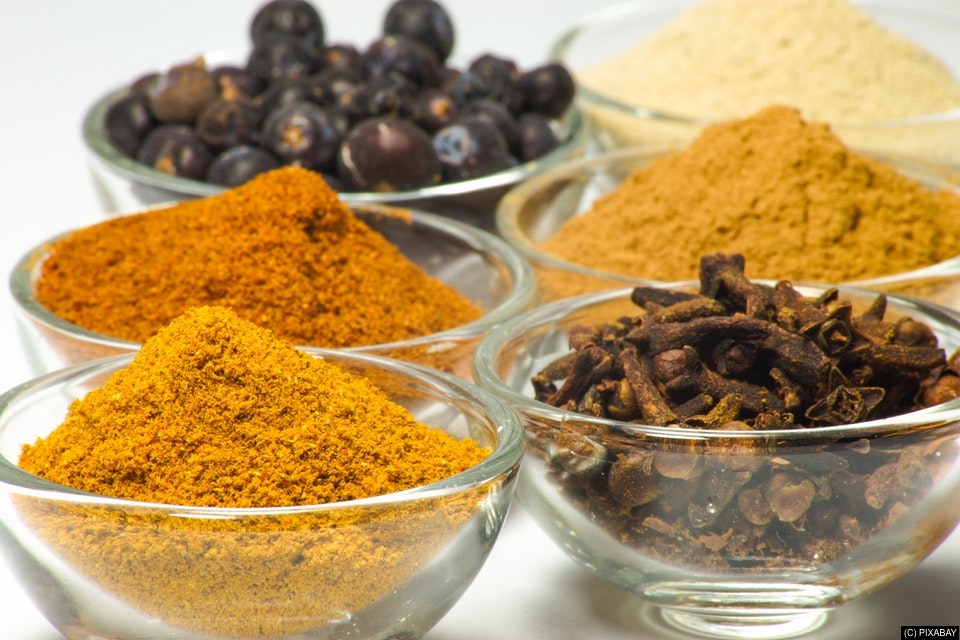
The essential spices in powder form in my Indian cupboard are:
Turmeric, Cumin, Coriander, Garam Masala, mild curry powder, Tandoori Masala
I have cupboards full of many more powders, seeds, dried leaves and variants on pre-spiced dishes. A good friend travels a lot in the East and brings me back things I have never seen to try and experiment with.
The Process
Generally, for many dishes, this will be the process. With each stage, I will give the reason why I do what I do and when.
- Heat oil in a saucepan. Enough to cover the bottom of the pan with about 0.5cm in depth.
- Add a few black mustard seeds if you have them (These start to pop and jump in the oil when it reaches the correct temperature to add the onions; so they fry and don’t boil in the oil)
- When the onions start to turn golden brown add crushed garlic and chopped ginger.(In comparison to the onion these will burn quickly and spoil so there is no need to add them until about 2 minutes is left in the frying time of the onion)
- Reduce the heat and when it has settled after about 30 seconds or so stir in the powders. Immediately the powders are stirred in add 2 or 3 dessertspoonfuls of water. (Powders burn very quickly. They will cook in 10-30 seconds and any longer without water risks ruining the flavour and being left with an acrid bitter burnt aftertaste)
- Add fresh chilli whether chopped or sliced. (If chilli is added when the oil is hot it spoils very quickly and will give off a vapour that will make you choke and cough. It also ruins the flavour of the chilli)
- Add pureed tomato. This combines with the onion and spices and becomes the sauce for your curry.
- When the tomato is all absorbed into the sauce and the oil separates, the sauce is ready for meat and/or vegetables and seasoning with salt.
- If you are adding yoghurt to the sauce this is the stage I add mine. Yoghurt is likely to separate if you just pour it in. I blend mine with a little water and tomato so that it is thoroughly mixed prior to going into the sauce. Once added stir until the sauce comes back to the simmer.
- Finishing touches. When the meat or vegetables are cooked, taste to check and adjust the seasoning with salt. Stir in lemon or lime juice if the recipe calls for it. Garnish with Fresh chopped Coriander. (Lemon and Lime are added after the heat is turned off as the juice burns and spoils the flavour if added during cooking. Coriander leaves have a delicate flavour that is lost and cooked away if added as more than a garnish at the end.)
NB If you want a stronger flavour of fresh coriander in your sauce use the root or the stems as these are both stronger in flavour and can stand cooking in the sauce. I add mine as a root in a paste with the powders, as a finely chopped stem once the tomato has been added
Now all you need are some recipes. These will follow and it is likely as they do new ingredients will be added.