Tag: Five Star Motorcycle Review

The latest five-star Motorcycle review from THEGAYUK.

  • MOTORCYCLE  REVIEW | Zero SR/S Electric

    MOTORCYCLE REVIEW | Zero SR/S Electric

    Electric motorcycles; The future or the devil’s work? An inevitability or a passing phase?

    Ever since I visited one of Europe’s largest electric motorcycle dealers, English Electric Motor Co, I have been hooked. They graciously facilitated my inauguration to electric motorcycles.

    There is, however, no substitute for living with a bike, so Zero was kind enough to lend me their SRS press bikes for a while, to give me an opportunity to do a real-world review.

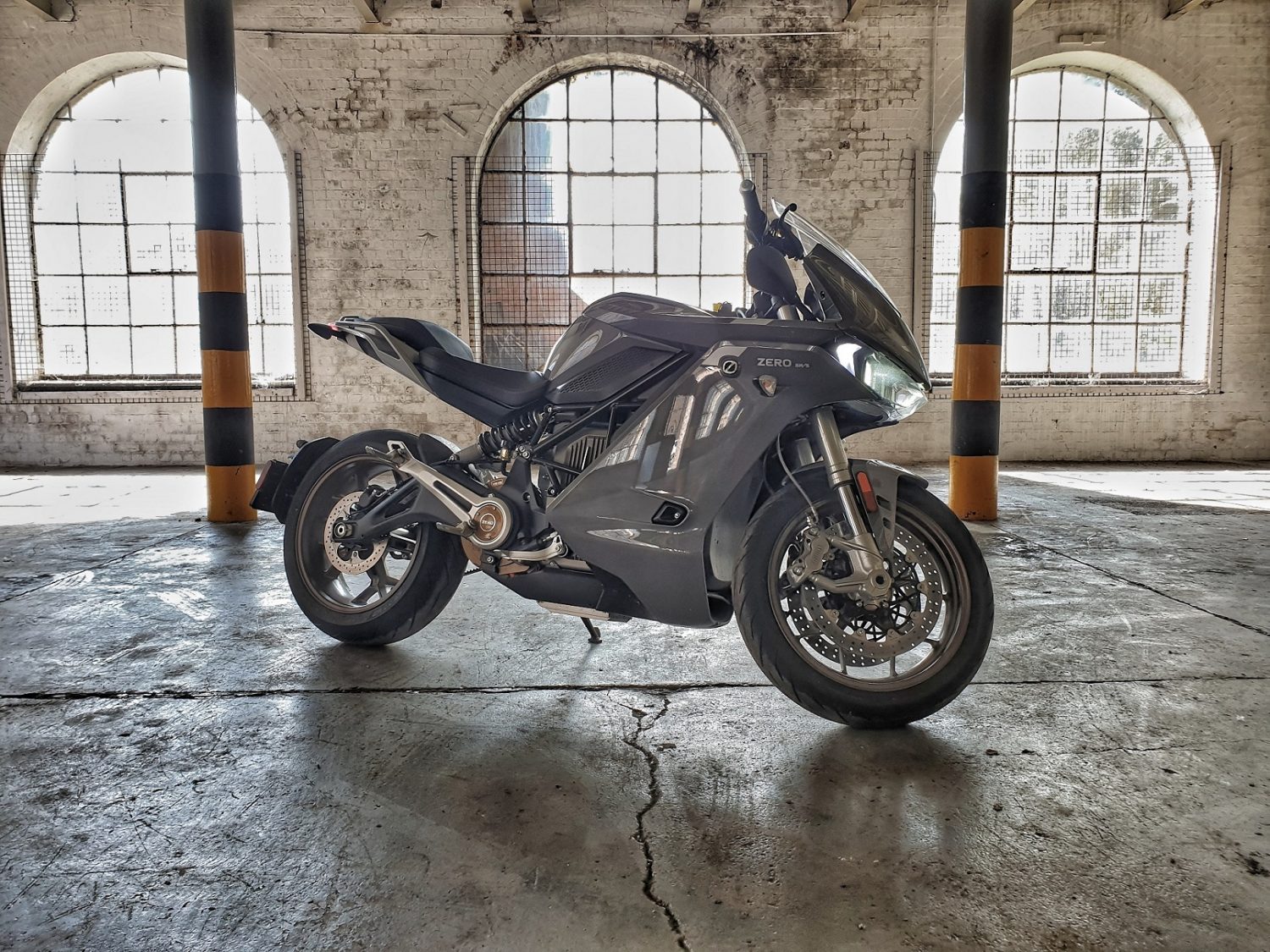
    Zeros’ SRS is a fully electric motorcycle, like all of their bikes, and in the Zero stable, the SRS is the biggest, most expensive, most capable bike they make.

    Let’s run through some statistics. This bike weighs 230kg, which is around 20kg heavier than a conventional ICE (Internal Combustion Engine) motorcycle. For example, the Suzuki GSX-S1000 is 209kg and the Yamaha MT10 is 210kg, not bad at all.

    Power is deceptive and stated as 110bhp, which doesn’t sound like much. Don’t let this dampen your enthusiasm, rest assured you won’t be disappointed in the performance from this SRS. To add some perspective, a Ducati Panigale V4 makes 123Nm torque, the BMW 1000RR makes 100Nm torque. The Zero SRS make 190Nm of torque… yes… 190Nm!! Make no bones about it, in sport mode, this bike is seriously fast.

    Bear in mind also that the power and torque from an electric motor are delivered in a different way to an ICE engine. On a traditional motorcycle, as revs build, generally power builds too. With an electric drivetrain, the power and torque are linear, meaning you have very strong power available from the moment you twist the throttle if you want it.

    Interestingly, it carries its weight quite low. Most of the weight is in the battery and motor, which is all below your knees. What would be the fuel tank on an ICE bike, is the storage box for the charging cable on the SRS.

    Let’s talk about range. It’s usually one of the first questions people ask about electric motorcycles generally. It’s actually really hard to answer. This isn’t an excuse or me trying not to answer. There are a lot of factors that affect the range, such as temperature, riding style, type of roads and more. Batteries perform worse in hot weather for example and if you ride aggressively and in sport mode all the time, your range will suffer. The same applies to sustained high speeds such as motorways or dual carriageways, where the constant draw on the battery takes a toll on the range.

    When I first collected the bike, I inevitably selected sport mode and spanked it for a few miles, quickly discovering the negative impact this had on the range. Fast forward a few days and by riding a bit more carefully, switching modes to soften the power and regenerate electricity in traffic, I could easily see 110 miles+ on a mix of roads.

    Talking about rider modes, there are 5 on the SRS. You have the full-fat Sport mode which lets you have all of the power with reduced regenerative braking. You still have ABS and traction control though (which is a good thing). Next is Street mode, which offers slightly reduced power and increased regenerative braking. This mode is great for general riding. Next is Eco mode which restricts power and offers maximum regenerative braking. Top speed is restricted to 75mph. I use this is traffic to extend the range when there’s no point in using street or sport modes. There is also a rain mode which has the softest power delivery and least amount of regenerative braking. Rain mode is designed for low traction conditions.

    Lastly, there is Custom mode. This is a mode that you can personalise, for example, maximum power with increased regenerative braking. You can also rename it. The team at English Electric Motor Co customised theirs and called it Beast mode.

    Zero have taken a fairly traditional approach to styling on the SRS. They could have taken a more radical, futuristic approach, but I really like it, it looks great. There are some neat touches like the mirrors. They are mounted low on the fairing below the handlebars and actually look under your arms. It sounds odd but they are very effective. Quality of components is construction is outstanding. The bike is excellent and feels very premium and it’s the easiest bike to ride. Controls are absolute simplicity with no clutch, no gears and just brakes and throttle. The throttle is progressive and very smooth.

    Handling is superb, this thing corners so hard. It’s a little short, but I like that, it helps to deal with the poor condition of our roads. The suspension is fully adjustable Showa front and rear and brakes are J-Juan radial callipers and are excellent.

    “How long does it take to charge?” is another common question. Let’s do some man maths. The battery is 14.4kwh. Think of it as a fuel tank. If you charge up from a domestic 3 pin plug, you will see a charging rate of 2.3kwh. That means that every hour, 2.3kwh flows into the 14.4kwh battery, simple. Think of kwh as litres if you like. If the battery was empty, on a 3 pin plug it would take just over 6 hours to fully charge, which you would typically do at night when the electricity is cheap.

    The maximum rate you can charge the battery is 6.6kwh on a type 2 fast charger such as the ones at supermarkets, shopping centres and fast-food restaurants. This means, if it was completely empty and you used any fast charger, regardless of the rating, it would charge the SRS at 6.6kwh and it would fully charge in just over 2 hours.

    In reality, it is unlikely that people will fully charge ‘on the go’, but instead, maybe top-up.

    On one of my rides, I stopped at a shopping centre in Milton Keynes and topped up for 30 odd minutes. In that time I increased the battery charge by 20%. It was simple and free.

    Another big bonus of running an electric motorcycle is running costs. At home, you will probably pay something like 6p/kWh for your electricity. Let’s say 10p for the sake of man maths. If you charge at home, from a 3 pin plug, at night, a 14.4kwh battery will cost £1.44 to charge. Even better, if you charge at a shopping centre or McDonald’s on a fast charger, it’s usually free.

    In addition to the minimal running costs, servicing is a far more economical affair. Remember, electric drivetrains are simplicity themselves. Very few moving parts, just an electric motor. No gearbox, no complicated engine with hundreds of moving parts. Servicing tends to be consumables such as brakes, tyres, drive belt and so on. The battery has a 5-year warranty and after that, is expected to last the lifetime of the motorcycle if looked after correctly.

    To sum things up, the Zero SRS really is a great motorcycle. It is outrageous if you want it to be, or it can be a pussycat. It’s incredibly easy to ride and very well built. It’s pretty practical but not suitable for everyone. I love it and am very pleased to have had the time to get to know it.
  • MOTORBIKE REVIEW | Suzuki V-Strom 1050 XT

    MOTORBIKE REVIEW | Suzuki V-Strom 1050 XT

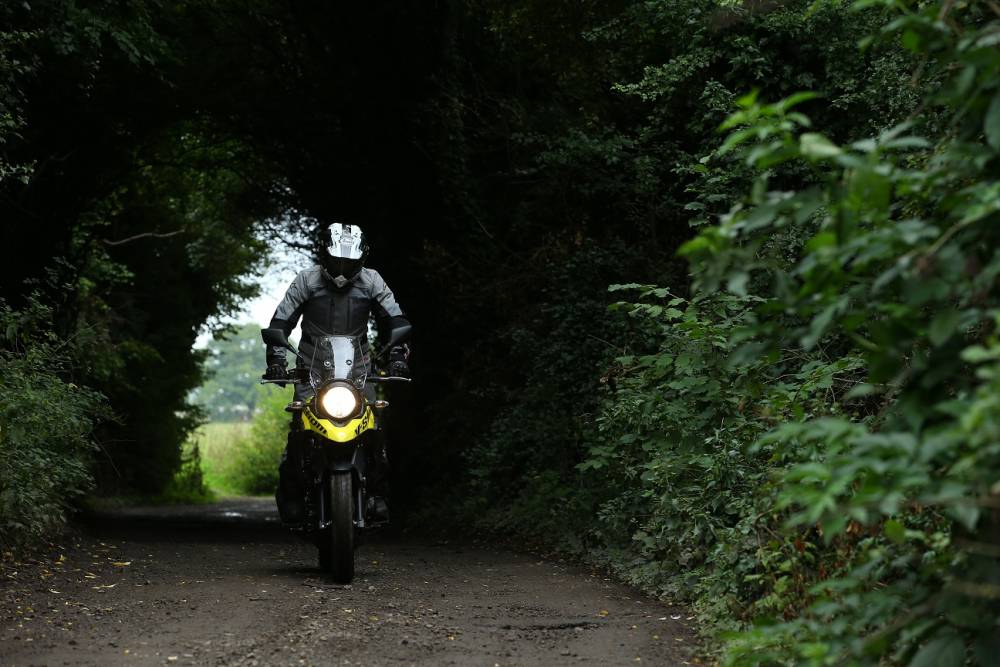
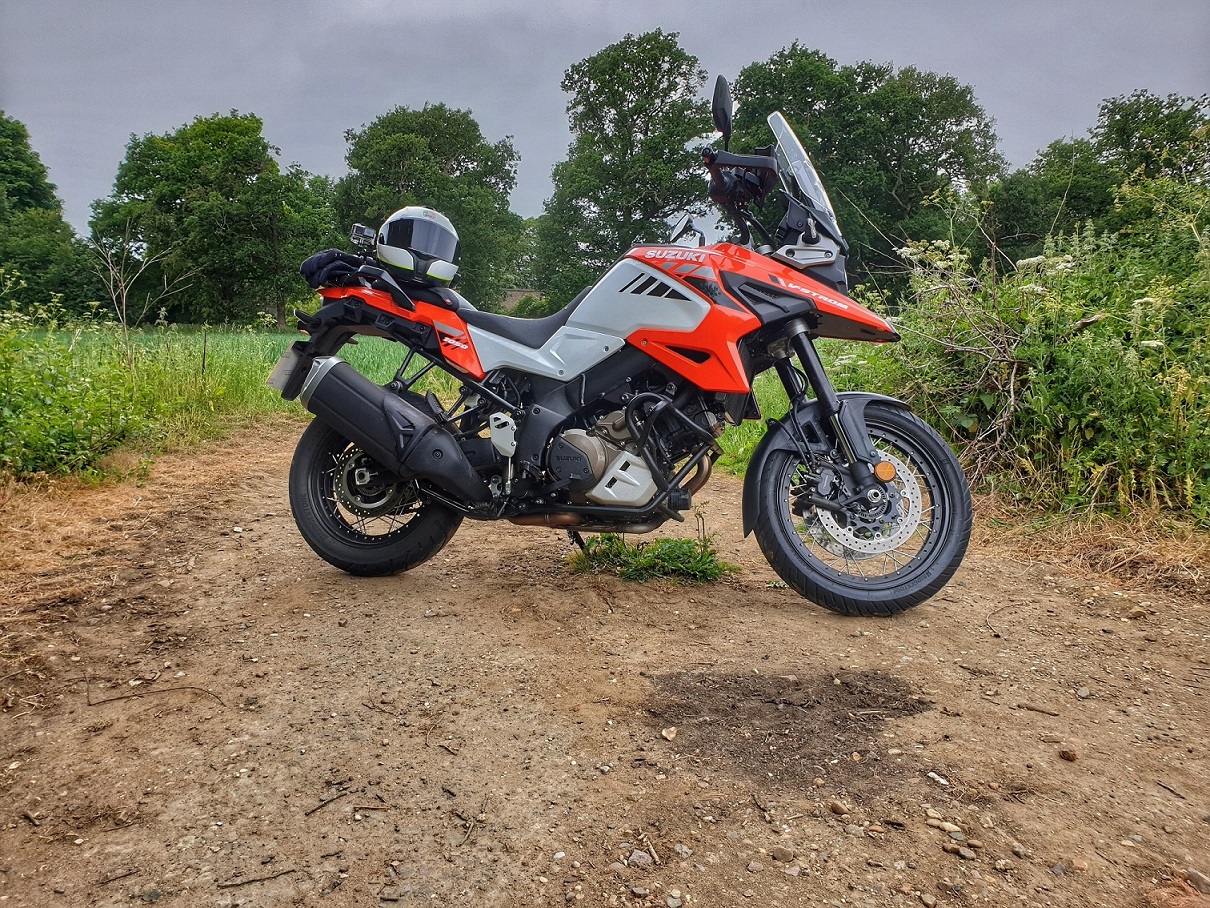
    Suzuki’s entry in the adventure bike fraternity is the V-Strom, previously also known as the DL.

    This latest 2020 incarnation is known as the 1050.

    It’s a 1000cc v-twin adventure-tourer although actually, it’s a 1037cc v-twin.
    This is a good engine that has been around for a while now, first making an appearance in the TL1000R in 1997, a legendary bike. It also featured in the SV1000 which was a surprisingly good bike. A friend of mine had an SV1000. He fell off it in front of us all once, wheelying it. His excuse was he had just polished it and the seat was slippery.

    Now, the engine takes pride of place in the V-Strom 1050, making 106bhp and 100Nm torque. This is an increase of around 6bhp on last year. Peak power is now at 8,500 rpm and peak torque is at 6,000 rpm, which is 2,000 rpm higher up the rev range than the previous model.

    Suzuki has played with things like the cam timing and pushed the torque further up the rev range which makes this new incarnation of the V-Strom a lot of fun.

    There’s a 6-speed gearbox but no fancy quick shifter. There is a slipper clutch of sorts thanks to Suzuki Clutch Assist System (SCAS) which also makes the clutch very light in operation. 

    The throttle is fly by wire and is very smooth. I didn’t experience any snatchy or jerky behaviour, it’s very polished, which leads us nicely into the electronics. There are a host of sensors, from lean angle sensors to crank sensors, wheel speed sensors, gear position sensors, gyroscopic sensors and more, which provide information for the various electronic systems on the bike. This information is used by systems such as the ABS and traction control.

    You can choose between 3 rider modes, 3 traction control settings and 2 ABS settings. You can’t actually turn ABS off which may be an issue for more serious off-roading, but honestly, this is probably more of a touring bike than a hardcore adventure bike.

    The suspension is 43mm, USD, fully adjustable KYB forks, and a KYB shock with rebound and preload, which all works very well, the suspension is great. There’s also a remote preload adjuster just behind your left thigh, great for adding some preload if you’re carrying a pillion.

    It’s surprisingly fast when you consider it only has 106bhp, and there’s a satisfying rush of power in the upper rev range. It’s great fun to ride.

    Brakes are excellent with 310mm discs at the front with four-pot radial callipers and outback is a 260mm disc with a single-piston calliper. They offer great feel and really are superb brakes.

    At 247 kg it’s not a featherweight but it carries the weight well. Pushing around the workshop it felt pretty big, but as soon as you are on the move, the weight disappears. On the move, the V-Strom 1050 feels agile and handles really well.

    I’m a fan of the old V-Strom, I remember I had one on test in 2018 and loved it. I even took one around Bruntingthorpe which was fun, scraping the pegs on a V-Strom on track.

    The range is a positive attribute with this bike. Suzuki has fitted it with a 20L tank. When I picked the bike up, it was full and the range was showing as 201 miles. With just under half a tank left, the range was showing as 99 miles.

    Overall, this is a great bike. It’s fun, it’s pretty fast and it handles really well. It’s comfortable enough to be able to ride long distance with no trouble too.
    If there was a criticism, it would only be that the V-Strom lacks some of the toys that some of the heavyweights in the adventure bike sector have; electronic suspension and the like.

  • MOTORCYCLE REVIEW |Triumph Bobber by Oshe

    MOTORCYCLE REVIEW |Triumph Bobber by Oshe

    1960 was an important year for Triumph.

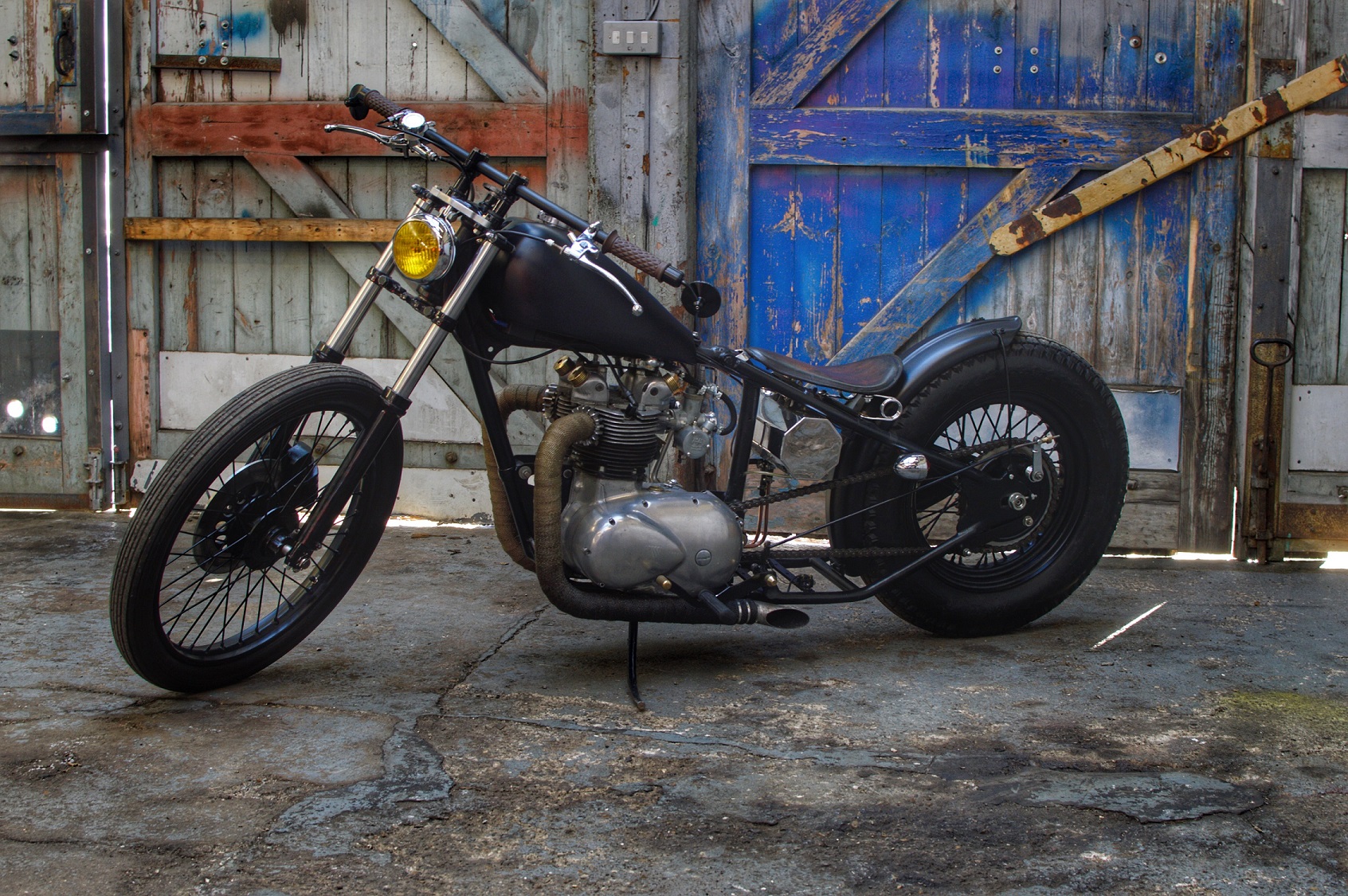
    They had introduced the new ‘unit’ 500cc engine with the engine and gearbox as a single unit. 1960 also meant the T100 was when the controversial bathtub-esq bodywork was released on the world. This was a semi-enclosed rear end that resembled an old upside-down tin bath. This wasn’t well received and only lasted 2 years.

    This 1960 Triumph T100 bobber was built by David as a bit of fun in his downtime. David is the owner of Oshe & Workshop Seventy7, 2 sides of the same coin, located at Ordnance Depot, Weedon, Northamptonshire. 

    Their business is bespoke restorations and builds of classic cars and motorcycles, tailored to the owners’ requirements. They will build you the car of your dreams, with every detail customised to your requirements. 

    David grew up in South Africa and has been a petrolhead as long as anyone can remember. He’s raced MX and even owned a motorcycle shop over there in 1996/7 that specialised in 2 strokes.

    His life changed when he met a South African girl in LA while he was travelling. She lived in the UK and David spent the next 2 years finding a way to move to the UK to be with her. 

    That was 20 years ago and they now have 11 years of marriage under their belt and a beautiful young son. Quite the fairytale.  

    Front forks are a pair that he found lying around his mates’ garage and were modified and rebuilt by Pitted Forks in Luton, with uprated springs and shortened tubes to stiffen and lower the front end.

    There’s a bolt-on hardtail rear frame section and traditional bobber style, vintage leather, sprung seat. 

    David’s bobber emits a mighty battle cry from the short, slash-cut, straight through pipes. No electric starter here, just an MX style Kickstarter ready to break your shin, with a right side gear change and left-side foot brake to mess with your brain even more. This thing screams attitude.

    Oshes’ nasty little murdered out bobber has a cool, satin black, hand made fuel tank by Olliminium and is dripping with neat touches, like the machined down brass military tank shell, repurposed as the distributor cap, amber front light and cut down satin black rear fender.

    Chopper bars give it a badass stance and David raided his mates’ garage again for a set of wire wheels, which were, of course, painted black then wrapped in period style Avon rubber. Old Triumphs have crap electrics, so an upgraded ignition system was installed. Mirrors, grips and lots of subtle details have been added to create a simple, clean but rebellious ride. 

    Photos courtesy of Daisy Turner. She’s a budding photographer and this was her first shoot. She’s only 13 years old!

  • Energica EVA EsseEsse9 – The future is here

    Energica EVA EsseEsse9 – The future is here

    Old Empire Motorcycles was founded in 2010 through an absolute and enduring passion for everything two-wheeled. It’s one of the coolest and most respected custom motorcycle builders in the UK.

    They create a handful of one-off custom bikes annually, some of the most beautiful and innovative custom motorcycles in the UK. So beautiful in fact, they have been exhibited at Harrods London and at the Saatchi Gallery and won numerous awards from titles such as; Silodrome, Pipeburn, MCN and Cafe Racer TV plus they won the coveted Malle Mile Best of show. They have even won a Salon Privé award.

    A couple of years ago, Alec, the owner of Old Empire, embarked on a new venture, English Electric Motor Co or EEMC.

    EEMC is now one of Europe’s premier electric motorcycle retailers, yes electric motorcycles. Electric motorcycle sales are going through the roof. By the end of the 1st quarter 2019, registrations of electric mopeds, motorcycles and quadricycles were up by 71% in Europe. Ok, so the number is still pretty small but growing very fast. 

    EEMC has jumped in with both feet and are taking the bull by the horns. 

    I received an invite to try some of their bikes recently so I thought I’d go and see what all the fuss was about. 

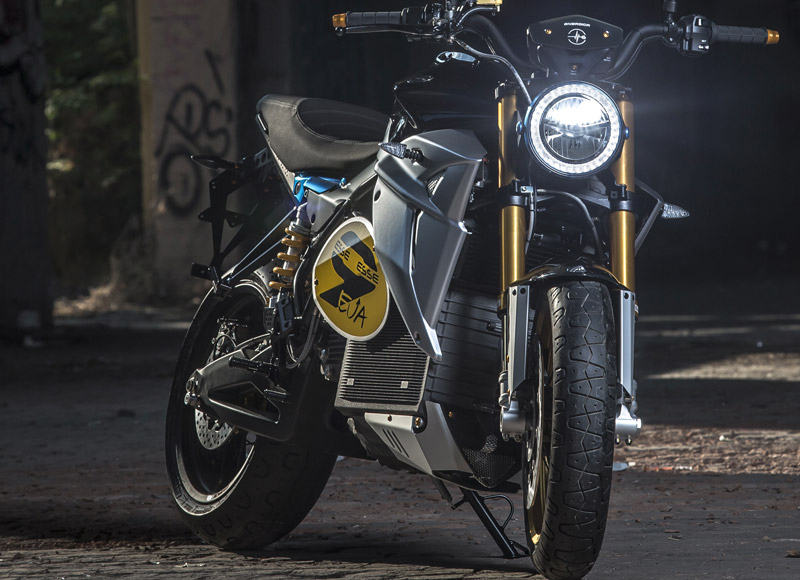
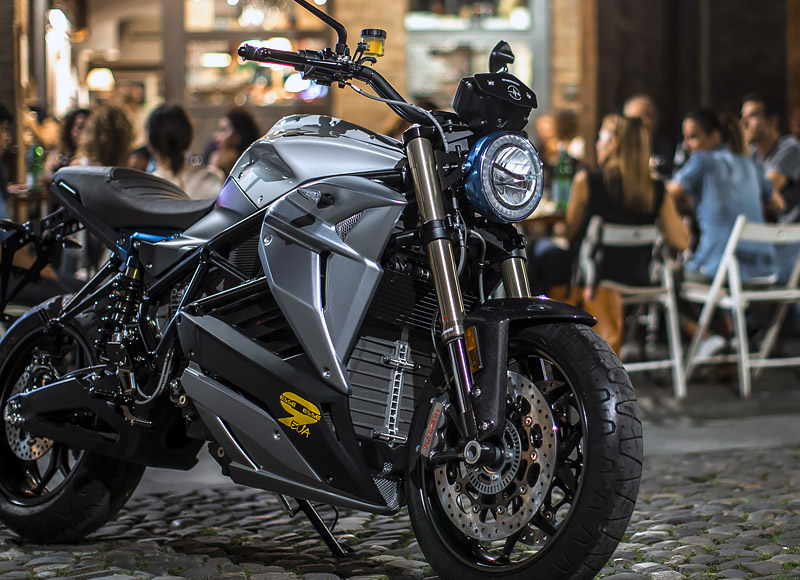
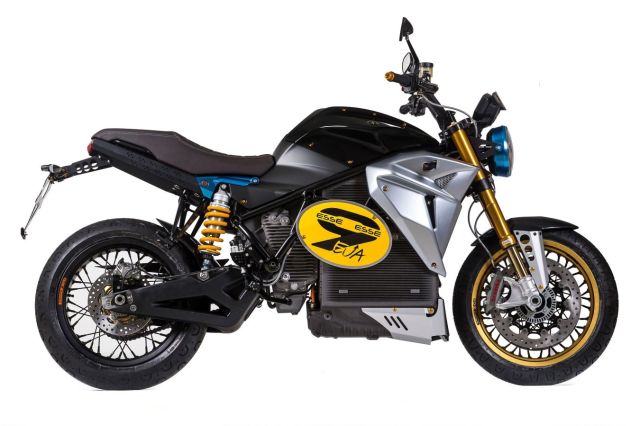
    They laid on a range of their electric motorcycles to try. I could go on all day about them all so, long story short, I’ll tell you about the top of the range, the Energica EVA EsseEsse9.

    It’s a naked bike, I guess like an Aprilia Tuono V4 1100 factory or Yamaha MT-10 SP. 

    As you can see, there’s no fairing, and you sit fairly upright. It’s all pretty typical. It looks slightly unconventional, with a battery pack and motor where the engine would usually sit, but other than that, it’s pretty familiar stuff.

    Energicas EVA EsseEsse9 makes 110 bhp which isn’t bad, however, it makes 180nm torque. An Aprilia Tuono V4 1100 factory, the benchmark naked bike, only makes 120nm torque. 

    Suspension is top of the line, quality stuff. Marzocchi 43 mm, fully adjustable for preload, compression and rebound damping.

    At the rear there’s a very nice Bitubo rear mono shock, also fully adjustable for preload, compression and rebound damping. It’s a quality setup and does a brilliant job.  

    Brakes are very impressive. Brembo front and rear with awesome feel and very strong.

    Front brakes are Brembo double floating 330mm discs with big 4 pistons radial callipers.

    The rear brake is a single 240mm disc with 2 piston calliper.

    Tyres are Pirelli Phantom which are a good all-rounder but I would consider something more performance-oriented personally. The front is pretty typical 120/70 ZR17 and the rear is 180/55 ZR17. 

    As is typical on top-end motorcycles, there are a host of electronics.

    Switchable Bosch ABS is standard and there are 4 Riding Modes: Eco, Urban, Rain, Sport.

    Energica, like some other electric motorcycles and cars, have regenerative braking. This generates electricity when you are on overrun or braking. It genuinely makes a difference too. I saw the battery % rise a couple of times! Regenerative braking is adjustable on this bike; 4 regenerative maps: Low, Medium, High, Off.

    Advanced traction control has six levels of intervention so you can dial it right back if you’re brave. Cruise control is standard too and uses the electronic brake to maintain speed and increase braking energy.

    A couple of the key differences between the Energica EVA EsseEsse9 on the competition are the oil cooled electric motor, meaning the motor temperature is controlled and there is less chance of thermal overload under heavy load. The controlled is water cooled for the same reason. 

    That’s all great but what’s it like to ride?

    Honestly, it’s amazing. 

    The cycle parts are all excellent. Brakes, suspension and steering are all superb. This bike corners hard and stops very well. 

    When you first pull off it’s pretty odd. More or less silent apart from some electric motor whine which is more pronounced on the Energica than on some other electric motorcycles. It has a chain drive too rather than the belt drive on most competitor bikes. I certainly feel safer with a chain taking 190Nm torque. 

    There are no gears and no clutch so you just twist and go…..and it really goes.

    Acceleration is breathtaking and relentless. 

    On the Energica EVA EsseEsse9, from the moment you twist the throttle, you have maximum torque. It’s the way electric motors deliver their power. 

    It means that every time you accelerate, you have an unrelenting, jaw-dropping acceleration. It just doesn’t stop. 

    Overtaking a car, for example, just wait for a gap, snap the throttle open and hold on’

    A conventional bike would have to change down a gear or two which takes precious seconds. In no time, the Energica is just a dot on the horizon. It’s like you’re always in the right gear at the right revs. 

    It accelerates as hard at 80 mph as it does at 40 mph too. It’s like nothing you’ve ever ridden. 

    It is absolutely brilliant and completely addictive. Accelerating out of corners, away from lights, in fact anywhere, it’s outrageous. I doubt many conventional bikes could live with it. 

    The two main criticisms of electric motorcycles are usually the lack of noise, and range/charging Infrastructure. 

    Noise is a double-edged sword. Anti-noise pollution legislation is becoming increasingly stringent, but it’s not an issue on an electric motorcycle. 

    Riding through a local village, I was completely unheard and didn’t interrupt anyone’s day. The same goes for track days; no issues with noise pollution if you’re on an electric bike.

    However, On a quiet country road, I passed some dog walkers and cyclists. Neither heard me coming until I was basically on them. 

    As for charging, the Energica with recharge from 0-85% in just 20 min with a level 3 34kW fast charger. Or you can charge 0-100% on a level 2 charger in 3.5hrs. 

    With a full charge, you can get around 70-120 miles, depending how you ride. Motorways on high load, higher speeds use more battery power and around town and on b road blasts, you get much more range.

    What about the cost? 

    It’s not cheap. You need to factor in that this is a very well built motorcycle with top quality components. You also need to remember you have very low running costs as there are hardly any moving parts, but most significantly, you don’t have to buy petrol ever again.

    The EsseEsse9 Standard is £20999 OTR* (*includes £1500 government subsidy)

    The EsseEsse9 Special is £21999 OTR* (*includes £1500 government subsidy) English Electric Motor Co have a demonstrator EsseEsse9 Standard for sale at the moment with only 960 miles on it for just £18990 (0% finance available)

    If this is the future then I can’t wait. It’s brilliant. 

    I would recommend anyone goes to their local dealer for a chat and a ride. In the UK give English Electric Motor Co a call. They’re awesome and really friendly. 

    English Electric Motor co

    Twitter; https://twitter.com/EngElecMotCo

    Instagram; https://www.instagram.com/englishelectricmotorco/

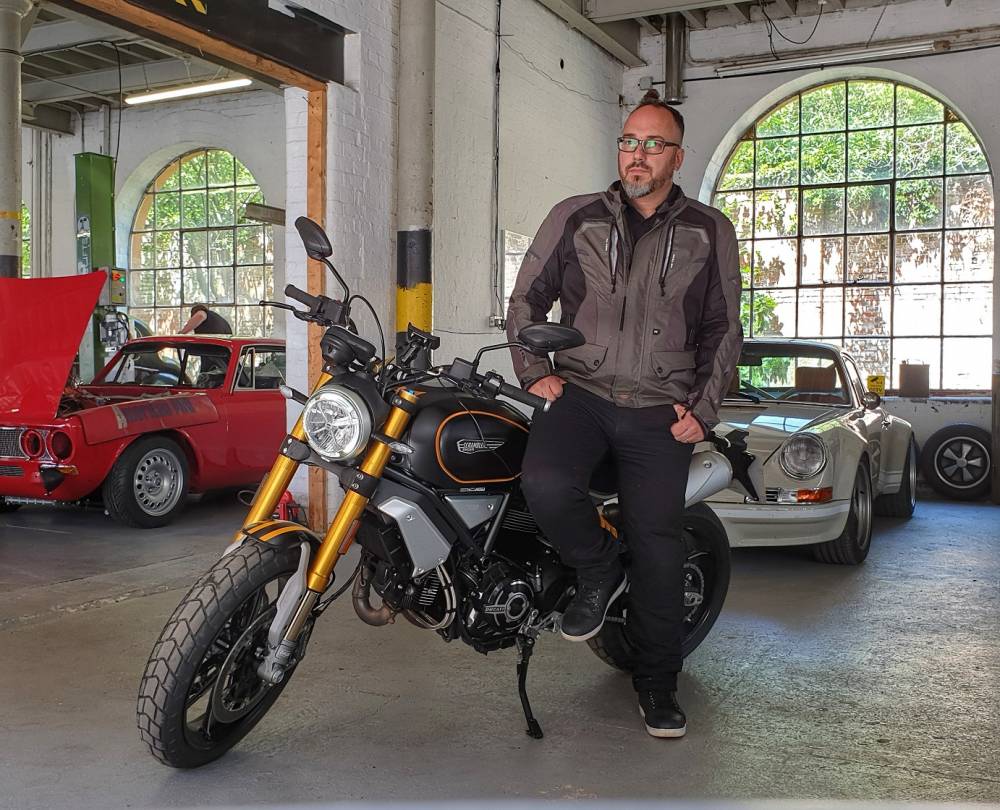
  • MOTORCYCLE REVIEW | Ducati 1100 Scrambler Sport

    MOTORCYCLE REVIEW | Ducati 1100 Scrambler Sport

    ★★★★★ | Ducati 1100 Scrambler Sport

    With the decline is sports bike sales, manufacturers have had to look elsewhere. They have had to find more creative ways to sell motorcycles and one of the ways has been to develop categories such as adventure and retro bikes. That’s brilliant for me, I love both.

    Ducati has arguably one of the most distinctive retro models on the market at the moment with the scrambler range of motorcycles. They have created a stylish, alluring range that is modern with a provenance that can be traced back to the Ducati Scramblers of the ’60s & ’70s, for many of us these were the bikes of our youth. It’s all in the genes.

    The Scrambler 1100 range consists of; standard 1100, the Special and the Sport. Our test bike was the sport which means it had fully-adjustable Öhlins suspension all ‘round, very sexy.

    Ducati has fitted fully adjustable 48mm USD forks at the front and a fully adjustable Öhlins unit at the rear. Both are superb and needed little or no adjustment apart from a sniff more preload at the rear as I am probably best described as ‘well built’.

    For the Sport, Weight is up very slightly from the standard bike’s 186kg to 189kg, probably due to the Öhlins suspension which is well worth it.

    Brakes are excellent, very progressive and incredibly capable. They lack a bit of initial bite but this is typical of modern bikes with ABS. Ducati has fitted twin 320mm discs with Brembo radial monobloc callipers at the front and a 245mm disc, with single-piston at the rear. As you would expect, cornering ABS is standard equipment.

    Styling is a real focus of this bike, we’ll come back to this point shortly. A steel teardrop fuel tank with interchangeable aluminium side panels dominates your view. It’s unique and looks great in my opinion. Wheels are machine-finished 10-spoke, flat-track style and really work for me.

    With the comfortable, flat seat, wide bars and retro styling, the Scrambler is gorgeous. It’s thoroughly modern but beautifully retro. Simply, the best of both worlds.

    I even found myself wearing different riding gear to suit the style of the bike. Tucano Urbano Sneaker Marty motorcycle boots, Richa Infinity 2 jacket and Richa black motorcycle jeans. This definitely suited the style of bike and riding and was really comfortable.

    Ducati has used the 1100cc (1,079 cc) air-cooled L-twin engine which has been around for a while now but is dripping with character and is a punchy engine.

    As is usual with modern motorcycles, there is a full suite of electronics to keep us safe. Traction Control, 3 Riding Modes (Active, Journey and City), Ducati Safety Pack (Cornering ABS + DTC- traction control), RbW (fly by wire throttle).

    I never changed the rider modes. It doesn’t make crazy power so I just left it in the top mode, Active.

    Off-road I think it might help to soften the power to gain traction. By the way, the underside of scrambler sport is completely unprotected, so if you do go off-road, be mindful.

    Power is a relatively modest 85bhp and 88Nm of torque. This coupled with the retro styling did concern me a little before I picked the bike up. I was worried it could be a little form over function. I didn’t need to bother, it’s a great bike.

    I’m not sure how Ducati have done it. Or even if it is intentional, but the Scrambler is dripping with character. In the morning, when you first fire it up, it has a reluctance that our bikes of old used to have. After a few moments it’s perfectly on song but, first thing, it’s like waking a grumpy teenager. This is not a complaint. In a world where everything works perfectly all the time, it’s a welcome characteristic and makes the bike feel alive.

    While we’re on the subject of character, Ducati has done a great job with the standard exhausts. They bark and pop and generally make a lovely noise. I don’t know how they have done it with ever-tightening legislation, but good for you Ducati.

    What’s it like to ride? It’s really good fun. The gearbox is excellent, with easy clutchless up changes through the ‘box. The suspension is very good and the bike loves to lean.

    Brake hard for a roundabout, pitch the bike on its side in 2nd gear and accelerate hard out again and you’ll be smiling from ear to ear. Leant over, under power, it’s very sure-footed, even on the Pirelli MT60RS semi knobbly tyres. The bike doesn’t move around or feel twitchy at all. This is a very friendly bike to ride at any speed.

    On a motorway, it’s fine up to the legal limit or a bit above. On a private road we got it up to 120mph but after about 90mph, with no wind protection, it gets a bit hard work.

    Where this bike comes alive is everywhere else! B-roads, A-roads, city centres, everywhere. It a hooligan but is made to make you smile.

    The throttle response is excellent and nicely progressive and the wide bars felt a little high at first, but after a few miles, you feel completely at home.

    One of the key features for me is that It’s very friendly. The Scrambler 1100 Sport doesn’t have massive power, but easily enough to have a lot of fun. It is great at low-speed manoeuvring, it’s comfortable, it’s a bit of a hooligan but completely predictable and it looks amazing. What’s not to like. This is a massive win in my book, I’m a big fan.

    Power: 85bhp@7500rpm
    Torque: 65ftlb@4750rpm
    Weight: 189kg (dry)
    Fuel capacity: 15 litres
    Front suspension: Öhlins 48mm USD fully adjustable forks
    Rear suspension: Öhlins fully adjustable single shock
    Engine: 1079cc air-cooled 4 valve L-twin
    Front brakes: 2x320mm discs, 4-piston Monobloc Brembo calliper with cornering ABS
    Rear brake: 245mm disc, single-piston calliper
    Seat height: 810mm
    Price: Scrambler range starts at £10,795

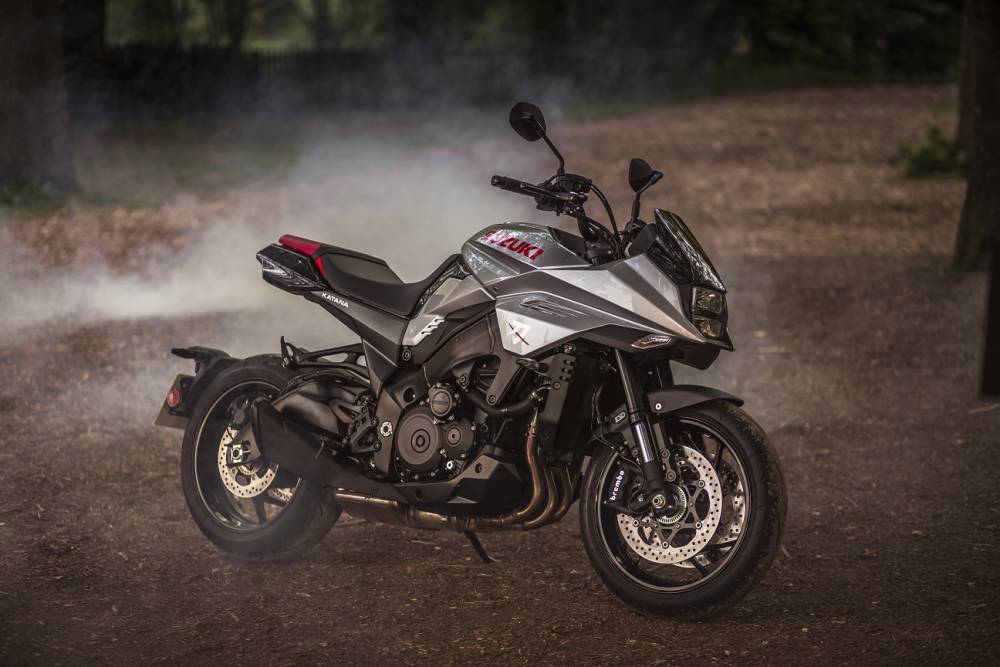
  • MOTORBIKE REVIEW | Suzuki Katana 2019

    MOTORBIKE REVIEW | Suzuki Katana 2019

    If you were around in the ’80’s you’ll remember that Rocky fought Ivan Drago in Russia and won the hearts of the Soviets, despite the cold war raging on around them. Doc brown made a time machine out of a Delorean, ET phoned home, the Russian nuclear plant Chernobyl blew up and so did a space shuttle, the world discovered crack but most significantly, Suzuki unveiled the fastest production motorcycle ever. The GSX1100S Katana.

    The Katana was a sign of virility and masculinity. You just couldn’t buy anything faster, end of.

    Katana has been around in various guises for a long time. Introduced in ‘80 in 1100 trim (Aircooled 1075cc 16v), (they had a 750cc version in Japan only), but was gone in Europe by ‘85.

    Fast forward to 2019 and the beast is back.

    Suzuki have resurrected the Katana name. In the same way the original Katana was based on the GSX1100, Suzuki have based the Katana on the GSX-S1000 a very competent bike in it’s own right.

    This means the Katana is powered by the street-tuned version of the four-stroke, liquid-cooled, DOHC, 999cc, inline-four engine that became a legend in the 2005 GSX-R1000. This engine is a masterpiece. 150ps (148bhp) and 108 Nm torque means this is a very strong engine, with a wealth of torque low down and a strong rush of power higher up the rev range.

    Suzuki’s new Katana is equipped with some of the most advanced rider technology available, including an Advanced Traction Control System², Low RPM Assist, Suzuki Easy Start System and Suzuki Clutch Assist System (SCAS) (slipper clutch) and ABS.

    Front brakes are superb 4 piston radial mount monobloc Brembo calipers, working on 310mm floating discs. Forks are 43mm KYB inverted and are fully adjustable for damping, rebound, compression and spring preload. Rear suspension has adjustable rebound damping and spring preload.

    We were fortunate enough to be invited along to the UK press launch of Katana.

    Unfortunately, the weather wasn’t kind to us, it poured with rain all day.

    After a short presentation and some breakfast, we were allocated our bike (mine was no.7) and set off in convoy.

    Our day was spent touring the cotswolds, getting to know the Katana on a variety of roads, with some cool people. The rain was relentless but didn’t dampen the mood. By lunch we were all soaked through. Even my boxers were wet.

    Arguably the rain was a good way to test the manners of the Katana. She’s a big bike with a lot of power, on wet roads. Katana’s engine and power delivery is sublime. Tiptoeing around, looking for trouble, the throttle response proved to be excellent. There was no snatchy, jerky throttle openings and the bike proved to be very user friendly. For the last half hour of the day, the rain stopped, the roads dried and the pace picked up.

    The Brembo brakes are excellent and the front end is very confidence inspiring. It turns quickly and is easy to throw around.

    The Katana is such a great package. It’s fast, very well balanced, well equipped, brakes are excellent, the engine is a masterpiece and those looks!

    Echoes of a legend, a reflection of a icon or maybe a tribute to an infamous motorcycle from bygone era. Whatever you call it, the 2019 Katana is unforgettable.

    The styling is as individual and as unique as you will find on a modern motorcycle. Everywhere you go, people stop and look. Some have no knowledge of the legend that is the Katana, they simply notice the futuristic looks. Some remember the original Katana and stand and stare as memories come flooding back.

    If you’re in the market for a naked retro that radiates charisma like no other, i strongly urge you to arrange a test ride at your local dealer. You won’t be disappointed.

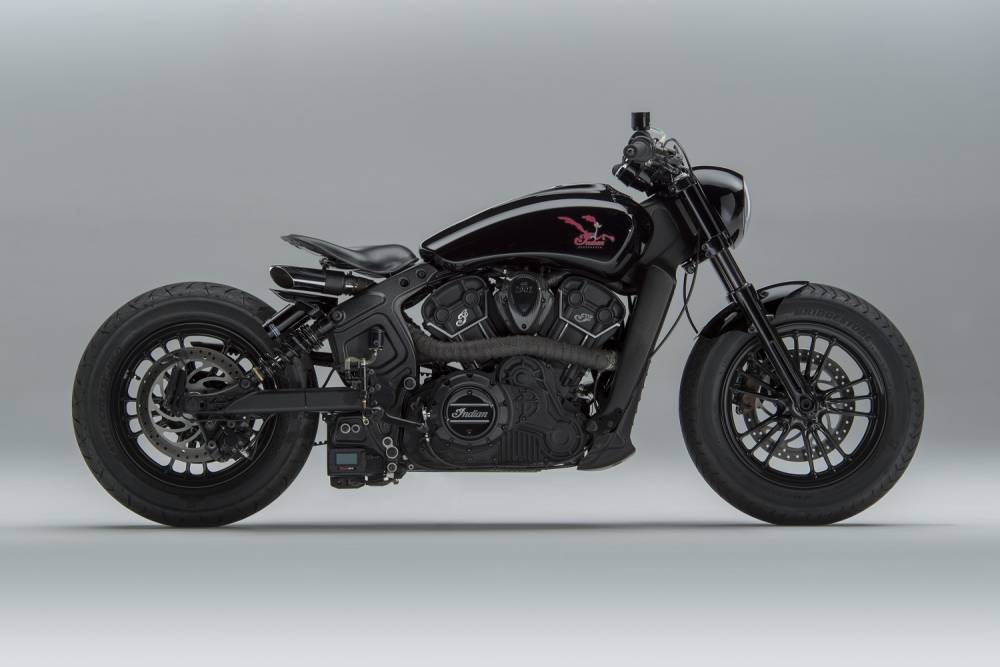
  • MOTORBIKE REVIEW | MotoShed’s ‘Road Runner’ Indian Scout Sixty

    MOTORBIKE REVIEW | MotoShed’s ‘Road Runner’ Indian Scout Sixty

    ★★★★★ | MotoShed’s ‘Road Runner’ Indian Scout Sixty

    MotoShed is a like-minded and free-spirited bunch of mates who have spent the last 20 years in various aspects of the motorcycle industry. Their experience is wide-ranging from bike building to race preparation, design, marketing and generally living and breathing motorcycles. They operate guerilla style, preferring to stay out of the spotlight. They don’t talk shit, they build cool bikes.

    Their list of badass builds is long and distinguished just like their client list, including some names you might recognise; Jonny Rea, Fogarty, Adam Ant and plenty more.

    Indian Motorcycles are America’s first motorcycle company, founded in 1901.

    In 2016 they launched the Scout Sixty. It was on that launch in Spain where a couple of the MotoShed team hatched their plan to build ‘Road Runner’.

    “The main thing I wanted to achieve was a more ‘sporty naked’ ride and I wanted to do under seat pipes, as nobody else had done it on a scout.”

    A few hours kicking ideas around about how you could modify one and the under seat exhaust idea was born. They ordered a Scout the next day.

    Standard Indian Scout Sixties ride very well. It’s a good looking, well-built bike out of the box, but Moto Shed could see there was potential for more, it just needed releasing.

    There’s a more aggressive riding position with heavily upgraded suspension in the form of fully adjustable HyperPro shocks at the back and rebuilt stiffer front forks with black nitride coating. The increased ground clearance, thanks to a stiffer suspension, allows more lean angle. All of this means dramatically increased cornering performance. To further enhance this, the standard foot controls have been switched out for a set of Rizoma rearsets mounted on custom plates and there’s a set of lower Renthal bars. The more aggressive riding position means you can ride the Moto Shed Road Runner harder and faster.

    What about the under seat exhaust?

    On modern bikes with their ever-increasing electronics, packaging is always an issue. There are a lot of important components hidden away under the seat, such as the battery, ECU and miles of wiring. It’s an impressive packaging job by Indian Motorcycles.

    In order to achieve a light-weight aesthetic, while retaining the factory look, the team had to get seriously creative, relocating the ABS pump, building a custom battery box for the smaller race-style battery, regulator, rectifier, ECU and extend the wiring loom to accommodate. Serious work, and all done to Incredibly high standard.

    Once the space under the seat had been created, the team set about fabricating the under seat exhaust.

    It really was the most complicated part of the build. Serious thought and skill was needed to route the pipes around the engine and through the new gap under the seat.

    Managing the heat was a big concern so the exhaust was wrapped to try to insulate the heat and protect the bike and rider. There’s also a rear hugger/heat shield to deflect the heat and keep the road dirt away from the exhausts.

    A Dynojet Power Vision CX system was incorporated to log data and help to perfectly re-map the ECU and fly-by-wire throttle. The guys say the fueling and throttle response is superb but man it’s loud.

    Road Runner is dripping in bespoke parts. For example, Chris Walton of CW Engineering hand made the headlight nacelle, front mudguard and rear hugger and Steve Adams, an ex-Aston Martin upholsterer, re-finished the 1920 Solo Saddle Seat and Illusion Race Paint did what they do best.

    A host of high-quality accessories and parts were chosen to compliment their work and enhance the performance and aesthetics of Road Runner. There are a black Galfer clutch lever, brake lever and master cylinder and a JB Speaker LED headlight. There’s even a unique carbon fibre water header tank, sourced from a renowned British Superbike team.

    The team invested over 100 hours of labour in the Road Runner build, not taking into account the many long nights of discussions, planning and head-scratching that lead to what you see here.

    If you fancy a Moto Shed bike in your life, they can be contacted on; build@motoshed.co.uk


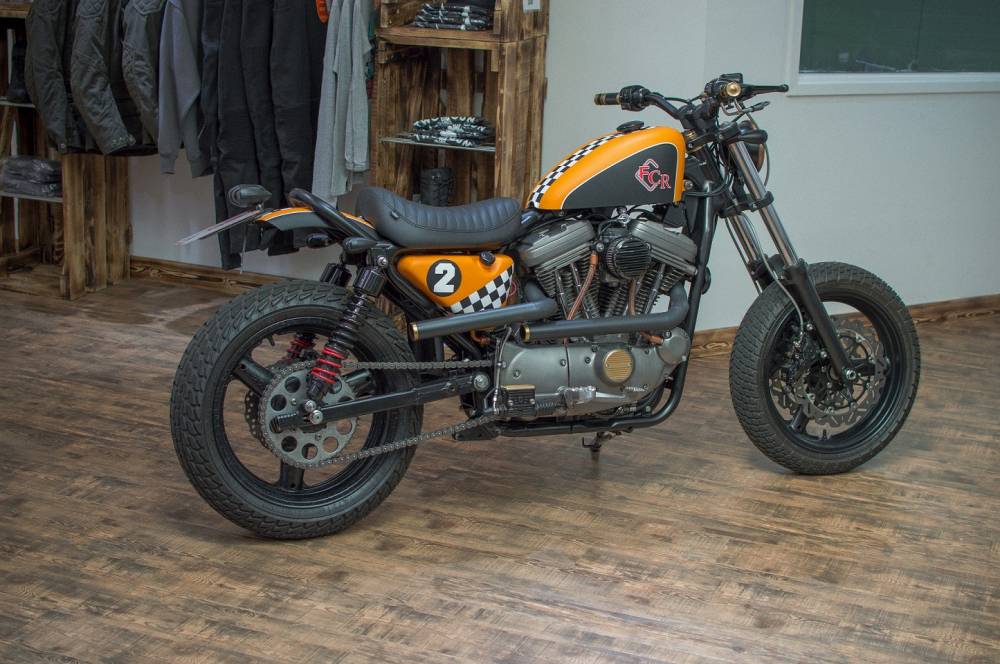
  • Jaw Dropping Harley Scrambler

    Jaw Dropping Harley Scrambler

    Fastec Racing, based in Newmarket, is an engineering company who manufacture custom parts for everyone from race teams to joe public. To promote their work (and because they live and breath bikes) they have built a string of show bikes. One of the latest is this disrespectful, insolent Harley Sportster Scrambler / Tracker. This bike reeks of attitude and bad manners but man, it looks like it’s fun.

    Originally an XL1200 Sportster, it’s been rebuilt, piece by piece from the ground up. The engine has had a complete nut and bolt rebuild including brand new pistons and barrels. Exhaust gasses exit fast and loud through some hand made stubby pipes

    One of the most impressive tricks up the sleeve of this mischievous Harley is the electrical system. The old Harley wiring was ripped out and replaced with a Motogadget M-unit blue. This is the heart of the entire onboard electrical system and controls everything from the ignition to the lights to the alarm and everything else electrical. The coolest thing about this system is the Bluetooth capability. All of these features and more can be controlled from an app on your phone. Remote start, engine diagnostics, positioning and a whole host of other stuff.

    The rear frame overhang on the standard Sportster has been cut off behind the upper shock mounts and an upswept rear hoop has been seamlessly grafted in, following the line of the fame, from swingarm pivot to upper rear shock mounts. An in house fabricated short rear mudguard and hand fabricated oil tank, ignition cover and custom made short seat gives the bike a tough, hard as nails look and those CNC’d footpegs have a steampunk kind of vibe.

    A Suzuki GSF 1200 Bandit rear wheel has been expertly squeezed into the rear with a Fastec brake calliper mount and spacers. Up front, there’s a Bandit 1200 front end; forks, wheel and brakes. That’s not as easy as it sounds. The bandit forks are beefier than the Harley forks and the spacing is wider to allow for the wider front wheel. To accomplish this, Fastec designed and manufactured a custom set of yokes to take the 43mm Bandit stanchions. The forks are held tight with one of their own Suzuki Bandit fork braces. Bars are mounted on custom risers with machined handlebar grips, all made in house.

    Why a Bandit front end on a Harley? The GSF Bandit is a great bike to modify and always has been. By grafting on a Bandit front end they get a twin disc front brake setup and a wider front wheel allowing for a much broader choice of rubber.

    Talking of rubber, this scrambler/tracker runs Heidenau K73 supermoto tyres to give that hardcore look and still offer plenty of grip, with 120/70-17 up front and 160/60-17 at the back.

    The icing on the cake is the paintwork, taken care of by Hilary at  Hurricane Airbrush Art.

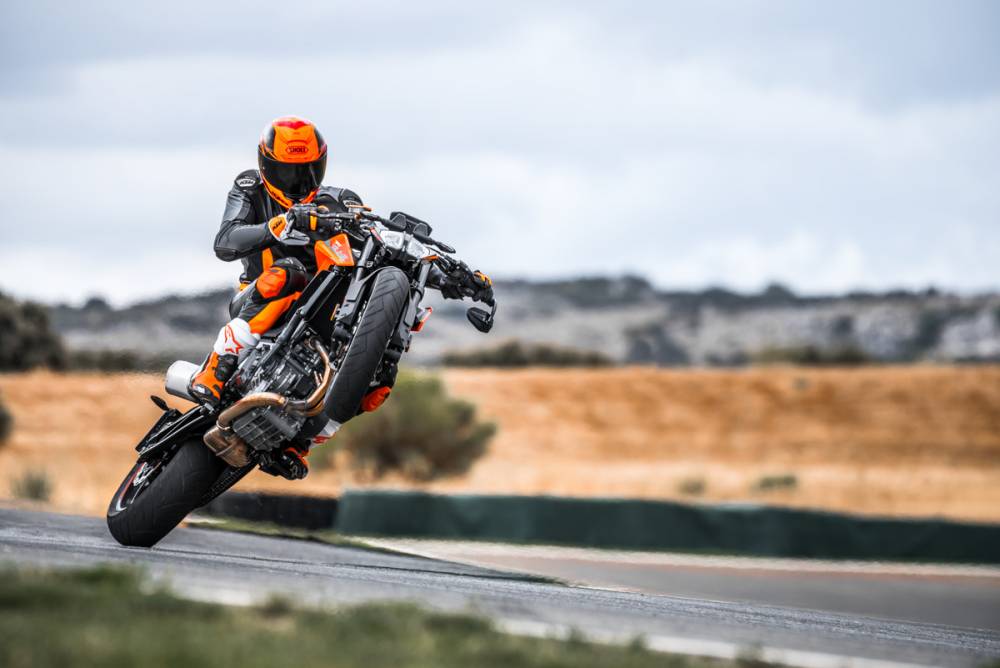
  • MOTORBIKE REVIEW | KTM 790 Duke – Ready to Race

    MOTORBIKE REVIEW | KTM 790 Duke – Ready to Race

    ★★★★★ | KTM 790 Duke

    What Have We Got

    KTM has a rich and successful motorcycle pedigree. Countless world championships across a wide range of disciplines from Motocross to Endurance to Moto3 and much more. They have become one of the most successful motorcycle brands in history. KTM has been one of the world’s fastest-growing motorcycle manufacturers for some time now. 2016 was the company’s sixth consecutive record year and in 2018, they unleashed this 790 Duke on the world.  

    Small, light and fast, the KTM 790 Duke is powered by the brand new LC8c parallel twin engine kicking out 105 hp.

    Riding

    When you first swing your leg over, the Duke feels small, like a 250, narrow and short. It’s purposeful and uncomplicated. Press the starter and it barks into life. The parallel twin sounds just like a V twin with a powerful and potent rumble.

    When you increase the pace, the 790 really starts to make sense.

    It’s great at commuting, it’s noisy, torquey and very easy to manoeuvre, making light work of slicing through town. As you leave the 30mph confines and the road starts to open up and the pace increases, the KTM loves it. The harder you push, the better it gets, It really is a little hooligan.

    It’s fitted with a quickshifter as standard so going up and down through the 6-speed box is effortless, helped by a slipper clutch (PASC™). I found a couple of false neutrals on the way up through the ‘box but put it down to the bike having been a press bike that’s probably seen it’s fair share of abuse.

    Details

    There’s a funky ultra lightweight chrome-molybdenum steel trellis frame with bolt-on aluminium rear subframe and very cool looking die-cast aluminium open lattice swingarm and at the sharp end, you’ll find 43mm upside-down WP suspension forks fitted with progressive springs.

    Outback is a WP suspension, gas-assisted, directly linked rear shock, also with progressive spring and 12-stage adjustable preload.

    Front brakes are KTM branded, radial 4-piston callipers with a radial front brake master cylinder working on twin 300 mm front brake discs. I thought the whole lot was excellent, needing little more than 2 fingers.

    KTM’s 790 Duke has ride mode technology with customizable track mode as standard. This wild child is among the best equipped bikes in this arena, with ride mode technology with customizable track mode as standard. It Boasts an array of tech usually seen on bikes costing twice as much; Cornering ABS including Supermoto mode (for backing it in), lean-angle sensitive motorcycle traction control (MTC), motor slip regulation (MSR), Quickshifter+, and even launch control work seamlessly to make this a very serious weapon.

    The compact and neat TFT dashboard works with KTM MY RIDE which is a smartphone app that is an awesome tool, click the link to see what it can do.


    Living with it

    KTM have fitted Maxxis Superamaxx ST tyres which on my test ride on dry, warm roads, were great. It had a brand new rear tyre so I took a few miles to wear it in but they felt very stable, loads of grip, easily able to get a knee down without feeling it was anywhere near the limit of grip.

    KTM says the goal with the 790 Duke was to create the ultimate street weapon. Ultimate is a big boast but it is really, really good.

    In my opinion, it was all the bike you’ll ever need. You can jump on it and pop to the shops or head off to a track day, it will easily do everything and do it bloody well.

    My one complaint was the complete lack of protection. It’s a naked bike so no fairing, not even a fly screen. The 790 is fast, so you’re at mad speeds most of the time. On dual carriageways and motorway, it’s tiring but, don’t go on them!

    The Verdict

    Brilliant, fast, light and more fun than any bike has a right to be. That’s how I’d sum the KTM 790 Duke. Accelerating hard, throwing gears at it with the quickshifter doing its job, cutting through the countryside at daft speeds. Looking for trouble, adrenaline pumping, the parallel twin barking and shouting “is that all you’ve got”.

    Riding the 790 Duke was a pure, visceral experience. I keep catching myself daydreaming about it now, imagining gunning it out of a corner or flicking from side to side through a roundabout.

    Loves

    1 Fast! It’s really fast

    2 Handling. It’s outrageous

    3 Quickshifter+

    Loathes

    1 No wind protection

    2 Heat, it got pretty hot

    3 Gearbox. I got a few false neutrals

    Lowdown

    BikeKTM 790 Duke
    Price – £8499
    MPG – 48 mpg
    0-62 – 3.1s
    Power – 105 bhp / 86 Nm torque
    Top Speed – 151 mph
    Co2 – 102.9 (g/km)

  • MOTORBIKE REVIEW | Suzuki V-Strom100XT

    MOTORBIKE REVIEW | Suzuki V-Strom100XT

    ★★★★★ | Suzuki V-Strom100XT, Jack of all trades

    What Have We Got?

    I would have loved to see the look on the old guy’s face, comfortably oblivious of his surroundings, safe in his generic eurobox, as we exited the roundabout side by side, me on the V-Strom, cranked over will a full set of luggage. ‘Round the outside, hard on the gas, then off into the distance.

    I’d like to think he would have turned to Dorris in the passenger seat and muttered, “I didn’t expect that.”

    Suzuki have been in the adventure bike game for a long time. The V-strom first landed on our shores in  2002 and this is the latest incarnation. It’s got a 1037cc 90 degree V twin kicks out 100 bhp and 101 Nm torque and is huge fun.


    Riding

    Well, I’m actually quite new to adventure bikes. These days, the roads are in a pretty shit state and I’m older, so I thought I’d give it a go. I wasn’t disappointed. The V-Strom100XT is a big beast but so are all adventure bikes in this class. Mine had optional (and expensive) luggage too so I was a bit tentative filtering through traffic.

    It’s big, very comfortable, punchy and great fun, way more fun that I expected. It turns well, handles nicely and I’d go as far as to say pretty sporty on the road. Something I particularly liked was the ability to be fast over any road surface. A few times I was riding with other guys on sports bikes on the back roads and they just couldn’t live with the Strom. It’s plush, forgiving suspension just dances over the rough, potholed roads, still giving good feedback and confidence, no doubt helped by the electronics. The guys on their sports bikes were shaken to pieces.

    Details
    Stopping the V-Strom is easy thanks to radial mounted four-piston monobloc Tokico brake callipers biting on to twin 310mm diameter discs on the front, and a 260mm diameter single disc with a single piston calliper on the rear.

    The Bosch ABS system has what Suzuki call “Motion Track Brake System¹” which uses a 5-Axis Inertial Measurement Unit (IMU), which measures lean angle and front and rear wheel speeds and provides optimal ABS braking for the situation. Very clever.

    There’s also 2 mode traction control.

    1 is the lowest level of intervention, allowing sporty riding. It allows an amount of wheel spin so you can have fun.

    2 is normal which eliminates wheel spin to ensure a safe ride. Great for riding in the wet.

    You can, of course, turn it off if you want, if you were heading off road for example.

    Living with it

    Suzuki’s V-Strom1000XT is an awesome bike. It did everything we asked it to without breaking into a sweat. We even took a V-Strom on track, hooning it around Bruntingthorpe. Admittedly it’s not the obvious choice as a track slag but it was surprisingly good. It moves around a little when you really push on and the pegs tend to go down, but it’s very good and very funny to see other people’s reactions. It doesn’t do anything stupid, it’ll hold a decent line and doesn’t sit up on the brakes in the corners. It’s a very civilised way to do a track day.

    The Verdict

    Why a V-Strom? The adventure bike sector is crammed with bikes. Everyone seems to do one or even several. BMW is the obvious choice and arguably, you can say they started it all.

    Yamaha, Triumph, Honda, KTM, Ducati and more all play in this playground.

    The V-Strom sits in between most of these interestingly. Generally, adventure bikes are around 1200cc or 800cc (ish). Suzuki’s V-Strom1000 sits in the middle. At 232kg It’s lighter than pretty much all of the competition, even the smallest capacity bikes like the Triumph Tiger 800.

    It’s obviously down on power on the big capacity competition but at £9,999 it’s very well priced.

    A BMW R1200GS, for example, starts at £12,400 and a Honda Africa twin starts at £11,575.


    Loves
    1 Comfort, you can ride for hours
    2 Great handling
    3 Torquey V-twin engine

    Loathes
    1 Optional luggage was odd shaped & pretty small
    2 Vibey at low revs
    3 Dashboard is pretty busy

    Lowdown
    Motorcycle – Suzuki V-Strom1000XT
    Price – £9.999
    MPG – 58.85mpg (manufacturer claimed. We only got around 40 mpg)
    0-62 – 3.1s
    Power – 100 bhp / 101 Nm torque
    Top Speed – 126 mph
    Co2 – 112 (g/km)

  • MOTORBIKE REVIEW | Suzuki V-Strom 250 ABS

    MOTORBIKE REVIEW | Suzuki V-Strom 250 ABS

    ★★★★★ | Suzuki V-Strom 250 ABS

    The bike

    The bike we have here is a Suzuki V-Strom 250 which falls perfectly into the A2 licence* class. It’s an adventure bike, with longer travel suspension, upright seating position. Think of it like an SUV. Looks good, rugged, can handle all sorts from off road to motorways so it’s perfect for our crappy roads. It has a 248cc parallel-twin engine and is more road-focussed that off road. 248cc, 25bhp and 23.4 Nm torque doesn’t sound like much, but it’s enough to have fun and do whatever you need to do.

    Riding

    It’s not particularly fast with a top speed of 85 mph which means those faster overtakes need a little planning. With such modest power and a fun chassis, it does mean you can exploit the V-Strom pretty much everywhere without constantly looking over your shoulder for blue lights. You won’t believe how easy the little V-Strom is to ride.

    Bars are fairly high and the seat is soft and comfortable, prompting you to sit up straight in a typical adventure bike style.

    It’s big enough to have some road presence and small enough to filter through traffic and it does it all on a thimble full of fuel. This little adventure bike does a staggering 88 mpg which means over 310 miles on a single tank.

    Details

    There’s a 12V DC power outlet for your sat nav or your phone, a very neat reverse-lit full-LCD instrument panel showing; Speedometer, tachometer, odometer, average fuel consumption, fuel gauge, RPM, service indicator, clock, dual trip meters, gear position, coolant temperature and oil pressure. It sounds like a lot of information but it’s very easy to read. There’s a very handy screen in front of you to protect you from the wind too.
    The brakes offer good feel and work well and Bosch ABS is standard. It’s rugged and handsome and doesn’t look like a beginner bike.

    Living with it

    On the road, the bike rides very nicely. The V-Strom turns well and is fun. It’s a very friendly package, helping you to feel safe and confident. If you’re new to bikes or returning, this is a great way to build your confidence. It’s very easy to manoeuvre with good steering lock which makes urban riding simple.  

    Despite its adventure bike looks, it’s a pussycat. With a low seat height, it’s a piece of cake to ride. The upright riding position is very comfortable but it isn’t fast.

    The Verdict

    If you are a new rider or returning to two wheels after a break the V-Strom 250 is great. It looks good, it’s easy to ride, it’s economical and won’t break the bank. It’s not fast so is ideally suited to urban riding and not really ideal for motorway miles.

    There are many benefits to riding a motorcycle. it’s fun, It’s practical and in these times of ever-increasing congestion on our roads, a bike offers a fantastic alternative to sitting in queues of traffic hour after hour. It’s greener too!

    Loves

    Easy to ride & fun

    Uses hardly any fuel

    Rugged, handsome styling

    Loathes

    Not very fast

    A little buzzy when you rev it hard

    Exhaust is quiet

    Lowdown

    Motorcycle –  Suzuki V-Strom 250

    Price – £4.599
    MPG – 88.28 mpg (combined)

    0-62 – 9.3 seconds

    Power – 25bhp and 23.4 Nm torque

    Top Speed – 85 mph
    Co2 – 72 (g/km)

    *if you are over 19 with a full car licence, you can take your CBT (basic test), take your theory test and your practical test (just like a car), then you can ride any bike up to 35kw (47bhp). That’s called an A2 licence.

    https://assets.publishing.service.gov.uk/government/uploads/system/uploads/attachment_data/file/568266/routes-to-your-motorcycle-licence.pdf