
Judy Shepard is an extraordinary woman. In 1998 her eldest son Matthew a 21-year-old student at the University of Wyoming was tied to a fence outside of the town of Laramie, beaten mercilessly and left to die.
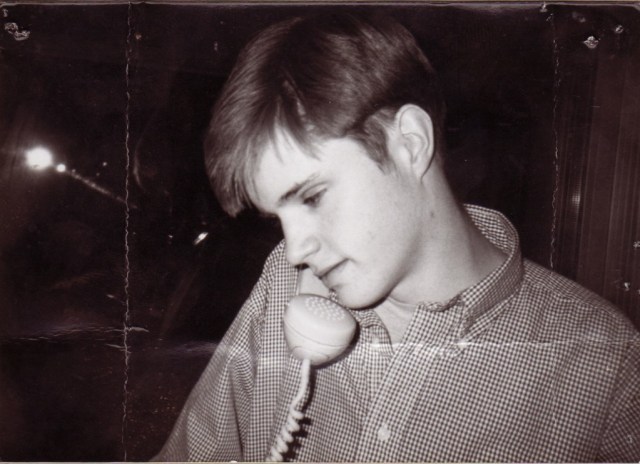
This particular pernicious hate-crime caught the public’s attention, and news of his death provoked outrage from Wyoming to The White House. It also caused an international sea of sympathy for Dennis and Judy his typical American parents who were thrust into the glare of the world’s media when all they wanted to do was grieve in private. At the subsequent trial when two local youths were found guilty of Matthew’s murder a stoic Dennis supported by his wife, pleaded that his son’s killers should not be given the death penalty.
This was just an inkling of what was to follow when the Shepard Family created The Matthew Shepard Foundation. The aim was to honour Matthew in a manner that was appropriate to his dreams, beliefs, and aspirations, and the Foundation seeks to “Replace Hate with Understanding, Compassion, & Acceptance” through its varied educational, outreach and advocacy programs and by continuing to tell Matthew’s story.
The Foundation transformed this introverted housewife into a powerhouse who trotted around the world promoting tolerance and diversity whilst helping to spearhead a major piece of Legislation to help eradicate hate-crime. Feted by politicians and celebrities alike, she has swapped her kitchen in Casper Wyoming for the stages in Universities and Conference Centers imploring anyone and everyone to help the Foundation bring about more change.
Where others would have withdrawn from life after having to deal with such tragedy, Judy and Dennis instead chose to turn their personal loss into a remarkable force of good that would help insure that other parents and other children would not have to face the same fate as they did with Matthew.
Last year Roger Walker-Dack interviewed Judy Shepard to talk about Matthew’s legacy and her hopes for the future.
RWD: So much has changed in the LGBT landscape since Matthew’s passing. Is it enough, or is there still more to do?
JS: There is a lot more to do. In the US we are making inroads legally and legislatively but there are still so many hearts and minds that need to change. We have achieved about 50% of where we need to be on same-sex marriage, but even on that we have a long way to go. Maybe when another younger generation grows up and is empowered to vote and be active in the community, then things will change much more rapidly than they do now. But certainly compared to other civil and equal rights issues we are on the right path especially as we now have the support of more leading politicians and people with influence than those who are lined up against us.
RWD: You were very involved with the passing of the Matthew Shepard Hate Crimes Act in the US Congress. What did you hope it would change and is it achieving it?
It’s important to know that it’s called the Prevention of Hate Crimes Act and although I disagreed with Senator Ted Kennedy and Senator Gordon Smith the Bill’s Sponsors on the exact title, I went along with it anyway. To me the most important thing that the Act was going to do was to send a message to the rest of the country that the gay community was indeed a select group of people where hate crimes were being concentrated.
We need a way to record it and a way to prosecute it if local authorities could not afford to do, or were unwilling to do it. So in that sense, it really is working.
There were people who were against it claiming that it was against God’s will, but I think its existence has done a lot to help create a different and better environment. It’s helped make more public awareness that the LGTBQ community were the victims of these crimes and needed to be protected.
Michele Josue’s superb new documentary Matt Shepard Is A Friend of Mine mentioned that there were 33 hate crimes that ended in fatalities the same year as Mathew was killed.
Let me clarify that. There were 33 REPORTED cases. Many of these hate crimes are never ever recorded simply because they are against gay people. To this day, we will never ever know a true count of the victims, but we are sadly convinced it is a lot more than any official statistics.

Have matters improved since the Act was passed?
One of the problems that our Foundation is tackling right now is that reporting of these crimes is voluntary. So not every community is eager to participate, and not every victim is willing to come forward especially in vast sections of our country where you can still be fired from your job for just being gay. For these victims, the fear of being ‘outed’ in their own community far outweighs the physical and verbal abuse they have suffered.
We know that it is vastly underreported. But the Act has nevertheless made a difference and in the way that we wanted it to. It expanded the parameters as what was defined as a ‘crime’ and it also made it easier in many parts of the country for people to be able to come forward and be treated with respect and dignity.
I was shocked when I read in the 2013 Stonewall Report into Hate Crimes in the UK that the bulk of the perpetrators are under 25 years of age. Does this surprise you?
Sadly no. It is a phenomena of this country too, and it seems like a sort a rite of passage in some ways to commit such an act of violence. The crime rate amongst young people in this country is more prevalent when they’re dealing with internal struggles of whom they want to be, and are having a need to prove themselves to others. We also find that some young gay people who are troubled about being victims also become extremely violent and anti-gay to detract attention away from themselves. I am greatly saddened by this situation, but not shocked at all.
How can we as parents and peers help young people come out as gay and not be afraid?
We have to create an environment in everybody’s community, schools etc that says we respect them no matter what as human beings. Gay or straight. We must tell them that we care most about the fact that they are all equal citizens.
We must let them know that we will be there for them, for talking, for listening, for welcoming, and especially for not making them feel different from any of us. This is the very last thing that most young people want to be made to feel because to them ‘different’ can so often mean ‘wrong’. They want most of all to blend in, and we should be there to help them to do this. The message must be that this is how it is, and that it is really fine to be who you are. I know we all still have a long way to go to create such an environment, that’s for sure.
The matthewsplace.com website is a great resource centre for LGBTQ youth for LGBTQ youth, can you tell us more about that?
When we started the Foundation years ago I was searching the internet which was still fairly new then, and I found that there was nowhere to get any information to help gay youth deal with any of the issues they were confronting, nationwide or even in their own backyard. So I started to find out what community centres existed and in what cities, and particularly looked for ‘safe places’ for young people to go, and it all simply grew from there. We have now developed resources where we can continually track all the places to ensure that they still exist, and can really help, and are still ‘safe’.
This then all morphed into this something much larger when so many talented writers and kids with information started to just write in and leave comments on the site. We decided that they should all be encouraged and added to the website and given their own special place, and so we started the Blog. It has covered the whole gamut from asexuality to transitioning to health issues, how to help your friends come out, help for parents etc. Matthews Place is a fantastic site, which is helping so many young people who visit and participate.
However one of the problems we have run into is that some schools have actually blocked access to pro-gay websites even though they don’t block access to anti-gay websites. So to counter-balance this we spend a lot of time trying to ensure that all our information is available on public computers, which is no easy task.
We are US based but we get an awful lot of international visitors to our website as what we deal with is really a universal situation and a vast majority of our information can help young gay people wherever they are in the world.
Wyoming Location Where Gay University Of Wyoming Student Mathew Shepard’s Body
http://gty.im/1547028
Dennis and Judy Shepard address the media at a press conference to highlight the need to pass the Hate Crimes bill outside the Capitol building in Washington, DC November 8, 1999.
The stage play The Laramie Project by Moses Kaufman went into great detail on both Matthew’s attack and the way it affected the whole local town is continually being performed, does that upset you in any way?
No, it’s one of the few things that the Foundation officially endorses, and we actually do a lot of work helping companies mount their productions. This wonderful play has such a universal message that’ starts with hate but ends with acceptance. When you watch all those characters on that stage you realize it’s a microcosm of every community in the world. It covers all kinds of issues besides about being Gay, and it’s not just about what happened to Matt either. It’s about the aftermath. I love that they still do it, and I love the fact that it is one of the most performed plays in the US today.
What do you think that Matthew would be doing if he were here today?
I think he would be doing exactly what I am doing now in some form. Even when he was little he was always concerned about the other boys being bullied in the playground, and would come to their aid. He wanted to do something to help other people on a national level years ago, so in a way I am filling in for him.
After watching this new documentary I am even more convinced that your actions and work over these past 16 years are a reflection of Matthew’s spirit.
I am an introvert off the scale so for me to go on a public stage to speak on these issues, would have been the very last thing, I would have normally chosen to do but I feel Matt’s presence with me.
US President Barack Obama applauds the sisters of James Byrd, Jr., Betty Byrd Boatner (2nd R) and Louvon Harris (2nd L), and the parents of Matthew Shepard, Judy Shepard (C) and Dennis Shepard (L) after Obama spoke in honor of the enactment of the Matthew Shepard and James Byrd, Jr., Hate Crimes Prevention Act during a reception in the East Room of the White House in Washington, DC, October 28, 2009. In 1998, when he was a college student in Wyoming, Shepard was murdered because he was gay. Byrd, an African American man, was dragged behind a pickup truck to his death in Texas the same year.
Does it upset you to be continually expected to talk about Matthew?
No, his spirit is with me, and there was so much more to Matt than the way he died.
What are your hopes for the Matthew Shepard Foundation in the future?
In a perfect world , would hope there would be no need for it as everything should be the way it should be: normal and accepting. Where nobody really cares if you are gay, straight or whatever. However I’m not sure if that will ever really happen. I would like the Foundation to be a perpetuating presence: that it would always be there, but as an information provider not lobbying for legislation or fighting injustice or any of those things.
Asides from the Matthew Shepard Hate Crimes Act, what is the legacy that you would like to leave on behalf of all the Shepards?
I think the passing of the Employment Non-Discrimination Act (ENDA) is the most important thing that is still not done. Same-sex marriage will continually follow its natural course, as people accept that it is unconstitutional to ban it and it is just so wrong. Job discrimination is also wrong but it’s a much harder struggle trying to convince people that you should not fire someone for their sexual orientation or their gender identity. It seems to be something that people, especially the older generation in power just don’t want to talk about or deal with the issue
When I started all this work there was a ‘plan’. We would tackle hate crimes first then ENDA, then same-sex marriage last, but somehow marriage jumped the line and everyone forgot about ENDA. As a community, we focused all our efforts recently on marriage and none on job security at all, which I think is wrong. And I also find it rather ironic that the only jobs that are safe in this country now are in the Military.
Matthew had a happy experience when he came ‘out’ to you and Dennis, as you were both supportive. Can you share with us your thoughts, on the whole, coming out experience?
Every one feels so alone if no one is telling their story and that can lead to so many negative things like depression and enforced solitude. People should just be who they are and let everybody see this, including family and friends that support them. Its critical that everyone knows that this is not some one-off freak of nature thing but something that is perfectly natural.
If Matt had not trusted and believed in us to tell us, I would not have survived finding out in the hospital after the attack.
It would be great if we didn’t have to have the whole coming out process right? But we do and there is still so much negativity and mythology surrounding being gay. If only everybody understood that their doctor, their minister, or their teacher happens to be gay and it really makes no difference what so ever.
So I entreat everyone to take this step, take this leap of faith and I think they will find more support than they think.
You took your own great leap of faith after Matthew died starting The Foundation, which can never replace him but seems to bring you a sense of satisfaction and fulfilment…
Doing this work and creating the Foundation with Dennis has been my survival. If I hadn’t taken this issue on, and tried to make a difference, I really don’t know what I would have done. I certainly never thought when we started it that 16 years later we would still be doing it. I thought it would be one or maybe two years and then Matt’s story would just fade into history. The more I find out, the more I am encouraged that things are changing and are getting better. Yes, it gives me a sense of joy that things are really happening and we can make a difference.
http://www.matthewshepard.org/
http://www.matthewsplace.com/
http://mattshepardisafriendofmine.com/
by Roger Walker-Dack
This interview was taken from a previous issue of THEGAYUK Magazine. Please subscribe today and support us