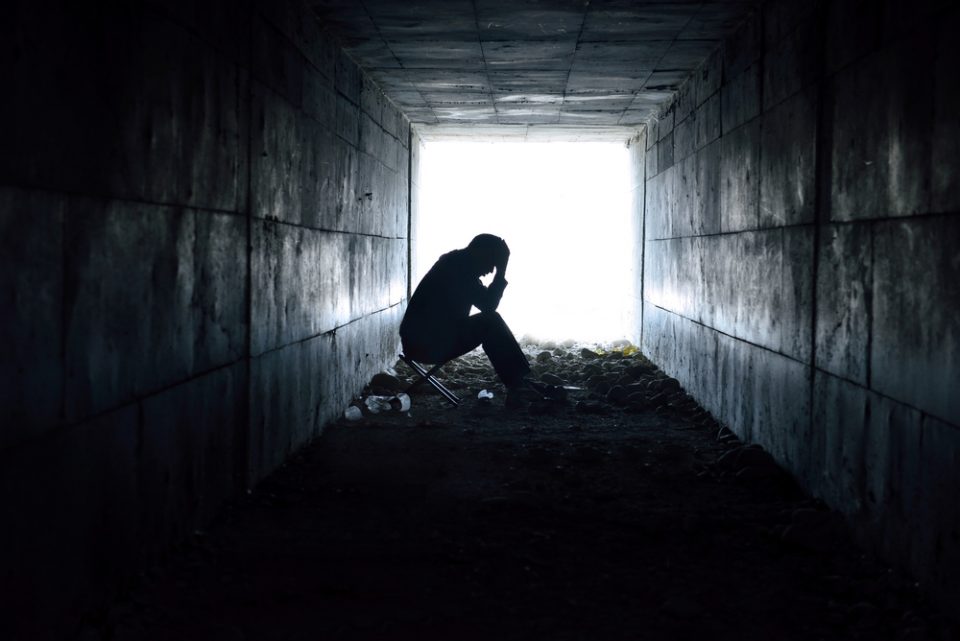
Rape is a most detestable crime.
It is a crime that involves sex but also violence, deceit, power and in some instances romance. As a society, we have come to the (unfounded) conclusion that rape is a violent affair, committed by a stranger in a dark alley at midnight and victims are always women. How wrong we are.
Historically, there has been little consideration of men as victims of rape. The law only recognised non-consensual penetration of the anus as rape in 2003 under the Sexual Offences Act. But male rape in the twenty-first century is, more than ever, a social issue.
According to the most recent government statistics, The British Crime Survey (2013) found that out of 473,000 victims of sexual assault, 72,000 are male. Narrow this to rape and it is estimated that 78,000 people in the UK are victims of rape, of which 9,000 are believed to be men. For those who like statistics, male rape accounts for almost twelve per cent of the estimated national total; a figure that cannot be ignored.
Whilst this is a serious social issue, you wonder why a gay lifestyle magazine is raising the subject. The reason is that current law is gender specific, meaning only men can be perpetrators of rape, not women. In other words, men are raping 9,000 other men a year. Gay rape exists and we need to talk about it.
The most basic definition of rape is sexual intercourse without consent. The issue with this is that there exists no clear definition of what consent means and it presupposes that both parties define consent in the same way. As a result, victims often don’t understand that they have been abused.
When violence is involved, it is easier to identify a lack of consent because there would often be evidence of resistance. Although it is no longer necessary to show that force was used to prove that sex was non-consensual, it remains difficult for most to understand this and a gap is created between principle and practice. In principle, any submission to non-consensual sex is rape. Yet those who are subject of rape will often fail to recognise this and would not consider themselves victims.
It is alarming to discover that the real rape stereotype, mentioned above, is so wrong. In most instances the victim is raped by someone known to him and this is known as acquaintance rape; often this involves some form of deceit, intoxication and also romance. Note that violence is very rare in this scenario and it distinguishes between force and unwanted sex. It is important for us as a community to recognise this distinction and recognise the later as the most prevalent form of gay rape.
In large, social attitudes are to blame for us not recognising rape when it happens. But another hurdle for male rape victims is the police. Since the legal identification of male rape, there has been an increase on police reporting every year. However, these figures are an underestimation of the true reflection of male rape due to the reluctance many have to report their experience. The statistics in this instance are merely the tip of the iceberg.
Recent reports* have suggested that police officers responsibility and care for victims of male rape is very poor. Treatment provided is completely insufficient because there is a lack of training, awareness and understanding. Compare this to the extensive training and recent reform gone in to female rape and it may appear somewhat homophobic, that the police consider male rape as a less serious issue. All this adds to the reluctance victims have to report their rape to the police.
As a result of poor education, police often challenge male rape victims’ sexuality and masculinity. In instances of acquaintance rape (which we know is the most common form) police tend to view victims as somewhat culpable for their rape because they failed to fight off their attacker. Consequentially, the police are far more likely to blame homosexual male rape victims than heterosexual male rape victims for their rape. This would suggest that the police consider sexual violence less distressing for homosexual men and are more likely to view the rape as consensual sex.
Despite all this, if a rape victim manages to be taken serious and the case was to proceed to trial, the victim has to endure the gruelling process of cross-examination. As questions surrounding the male rape victim’s sexual history with the alleged perpetrator are allowed at trial, it can be argued that if consensual homosexual sec took place previously, it was also consensual sex at the time in question. In addition to this, the victims’ physical response can be used to discredit the male rape victim. For example, if the victim were to have an erection and ejaculate, despite this being an involuntary reaction. Yet this involuntary body response is used as to argue that the male rape victim consent to the sexual activity.
It is evident that there is a lack of understanding to manage male rape victims because there is a lack of understanding and knowledge of male rape. This is amplified by the continuing presence of rape myths and stereotyping certain (homosexual) victims of male rape. The only way to counter this is to demand attention and to discuss the issue, amongst ourselves, with the police and if be it in court.
* Javaid, A. (2014) Male Rape: The Unseen World of Male Rape. Internet Journal of Criminlogy, ISSN 2045 6743
Khan, N. A. (2008) Male Rape: The Emergence of a Social and Legal Issue. Great Britain: Palgrave Macmillan.
Rumney, P. (2008) ‘Policing male rape and sexual assault.’ Journal of Criminal Law, 72 (1), pp. 67-86.
by Joshua Vaughan | @Joshua_Le_Von
If you need to report a sexual assault or need to talk to somebody about issues raised in this article please contact the Victims Support Helpline on 08 08 16 89 111
Opinions expressed in this article may not reflect those of THEGAYUK, its management or editorial teams. If you’d like to comment or write a comment, opinion or blog piece, please click here.