Day: 20 September 2017

  • DVD REVIEW | North Sea Texas

    ★★★★ | North Sea Texas

    Pim is a young boy from a small Belgian coastal town who lives a dreary existence with his mother, Yvette, who is a boozy accordion player.

    Pim dreams of beauty pageants, princesses and Gino, the handsome boy next door to escape life with his blowsy neglectful mother. As Pim moves into his teenage years, his life takes on unexpected turns as he becomes more deeply involved with Gino and his family and a hot and hunky young traveller called Zoltan arrives back on the scene.

    Cult short filmmaker Bavo Defume has made a film which is inspired more by beauty than by social realism. The intention was to make a film which depicts more than the sometimes grey and gritty world we can inhabit. The film is set in an unspecified time period with classic retro patterns and furniture and luscious coastal landscapes.

    Although the world that the characters inhabit is sometimes stylised, the acting is natural and convincing. The result is a film which is both moving and beautiful to watch. It also holds the viewer’s interest through the drama played out so convincingly between the young actors. Coming of age dramas don’t get much more luscious, stylish and watchable than this.

    BUY FROM Amazon  | iTunes

    Originally released: 2012

  • Homophobic bullying doubles in Manchester schools in two years

    There has been a shocking surge in homophobic bullying in Manchester’s secondary schools.

    Homophobic bullying doubles in Manchester schools in two years

    A report released by Liberal Democrat, John Leech shows a shocking increase in homophobic and transphobic bullying in Manchester’s high schools. Nearly 700 incidents were recorded in the last six years. John Leech called the increase “upsetting”.

    The report also highlights that there were just 8 reports of homophobic bullying in 2010/11 to 160 in 2015/16.

    The former Manchester MP of ten years submitted a Freedom of Information (FOI) enquiry to every high school in the city and has said it is “depressingly clear” that homophobic and transphobic bullying is here to stay.

    Of the 42 high schools in Manchester, 36 responded to the legal request. Mr Leech also raised concerns at the number of schools who had reported zero incidents in the last five years, saying that schools may be too worried to come forward with the real numbers.

    Of the 25 schools that did respond, a worrying trend showed incidents doubling in the last two years, from 76 in 2012-13 to a staggering 160 in 2015-16.

    Reports of bullying ranged from name-calling to physical assault.

    John Leech, who led the successful campaign to pardon war hero Alan Turing, said: “Bullying of any kind is completely unacceptable but to still have homophobia and transphobia rife in Manchester’s schools is deplorable.

    “I have fought for LGBTQ+ rights my whole life and these numbers are really, really upsetting to see.”

    Leech designed the Bill and led the campaign to pardon Alan Turing, whom he said was a “hero”, and whose conviction for homosexuality he slammed as “utterly disgusting and ultimately just embarrassing”. He went on to secure the pardon for the 50,000+ other men convicted of similar offences and led the campaign to outlaw homophobic chanting at football matches.

    Now Mr Leech has turned his attention to what appears to be a concerning spike and consistent rise in teenage bullying. In 2010-11 there were just 8 reports but continued to rise steadily to 160 in 2015-16.

    The reports highlights the staggering increase in the number of reports of homophobic and transphobic bullying in Manchester’s secondary schools.

    The information for the year 2016-17 only covers until January but there were already 134 incidents making it set to be the worst year yet. In total there were 666 reported incidents of homophobic and transphobic bullying in Manchester’s high schools from 2010-17.

    But that doesn’t cover the full story. 17 schools either refused to answer the FOI Request or reported zero incidents – something Mr Leech raises significant doubt over: “Whilst this is concerning, it is much better that schools are transparent with their reports. Schools that came back with 0 reports can only be misleading in what is clearly a worrying trend across the city. We have to be realistic about the issue here and sweeping it under the carpet helps no one.”

    In an emotional speech at the Liberal Democrats conference in Bournemouth the former MP added: “We have absolutely no right to claim we live in a decent society when this kind of behaviour is still rife in our schools.”

    Mr Leech pledged to work with schools, LGBTQ+ groups and local communities to further promote equal rights and said that he would commit himself and his party to “virtually anything” to tackle the growing problem in Manchester’s schools.

  • Could your commute be making you ill?

    Scientists have discovered the cocktail of germs and bacteria being picked up by people on Britain’s public transport every day.

    Could your commute be making you ill?

    Millions could be leaving themselves open to skin infections, respiratory infections and even food poisoning.

    A test of surfaces touched daily by commuters and tourists on London’s tube system was commissioned by Coldzyme to highlight the number of germs and bacteria we come into contact with every day.

    A commuter used the Tube wearing a white glove and touched surfaces such as chip and pins pads on ticket machines, handrails on escalators and stairs and grab-handles in tube carriages.

    Dr Jacob Malone, joint group leader at the university for East Anglia and the John Innes Centre then analysed the glove and found a mixture of bacteria and fungi.

    Among the bugs found were bacteria from the Staphylococcus species, including S. aureus – which can cause skin infections, respiratory infections such as sinusitis and food poisoning.

    Bacteria from the Pseudomonas species was also identified, including P. aeruginosa, which is a common, opportunistic pathogen.

    While it’s not generally a threat to healthy people, it can cause infections in those whose immune systems are weakened or compromised in some way.

    There were also some other proteobacterial species such as Escherichia coli and Salmonella, of which some can cause diseases such as food poisoning, although many do not do this.

    Several different fungi, which are spread by spores floating around in the air and on surfaces, were also found.

    Dr Jacob Malone, said: “The range of bacterial species we isolated was quite large, with many different species, and many shapes, sizes and colours of colonies present.

    “The bacterial colonies we see on the plates only represent a tiny subset of the different species that were likely to be present in each case, as the vast majority of bacterial species cannot be grown up in the lab.

    “What we found was totally normal for any set of surfaces that come into contact with people daily.

    “The whole world is teeming with bacteria and fungi, and this is a normal and healthy situation.

    “Only a small fraction of the bacteria in any environment are dangerous, and even then, only in specific situations.

    “Obviously, people should exercise proper care and attention, and I would not recommend eating food that has dropped on the subway floor or licking the furniture, but there is no particular cause for alarm.”

    A spokesman for Coldzyme added: “As we go about our day-to-day lives, we come into contact with a host of germs and bacteria, particularly in public spaces such as the transport network or our work places.

    “Whether it’s a bacteria that can cause an infection or sickness bug or a simple cold virus, any one of them has the potential to leave to feeling at least a little under the weather.

    “Protecting yourself as much as possible from the harmful germs and bacteria is the best defence, by doing things such as wearing gloves, covering your mouth and nose when your sneeze and washing your hands regularly.

    by Gemma Francis

  • Brilliant… Then we’re all good then… W1A makes a return

    The brilliant comedy, W1A has returned for the third series – and we’re loving it.

    It turns out that there was film in the camera after all, therefore W1A is set to return to BBC Two for a third series of the award-winning comedy written and directed by John Morton.

    This is the year in which the BBC’s Royal Charter is up for renewal. The charter renewal process gives the BBC an opportunity to question everything it does and ask the question whether there is any point to doing any of it anymore. At the heart of this process is the charter renewal group, chaired by Head of Values Ian Fletcher (played by Hugh Bonneville).

    Working alongside Ian in order to help him reset the dial for everyone in the corporation and shine a new light on that dial, or at least shine the old light but with a new bulb so nobody can be in any doubt where the dial is or have any excuse for not being able to read what it says are Anna Rampton, Director of Better (played by Sarah Parish); Simon Harwood, Director of Strategic Governance (played by Jason Watkins); Siobhan Sharpe, Joint CEO of FUN Media (played by Jessica Hynes); David Wilkes, Commissioning Editor Primetime Factuality (played by Rufus Jones); Izzy Gould, Development Executive (played by Ophelia Lovibond); Will Humphries, Assistant to Ian Fletcher (played by Hugh Skinner); Lucy Freeman, Head of Inclusivity (played by Nina Sosanya); Neil Read, Current Head of News and Current Affairs (played by David Westhead) and Tracey Pritchard, Senior Communications Officer (played by Monica Dolan).

    W1A is on Monday nights, 10 PM on BBC 2

  • MOTORING | Over 40s no longer need MOT

    Over 40s no longer to get a roadworthy health check.

    Not only is my old VW camper van tax exempt but from April 2018 I won’t even have to have him MOT’d. This is great news, right? Wrong. And I’ll explain why with the hidden twist at the end.

    The Department of Transport has decided that cars over 40 years of age will no longer require a statutory MOT certificate. This is what every car onwards of 3 years old (at present) requires to prove it is road worthy. Without a MOT certificate, your motor insurance is invalidated meaning you are not covered in the event of an accident.

    Cars made before 1960 are exempt. This represents almost 200,000 cars on UK roads. The new changes will add over 290,000 MOT exemptions from having to have MOTs. The DfT has said that older cars are “usually maintained in good order”

    Where they have got this information from I do not know. I work in the motoring trade and we carry out MOT’s. A lot of older cars pass our doors and despite me working there, l am not exempt from a failure or advisory. Indeed my fleet of 4 (2 old Volkswagens and 2 old Fiats) all but the Golf have advisory warnings on their MOT’s. All are kept in pretty good order. Both Fiat’s failed their 2017 MOT’s. Can you see where this is going?

    I work in the motoring trade and we carry out MOTs. A lot of older cars pass our doors and despite me working there, I am not exempt from a failure or advisory. Indeed my fleet of four (two old Volkswagens and two old Fiats) all but the Golf have advisory warnings on their MOT’s. All are kept in pretty good order. Both Fiat’s failed their 2017 MOTs. Can you see where this is going?

    Admittedly only the camper will be exempt but my four want for nothing. I have a bank account set up for any running repairs that they need but this still doesn’t stop them failing. I like to think that I take great care of them. The truth is I don’t. And this stands true for the older cars we get in for MOT.

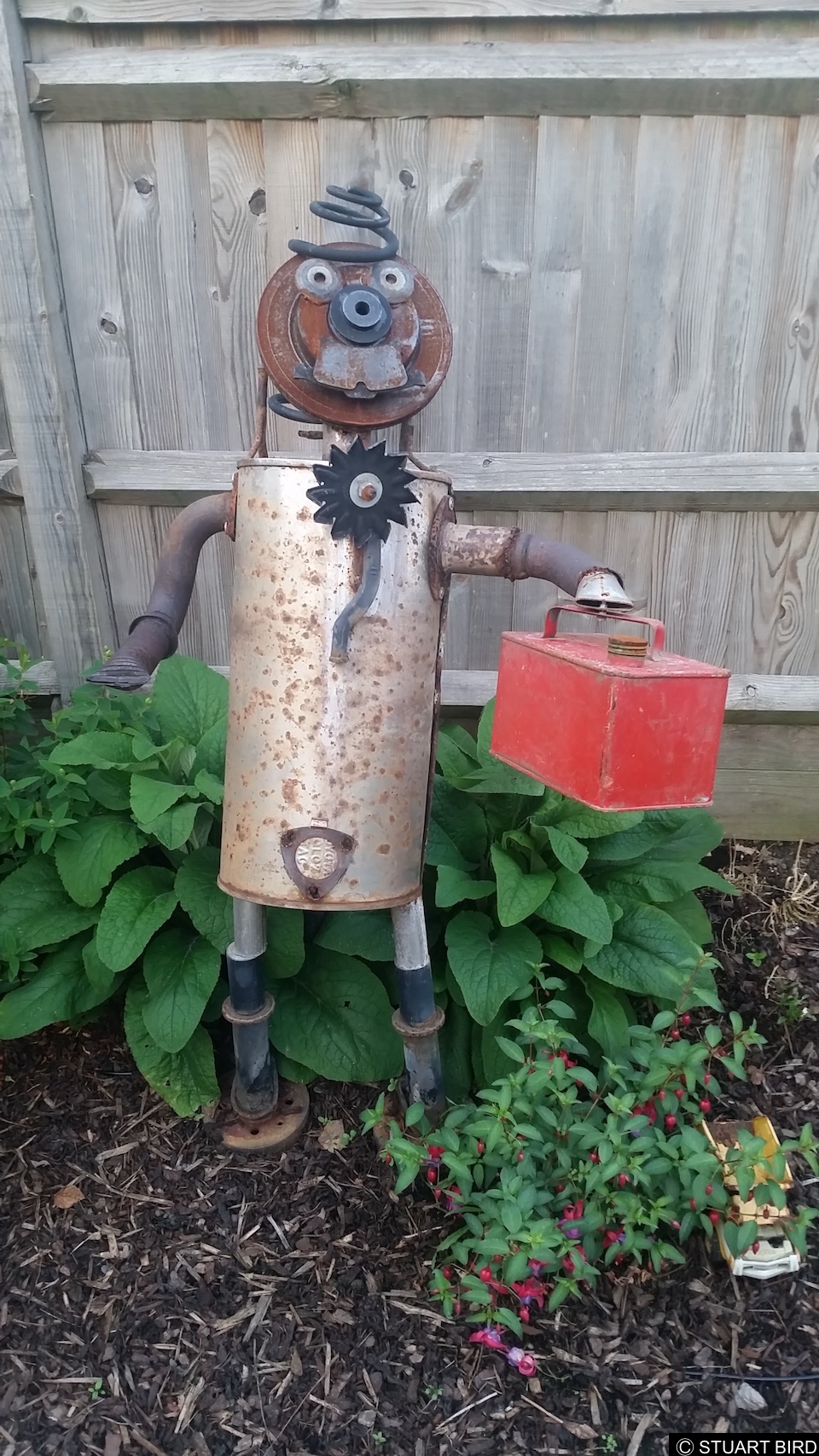
    A classic example was an old VW bus that came in. All shiny paint and recently restored. It failed of inadequate welding repairs to the chassis. I’m sure my friend whose bus came to us last year also failed on inadequate welding repairs. Here lies a problem with older cars. they rust. Now any idiot can pick up a welder and have a go. It’s harder than it looks. I’ve tried and failed. I tried again and made a metal man from scrap for the garden but in no way is my welding to be relied upon for meeting MOT standards.

    And then we have the other problems associated with the older car and its inadequate use. Things seize up. The Fiat has a lazy handbrake on the rear brake calliper. The camper had a rear brake that wasn’t working. Without my MOT I wouldn’t have known this. This remember is coming from someone who looks after their cars.

    This remember is coming from someone who looks after their cars.

    There is just too much to go wrong. And it will put lives at risk. When was the last time you looked at your brake pads? You wait for the warning light to come on, don’t you? Does your car has a warning system? Only my Golf does.

    But surely this will save us money? Well no. OK, I don’t pay for my MOT’s. It’s a perk of my job and saves me £216 a year or £54 a car but I’d rather pay that just for peace of mind. And here comes the catch. The DfT has said “The option for owners to take their vehicles for a voluntary MOT test will remain. They will still, like all vehicle owners, need to ensure that they meet the legal requirement of keeping their vehicle in a roadworthy condition at all time.”

    Over 2000 people were consulted for the change in MOT law. Strangely a larger majority voted against exemption of vehicles over 30 years or older from MOT tests. The DfT agreed with the consultation on this. It cited accident data as well as the strong negative reaction from the public to this suggestion. Accident data. Vehicles 30 years or older involved in accidents caused people in the consultation to be wary.

    The MOT, however, is flawed. It only proves that on that given day of presentation, it was deemed safe for the road. It could all go wrong tomorrow. Without one, however, how will you know? How many of us out there are mechanically sympathetic to the workings of our cars or can detect a fault? Apparently those with older cars are more in tune. Apparently, we tend to look after them more. As a case study l have just failed.

    Visit any car forum and I’ll beg to differ. The questions people ask sometimes make me shudder to the core. Sometimes I want to grab the keys from them and toss them into the drain.

    There is another fear to come from this though and that’s restrictions of use. I was deep in discussion with a friend in the trade and he spoke at length that soon there will be restrictions for use of older cars. I couldn’t disagree. Mark my words, they will come.

  • Brazil just ruled that being gay is a disease

    A court in Brazil has ruled that gay cure therapy is legal

    Despite having one of the largest LGBT+ prides in the world, a court in Brazil’s capital, Brasilia, has ruled that homosexuality is a disease and that so-called “gay cure” therapy is legal.

    Judge Waldemar Claudio de Carvalho ruled that homosexuality can be treated as a disease and that conversion therapy as a means of curing it, is legal. The ruling has caused widespread condemnation and concern amongst LGBT+ people and their allies.

    The judge overruled a 1999 resolution which outlawed therapists from treating homosexuality.

    The appeal on that resolution was put forward by an evangelical Christian, Rozangela Justino, who was banned from practising after offering conversion therapies.

    A number of high-profile organisations and people have rallied against the ruling saying that they will appeal the decision. Toni Reis, who heads the National Lesbian, Gay, Bisexual, and Transgender Alliance, said the ruling was a step in the wrong direction plans to appeal at the Inter-American Court of Human Rights.

    Brazil’s psychology council says it would appeal the injunction also.

    Speaking to the Guardian, David Miranda, a gay councillor in Rio de Janeiro said,

    “This decision is a big regression to the progressive conquests that the LBGT community had in recent decades”.

    Brazil also has one of the highest crime and murder rates against LGBT+ people in the world. In 2016 it was recorded that one LGBT+ person was killed every day in Brazil.