★★★★★ | The Internet’s Own Boy: The Story Of Aaron Swartz
This is the story of a charming and selfless information prodigy that strived to use his talent to make this a freer and better world for which he ended up paying for with his life.
Aaron Swartz was born in Chicago, the middle son, of successful middle-class Jewish parents. Inquisitive from birth, he taught himself to read by the age of three and by the time he reached High School he despaired of his teachers who he complained taught him less than he could read up in an hour. At 13 he won a competition for young people who created non-commercial websites for which the prize included a trip to M.I.T. From then on, there was no looking back for him.
From there the young genius played a major part in the development of the basic Internet protocol RSS and also co-founded Reddit which became the most popular social news website in the world. His work brought fame in the online communities and also wealth (when Reddit was sold) but this affable young man couldn’t have been less interested in either. What did excite him was social justice and political organising that focused on working to free up inaccessible information online that he believed belonged in the public domain and should be available to all without charge. It was what would prove to be his undoing in time.
Without Swartz’s involvement it is most unlikely that the Stop Online Piracy Act would have been defeated in Congress, but when he set about copying almost 5 million academic articles from JSTOR (Journal Storage) Database at M.I.T. events did not go his way. Swartz maintained that as these articles had been financed from public funds they should be freely available. When he was caught, JSTOR chose not press any charges but the Federal Government did and very aggressively pursued Swartz and indicted him with a total of 13 felonies. To its shame, M.I.T. just stood on sidelines and did nothing.
The beauty of Brian Knappenberger’s rather wonderful documentary of this extraordinary young man is that he makes a concerted effort to show not only why the online community was in awe of his seemingly unlimited talent, but by including his very supportive and proud family and friends, he showed what an exceptionally nice person Swartz was too. This very unassuming man was magnanimous and both reserved and quiet but he seemed to blossom as more people called on him to help. He was a passionate thinker who used the same logical approach he employed when programming also in how tackled any social injustice he came across.
Why he took his own life is never really explained in the movie, but what is very clear from listening to all the evidence is that was a wasted life cut short. However his memory just doesn’t live on with his loved ones, and with the online community who are in awe of all his inventions and achievements. In 2013, a Bill was introduced to finally reform the ambiguous and outdated Anti-Hacking Law that the Government used so mercilessly against him. The Bill is called Aaron’s Law, as well it should be.
As Jeffrey Schwartz’s excellent new documentary I Am Divine is released in the UK, The Gay UK’s film critic Roger Walker-Dack caught up with legendary filmmaker John Waters for a few personal words about his muse and great friend Divine.
John told us ‘When it comes toI Am Divine I have let Jeffrey be the one to speak, as it’s his film in this instance he’s the one who deserves the attention. I’m STILL shocked that Divine is dead! Divine had a great life in the UK, and he’d be thrilled that the film is being so well received.’
Glen Milstead aka Divine was unquestionably John Water’s finest actor and muse. Not simply because of his talent that was as outsize as his physique, but because like Waters he was both totally fearless and dared to push the boundaries of bad taste as far as he possibly could. And he did it all in such outrageous style and unfettered enthusiasm that made him such an iconic cult figure.
In filmmaker Jeffrey Schwartz’s new very upbeat documentary into this unique entertainer and character, we learn that Divine had always dreamt of being a movie star since he was a kid who had been picked in and bullied at school as being both effeminate and fat. And he did deservedly become one and was just about to parlay his major underground success into the mainstream with a (non-drag) part in a nationally syndicated TV sitcom when he dropped down dead in Hollywood after a massive heart attack the very day before filming was due to start. He was just 42 years old. Manager, Bernard Jay poignantly claimed that as Divine was at the peak of his career, he had at least died happily.
Divine and John Waters both grew up in Baltimore and met when they were teenagers. They made anarchic campy home movies together at the beginning with exaggerated characters in outrageous situations with hyperbolic dialogues. They were never meant to be shown outside of their wee band of local actors that included Mink Stole, Edith Massey, and David Lochary (the latter becoming a big love of Divine’s life before his own untimely death). But word got out and soon people were clamouring to see the films that got bigger and even bolder.
Water’s ‘trashy trilogy’ ‘Pink Flamingos’, ‘Female Trouble’, and ‘Desperate Living’ cemented Divine’s reputation as a movie diva, in particular, Flamingos which earned him the title of ‘the filthiest person alive’ after the notorious scene where he actually ate dog faeces. And after these successes, he also started to diverse his career taking starring roles in Off-Broadway shows, and becoming a very successful disco recording star. He added a whole new meaning to the word ‘fierce’!
Many of the interviewees that Schwartz included gave Divine great credit for expanding the concept of the drag queen from brash female impersonator into something much larger, more subversive and less gender specific. Yet without a single exception, none of the TV chat show hosts that interviewed him could deal with the fact that Divine was sitting opposite them in men’s clothing calmly stating that ‘she’ was a character that he played and not the person he actually was off the screen.
Matinee idol Tab Hunter recounted the joy he had at working with Divine on two very successful movies ‘Polyester’ and ‘Lust in The Dust’. These were followed by ‘Hairspray’, which turned out to be Divine’s biggest hit and very last movie.
Schwartz beautifully captures both the joyous nature of Divine’s flamboyant life and also the great sense of sheer enjoyment he had. He includes the completely tasteless clip from ‘Eat Your Makeup.’ in which Divine played Jacqueline Kennedy in a grotesquely amusing re-creation of the Kennedy assassination just two years after the event. But he also shows the scene from ‘Multiple Maniacs’ where Divine’s character is raped by a giant lobster! A perfect epitaph.
Someone said towards the end of the movie … ‘after him, no-one can ever now be called Divine … he OWNS that title’. Too true.
An unmissable flawless movie.
The fabulous UK and Irish Cinema and VOD release of I Am Divine is one week away!
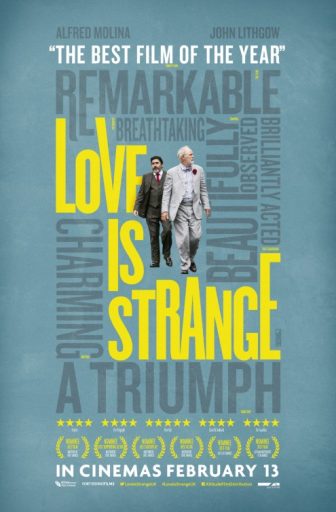
Love Is Strange one of the most talked about gay movies of the year has been wowing both crowds and critics in the US since it opened in August. The New York Time’s Movie Critic recently said it would be his personal pick for the Best Picture Oscar. Now it is finally about to open in UK Cinemas, here is our take on this superb love story.
In Ira Sach’s follow-up to his highly acclaimed 2013 hit Keep The Lights On, love is also extraordinarily wonderful too. It’s the tale of George & Ben a devoted couple who have enjoyed a somewhat glorious life together in Manhattan for the past 39 years. Now that same-sex marriage is legal in NY they decide to have a joyous wee ceremony surrounded by their close friends to tie the knot and make it all ‘official’. Everyone is happy for the two men now in their late 60s, except for George’s employers who had been blissfully aware of his relationship with Ben in the 12 years he had taught music at their school. Marriage, however, was too much for them, the Catholic Church that is, so in an act of Christian charity they unceremoniously fired him on the spot.
With Ben already retired and George unable to find another job the men soon ran out of money and very reluctantly had to sell the Co-op Apartment that they had lived in for decades. Sadly none of their friends in the city had a spare room to put the couple up in, so for the very first time since they had met, they had to split up whilst the hunt for a new affordable Manhattan apartment continued.
George moved in with a couple of handsome young gay cops next door and crashed on their couch. The trouble was that his new ‘landlords’ had a seemingly endless list of young friends who loved to hang out at the apartment and party all hours, usually whilst sitting on George’s ‘bed’. Ben, on the other hand, was given a bunk bed in his great nephew’s room, something the young rebellious teenage bitterly resented.
As time passed, and with no sign of a new apartment for the newly weds, tensions got very strained. George could hardly bear living in party central and getting little sleep, and Ben seemed stuck in the middle of an escalating feud between his great nephew and his parents who saw eye to eye on nothing. It was when the latter eventually erupted and the boy was grounded after being caught out being led astray by a much older school chum, that there was a breakthrough between him and his old gay ‘nuisance’ Uncle. In a very touching scene when the boy broke down and didn’t just share but actually listened for once, he learnt from Ben about being true to himself and loving who he wanted too without shame.
It’s impossible to say where things led to from this point without giving spoilers in what is such a beautiful and touching story. It’s a neat lesson in hate (the Church), and in tolerance (the family) and a perfect example of love that is quietly understated and without histrionics.
George and Ben are portrayed so exquisitely by veteran actors Alfred Molina and John Lithgow and are the perfect epitome of a devoted couple completely in love and who totally idolise each other. The very obvious chemistry between the two on screen is completely convincing and they are a sheer joy to watch.
There is absolutely nothing ‘strange’ about George and Ben’s love especially as it is the focus and example to all the other couples in this charming story whether they are gay or straight.
Mr Sachs has created a fine feature about mature love that shouldn’t just be niche marketed as a ‘gay film’ as it deserves and will delight a much wider audience.
P.S. And I am thankful to him too that this is one ‘gay theme’ film that doesn’t have the obligatory nudity.
This is a regular subject matter for gay films these days and we have chosen these 10 from right across the spectrum.
CREDIT: Edge of Seventeen / YouTube
BEGINNERS
Christopher Plummer’s Oscar-winning turn as newly widowed 75-year-old Hal who declares to Oliver his son (Ewan McGregor) that he is now gay and is determined to make the most of the time he has left. Sweet and very funny.
This sentimental story set in small town America in 1984 teaches High School student Eric that love and sex are not the same things and he almost goes back into the closet. Great period piece, well acted and a neat happy ending.
A heartstring-tugging story of forbidden love between an Israeli and a Palestinian in Tel Aviv where the latter risks his life if he comes out to his family. It’s all the more remarkable that after all the horrors the pair goes through, that the overwhelming feeling that one comes away with from this film, is of hope.
A remarkable and unpredictable drama that deals with a repressed Polish Catholic priest’s personal struggle with his homosexuality. Brave, controversial and extremely moving: it worn a prestigious Teddy Award for best LGBT film at Berlinale.
Bram a good looking Belgian/Turkish 20-year-old gets thrown out of his family home in Antwerp when he comes out, although his father is happy to house his other sons who are crooks, which is far better than being gay. An intelligent drama that becomes an entertaining romance.
Nick, the youngest son of a wealthy Chinese/American family tries to put the pieces together of his older brother’s life after he was tragically killed in a car crash and discovers that he had wanted to ‘come out’ to him before he had died. Very endearing.
In this hot and steamy German tale, one straight trainee policeman discovers that probably shouldn’t be getting married to his pregnant girlfriend after all, when he has a very physical relationship with one of his colleagues. Very well written, and beautifully acted.
This coming-of-age story tells of two teenage girls, who are best friends, dealing with all the restrictions of growing up in Iran today. The girls are exploring their emerging sexuality as they become part of Tehran’s underground party scene. Superb, if not scary, look at some of the conflicts and struggles in contemporary Iran.
From 1996 this wonderful British film version of Jonathan Harvey’s hit play about two gay teenagers finding themselves and each other in a Council Estate in London.
An award-winning Brazilian film about a blind school boy and his virginal innocent friend who are slow to realise their feelings for each other. Tender, with some neat touches of humour … We predict that you will so fall in love with this one when you see it.
It’s Anthony’s 50th birthday, a fact that Jane discovers when she finds her mother Philomena crying over an old photograph.
Anthony is the son that she had out of wedlock as a teenager in Ireland and who was forcibly taken by nuns and given away for adoption. It’s a tale that she has kept to herself for all these years but she can longer hold back on wanting to know whatever became of him.
A chance meeting leads Jane to Martin Sixsmith a former BBC journalist who just had to resign as a government spin doctor over a scandal and was now at a loose end. As an ex-foreign correspondent used to loftier matters he initially resisted the approach to investigate Philomena’s story as he considered human interest pieces beneath him. But he did reluctantly take on the project even though he initially had a great deal of difficulty adapting to Philomena and her world. She was still a devout Catholic, and a retired nurse with very simple tastes, plainly spoken and completely unworldly. And he was ex Oxbridge & Harvard, having spent years as the BBC’s correspondent in Moscow & Washington and was urbane, sophisticated and very sarcastic.
They started by taking a trip together back to the convent in Ireland where the baby had been born. Philomena still believed that the nuns would help her in her search even though all those years ago they had been prepared to let her die as a penance for her sins when it was a difficult breach birth. However, they drew a blank as the nuns claimed that all the papers relating to all the babies born there had been burned in a fire long ago. But later at the local pub where they were lodging, Martin learned that the nuns had burned all the evidence because they had actually been selling all the babies off to wealthy families in the USA.
Now that he senses that there is a real story to tell, he gets a contract with a magazine that will finance the next part of their search which will mean them both of flying to Washington D.C. to investigate any leads they can get from adoption agencies on immigration officials to find Anthony. Finding the son who was given away turned out to easier than even the intrepid journalist believed. However not only was it not the outcome that either of them had wished for, but it was what they also discovered about themselves as a result that had a profound effect on them both.
Director Stephen Frears (The Queen, High Fidelity) is so back on form with this wonderful new movie after his last three misfires. Based on a true story written by Martin Sixsmith …. and with a script co-written by Steve Coogan, who plays Martin in the movie … it’s a harrowing heartbreaking tale that fills one with so many emotions. In fairness, it starts out slowly, but once Philomena hits her stride and you begin to realise that this is far from a predictable birth-mother and child reunion story, that you start to choke up … and get angry too.
Dame Judi Dench reunited with Mr Frears (Mrs Henderson Presents) is flawless as Philomena, who she reveals has this wonderful sense of wicked humour, and on certain matters is a lot more worldly than we ever expected. Her rigid belief in her faith regardless of all the evil she uncovers is both remarkable and totally convincing, albeit hard to approve off. Despite all that she went through, she asks for very little ….’I’d just like to know what he thought of me, I have thought about him every day’. And she does at least get that. It is a breath-taking performance.
Steve Coogan plays Sixsmith rather drolly as a total non-believer and in the investigation itself is the ‘bad cop’ to her ‘good cop’ role. He and Philomena hold different views on almost everything, but as the search moves closer to its conclusion they develop a close bond together and a deep respect for each other.
This movie will probably end up on my year’s Best Movie List … I think it best to go into this movie knowing no more of the plot than what I have revealed here, but there is a very specific reason why all readers of thegayuk.com will so relate too it. Although I should perhaps share that you will more than one pack of kleenex handy, and also if you had a low opinion of the morals of Catholic nuns before this, you will discover that they are even more despicable evil than that. Urgh!
Well in our very casual and unscientific survey we discovered that there is not one single answer. The majority of them just simply disappear back into anonymity and sadly many of them do not physically survive.
Arpad Miklos, Eric Rhodes, Wilfrid Knight and Roman Ragazzi all took their own lives, and in Ragazzi’s case it was after he had been exposed and after lost his job at the Israeli Consulate. Others like Josh Weston lost their lives to complications from HIV. In fact, in 2013, the number of suicides or deaths of those in the gay porn industry under the age of 55 exceeded a dozen, which is more than twice the annual average. Some sadly like Christopher Luke McAteer aka Clay at Corbin Fisher who shot himself are as young as 18- years old.
Also several of them like Bobby Clark, Phenix Saint, and Trevor Knight ‘retire’ very publicly and then are back on our screens before we can say ‘safe sex’. Others do however find a whole new life waiting in their future, and we tracked down a few of them to see how they were coping now they were fully clothed.
Jake Floyd aka Jake Genesis didn’t return to the police force when he retired, he just turned to God instead. However after Joey Santiago had been worshipped as ‘Gustavo Arrango’ he went one better and became a Priest at the House of Prayer Monte Santo in Puerto Rico.
Colton Ford made a sort of successful transition from porn to pop star. He covered Stevie Wonder’s Signed, Sealed, Delivered with a dance mix that went to be no. 9 on Billboard’s Hot Dance Club Play chart. Fredrik Elkund aka Tag Eriksson who went from being a successful businessman in his native Sweden to become a top international porn performer, then parlayed that into becoming a top real estate broker and a star of Bravo TV’s Million Dollar Listing NY.
When Shawn Loftis aka Collin O’Neal hung up his jockstrap he became a teacher in Miami before his past was revealed to the authorities, today he has a successful new career as an iReporter for CNN. Kevin Hodge aka Hytch Cawke also became an educator and was the Head of the English Department of a School in Massachusetts until the local FOX TV station publicly exposed his past, which promptly ended his career.
Gay-for-pay Kurt Wild ‘retired’ after his wife gave birth to their fifth child. Now he is a full-time father and he says, without a trace of irony, a wildlife photographer too.
Britain’s own Aiden Shaw dominated gay porn in the ’90s with both his massive personal endowment and his clever novels and memoirs, and then at the age of 47 became a silver-fox high fashion menswear model.
Tom Judson aka Gus Mattox career path is completely unique. Judson was a successful musical theatre actor and performer who transitioned into a porn star when he was in his 40s, which is usually when others are making their exits. He made a big splash for two years picking up a GayVN Performer of the Year before putting his clothes back on for good. He can often be found performing his own one-man musical, Canned Ham in theatres that talks about his life as a naked star.
We did however find several porn stars trying to see what life would be like if they just drop the word ‘porn’ from their job title and turn their hand to acting in more mainstream movies. It’s a big jump from screaming out ‘give it to me big boy!’ to quoting some soliloquy from the Bard so luckily most of them do the crossover in baby steps plumping for roles in movies that won’t stretch their talents too far.
Plus many of them opt for parts that demand they are naked for at least one scene to remind us all what their greatest attributes still look like.
Dylan Vox aka Brad Brenton was one of the stars in the TV series called The Lair which doesn’t totally count as a complete break with the past as it is the story of a gay sex club run by vampires who are into sucking more than just necks of the cast (of mainly porn stars) who have somehow forgotten their clothes along the way. The plots are also as soft as the sex.
Vox fared better in Longhorns a very likeable romantic comedy although it seems like the director must have been worried that the audience may feel that the plot was a little thin in parts, so he had most of the cast proudly dropping their trousers just in case our attention was drooping. Since then however, he has had a steady stream of roles in B-movies from The Asylum Company who specialise in ‘mockbuster movies’. These are films that are released to coincide with those of mega studio epics in order to capitalise on the hubbub surrounding the big-budget movies such as Hercules Reborn that preceded Hercules starring Dwayne Johnson. They may never qualify him for an Oscar but Vox did get one good review ‘he pretty much steals what little thunder there was to steal’ wrote a critic, and it is after all work on the silver screen, and he does get to keep his clothes on.
The heavily inked Frankie Valenti aka multi-award-winning porn performer Johnny Hazzard was another (ex) porn performer who also appeared in The Lair, then went on to put in a surprisingly impressive performance in a lightweight movie called Tiger Orange which is about to be released on VOD. On the strength of this one role film and with his new T-shirt company Valenti wants us, and himself, to completely forget his xxx-rated movies so he declined our invitation to interview him for this article.
Sean Paul Lockhart aka Brent Corrigan aka Fox Ryder has gone one better than his peers and after a brief but intense career as a vivacious porn star, he moved into mainstream movies both in front and behind the camera. True his first ‘legit’ role was in the very questionable Judas Kiss a gay sci-fi movie, which features a plotline where the protagonist had sex with himself. Corrigan did, however, fare better though in a melodramatic gay thriller called Truth, and even with its howler of a script, he turned in a memorable performance. Then in 2013, he directed himself in Triple Crossed a rather inoffensive gay thriller/romance for which he at least deserves an ‘A’ for effort.
François Sagat the rugged French porn star with a tattooed scalp followed bit parts in two mainstream horror movies Saw VI and ‘L.A. Zombie’ with a starring role in Man At Bath, which thanks to Sagat’s wooden performance was probably one of the worst movies we sat through in 2014.
Thankfully for all of us he has subsequently retired to focus on his own clothing line.
This article was taken from our PORN ISSUE (13) July 2015 and now forms part of our Being A Porn Star Series.
Opinions expressed in this article may not reflect those of THEGAYUK, its management or editorial teams. If you’d like to comment or write a comment, opinion or blog piece, please click here.
Is there such a thing as a “gay voice”? Why do some people “sound gay” but not others? Why are gay voices a mainstay of pop culture, but also a trigger for anti-gay harassment? You have probably asked yourself some of these questions in the past but American journalist David Thorpe finding himself single again in his mid-forties went one step further when he thought that his ‘gay voice’ was maybe the root of all his problems. He set out to seek some answers and along the way made this rather tender and touching incisive film about his journey which is also wonderfully hilarious and something that all gay men can relate too. On a recent trip to London for the European Premiere of the movie at BFI Flare Festival, we sat down with him and talked (in our very gay voices) about what he discovered.
Karim Aïnouz is part of a rare breed of filmmakers whose work manages to be both wonderfully profound and edgy yet totally engaging and entertaining. He has never been afraid to challenge his audiences and leave story strands unfinished so that they can appropriate them, as they will. If that is not enough, Aïnouz’s work is also extremely sensual and provocative as well. The 49-year-old Brazilian who directed the hugely successful ‘Madame Sata’, honed his craft working with gay auteur Todd Haynes in New York for the best part of 15 years, and then he moved yet again to Berlin and fell in love. This time as much with the city as with the men. It inspired him to write/direct his fifth and most personal movie to date about his new love and more importantly, his old one too. This was Futuro Beach in Brazil where he used to hang out as a kid and dream about the world faraway that he was missing.
This new movie is about lives that are lost and loves that are found, but mainly it is about the journey that one man takes on his voyage of self-discovery. It starts in the sizzling Brazilian sun where emotions ride high and takes on an evocative trail that ends a decade later on the damp mist-ridden German coast. It’s a thought-provoking visual treat that has been enchanting audiences around the globe and has now finally arriving on our shores. Our Contributing Editor Roger Walker-Dack took the opportunity to sit down with the filmmaker when he landed in London with the film and talk about love and loss, and a great deal about oceans too.
RWD: The way you portray both Futuro Beach and Berlin in your film seems almost like a personal love affair between you and these two places.
KA: It couldn’t be truer, and I feel close to them both for very different reasons. The Beach in Brazil was very near to where I was raised and where I got to hang out was a kid right up until I was in my twenties. It is like my ‘old’ home in a way and now Berlin has become my ‘new’ home for the past five years. It all started as a deep desire to do something in Futuro, which is so much more than just another place to me and when I started to develop the plot that began there, it made sense to me as the story evolved that the characters would move to Berlin.
RWD: How did you end up in Berlin in the first place?
KA: I was in NY for about 15 years working for the filmmaker Todd Haynes for most of the time, and then I got an artist residency grant to go to Berlin for a year. I really thought it would be a good city to start writing another film, as it is a neutral place and somewhere that I had visited but never lived before. For me Berlin was love at second sight as there was something going on then in 2004 that reminded me of the sort of freedom that I felt when I first moved to NY in the mid 1980s. There was a sense that everything was very open and that anything was possible, and a certain chaos to it all that was super exciting for me. There was this wonderful sense that the future was being made and that Berlin was being re-invented, and so that is why I decided to have my base there.
RWD: You start and end the movie at an ocean, why was that so important to you?
KA: Futuro Beach is on the North East coast of Brazil near Venezuela and the ocean there has been a very strong presence throughout my life. Growing up there the ocean was for a me a border that separated us from the world, rather than a place of paradise that most people think it is. I always had this image of a guy who would spend most of his time staring at the ocean and imagining perhaps what was on the other side. This after all is a city which is a place of migration that a lot of people leave. Others see the ocean as melancholic or an idyllic place but for me it was very much a place that you should cross to find out about the world. In those days Futuro was a very isolated place and was hard to get as there were no direct flights, and so the ocean was what linked us to the world.
RWD: Where did the actual story come from?
KA: It is a total original story in which I incorporated certain elements that were important for me. The first thing that I wanted to do in this movie was show my love for these two cities. Also at the time I started writing it I had just finished re-reading Moby Dick and this inspired me to want to make a movie about travel and adventure. I also wanted to tell a generational story and I wanted to write about a certain gay diaspora and about the generations who have to leave and go to urban centres to be creative. I was intrigued with the whole concept of re-inventing oneself somewhere far away from home.
I wanted to tell the story of someone who left, not solely because of his sexuality, and of the consequences when he needs to leave to reinvent himself. I had the idea of having a family that he left behind and I eventually developed that into the story line of the younger brother who would come and confront him. Suddenly everything seemed to make sense and the story came together came out of my desire to make a film about sexual diaspora and fear and masculinity.
RWD: You hit the ground running early on in the movie with very animalistic sex between Donato and Konrad which is both rough and passionate. How important was the sex and the fact that despite its eroticism you didn’t make it explicit.
KA: Konrad had lost his best friend and it was the first time that Donato had also lost some one that he had been unable to rescue. There was this deep and brutal sense of loss and there is nothing more for celebratory to life than sex, so I thought it would be an interesting and a beautiful way to let these two guys get together and deal with that loss through bringing life. This first time they have sex I wanted to make it more about physicality and violence and the desperate need they have for each other, and then to show the intimacy afterwards. It was very important that it was not a romantic relationship between these two men but something that was almost an animal bonding as the affection and the relationship would come out later as they got to know each other more.
RWD: You gave us a hint at this point that it may have been a movie at a romance but in the end it was much more about making a search for self-identity. Was that important to you?
KA: I was interested in both things, not just self-identity but about how two men can relate to each other. The emotions are quite mixed up in the film; there is the romance, there is the question of self-identity, and finally there is also the question of brotherly love. The romance was interesting but just as a triggering point for someone to find out what is real as I was always very resistant of having them together 10 years later. It was important that they had more than a passing moment and something which was very deep, but at the end of the day I wanted to make this more about a character who has to discover himself and the road he has to take to get there.
RWD: Do you consider this a ‘gay film’ per se?
KA: On one hand yes, I think absolutely. I used several of the gay clichés: the motorbikes, the soldiers, the lifeguard, so on that level it is a super gay film. (laughs) I wanted to use all the elements of masculinity and virility and how one man relates to another. I like to think of this almost as a gay masculine melodrama whatever that means. (laughs)
RWD: The relationship between the two brothers is extraordinarily wonderful, yet you were an only child.
(laughs)
Are there any parts of the movie that are autobiographical?
KA: There are a lot of the parts of the film that are, but I hasten too add I am not married to a German man(laughs). Asides from the fact that these are the two cities that I live in, there is the music, and also that I have been a serious swimmer since I was a kid. In fact this is my fifth film and is by far my most personal so it was even more challenging to make it entertaining and relevant to other people.
RWD: It is a stunning visual film particularly when you allowed the camera to linger longer than usual in many of the scenes. Was this part of you wanting to leave us somewhat stranded on several aspects of the story that you left unfinished?
KA: Absolutely. There are two elements there. I had imagined this movie like an old school slide show when you have image after image. I wanted to make this as a series of portraits of certain situations and like a poem. For that reason I wanted to do a movie where not everything is shown or is explained, just like between one slide and the next slide when there is something you can fill in. For example I did shoot scenes with the brother’s mother and she had the answers to some of their character’s questions. But I decided to edit her out and leave those particular questions unanswered, which allows the audience to fill them in and appropriate the film for themselves. So not wanting to spell it all out I hope that I left enough time in those long shots for you to work it out.
RWD: Often when you take an approach like this in a movie and leave unfinished strands to the story you end up with either getting rave reviews or quite vitriolic criticism. Was that true for you?
KA: (laughs) It is so true. Some people cannot stand it but I wanted to take a risk, because the whole film is about taking risks anyway. When we screened the movie in Berlin the first review was from someone who really got it, but the very next one, I think from a French reviewer, totally hated being left high and dry as he called it. It was something that I needed to do as an artist because a lot of independent cinema plays it too safe, and that is not a path I could take.
RWD: You had some rather inspired casting, can you talk me through your process.
KA: Wagner Moura is someone I have known for a long time and always wanted to work with but I never had a suitable project for him before now. In Brazil he is a superstar and national hero because of his role in Elite Squad which won the Golden Bear in Berlin and was the biggest box office smash in Brazil ever. I thought that there was something about the character of Donato that would be a challenge for him as is totally unlike most of the roles he has done up until now.
For Jesuíta Barbosa’s character I need to find a local boy from that region who had same musical accent when he spoke, and who was new and a total fresh face. We actually took a year to cast him and saw a lot of people, but when he came into the room I immediately knew that there was something really special about him.
I didn’t know Clemens Schick until we did a casting in Berlin and I saw there was a roughness to his Aryan look that I thought was interesting because I didn’t want to cast a classic blonde German guy. I saw a danger in him that I thought he would bring to the party.
So I had three men from three very different places who had three different trajectories. Clemens is very much an established theatre actor, Jesuíta was a newbie, and Wagner was a huge movie star and I thought it would be interesting to mix them together. When the film came out in Brazil we had a great opening week but by the 3rd day there was an enormous outcry against the film because people could not accept that Wagner their favourite action movie star could be doing an edgy gay film like this.
RWD: When I first saw this movie I summed it up in my review as melancholic and mesmerising but now one of the overriding memories that remain with me was the fact that it has a message of hope, especially from that wonderfully dramatic final scene.
KA: You are right. In all the films that I have done there is this feeling of different kind of families, and a different kind of connection between people. It was important for me that the story allowed the viewer to witness the hardness they went through and the joys that they shared. It was also essential to me that we end our journey with the characters but that the characters can go on with their lives.
It’s funny I am huge fan of Fassbinder but I could never end a film like he did always on a downer. I am from a culture that is optimistic so I think it is important to always have some kind of redemption and some kind of hope.
RWD: What’s next for you?
The next film is probably a road film that I wrote about a guy looking after his father hiding away in the mountains of Algeria. I am half Algerian but I have never ever been to the country yet, so it will be a new adventure that I am undertaking.
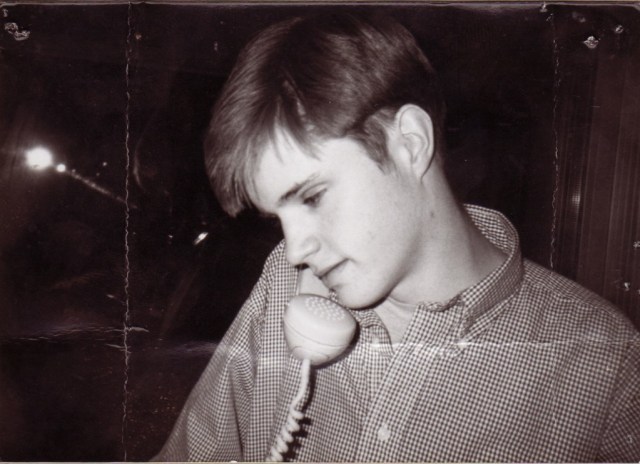
Judy Shepard is an extraordinary woman. In 1998 her eldest son Matthew a 21-year-old student at the University of Wyoming was tied to a fence outside of the town of Laramie, beaten mercilessly and left to die.
Matthew Shepard Foundation
This particular pernicious hate-crime caught the public’s attention, and news of his death provoked outrage from Wyoming to The White House. It also caused an international sea of sympathy for Dennis and Judy his typical American parents who were thrust into the glare of the world’s media when all they wanted to do was grieve in private. At the subsequent trial when two local youths were found guilty of Matthew’s murder a stoic Dennis supported by his wife, pleaded that his son’s killers should not be given the death penalty.
This was just an inkling of what was to follow when the Shepard Family created The Matthew Shepard Foundation. The aim was to honour Matthew in a manner that was appropriate to his dreams, beliefs, and aspirations, and the Foundation seeks to “Replace Hate with Understanding, Compassion, & Acceptance” through its varied educational, outreach and advocacy programs and by continuing to tell Matthew’s story.
The Foundation transformed this introverted housewife into a powerhouse who trotted around the world promoting tolerance and diversity whilst helping to spearhead a major piece of Legislation to help eradicate hate-crime. Feted by politicians and celebrities alike, she has swapped her kitchen in Casper Wyoming for the stages in Universities and Conference Centers imploring anyone and everyone to help the Foundation bring about more change.
Where others would have withdrawn from life after having to deal with such tragedy, Judy and Dennis instead chose to turn their personal loss into a remarkable force of good that would help insure that other parents and other children would not have to face the same fate as they did with Matthew.
Last year Roger Walker-Dack interviewed Judy Shepard to talk about Matthew’s legacy and her hopes for the future.
RWD: So much has changed in the LGBT landscape since Matthew’s passing. Is it enough, or is there still more to do?
JS: There is a lot more to do. In the US we are making inroads legally and legislatively but there are still so many hearts and minds that need to change. We have achieved about 50% of where we need to be on same-sex marriage, but even on that we have a long way to go. Maybe when another younger generation grows up and is empowered to vote and be active in the community, then things will change much more rapidly than they do now. But certainly compared to other civil and equal rights issues we are on the right path especially as we now have the support of more leading politicians and people with influence than those who are lined up against us.
RWD: You were very involved with the passing of the Matthew Shepard Hate Crimes Act in the US Congress. What did you hope it would change and is it achieving it?
It’s important to know that it’s called the Prevention of Hate Crimes Act and although I disagreed with Senator Ted Kennedy and Senator Gordon Smith the Bill’s Sponsors on the exact title, I went along with it anyway. To me the most important thing that the Act was going to do was to send a message to the rest of the country that the gay community was indeed a select group of people where hate crimes were being concentrated.
We need a way to record it and a way to prosecute it if local authorities could not afford to do, or were unwilling to do it. So in that sense, it really is working.
There were people who were against it claiming that it was against God’s will, but I think its existence has done a lot to help create a different and better environment. It’s helped make more public awareness that the LGTBQ community were the victims of these crimes and needed to be protected.
Michele Josue’s superb new documentary Matt Shepard Is A Friend of Mine mentioned that there were 33 hate crimes that ended in fatalities the same year as Mathew was killed.
Let me clarify that. There were 33 REPORTED cases. Many of these hate crimes are never ever recorded simply because they are against gay people. To this day, we will never ever know a true count of the victims, but we are sadly convinced it is a lot more than any official statistics.
Matthew Shepard Foundation
Have matters improved since the Act was passed?
One of the problems that our Foundation is tackling right now is that reporting of these crimes is voluntary. So not every community is eager to participate, and not every victim is willing to come forward especially in vast sections of our country where you can still be fired from your job for just being gay. For these victims, the fear of being ‘outed’ in their own community far outweighs the physical and verbal abuse they have suffered.
We know that it is vastly underreported. But the Act has nevertheless made a difference and in the way that we wanted it to. It expanded the parameters as what was defined as a ‘crime’ and it also made it easier in many parts of the country for people to be able to come forward and be treated with respect and dignity.
I was shocked when I read in the 2013 Stonewall Report into Hate Crimes in the UK that the bulk of the perpetrators are under 25 years of age. Does this surprise you?
Sadly no. It is a phenomena of this country too, and it seems like a sort a rite of passage in some ways to commit such an act of violence. The crime rate amongst young people in this country is more prevalent when they’re dealing with internal struggles of whom they want to be, and are having a need to prove themselves to others. We also find that some young gay people who are troubled about being victims also become extremely violent and anti-gay to detract attention away from themselves. I am greatly saddened by this situation, but not shocked at all.
How can we as parents and peers help young people come out as gay and not be afraid?
We have to create an environment in everybody’s community, schools etc that says we respect them no matter what as human beings. Gay or straight. We must tell them that we care most about the fact that they are all equal citizens.
We must let them know that we will be there for them, for talking, for listening, for welcoming, and especially for not making them feel different from any of us. This is the very last thing that most young people want to be made to feel because to them ‘different’ can so often mean ‘wrong’. They want most of all to blend in, and we should be there to help them to do this. The message must be that this is how it is, and that it is really fine to be who you are. I know we all still have a long way to go to create such an environment, that’s for sure.
The matthewsplace.com website is a great resource centre for LGBTQ youth for LGBTQ youth, can you tell us more about that?
When we started the Foundation years ago I was searching the internet which was still fairly new then, and I found that there was nowhere to get any information to help gay youth deal with any of the issues they were confronting, nationwide or even in their own backyard. So I started to find out what community centres existed and in what cities, and particularly looked for ‘safe places’ for young people to go, and it all simply grew from there. We have now developed resources where we can continually track all the places to ensure that they still exist, and can really help, and are still ‘safe’.
This then all morphed into this something much larger when so many talented writers and kids with information started to just write in and leave comments on the site. We decided that they should all be encouraged and added to the website and given their own special place, and so we started the Blog. It has covered the whole gamut from asexuality to transitioning to health issues, how to help your friends come out, help for parents etc. Matthews Place is a fantastic site, which is helping so many young people who visit and participate.
However one of the problems we have run into is that some schools have actually blocked access to pro-gay websites even though they don’t block access to anti-gay websites. So to counter-balance this we spend a lot of time trying to ensure that all our information is available on public computers, which is no easy task.
We are US based but we get an awful lot of international visitors to our website as what we deal with is really a universal situation and a vast majority of our information can help young gay people wherever they are in the world.
Dennis and Judy Shepard address the media at a press conference to highlight the need to pass the Hate Crimes bill outside the Capitol building in Washington, DC November 8, 1999.
The stage play The Laramie Project by Moses Kaufman went into great detail on both Matthew’s attack and the way it affected the whole local town is continually being performed, does that upset you in any way?
No, it’s one of the few things that the Foundation officially endorses, and we actually do a lot of work helping companies mount their productions. This wonderful play has such a universal message that’ starts with hate but ends with acceptance. When you watch all those characters on that stage you realize it’s a microcosm of every community in the world. It covers all kinds of issues besides about being Gay, and it’s not just about what happened to Matt either. It’s about the aftermath. I love that they still do it, and I love the fact that it is one of the most performed plays in the US today.
What do you think that Matthew would be doing if he were here today?
I think he would be doing exactly what I am doing now in some form. Even when he was little he was always concerned about the other boys being bullied in the playground, and would come to their aid. He wanted to do something to help other people on a national level years ago, so in a way I am filling in for him.
After watching this new documentary I am even more convinced that your actions and work over these past 16 years are a reflection of Matthew’s spirit.
I am an introvert off the scale so for me to go on a public stage to speak on these issues, would have been the very last thing, I would have normally chosen to do but I feel Matt’s presence with me.
US President Barack Obama applauds the sisters of James Byrd, Jr., Betty Byrd Boatner (2nd R) and Louvon Harris (2nd L), and the parents of Matthew Shepard, Judy Shepard (C) and Dennis Shepard (L) after Obama spoke in honor of the enactment of the Matthew Shepard and James Byrd, Jr., Hate Crimes Prevention Act during a reception in the East Room of the White House in Washington, DC, October 28, 2009. In 1998, when he was a college student in Wyoming, Shepard was murdered because he was gay. Byrd, an African American man, was dragged behind a pickup truck to his death in Texas the same year.
Does it upset you to be continually expected to talk about Matthew?
No, his spirit is with me, and there was so much more to Matt than the way he died.
What are your hopes for the Matthew Shepard Foundation in the future?
In a perfect world , would hope there would be no need for it as everything should be the way it should be: normal and accepting. Where nobody really cares if you are gay, straight or whatever. However I’m not sure if that will ever really happen. I would like the Foundation to be a perpetuating presence: that it would always be there, but as an information provider not lobbying for legislation or fighting injustice or any of those things.
Asides from the Matthew Shepard Hate Crimes Act, what is the legacy that you would like to leave on behalf of all the Shepards?
I think the passing of the Employment Non-Discrimination Act (ENDA) is the most important thing that is still not done. Same-sex marriage will continually follow its natural course, as people accept that it is unconstitutional to ban it and it is just so wrong. Job discrimination is also wrong but it’s a much harder struggle trying to convince people that you should not fire someone for their sexual orientation or their gender identity. It seems to be something that people, especially the older generation in power just don’t want to talk about or deal with the issue
When I started all this work there was a ‘plan’. We would tackle hate crimes first then ENDA, then same-sex marriage last, but somehow marriage jumped the line and everyone forgot about ENDA. As a community, we focused all our efforts recently on marriage and none on job security at all, which I think is wrong. And I also find it rather ironic that the only jobs that are safe in this country now are in the Military.
Matthew had a happy experience when he came ‘out’ to you and Dennis, as you were both supportive. Can you share with us your thoughts, on the whole, coming out experience?
Every one feels so alone if no one is telling their story and that can lead to so many negative things like depression and enforced solitude. People should just be who they are and let everybody see this, including family and friends that support them. Its critical that everyone knows that this is not some one-off freak of nature thing but something that is perfectly natural.
If Matt had not trusted and believed in us to tell us, I would not have survived finding out in the hospital after the attack.
It would be great if we didn’t have to have the whole coming out process right? But we do and there is still so much negativity and mythology surrounding being gay. If only everybody understood that their doctor, their minister, or their teacher happens to be gay and it really makes no difference what so ever.
So I entreat everyone to take this step, take this leap of faith and I think they will find more support than they think.
You took your own great leap of faith after Matthew died starting The Foundation, which can never replace him but seems to bring you a sense of satisfaction and fulfilment…
Doing this work and creating the Foundation with Dennis has been my survival. If I hadn’t taken this issue on, and tried to make a difference, I really don’t know what I would have done. I certainly never thought when we started it that 16 years later we would still be doing it. I thought it would be one or maybe two years and then Matt’s story would just fade into history. The more I find out, the more I am encouraged that things are changing and are getting better. Yes, it gives me a sense of joy that things are really happening and we can make a difference.