In 1999 a nail bomb went off in the popular gay pub The Admiral Duncan, killing three people.
Three people were killed and dozens injured when a bomb, left in an unattended bag, placed by Neo-Nazi David Copeland, exploded on the 30th April 1999. The Admiral Duncan bombing was part of a series of three bombings in London, by Copeland who was targetting various diverse communities and stirring fear in the communities he targetted.
The Soho bombing was the deadliest attack.
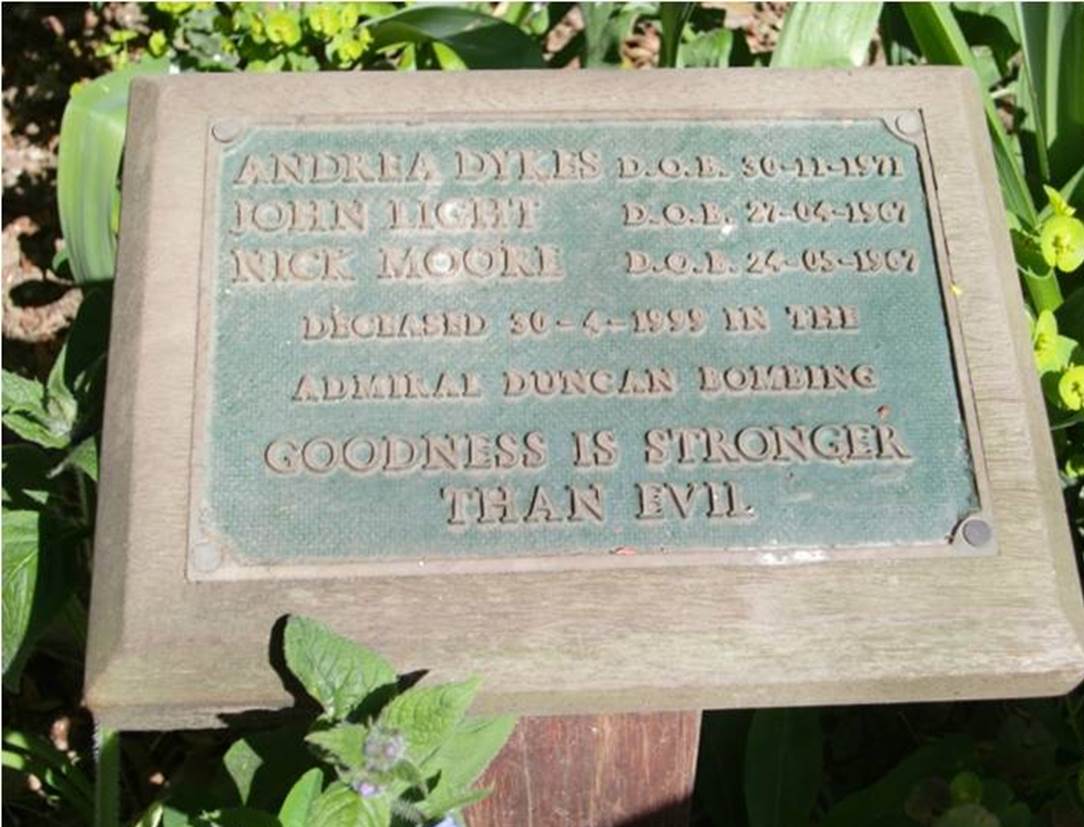
Andrea Dykes 27, Nik Moore 31 and John Light, 32 were killed. Andrea was four months pregnant at the time. Around 70 people were injured.
Days after the attack, Peter Tatchell and members of the activism group Outrage organised a vigil outside the pub.
Copeland was captured that same evening. He had terrorised Londoners with two other bombings, one in Brixton on the 17th and one in White Chapel on the 24th. His two other bombs, fortunately, did not kill anyone. It was thought that Copeland was trying to stir up race and homophobic tensions.
Copeland was convicted of three murders and three offences of planting bombs on 30 June 2000 and given six life sentences. The minimum time he’ll spend behind bars is 50 years.
Read more about the attack here and to see pictures from the attack click here.
Pride in London joins 17-24-30 NationalHCAW to mark 20 years since Admiral Duncan bombing
On 30th April 1999 a nail bomb attack at the Admiral Duncan pub in Soho killed three people and wounded 79
Soho attack followed two other nail bombings in Brixton on 17th April and Brick Lane on 24th April as part of a homophobic, racist terror campaign
Soho Act of Remembrance marking the 20th anniversary of the attacks will take place at 5pm on Tuesday 30th April outside the Admiral Duncan
Pride in London is joining anti-hate charity 17-24-30 NationalHCAW (National Hate Crime Awareness Week) this Tuesday (30th April) to mark the 20th anniversary of the London nail bombings and remember those killed during the attacks: Nik Moore, Andrea Dykes and John Light.
An Act of Remembrance marking 20 years since the attacks is planned for Tuesday evening, starting outside the Admiral Duncan and then moving round to St Anne’s Gardens on Wardour Street. The latter part will feature speeches from: Rev Simon Buckley, St Anne’s Church; Mark Healey, Founder 17-24-30 NationalHCAW and Cllr Ian Adams, Westminster Council – as well as three poems read by Trudy Howson, LGBT Poet Laureate; Terry Morely, Nik Moore’s aunt and Natalie Patterson, Andrea Dyke’s sister, and performances by the London Gay Men’s Chorus, the Pink Singers and Diversity Choir.
The bombing in Soho followed two connected attacks in other parts of the capital: Brixton on 17th April and Brick Lane on 24th April. Though there were no fatalities, 61 people were injured by the blasts. These attacks were racially-motivated and targeted the black community in south London and the Bangladeshi Muslim community in the East End. Smaller acts of remembrance took place in both locations on the respective dates as part of 17-24-30 NationalHCAW’s April Acts of Remembrance.
Mark Healey, Founder of 17-24-30 NationalHCAW, said, “It’s hugely important that our communities come together to mark the anniversaries of these horrendous events. We have a duty to remember those we lost, to show our ongoing support to those affected by these attacks, and most importantly to educate the next generation to make sure these kinds of attacks never happen again.
“We’re good at dealing with the immediate aftermath of these kinds of attacks but more needs to be done to deal with their longer-term impact on our communities. Some of the survivors and the families affected by these attacks are still suffering and need more support. I hope our April Acts of Remembrance inspire people to get involved, to build stronger links between all our communities and ensure there is no place for hate amongst us.”
The Soho Act of Remembrance will take place at 5pm on Tuesday 30th April outside the Admiral Duncan on Old Compton Street, Soho. So the organisers can gauge how many people will attend, please register here if you plan to join the act of remembrance.
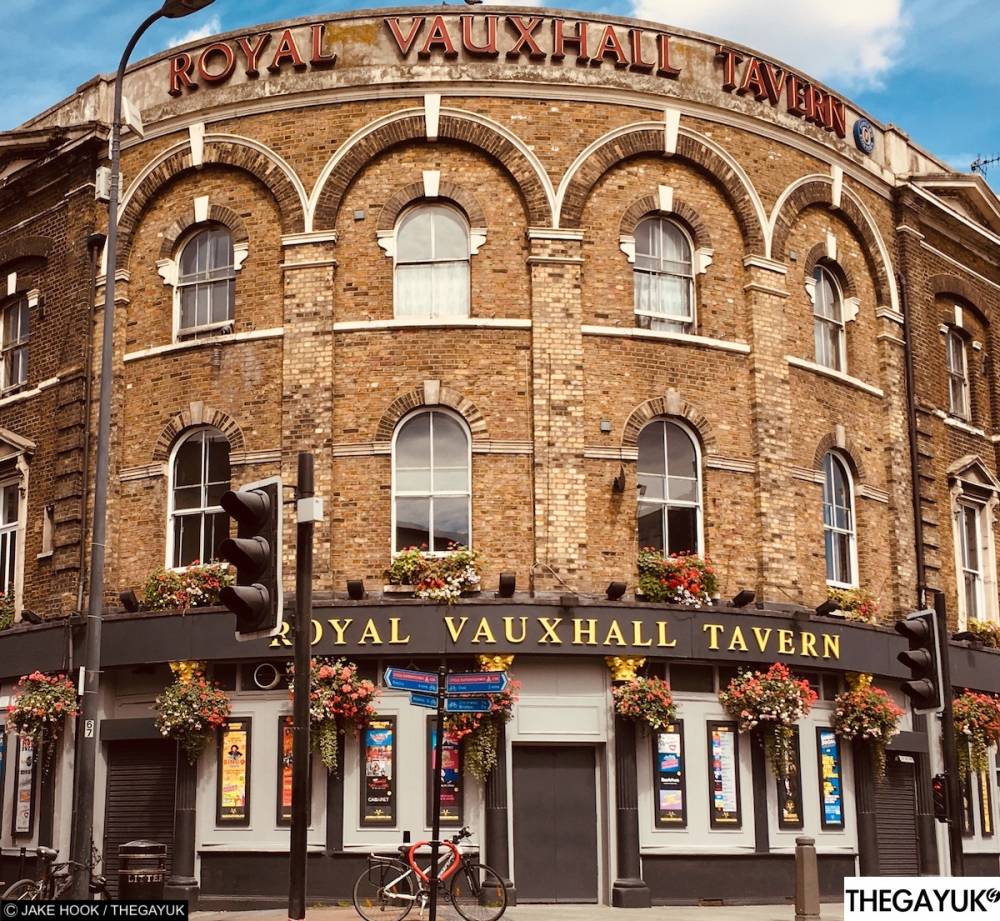
London has a rich history of drag from the Royal Vauxhall Tavern to the now-shuttered Black Cap, here’s the best place to go to catch some drag in the UK’s capital.
Central London
Admiral Duncan
If you’re in central London, i.e. Soho, there’s really only one place to find drag every night and that’s at the Admiral Duncan. It’s a friendly traditional pub in the heart of Soho (Old Compton Street). It has regular drag from the likes of Mary Mac, Sandra, Baga Chipz and Cookie Monstar. See what’s going on at their website.
Halfway II Heaven
Is another great haunt to see some traditional drag queen shenanigans with queens appearing almost every day of the week, right on the doorstep of Trafalgar Square (where Pride In London is hosted). Whether you’re into karaoke, lip syncing or good old fashion cabaret this venue is a must watch. See what’s going on at their website.
East London
The Glory
The home of East London Drag, the Glory is a highly rated queer space in the heart of East London with events almost every night of the week. See what’s going on at their website.
South London
Royal Vauxhall Tavern
One of the oldest, if not the oldest venue in London just south of the river in Vaxuhall. With shows from Duckie to David Hoyle the Royal Vauxhall Tavern offers a cool, queer as f**k experience that mustn’t miss if you’re in London town. See what’s going on at their website.
Two Brewers
This is a MUST go venue if you’re in south London (Clapham). It’s legendary and it’s drag from wall to wall. It’s also got a great value for money bar and friendly bar staff. See what’s going on at their website.
In 1999 a nail bomb went off in the popular gay pub The Admiral Duncan, killing three people.
Three people were killed and dozens injured when a bomb, left in an unattended bag, placed by David Copeland, exploded on the 30th April 1999.
Andrea Dykes 27, Nik Moore 31 and John Light, 32 were killed. Andrea was four months pregnant at the time. Around 70 people were injured.
David Copeland was captured that same evening. He had terrorised Londoners with two other bombings, one in Brixton on the 17th and one in White Chapel on the 24th. His two other bombs, fortunately, did not kill anyone. It was thought that Copeland was trying to stir up race and homophobic tensions.
Copeland was convicted of three murders and three offences of planting bombs on 30 June 2000 and given six life sentences. The minimum time he’ll spend behind bars is 50 years.
Read more about the attack here and to see pictures from the attack click here.
A number of LGBT+ activists have taken to the streets of London to reclaim LGBT history.
CREDIT: Sexual Avengers
Activists from the campaign group Sexual Avengers have taken to the streets of London to mark various landmarks with special blue plaques to “reclaim radical” LGBT+ history.
The Sexual Avengers have taken over often ignored sites of LGBT history including, The House Of Lords, The Admiral Duncan and the home of Black Pride.
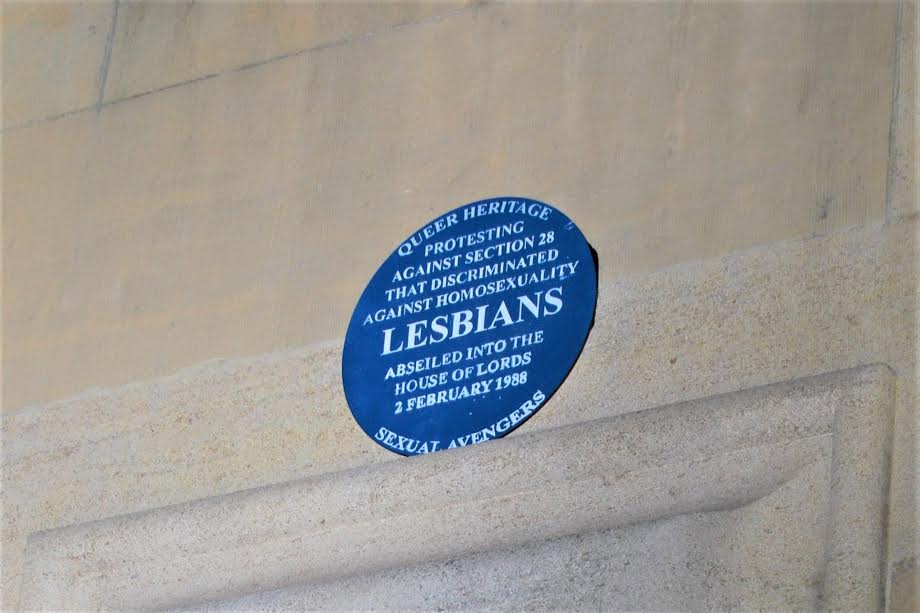
Security guards at the House of Lords were “baffled” as four lesbians scaled the outside wall to affix a specially designed blue plaque with the words “Queer Heritage” emblazoned on it. The move mirror the actions of four lesbians who climbed the building in 1988 during the Section 28 debate.
CREDIT: Sexual Avengers
CREDIT: Sexual Avengers
Speaking about the stunt, Sexual Avenger Lucy Warin said,
“For us, the personal is political. I’ve grown up queer in a straight world that tells me I’m allowed to be gay, but not ‘too gay’.
“As a community we don’t get to celebrate our personal history much – straight people can’t identify the place they ‘come out’, they didn’t lose their virginity ‘in the closet’ and they probably can’t name one of the multiple places on public transport where I’ve lowered my voice or degendered my partner when telling a friend about a relationship.
“There should be no shame attached to these sites. We have to uncover our history to celebrate and learn from it.”
CREDIT: Sexual Avengers
Sexual Avenger Ariana Jordão, 33, attached the plaque to the House of Lords.
She said,
“We did this to celebrate collective acts of queer resistance. The House of Lords represents the powerful who ignore the interests of the few, so this is about visibility, creating something that’s impossible to ignore – a rupture in the impenetrable powerhouse. It felt awesome standing on the shoulders of giants, and of my friends.” Ariana is a biologist, artist and gardener.
Sexual Avenger Dan Glass said,
“Radical queer history is full of hope, full of hard fought campaigns by committed groups and individuals that have won us the rights we now enjoy today. London is unique as a ‘gay friendly’ city with no permanent LGBTQIA+ museum or cultural space: comparable cities such as Berlin, San Francisco or New York all have such a space. We demand a queer cultural space to understand where we’ve come from, and how far we still have to go to achieve equality, especially for the most vulnerable members of our community.”
The activists plan to target a number of spaces in London, including:
The House of Lords, where four lesbian activists abseiled into a debate to protest queerphobic Section 28 legislation, 2 February 1988
Vauxhall Pleasure Gardens, the current site of the UK’s only pride event organised by and run for people of colour, 2005 to present
and a number of LGBT clubs that have closed in recent years.
The Hoist, 1995 to 2016
The Black Cap, 1965 to 2015
The George & Dragon, 2002 to 2015
Barcode, 1996 to 2015
The Joiner’s Arms, 1997 to 2015
Candy Bar, 1996 to 2014
First Out Café, 1986 to 2011
London Astoria, 1976 to 2009
Ghetto, 2001 to 2008
The missing original plaque dedicated to the three victims of the Soho nail bomb attack in April 1999 has been replaced ahead of memorial event tomorrow evening.
The nail bomb, which went off on the 30th April 1999 in the Admiral Duncan was aimed at the gay community in Soho. It was the 3rd of three attacks planned and orchestrated by David Copeland who is currently serving six concurrent life sentences and in 2007 the High Court ruled that he must serve 50 years.
A replacement plaque has been ordered and will be on display at tomorrow’s memorial event held in Soho.
Cllr Ed Argar, Westminster City Council cabinet member for city management, said:
“I find it appalling that anyone would steal the memorial plaque remembering those who died and were injured in the horrific Soho bombing of 1999.
“We have moved swiftly to get a replacement memorial delivered and installed ahead of the 14th anniversary of the Soho bombings tomorrow (Tuesday 30th April), having been alerted to its removal, and we hope it will be in place later today.”
The new plaque has cost £260, with half being paid by Westminster City Council and 17-24-30.org paying the other.
The replacement plaque will be installed this afternoon and reads:
The original Soho Bomb memorial plaque has gone missing according to Mark Healey, the founder of the anti-hate campaign 17-24-30.org, from its position in St. Anne’s Gardens in Soho, London.
The memorial remembers the three victims who lost their lives in the blast which ripped through the popular Soho pub, the Admiral Duncan in April 1999, killing Andrea Dykes, John Light and Nick Moore.
The Soho nail bomb was the 3rd of three attacks planned and orchestrated by David Copeland. He planted the other two bombs in Brixton (17th April 1999) and Brick Lane (24th April 1999).
He is currently serving six concurrent life sentences and in 2007 the High Court ruled that he must serve 50 years.
In a statement from 17-24-30 the organisers of the Act Of Remembrance which is to take place on the 30th April have said that, ’17-24-30 have agreed to help cover the costs so that it can be ordered straight away and hopefully in place ready for the service on Tuesday 30th April – marking the 14th anniversary of the attacks.’
The new plaque will cost £260 and it is hoped that it will be delivered and installed before Tuesday’s service.