Tag: Birmingham Rep

All the latest breaking news on the Birmingham Rep. Browse The THEGAYUK’s complete collection of features and commentary on the Birmingham Rep and the LGBT+ community.

  • THEATRE REVIEW | Tommy The Musical, Birmingham Rep

    ★★★★ thrilling and emotional

    One of the most influential UK rock and roll bands, The Who were formed in 1964 in Shepherd’s Bush, London. In 1969 The Who created a unique concept album called Tommy, and it quickly became a cultural fete. In 1975, Ken Russell adapted the album into one of the best and biggest films with an all-star cast starring Tina Turner, Elton John, Eric Clapton, Jack Nicholson, and more.

    New Wolsey Theatre and Ramps on the Moon collaborated to bring to life Tommy The Musical to the main stage as a daring musical. The Who’s Tommy musical was a sad, gritty and powerful tale about a boy who is ‘deaf, blind and dumb’ and at the mercy of Uncle Ernie (Garry Robson) who ‘fiddled about’ with him at night; Cousin Kevin (Lukus Alexander) who bullied and taunted Tommy, and a thug of a stepdad Frank (Alim Jayda), relentlessly trying to ‘solve’ Tommy’s disabilities.

    Tommy The Musical, directed by Kerry Michael, was extra special for it allowed the opportunity for actors who are D/deaf, disabled and non-disabled to work together to produce an eerie and fantastic production with all-audience accessibility. Through embedded audio description, creative captioning and integrated British Sign Language, everyone could engage and be a part of the musical.

    Tommy (William Grint) was phenomenal. William really brought to life the chronicles of Tommy’s life and was sublime in the delivery. What Tommy went through, was hard and gruelling, and William did an amazing job showcasing the outcomes of so much abuse. His two voices (Julian Capolei and Matthew Jacobs-Morgan) were perfect for Tommy’s voice, in particular, Julian’s voice, which was so powerful and pleasing to the ear. Tommy’s mother, Nora (Donna Mullings) was also formidable, really conveying emotion without speaking a lot, and when she did, it was potent and emotionally charged. The best voice in the production was the actor playing Nora’s voice (Shekinah McFarlane).

    The outstanding performer of The Who’s Tommy was Acid Queen (Peter Straker). In the film, Acid Queen is played Tina Turner, and for this production, it was a man dressed in drag, which was a very progressive touch to the production. Peter’s voice was stunning and his overall performance was commanding – this was the highlight for me.

    This is an excellent idea, and we need to see more theatre productions reflecting stories through actors who are physically affected by the context of the plays.


  • THEATRE REVIEW | To Sir, With Love, The Birmingham Rep

    ★★★★ – What theatre is all about!

    Photo Credit – Graeme Braidwood

    Adapted by Ayub Khan-din for Birmingham, To Sir, With Love had its natural charm and appeal to the audience of The Rep. The local, ‘banterous’ fun was well appreciated and received for many laughs were heard in the auditorium. What also impressed me, and I found highly commendable, was the extent to which The Birmingham Rep invested their efforts into nurturing young, new and home-grown talent via The Young Rep Company.

    Every young person shone and were utterly convincing in the roles they played, conveying a variety of emotions with much maturity. Charlie Mills who played Denham, stood out for his aggressive demeanour at the start, and the 360 degree turn at the end. His transition from delinquent to amicable was very warming to witness. Alice McGowan portraying Pamela performed with delicateness but fierceness too and, though her part was smaller, Alice really invested her time to move elegantly and speak with natural flair in-line with the character’s traits. Eden Peppercorn, who played Monica, did really well in contributing to the chaos and challenge of Mr Braithwaite’s initial classes. Her subtle change of heart was well developed and endearing too. Phillip Morris, local actor who trained at Birmingham School of Acting, did a sterling job, to the point of gripping the audience all the way through while fully harnessing the moments and challenges in which his character found himself in. Phillip Morris was a star of the play, and I believe this opportunity granted by The Rep will no doubt further his career in the theatre industry.

    I really loved the thorny fun had between the characters of Mr Weston and Clinty, played by Matt Crosby and Polly Lister respectively. Polly really embodied the locality of the adaption through her West Midlands accent, and she was much joyful to watch, with exquisite comedic timing. Matt was a treat to watch too, and he must have channelled a teacher he knew, because his portrayal of Mr West really made me, and I’m sure others, reminisce, not very fondly, teachers from our pasts; or for those in the profession, education staff would probably relate too.

    Plays are instrumental to teach people their own history. To Sir, With Love did just that. It gave us flavours of the past mixed with contemporary seasoning. It was a feast to be lapped up! Using young talent really made the production special and very memorable, and I hope to see the young actors on stage again soon, as they so deserve it!

    Running until 6 May.

  • THEATRE REVIEW | One Love: The Bob Marley Musical, The Birmingham Rep

    ★★★★★ | One Love: The Bob Marley Musical

    Played with your heartstrings and lullabied your soul

    © Helen Maybanks

    Few names exist in the music industry where sparks have spread like wildfire across the world. Bob Marley was certainly the sensation that reached many people around the globe, and the feeling that ripples still decades later. Bob’s vision, talent and style have made him an eternal flame.

    The Birmingham Rep hosted ‘One Love: The Bob Marley Musical’, and an epic event it was! Written and directed by Kwambe Kwei Armah, ‘One Love’ celebrates the icon Bob Marley in a delicate, timeless and memorable way. Through the history of his early music career to his later achievements, the audience were transported on a journey evoking nostalgia and emotion from the depths of your core.

    Mitchell Brunings played Bob Marley in an effervescent way that drew you in instantly, and commanded the stage with mastery and ‘next-level’ leadership, as the remaining characters shone around him; upscaling the standard of the production. It was a flawless performance by Mitchell. As an ensemble, every artist was terrific and invested every ounce of energy into every move and musical note. Alexia Khadime who played Rita Marley was the second star of the show second to Mitchell Brunings, with her gifted musical range and was absolutely captivating in her acting. Alexia really added to the drama and darkness of the story and handled emotion expertly.

    The Redemption Song was my favourite moment in the show as the track was beautifully arranged to illustrate the moment Bob Marley’s life turned 360 degrees, returning to his routes.

    ULTZ designed the production and a vision that was fitting with the ambition of the show. Using multimedia against sets, creating moments in time with real footage corresponding with key events shown in the musical. People need to see this show for the education, entertainment and the ride down memory lane were as sweet as guava jelly!


  • THEATRE REVIEW | Cirque Berserk, Birmingham Rep

    THEATRE REVIEW | Cirque Berserk, Birmingham Rep

    Dangerous, daring but a little spark-less  ★★★

    ©circusphotographer.com

    This is the second time that I have seen Cirque Berserk at the Birmingham Rep, and I have mixed feelings. Mostly, I really enjoyed the acts, and there were moments that got you on the edge of your seat, gasping in horror; but others that made you cringe.

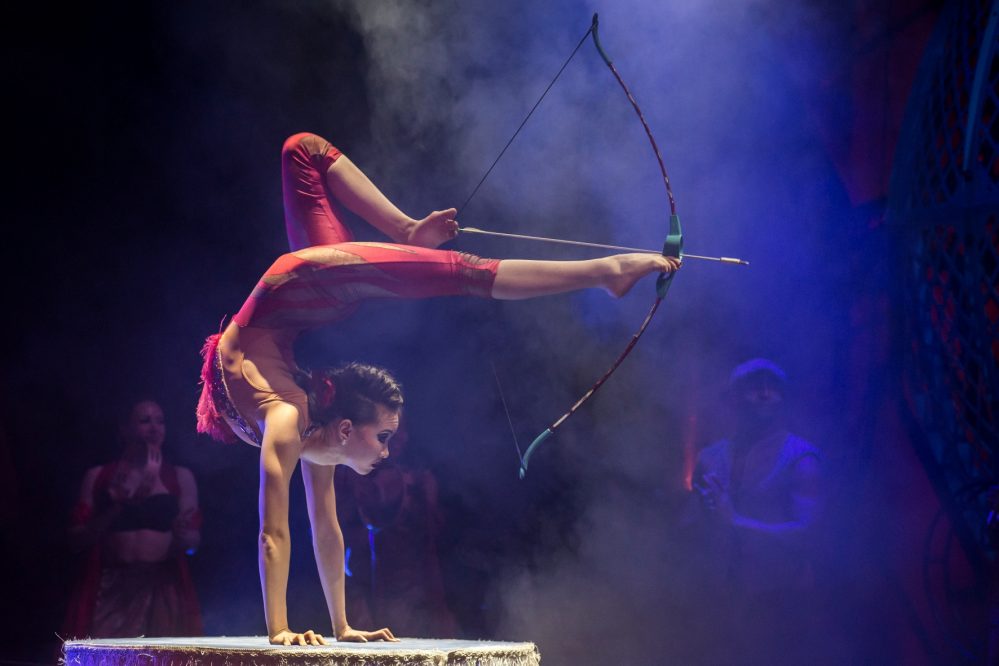
    There were your usual circus’ performances such as acrobatics, flame juggling, and even a clown character, which was quite funny; it was funnier when you heard the children laugh out loud in the audience at his every gag. The acts that stood out were Tropicana Troupe, a Cuban acrobat team that catapulted themselves across the stage landing perfectly on a crash mat, and in the second half flying halfway across the air to land precisely on a chair high up off the ground. Of course, their god-like bodies were also a show-stopper. Jose and Gaby performed a stunning contemporary/acrobatic dance routine where Gaby suspended herself with just one hand using Jose’s forehead as support. This blew the audience away, and we were glued to their beautiful movement throughout. Odka was also incredibly mesmerising to watch as a contortionist; Odka shot an arrow against a target by using her feet! Then we saw her spill out of a small bottle-like container. The four motorcyclists inside a metal dome they call – Globe of Death – was extreme and jaw-dropping, and was a brilliant way to end the show.

    The other artists appeared little awkward and kept demanding rounds of applause which took away the moments that were really stunning and hand-clapping worthy. Bolas Argentina were very good in the second half, but the first half it was awkward when Germaine tossed the bolas against a springboard but it was a lacklustre effort. Then, Gabriel did a similar trick and it had so much more energy and rhythm to it. The Berserk Dancers were disappointing, as every time they appeared on stage, it looked like they were forced to be there and it made some moments cringing and laughable with only one or two really going for it. Timbuktu Tumblers were very good, but again, a lot of applause begging after every little thing. British audiences, I guess, like to be left alone and want to clap when they feel it necessary. It was especially awkward at the very end when the audience clapped, but the artists wouldn’t move until there was a complete standing ovation, which ended with an unenthusiastic standing ovation from half of the audience.

    Overall, enjoyable, but for a circus with some very good acts, it lacked a punch.

  • THEATRE REVIEW | William Shakespeare’s Long Lost First Play (Abridged)

    THEATRE REVIEW | William Shakespeare’s Long Lost First Play (Abridged)

    Delightful, charming and uproariously funny. ★★★★★

    © Geraint Lewis

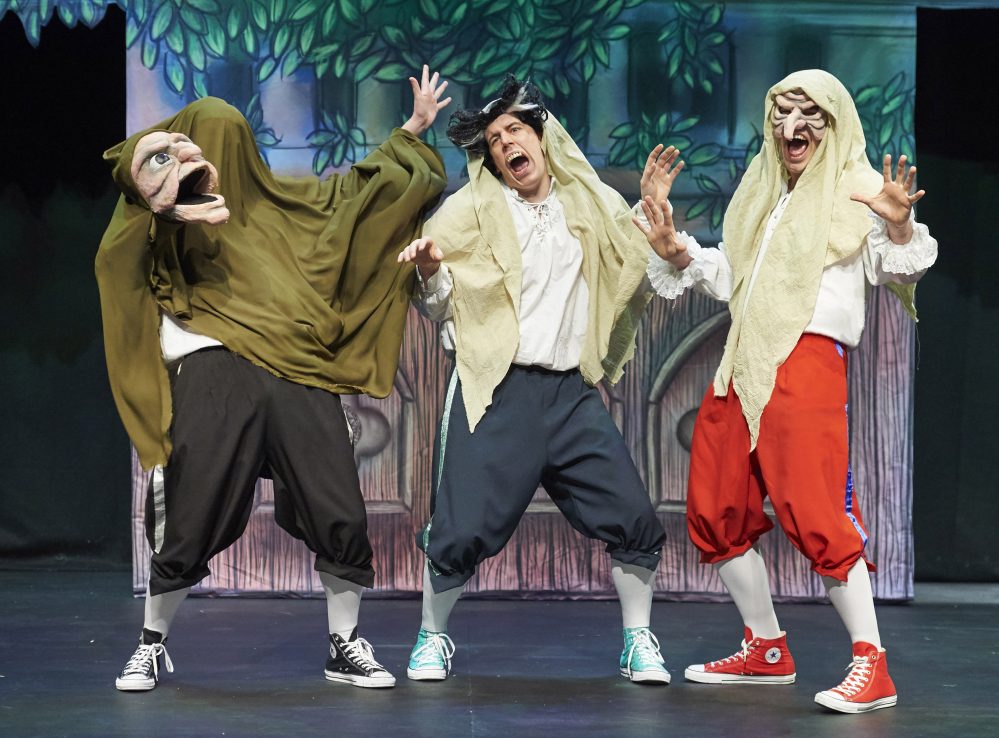
    Reduced Shakespeare Company put on a masterful performance combining Shakespeare’s most and least known plays and characters into a fiendish cauldron, summoning up hilarious crossover tales that made the audience laugh out loud. Reed Martin and Austin Tichenor designed ‘William Shakespeare’s Long Lost First Play’ with all Shakespeare levels in mind. Whether you are a beginner or a scholar, there was something for you to laugh at, recall the connection, and laugh again. Perhaps rekindle fond memories of school, rehearsal and at a theatre.

    The three actors commanded their craft with expertise and mastery. It was very clear, very quickly, that Joseph Maudsley, Matthew Pearson and James Percy had studied, played and understood the plots and twists written by the Bard. I chiefly loved the scene in which one actor was attributing Disney connections with Shakespeare’s plays. The ‘Frozen’ and ‘A Winter’s Tale’ link was one of the funniest moments because when the other actor contested that connection, the other said ‘let it go’. The speed in which the three actors morphed, transformed, and changed to represent the different characters was astonishing, as well as the effervescent energy that glued the audience to their every move. The plot crossovers were also something to remember, in particular, Lady Macbeth coming onto Hamlet, and Richard III getting it on with Falstaff. It was so enjoyable to watch the twists and contrivances that got them to be together. Archenemies Ariel and Puck were the thread that brought the stories together, played by Joseph Maudsley and James Percy respectively, convincingly demonstrated that all of Shakespeare’s plays could coexist in the same universe. Who knew?

    The set was very stripped down with only one arch as the backdrop. However, this made it even more special because it became all about the actors, with their props and fanciful attires that coloured the stage with the gags, tricks, and exquisite storytelling that we saw last night. I want to see them again!

    Running 14th and 15th February.

  • THEATRE REVIEW | Stories To Tell In The Middle Of The Night, Birmingham Rep

    Stories To Tell In The Middle Of The Night written and performed by Francesca Millican-Slater was not what I expected. ★★

    © Graeme Braidwood

    Its premise explores the many thoughts that people have before trying to fall sleep, and then still not being able to do so hours later. It’s a great concept for many of us can relate to the drivel that goes through our minds prohibiting our brain to switch off and go to sleep. However, Francesca’s stories were too disconnected for the average person to relate to. The odd story resonated some recollection in the back of our memory archive – like the supermarket couple scenario, but the rest were just tales that didn’t quite grip spectators, having to wait a while for a punchline. It would be a great sketch for a Spoken Word night, but as performance it lacked spark. We were merely watching a woman talk about things that go on in her own head. Sadly, they were things that not many people could connect to, alienating us in parts. It was neither comedic, nor was it dramatic. Stories To Tell In The Middle Of The Night would have been something to play on the radio to help you fall asleep.

    There were some poetic notes to the writing. So, audibly, and in some instances, it was pleasing; particularly when Francesca came back to the middle podium and described where we were in the night using astronomical angles and nautical references to help us imagine the arrival of the dawn, and the familiar feeling of ‘oh shit, I need to be up in a few hours’.

    The Rep Foundry is a fantastic programme that gives new writers the opportunity to create, and later perform, their own work. Perhaps the next draft would benefit from a framing device whereby the three podia that the protagonist utilises may represent the id, ego, and superego of the insomniac psyche portrayed. As it stands, the stream of consciousness text is lost in the back waters.


  • THEATRE REVIEW | What’s In A Name, Birmingham Rep

    THEATRE REVIEW | What’s In A Name, Birmingham Rep

    ★★★★ | A modern farce that delivers ounces of emotion, comedy and suspense. A full platter!


    (Photo credit: Robert Day)

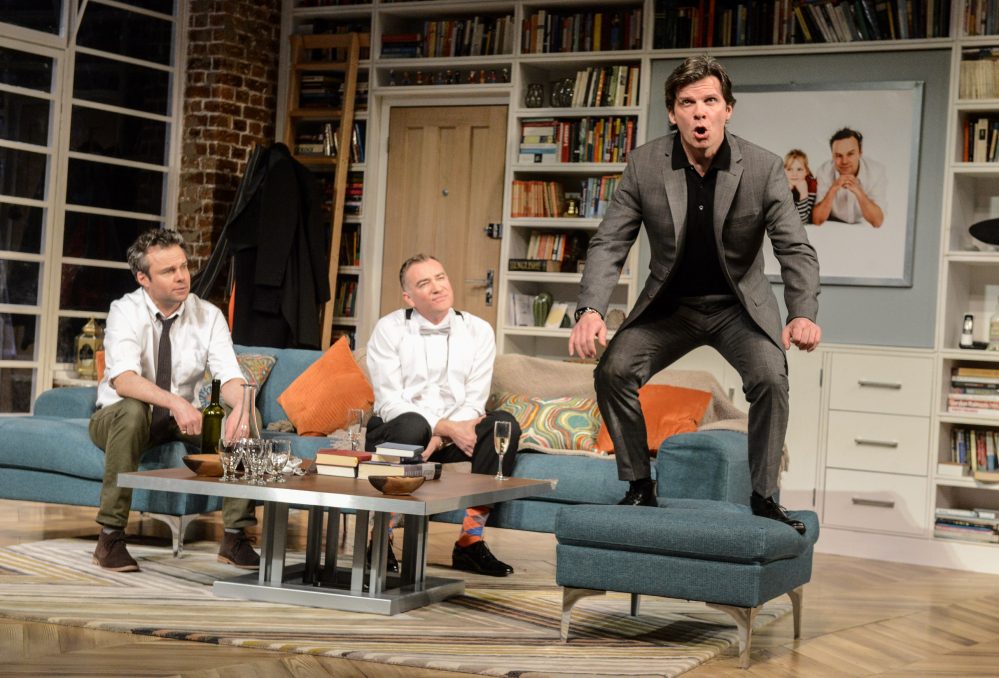
    What’s In A Name, written by Alexandre De La Patellière and Matthieu Delaporte, stages a dinner party packed with many surprises and twists that kept you on edge, and slightly edgy, while holding your belly for laughing. It is set in London, and the story centres itself around the name of Adolphe which Vincent jokes about calling his son when he is born. The story then darkens as secrets are revealed within each of the five guests.

    Sarah Hadland, who most would remember as Stevie in Miranda, stole the show with her multi-emotional portrayal of Elizabeth. Sarah was completely natural and every line and action was delivered with sheer dexterity and conviction. I was so happy to see Sarah aka Stevie up close, and to not see her as Stevie at the same time, which was something I really enjoyed. Raymond Coulthard was magnificent as Carl, and was great to see him back at the Birmingham Rep after watching him in King’s Speech. Carl carried the biggest secret and Raymond played the audience well, never giving any of it away. Nigel Harman, Eastenders, was formidable as Vincent, Elizabeth’s younger brother. Nigel conveyed him with such energy and natural flair that one could not help but be drawn every time he spoke and moved. Jamie Glover was excellent with his cross-examining scenes as Peter, challenging Vincent and others to prove a point. He made the set appear like it was his own home with the way he perched on or leaned against features in the front room signalling natural familiarity. Olivia Poulet as Anna was a great ingredient to turn the drama on its head with coming in quite late and revealing a hidden secret. Olivia was charismatic and held her own against the other theatrical titans.

    I seriously suggest everyone go and see this as it draws you in with the clever humour and sophisticated drama – you just didn’t know what you were going to get!


  • THEATRE REVIEW | Pride and Prejudice, The Birmingham Rep

    ★★★★★ | Pride and Prejudice, The Birmingham Rep

    CREDIT: Johan Persson

    Masterfully personifies Austen’s work of art.

    I remember reading Pride and Prejudice in my early teens, and recall falling in love with characters and the way they came to life on every page. Last night, Simon Reade’s stage adaptation delivered the feeling of nostalgia and I couldn’t help but fall in love again.

    It is quite rare to see a cast where every character, minor or major, stand out equally, and contribute superbly to every scene they are in. This was true of Pride and Prejudice. I was blown away by the humour, the tension, and the vulnerability that every actor was able to portray throughout the production. Matthew Kelly did a sterling job as Mr Bennet, with his on-point comedic timing and powerful voice that rippled through the auditorium. The shining actor was Felicity Montagu who played Mrs Bennet, and what a sensation she was. Felicity was the true embodiment of the role and from minute one she had you in stitches. The dour portrayal of Mr Darcy by Benjamin Dilloway was accomplished and perfect for the character, showing Benjamin’s versatility, for his change of mood when he confesses his love to Elizabeth Bennet was more heartfelt and the audience were drawn in. There were some ‘awwws’ when he professed his true feelings to Elizabeth. Elizabeth Bennet, portrayed by Tafline Steen, was a whirlwind. Headstrong, charismatic, un-lady like, and the Elizabeth I envisioned when I first read the book. This was a typical feeling I had, as every role was expertly crafted to suit the novel, making it a magical experience for the Austen aficionados. Doña Croll’s Lady Catherine De Bourgh was a sensation and the epitome of the high class of the era. Her characterisation was composed, edgy and a little on the dangerous side.

    The set, as well as the props and effects, transported the audience into the early 1800s where ‘things’ were seen of more value than people. Gossip and hearsay were a constant pleasure manifested in the society of the era, and Austen did a brilliant job capturing it. Simon Reade outdid himself by introducing to us the story we cannot help but go weak at the knees at every time.

    I was so impressed by the energy and enthusiasm shown across the production that I want to see it again and again, and haven’t stopped recommending Pride and Prejudice to friends. Perhaps that is why there are scarcely any seats left!


    Pride and Prejudice plays at the Birmingham Rep until 12th November

  • THEATRE REVIEW | What Shadows, Birmingham Rep

    ✭✭✭✭ | What Shadows

    CREDIT: Ellie Kurttz

    Is prejudice innate or learned? Is racism okay if everyone is? And is there such thing as racism equality? These are some of the questions that What Shadows evoked, and are still riddling my mind.

    In 1968, Enoch Powell made a speech in Birmingham that created a fissure along the street where it was famously delivered and divided a nation with words that scarred those who became a target of it. The Birmingham Rep put on the production of What Shadows and a troubling moment of history was resurfaced.

    In the Studio Theatre, real trees had been planted to give the idea of wilderness and lighting cast shadows on the wall for different moments of the play. I found myself staring at them a lot to figure out their purpose, and it dawned on me, halfway through, that the trees were probably the same ones that had witnessed history across the decades that the play was set in. They were the shadows of time.

    Cast-wise, each performer was equal in acting craftsmanship. Most actors multipart played different roles showcasing dexterity and natural flair, which contributed to an extremely believable production that took you on a chronological journey of identity. Chris Hannan, the writer of What Shadows, summoned a mixture of feelings in the audience, and without bias, created a story that made the audience ask and debate inwardly how they felt about their own identity: what is natural for human beings to feel? And, is double standards of racism correct?

    Ian Mcdiarmid not only looked the part but his physicality, as well as his tone of voice, were uncannily accurate. The power and fragility of Enoch was brought out by Ian in a subliminal way, and it was one of those performances that stunned you and made you feel incredibly glad to have had the opportunity to watch it.

    Bríd Brennan played Enoch’s wife, Pamela, and Sofia Nicol, an unrivalled genius of the early 90’s, which were played in a delicate and powerful way. The actor who stood out for me for his passionate, strong and utterly convincing portrayal of the Sultan was Phaldut Sharma. When he begged for his wife, Grace Hughes (Paula Wilcox), to remember him was close to tear-jerking, and the racial divide was felt the strongest when he gave a speech about serving with the Punjabi regiment and in the British Army as well as being a comrade of Enoch’s, and then Enoch’s dismissal and belittling of the sacrifices made by his regiment brought racism home. A superb performance I will never forget.

    Paula Wilcox did a sterling job as Grace Hughes, a lady who lost her husband during the war, and embodied, with impeccable skill, a racist resident in Birmingham who sided with Enoch’s views, but when she got to know the Sultan, the racial tension fell away, and left room for love.

    What Shadows plays at The Birmingham Rep until the 12th November

  • THEATRE REVIEW | THE EXORCIST, THE BIRMINGHAM REP

    ★★★★★ | The Exorcist was a frightening occasion with jumps, bumps, and lights were left on in my home.

    Robert Day


    The original ‘The Exorcist’ written by William Peter Blatty brought horror to U.K. cinemas in the 1970’s being banned in most of them, for people fainted, were sick and were left immobilised from the terror. The Birmingham Repertory Theatre developed the play version alongside Bill Kenwright, and playwright John Pielmeier for a U.K. premiere which happened on the 21st October.

    I was stunned immediately by the ambition of the set design and special effects used throughout the play. I previously thought it would be a play that was going to be hard to get a scared out of as you knew what was going to happen, as well as you are not manipulated by the sounds and editing that you normally experience in a film. However, The Birmingham Rep’s ‘The Exorcist’ took you by surprise and you daren’t bat an eyelid. The illusionist setting and apparition of the evil spirit were special effects you would see in a film now. The illusion design was masterfully developed by Ben Hart. The way the walls appeared to move and the dark cloud traveling along the set as the demon were just otherworldly!

    Robert Day


    The performance, delivered by the cast, matched the effects with equal conviction with Regan, in particular, played by Clare Louise Connoly, shining brilliantly. Clare’s multifaceted portrayal of Regan was sublime, and delivered every ounce with dexterity. She surpassed herself when becoming possessed with ambitious physicality and movement that contributed to the eerie ambience of the production.   Jenny Seagrove played Chris, Regan’s mother, and played her emotions very authentically as well as showcasing anger and fear very intelligently.

    Peter Bowl’s Father Merrin stole the show for me. He played the Father quietly, confidently, and made the audience feel at ease as the one who was going to solve the puzzle. An incredibly gifted actor whose short time on stage provided entertainment to the last second, and the audience hung onto every word he said. The flamboyant character Burke, played by Tristram Wymark, had genial comedic timing. A couple of times leaving some audience members in hysterics. Adam Garcia contributed to the sombre mood of the play with his portrayal of Father Karras, whose mother had been ‘taken by the devil’, and had died from the event.

    It was a well-accomplished production, with effects that could not be believed were possible, acting that was on point, with all characters providing an air of mystery and suspense; and the effects that made the audience jump, which to me was a treat that I won’t be forgetting any time soon.


  • THEATRE REVIEW | Dead Sheep, The Birmingham Rep

    THEATRE REVIEW | Dead Sheep, The Birmingham Rep

    A history lesson with outstanding features.

    Deep Sheep
    CREDIT: The Birmingham Rep

    Drama based on the rise and fall of Thatcher has been in production ever since the year she lost power. By the very nature, ‘Thatch- iopic,’ as coined by my theatre colleague, can be bitty and could potentially reduce long-standing working relationships and battles to single scenes or moments.

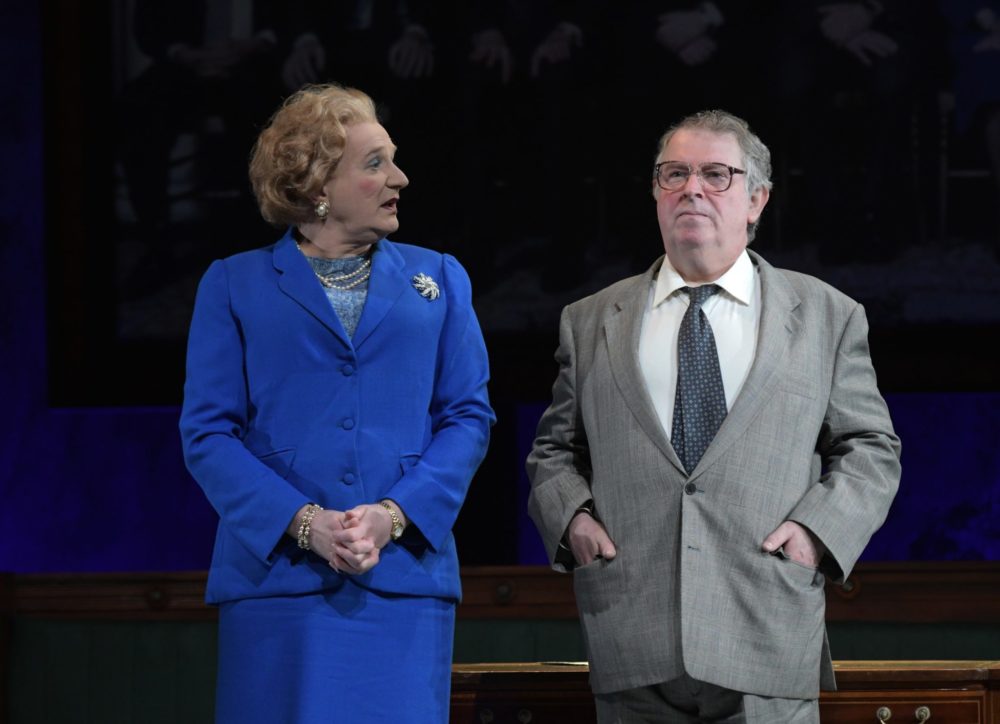
    Dead Sheep is a focused theatre piece in which the relationship between Margaret Thatcher (Steve Nallon), Geoffrey Howe (Paul Bradley, best known for playing Elliot Hope in Casualty), and his wife, Elspeth Howe (Carol Royle) take centre-stage. The triangle, where Howe finds himself in the middle of, is a tug-o-war that eviscerates Howe and forces him to choose one side. Torn between political loyalty and spouse angst, Bradley delivers a formidable and emotionally dynamic performance that was purposely understated to enhance the subtlety of the personality.
    The highlight and perhaps selling point was casting Margaret Thatcher as a man.

    Steven Nallon did an astounding job playing her, it was as if the Iron Lady herself was present before us with the line delivery as well as the movement, stunned and entertained the audience throughout. A couple of belly laughs were had.

    Three actors played narrators (Graham Seed, Christopher Villiers and John Wark) as well as politicians/minister in her cabinet. This entertained the spectators, but at times detracted from the action. Sometimes we just wanted to be shown the story as opposed to being told beforehand. It ruined the drama for us, in part.

    Overall, a successful and refreshing take on the ‘iron’ age of British politics, and as Jonathan Maitland (Writer) said: “But there is one corner the tractors seem to have missed.” What it was like for Geoffrey Howe at the right side of the force not to be reckoned with.