Tag: Electric Car Review

Find the latest reviews for electric cars available in the UK. We investigate range, how economic and expensive the latest electric models are.

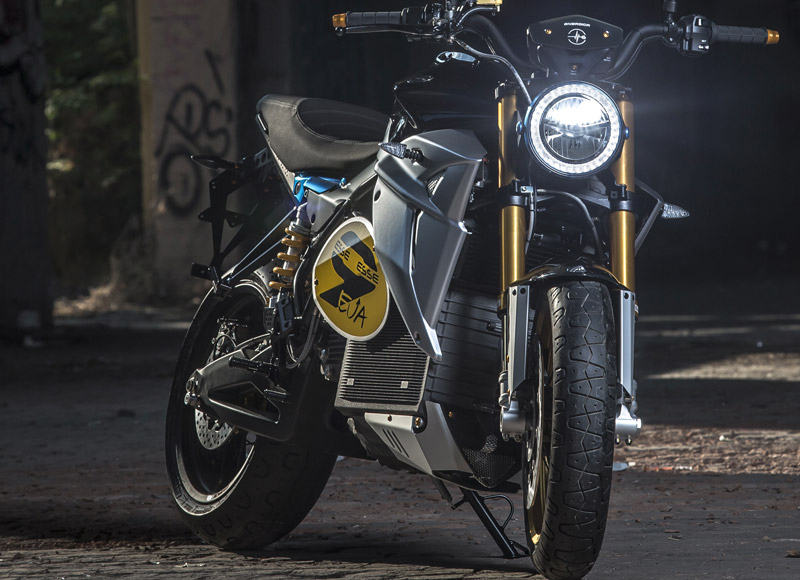
  • Energica EVA EsseEsse9 – The future is here

    Energica EVA EsseEsse9 – The future is here

    Old Empire Motorcycles was founded in 2010 through an absolute and enduring passion for everything two-wheeled. It’s one of the coolest and most respected custom motorcycle builders in the UK.
    They create a handful of one-off custom bikes annually, some of the most beautiful and innovative custom motorcycles in the UK. So beautiful in fact, they have been exhibited at Harrods London and at the Saatchi Gallery and won numerous awards from titles such as; Silodrome, Pipeburn, MCN and Cafe Racer TV plus they won the coveted Malle Mile Best of show. They have even won a Salon Privé award.

    A couple of years ago, Alec, the owner of Old Empire, embarked on a new venture, English Electric Motor Co or EEMC.

    EEMC is now one of Europe’s premier electric motorcycle retailers, yes electric motorcycles. Electric motorcycle sales are going through the roof. By the end of the 1st quarter 2019, registrations of electric mopeds, motorcycles and quadricycles were up by 71% in Europe. Ok, so the number is still pretty small but growing very fast. 

    EEMC has jumped in with both feet and are taking the bull by the horns. 

    I received an invite to try some of their bikes recently so I thought I’d go and see what all the fuss was about. 

    They laid on a range of their electric motorcycles to try. I could go on all day about them all so, long story short, I’ll tell you about the top of the range, the Energica EVA EsseEsse9.
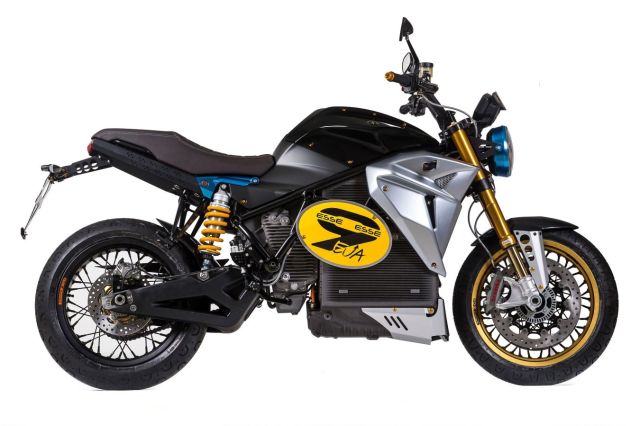
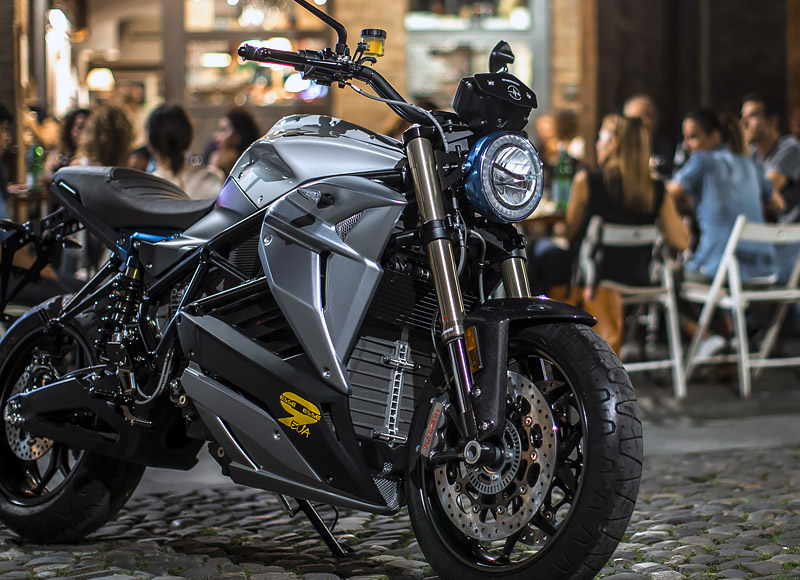
    It’s a naked bike, I guess like an Aprilia Tuono V4 1100 factory or Yamaha MT-10 SP. 

    As you can see, there’s no fairing, and you sit fairly upright. It’s all pretty typical. It looks slightly unconventional, with a battery pack and motor where the engine would usually sit, but other than that, it’s pretty familiar stuff.

    Energicas EVA EsseEsse9 makes 110 bhp which isn’t bad, however, it makes 180nm torque. An Aprilia Tuono V4 1100 factory, the benchmark naked bike, only makes 120nm torque. 

    Suspension is top of the line, quality stuff. Marzocchi 43 mm, fully adjustable for preload, compression and rebound damping.

    At the rear there’s a very nice Bitubo rear mono shock, also fully adjustable for preload, compression and rebound damping. It’s a quality setup and does a brilliant job.  

    Brakes are very impressive. Brembo front and rear with awesome feel and very strong.

    Front brakes are Brembo double floating 330mm discs with big 4 pistons radial callipers.

    The rear brake is a single 240mm disc with 2 piston calliper.

    Tyres are Pirelli Phantom which are a good all-rounder but I would consider something more performance-oriented personally. The front is pretty typical 120/70 ZR17 and the rear is 180/55 ZR17. 

    As is typical on top-end motorcycles, there are a host of electronics.

    Switchable Bosch ABS is standard and there are 4 Riding Modes: Eco, Urban, Rain, Sport.

    Energica, like some other electric motorcycles and cars, have regenerative braking. This generates electricity when you are on overrun or braking. It genuinely makes a difference too. I saw the battery % rise a couple of times! Regenerative braking is adjustable on this bike; 4 regenerative maps: Low, Medium, High, Off.

    Advanced traction control has six levels of intervention so you can dial it right back if you’re brave. Cruise control is standard too and uses the electronic brake to maintain speed and increase braking energy.

    A couple of the key differences between the Energica EVA EsseEsse9 on the competition are the oil cooled electric motor, meaning the motor temperature is controlled and there is less chance of thermal overload under heavy load. The controlled is water cooled for the same reason. 

    That’s all great but what’s it like to ride?

    Honestly, it’s amazing. 

    The cycle parts are all excellent. Brakes, suspension and steering are all superb. This bike corners hard and stops very well. 

    When you first pull off it’s pretty odd. More or less silent apart from some electric motor whine which is more pronounced on the Energica than on some other electric motorcycles. It has a chain drive too rather than the belt drive on most competitor bikes. I certainly feel safer with a chain taking 190Nm torque. 

    There are no gears and no clutch so you just twist and go…..and it really goes.

    Acceleration is breathtaking and relentless. 

    On the Energica EVA EsseEsse9, from the moment you twist the throttle, you have maximum torque. It’s the way electric motors deliver their power. 

    It means that every time you accelerate, you have an unrelenting, jaw-dropping acceleration. It just doesn’t stop. 

    Overtaking a car, for example, just wait for a gap, snap the throttle open and hold on’

    A conventional bike would have to change down a gear or two which takes precious seconds. In no time, the Energica is just a dot on the horizon. It’s like you’re always in the right gear at the right revs. 

    It accelerates as hard at 80 mph as it does at 40 mph too. It’s like nothing you’ve ever ridden. 

    It is absolutely brilliant and completely addictive. Accelerating out of corners, away from lights, in fact anywhere, it’s outrageous. I doubt many conventional bikes could live with it. 

    The two main criticisms of electric motorcycles are usually the lack of noise, and range/charging Infrastructure. 

    Noise is a double-edged sword. Anti-noise pollution legislation is becoming increasingly stringent, but it’s not an issue on an electric motorcycle. 

    Riding through a local village, I was completely unheard and didn’t interrupt anyone’s day. The same goes for track days; no issues with noise pollution if you’re on an electric bike.

    However, On a quiet country road, I passed some dog walkers and cyclists. Neither heard me coming until I was basically on them. 

    As for charging, the Energica with recharge from 0-85% in just 20 min with a level 3 34kW fast charger. Or you can charge 0-100% on a level 2 charger in 3.5hrs. 

    With a full charge, you can get around 70-120 miles, depending how you ride. Motorways on high load, higher speeds use more battery power and around town and on b road blasts, you get much more range.

    What about the cost? 

    It’s not cheap. You need to factor in that this is a very well built motorcycle with top quality components. You also need to remember you have very low running costs as there are hardly any moving parts, but most significantly, you don’t have to buy petrol ever again.

    The EsseEsse9 Standard is £20999 OTR* (*includes £1500 government subsidy)

    The EsseEsse9 Special is £21999 OTR* (*includes £1500 government subsidy) English Electric Motor Co have a demonstrator EsseEsse9 Standard for sale at the moment with only 960 miles on it for just £18990 (0% finance available)

    If this is the future then I can’t wait. It’s brilliant. 

    I would recommend anyone goes to their local dealer for a chat and a ride. In the UK give English Electric Motor Co a call. They’re awesome and really friendly. 

    English Electric Motor co

    Twitter; https://twitter.com/EngElecMotCo

    Instagram; https://www.instagram.com/englishelectricmotorco/

  • CAR REVIEW | Nissan Leaf Tekna

    If you see a modern electric car on the roads, there’s a very good chance it’ll be Nissan’s Leaf.  ★★★★

    First available back in 2010 with European sales starting a year later, over 180,000 have been sold in the last five years. With several major manufacturers releasing their own electric cars, is the Leaf still worth considering?

    One thing that hasn’t really changed in the last five years is the Leaf’s distinctive shape. If I’m being kind I’d say it reminded me a little of a Japanese Bullet Train although you do need to squint see the likeness. While not classically handsome, it’s distinctive and easy to recognise as an electric vehicle if you’re after a bit of social smugness.

    It also hides a very roomy interior, thanks in part to the packaging advantages you get with electric cars. With the battery mounted under the floor and the motor being compact, there’s a lot more room than you’d think possible in a car around the size of a Ford Focus.

    I liked the high mounted LCD display for speed as it was right in your line of sight even when looking at the road. There’s also another larger screen in the conventional location that shows charge levels and how quickly you’re draining the battery. A touchscreen in the centre of the dash takes care of the infotainment and proves easy to use if not as sharp to look at as other systems from rivals. Overall the interior is well put together but lacks the premium feel VW do so well.

    Rear seat passengers sit higher than those in the front so they can see out with both leg and headroom very good. The boot is large but disappointingly has a very high load lip; fine for light items but I wouldn’t want to wrestle anything too heavy up there. There’s a couple of canvas bags for the charging leads which hang either side of the boot which is nice but not as nice as a specific compartment as some electric cars have.

    Speaking of charging, you’ll probably want to know how long it takes and how many miles the battery is good for. According to Nissan, you can get over 120 miles out of a single charge but if we’re honest; this is quite tricky to achieve. You’ll need to drive at less than 40 mph with no heating, no air-con and a very gentle touch on the throttle. More realistic is around 80 miles (even I achieved it) if you don’t mind limiting your top speed to around 60 mph.

    Treat it like a petrol car with heavy throttle openings, air-con set to freeze and a good chunk of time spent at 70 mph and you’ll get even less. Still, the Leaf was never intended to be a long distance motorway car and to expect it to perform like one is unfair.

    For the vast majority of people on the vast majority of journeys the Leaf will have more than enough range. Once you do run out of juice, charging time depends heavily on the equipment you’re using. A rapid charger like you might find at motorway services can manage 80% charge in just 30 minutes however these are a lot more industrial than you might find at home.

    The quickest charger Nissan currently offer for home use takes around four hours, the standard offering around eight while plugging it into a normal plug socket will take an agonising twelve hours.

    In practice however, most people won’t use all of the charge in a single day while fast charge points are springing up all over the country. Even supermarkets are installing more and more of them whether you slum it in Asda or go posh in Waitrose.

    In the week I had the car, I never had less than twenty miles range when I parked up at a charger eliminating any range anxiety I might have had. Further helping this is Nissan’s ‘Carwings’ app which allows you to check charge levels remotely and even turn on the air-con from your smartphone. Impressive stuff.

    Those that enjoy driving will find the Leaf much better than they might expect. Compared to the Renault Zoe I tested recently, the suspension felt well set up offering good levels of comfort while still feeling pretty agile around bends. There was also none of the under-damped feeling you got from the French car – any body movement after a bump felt well controlled with no wallow.

    I never found myself yearning to go for a blast in the Leaf but neither was I ever unhappy with how it drove. Even acceleration is pretty brisk up to about 50 mph where it starts to tail off like most electric cars.

    All but lowly Visia trim get alloys, body coloured mirrors and privacy glass while the higher trims add bigger, snazzier wheels along with more and more toys. Although the top Tekna trim I tested was rammed with equipment including a punchy Bose stereo, incredibly handy around view monitor that gives a virtual bird’s eye view of the car and heated leather seats, most people would probably be happy with Acenta models that are £2000 less. The main consideration for many will be with regards to the battery; do you pay £5000 to own it outright or lease it on a monthly basis?

    Leasing may seem like a good option to protect yourself from potentially pricey battery replacement but they are proving very reliable. Some cab firms are reporting over 150,000 miles from the original pack with very little in the way of degradation while electric cars need much less in the way of servicing too.

    Although it may be five years old, the Leaf is still a compelling option not just for those after an electric car but a roomy hatchback too. While it naturally gives the kind of smooth, serene acceleration electric cars do so well, the Leaf also offers drivers a little bit of fun should the road get twisty. Apart from that high load lip, it’s very practical too while running costs will be minimal. Motoring doesn’t get more sensible than this.

    Pros

    Relaxing to drive

    Practical

    Peanuts to run

    Cons

    Variable range

    High load lip

    Top models pricey

    The Lowdown

    Car – Nissan Leaf Tekna

    Price – £25,960 on the road (after £5,000 government grant)

    Power – 110bhp

    0-60 – 10.2 seconds

    Top Speed – 94mph

  • CAR REVIEW | Zoe, Renault Electric dreams? Living with the Renault Zoe

    The electric car has seen a significant rise in popularity in recent years. Once seen as the preserve of milk floats and mobility scooters, advances in battery technology have increased range, reduced charging time and made electric vehicles seem a viable option.

    The question is how do they perform in the real world? Only one way to find out….

    Renault’s Zoe is an all-electric supermini that is around the same length and width as a Clio (they even share a platform) but a bit taller. You wouldn’t call it an MPV or a crossover but you do find yourself looking over the roofs of most other cars meaning visibility is excellent. Thanks to clever packaging of the batteries, motor and other mechanical bits there’s plenty of space inside. Front seat passengers will be able to stretch out and even wear a hat while those in the back won’t be much worse off. It’s no limo but it’s certainly better than you’d expect from this size of car. Open the boot and you’ll be pleasantly surprised again; it’s huge for a supermini although the load lip is a little high and does without a plastic trim. It’s a minor thing but I’d worry about scratching the paint when loading something heavy or bulky. More of an annoyance are the pair of charging leads in bags either side of the boot.

    Other manufacturers can hide them away so why can’t Renault?
    Style wise I think Renault are onto a winner. There are a few touches such as the blue rear lights and ‘ZE’ (zero emissions) badge that suggests electric propulsion but unlike cars like the G-Wizz or Renault’s own Twizy, these aren’t overt. Instead, you get a nicely sculpted shape that hides its height well. The only angle I’m not keen on is the rear; the feature lines that flank the number plate and lead into the bumper make it look a bit jowly. Inside is light, airy and modern with visually appealing plastics. Sure they’re hard to the touch but then you have to remember the cheapest Zoe is less than £14,000 including a £5,000 government grant. Even the top of the range model barely breaches £20,000. You’d spend an awful lot more on an electric Golf which would be a lot more austere too. At that price, you do need to lease a battery pack at between £70 and £113 a month. If you want to buy the battery outright then add £4500 to the base price.

    Renault’s 7” ‘R-Link’ infotainment system works well being easy to navigate, easy to pair a phone to via Bluetooth and lacking any sort of lag other systems sometimes suffer from. Sat-nav is an option but a CD player is not. For me, this isn’t really a problem as streaming music is simple plus you can always use the USB or aux port conveniently placed above a cubbyhole perfect for your media device. Conventional dials have been replaced by another TFT screen which I found clear and easy to use. There’s even a gauge to show you how much juice you’re using and when you’re charging the batteries whilst slowing down. This becomes a very useful tool when you’re looking to maximise the car’s range.

    Speaking of range, Renault suggests that on average you’ll need to charge up every 80 miles. In practice, this distance is totally achievable as long as you change your driving style to suit electric power. Gentle acceleration and deceleration is vital as is maintaining your speed where possible. While this may sound like hassle, the reality is that it’s actually pretty relaxing. You soon get used to barely touching the brake pedal, instead relying on the car’s regenerative brakes that harvest energy as you start coasting. What may grate is that air-con and heating take a chunk out of the range; not an issue on short commutes but potentially a worry on longer journeys. Still, chargers are popping up all the time and the most powerful can squeeze 80% of a full charge into the Zoe in 30 minutes.

    So what’s it like to drive? Being electric there’s only one forward gear plus reverse with no clutch at all. I suppose you could compare it to an automatic (there’s only a throttle and brake pedal) but with totally seamless acceleration. Performance below 40mph is actually pretty brisk, feeling much quicker than the numbers suggest. Over 40 it does struggle a little as the torque drops off significantly. 70mph is achievable but it drains the battery very very quickly; it’s better to stick to 60 or below and relax. The ride is fairly comfortable although the stiff sidewalls of the low profile economy tyres mean potholes and expansion joints can thump through the suspension into the cabin. There is a fair amount of body roll if you push it hard around a corner but it never feels unstable thanks to the low mounted batteries. You’d never call it fun or involving but it is very competent and not at all unpleasant, perfect for commuting in other words.

    With that in mind, it’s commuting that I did plenty of in my week with the car. Renault will supply all Zoes with a fast charger as plugging it into a normal electric socket gives a charging time of 16 hours. Thankfully I had access to a fast charger which ensured the car was always 100% charged at the end of the working day.

    In total, I travelled nearly 400 miles and came away very impressed. Only once did I suffer from any ‘range anxiety’ but even then I was able to get to a charger which topped up the battery enough to get me home after less than 45 minutes.

    Make no mistake, the Zoe won’t be for everyone. If you need to go more than 80 miles in a day and/or spend a lot of time on motorways then you’re better off sticking to a diesel. For the rest of us – a sizable majority – then the Zoe does make sense. It’s quiet, refined, easy to drive and very spacious while the styling is significantly nicer than the vast number of ‘eco’ cars. If I were in the market for a new supermini, the Zoe would be a serious contender.

    PROS

    Spacious

    Easy to drive

    Fast charging times
    Cons

    CONS

    Range could still be better

    Not much fun

    Charging cable storage could be better