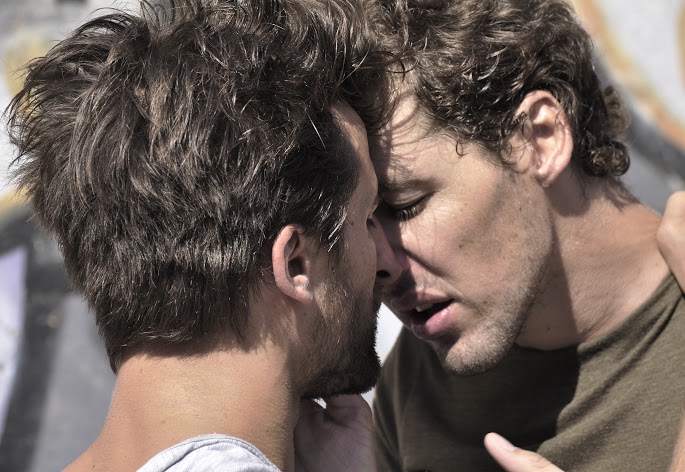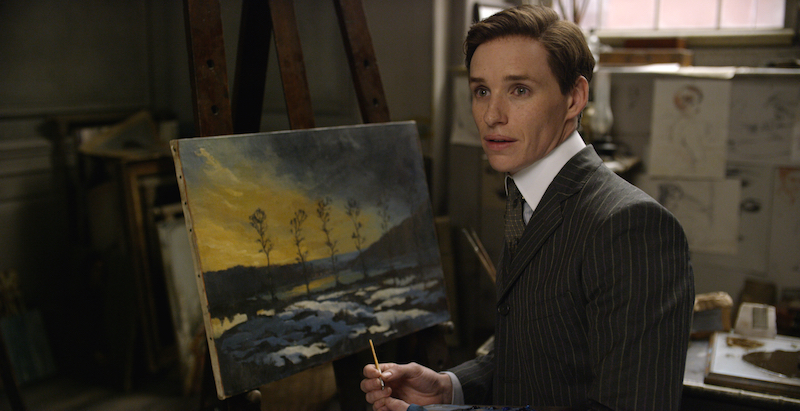
Oscar-winning Director Tom Hooper (‘The Kings Speech’) and Oscar-winning Actor Eddie Redmayne (‘The Theory of Everything’) bring us the life of a male Dutch artist who, with the support from his wife, becomes a woman, in the new film ‘The Danish Girl.’ ★★★
Tag: Film Review
All the latest film reviews for LGBT themed films and others.
-

FILM REVIEW | The Danish Girl
Based on the book of the same name by David Ebershoff, ‘The Danish Girl’ tells the real life story of Einar Wegener (Redmayne) who never felt right as a man so transitioned into a woman, being one of the first known recipients ever of reassignment surgery. It was with the support of his wife and fellow painter Gerde Wegener (Alicia Vikander) that gave him the courage and hope that helped him through the transition to live the rest of his life as Lili Elbe. But the film portrays Einar’s transition and Gerde’s acceptance as a dull one, there are no real revelations, nothing exciting about the story, and even Redmayne’s performance is a bit under the radar. It’s Vikander who steals the movie right from under Redmayne’s corset.The movie tells us that Einar’s interest in all things transgender suddenly happened when Gerde asked him to fill in for a female model who didn’t show up for one of her painting sessions. So she asks Wegener to put on a dress so that she can finish the painting. Wegener likes the way it feels, but more importantly he likes the way he looks in it, and this suddenly awakens Einar’s inner woman. This takes place in 1926 while the couple was living in the liberal land of Copenhagen, though such things were not done, nor not even discussed back then. But with Gerde’s full support, and help, Einar starts dressing up as a woman outside of their house. Things get a bit more complicated when another man, Henrick (Ben Whishaw) takes an interest in Einar, who by this time has started calling herself Lili.Gerde is asked to go to Paris so that she can work for a local art dealer, and while her career flourishes, their marriage slowly dissolves. And a childhood friend of Lili’s, Hans (Matthias Schoenaerts) shows up and forms a complex triangle with the couple. And it’s not long before Einar goes ahead with the surgery.‘The Danish Girl’ is dull. It’s not a sweeping European love story where love conquers all in the midst of one man’s gender confusion and one woman’s loyalty to such man. Hooper’s direction can’t bring Lucinda Coxon’s boring script to life. Not even the actors can accomplish this.Redmayne is good as Einar/Lili, yet there were times when I thought I was still watching him play Stephen Hawking. It’s his eyes, he blinks them quite a lot in this film, just like the way he did in ‘The Theory of Everything.’ However, ‘The Danish Girl’ is pretty much Vikander’s movie.She’s beautiful and emotional and accepting when the times call for it – it’s just as good a performance as Felicity Jones was as in ‘The Theory of Everything.‘ Vikander’s star is on a meteoric rise, having appeared in three films this past year (‘Ex Machina,’ ‘The Man from U.N.C.L.E.‘ and ‘Burnt‘). She’s currently filming the fifth Bourne Identity film with Matt Damon and Tommy Lee Jones and has two other features coming out in 2016. I was very disappointed that ‘The Danish Girl’ was not as good as I had hoped, perhaps it might be better to read the actual book, and skip the movie.by Tim Baros -
FILM REVIEW | Eden, It Is About The Music
If you’re a big fan of garage and dance music, then you’re gonna love ‘Eden,’ a film about one of the pioneer DJ’s of the French underground dance music scene, with a great soundtrack. ★★★★
-

FILM REVIEW | Sherpa
Sherpa | ★★★★★
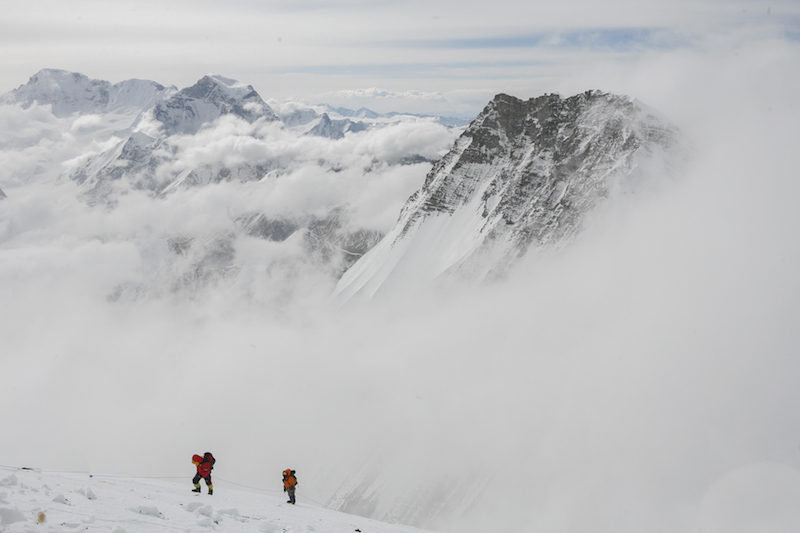
A very moving story about the men who risk their lives to help others reach the top of Mount Everest is told in the excellent documentary ‘Sherpa.’
Sherpas are an ethnic group from Nepal’s mountainous region, high in the Himalayas. It’s also a surname in a culture that mostly doesn’t assign surnames to its people.
Sherpas are highly regarded as elite mountaineers and experts in their local areas, and because they live in very high altitudes, they get hired to serve as guides for expeditions in and around the Himalayan Mountains, especially expeditions up Mount Everest. Sherpas are tasked with carrying all the necessary expedition equipment up (and down) the mountains. And as for expeditions up Mount Everest, Sherpa’s go up and down the mountain about 30 times. They also have to go through the Khumba Icefall, a dangerous and constantly moving block of ice that is the first hurdle in climbing the mountain. The term Sherpa made it into the cultural lexicon in 1953 when Sir Edmund Hillary and Tenzing Norgay became the first people to reach the summit of Mount Everest, in a year that was the Coronation of Queen Elizabeth. Norgay was referred to then as a Sherpa, and he was awarded the George Cross, while Hillary was Knighted. Norgay gave the name Sherpa a currency that is synonymous with climbing.
In ‘Sherpa,’ filmed in 2014, Director Jennifer Peedom set out to make a documentary from the Sherpas’ point of view, she wanted to observe up-close, how, and why the relationship between foreign climbers and Sherpas have shifted and soured since the euphoria of 1953, especially after 2013’s ugly brawl when a climber made a derogatory remark to a Sherpa at 21,000 feet, causing a fight between the climbers and the Sherpas. What the filmmakers got instead was to capture the worst tragedy in the history of Everest, and the subsequent days that would change the mountain forever.
The filmmakers embedded themselves with a commercial expedition run by New Zealander Russell Brice’s company Himalayan Experience. Brice had four returning clients after they had failed to reach the summit in 2012, so the pressure was on to get them to the top. There was also a team of 25 Sherpas, managed by Phurba Tashi Sherpa, who Peedom was able to interview before the climb. We see him as he prepares to make history by being the first person to summit Mount Everest 22 times; his wife and mother are also seen voicing their concern about him climbing the mountain they refer to as Chomolungma.
But at 6:45 a.m. on April 18th, 2014, a 14 million kg block of ice crashed down onto the climbing route through the Khumbu Icefall, killing 16 Sherpas. This disaster changes the Sherpas’ lives, shatters the dreams of the climbers, puts into question future expeditions, and changes the focus of Peedom’s documentary. It was the worst tragedy on Everest. Peedom captures the Sherpas united in grief and anger while everyone rushes to implement a rescue plan. But it turns into a Sherpas versus Westerners showdown as the Westerners want to control the rescue and recovery while the Sherpas want to included in retrieving their own. Peedom captures the tension and the drama, all at Base Camp, at 17,598 feet.
‘Sherpa,’ beautifully directed by Peedom, who also directed 2006’s Everest: Beyond the Limit, was ready to tell the story of the relationship between the Sherpas and the foreigners on Everest. After the avalanche she tried to make sense of it all, and captured on film the unfolding situation, and the Nepalese Government’s slow reaction to the tragedy. Peedom follows the story as it unfolds as she and the rest of the crew inadvertently witnessed and documented a historic event.
She also beautifully interweaves the back-stories of those who risk their lives for the sake of others – the Sherpas. Her crew capture the beauty and the landscape of the region, while at the same time capture moments of disaster and anger and sadness, it’s a compelling and must see documentary. The Best documentary of the year.
On April 25, 2015, there was a massive earthquake in the Nepal region killing over 9,000 people. It was the worst natural disaster to strike Nepal in 80 years. It triggered an avalanche on Mount Everest that killed 19 people, and aftershocks took place, which further put into question the future of climbing Mount Everest ever again.
Sherpa won the Best Documentary Awards at the London Film Festival. It’s now out in cinemas.
-
FILM REVIEW | Chemsex
A hard-hitting and eye-opening look at gay men and their sexual lifestyles is on full display in the new documentary ‘Chemsex.’ ★★★★
It’s not all gay men, but, as the documentary tells us, it’s but a few who go on drug binges, coupled with lots of unsafe sex, that last all weekend. And it’s these men who are more than likely to become infected with HIV.
We meet several of these men. One of the first is Dick, who is not shy to tell us about his sexual exploits, while on drugs, and freely admits that he’s just taken drugs before the camera crew arrives (a couple of the guys interviewed admit to this). We also meet clean cut Simon, a well-educated man who happens to be a geneticist. He’s had a hard time beating the temptation to take part in drugs and unsafe sex. He also admits that he’s HIV+, but he’s also a denialist who doesn’t believe that he’s got it. We then meet Enrique, a 30-something good looking Spanish man who says he was a commercial banker for 10 years but lost everything because of his chemicals habit.
After losing pretty much everything, including his job, he resorted to prostitution to make money. More importantly, we meet David Stuart, Substance Use Lead, GUM/HIV Manager at Soho’s 56 Dean Street Clinic. We see his discussions with Simon, who he tells to try to go a week, and two weeks, then another without taking drugs. Stuart is the voice of reason in ‘Chemsex.’ He’s there as an advisor, and also as a friend, to many of his patients. Stuart bluntly says in the film that him and a friend used to regularly do cocaine while he was hooked up to a IV drip while he was close to death with an HIV illness many years ago. No doubt his experience with both HIV and drugs enables him to relate to his patients at the clinic. And his program at the Clinic is one of its kind and is being used as a model for clinics in the country.
It’s a disturbing documentary. Not only after hearing about these men’s behaviour but also to digest the fact that there are organised private parties for men who want to combine unsafe sex and various types of drugs. We meet one party organiser who opens up his home to the cameras, and we see the men who are there, engaging in unsafe sex all around the house, with most of them openly taking drugs, mostly provided by the host.
Of the estimated 107,800 people living in the UK with HIV, 24% are undiagnosed and possibly spreading the virus. And men who have sex with men have the highest risk of infection in the UK and, in 2013, they accounted for 54% of new diagnoses. One in 11 gay men in London is living with HIV. And a record high of 3,360 gay men were diagnosed with HIV in 2014. It’s statistics like these that make you wonder why gay men partake in drugs and unsafe safe, with Chemsex being the term for this. Directors William Fairman and Max Gogarty spectacularly highlight this epidemic in the gay community in a very powerful and potent film about the underworld of modern gay life with it’s easy access to sex using mobile apps and the internet, and drugs.
Statistics in a chemsex study from 2014 by 56 Dean Street Clinic showed that 3,000 gay men accessing the clinic each month are using recreational drugs, though not necessarily wishing to address their drug use. 100 new gay men access specific ChemSex support each month; 70% of these reported no ‘chem-free’ sex in previous six months while 98% had never accessed statutory drug use support.
-
FILM REVIEW | Chemsex
A hard-hitting and eye-opening look at gay men and their sexual lifestyles is on full display in the new documentary ‘Chemsex.’
It’s not all gay men, but, as the documentary tells us, it’s but a few who go on drug binges, coupled with lots of unsafe sex, that last all weekend. And it’s these men who are more than likely to become infected with HIV.
We meet several of these men. One of the first is Dick, who is not shy to tell us about his sexual exploits, while on drugs, and freely admits that he’s just taken drugs before the camera crew arrives (a couple of the guys interviewed admit to this). We also meet clean cut Simon, a well-educated man who happens to be a geneticist. He’s had a hard time beating the temptation to take part in drugs and unsafe sex. He also admits that he’s HIV+, but he’s also a denialist who doesn’t believe that he’s got it. We then meet Enrique, a 30-something good looking Spanish man who says he was a commercial banker for 10 years but lost everything because of his chemicals habit.
After losing pretty much everything, including his job, he resorted to prostitution to make money. More importantly, we meet David Stuart, Substance Use Lead, GUM/HIV Manager at Soho’s 56 Dean Street Clinic. We see his discussions with Simon, who he tells to try to go a week, and two weeks, then another without taking drugs. Stuart is the voice of reason in ‘Chemsex.’ He’s there as an advisor, and also as a friend, to many of his patients. Stuart bluntly says in the film that him and a friend used to regularly do cocaine while he was hooked up to a IV drip while he was close to death with an HIV illness many years ago. No doubt his experience with both HIV and drugs enables him to relate to his patients at the clinic. And his program at the Clinic is one of its kind and is being used as a model for clinics in the country.
It’s a disturbing documentary. Not only after hearing about these men’s behaviour but also to digest the fact that there are organised private parties for men who want to combine unsafe sex and various types of drugs. We meet one party organiser who opens up his home to the cameras, and we see the men who are there, engaging in unsafe sex all around the house, with most of them openly taking drugs, mostly provided by the host.Of the estimated 107,800 people living in the UK with HIV, 24% are undiagnosed and possibly spreading the virus. And men who have sex with men have the highest risk of infection in the UK and, in 2013, they accounted for 54% of new diagnoses. One in 11 gay men in London is living with HIV. And a record high of 3,360 gay men were diagnosed with HIV in 2014. It’s statistics like these that make you wonder why gay men partake in drugs and unsafe safe, with Chemsex being the term for this. Directors William Fairman and Max Gogarty spectacularly highlight this epidemic in the gay community in a very powerful and potent film about the underworld of modern gay life with it’s easy access to sex using mobile apps and the internet, and drug
Statistics in a chemsex study from 2014 by 56 Dean Street Clinic showed that 3,000 gay men accessing the clinic each month are using recreational drugs, though not necessarily wishing to address their drug use. 100 new gay men access specific ChemSex support each month; 70% of these reported no ‘chem-free’ sex in previous six months while 98% had never accessed statutory drug use support.
-
FILM REVIEW: Carol
In the new film ‘Carol’, Rooney Mara and Cate Blanchett play two women who fall in love at a time when it was not accepted and actually frowned upon.
Director Todd Haynes, in his first film since 2007’s I’m Not There, has crafted this movie in a style and theme that he’s used before. In ‘Far From Heaven‘ Julianne Moore’s housewife faces a marital crisis – her husband is caught kissing another man so she takes comfort in the arms of a black man. Whereas in Carol Cate Blanchett‘s unhappy housewife falls into the arms of another woman. Both of these films take place in the 1950’s where it’s all dewy and lush and beautiful. And the attention to detail in both films is amazing, capturing the fashion and essence that was the norm of it’s time, where everyone made an effort to dress up, especially the women, even just to go shopping.
Blanchett’s character, Carol Aird, is in a loveless marriage but it’s not because her husband is cheating on her with another man, it’s because Carol is cheating on her husband with another woman. It’s not a mid-life crisis that Carol is going through, she’s been linked to Abby Gerhard (Sarah Paulson) in the past, and Abby has always been in the shadows throughout Carol’s marriage to Harge (Kyle Chandler). Harge still loves Carol, he wants to stay married, but Carol insists that the divorce still goes ahead, which is very difficult for the both of them because of their young daughter. But one day Carol goes into a department store and is eyed by employee Therese Belivet (Rooney Mara), who suggests to Carol to buy a train set for her daughter. Carol and Therese have chemistry, and the next day Carol invites Therese out for lunch to thank her for helping her out with her purchase. Eventually, they start seeing each other more and more, and they fall headstrong into a relationship. Carol, who has the perfect husband and the perfect house, pursues a relationship with Therese, at the risk of losing custody of her daughter. Harge, in utter frustration over Carol’s new found relationship, seeks full custody of their daughter using a morality clause as the reason. And Therese risks her impending marriage to her boyfriend Richard (Jake Lacy) to be with Carol, and she and Carol embark on several trips together. It’s not until New Year’s Eve where they consummate their relationship in a full on one-minute lip lock, which leads to a sexual act, again full on, there’s almost nothing left to the imagination. But will Carol’s impending divorce and the threat of losing her daughter and Therese’s burgeoning career as a photographer get in the way of their relationship?
Blanchett is magnificent as Carol, who risks losing her daughter yet has strong feelings for a much younger woman. Mara is even more superb as Therese, her innocence and naivete in full display. Both actresses are excellent, yet it’s Mara who ups Blanchette in the acting arena. The movie basically revolves around Therese and her coming of age not just with her career but with her sexuality as well. It would be a shame if Mara is reduced to supporting actress level as Blanchett does get top billing, they both deserve Best Actress Academy Award nominations but it’s Mara who should be on the podium. Chandler is also excellent as Carols’ husband – he’s got an ideal 1950’s look about him. ‘Carol,’ Based on the novel ‘The Price of Salt’ by Patricia Highsmith, was written at a time when it’s subject was considered scandalous, which Haynes truly captures.
Carol was filmed with Super 16mm to produce the muted hues of glamour magazines of the era, it’s romantic and dramatic and lovely to watch.
-
FILM REVIEW | Tangerine, A Film You Will Not Want To Miss
★★★★★ | Tangerine
Two transgender prostitutes tear up Santa Monica Boulevard in the brilliant new film ‘Tangerine.’
In a week that also sees the releases of Michael Fassbender in Steve Jobs and Dame Maggie Smith inLady in a Van, Tangerine is far and above the best film of the three.
It is one of the most funny and original films of the year. and stars two transgender actresses in the lead roles, roles that will make them both stars.
Mya Taylor is Alexandra, and Kitana Kiki Rodriquez is Sin-Dee (yes, Sin-Dee), it’s Christmas Eve in Los Angeles, and Sin-Dee has just got out of jail after spending 28 days for holding drugs for her pimp boyfriend Chester (James Ransom). She finds out, from Alexandra, that Chester has been having sex with Dinah (Mickey O’Hagan), so Sin-Dee goes on a mission to find Dinah and then to confront Chester. And Alexandra is having her own drama – she’s performing at a local bar that night and has passed out fliers to everyone she knows. Meanwhile, she’s got one of her regular customers, Razmik (Karren Karaguilian), looking for her. Razmik has problems of his own, he’s attracted to transgender prostitutes, but he’s married with a young daughter at home. He’s also got his nosy mother-in-law visiting for the holidays.
Sin-Dee finds Dinah in a motel room with several other prostitutes and their naked male customers, so she literally kidnaps her and then heads to confront Chester. Alexandra, meanwhile, scuffles with a customer who doesn’t feel like he should pay her because he didn’t come. But she does have sex with Razmik in a brilliant uncut sex scene in a car wash. All these characters converge together at the local Donut Shop as they confront each other about infidelity in a very dramatic and hilarious ending. Tangerine is a Christmas tale not of the typical Christmas kind.
Shot on three iphone 5s’ on a $105,000 budget, Tangerine is not the sort of movie you would expect to be dazzling, funny, dramatic, adventurous and original, but it is. Thanks to the many elements that bring this 88-minute film to fruition which make it so; the guerrilla style filmmaking is excellently created by Director, Editor, Co-Cinematographer and Co-Writer Sean Baker (co-written along with Chris Bergoch). And the actors are fantastic. Baker initially met Taylor at the Los Angeles Lesbian Gay Bisexual Transgender and Queer Community Center, and she introduced him to all her friends, including Rodriquez, which is how ‘Tangerine’ came to be, and these two actresses more than carry the movie, they are the movie, you can’t take your eyes off them. The rest of the cast is also brilliant; especially Karaguilian (who is a professional actor) brings sympathy to his role as a man trying to do the right thing but who also harbours a secret, and O’Hagan as the ‘other’ woman who is literally dragged around Los Angeles by Sin-Dee in the search for Chester. The Los Angeles neighborhood where this film is shot feels like another character in the film; the hued and hazzy skies, cheap motels, strange people and very cheap fast food restaurants litter the area. And the music (and script) is cutting edge; pulsating, loud, sharp, a perfect match for a film with characters who are the same, who spew lines such as, “He just went from half fag to full fag” to “You forget I’ve got a dick too,” with copious amounts of the word ‘bitch’ and ‘whore.’
Tangerine is a smorgasbord of wit and sarcasm. It’s also brilliant and must be seen to be believed.
-

FILM REVIEW | In The Grayscale – A Chilean love affair
Two men, who seem perfect together, fall in love in the new Chilean gay film ‘In the Grayscale.’ ★★★★
We first meet Bruno (Francisco Celhay) in his grandfathers’ workshop studio where he is living. He’s an architect, and has been assigned by the city commissioners to design a new monument in Santiago. Bruno is introduced to Fer (Emilio Edwards), a history teacher who knows Santiago inside out and will help Bruno look for a unique spot for the monument. Bruno is recently separated from his wife Soledad (Daniela Ramirez) and they share custody of their young son Daniel (Matias Torres). Soledad is very depressed about the breakup of their marriage, and there are days when she can’t get out of bed, even when she’s supposed to be watching Daniel.
Bruno, a handsome quiet type, and Fer, who’s very goodlooking, perky, full of jokes, very energetic with a perfect smile and perfect hair, spend their days together riding their bikes around Santiago. And over the course of their tours of the city, Bruno slowly starts to fall for Fer. It’s a love affair that Bruno finds surprised to be in; he always had doubts about his sexuality but didn’t realize he was going to find someone like Fer. But Bruno has responsibilities with his family, plus he’s ignoring the work that he’s been given so he’s under a lot of pressure to please everyone. And word is out that he’s been seen spending time with, and kissing, another man. Can Bruno handle the pressure of his new relationship while trying to be a role model to his son?
‘In the Grayscale,’ which literally translates to being in a state of flux, or being in a range of gray without any color, is pretty much a depiction of Bruno’s life, and is an impressive debut feature from Claudio Marcone. It’s an eye opening film depicting one man questioning his sexuality pitted against another man who’s very comfortable with his. The two male leads are very good, confident in their roles, making the story very believable. But the best bit of the movie comes at the end in the form of a song called ‘Disfruto’ by Carla Morrison which rolls over the closing credits. Morrison’s voice is angelic, and the song, which translates to enjoy, is an ode to secret love, where she sings (in Spanish) ‘be with me during this time, to guard the secret, and to be careful with these moments.’ It’s a beautiful song that wraps up the love between the two men in the film.
Available on Amazon
-
FILM REVIEW | Under Milk Wood, earthily sexy
Under Milk Wood | ★★★★
I studied Dylan Thomas’s “Under Milk Wood” for my English A Level, rather more years ago now than I choose to mention and it came as quite a surprise to me to realise that I still remembered, almost word for word the narrator’s first long speech, beautifully spoken here by Rhys Ifans.
“Under Milk Wood” is really an extended dramatic poem for voices. It was first conceived as a radio play, commissioned by the BBC in 1954, with Richard Burton voicing the narrator. Later it was turned into a stage play, and there is at least one previous film (1972) with Burton reprising his narrator role, and with such luminaries as Elizabeth Taylor, Peter O’Toole and Glynis Johns amongst the cast.
Whilst remaining absolutely true to Thomas’s original text, the screenplay of this new film, brings out more than any I’ve seen or heard, the sheer earthy, lascivious and hilariously funny filthiness of Thomas’s dreamscape, a true celebration of the joys of sex. Only most of the sex in this story takes place in people’s minds, their fantasies and desires brought out in full, luscious technicolour glory. The film looks superb, for which director of photography Andy Hollis deserves enormous credit.
Director Kevin Allen has at his disposal an excellent cast of Welsh actors, many of them faces well-known from TV, all perfect for their roles. Rhys Ifans, who also doubles as Captain Cat, is quite as effective as Richard Burton in his long opening speech, his accent, though perfectly intelligible, just that bit more Welsh, where Burton, targeting a 1950s audience, slightly Anglicised his tones.
Charlotte Church, making a very successful screen debut, is cast as Polly Garter. She has a plump, rounded, wholesome sexiness that is absolutely perfect for the fertile baby machine, that the rest of the village like to gossip about.
Ultimately, though, the film is also about loss; loss of community, loss of a way of life. Captain Cat is old and dying and his demise is symbolic of the death of the village Llareggub (Bugger All spelt backwards). There hangs over the film a purveying sense of nostalgia for a time that never waa. Gritty realism is swept away with a click of the camera, and for 85 minutes we can escape into a world of dreams and fantasy. I enjoyed it immensely.
-
FILM REVIEW | Big Eden – a rerelease of a very much beloved gay film
The award-winning gay romance film Big Eden is celebrating its 15th anniversary by being re-released on VOD and Blu-Ray. ★★★★
It’s a film that takes us back to the simpler times; pre 9/11, a time when the hardest thing one had to most worry about was being single in a large city.
Henry Hart (Arye Gross), a very successful NYC painter, and eternally single, finds out that his grandfather, who lives alone back home in Big Eden, Montana, has had a heart attack. So foregoing a big opening for his latest artwork, and much to the behest of his very pregnant assistant Mary (Veanne Cox), Henry jumps on a plane to be with his grandfather Sam Hart (George Coe).
Going back home, to a state with beautiful lakes and mountains, brings back lots of memories for Henry. First of all, it’s where he met his first love Dean (Tim DeKay), a man who ended up leaving town and getting married. It’s taken a while for Henry to forget about him, including years of therapy. Back home is also where lots of his old friends still live, including Grace Cornwell (Oscar-winning actress Louise Fletcher), now a schoolteacher who was the one who informed Henry of his grandfather’s condition. Henry goes back home to a place that accepts his sexual orientation, times have changed and so has the community. Local busy body Widow Thayer (a very funny Nan Martin) makes it her job to nose into other people’s business and arranges teas for local people to ‘meet.’
Once she sees Henry back in town she arranges a tea lunch for Henry with the local single women, but when she realizes he’s gay, she arranges a tea lunch with the local gay men. But it’s not any of these men that Henry is interested in. He’s back in town specifically to take care of his grandfather and is not interested in dating any of them. But soon enough he finds out that the very good looking Dean has moved back to town with his two sons. Seeing Dean again brings back memories from the past, and also questions as to why they never got together. Meanwhile, Widow Thayer has volunteered to cook dinner for both Henry and Sam as Henry claims that, being a New Yorker, he simply doesn’t know how to cook. So for the first few nights Thayer makes and brings over dinner, but it’s local store owner Pike Dexter (Eric Schweig) who volunteers to take over the cooking duties. He buys recipe books to make the most delicious meals, meals that he delivers to the Harts but always saying that they come from Widow Thayer. When Pike delivers the dinner, he quickly leaves, never staying to join Henry and Sam when asked to. Pike is something of an enigma in town, he’s quiet, reserved, but at the same time tall and strong. Pike seems to be hiding something, is it something about Henry’s homosexuality perhaps? Henry stays on in Big Eden as his grandfather continues to improve, he appears to be in no rush to get back to New York. Will Henry decide to stay in Big Eden permanently and leave the big city behind?
Do Henry and Dean finally hook up? Why is Pike to mysterious? And what does Widow Thayer have up her sleeve next?
Director and writer Thomas Bezucha crafts a beautiful romantic film with characters who could be from anyone’s hometown. The actors are all wonderful in their roles. And it’s a credit to Bezucha and his team that the setting is perfect. Every last detail is thought of and captured on film, and certain shots are set up perfectly, from the beautiful landscapes to the items in the local grocery story. Plus the country and western soundtrack gives the film a perfect flavor. It’s a must that you watch ‘Big Eden’ as it takes us back to a simpler time. It’s one of the most romantic gay films of all time, and proving that yes, you can always go back home again.
‘Big Eden has won numerous Audience Awards at several film festivals and in 2001 was named Best Fiction Feature at the Miami Gay and Lesbian Film Festival and Best American Independent Feature Film plus Best Film at the Cleveland International Film Festival.
‘Big Eden’ is available for the first time on Blu-Ray, new HD version for VOD, which includes new bonus materials.
Available to buy here -
FILM REVIEW | The Lobster
Imagine a world where if you can’t find a parter in 45 days you will be changed into the animal of your choice. That’s what ‘The Lobster’ is all about.