Tag: Five Star Play Review

The latest Five Star Play Review from THEGAYUK.

  • THEATRE REVIEW | An Inspector Calls, The Playhouse Theatre

    THEATRE REVIEW | An Inspector Calls, The Playhouse Theatre

    ★★★★★ | An Inspector Calls, The Playhouse Theatre

    An Inspector Calls
    CREDIT: Mark Mark Douet

    J.B. Priestley’s 1940s play An Inspector Calls had languished somewhat until Stephen Daldry’s (The Crown, Billy Elliot, The Hours) landmark 1992 production.

    The piece was much loved by amateur dramatic societies and small regional theatres, in part due to its seven-person cast and one room staging. Daldry’s revival, almost 25 years ago, at The National Theatre, gave the play a fresh lease of life with a radical new staging and a dramatic set design by Ian MacNeil. Now restaged again in London at The Playhouse Theatre, after long-running regional tours, this stylish and evocative revival is still feeling as fresh and pertinent as it did in the 90s.

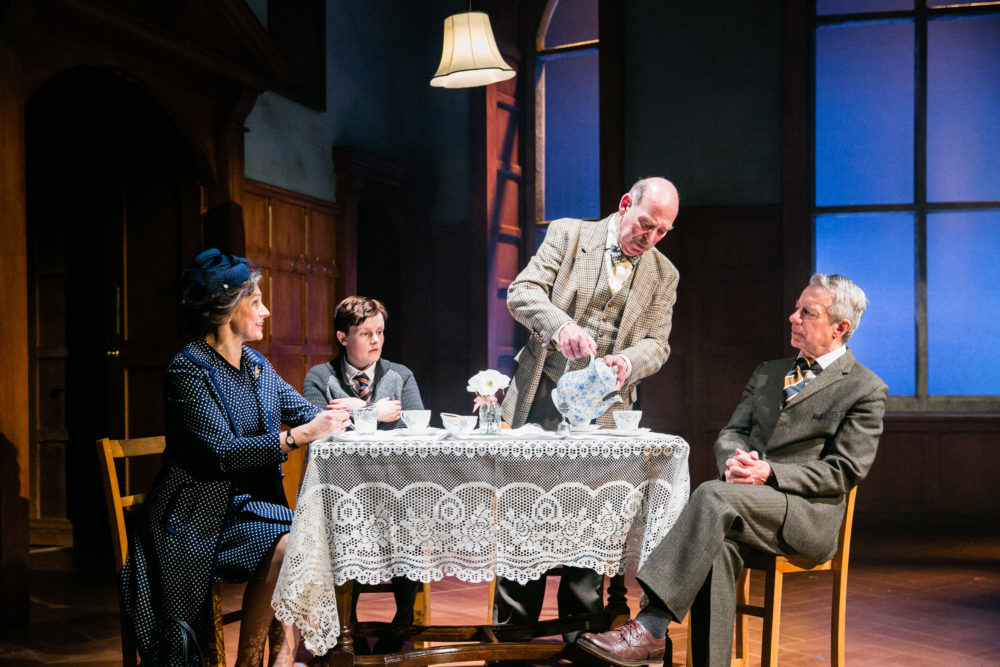
    In 1912 the wealthy upper middle-class Birling family are celebrating their daughter’s engagement to the son of a prominent family. The evening in their dining room in Bromley is interrupted by the arrival of Inspector Goole who tells them of the death of a young woman by a particularly gruesome suicide. The family are at first irked by the intrusion on their celebrations but gradually come to see that they each had a role in bringing about the woman’s downfall.

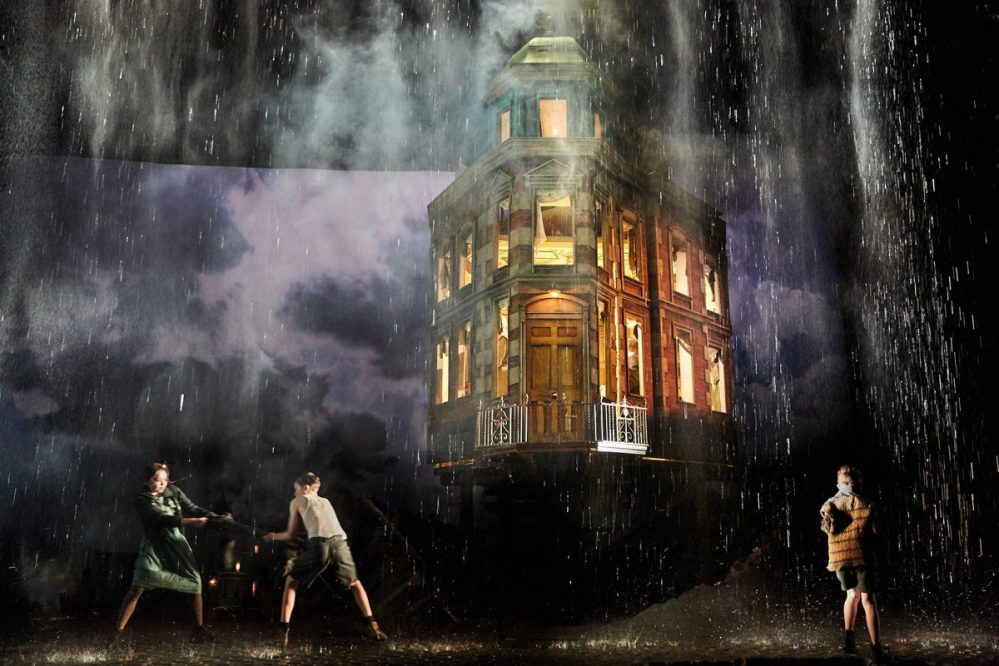
    The stage is dominated by a giant dolls’ house raised high above the stage. This has to be one of the most breathtaking stagings of the last few decades. To describe the workings of the set would ruin the surprises but needless to say, it’s a clever design that enhances and doesn’t swamp the play’s message. Even though the smaller stage of The Playhouse feels a little cramped for the production, it’s still powerful and atmospheric. The cast are strong, and special mention must go to the excellent Barbara Marten as the monstrous Sybil. She imbues a touch of high camp without detracting from the horror of her snobbish coldness.

    Can a revival of a play from seventy years ago, about a family from a hundred years ago still speak to today’s audiences? The answer is a resounding yes. The theme is self-interest, prejudice and how people use others weaker than them to get ahead. With recent world events and the scary rise of far right wing politicians, it couldn’t feel fresher. Or more chilling.

    Follow Chris Bridges on Twitter


    An Inspector Calls plays at The Playhouse Theatre

  • THEATRE REVIEW | Pride and Prejudice, The Birmingham Rep

    ★★★★★ | Pride and Prejudice, The Birmingham Rep

    CREDIT: Johan Persson

    Masterfully personifies Austen’s work of art.

    I remember reading Pride and Prejudice in my early teens, and recall falling in love with characters and the way they came to life on every page. Last night, Simon Reade’s stage adaptation delivered the feeling of nostalgia and I couldn’t help but fall in love again.

    It is quite rare to see a cast where every character, minor or major, stand out equally, and contribute superbly to every scene they are in. This was true of Pride and Prejudice. I was blown away by the humour, the tension, and the vulnerability that every actor was able to portray throughout the production. Matthew Kelly did a sterling job as Mr Bennet, with his on-point comedic timing and powerful voice that rippled through the auditorium. The shining actor was Felicity Montagu who played Mrs Bennet, and what a sensation she was. Felicity was the true embodiment of the role and from minute one she had you in stitches. The dour portrayal of Mr Darcy by Benjamin Dilloway was accomplished and perfect for the character, showing Benjamin’s versatility, for his change of mood when he confesses his love to Elizabeth Bennet was more heartfelt and the audience were drawn in. There were some ‘awwws’ when he professed his true feelings to Elizabeth. Elizabeth Bennet, portrayed by Tafline Steen, was a whirlwind. Headstrong, charismatic, un-lady like, and the Elizabeth I envisioned when I first read the book. This was a typical feeling I had, as every role was expertly crafted to suit the novel, making it a magical experience for the Austen aficionados. Doña Croll’s Lady Catherine De Bourgh was a sensation and the epitome of the high class of the era. Her characterisation was composed, edgy and a little on the dangerous side.

    The set, as well as the props and effects, transported the audience into the early 1800s where ‘things’ were seen of more value than people. Gossip and hearsay were a constant pleasure manifested in the society of the era, and Austen did a brilliant job capturing it. Simon Reade outdid himself by introducing to us the story we cannot help but go weak at the knees at every time.

    I was so impressed by the energy and enthusiasm shown across the production that I want to see it again and again, and haven’t stopped recommending Pride and Prejudice to friends. Perhaps that is why there are scarcely any seats left!


    Pride and Prejudice plays at the Birmingham Rep until 12th November

  • THEATRE REVIEW | The HIV Monologues

    THEATRE REVIEW | The HIV Monologues

    ★★★★★ | The HIV Monologues

    The HIV monologues review
    CREDIT: Dionysis Livanis

    From AIDS to PrEP: Love, Sex & HIV

    If you met a moreish specimen of a man on Grindr, in Rupert St Bar or at a friend’s gatherette and there was immediate trouser-twitching, shimmies to the heart department and your thoughts turned towards naming your first pair French bulldogs – but then, after some time into this meet, said hottie informs you he’s HIV positive – do you know how you’d react?

    Marking twenty years since life-saving HIV medication was introduced to the UK, Patrick Cash has penned a very real production that will send sparks to your neurons, pricking your nervous system: a trio of scenarios that are entwined together touching on the effects of HIV in the 80s up until the current day.

    Alex (Denholm Spurr) – a Labrador puppy intermixed with a male cheerleader with obtuse understanding of the immune-attacking virus – struggles with the idea of being close to someone who’s positive, and barely has enough shrapnel to buy even the smallest tube of lube.  The out-of-work actor gets himself into a sticky situation with the truth.

    Lack of knowledge inflames fear, but understanding can provoke the guardian in all of us.  Irene’s (Charly Flyte) journey nursing AIDS patients is moving and compelling.  Barney (Jonathan Blake – one of the first people to have been diagnosed with AIDS in the UK) learns to live with the deficient insight with HIV in the 80s – a convincing performance.

    A Thunder Looper of emotions: stigma, humour, shame and love – some well-directed tandem acting by Luke Davies – a challenging subject to cover – executed well.

    Two new dates at the King’s Head Theatre as part of their World AIDS Day weekend 20th and 21st November.

  • THEATRE REVIEW | THE EXORCIST, THE BIRMINGHAM REP

    ★★★★★ | The Exorcist was a frightening occasion with jumps, bumps, and lights were left on in my home.

    Robert Day


    The original ‘The Exorcist’ written by William Peter Blatty brought horror to U.K. cinemas in the 1970’s being banned in most of them, for people fainted, were sick and were left immobilised from the terror. The Birmingham Repertory Theatre developed the play version alongside Bill Kenwright, and playwright John Pielmeier for a U.K. premiere which happened on the 21st October.

    I was stunned immediately by the ambition of the set design and special effects used throughout the play. I previously thought it would be a play that was going to be hard to get a scared out of as you knew what was going to happen, as well as you are not manipulated by the sounds and editing that you normally experience in a film. However, The Birmingham Rep’s ‘The Exorcist’ took you by surprise and you daren’t bat an eyelid. The illusionist setting and apparition of the evil spirit were special effects you would see in a film now. The illusion design was masterfully developed by Ben Hart. The way the walls appeared to move and the dark cloud traveling along the set as the demon were just otherworldly!

    Robert Day


    The performance, delivered by the cast, matched the effects with equal conviction with Regan, in particular, played by Clare Louise Connoly, shining brilliantly. Clare’s multifaceted portrayal of Regan was sublime, and delivered every ounce with dexterity. She surpassed herself when becoming possessed with ambitious physicality and movement that contributed to the eerie ambience of the production.   Jenny Seagrove played Chris, Regan’s mother, and played her emotions very authentically as well as showcasing anger and fear very intelligently.

    Peter Bowl’s Father Merrin stole the show for me. He played the Father quietly, confidently, and made the audience feel at ease as the one who was going to solve the puzzle. An incredibly gifted actor whose short time on stage provided entertainment to the last second, and the audience hung onto every word he said. The flamboyant character Burke, played by Tristram Wymark, had genial comedic timing. A couple of times leaving some audience members in hysterics. Adam Garcia contributed to the sombre mood of the play with his portrayal of Father Karras, whose mother had been ‘taken by the devil’, and had died from the event.

    It was a well-accomplished production, with effects that could not be believed were possible, acting that was on point, with all characters providing an air of mystery and suspense; and the effects that made the audience jump, which to me was a treat that I won’t be forgetting any time soon.


  • THEATRE REVIEW | Barry Humphries’ Weimar Cabaret featuring Meow-meow

    THEATRE REVIEW | Barry Humphries’ Weimar Cabaret featuring Meow-meow

    ★★★★★ | Barry Humphries’ Weimar Cabaret

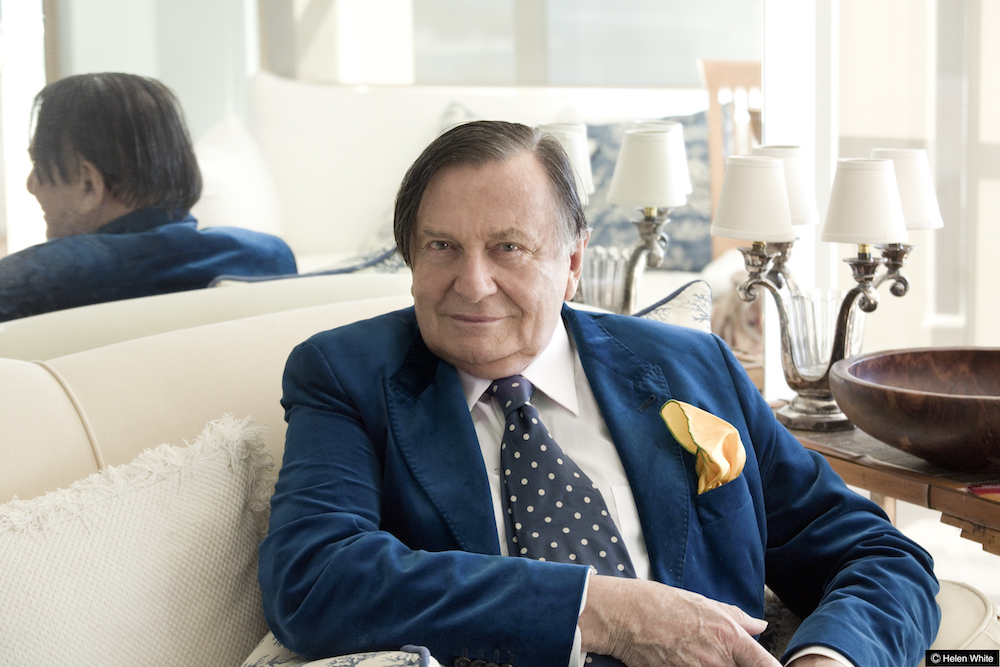
    What’s your deepest impression of Barry Humphries? The tacky, kitsch-bitch supreme Dame Edna Everage, all ghastly, C&A drag and granny glasses, or worse, the snot-and dandruff spattered Sir Les Patterson?

    Barry Humphries
    CREDIT: Helen White – PR Supplied

    Hopefully, it’s neither. See, the true Barry Humphries is a deeply cultured graduate of the fine arts, and has written definitive articles on eccentric, human sexuality. He’s also a superb character actor, to the extent audiences mistake his Sir Les Patterson creation for a genuine Ambassador of Australian culture! And if Brits, unfairly, accuse Americans of misunderstanding irony, it’s sheer, poetic justice that they’re completely insensitive to Barry Humphries’ deathly dry, Australian wit.

    There’s a reason for that, of course – what ex-colonial, reactionary, right-wing regime can bear ridicule?

    Not Little Britain, that’s for sure, and Humphries, initially, works hard to win over a cold, deeply monied and highly privileged Chelsea audience. Still, he’s a charming and infectiously erudite bon vivant, all barrel-chest, squat neck and deliberately ironic, his physicality eluding rigid, anal-retentive analysis. Quite simply, the audience – many of whom have never seen the real Humphries – don’t know what to make of him, suspending their typical, pack-mentality persecution prejudices. Oh, don’t get me wrong, many hardcore Conservatives adore the arts – remember David Mellor, anyone? – but often, they view culture as shockingly disposable.

    Not tonight, perhaps. ‘I’m doing my hardest impersonation ever tonight’ Humphries quips, ‘myself’.

    Too true, and Humphries’ actual, authoritative, deeply knowledgeable self is instantly seductive company. Always ferociously anti-fascist and bitterly opposed to any suppression of human diversity, he’s a tireless champion of Berlin’s Weimar Republic, immortalised by Christopher Isherwood’s Cabaret.

    Never heard of the Weimar Republic? Google it ASAP – it’s essential queer history. An inter-wars, sexually diverse paradise, the Republic briefly flourished from 1919-1933, an intense island of queer resistance against crushing, hetero-normative banality. And Humphries, obviously, is in his element, showcasing the cream of Weimar musicality – his entire career has hilariously skewered homophobia on the spot.

    So naturally, his Weimar night shares a treasure-chest of subversive memories. Discovering stacks of obscure, German sheet-music in late 1940s Melbourne, Humphries, enthralled, tracked down any possible recordings and information on the Weimar Republic. Many otherwise utterly obscure composers – Krenek, Spoliansky, Schulhoff and Hollaender – set cynical, Weill and Brechtian lyrics into thrillingly mutated music fusing American jazz and indigenous folk motifs.

    And that music, of course – soon becoming the vital staples of furiously transgessive cabaret throughout Berlin – was pure poison to Germany’s ultra-reactionary, proto-Nazis. Physical, sexual and emotional spontaneity – all encouraged and cemented by Weimar’s signature, polyrhythmic musical delights – was seen as instantly inflammatory, undermining every fascist orthodoxy.

    Tragically, with the brutal rise of Nazi supremacy in 1933, Weimar was immediately suppressed, but Humphries’ gorgeously provocative time-capsule of the era suggests what we’ve lost. Appropriately, he’s accompanied by mischievous, multi-talented diva Meow-meow, channelling as always the spirit, attitude and killer glamour of every possible living drag queen! Yes, Meow-meow is a biological female, but far more than fellow, drag manqué Holestar, Meow-meow performs her femininity as an intoxicating artificiality she’s just discovered. Does it work? Oh god, yes – as sublimely as Ru Paul in full, killer-queen mode, and visiting and inhabiting Weimar’s music simply demands a hugely exaggerated reality!

    CREDIT: Harmony Nicolas PR SUPPLIED
    CREDIT: Harmony Nicolas PR SUPPLIED

    It’s a theme that extends, even, to Humphries’ backing chamber orchestra, all uniformly dressed in sharp, Bohemian black, all Joel Grey trilbies for men and women. And the music’s a revelation, all instantly contagious, colloquial melodies grafted to the spare bones of classicism and non-European, imported tonalities. Yes, there’s some expected, Weimar favourites – ‘Pirate Jenny’ and ‘Surabaya Johhny’ – but the stand-out is Erwin Schulhoff’s ‘Dada masterpiece’, the Sonata Erotica.

    Bearing radical, avant-garde comparison to John Cage’s 4.33’ – four minutes of silence with the score considered any random sounds within that time – Sonata Erotica still startles. Exuberantly performed by Meow-meow, it’s orgasmic moaning, pants and screeching delivered as fine, operatic art, the most joyous, unrestrained expression of subversive sexuality possible!

    No wonder Humphries, after an awkward but endearing dance with Meow-meow, finally exits with an ecstatic grin- he’s just mentally liberated yet another slice of Little Britain!


    Follow Sasha DeSuinn on Twitter

  • THEATRE REVIEW | Blanc de Blanc, London Hippodrome

    THEATRE REVIEW | Blanc de Blanc, London Hippodrome

    ★★★★★ | Blanc de Blanc

    Blanc de Blanc is the new circus show in the cabaret theatre at London’s
    iconic Hippodrome Casino. From the team behind the sublime LIMBO and
    Cantina, it’s described as an evening of ‘breathless abandon’ and they’re not lying. It’s a dazzling spectacle of pure madness.

    Imagine if Bob Fosse’s disaffected dance hall girls from Sweet Charity met with the bawdy performers from The Kit Kat Club in Cabaret and decided to mix it up by throwing in a smattering of MTV style gyrating and twerking. If you add in the attendees at a fetish ball, the clientele of an underground Parisian bar from the 1930s and some wasted dancers from an Ibiza foam party then you’ve maybe envisioned part of it. That sounds like an unholy mess but it really isn’t. It’s bizarre but it works.

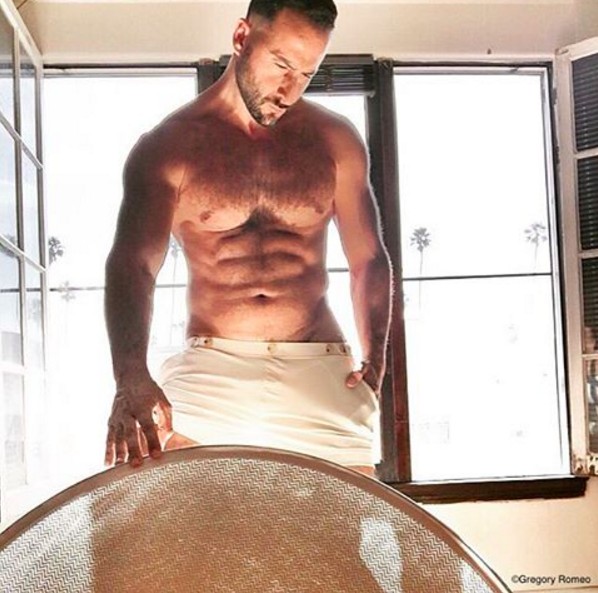
    Loosely linked by the celebration of champagne drinking, the show is hosted by French beefcake and model Monsieur Romeo and his sidekick contortionist and post-modern clown Spencer Novich. The show contains the inevitable repertoire of cabaret standards. There’s trapeze work, hoop spinning and contortionism as well as plenty of nudity and things being inserted into or pulled out of places you might not want to even think about.

    There’s the usual stuff that makes you gasp, laugh and say “Eurgh” as well as marvelling at the performer’s skills (and their beauty). The difference between this and a standard burlesque or circus evening is the style. Everything is done with panache. Choreographer Kevin Maher and director Scott Maidmont’s production is a sight to behold. It’s not surprising as between them they’ve worked with J-Lo, Madonna and Britney (to name but a few). It’s all deliciously camp and self-mocking and tremendous fun.

    The styles gel together and the show segues well between acts with a great build up to a frenetic finale. It’s raucous but restrained and even in the most absurd moments retains some dignity. It’s like an unfettered club night but one where you have to be a member and have a propensity for the darker things in life to be allowed in.

    They even manage to make a 5-minute pause for the audience to pop up on the stage to take selfies with the cast not seem too brash. If you’re looking for a good night out with attitude then you won’t go far wrong with this show.

    Blanc de Blanc plays at the Hippodrome Casino until 29th August


    Follow Chris Bridges on Twitter

  • THEATRE REVIEW | Through The Mill, Southwark Playhouse

    ★★★★★ | Through The Mill, Southwark Playhouse

    CREDIT: Southwark Playhouse

    It’s Judy Garland times three in the new musical Through The Mill now playing at Southwark Playhouse.

    The show gives us Garland in three different stages in her life. There’s the young Judy before her Wizard of Oz role – ages 13 through 16 – brilliantly played by Lucy Penrose. Then we have the Palace Judy – the time in Garland’s life when she was performing on Broadway at the Palace Theatre, age 29 – with Belinda Wollaston in the role. Then finally we are presented with CBS Judy – the 47 year-old star (played by Helen Sheals) who was in the last year of her life during which she had her own television show on America’s CBS network.

    These three eras of Judy’s life are superbly intertwined in a show that’s both fantastic and tragic. We all know that Judy died at the age of 47 in London due to an over-dosage of barbiturates. But she had such a tumultuous life, and it didn’t make matters any better in that she was an extremely insecure, and nervous, woman. Young Judy’s father (played by Joe Shefer) ran a cinema, but he also had a predilection for young boys. Her mother Ethel (Amanda Bailey) was an extremely controlling stage mother. But Palace Judy’s life isn’t much better. By this time she takes various drugs just to help her get through her day (and to get her on stage). Her life seems to be a mess, though she’s got her husband Sid Luft (Harry Anton) with her at all times. By the tim CBS Judy (who actually opens the show with a rounding version of ‘Life is Just a Bowl of Cherries’) sung brilliantly by Sheals, her life seems to be on track, she’s got a hit television show, but the network keeps on demanding more and more from her. It’s too much for a woman as fragile as Judy, and though her death is not played out on stage, we all know what’s going to happen to her.

    Through the Mill is excellent. It’s all due to the three women who play Judy, they are all very good but it’s Penrose who shines a bit more because she plays a version of Judy that is young and innocent, and Penrose conveys that excellently. When Young Judy and Palace Judy duet on ‘Zing, Went the Strings of my Heart’ together in the intimate theatre, it’s an event! And when all three get together to sing the finale – ‘Over the Rainbow’ – there’s not a dry eye in the house.

    Director Ray Rackham, along with the rest of his crew, have staged a musical that’s larger than life in a theatre that’s as intimate as a living room. And the parallel timeframes used in this production is genius. Cleverly, the musicians also act in the show, from Carmella Brown who plays CBS Judy’s assistant, to Don Cotter who is very good as Louis B. Mayer, the head of MGM who greenlit Garland for Wizard of Oz.

    Please go see Through the Mill, even if you’re not a Judy Garland fan. It’s a fabulous show.

    Through the Mill is playing at the Southwark Playhouse until July 30th .

  • THEATRE REVIEW | Shadowlands

    THEATRE REVIEW | Shadowlands

    ★★★★★ – So emotional, I couldn’t help but cry.

    Amanda Ryan as Joy Davidman and Stephen Boxer as C.S. Lewis in Shadowlands. Credit Jack Ladenburg

    Credit: Jack Ladenburg

    Last night was one of those nights where you sit there, and for the whole of the two hours you felt so lucky to be a theatre reviewer. I didn’t think theatre could touch a person that deep, in the way that William Nicholson’s Shadowlands undoubtedly did.

    “Shadowlands is based on events that occurred in the lives of two real people – C.S Lewis and Joy (Davidman) Gresham (…) I have used parts of their story, not used other parts, and imagined the rest.” – William Nicholson.

    ‘Jack’ Lewis and Joy Davidman were played by Stephen Boxer and Amanda Ryan respectively, and I will never see the two actors as themselves again. C.S Lewis and Joy were resurrected and put on stage for the audience of the 21st Century to see the marvel that his world was, and the imagination he had, through William Nicholson’s own genius take on Chronicles of Narnia legend’s life. The portrayal was too surreal to be called acting. For a week only, the two lives come alive and let us in to see the lives that lived in and around C.S Lewis’.


    Credit: Jack LadenburgCredit: Jack Ladenburg     

    The formidable writing of Nicholson astonishingly captivates C.S Lewis and you were reminded of Narnia, as the story was told. I particularly adored the moment in which Lewis sparked the notion of magic with young Douglas, who wanted to believe in it so bad. Having seen The Lion, The Witch and The Wardrobe at Christmas at the Birmingham Rep, I was gleefully pleased to see some features used for this. It made the experience so much more magical.

    It is rare not to be able to control your lacrimal glands in public, but this story pushed them out of you whether you liked it or not. And I wasn’t the only one, with sniffles and other crying-like noises surrounding me, the whole theatre could not help but give in to the emotions of the heart-breaking story. One couple were so engrossed that were constantly saying: “Oh dear” as the action darkened.

    The subliminal acting, combined with almost too-good-to-be-true storytelling by William Nicholson evoked emotions that could not help but escape the depths of the human soul. “The happiness now, is part of the pain then.” Said Joy when she was on holiday with Jack, as the dreaded end was near, which touched so many people.

    Other acting, from Denis Lill (Warnie), Simon Shackleton (Prf Christopher Riley) and all the others contributed to the fullness of the play, and created exquisite drama which helped bring to life the man who made so many of our childhoods magical and filled with wonder.


    Shadowlands plays at the Birmingham Repertory Theatre until 4 June.

    Follow Alex Da Silva on Twitter

  • REVIEW | Lindsay Kemp: My Life and Work with David Bowie

    REVIEW | Lindsay Kemp: My Life and Work with David Bowie

    ★★★★★ | Lindsay Kemp: My Life and Work with David Bowie Interviewed By Marc Almond

    by Miss Shockingly Precise.

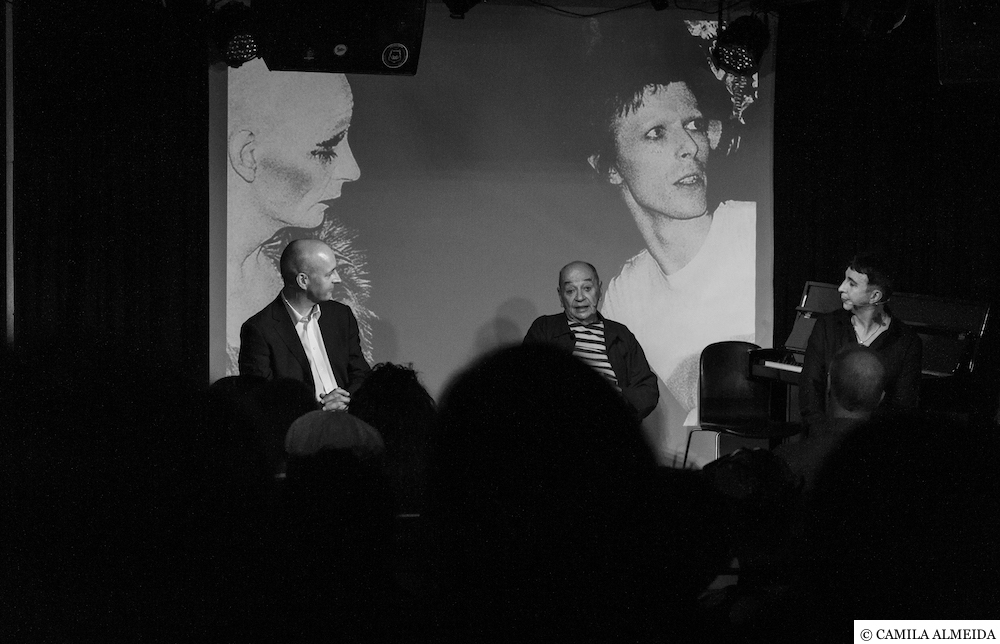
    CAMILA ALMEIDA @ THE ACE HOTEL

    British theatre, too often, is like the Catholic Church – full of fawning reverence for one-note deadbeats. Take Laurence Olivier. Sure, the guy’s voice was beautifully modulated, but his delivery, always, was so ridiculously clipped, precise and cold it sounded phoned in from the morgue. Olivier, somehow, always rigorously excluded emotion from his roles, which, if technically brilliant, never prompted tears or tore at listening heartstrings.

    That’s hardly the case with the stunningly emotive Lindsay Kemp, arguably British theatre’s most criminally under-appreciated genius. Taking English reserve by the throat and making gorgeously perverse, tenacious love to its’ dreary expectations, Kemp’s a singular and unlikely Messiah of the marvellous.

    Never heard of him? Of course you have; as David Bowie’s crucial, formative mentor, Lindsay inspired and helped create Bowie’s era-defining, still hugely influential Ziggy Stardust shows. However, that barely addresses Lindsay’s hugely innovative, still non-stop artistry, and fittingly, the Ace Hotel, the epitome of Shoreditch’s nouveau-hipster Renaissance, is celebrating Lindsay’s legacy.

    Outside, the pavements are crammed with adoring disciples eager for Lindsay’s first, London appearance since 2002, a celebration hosted by Marc Almond and Nicholas Peg. It’s completely deserved. For readers unaware of his legacy, Lindsay completely bulldozed theatrical tedium worldwide with a raw, radiant sexuality more relentlessly beautiful than a gay Sistine Chapel.

    The shows – Salome, Flowers, The Big Parade and many more – are landmark theatrical legends, but Lindsay, oddly, is overlooked by today’s crushingly ordinary theatre industry. That’s their loss, and probably, prompted by envy and the inability to market Lindsay’s fabulous, unrestrained genius as a guaranteed cash-cow. Still, tonight, the Ace Hotel is bursting at the seams with stellar talents frantic to lionise Lindsay on his own terms, discussing his own life and Bowie anecdotes.

    Firstly, there’s the enigmatic, irrepressible and outrageously entertaining Ernesto Tomasini, who – in a nod to tonight’s Bowie reminiscences, delivers soaring, falsetto takes of ‘Starman’ and ‘Threepenny Pierrot’. Then, there’s a huge, spontaneous rush of mass goodwill as Lindsay himself holds court, informally urged by a hugely appreciative Marc Almond and Bowie expert Nicholas Peg. If one measure of judging an artist is his influence on others – as Dali, arguably, inaugurated everyday surrealism – then Lindsay’s pivotal influence on Bowie, Marc Almond and countless others speaks volumes.

    Single-handed, coming from the most improbable circumstances – a working-class, pre-World War Two baby from Yorkshire – Lindsay’s maverick, sexual brilliance would, eventually, totally invalidate unimaginative theatre. Yes, Lindsay’s only possible, if less influential, British rival – the fiercely iconoclastic Steven Berkoff – also assaulted British restraint, but only Lindsay relentlessly elevated gay sexuality as a subject of breath-taking wonder.

    So no wonder David Bowie came running to study at Lindsay’s bewitching feet. Inevitably, they became involved, with Bowie co-starring in ‘Pierrot In Turquoise’, an early Kemp production, but Bowie’s ferocious ambition and libido proved too volatile for sustained collaboration. Ziggy Stardust, of course, stands as a permanent, world-changing monument to their later, final teamwork, but the focus, tonight, is on Lindsay’s beautifully idiosyncratic memoirs.

    He’s shocked, visibly, at how London’s changed, and even his hugely typical generosity of spirit can’t mask that regret. “I ventured into Soho, but it’s changed a lot, they’ve ripped out the wickedness. The bohemians are gone and there’s no danger, it’s very dull’. His own recollections, however – effortlessly summoned from a seemingly bottomless well – are gold-standard outré, a train-wreck, incest child of Picasso and Fellini. “I especially miss…  Miss Martinez (an exotic princess who danced in Soho, to the music of Ketelby’s) who always danced with a stuffed peacock on the streets…”

    Never remotely deflected from embracing his inner misfit – even by a vicious matron nicknamed ‘Frostbite’ at school, who scrubbed his face free of amateurish make-up with Vim(!) – Lindsay adored early 60s London. “Back then the city was glorious, liberating, and we definitely thought we would change the world – and we did, for about ten minutes!”

    Unsurprisingly – as a seriously conspicuous, de facto head of London’s rainbow demimonde – Lindsay was swamped with intriguing, if paradoxically low-profile offers. His small, cameo part is delightful in seminal, British horror flick The Wicker Man, but he didn’t warm to co-star Britt Ekland. “She was such a bitch,” he recalls, “I accidentally poured a glass of Guinness over her!” However, things improved with the arrival of a ‘fabulous looking girl’ on set. “She was Britt’s on-screen arse and knockers” Lindsay continues. “Britt was rather flattered…”

    In incomparable, mellifluous form, effortlessly charming at the bat of an eyelash or droop of a brow, Lindsay barely slows for queries from either host. But he pauses, smilingly, as co-host Nicholas Peg announces an exclusive extract from event planner Nendie Pinto-Duschinsky’s upcoming, major documentary on Lindsay and his world.

    Enthralling from the outset, it’s a bold, impressionistic portrait of a 21st Century pierrot – Lindsay himself – surfing the fabulous storm-surge of his own brilliance. Buoyed on an utterly uncharted, artistic tsunami, Lindsay’s drawn – and continues to draw – furiously devoted kindred souls in his wake. And, no matter how brief the contact, the fallout, often, is life-changing. ‘Timid Kate Bush’ for example, ‘became savage onstage’ and he taught Bowie “how to touch and reach and use stillness to communicate”. Difficult, you’d think, when Lindsay, partner Jack Birkett, Angie and David Bowie were all sharing the same bathroom, but brilliant, first impressions sanctify any downsides. As Lindsay so memorably describes his initial encounter with Bowie, ‘The door opened and it was the Arch-angel Gabriel!’

    Now, exit lines don’t get better than that, but the night’s not quite finished yet. With guitarist Neal X, host Marc Almond – himself a consummate lyricist and globally eminent torch singer of the bewitching, beguiling and bizarre – unforgettably serenades Lindsay. There’s a pin-drop hush as Marc, quite exquisitely, renders Jacques Brel’s ‘Port Of Amsterdam’ and Bowie’s ‘Starman’ as ravishing hymns of exultation. And then, ratcheting the feel-good delirium even higher, singer Holly Johnson presents Lindsay with a glorious, floral bouquet.

    Immediately, there’s an ecstatic, standing ovation from the host of gay celebrities present, as those of us lucky enough to attend remember one, unforgettable fact. There is true magic in this often dreary world, and it exists in two, simply enchanting words; Lindsay Kemp. Now and forever, the reigning Queen of gorgeous excess.
  • THEATRE REVIEW | The Father, Birmingham Rep

    ★★★★★ | Delicately humorous and emotionally charged.

    (more…)

  • THEATRE REVIEW | Haram Iran

    THEATRE REVIEW | Haram Iran

    ★★★★★ | Haram Iran

    CREDIT: Above The Stag
    CREDIT: Above The Stag

    Two young men were publicly hanged in a square in Mashhad, Iran on 19th July 2005. The new play Haram Iran tells this horrific story.

    Ayaz Marhoni and Mahmoud Asgari were both teenage boys who liked to hang out together. But it was suspected that these two young men had a homosexual affair, though the true nature of their crime had never actually been confirmed. But they were publicly executed after being convicted on the trumped up charges of raping a 13-year old boy.

    The Above the Stag theatre in Vauxhall has produced a play that re-enacts and tries to give credence and understanding to the story of these two young men, and their lives, and their execution. It’s an amazing and relevant play.

    Ayaz (Viraj Juneja) and Mahmoud (Andrei Costin) play ball, study together and hang out at Ayaz’s house. They’re fast becoming good friends, enough so that it makes Fareed (Merch Husey) jealous. Mahmoud spends a lot of time at Ayaz’s house, in his bedroom, just hanging out. Ayaz is obsessed with books, books that his mother (Silvana Malmone) has illegally kept as she’s not allowed to have them because of Sharia law.


    ADVERT

    [adinserter block=”1″]


    Ayaz is most enraptured by The Catcher in the Rye, and he reads passages of the book to Mahmoud. Some of the passages are sexual, making the young men a bit turned on. One day Ayaz notices huge marks on Mahmoud’s back, caused by whippings inflicted on him by his father. Ayaz rubs oil on Mahmoud’s back, but it’s this act, witnessed by Fareed, which causes their downfall. Ayaz is initially charged with corrupting, and penetrating Mahmoud, is thrown in jail, and repeatedly raped by the prison guard (Fanos Xenofos). Eventually they are both charged with consensual homosexual acts and the judge (George Savvides) punishes them to death.


    ALSO READ: Gay Air France flight attendants fear for their lives if forced to travel to newly opened route to Iran


    Haram Iran is a hugely important play that highlights the brutality and injustice that these two young innocent men endured in Iran. While not every scene in Haram Iran might not have actually taken place, what is fact is the murder at the hands of the Iranian government of these two young men.

    Directed by Gene David Kirk with brutal and emotional intensity, Haram Iran was written by Lawyer Jay Paul Deratany, who happened to find the story online. And each member of the cast are excellent. Juneja and Costin are both very believable as Ayez and Mahmoud, young and innocent but punished nonetheless. Maimone as Ayaz’s mother is superb in her role. Xenofos is very scary (and a bit too believable) as the prison guard who shows no mercy, while and Savvides is downright cold, mean and heartless as the judge.

    Haram Iran is a brutal yet delicate story of two young men who didn’t deserve to die because of who they were.

    Haram Iran plays at Above The Stag until the 1st May 2016