Tag: Issue 12

  • INTERVIEW | Jonny McGovern: “Kiss my motherfu**ing ass, fu** yourselves Dolce & Gabbana”

    INTERVIEW | Jonny McGovern: “Kiss my motherfu**ing ass, fu** yourselves Dolce & Gabbana”

    Taken from Issue 12 of THEGAYUK (June 2015)

    New York native, McGovern is part of LGBT technology history. As each new advancement made it possible for gay voices to be heard he’s been at the forefront of it. From taking advantage of a newly introduced iTunes to Podcasting to Vlogging. We sent MARK GOGGIN to find out what the original gay pimp is doing now.

    Jonny McGovern
    Credit: YouTube/HeyQueen / Supplied

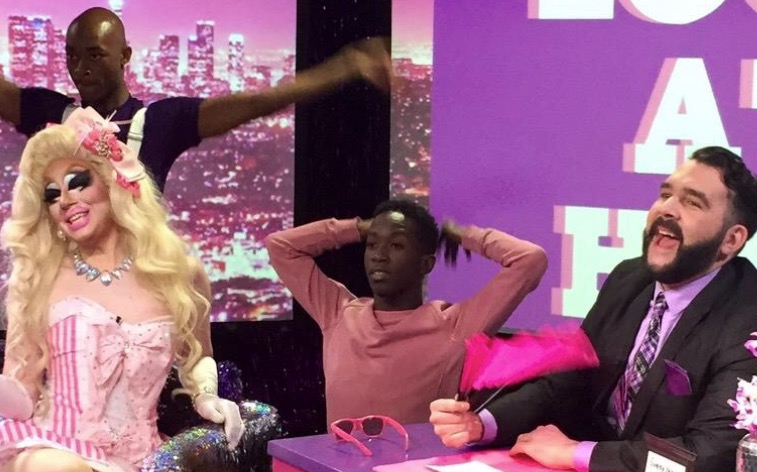
    I caught up with the Gay Pimp Jonny McGovern and he spilt the T about his show Hey Qween, his musical past and what Dolce & Gabbana can kiss…

    MG: First off, congratulations on the success of Hey Qween! Where did the idea originate?
    JMG: The idea for Hey Qween started after I finished shooting Whoa, Dude! which was the first show I did with The Stream studios (co-producers of Hey Qween) that celebrated the best intentionally and unintentionally homoerotic content from around the Internet, kind of like The Soup. They asked me what I wanted to do next, and I had an idea for a talk show. The only thing that I really knew about it was that I wanted to call it Hey Qween, I would sit down with a guest and I would say “Hey Qween,” and they would say “Hey Qween,” back and we would have a conversation. That was it, almost like Charlie Rose a very basic interview show. But when it hit me like a lightening bolt to include Lady Red Couture in the mix, it all came together. I knew that if I had her there she would be like my drag Ed McMahon sidekick and we could kiki at the beginning of every show.

    MG: Your relationship with Lady Red Couture is hilarious. How did you meet?
    JMG: I first saw Lady Red perform at Hamburger Mary’s in West Hollywood where she was part of the Goddess revue hosted by Calpernia Addams and Lady Red stole the show. She did a big gospel number where she wore church robes and started testifying and would run to the back of the club and disappear and then run out of a totally different door. I was in drag love. I asked her to be part of my Dickmatized video where she played around the way banjee girl. Then I wrote the song Rich White Woman for her and I thought she was so fun and so charismatic that when I started Hey Qween I thought she would be the perfect match. Though we didn’t know each other that well when we started Hey Qween we are now best friends and spend all the time together and always have a ton of fun. It’s been like a dream working with her, she is a superstar.

    MG: Is she EVER going to sign up to Drag Race? She’d kill it!
    JMG: Yes! That is our dream. We did work on an incredible audition tape for her for Drag Race season 8 and it has been submitted, so may the best woman win! I know she would kill it.

    MG: Talking of Drag Race, some great contestants have graced your couch. Who was your favourite to interview? Or at least who were you most excited about meeting? 
    MG: RuPaul herself. I’ve been a fan since I was a teenager and though I got to interview him on the phone once for my podcast we had never really gotten a chance to sit down and talk in real life. The show was so fun, and he was so open and inspiring that it was truly a dream come true. As far as the other queens I’ve enjoyed all of them. Our most popular episode was Willam – he’s always a hoot and he bought his own pizza. We also really enjoyed Alaska who came in an amazing garbage bag couture dress. They’re all a lot of fun and come ready to kill. Trixie Mattel was also a highlight for our season premiere because she was so funny and honest.

    MG: Did anyone turn out to be a bit of a letdown?
    JMG: No. I think everyone has always been great. Some interviews are harder to edit than others, some people are more ready to spill the T, other people I need to warm up into being comfortable. That sometimes leads to a harder editing job to make the conversation seem as lively and spontaneous as it needs to be. But most of the Drag Race girls come prepared to have fun and we just have a kiki.

    MG: Hey Qween! Series 3 is currently underway. How’s it going?
    JMG: It premiered two weeks ago with Trixie Mattel and our latest episode is with Latrice Royale. Next week the legendary Coco Peru comes on, followed by Mathu Andersen, followed by more and more amazing guests! We’ve been working with The Stream who is an incredibly supportive studio and they have given us our own channel Hey Qween TV. Season 3 is bigger than ever and we are having a ton of fun.

    MG: You suggested upping the gay ante this series and were helped out by the fans to raise the budget. Did you get enough to support your new ideas?
    JMG: Yes we ended up raising almost $13,000 from the fans, which was incredible! We have been able to use it to not only make Hey Qween better but to expand the brand into a whole bunch of other shows that I know our audience is going to love.

    MG: Have you bagged any celebrities for season 3 that you’ve wanted to interview for ages? Who would your dream guest be?
    JMG: Mathu Andersen was definitely a dream guest since he’s been creating the RuPaul look the last 20 years. He’s such an incredible artist and mysterious elusive enigma that I was excited to chat with him. My dream guest is one of the surviving cast members from Paris Is Burning, Junior Labeija who was the MC in all of the ballroom scenes. We would love to have him on, he is one of the most iconic figures from that film and to get to talk to him about his experiences and his incredible charisma would make for a legendary Hey Qween how. Of course, I would also love to interview Kevin Aviance who is my number one favourite drag queen in the world. Martha Wash who is the voice behind Everybody Dance Now from C+C Music Factory, Black Box and tons of others. I’d also love to interview Miss J from America’s Next Top Model. The list goes on and on.

    MG: I definitely think you should consider bringing Hey Qween! to the UK, make it some sort of club tour! Will the season 3 budget stretch to that – possibly?
    JMG: We would love to come to the UK! I love London, I went as a teenager several times but I have not gotten to come back as a fully-grown homo. We actually would love to see Hey Qween come on real TV in the UK. I feel that the audience over there and the networks might be more open to putting our show on real TV because you have excellent taste and are less scared of drag and stuff like that than American networks. So hopefully someone in the UK, a producer, will read this and you can send us over. If RuPaul’s Drag Race UK happens maybe we could do a simultaneous Hey Qween season at the same time – that would be dreamy honey.

    MG: Outside of Hey Qween you’ve produced some great music and comedy under the persona The Gay Pimp. Are you dropping any new music soon?
    JMG: I had been doing The Gay Pimp stuff for ten years and as much as I love it, I wanted to be able to evolve and do stuff where I wasn’t trying to be the same person I was ten years ago. I am able to reflect who I am and what I do now. So I’ve taken a little break from that but that doesn’t mean I’ve stopped making videos! I have the final video single from my Gayest Of All Time album coming out in the next couple of months. It’s full of sexy guys with Lady Red and some lady back up singers. It’s really fun so that should be coming pretty soon.

    MG: Who inspires you as a musician?
    JMG: When I was a kid I thought I wanted to be a RnB singer, but then I realised I was a 6’4” gay white man so that was probably going to be a difficult path! I kind of put it aside but when I started to do comedy, doing sort of comedy songs and using my musical skills like that, it really made sense. It is something that I have truly enjoyed and has let me play at being a pop star for many years. My biggest musical inspiration is my co-producer Adam Joseph who works with me on all of my records. He is a musical genius and anytime I have a seed of an idea he has such incredible musical knowledge that he is able to listen to my vision and create it seemingly instantaneously. He is incredible and if you’ve never heard him sing before he has many of his own albums, I call him the white soul hummingbird because he sounds exactly like your favourite black diva but he’s a little white man.

    MG: What’s your number one go-to album?
    JMG: I currently listen to lots of club music and trap music because I DJ at a party here called Saturday Night Slut in West Hollywood every week. When I’m just listening myself, old Aretha Franklin records from the late 60s and all through the 70s, Martha Wash’s solo album, DJ sets by Junior Vasquez from the 90s and Prince’s Sign ‘O’ The Times is probably one of my favourite all-time records.

    MG: We heard The Gay Pimp was started because of a homophobic Eminem rant, is there any truth in that?
    JMG: Yes… (the)Eminem (album) had come out and though it seemed at first like he was kind of like a modern guy and maybe wasn’t going to be homophobic, as the album rolled out we saw that he was kind of having a lot of homophobic stuff. He was throwing fag around and I felt that the media was giving him a pass on it. I figured the best way to protest would be to write a musical. When you’re an artist you got to protest with your art. So we wrote a hilarious little show called The Wrong Fag To F**k With The Gay Pimp vs Eminem, which was a parody musical where Gay Pimp was this pop star in an alternate universe who battled Eminem at the MTV Video Music Awards. Needless to say, it ended up with Eminem getting f***** up the butt by Gay Pimp – and hilarity ensued. The show became so popular; people started asking me to perform at nightclubs around town. It was the era of Britney and NSync, so I would go with backup dancers and drag queen cheerleaders and we would go to these tiny bars and perform these Gay Pimp songs as if we were doing a stadium show in these tiny little dive bars.

    MG: With that in mind, do you think it is important as a gay male to stand up for LGBT issues? Do you get involved in LGBT debates – the Dolce & Gabbana debacle or Indiana’s recent outburst for example?
    JMG: Yes I think it is extremely important for all of us to be aware of what is going on as far as civil rights for LGBT people in our countries and around the world. We can’t be ignoring how our brothers and sisters in other countries are being treated and we can’t just be satisfied with sitting around and letting big corporations and the right wing make decisions that affect us. So it’s very important for us all to speak out. As far as the Dolce & Gabbana debacle that makes me think they are completely out of touch and in a self-hating bubble of their own. For them to have any comment about what makes a family real – you can kiss my motherfu**ing ass, fu** yourselves Dolce & Gabbana.

    MG: Thank you so much for your time. Where can we visit to get all of our Gay Pimp needs?
    JMG: Make sure you subscribe to Hey Qween TV on YouTube – the Look At Huh aftershow, Hot T, He’s Fit and Judge Lady Red. Plus you can visit my blog everyday gayestofalltime.com for sexy gent pictures, new podcasts, Hey Qween updates and more dirty gay fun. Plus make sure to support me by buying my music on iTunes. Daddy needs to pay rent.

    Twitter: @GayPimp
  • INTERVIEW | Not Vlog Standard… The Out And Proud YouTubers

    There’s a new class. Class of YouTube.

    YouTubers are some of the hardest working creatives out there.

    With a combined (some of them have multiple channels) audience of around 1.2 million, or the same audience figures as a regular programme on a smaller UK broadcaster, we meet six out and proud YouTubers, who aren’t leaving their careers in the hands of some out of touch station programmer or network exec. YouTube blogging, or vlogging, if not the future is definitely about the now.

    It seems the world and their video cameras are up on YouTube making videos. The promise of book deals, crossing over to mainstream media and millions upon millions of fans, or subs as I’m told they’re sometimes referred to, seems tantalisingly easy to achieve. After all where’s the talent in turning on a camera and talking for 10 minutes about anything and everything?

    In this new age who is now the sieve. In days past network execs, focus groups and critics used to be the sieve, weeding out the crap ideas, the weak scripts and the wooden presenters. There was a system, and much like the music industry of past, those charged with commissioning had control over what, when and how you watched it.

    Now YouTubers have put the schedule in your hands. You are the sieve. You are now the casting couch. Hundreds of thousands if not millions of vloggers are vying for your attention. However, in this new world, just like the old fame formula, only a few will make it, but for how long is anyone’s guess.

    In amongst the cat and the Charlie-bit-my-thumb videos there are some gems, some really interesting commentators. Activists, psychologists in the making, social commentators and those who would find a perfect home on QVC, but just how influential are YouTubers and in a world of constant, unrelenting distraction, does it pay to lay it all out online? When every second of your life is bared for all to see, every detail pored over by thousands of viewers, what more is there to say?

    Six YouTubers, Miles (combined channel subscribers: 600,000), Will and RJ (combined: 350,000) Nicola (combined channels: 532,000), Ken (41,640) and Jake (73,400) cram into our studio for this month’s cover, cameras are out as they enter the building. It becomes clear that we’ve become material for their vlogs. No doubt within the coming days videos will surface of how we roll and that’s okay. We’re down with being hip.

    After our “Save By The Bell” inspired shoot, we get to it. I’m dying to know the why, the how and the how much?

    So why did you start?

    WILL: I knew when I started it was where the weird kids went to express themselves. I saw a friend of mine making videos. I saw that vlogging was a thing and that YouTube wasn’t just a place for cat videos. That made my mind explode. I decided to give it a try myself.

    MILES: I started because I was bored and had nothing else to do. So I started making videos for fun. I was just having fun with it.

    RJ: I started because I started dating him (pointing at Will)

    In the world of vlogging is there such a thing as over sharing?

    ALL: Yes…

    Who’s guilty of over sharing?

    WILL: I think we’ve all been guilty of over sharing at some point.

    JAKE: I try to keep my personal life as separate as possible. As much as I do all of my online stuff and my YouTube videos I have a personal life that I keep out. I don’t generally post too many photos of me and my friends or what I do for work. But I do talk about issues in my life, the things I’m thinking about. I try to keep that line, because I don’t want to become that person.

    WILL: Depends on the channel really, because what Jake does with his channel is different from what RJ and I do on our channels, because we film everyday, it’s like a video diary. Even then there are things that inherently just should be private. There’s no formula and everyone has different values on what they share and what they don’t share.

    KEN: There are sometimes when you wish you could edit it out

    NICOLA: (Smiling) Oh like there was this one time that I was vlogging…

    KEN: Oh yeah, he thought it would be a good idea to surprise me in the bathroom. I was naked.

    NICOLA: But I thought you couldn’t see it… (Because it was dark)

    KEN: I was like ‘do not upload that…’

    NICOLA: People screenshot it and started brightening it.

    KEN: Brightening the exposure. So my penis is somewhere on the Internet.

    WILL: I did not know that…

    JAKE: I will be Googling that later.

    So what separates vloggers sharing their lives, to Kim Kardashian over sharing?

    RJ: I think one of the reasons why people are starting to gravitate to YouTube, especially the younger generation is because they’re so over saturated with that overly produced crap and they can kinda sense a little bit of the artifice involved. This feels a little more organic and you know for a fact that everything you see is real. For the most part.

    NICOLA: We get to choose what we share.

    WILL: Which makes me so comforted knowing that I’m in control of what’s being shared.

    JAKE: When you get to a certain size (number of subscribers) you become quite accountable. Things you say things you do… you’re impressionable.

    Is the goal then to crossover from YouTube celebrity to Kim Kardashian? To be in the mainstream?

    MILES: Not necessarily. We all have our different goals. Being on YouTube can also be a bridge for that to happen. For me personally it would be to get into entertainment or to act or whatever. For Ken it could be for cooking,…

    KEN: I’m indifferent really. I’m not saying I’m against it. If it happens it happens I guess, but it’s not my goal.

    WILL: The beauty of YouTube is that we’re all here, we’re all best friends and all have such different goals with our channels. There’s different content out there. I don’t think any of us know what’s in store. We just kinda roll and go with the flow.

    KEN: We don’t even know what’s happening five minutes from now.

    RJ: It’s always difficult when you get the questions what’s the point? What’s the goal of YouTube? If and when it actually does go somewhere, you’re like “Okay, I guess I’m going to ride this horse for as long as I can.”

    NICOLA: When you reach a certain goal you’re always making new goals. I don’t really think there’s an end point. There’s always something new to strive for.

    RJ: It’s like fashion. Fashion is never finished.

    So if ABC or HBO got on the phone tomorrow and said: We’re gonna do Gay Friends we want you six to be in it would you be happy to do that, because suddenly you’d go from something you have control of to something that is heavily scripted and edited.

    JAKE: We all understand how the entertainment industry works. We’ve all dabbled a bit… YouTube kinda does that. We all have a big group chat; we’d literally ask each other “what do we think?” It’s a community, we’re friends and any opportunities that pop up we usually run it past each other.

    RJ: It’s funny you should mention Friends, because when we’re at a YouTube gathering and I meet parents and the parents are “like why are my kids losing their minds over this?” I’m like, “picture Friends but imagine that Phoebe, Ross, Joey – all of them are all real people and everything you see happening is real and better yet, you can actually directly interact with them on twitter or in the comments on videos. How much more excited would you get to watch each episode?”

    KEN: The characters that you fall in love with or identify with are actually real not fictional.

    So are you the new entertainment industry?

    NICOLA: We’re separate.

    RJ: Whenever there’s a new media platform everybody

    always talks about how it’s going to replace old stuff and it never ends up happening. Movies didn’t replace radio, TV didn’t replace movies, the Internet didn’t replace print, it just evolved. Things learn to play together.

    KEN: We have our own playing field, because we don’t fit in yours.

    So how do you take your channel to the next level? To reach the dizzying heights of hundreds of thousands or millions of subscribers?

    KEN: There’s no formula.

    JAKE: It’s like a combination of luck and being charismatic.

    MILES: Timing.

    NICOLA: It also helps if a bunch of your friends also do it.

    RJ: Having a distinct voice. Knowing what makes your perspective unique also helps.

    JAKE: Being passionate. If you’re going to make a video you do it 500 per cent you don’t even give it 100. You go for it and if you want to talk about something you talk about it like it’s the most important thing in the world.

    RJ: If you don’t have fun making videos how do you expect someone to have fun watching you?

    How important are production values?

    JAKE: Ultimately I don’t know sh**.

    MILES: People place importance on it now because everybody has a super HD DLSR camera and it’s not necessary.

    RJ: You can pretty much use whatever works for you… YouTube has democratised the process. You don’t need a big expensive set, cameras or lights just as long as you have a really entertaining voice. I will say this though; once you upgrade you can never go back down. If you just start off with your iSight and you can make it work that’s fine. But the minute you upgrade you can’t go back down and go back, because people will notice and start to complain.

    MILES: I did that once. Fu** ‘em.

    KEN: Even the length of blogs… We used to vlog and they’d be 3 to 5 minutes and we uploaded a 15 minute vlog and they (the audience) were like “Yeah we like this…” When we went back down they were up in arms.

    So YouTube want people to stay longer and longer on the site, you’re part of the cogs that make the whole thing work. Do you get much say in the pre-rolls or the ads at the bottom?

    ALL: Nope.

    Ever seen an ad, where you’re like ‘I don’t want that against my content?’

    WILL: All the time. We get Mormon Singles. Christian Mingle…

    JAKE: I’m like; oh you’re missing the target market here just a little…

    RJ: Romney advertised on my channel, and I was like oh sweetie… No.

    What about private sponsorships?

    NICOLA: It’s really important to like what you’re promoting.

    WILL: People will catch it if you’re disingenuous.

    JAKE: It’s still us, it’s still authentic, the second it changes, not only do we notice but everyone watching does.

    KEN: It feels contrived.

    RJ: No detail goes unnoticed on the Internet.

    MILES: If I don’t like something, I’ll put it up and review it and tell everyone how bad it is.

    RJ: This is why you need to know your brand. Once you know what works for you.

    Can you talk about how it felt when your channel changed from your hobby to your business? The moment the first sponsor called up or when you went from 5 subscribers to thousands.

    MILES: For me it was when my Like Mah Status video blew up. It was all over the place any my current MCN (multi channel network) Style Haul called me and they invited me to partner with them and I, being only 17 or 18 at the time, was like: ‘Okay… Money’, and I signed my life away for two years.

    I was able to fly myself out to VidCon, and get hair extensions for the first time…

    WILL: and a goddess was born…

    VidCon is the largest multi genre online video conference which has been held annually in California since 2010, this year’s conference will take up five floors of the Anaheim Convention Centre.

    PICTURED: L-R JAKE, RJ, KEN, WILL, MILES, NICOLA

    RJ: As far as our channel was concerned when we went to NextUp.

    WILL: We applied for this programme, very last minute, out of thousands and thousands of channels that applied only 30 were selected. We only had like 25,000 subscribers at that point…

    RJ: But you’re taking workshops from YouTube in how to engage your audience, best practices and they are there telling you, “Listen…”

    BOTH: “You Can Do This!”

    RJ: “If you take this seriously you’re on to something”. We were living in Florida at the time and they were like “move to LA…”

    JAKE: For me I was like “How does YouTube know who I am?” they take the time to actually select out the people they think that can really do something with it. They give us advice.

    RJ: It’s a game changer for sure.

    Is there ever a worry that you’re going to piss YouTube off?

    KEN: Hummm… that happened. I was in YouTube’s Next Chef. I suddenly had traffic coming in my channel and they were saying there were some illegal clicks. I have no clue what that means. So they shut down my channel.

    Is it easy to get reinstated?

    KEN: No. It’s impossible.

    RJ: Did you get click bombed?

    KEN: Yeah.

    So do you have to start again?

    KEN: Yeah, I had to start all over again.

    RJ: I had to start another channel too. There was a hiccup at YouTube and you’re back to square one.

    KEN: You cannot use your name or email ever again to make a channel. You can, but you cannot ever be partnered again.

    JAKE: You’re blacklisted.

    Is it important to be partnered?

    ALL: Yes!

    KEN: That’s basically how you get paid.

    Do you read your comments?

    ALL: Yes.

    RJ: You have to go through your comments. YouTube isn’t just posting videos on the platform; it’s also about building a community with your audience. So you do have to interact with them.

    KEN: There’s also a difference between someone giving you a nice criticism and there’s people who are just awful.

    WILL: As far as our channel goes, I have to have RJ go through our channel and go through all the crap before I can actually go through and respond. As a daily blog so many people tend to pass judgement on the way you live your life. I never realised how upsetting my day-to-day routine has been for a lot of people. The littlest things, the way I set my silver wear on the table… the way that I decide to go to bed… really upsets people.

    RJ: What we eat, how we eat it…

    WILL: How I decorate. I wanted to put blinds and curtains up… my comment section was just filth.

    RJ: YouTube gives you tools. There’s the remove comment button, ban user button…

    JAKE: And you can filter certain words.

    RJ: You can put “faggot” in your filter and as soon as that word is used the comment is removed. There are tools at your disposal. There was one video that just seemed to get a ton of hate and it was really vitriolic. That was when I decided to start blocking people. I noticed, I really only had to block five people. They were the ones that were leaving comment after comment after comment. I just had this epiphany that there are people who are just spending hours upon hours just going through trying to be negative. It’s more of a reflection on them than us.

    KEN: It’s more of a compliment for you.

    RJ: There are people who are like if you block one account they’ll create a whole new account… gurl… come on.

    Will vloggers destroy YouTube in the same way bands arguably helped destroy MySpace?

    MILES: Oh…

    KEN: I don’t know but… Everyone has their own voice on YouTube; everyone has their own audience.

    RJ: I don’t think YouTube is going to become MySpace unless a Facebook type thing comes along and makes it obsolete.

    JAKE: They’re really ahead of the game. If something’s not working they’ll change it. They’re really intuitive and dynamic and on top of it.

    MILES: They’re connected to Google. They’re powerful.

    JAKE: I don’t think it’s something we need to worry about it’s more about us being adaptive to anything they change, we need to fall into, which they’ve done many times in the last year without telling us.

    RJ: Things can change without warning and you have to be able to go with the flow. YouTube pretty much changed the game when it comes to online video. Right now there’s no other platform out there that has the audience.

    In a recent interview with Out Magazine (JAN 2015) Tyler Oakley (6,800,000 subscribers) said there was no hierarchy. That no one is above anyone else in the YouTube community… Is there a YouTube hierarchy?

    JAKE: In a perfect world…

    KEN: I plead the fifth.

    MILES: It’s there for sure.

    RJ: All that can change. Nothing is permanent on YouTube. Just because someone’s the sh** now, doesn’t mean that’s going to be that way forever. The mighty have fallen, multiple times.

    JAKE: I think it’s important for people who rise right to the top to give the people who are smaller advice and pick them up, hold their hand, still talk to them and don’t get too big for your boots. At the end of the day… they started at zero.

    RJ: Everyone starts at Zero.

    JAKE: Tyler Oakley, all of us can agree, nobody works harder. He deserves every bit of success he has, but because he endlessly works.

    RJ: I think all of us are here, partially because somebody who was bigger than us helped us…

    WILL: and gave us a leg up.

    CHANNELS:

    WILL AND RJ

    MILES

    JAKE

    KEN

    NICOLA

    This interview was taken from Issue 12. Subscribe now and don’t miss another issue

  • INTERVIEW: Jonny Benjamin, Saved By A Man Called “Mike”

    In 2008, drama student Jonny Benjamin decided to take his life, by jumping from Waterloo Bridge in London. One man saved his life.

    What ensued was one of the most impressive manhunts in the history of Twitter. #FindMike (a man actually named Neil Laybourn) became a worldwide trend and attracted global mainstream media in the search for this one man who made the difference between life and death. We speak to Jonny about how his story is now the subject of a new documentary The Stranger On The Bridge, and how coming out as gay was equally as hard as coming out with a mental illness.

    JH: Now that the documentary is out and it’s not just morning TV or radio snippets, but the story told by you, can you describe how you feel?

    JB: It feels quite surreal to be honest for it to be out there. It feels good. I’ve had some really amazing feedback from people that either feel that they’ve been educated or people that have been going through similar things themselves. I’m really pleased with the reaction.

    JH: Does it feel like you’ve got closure?

    JB: Yeah it does. It feels like that chapter is closed, it was a really dark place that I was in and it feels like that door is closed to that chapter now. Which is a good feeling.

    JH: But Hollywood is knocking on the door?

    JB: Yeah, we have had approaches from Hollywood, again very surreal, but we’re in early days and early stages.

    JH: You’ve talked about getting closure and how it feels good, but how do you feel about this story being on the silver screen, going out to an even wider audience than you’ve had so far?

    JB: It’s great because the whole point of this is to raise awareness of both suicide and mental illness. If it goes even bigger, or even further then great, because it will increase awareness, help more people. So I’m happy for it to go far and wide as possible, if it’s going to help people.

    JH: How discriminatory do you think society is for those living with mental health problems?

    JB: I think it’s getting much better, I think the stigma around mental illness is decreasing, so it’s getting easier to live with a mental illness in public. It’s still got some way to go though, particularly for conditions like schizophrenia. There’s a lot of understanding out there on depression and bipolar, but there’s very little understanding about schizophrenia.

    I was reading one survey, it said that three quarters of people with schizophrenia don’t tell their friends and family, which is a huge number. So there’s a lot of stigma out there about schizophrenia and that’s the point of the film we’ve just done, to reduce that stigma really.

    JH: Was it difficult to go back to the bridge and to Neil (the man dubbed Mike) again and revisit the past?

    JB: At some points it was difficult. When I looked through all the photos of the different Mikes that came forward… that was really difficult. You definitely have to go back to that place that you were (at). I found that quite tough. Going back to the bridge? I got used to it in the end. We had so many interviews and so many photo-shoots on the bridge, you get used to it really.

    JH: Since the broadcast of the film, have you noticed people treating you differently?

    JB: No, I haven’t to be honest. Not at all. Everyone’s been the same with me. Almost like it hasn’t happened now. It feels quite strange, feels like it was a bit of a dream. No one’s treating me differently. What I have got is a really overwhelming response, which is lovely. Really overwhelming. In a good way.

    JH: Twitter can be used so positively but also it is a platform for trolling. Do you have a mechanism to deal with negativity? One particular celebrity who will go unmentioned had a pop… How are you dealing with people that might criticise you for bringing this issue to light?

    JB: I just try and ignore it really. Ninety-nine per cent of people had positive feedback to say. It was just one or two people who were critical of it. I just ignore it really. They’re looking to start a fight and I don’t want to detract attention away from what the programme is really about, which is to raise awareness. I don’t really care what they say to be honest. It just shows their ignorance really. I feel sorry for them if anything.

    CREDIT: Supplied by PR

    PICTURED: Mike, Whose real name is Neil.

    JH: What do you feel about the term mental health or mental illness? Could it be expressed better?

    JB: With mental health there is that stigma. But what other words do you use really? I know some people have got issues around mental health and mental illness but I really don’t know what other term we would use. We’ve all got mental health. It’s like a spectrum really.

    JH: Do you think more celebrities like Stephen Fry and Ruby Wax should be coming out with their mental health issues?

    JB: I think it’s really tough, because of the stigma for people to come out, but I think it’s happening, especially in the last few years I’ve noticed that people are becoming a lot more open. There should be no shame in it really. The more high profile people who come out and talk about it, is fantastic really. It inspires other people to do the same.

    JH: How much has your sexuality played a part in your depression and in your schizophrenia? Is there a connection?

    JB: I think there is. It was a massive weight on my shoulders hiding my sexuality and it definitely contributed towards what I went through I’d say. I was so scared about coming out. I come from a Jewish family and it’s something that’s frowned upon in the Jewish religion. I was really scared about coming out. It definitely added to my mental health issues for sure. When I came out eventually, I came out two months after I was diagnosed; it completely changed my life around for the better. Struggling with my sexuality definitely contributed to my suicidal thoughts and feelings. That’s how terrified I was about coming out.

    JH: Which was easier to come out about for you? Being gay or having mental health issues?

    JB: I think it’s equally hard to be honest. Equally as hard. Coming out about my mental illness was tough, really tough especially towards my friends. I found it really tough to come out to them. But with coming out about sexuality I found it harder to come out to my family.

    JH: People must feel like they know so much about you, but really they only know a certain section about you, because there’s more to you than a) being gay and b) having a mental illness. Do you think people think that’s it? Nothing more to Jonny? Does being open with your mental health make it difficult to find a partner?

    JB: Having mental health issues makes it difficult to find a partner more than anything. Things like paranoia and intrusive thoughts – some of the symptoms of schizophrenia are heightened when you’re in a relationship. I’ve never been in a proper relationship, I would say and I’ve always found it quite hard dealing with mental health issues when you’re with a person. A lack of understanding about my mental health makes it even harder. I might be very paranoid about where they’re going, whom they’re seeing. It’s a level of trust that I find hard to gain.

    JH: So are you more interested in looking after yourself at the moment then finding a partner?

    JB: Yeah. The last two months have been really difficult; I became ill again at the end of last year. That’s my priority now to get my mental health back on track and relationships will come second.

    JH: Is the NHS or the Government doing enough to engage in this issue?

    JB: There’s nowhere near enough, in the UK there’s 17 suicides every day. The reason why it’s so bad is because there’s not enough education and support. We should be going into schools at an early age, into universities and work places as well to educate people and let them know that they’re not alone and they can get support if they’re struggling. It feels like a taboo, the subject we don’t want to talk about. But it’s all about reaching out.

    When I was 16 or 17 at school and I was really starting to struggle with my mental health, if someone would have come in, a guest speaker, and just said “This is what mental health is, this is what you can do”, it would have changed my life around.

    But unless we start talking about it then more and more people are going to suffer and unfortunately take their lives.

    If you need to talk to somebody about issues raised in this interview there is a helpline for the LGBT community open from 10AM to 11PM everyday of year. Call: 0300 330 0630 or visit: www.llgs.org.uk

  • INTERVIEW | Jeffrey Schwartz

    In the 1950s an exceptionally handsome young man was the biggest box office star at Warner Brothers Studio in Hollywood.

    This major heartthrob matinee idol, made over 40 films was also a very successful pop singer, his debut number one single, Young Love, was the genesis for Warner Brothers Records. He was one of the world’s most sought-after bachelors. He never married. He also had a secret that he tried to keep from his fans for decades, but in 2005 at the grand age of 73 he published his autobiography and finally came out of the closet. The man is Tab Hunter and in a new documentary on his life Tab Hunter Confidential we finally get to learn about the man behind the star and find out what a real charmer this former member of Hollywood royalty is all about.

    Tab was in London recently for the international premiere of the movie and before we met the man, we caught up with award-winning Director JEFFREY SCHWARTZ to ask what it was like telling the story of such a great gay icon.

    RWD: So why Tab Hunter?
    JS: I thought he was one of those people that never got his due. He was known as being the most beautiful man in the world but I really respected all the work that he put in to further himself as an artist and actor. It was after reading his memoir that gave me a real appreciation of the fact that he was part of the Hollywood star-making machine. They invented this persona for him, yet his private life was as different as could be. I wouldn’t say he was leading a double life, but he was living in a box at a time where he couldn’t really express who he really was as he was being controlled by the powerful Jack Warner and his studio. I felt that I really fell in love with him watching the films and reading his book and then interviewing him for my movie I Am Divine. I thought that this is a man who needs to be reinvigorated and reintroduced to the public. Also how many people can talk about being a product of a star-making machine from that period? We can’t talk to James Dean or Monty Clift or Rock Hudson but Tab is still with us and he can talk about these things. The fact that he came out the other side as a happy healthy survivor of it all is so very impressive and unusual and so I just wanted to tell his story.

    RWD: So far you have now made four documentaries on gay icons: two of who are dead and two alive. What’s the difference with the ones who are still living? Do you have to tread carefully and be more sensitive?
    JS: It’s very different to have a subject who is still alive. Jack Wrangler the iconic porn star was happily part of his film (Wrangler: Anatomy of an Icon) and got to tell his entire story but he sadly passed away before we had its first screening so he wasn’t able to see the reaction to it. Divine obviously had been gone for 25 years by the time I made the film. Vito Russo (Vito) had gone, but Tab was around and was ready to tell his story and I got to ask him everything.

    RWD: Did you hold back at all?
    JS: No I didn’t, but the whole process was difficult for Tab because he is such a very private person. He does not think that it’s appropriate to talk about certain things because that’s how he was raised and that’s the culture he grew up in. It was a time when you just didn’t talk about your personal life.

    RWD: Tab says in the movie that he has never been as open about anything as he is with you. My question is, why you, and why now?
    JS: He wrote his memoir Tab Hunter Confidential about 10 years ago so he already had the trial by fire so to speak. We used the book as the general backbone of the film and so we could talk about everything that he had written about, but we also had to appreciate that the book actually marked the opening of the closet for Tab. He had never talked about being gay prior to that and it was very difficult for him to do so, but by the time I first sat down to interview with him he was slowly getting used to it.

    In the film he had to go back to talking about things that are difficult for him to discuss but I definitely did not hold back in my questions and sometimes you can even see his discomfort during the course of the film. We have to appreciate that even though we are in 2015, here is a man who had been trained from a very early age to keep certain things hidden, and I found it so touching that now at 83-years-old he is finally able to talk about these things.

    I think it is very healing, not just for him but for an entire generation of people who were of his time, and also for younger people to sort of take a look back at the time where people could not be open and see how far we have come in just a few decades. It was a completely different world in Tab’s day.

    RWD: Were there any restrictions because Allan Glaser, Tab’s partner of 30 years, was on board as a producer?
    JS: None at all, and in fact the film would not even exist without Allan. He was the one who pushed Tab to write the book, and when it came time to develop the documentary, Allan was the one who told Tab that he needed to do this, and without Allan’s encouragement, Tab would not have been so forthcoming. Allan was certainly wanting to have Tab to go further than he ever had before, and in fact there were some areas where I wanted Allan present and some interviews when I didn’t want him around. For example when we interviewed one of Tab’s ex-lovers I told Allan that I didn’t think he should be around for this one and there were also certain parts when Tab was talking about his relationship with Allan that I thought maybe he’d like to go into the other room.

    RWD: You portrayed Tab as a gay man who preferred to have a steady boyfriend, rather than one who slept around. Was he really that monogamous?
    JS: Even though he is not comfortable necessarily talking about having affairs, he did have them and wrote about them in the book. Rudolf Nureyev was just one of them. Within the periods when Tab was in a relationship he was a very old-fashioned guy, but he didn’t have a long-term boyfriend until he met Neal Norlag in the 1960s. He never defined his ‘relationship’ with ice skater Ronnie Robertson as them being boyfriends and he would never consider themselves a couple, and it was the same thing with his extended fling with Tony Perkins when they were seeing each other. It was all such a different mentality then.

    Allan is Tab’s longest relationship and has lasted decades and it’s sort of an aspirational kind of relationship, which everybody would love to be in. So yes, Tab certainly had his affairs but I would never call him a libertine.

    It’s funny that now so many people are coming out of the woodwork and I get emails and notes on our Facebook Fan page with people wanting to tell me a story about them and Tab. Like: “I was at a gay bar in Key West in 1973 and I saw Tab and we went home together!” Ninety-nine per cent of these stories are however total BS, but I am very entertained by them. First of all Tab would never go to a gay bar and I don’t think he has stepped inside one more than twice in his entire life. I think people like to imagine this fantasy and maybe it was somebody who looked like Tab, or maybe it was Troy Donohue, (the Studio eerily shaped him into a Tab lookalike replacement after he left) we just don’t know.

    RWD: For a man who was closeted for such a long time, Tab comes over as well balanced and sane and without the usual neuroses. Is that really the case?
    JS: Yes, but it took a long time. He was raised in an era when being gay was considered a mental illness and a disease and was against the law. You would never get any encouragement from any aspect of society at being gay. He was a victim of self-loathing that so many gay men and lesbians felt at that time. He was raised as a strict Catholic and when he tried to get some peace of mind about the feelings he was having, the priest that he confessed too rejected him, and he carried that with him for many years.

    For years he carried the feeling of being dysfunctional and in fact when he did come full circle to accept himself, part of the irony was how he was able to do that was through the Church and through his spirituality. He is a very devout Catholic but he found a way to reject the dogma of Catholicism and accept the Church’s teaching about love and self-acceptance. I find that fascinating because so many gay people have a knee-jerk reaction to religion because of the attitude of the Church towards homosexuality. Tab decided to ignore the condemnation part and although I wouldn’t say that he is now running down Santa Monica Boulevard with a rainbow flag or anything like that, but he does completely accept who he is.

    Tab was a major box office star for 10 years. When that part of his life ended he didn’t try to desperately hang on to the stardom, he just wanted to keep working. So many stars go a little cuckoo once their stardom fades and they dramatically try to hold on to the fame. Tab never did that because he didn’t buy into the whole movie star bit, so when it ended he was perfectly happy doing something else.

    RWD: Was he ever part of the old Hollywood ‘gay’ set like Christopher Isherwood and Don Bachardy?
    JS: He knew Rock Hudson certainly, and he knew Monty Clift, and he was very close to Roddy McDowell. These are men however who kept secrets even now and so if you would ask Tab: “Tell me about Roddy McDowell, tell me about the gay parties you went too…” he is still protective and will remain silent. Just the other day in Boston a journalist was trying to get some dirt on James Dean and he said to Tab: “Everyone thinks that Dean was gay or bisexual” and Tab just responded with: “I don’t know as I always saw him hanging out with Natalie Wood or Pier Angeli a lot.” Even if he knows he’s certainly not saying. He just doesn’t dish.

    RWD: He chose though to remain closeted and not have a double life by marrying a woman, was that because of his faith?
    JS: Tab is a very moral person. He did think about marriage and that would probably have made things a little bit easier for him, and the rumours would have stopped. However he chose not to go to that extra step like Rock Hudson or Antony Perkins. Rock was a good example of someone who was a big star with whom the rumours about his sexuality were getting out of hand, and so there was a decision made to dispel them once and for all. Tab also had the opportunity to do that and he could have gotten serious or even married any number of different women that he was close with. He decided however not too as it would be hurting the woman and it would be dishonest. That All-American boy, straight-up, honest image that he portrayed in the films is really him. He really was that guy, and I have so much respect for him because of that.

    RWD: The bulk of your movie deals with his discovery in the early days and then a great deal of his decline. Did he feel he got to fulfil his potential as an actor?
    JS: I think that when Tab started out he was laughed at. People looked at him as just a very pretty boy. If you look at those early films you will see that he was quite terrible, and he will readily admit to that. He wanted to be taken seriously so he made a conscious decision to work his ass off. He did serious theatre, and he had some wonderful acting coaches, and did some great work to prove himself. He made films like Gunman’s Wharf where he got to go against type, and he also did a wonderful TV Program called Portrait Of A Murderer where he played a very tormented man. I think once they happened he saw that Hollywood looked at him in a different way, and I think he would liked to have continued down that road.

    There were so many roles that he would loved to have played. When Midnight Cowboy was being made, he desperately wanted to play the lead role and actually tried to persuade John Schlesinger to give him the part. He also wanted to be cast in the movie version of West Side Story. When he looks back he would have liked to have done more, but when I talked to him about the past he always mentions Gunmen’s Wharf and That Kind of Woman he did with Sophia Loren. He was very happy in his work, and that’s all that matters to him now. He’s also so proud of the fact that he got to work with renowned directors like Sidney Lumet and John Frankenheimer.

    RWD: George Takei said that they made Tab take his shirt off in every single movie. Is that true or just wishful thinking on his part?
    JS: (Laughs) If we count the number of movies he was in I think we will find that in the majority of them he did do just that. We wanted to talk to people who had grown up watching Tab and everyone knows that the number of teenage girls who loved him was infinite, but of course all the gay boys were watching his movies just as much. Takei was one of those kids who were obviously deeply closeted as a very young person and buying the movie magazines and fantasising. The irony is that the man who created Tab’s ‘straight’ image was gay himself. Henry Wilson his agent also created Rock Hudson and he had his finger on the pulse of what people found attractive. Gay men are always at the forefront at putting forth a beauty and Tab is no exception. It takes a gay man to create God’s gift to women.

    RWD: If this film continues to receive such great reactions do you think that Tab would ever consider becoming an advocate for the gay community?
    JS: Tab would never ever want to consider himself an advocate or an activist in any way. Having said that, just by the very fact that he has lived his life the way he has, he is very much a role model. If you look at Tab now you will see how he has come out of all of this in a beautiful way but even though he happily identifies as gay, I still don’t know though how comfortable he is with the whole LGBT community as a concept. In fact I’m not sure that he had even said LGBT before in his life until he started this round of gay film festivals. When women come up to him and say: “You were my first crush!” he’s fine with that, but when men come to him and say the same, he still has a little discomfort even now.

    Interestingly enough for young people his look is so contemporary and although I think people are drawn in by the physicality, they all then, without exception, fall in love with his charm.

    RWD: One silly question, but what on earth was on (ex Hollywood star and now a nun) Dolores Hart’s head in the movie?
    JS: She has these pins on her Nun’s habit and one of them is from the Motion Picture Academy because she is still a voting member. She always wears it, as she is still very proud of her years that she spent in Hollywood as an actor. (There is another short film about her that I love called God Is The Bigger Elvis!) We had her in the film as she was one of the women that Tab went on dates with and did the photo layouts with, but she was also there to speak about Tab’s spiritual side and the fact that he was able to reconcile his faith with his sexuality. That is not often the kind of message you often hear from a nun, as she is so very accepting. I would love for people who are in the religious or the evangelical community to see this film because it might help bridge a gap of understanding.

    I’ve seen some comments on our Facebook page from fans that are only just now finding out that Tab is gay, and one woman said how very disappointed she was to discover this. These are the kind of people that I want to reach with this film because Tab, aside from his sexuality, is the very same boy next door that they always loved.

    RWD: What happens next for the movie?
    JS: We are booked in many Festivals and we will ultimately be picked up for distribution later this year. London was the most perfect venue for our international premiere.

    RWD: We Brits have always loved Tab here because his TV show The Tab Hunter Show, in the 1960s was an enormous smash here in London, even more so than in the US.
    JS: He’s very proud of that.

    RWD: What’s next for you?
    JS: I’m still figuring that out but I cannot seem to get away from gay icons. I’m developing a film about Allan Carr the producer of Grease and Cant Stop The Music who was a very colourful Hollywood figure. I’m also developing a sequel to The Celluloid Closet with Rob Epstein and Jeffrey because Vito Russo’s wonderful book ends in the late 1980s and early 1990s. The sequel starts with New Queer Cinema and brings us up to date. Actually this is the first time that I am talking about it publicly.

    P.S. Tab himself was also on this whirlwind tour in London to promote the movie and we managed to get a few words with the man himself about life then and life now.

    TAB: To answer your question regarding those Hollywood days of the 50s, and what it was like for a young leading man who was gay, I can only say that the studio and I never discussed it. One never talked about their sexuality openly. Being gay in those days was not only illegal; it was considered a mental illness. Everything was very hush-hush. When someone signed a contract with a studio, they also signed a morals clause and if they found out you were gay, they would terminate you.

    If word had gotten out about a star being gay, it would have killed their career. Studio heads protected the actors they were building. Contract players did as they were told. If they didn’t, they were out and someone else would take their place.

    RWD: What advice would you give young gay people coming out today?
    TAB: For young people coming to terms with their sexuality today, all I can say is, be true to yourself… Geraldine Page once told me… (The press loved her. They hated my guts.) She grabbed my arm and said, “If people don’t like you, that’s their bad taste.” I needed to hear that, and I’d like to pass that on to all of you. Just remember… If people don’t like you, that’s their bad taste.

  • June 2015

    June 2015

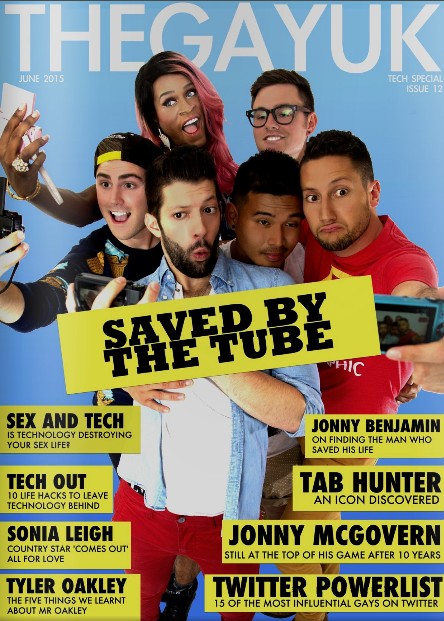
    YouTubers Magazine Cover
    CREDIT: Monty McKinnen / THEGAYUK


    Inside issue 12

    Tech Special with The YouTubers: Miles, RJ, Nicola, Ken, Will and Jake, ICON – Tab Hunter, Country Star – Sonia Leigh, Jonny McGovern, and the story of Jonny Benjamin searching for the man who saved his life. PLUS all your favourites – Reviews, Fashion, Lifestyle, Advice and Listings.