Tag: Mitsubishi

All the latest breaking news on Mitsubishi. Browse THEGAYUK’s complete collection of news, articles and commentary on Mitsubishi.

  • CAR REVIEW | Mitsubishi L200 Barbarian X

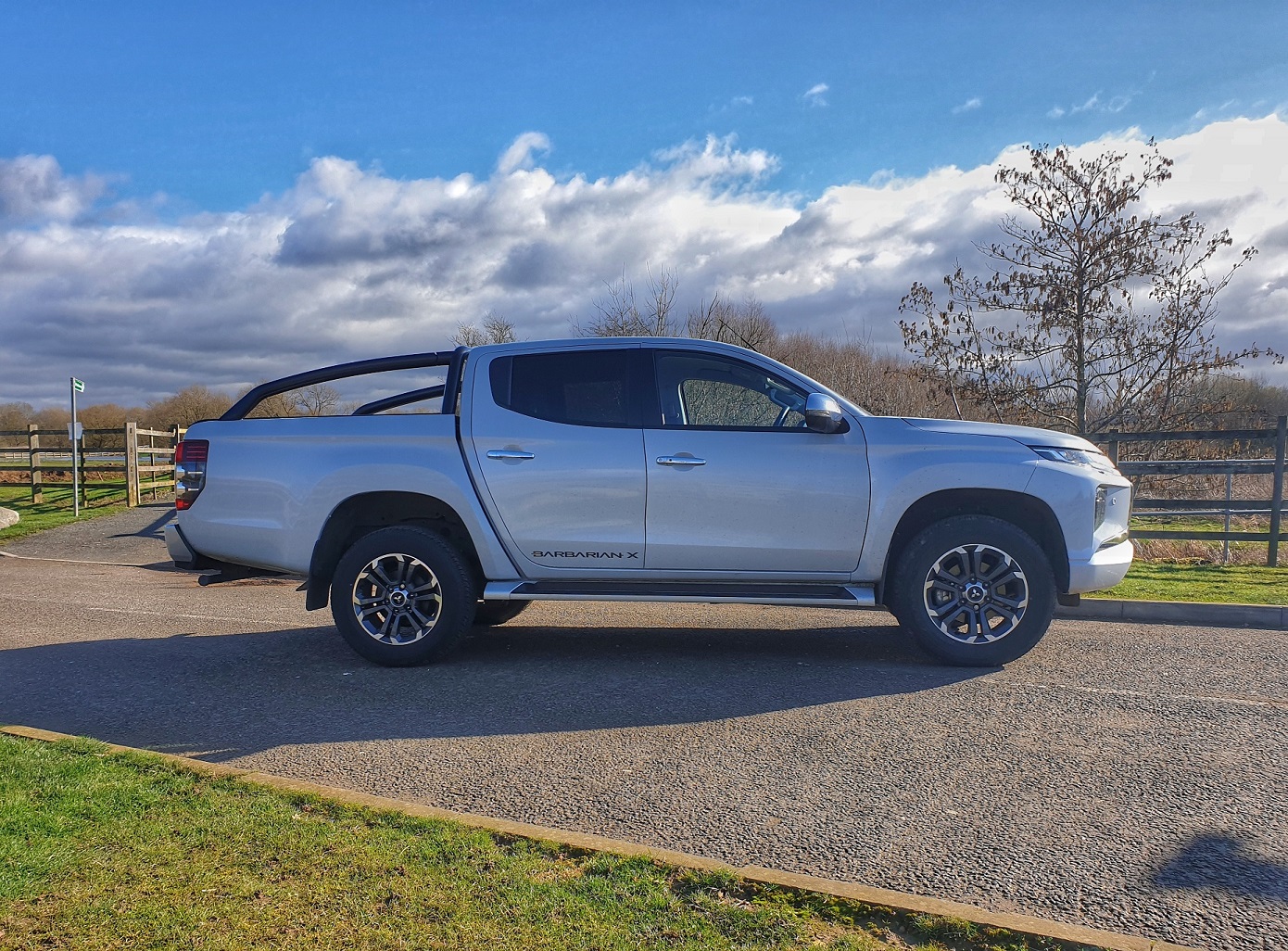
    CAR REVIEW | Mitsubishi L200 Barbarian X

    Rating: 5 out of 5.

    The Mitsubishi L200 Barbarian X is the latest in our series of lifestyle pickup reviews.

    Mitsubishi’s L200 is now in its 6th generation with production beginning way back in 1978, and worldwide production topping five million vehicles so far.

    If you’re looking for a pickup, you will be interested in some or all of the statistics, so here we go;
    There is an all-new 2268cc all-aluminium turbo diesel 4 cylinder engine producing 150bhp and 400Nm torque. Gearbox options are the new 6 speed automatic or a 6-speed manual.

    The payload is up to 1080kg and gross train weight (GTW) is 6100 kg.
    Curb weight for the L200 is 1935kg and the towing capacity is 3100kg with a twin axle trailer.

    At just under 5.3m long, this is a long vehicle and certainly doesn’t fit into a small, modern parking space. Width is 1.8m and feels no wider than most of the traffic around you. Lastly, the bed length is 1850 on this model.
    List price on the L200 starts at around £21,000, rising to £32,000 for what you see here, the Barbarian X.

    Solid axle and leaf spring at the rear and double wishbones and struts at the front.

    It wasn’t all that long ago that a pickup was simply a work tool. I remember early L200’s, Ford Rangers and many others, being pretty agricultural and basic. Over time, manufacturers have added more and more creature comforts. These days, manufacturers generally include at least one well-appointed, lifestyle type pickup in their range.

    Mitsubishi is no exception with their L200. This Barbarian X model is like a luxury SUV inside.

    Barbarian X comes with leather and Alcantara upholstery. The seats have sixpack quilted stitching, and leather features on door cards, centre console, armrest, and rear seats. The interior plastics are high quality and soft touch and after several thousand press fleet miles (aka hard miles) the interior is fresh, unmarked and doesn’t squeak or rattle.

    Exterior styling is a bit contentious. In a time when manufacturers seem to be trying to soften the styling on pickups to make them less aggressive, Mitsubishi decided on a more bold approach to the styling. The front is particularly striking with angle and straight lines dominating. They call is dynamic mesh. One thing is for sure, it’s an imposing sight in your rearview mirror.

    Side steps have been raised, in fact, the whole vehicle rides higher.

    Pickups have generally lacked in creature comforts over here. In the last few years, things have certainly changed, and this L200 boasts an impressive list of active safety aids. Partly lead by legislation and partly by customer expectation, o modern pickup is very well specified. This Mitsubishi has every active safety aid you would find on a modern car. Mitsubishi proudly state this barbarian X has class-leading active safety.

    As you would expect, there is a touch screen infotainment system. It’s not the last word in refinement but works well and has a good stereo.

    What’s it like to live with and drive? It has a poor turning circle and is a little bit bouncy over potholes, to be honest. Mitsubishi have stiffened the suspension over the previous generation. There are stiffer springs but in my humble opinion, the damping could be better. It works much better with a bit of weight on the back and is very smooth then. Let’s put this into perspective. This L200 is a pickup, designed to work for a living. It’s also a serious off-road tool with increased ground clearance over the previous model and a host of off-road features such as a low range gearbox and locking diffs. It’s also a luxury SUV and all for £32,000. Bearing that in mind, there is bound to be a compromise. Saying it’s compromised seem unfair though, it’s very nice to drive. I did 5hrs on the road in it one day with absolutely no issues or complaints. It was a lovely place to be.

  • CAR REVIEW | Mitsubishi Outlander PHEV – Too good to be true?

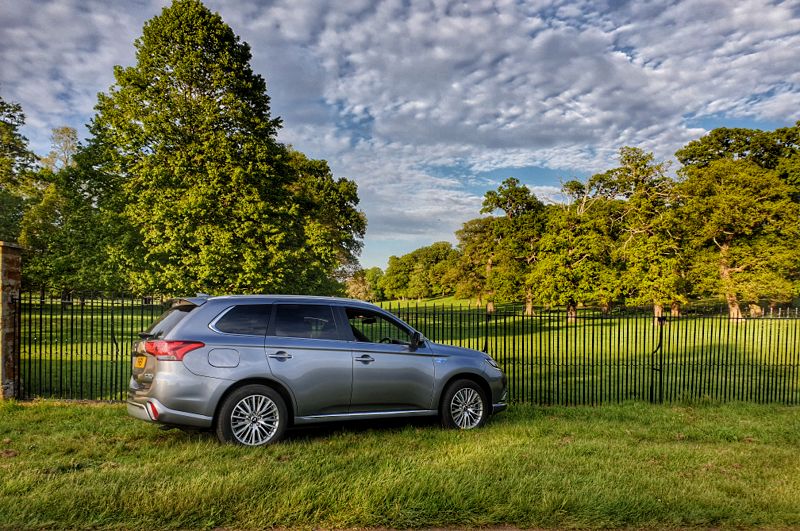
    CAR REVIEW | Mitsubishi Outlander PHEV – Too good to be true?

    ★★★★★ | Mitsubishi Outlander PHEV

    With increasingly stringent legislation, manufacturers are being squeezed and challenged to meet changing goals for reduced emissions and an ever more environmentally friendly footprint.

    By January 2018 there were more than 100,000 Mitsubishi Outlander PHEV sales across Europe, making it the most popular plug-in vehicle. In fact, despite a growing number of competitors, it remains the best-selling plug-in vehicle – hybrid or electric – in the UK.

    Which brings me to the next point.
    For the layman, the hybrid sector is a little confusing. There are several different types. Self-charging, plugin, parallel, range-extended and more.

    Mitsubishi have a very interesting way of delivering their Hybrid solution.

    The Outlander PHEV has an electric motor for each axle. That means one motor powers the rear wheels, one powers the front wheels, so 4X4.

    Electricity for these motors comes from either the battery, which ideally should be charged from the mains for maximum efficiency, or can be charged by the engine while you are driving (not very efficient though). When you are driving, if you use up all of the battery power, or you need more power than the battery can supply (say an overtake or spirited drive) the engine kicks in and generates more electricity. In extreme cases, if you accelerate hard or really labour the vehicle, the engine will also provide drive to the front wheels to assist the electric motors.

    The petrol engine is a 2.4-litre petrol engine, which uses MIVEC variable valve timing system. It’s very quiet and smooth and is surprisingly efficient.

    The battery capacity has been increased and is now 13.8kWh and in electric-only mode, the Outlander will now do 84mph on a private road.

    Another interesting feature is that it has only one forward gear as it is essentially an electric drivetrain. This means progress is seamless and driving it is absolute simplicity.

    In electric-only mode, in real-world driving conditions, the Outlander should do up to 28 miles on a charge. It doesn’t sound like much, but remember that this is a hybrid and this is more than enough for a lot of people’s daily commute.

    The theory is, you charge up on cheap electricity overnight, drive to work, charge up at work, usually for free (if you need to) and drive home, all on electric only. On longer journies, you can travel without range anxiety as you have the security of the petrol engine to generate power.

    It’s not uncommon for owners to go months without having to top up the petrol tank, as most of their journeys are fully electric, or mostly electric.

    What’s the Mitsubishi Outlander like?
    In brief, it’s a very well-engineered, well built, roomy and practical, luxury SUV.

    The current model has had a host of improvements and additions, making it a beautiful car, very well appointed.

    The updated Outlander benefits from new LED headlamps and all-new 18” alloy wheel design as well as super-All Wheel Control system with new SNOW and SPORT driving modes.

    Higher body rigidity through the use of structural adhesive welding plus a quicker steering rack with SPORT mode remapping means improved handling and safety. There are larger front brake discs (vented) for improved feel and stopping power too.


    As you would expect there are a full suite of advanced safety features and technologies, such as;

    Five-star NCAP safety rating, Automatic headlamps, Rain-sensing wipers, Reversing camera,
    Electronic handbrake with auto hold. There are also excellent LED headlights and daylight running lights with automatic high-beam, a very effective 360-degree camera with rear cross-traffic alert, lane departure warning, adaptive cruise control, blind-spot warning system with lane-change assist and even more.

    With this level of electronic assistance, it would seem like the Mitsubishi Outlander PHEV might be a bit cold and emotionless but actually, despite all of the electronics, it’s very easy to drive and feels very familiar. You don’t notice any intrusion and I found I felt instantly at home driving it.
    The luxurious Interior was a very nice place to be with quality leather and high-grade plastic throughout.
    Our test car had gunmetal grey leather seats with 8-way electric adjusted front driver’s seat and matching door upholstery and centre armrest, premium Alpine audio system with remote smartphone app compatibility (apple carplay and android auto), heated front and rear seats, power tailgate and heated steering wheel.

    In summary, it’s hard to review the Mitsubishi Outlander PHEV because there is so much to it.

    This is not a straightforward luxury car review. The PHEV side of the vehicle is so clever and well-engineered and has some significant benefits over a conventional car or SUV. It’s not a one size fits all car. If you are a high mileage driver, this probably isn’t the best choice for you. However, in most other respects, the Outlander PHEV offers some great benefits. During our time with the car, we genuinely saw well over 200mpg averages. That’s not fake journalist talk either. The batteries were charged and we were driving the car as we normally would. Over a couple of days of running kids around, commuting to work and usual duties like shopping and so on, we regularly saw 200+mpg journeys. It really showed how effective this Outlander PHEV is if used correctly. Obviously, many journeys are completely petrol free.

    I would strongly urge you to call into your local dealer and arrange a test drive. The staff will talk you through the technology and the Hybrid powertrain and I’m sure you will be very impressed.
    Prices start at £36,755

  • CAR REVIEW | Mitsubishi L200 Barbarian

    I don’t know quite what I was expecting when l took delivery of the new and improved series 5 Mitsubishi L200 Barbarian pick-up.

    Visually you are made aware of its almost 5300mm in length. Its load bed length of 1470mm looked bigger than it actually was. The L200 range has come a long way since its launch in 1982 and the new model sees a subtle design change with some of the feminine curves replaced by straight lines making it look a little sturdier than the old model, while still being civilian friendly looking over the opposition from the likes of Nissan and Toyota. More importantly, there is now a city friendly tighter turning circle too. With 7 different guises of L200 pick-up available it is possible that every member of the family could find a pick-up to suit.

    The interior finish is rugged looking and the leather-covered seats are comfortable. All plastic surfaces practical and functional plastic of the hard variety that literally makes cleaning a wipe over. The fascia is laid out well and all the controls minus the heated front seat switches were within easy reach. The steering wheel housed controls for the stereo, phone and cruise control. It was all quite too civilised for what a pick-up should be. Thankfully l found some hard edge plastic under the switches on the steering wheel. An ideal edge for filing off that hard skin from a day’s graft on-site. This masculine touch was then ruined by the floor lighting. Nothing wrong with floor lighting l hear you say but the blue was just a touch 2000’s Lexus and even they don’t do it in blue anymore. Even more, Lexus was the pick-ups “Barbarian” signature illuminated in the kick plates.


    I developed a love/hate relationship with the inbuilt sat-nav and infotainment system. Its touch screen was easy to use for my thin fingers but having asked a real man we’ll call Dave to have a play, he moaned that its on-screen buttons were too compacted for his manly fingers. And the brightness of the screen at night was reminiscent to that of a Hollywood dashboard. So intense was the light l couldn’t use the sat-nav at night. The night option changed the colours making it harder to view quickly while on the move.

    On the road, this fully loaded pick-up will set you back £30,238.80 with no options available because it literally has everything thrown at it or for £2000 cheaper when bought with the manual gearbox. Traction control is quite essential in 2WD mode. The 2442cc in-line 4 16 valve DOHC turbo diesel MIVEC engine packs quite a thud in the back when needed.

    The price you pay for having a pickup that goes from 0-60mph in 11.8 seconds is that the 317 Ib.ft of torque at 2500rpm would spin the rear wheels without much provoking on moist surfaces. Select the 4WD and all the power was planted where you wanted it. Again on the road and over most surfaces it performed with car-like comfort and ability. The steering was nicely weighted more towards town driving ease with feedback of road ahead being well communicated through the thick-rimmed steering wheel. In 4WD mode, you could feel the front differential working via a slight rumble through the wheel.

    The engine could be heard if really pushed but in the normal day to day it was bearably audible from a cold start until fully warmed. All this power doesn’t come with an added fuel premium either and official figures suggest a respectable 43.5mpg giving a range of over 700 miles. With today’s fuel prices that’s quite commendable for a tank that’ll cost you about £80 to fill. 4WD’s have become greener and cleaner over the years and the Barbarian is one of the greenest.

    Remember that 5300mm in length l mentioned, in practice, it doesn’t feel that big on the road. Admittedly you will struggle to park it within a single bay at your local DIY store but the reverse camera and big mirrors make it an easy task. l am not the best at reversing anything bigger than a hatchback so the reverse camera was a nice addition and one of the best l have ever used. The lines that appear on the screen are just perfect for achieving your 10/10 parking space award. You shouldn’t find the Barbarian on that website where people park inconsiderately.

    I have to conclude that overall l was impressed by almost every aspect of the Barbarian. Its ease of driving, the quietness of the cabin, the way it was screwed together and even the engine bay was laid out in a simple logical layout. It was better than l thought it could and should be and if you were to have just one vehicle for work and play then this has to be high on the list. It’s car like applications such as one touch door handles, push start, full electric windows, climate control and cruise modes all add up to make this a civilised machine for not a lot of money when you consider what it can do and where you could go with it. l wasn’t able to trial its off-road ability so l have to take Mitsubishi’s word for it, though with its long established history and range packed full of 4WD models I’m pretty sure this could take you as far away from civilian life as you’d want to go on a weekend. Sadly the Barbarian being so civilised it’ll remind you all too soon that you have work on Monday.

    Pros

    Comfort
    Go anywhere ability
    More useful than you’d think

    Cons

    Blue LED lighting
    Dazzling sat-nav screen
    No hill descent control

    The Lowdown
    Car – Mitsubishi L200 Double cab Barbarian
    Price – £23,799.00 (£30,238.80 as tested)
    MPG – 43.5 mpg
    Power – bhp
    0-62mph – 10.5 seconds
    Top Speed – 109mph
    Co2 – 189g/km

  • CAR REVIEW | Mitsubishi ASX

    Launched in 2009 to high expectations, the Mitsubishi ASX failed to make an impact on the competitive Sports Utility Vehicle sector which at present is dominated by the Nissan Qashqai and Toyota Rav4.

    However according to the Society of Motor Manufacturers & Traders, in 2014-2015 sales grew by as much as 20% for the ASX. This is already on top of Mitsubishi sales, in general, rising over the last 3 years. This might account as to why we are seeing more and more ASX’s on the road. Now 7-years-older and finally finding love on the forecourt, can it now start worrying the competition? I had one for a week to find out.

    Visually she’s aged well. It is still striking to look at and in a carpark full of small SUVs from the likes of VW and BMW it demonstrates a victory against the bland.

    Sadly the interior cannot be said to have impressed as much. While the seats were supportive and comfortable with an impossible to locate switch to heat them, the plastics were of the hard wearing type similar to what’s used in the man machines from Mitsubishi like in their L200 pick up. There lacked a soft touch feel about the cabin. This soft touch was further lacking in stupid imprinted signs on the door pockets and centre console saying “no cups!” Most annoying after all it’s my car and I’ll put cups where I want them. Bottles were allowed in the door pockets.

    Further annoyances were found with the lack of illuminated switches on the doors for windows and mirrors except for one flimsy light for the drivers switch. You forget how much you take for granted an illuminated switch in the dark. So instead of giving these lights, Mitsubishi added some sunshine lights into the glass roof panel and it screamed cheap electrical light tape found on a famous auction website. That said when the roof panel was open it did make the spacious cabin even more tardis like. It wasn’t an unpleasant place to be if I am honest.

    And then there was the satnav and its illumination horrors. In the day the system was like Dr Jekyll. However, come dusk and nightfall it became Mr Hyde. At night in day mode it was just too bright. Thankfully there is a switch that turns it to night mode. It then becomes too dark using blacks and blues in colour.

    So far there isn’t a lot to recommend this 7-year-old car and then you drive it. Two things stand out as negatives. Firstly there is an almighty amount of road roar in the back. At first, I thought I had the window open. Secondly, from a standing start, there is an awful delay that catches you out when pulling into traffic. This can be over come by trying to get a slight roll going before you push down hard on the accelerator. It is then that the 2.2-litre diesel engine mated to one of the smoothest 6-speed automatic boxes l have tried makes you feel like you’ve spent a million dollars. Mitsubishi gives you paddle shifts on the steering wheel too but unless you are really into spirited driving there is very little need to use them. The gearbox was always in the right gear.

    This impressive gearbox and power unit managed to further impress in its economy in 4WD where l found it at its best as a driver’s car and in road behaviour.

    In 2WD the economy according to the onboard computer was exactly the same over the same route of 31MPG. As you would expect in 4WD, traction was increased and it was also felt that the traction control system was less needed in keeping it where it was pointed. And then there are the headlights. Nothing fancy about these units, they didn’t even swivel. What they did give you though was a beautiful beam pattern and crystal clear view on even the grimmest of road conditions. Commuting through the wildness of Surrey I found there was little need to use the main beam.

    So the ASX was starting to make me appreciate it and its appeal so quickly lost on taking delivery was starting to make sense. There is bags of room inside and the cabin does have a tardis feel about it. The boot is very generous for this size of vehicle and rear seat leg room with my 6-foot frame behind the wheel was more than adequate. With this opulent amount of space must come a good heating system and it was good. And then it was bad. and then it was perfect. Call it what you like but there were times l felt like Goldilocks. Set to 19 degrees it would heat the cabin until it was as hot as the sun and then cool it down with blasts of cold. Only then would it settle to a perfect temperature. This lasted around 10 miles per journey and opening a window would only confuse it.

    Where this ASX really excels is in its price. The top end £24,899  model is £1400 more expensive that its 1.6-litre sister and that only comes in manual. You do pay more at the pumps if you go by official figures of over 10 MPG worse for the 2.2 but only 4 MPG over the extra urban. I, however, was not able to match even its lowest figure of 39.8 for the urban dash. Compare the top of the range ASX to its lowest family member and it £9,000 saving doesn’t make the 1.6 ASX 2WD look good at all unless you are after an estate looking vehicle with no functions. The ASX is already 10 years out of date, don’t do yourself a disservice and make it worse by opting for the lesser model.

    Overall all is not lost for the quite likeable ASX. According to the 14 owners on the Autotrader website, it scored 4.6 stars out of 5 and prices are set to become even more competitive with talk of a new model ASX coming in 2017. Need yourself an SUV with a 5-year warranty? Now is the time to talk to Mitsubishi.

    Pros

    Automatic gearbox

    Headlights

    Standout looks

    Cons

    Poor switch gear

    Road noise

    Throttle response from standing start

    The Lowdown

    Car – Mitsubishi ASX

    Price – £24,899 (as tested)

    MPG – 39.8 urban

    Power – 147 bhp (at 3500 rpm)

    0-62mph – 10.8 seconds

    Top Speed – 118 MPH

    Co2 – 152 g/km

    by Stuart M Bird

  • CAR REVIEW | Mitsubishi Outlander PHEV

    148 miles per gallon. That is the official fuel consumption figure for Mitsubishi’s Outlander PHEV, an amazing figure for a big, heavy four wheel drive vehicle.

    Coupled to road tax that will currently cost you nothing, exemption from the London congestion charge along with a tiny 5% benefit in kind rate for company car drivers and it’s no surprise that they’re an increasingly common sight on our roads. It all sounds too good to be true, is it?

    Naturally you’ll be wondering how such a big 4×4 could possibly achieve such tiny fuel consumption. The key is in the name, specifically the PHEV bit; that stands for Plug in Hybrid Electric Vehicle. Under the boot floor is a battery pack large enough to power the Outlander for 32 miles without once relying on petrol power. Unlike many other hybrids, this battery doesn’t just get charged by the engine, you can plug it into the mains too.

    Once the electricity is all gone, there’s a conventional 2.0 litre petrol engine that can act solely as a generator to charge the battery, drive the wheels or a combination of both. The trouble is that if you rely too much on the engine the fuel economy starts to drop off a cliff. After a long drive on the motorway and with the battery virtually empty the economy dropped to just under 36mpg, a figure that is bettered by the majority of diesel SUVs.

    So is it all smoke and mirrors? In a word, no. If you’re one of the millions of motorists who don’t even manage 30 miles a day then the vast majority of journeys will cost you pence in electric rather than pounds in petrol. If you’re lucky enough to work somewhere you can plug it in then you can effectively double that range. According to Mitsubishi’s maths, on a single charge, 106 miles is the point at which a diesel would be more economical.

    For most people then, it’s a cheap car to run. It’s not terribly expensive considering the sheer size and complexity of it either. The cheapest Outlander PHEV is less than £29,000 yet still comes with keyless entry, 18” alloys, climate control, Bluetooth and iPod connectivity. Start to climb the range for niceties like sat nav, a premium audio system and swathes of leather and the price starts to get very close to £40,000 before options. BMW and Mercedes territory then.

    At first glance it’s pretty convincing. Externally it’s a quietly handsome shape that shys away from some of the crazier flourishes seen on other SUVs. There’s a little chrome but not enough to be garish giving a classy overall look. Inside the top spec GX5h test vehicle there’s red leather seats with matching trim on the dash, doors, steering wheel and even cupholders. It’s attractive enough but the level of finish is undoubtedly behind premium rivals. Wrinkly leather is not nice.

    Rear seat passengers are treated to vast amounts of legroom but seats that are an odd shape and quite hard too. Still, this was a fresh car so maybe a bit of use would soften them up. Behind the seats is a huge boot but no option of a third row of seats due to the battery pack. Oddly, you still get a couple of cupholders back there, however. The top half of the range also benefits from a powered tailgate that can be opened and closed from the key fob, handy.

    Those of you that love a bit of tech might also appreciate the Mitsubishi Remote Control on higher trim levels that lets you schedule charging, check battery levels and even turn the air conditioning on remotely through your smartphone. To accompany this you also get a 7” touchscreen infotainment system with sat nav that proved easy to work once you got to know it a little. The uprated Alpine speakers in the test car provided great sound quality too.

    To drive the Outlander proved to be a well-engineered bit of kit. Even with drive switching between petrol and electric acceleration was smooth without nasty jolts while noise levels were generally low. A flattened throttle pedal gets the engine screaming thanks to a CVT gearbox that keeps the engine at peak power, effective but loud. There’s also a little lag between nailing the throttle and actually getting full power. Not an issue under normal driving but slightly frustrating when trying to accelerate onto a busy roundabout for instance. It isn’t particularly quick either, 0-60mph takes around 11 seconds.

    Handling wise there is less body roll than you might expect but still noticeably more than a normal car or a BMW X3 for that matter. Although fairly neutral when cornered hard, it predictably understeers at the limit for safe if uninvolving progress. Still, this isn’t going to be a car you buy for fun, if driven sensibly you appreciate how easy it is to drive and how quiet it is. With decent ride comfort as well, it’ll prove good enough for most prospective owners.

    Should you buy one then? Well to benefit from the potential fuel savings you need to be able to plug it in somewhere and not be travelling too far too regularly. If that applies to you then there’s plenty to recommend. Even looking past the potential fuel savings, the Outlander looks good, is well equipped for the money and overall feels well made (looking past some of the iffy interior trim). No wonder they’re selling so well.

    PROS

    • Huge inside
    • Cheap to run. Mostly.
    • Well equipped

    CONS

    • Expensive on long journeys
    • Not as premium feeling as some rivals
    • Uninspiring to drive

    THE LOWDOWN

    • Car – Mitsubishi Outlander PHEV GX5h
    • Price – £38,399 on the road (after £5,000 government grant)
    • Power – 200bhp (combined)
    • 0-60 – 11.0 seconds
    • Top Speed – 106mph
    • Co2 – 44g/km