Tag: Movie Genre Biopic

  • FILM REVIEW | Florence Foster Jenkins – Some Of The Right Notes In All The Wrong Places

    FILM REVIEW | Florence Foster Jenkins – Some Of The Right Notes In All The Wrong Places

    ★★★★★ | Florence Foster Jenkins

    CREDIT: Pathe

    Meryl Streep shines in this touching tribute to the eccentricities of an ageing heiress.

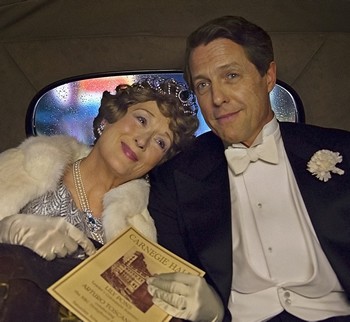
    Meryl Streep once again proves that she is one of the world’s greatest actors. This time Streep takes on the role of Florence Foster Jenkins, the ‘world’s worst opera singer’, who was a rich New York heiress who lived from 1868 to 1944.

    Florence Foster Jenkins was an incredibly successful performer within her own Vaudeville circuit, owning the audience with her incredible tableaux’s. However  she feels that her musicality (she was a child prodigy piano player, until illness robbed her of her ability to use her left hand) is being stymied. The larger than life character of Foster Jenkins decides that she wants to take up opera again, the problem is that she can’t sing, well at least to the ears that are around her. Whether she didn’t know this or refused to accept it is lost in the annals of history, but Foster-Jenkins was a force to be reckoned with, who once made a decision stuck to it doggedly, right to its conclusion.

    After hearing a young Soprano, she sets about making her life-long dream to play at Carnegie Hall in Manhattan, a reality. She hires a pianist, expertly portrayed by Simon Helberg (The Big Band Theory) and one of the world’s greatest vocal coaches (David Haig) and along with her Yes Man husband/manager played by a doting Hugh Grant, who pays off critics and audience members to enjoy Foster-Jenkins’ performances, Foster-Jenkins sets herself up for a mighty fall.

    Once again Meryl Streep proves that her acting is all in the eyes. She plays the ageing Foster-Jenkins with a delicacy that is truly touching and shows how poignant an actor she is. Streep manages to bring  hilarity and tragedy into one role. As she flings herself into one of opera’s most demanding arias, the Queen Of The Night, she takes on a Patricia Routledge (Keeping Up Appearances) form, yet is able to truly showcase the depth of Foster Jenkins musings and sheer love of life and ‘anything is possible’ attitude. We could all learn a thing or two from Foster-Jenkins. Hugh Grant perfectly plays his usual suave, English highly impotent secondary character allowing Streep’s magnificent talent to shine through.

    Directed by Stephen Frears and written by Nicholas Martin, this faithful retelling of the famous opera singer that never was, is a laugh out loud, poignant look back at a forgotten era.

  • 60 Second Gay UK Film Review | Eddie The Eagle

    60 Second Gay UK Film Review | Eddie The Eagle

    Eddie The Eagle – The true story of the ultimate underdog sporting hero in the feel good film of the year.

    (more…)

  • FILM REVIEW | Freeheld

    FILM REVIEW | Freeheld

    ★★ Freeheld | A dying female police officer struggles to get her benefits passed on to her female domestic partner in the new film ‘Freeheld.’

    (more…)

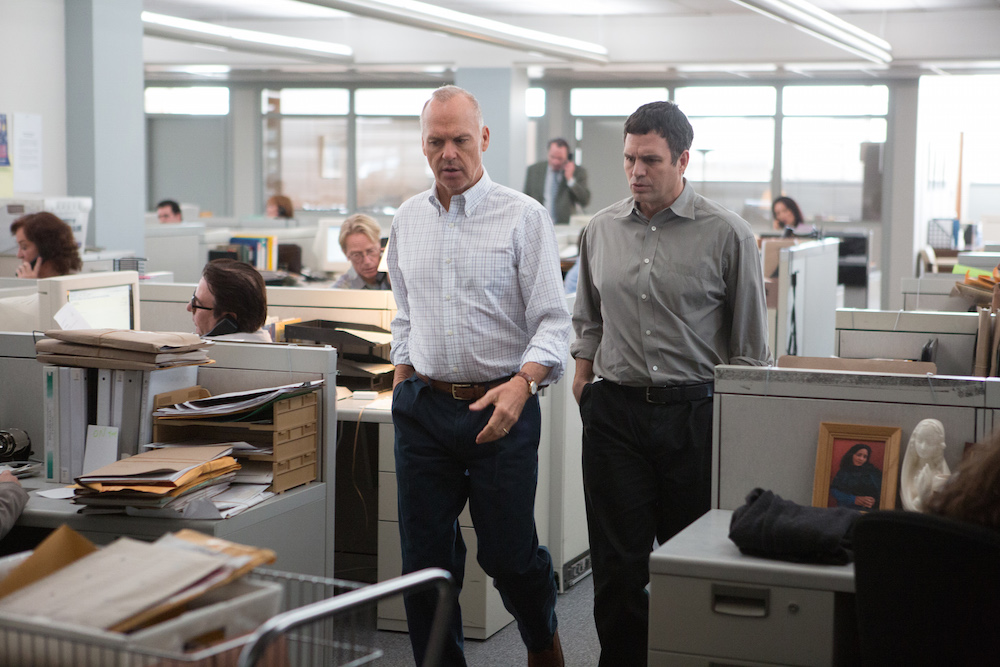
  • FILM REVIEW: Spotlight

    FILM REVIEW: Spotlight

    FILM REVIEW: Spotlight ★★★★

    (more…)

  • FILM REVIEW | The Danish Girl

    FILM REVIEW | The Danish Girl

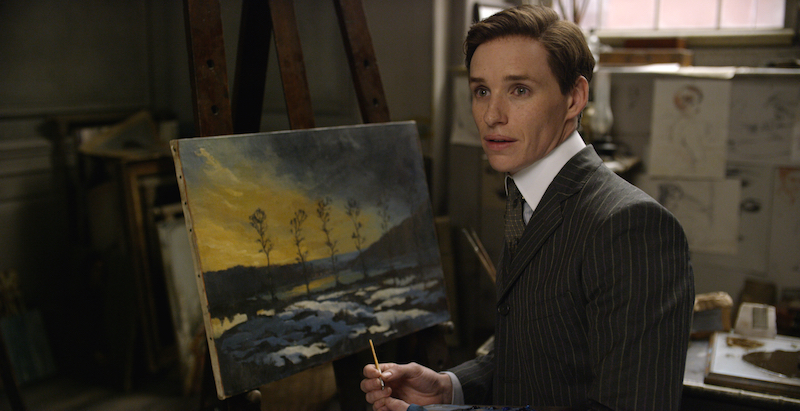
    Oscar-winning Director Tom Hooper (‘The Kings Speech’) and Oscar-winning Actor Eddie Redmayne (‘The Theory of Everything’) bring us the life of a male Dutch artist who, with the support from his wife, becomes a woman, in the new film ‘The Danish Girl.’ ★★★

    Based on the book of the same name by David Ebershoff, ‘The Danish Girl’ tells the real life story of Einar Wegener (Redmayne) who never felt right as a man so transitioned into a woman, being one of the first known recipients ever of reassignment surgery. It was with the support of his wife and fellow painter Gerde Wegener (Alicia Vikander) that gave him the courage and hope that helped him through the transition to live the rest of his life as Lili Elbe. But the film portrays Einar’s transition and Gerde’s acceptance as a dull one, there are no real revelations, nothing exciting about the story, and even Redmayne’s performance is a bit under the radar. It’s Vikander who steals the movie right from under Redmayne’s corset.
    The movie tells us that Einar’s interest in all things transgender suddenly happened when Gerde asked him to fill in for a female model who didn’t show up for one of her painting sessions. So she asks Wegener to put on a dress so that she can finish the painting. Wegener likes the way it feels, but more importantly he likes the way he looks in it, and this suddenly awakens Einar’s inner woman. This takes place in 1926 while the couple was living in the liberal land of Copenhagen, though such things were not done, nor not even discussed back then. But with Gerde’s full support, and help, Einar starts dressing up as a woman outside of their house. Things get a bit more complicated when another man, Henrick (Ben Whishaw) takes an interest in Einar, who by this time has started calling herself Lili.
    Gerde is asked to go to Paris so that she can work for a local art dealer, and while her career flourishes, their marriage slowly dissolves. And a childhood friend of Lili’s, Hans (Matthias Schoenaerts) shows up and forms a complex triangle with the couple. And it’s not long before Einar goes ahead with the surgery.
    ‘The Danish Girl’ is dull. It’s not a sweeping European love story where love conquers all in the midst of one man’s gender confusion and one woman’s loyalty to such man. Hooper’s direction can’t bring Lucinda Coxon’s boring script to life. Not even the actors can accomplish this.
    Redmayne is good as Einar/Lili, yet there were times when I thought I was still watching him play Stephen Hawking. It’s his eyes, he blinks them quite a lot in this film, just like the way he did in ‘The Theory of Everything.’ However, ‘The Danish Girl’ is pretty much Vikander’s movie.
    She’s beautiful and emotional and accepting when the times call for it – it’s just as good a performance as Felicity Jones was as in ‘The Theory of Everything.‘ Vikander’s star is on a meteoric rise, having appeared in three films this past year (‘Ex Machina,’ ‘The Man from U.N.C.L.E.‘ and ‘Burnt‘). She’s currently filming the fifth Bourne Identity film with Matt Damon and Tommy Lee Jones and has two other features coming out in 2016. I was very disappointed that ‘The Danish Girl’ was not as good as I had hoped, perhaps it might be better to read the actual book, and skip the movie.by Tim Baros
  • FILM REVIEW | Sherpa

    FILM REVIEW | Sherpa

    Sherpa | ★★★★★

    A very moving story about the men who risk their lives to help others reach the top of Mount Everest is told in the excellent documentary ‘Sherpa.’

    Sherpas are an ethnic group from Nepal’s mountainous region, high in the Himalayas. It’s also a surname in a culture that mostly doesn’t assign surnames to its people.

    Sherpas are highly regarded as elite mountaineers and experts in their local areas, and because they live in very high altitudes, they get hired to serve as guides for expeditions in and around the Himalayan Mountains, especially expeditions up Mount Everest. Sherpas are tasked with carrying all the necessary expedition equipment up (and down) the mountains. And as for expeditions up Mount Everest, Sherpa’s go up and down the mountain about 30 times. They also have to go through the Khumba Icefall, a dangerous and constantly moving block of ice that is the first hurdle in climbing the mountain. The term Sherpa made it into the cultural lexicon in 1953 when Sir Edmund Hillary and Tenzing Norgay became the first people to reach the summit of Mount Everest, in a year that was the Coronation of Queen Elizabeth. Norgay was referred to then as a Sherpa, and he was awarded the George Cross, while Hillary was Knighted. Norgay gave the name Sherpa a currency that is synonymous with climbing.

    In ‘Sherpa,’ filmed in 2014, Director Jennifer Peedom set out to make a documentary from the Sherpas’ point of view, she wanted to observe up-close, how, and why the relationship between foreign climbers and Sherpas have shifted and soured since the euphoria of 1953, especially after 2013’s ugly brawl when a climber made a derogatory remark to a Sherpa at 21,000 feet, causing a fight between the climbers and the Sherpas. What the filmmakers got instead was to capture the worst tragedy in the history of Everest, and the subsequent days that would change the mountain forever.

    The filmmakers embedded themselves with a commercial expedition run by New Zealander Russell Brice’s company Himalayan Experience. Brice had four returning clients after they had failed to reach the summit in 2012, so the pressure was on to get them to the top. There was also a team of 25 Sherpas, managed by Phurba Tashi Sherpa, who Peedom was able to interview before the climb. We see him as he prepares to make history by being the first person to summit Mount Everest 22 times; his wife and mother are also seen voicing their concern about him climbing the mountain they refer to as Chomolungma.

    But at 6:45 a.m. on April 18th, 2014, a 14 million kg block of ice crashed down onto the climbing route through the Khumbu Icefall, killing 16 Sherpas. This disaster changes the Sherpas’ lives, shatters the dreams of the climbers, puts into question future expeditions, and changes the focus of Peedom’s documentary. It was the worst tragedy on Everest. Peedom captures the Sherpas united in grief and anger while everyone rushes to implement a rescue plan. But it turns into a Sherpas versus Westerners showdown as the Westerners want to control the rescue and recovery while the Sherpas want to included in retrieving their own. Peedom captures the tension and the drama, all at Base Camp, at 17,598 feet.

    ‘Sherpa,’ beautifully directed by Peedom, who also directed 2006’s Everest: Beyond the Limit, was ready to tell the story of the relationship between the Sherpas and the foreigners on Everest. After the avalanche she tried to make sense of it all, and captured on film the unfolding situation, and the Nepalese Government’s slow reaction to the tragedy. Peedom follows the story as it unfolds as she and the rest of the crew inadvertently witnessed and documented a historic event.

    She also beautifully interweaves the back-stories of those who risk their lives for the sake of others – the Sherpas. Her crew capture the beauty and the landscape of the region, while at the same time capture moments of disaster and anger and sadness, it’s a compelling and must see documentary. The Best documentary of the year.

    On April 25, 2015, there was a massive earthquake in the Nepal region killing over 9,000 people. It was the worst natural disaster to strike Nepal in 80 years. It triggered an avalanche on Mount Everest that killed 19 people, and aftershocks took place, which further put into question the future of climbing Mount Everest ever again.

    Sherpa won the Best Documentary Awards at the London Film Festival. It’s now out in cinemas.


  • FILM REVIEW: The Program, Not A Winner In My Book

    Director Stephen Frears brings us the rise, and fall, of cycling champion Lance Armstrong in the new film ‘The Program.’

    (more…)

  • FILM REVIEW | Suffragette

    ★★★★ Suffagette | The plight of the British women who fought for the right to vote is beautifully told in the excellent film ‘Suffragette.’

    Suffragette’ is told through the eyes Maud Watts (Carey Mulligan) in London, 1912. She works in a local factory, the Glass House Laundry in Bethnal Green, is married to fellow factory worker Sonny Watts (Ben Whishaw) and they have a young son. Watts has actually been a part of the factory since she was very young: her mother worked in the same factory and would strap her to her back when she went to work. Her mother died when she was four and Maud started working part-time there at the age of 7. At the age of 12, she started working full-time. She’s now a lead washer where she makes 13 schillings a week (compared to the salary a man is paid for the same job – 19 schillings a week). Watts has also been sexually molested by the hard core boss Norman Taylor (Geoff Bell).

    One day Watts is asked to accompany another women who’s to speak at Parliament about women’s working conditions and a bill to give women the right to vote. Watts wasn’t supposed to speak, but the other woman, Mrs. Violet Miller (Anne-Marie Duff) had been beaten up and didn’t look presentable, so Watts is thrust into giving the preprepared speech. Watts speaks from her heart, and from her experience, ignoring the script that was written. This lights something within Watts and turns her into an activist. She gets more more disgusted at the lack of women’s rights, and even more so when she sees young factory worker Maggie Miller (Grace Stotter), Violet’s daughter, being groped by Taylor in his office. Taylor is a sexual predator who believe women have no rights, and he tells Watts to ‘leave the vote to us.’

    But Watts’ pleas to Parliament are not enough. They say that there is not enough evidence to support the bill. The women rebel in front of the Houses of Parliament; many are thrown to the ground by the police with little regard for the women’s safety. Some, including Watts, and fellow protestor Edith Ellyn (Helena Bonham Carter), are sent to jail, where they are humiliatingly stripped naked. But this doesn’t deter them, and this leads to Watts becoming a member of the ever increasing suffragettes – a group of women working full-time to advance the rights of women.

    The Suffragettes are led by Emmeline Pankhurst (Meryl Streep) – a woman who has given up her life to further the cause. She’s also in hiding for fear of getting arrested for leading the movement (during those times women had very little rights).

    Determined police inspector Arthur Steed (Brendan Gleeson) puts the women under surveillance – he won’t let them carry on with their protesting and letter box bombings – he wants them all arrested, especially Pankhurst, and calls the women the “East London ladies.” But Pankhurst rallies the women – she tells them at a gathering in a speech from a balcony “We would rather be lawmakers, not lawbreakers.” The women continue their protesting, even resorting to bombing an M.P.’s house, just to get their message across. But Watts eventually loses more than what she bargained for, but she’s more determined than ever to fight for the cause.

    ‘Suffragette’ tracks the foot soldiers of the early UK feminist movement, working class women who were forced to go into hiding to pursue equality. They were willing to risk, in their fight, their jobs, homes, families, and for some of them, their lives. And it’s a great movie. The film lies heavily on the shoulders of Mulligan’s portrayal of her character, a fictional character but someone who we route for every step of the way. It’s an unflawed performance that hopefully will see Mulligan receive an Academy Award nomination. Streep, who shares top billing, is only in the film for less than five minutes, but her character’s presence is felt all throughout the movie. Carter is perfectly cast as the local pharmacist and fellow activist, with a husband who supports her every step of the way. Carter is actually the great-granddaughter of Herbert Asquith – the Prime Minister during the time this movie takes place. Director Sarah Gavron (Brick Lane), working from a script by Abi Morgan (The Iron Lady), successfully and beautifully blends in actual footage of the real protestors into the film, in a film that effectively uses dark lighting and unglamorous costumes to set the mood of the times. And while the plot may be familiar (the recent Made in Dagenham follows a similar plotline), ‘Suffragette’ is an important film to highlight what women did to get equal rights. And we have to be reminded that they are still fighting, and in some countries around the world (Saudi Arabia), women still have very little or no rights.

  • FILM REVIEW | LIFE: There Is No Life in Life

    There’s a famous photograph of James Dean in Times Square taken by Dennis Stock. It is now a movie called ‘Life.’ ★★

    The photo, taken in 1955, shows James Dean, cigarette in his mouth, head tilted towards the ground, the billboards of Times Square in the background, dark clouds overhead, made the cover of Life Magazine. It also made Stock’s career.
    So ‘Life’ the movie is all about that photograph, and the events leading up to, and after, that photograph was taken. It’s also a buddy movie: one man on the cusp of celebrity, another man trying to capture him while struggling to make it as a photographer and to also spend time with his young son, with an un-cooperative ex-wife. Stock (Robert Pattison) is tasked with an assignment: to do a photo essay on an unknown actor. So he’s introduced to James Dean (Dane DeHaan) at a party, where he’s also introduced to a young Natalie Wood (Lauren Gallagher). Dean in on the cusp of fame – his first film – East of Eden – was yet to be released. So Dean agrees to have Stock follow him around to get some shots. The first are rejected by his editor – who wants to see hazy shots of an unknown actor boozing it up in a club with Eartha Kitt (Kelly McCreary)? Stock thinks about taking another job, this one in Japan, but he decides to stay in New York and gets back together again with Dean, and on the spur of the moment that famous Times Square photograph is taken. Not to end there, ‘Life’ takes us with Dean and Stock to Dean’s hometown in Indiana.
    There is where Dean feels most at home, and comfortable; with family, aunt and uncle and Grandma and nephew (his mother died when he was nine and his father sent him to Indiana to live with them). More famous photographs are taken there; Dean with his nephew, Dean on the farm, Dean in the kitchen; these photos would become part of the Life Magazine photo essay. And that’s the movie.
    As you can second guess, there’s not much of a story to build on. ‘Life’ is not only about the photographs, it’s also about the relationship between these two men and especially the trust Stock builds with Dean. But ‘Life’ is boring, with stale dialogue, and with acting that is quite lifeless. Pattison is fine as Stock, but DeHaan, even though he has hair that looks identical to Dean’s, just doesn’t bring the right energy and sparkle that we can presume Dean had. Ben Kingsley, however, is excellent as Jack Warner – the man who guided Dean’s career. And while the period details (clothes, cars, hairstyles) are fine, it’s the story that is not a very exciting one and is not enough to warrant a 110-minute film.
    Director Anton Corbijn just doesn’t bring any ‘Life’ to this movie.
  • FILM REVIEW | Pasolini, Controversial film about the late Gay Italian Film Director

    Director Abel Ferrera brings us the few days in the life of gay Italian film director Pier Paolo Pasolini in his new film simply titled ‘Pasolini.’ ★★★★

    Ferrera, who last year gave us the gripping, scandalous, controversial and excellent film Welcome to New York (which was inspired by the case of Dominique Strauss-Khan (DSK), the former chairman of the IMF), presents us a film where Ferrara imagines and then reconstructs the last days in the life of Pasolini.

    Pasolini was an extremely controversial film director. His films combined themes of religion and sex, his own personal views on topics such as abortion, displaying in your face bacchanals that left little to the imagination. His last film – titled Salo, or the 120 Days of Sodom – depicted children subjected to violence, sexual depravity, and horrific murder – making Pasolini an extremely hated, or genius, figure. In Pasolini, Willem Dafoe doesn’t so much imitate or play Pasolini in the film, but he inhabits the actions and thoughts of him. And Ferrara, in putting this film together, spoke to Pasolini’s relatives and friends to gather the memories and thoughts of a man who would wind up being killed by a rent boy at the age of 53 in Italy.

    Pasolini is not so much an actual biography of the last days of Pasolini’s life, it’s more of a combination of the actual events that took place coupled with scenes from an unmade Pasolini film, a film that he was actually working on when he died. So we have Ferrara inhabiting the shoes of Pasolini and bringing to life scenes from the film that Pasolini never made – Porno-Teo-Kolossai – coupled with the events from the last days of his life which included meetings to discuss his new film, in his home with his mom and assistant and various friends, and to finally, his pickup of a male rent boy that would result in his death. It’s a very realistic film. Ferrara uses the actual locations of the real life events and also uses Pasolini’s personal objects and clothes in the film. This, coupled with Dafoe’s performance, gives us a documentary style production that is rich in it’s storytelling. Dafoe gives a fantastic performance inhabiting Pasolini’s world, right down to the language (some of this film is in Italian, and not every part of it has subtitles), to the glasses that he wears, to the clothing, to the way he carries himself. Like Gerard Depardieu who perfectly inhabited the role of DSK, Dafoe convincingly inhabits the role here. Even down to the final scene in the film, where Pasolini has sex with the rent boy and ends up being badly beaten, and run over by his own car. It’s a brutal death for a man who didn’t deserve to die that way. His murder on a beach on the outskirts of Rome on November 2, 1972 is still an open case despite the conviction of the rentboy that he picked up that night. It would be bit more fascinating if a filmmaker can make a film about Pasolini’s life – that would be a much more well-deserved tribute.


    Available to buy on AMAZON

    by Tim Baros

  • FILM REVIEW | Kidnapping of Freddy Heineken

    ★★★ | Kidnapping of Freddy Heineken

    This film is a true sleeper, it had a limited cinema release earlier this year but now gets a DVD release.

    It tells the true story of the 1983 kidnapping of Freddy Heineken, the head of “that” brewing dynasty. It goes inside the gang responsible and shows their family links, how it escalated. It shows how these individuals went from owning a successful building company through to one of the worst recessions the world has seen that hit everyone, and finally to show how they planned and executed one of the biggest kidnappings in history.

    It stars Jim Sturgess (21, Cloud Atlas), Sam Worthington (Avatar, Clash of the Titans), Ryan Kwanten (True Blood, Home & Away) and Mark van Eeuwen as the main components of the group who, after being turned down for loans to help them through this tough period, and having their only piece of real estate occupied by squatters and therefore open to long and expensive legal battles to free it up, turn to crime.

    This film paints them all as dreamers, people who didn’t want to live in the real world, people who wanted their boats and mansions and cars back, people willing to do anything, ANYTHING to get their old lives back.

    So, along comes the idea, after a successful bank job that will keep them afloat and food the new scheme.

    The rest of history, and makes for a bloody good film. The back-story is intriguing, the plan ingenious and the rest of the film is gripping.

    Anthony Hopkins puts in a great turn as Freddy, showing little concern for his own safety and having fun with his captors as the whole scheme unravels.

    This film scored a terrible 27/100 on Rotten Tomatoes, but I enjoyed it. It is entertaining, the story is intriguing and the cast put in good performances. It is no frills, no major special effects, but this means it doesn’t detract from the actual story, which is, for me, how it should be – the story is centre stage.