Tag: Opera

All the latest breaking news on opera. Browse THEGAYUK’s complete collection of news, articles and commentary on opera.

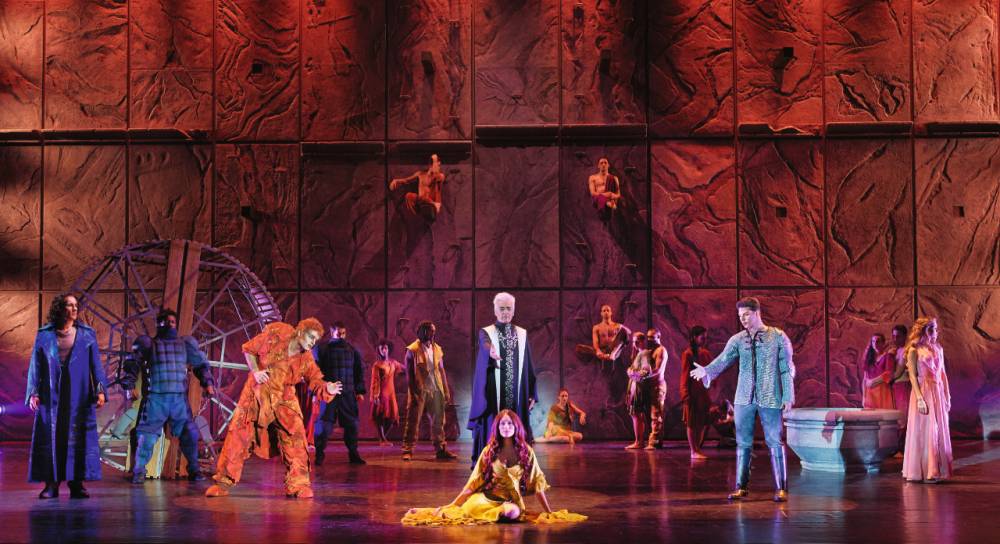
  • THEATRE REVIEW | Notre Dame de Paris, London Coliseum, London

    THEATRE REVIEW | Notre Dame de Paris, London Coliseum, London

    ★★★★★| Notre Dame de Paris

    The classic Notre Dame de Paris comes to London for a limited time, and it’s well worth your effort to attend.

    Based on the acclaimed 1831 novel Notre-Dame de Paris (and also known as The Hunchback of Notre Dame) by Victor Hugo, Notre Dame de Paris features an international ensemble of singers, dancers and acrobats and tells the tale of the hunchbacked cathedral bell-ringer, Quasimodo, and his desperate love for the gypsy, Esmeralda. The show, which is in London for 7 performances only, culminates with the 5,000th performance of the show. Playing at the London Coliseum in Covent Garden, this production is the original French production. Composed byRichard Cocciantewith lyrics byLuc Plamondon, directed byGilles Maheu and choreographed byMartino Müller, this production stars Angelo Del Vecchio (Quasimodo), Hiba Tawaji (Esmeralda), Daniel Lavoie (Frollo), Richard Charest (Gringoire), and Martin Giroux (Phoebus), among others, and all members of the principal cast in the current world tour. The singers are accompanied by the stunning English National Opera (ENO) Orchestra with Matthew Brind conducting.

    Del Vecchio is a wonder playing Quasimodo. Italian born, he is the only singer in the world to have performed the show in three languages. When he sings he is passionate, and you can feel his love for Esmeralda through his voice. Meanwhile, Tawaji is wonderful as the beautiful and mesmerizing Esmeralda, a role she has played all over the world since 2016. Esmeralda can have any man she wants, but after being kidnapped by Quasimodo, over time she starts falling in love with him. Think Beauty and the Beast and this is what you’ve got – but operatic style. But Notre Dame de Paris is not just opera, it’s grand opera. And in the amazingly beautiful confines of the London Coliseum, it makes for a grand grand show on a grand grand stage in a grand grand auditorium.

    Lavoie is also amazing in the role as Frollo – a priest who also has a dirty hand in the abduction and imprisonment of Esmeralda – only because he loves her but she won’t let him have her. Charest as Gringoire is our poet, and commentator, and guides us through this spellbinding production, while Giroux takes to heart his leading man status, and good looks as Phoebus, who woos not just Esmeralda but any pretty woman in sight. And besides the main actors and their amazing singing, acrobatics and break dancers are interspersed with the story. The cast of about a dozen or so jump, climb, twist, turn – it’s all very mesmerizing and choreographed spectacularly, especially when they climb the walls and dive underneath baricades and perform somersalts. It’s all very energetic and sexy.

    And Notre Dame de Paris is celebrating its 20th anniversary this year. Having sold out performances across 16 countries and been translated into nine different languages, Notre Dame de Paris originallydebuted at the Palais des Congrès in Paris, 1998. Following its opening, the production was commended in the Guinness Book of World Records 2000 for its record success for a musical during its first year.

    Director Maheu and choreographer Müller have created an opera that’s spell-binding in almost every way possible, while the lush music, by Plamondon and Cocciante, is perfect. Notre Dame de Paris is just like the city it’s named after. It’s romantic, beautiful, tragic, and very memorable. Notre Dame de Paris is a must see.

    Notre Dame de Paris plays at the London Coliseum until 27th January 2019. Book tickets here

  • THEATRE REVIEW | Tristan and Isolde, English National Opera

    ★★★★★| Tristan and Isolde

    Ever had your genitals unbearably pleasured in an opera house, and felt on the endless brink of a shattering orgasm? That’s the metaphorical rapture provoked by Wagner’s deliriously gorgeous Tristan and Isolde, the most awe-inspiring evocation of delayed gratification ever written.

    So, just how long does this particular, Wagnerian masterpiece take to climax? Oh, a mere five and a quarter hours, perhaps – in an averagely paced production – but doesn’t appreciating superhuman rapture also require superhuman, receptive discipline? Put bluntly, that means developing transcendent, buttock-muscle control, as passively sitting for so long – except for deliberate, committed masochists –is pure, exquisite torture.

    Still, grand opera certainly sorts out the dilettantes from the diligent, and it’s a defiant, demanding, take-no-prisoners corrective to the infantile immediacy of pop-culture. Shouldn’t we all be pig-sick, by now, of Big Brother, Twitter and non-stop media idiocy violating every possible moment 24/7? Sigmund Freud – still a very shrewd, cultural analyst if viewed with a necessary degree of retrospective scepticism – saw instantly gratifying every desire as profoundly immature.

    I won’t disagree. Culturally – gay, straight and undecided – we’ve regressed to squalling toddlers, instantly swiping-left, Grindr-style, on anything requiring even a fractional attention span. But naturally, you get what you give, so every dumb sap addicted to social media inhabits, unsurprisingly, a constant, solipsistic void of existential emptiness.

    Is there any known cure? Of course, darlings – simply embrace substantial culture. Why waste an instant, mental w*nk on tabloid trash-icons, when – much more thrillingly – you can step beyond kindergarten consciousness and relish the compound pleasures of deferred, adult anticipation?

    It’s a deeply ravishing state of mind superbly portrayed by Oscar Wilde’s stellar comrade-in-adversity, Aubrey Beardsley. Perfectly mirroring the heady, suffocating thrills of his closet transvestism and suppressed, incestuous lust for his sister, Beardsley’s The Wagnerites is brooding, unsettling and utterly overwhelming. Just like Tristan and Isolde itself, of course, conspicuously name-checked in the lower, right-hand edge of Beardsley’s drawing.

    But if Beardsley’s brilliantly acknowledging Wagner’s deep, disturbing power, he’s also viciously satirising the corrupt, unaesthetic, socialite scumbags attending opera purely for vapid prestige. Shockingly, it’s often still the case – opera-houses worldwide are swamped with corporate seats crammed with snoring, unappreciative oafs who leave at the first possible moment.

    That – surprisingly – is hardly the case here, and ENO’s first production of Tristan and Isolde in twenty years is packed to the thrillingly expectant rafters. Why shouldn’t it be? Do love, desire and death – the three, rock-solid fascinations of human nature – ever become passé? Yes, from Michael Jackson’s autopsy reports to the appallingly improbable marriage of Jerry Hall and Rupert Murdoch, we’re more riveted by grand excess than hillbillies – quite ecstatically – eating fresh roadkill.

    And grand excess, of course, always remains cutting-edge – just look at Lady Gaga, the patron saint of calculated, designer-team extremity. Mercifully, Tristan and Isolde’s collaborative brilliance is far less cynically on-trend, and is, quite genuinely, astonishing. It’s not surprising; internationally acclaimed artist Anish Kapoor’s set designs fuse Wagner’s timeless raptures to the startling, audacious modernity of 21st Century London.

    Thrillingly, Kapoor makes no concessions whatsoever to cosy, theatrical banality, so his work’s more shockingly joyful than an electrified dildo. Act one, fearlessly, splits the immense, Coliseum stage in tripartite sections with the aggressive beauty of high, sloping metal walls that tightly compartmentalize Wagner’s drama. It’s a sublime, pressure-cooker staging that unbelievably, ramps up Wagner’s protracted, sexual tension still further, and provokes mass, erotic exhaustion by just the first interval.

    Phew – who needs iPhone porn? Frankly, the most ferociously sexual function we have is the imagination, which is where every form of conceivable arousal begins, and here, it works overtime! But – in a world inescapably acquainted with the anatomical intimacies of every Kardashian and Caitlyn Jenner – it’s easy to forget Wagner’s somewhat off the cultural radar. So, cue a handy Instagram, flash-memory synopsis for queens unacquainted with ancient, Arthurian legends.

    Irish princess Isolde is being escorted by gallant knight Tristan to forcibly marry Cornish King Mark. She’s previously healed a shipwrecked Tristan despite his killing Morold, her intended fiancé, in combat, and then fallen irretrievably in love with Tristan.

    But, he’s stubbornly determined to fulfil his duty and deliver Isolde to Mark despite his mutual love for her. Distraught, she pressures him to drink poison in a suicide-pact, but her servant, Brangane, exchanges it for an irresistible love-potion. Instantly stripped to pure, raging love more frantically real than any social niceties or pretence, they adore each other to death – and beyond.

    Overwhelmed? You should be – in lesser, soap-opera producer’s hands, the story’s pure, prime-time Viagra, enough for decades of brain-dead, Hollyoaks sleaze. But Wagner – more fanatically committed to his art than any suicide-bomber – gave Tristan and Isolde a towering, life-changing intensity that demands, but ravishingly rewards, total intoxication from an audience.

    Still, it’s no easy ride for the singers, either, a punishing, five-hour, emotional assault course that stretches even phenomenal talents to the limit. But, we’re in superbly capable hands – soprano Heidi Melton’s Isolde breezily marries ferocious passion to a radiant, diva mystique Celine Dion would kill for. And tenor Stuart Skelton’s shockingly devoted Tristan provides a bedrock, vocal grounding, seamlessly unifying the often chaotic costuming choices – Samurai armour and bouffant wigs? – displayed.

    Just as compellingly, there’s bass-baritone Craig Colclough’s sonorously persuasive Kurwenal, Tristan’s staunch servant, and mezzo-soprano’s Karen Cargill’s mellifluous Brangane, Isolde’s lady-in-waiting. It’s all beautifully sustained by conductor Edward Gardner’s subtle grasps of emphasis, but tonight, this is Wagner on crack, with Kapoor’s astounding, never-static set-designs.

    Inside a huge, split amethyst hemisphere that also suggests an immense, suspended womb, Wagner’s lovers sing themselves to fatal, devouring ecstasy. By act three, negative lighting makes the sphere a black, hovering void on a white backdrop, streaming startling torrents of moving blood. Stunningly, it’s realising Wagner’s most cherished ideal – the gesamtkunstwerk, a spectacle simultaneously combining art, music and design- which, as a frenzied, mystical hedonist, he’d simply adore.

    So let’s pity poor, often cash-strapped Wagner – he barely came close to staging adequate versions of his soaring visions in his lifetime.

    Thankfully, a brief patronage from beyond-eccentric King Ludwig of Bavaria did allow one luxury – Wagner indulged his transvestite need to compose wrapped in yards of sheer, saffron silk, but it was too little, too late. Still, why complain? Sure, Wagner’s long gone, but his legacy’s the most shattering, exhausting, but most delirious love music ever made, and – like sexual diversity itself – permanently enhances human happiness. There’s really no better epitaph than that.

    Tristan and Isolde plays at the London Coliseum, St. Martin’s Lane to 9th July.

    Follow Sasha de Suinn on Twitter
  • THEATRE REVIEW | English Touring Opera’s Don Giovanni – Sheffield Theatres and National Tour

    ★★★ | English Touring Opera’s Don Giovanni – Sheffield Theatres and National Tour:

    Lust, passion, revenge, deceit, drama and sex all combine in the gloom of the subterranean tunnels in Don Giovanni, the classic opera, performed by English Touring Opera.

    Picture credit – Richard Hubert Smith

    Opening with him fleeing the scene of a murder, Don Giovanni is pursued by his past, including the bitter lover he jilted, the bride-to-be he seduces (along with her jealous husband-to-be), and also by the daughter of his latest victim who seeks to redress the balance of his wrongdoings. This opera is brimming with drama from the passionate opening bars of the overture to the supernatural denouement. Part thriller and part comedy, the opera is ambiguous enough for you to decide whether Don Giovanni is a murder, philanderer and criminal, or whether he is a hero of defiance who refuses to allow his behaviour to be governed by social convention and authority.

    Mozart’s opera has shades of both light and dark in it, with delicate comic touches and some witty one liners buried in the brooding tale of lust, murder, insatiable sexual appetites, betrayal and revenge.  Sung in English, this version is relatively accessible and is presented with subtitles to ensure that even an opera novice can get the most out of the story.

    Out of the cast, George von Bergen was as charismatic as Don Giovanni himself in his portrayal of the titular character, with his booming baritone voice and cocksure swagger fleshing out the anti-hero of the piece, whilst Matthew Stiff provided much needed comic relief in his cheeky turn as Leporello, Giovanni’s servant.

    The static set design worked well, with the oppressively tall structure and a metal staircase dominating the stage and to some extent, blurring the time frame of the piece, making the themes of the opera feel simultaneously traditional but still relevant. Equally, the themes of above and below ground level intimated by the catacombs remind the audience that this is an opera which also deals with the issue of class and Anna Fleischle’s design reflects that nicely. Guy Hoare’s lighting design is subtle and unobtrusive throughout, but yet explodes into dramatic and assertive visuals which not only accompany, but utterly enhance the culmination of the story in the closing scenes. Musically, Mozart’s score was beautifully played by the English Touring Opera’s orchestra and the addition of live music always enhances a piece such as this.

    Opera is often shunned and thought of as being rather elitist, but the reality is very different. Don Giovanni pulls together the darker themes of opera, enhances it with some lighter moments, but which retains all of the passion, power and dramatics one would expect.

    English Touring Opera is currently at Sheffield Theatres , before continuing on its extensive UK tour until the 10th June 2016 with a trio of operas – Don Giovanni, Iphigenie En Tauride and Pia De’ Tolomei. For more information and to book tickets, visit www.englishtouringopera.org.uk

  • THEATRE REVIEW | Opera North La Traviata – National Tour

    ★★★★ | Opera North La Traviata – National Tour

    Set in Paris circa 1700, Alfredo Germont, a demure young man falls in love with Violetta, a courtesan, who is the toast of society because of her lavish, debauchery filled parties. But Violetta is dying and despite initially dismissing him, she falls for Alfredo and gives up her lifestyle to be with him. As they move to the country and with her fortune dwindling, Violetta is visited by Alfredo’s father, who is worried about the impact upon his daughter’s marriage prospects as a result of Violetta’s former profession, and he talks her into leaving Alfredo to secure the family’s future. But with Alfredo confused at why his love has abandoned him and with Violetta’s health failing quickly, can love bring the two back together before it is too late?

    Opera North has produced a simply sumptuous production of Verdi’s beautiful and heart-breaking opera, both in terms of performance and presentation. During the opening scene where Violetta appears, silhouetted by a full moon, the combination of modern theatricality and traditional opera makes it clear that you are about to watch something special. From the sexually charged ensemble piece of Violetta’s party during the opening, to the ghostly visitations voyeuristically poised over Violetta’s death bed, the director, Alessandro Talevi, provides a refreshing take in terms of the opera’s presentation.

    Hye-Youn Lee, as Violette and Ji-Min Parkas Alfredo were well matched in terms of their performances, with Lee providing a sweet and sensitive performance, whilst Roland Wood stood out from the remainder of the cast as Alfredo’s desperate and scheming father. It is only when you hear opera sung live you are hit with the sheer power of their voices, especially as the soaring sounds echoed around the opulence of the Leeds Grand Theatre. The live orchestra sent a shiver down the spine, from the opening notes played by the piercing strings to the swelling crescendos of the closing moments, and sounded exquisite.

    Opera is often overlooked by theatre goers because of the perception of it being impenetrable and highbrow, but Opera North have produced a theatrical piece which is beautifully put together, but accessible to all. La Traviata is embedded in popular culture and you will recognise it from the silver-clad roof top bus ride in Priscilla, Vivien’s first opera in Pretty Woman or the story of Satine and Christian in “Moulin Rouge!” Whether you are an opera novice or aficionado, this production oozes quality and has much to recommend it.

    Despite being sung in Italian, the show has surtitles; two screens which provide the audience with details of what is being said. These surtitles are detailed enough to enhance and drive forward the narrative, but do not translate every single word, thereby allowing you to easily understand the interactions of the characters without it ever preventing you from being able to watch the stage and to appreciate the music, staging or performances.

    La Travita is currently being performed alongside a two other productions, The Bartered Bride and The Coronation Of Poppea (the latter two being sung in English) which comprise Opera North’s Autumn season and are being performed at different venues around the country, including Leeds, Nottingham, Belfast, Manchester and Newcastle.

    For full details, visit their website at http://www.operanorth.co.uk