Tag: Politics

The latest news, interviews, and views from the world of LGBT politics in the UK and internationally.

  • Isle Of Man Gay Couple Refused Rental Accommodation

    A couple from the Isle of Man are petitioning for a change in the law after they were refused an accommodation agreement on the basis of their sexual orientation.

    Kira Izzard and Laura Cull from the Isle of Man’s capital, Douglas, said they were ‘shocked’ to discover there was no law in place to protect them from discrimination based on sexuality.

    The BBC is reporting that the couple have launched a petition calling for introduction of the UK’s Equality Act 2010.

    The petition has gained the support of over 1000 people.

    You can sign the petition here
    http://www.gopetition.com/petitions/equality-act-2010-on-the-isle-of-man.html

    Chief Minister of the Isle of Man, Allan Bell MHK said:

    “I am extremely disappointed that this type of ugly, out-dated prejudice survives after all the work that has been done over the past 20 years or so to make the island a more tolerant place

    “I do believe that our society today is generally much more tolerant than it used to be. But this incident shows that there are still isolated pockets of bigotry that can only be tackled through legislation.

    “An Equality Bill, based on the UK Equality Act 2010, is already in the drafting process and will deal with discrimination of this kind. I have asked that preparation of this legislation be accelerated.

    The Chief Minister concluded:

    ‘I have a clear message for those inside or outside the Isle of Man who still think this is an outpost of old-fashioned prejudice. This is a modern, caring, compassionate and inclusive society and we do not want to be associated with bigots who live in the past.’

    Ms. Izzard and Ms Cull are planning to be civilly partnered later this year. The couple were told by the Citizen’s Advice Bureau that the landlord was acting within the law

    Homosexuality was outlawed under Isle Of Man law until 1992. Civil Partnerships were legalised in April 2011. Same-sex couple are also legal able to adopt.

  • Delaware Becomes 11th State To Legalise Gay Marriage

    Eleven states of fifty in the US now recognise same sex marriages, after Delaware’s state Senate approved the gay marriage bill 12-9 after a 3 hour debate.

    Just a week after Rhode Island passed a law recognising same sex marriage, Delaware has become the 11th state in the US to legally recognise gay marriage.

    However the bill, which comes into force on the 1st July, doesn’t offer same-sex couples any more rights or laws than they already have under civil unions.

    The state began recognising same-sex civil unions just under a year ago, the new bill is more of a symbolic win for the state’s many lesbian and gay people.

    The new law doesn’t force religious establishments to perform same-sex marriages that conflict with their beliefs, but under an existing law enforced in Delaware is a ban on business owners discriminating based on sexual orientation.

    According to The Republic.com Minnesota is next on the list of states to legalise gay marriage, the mid west state, is poised to make the new law, after a Democratic speaker of the state house said, ‘that a gay marriage bill endorsed by the governor and likely to pass in the state Senate also now has enough backing in his chamber. The House will vote on the measure Thursday, and if it passes, the Democratic-led Senate could vote on it as soon as Saturday.’

  • France Becomes 14th Nation To Legalise Gay Marriage

    France’s Government passes same-sex marriage in final vote in Parliament.

    France is ready to become the 14th nation on earth to legalise same-sex marriage after the National Assembly passed the bill in a vote.

    331 voted in favour, while 225 voted against – giving same-sex couples the legal right to marry.

    Pinknews are reporting that the final step in making marriage equality law in France is for the president, Francois Hollande to sign the bill.

    President Hollande as already given his formal approval.

    The revelation follows the news that New Zealand voted in favour of marriage equality last week.

    However there has been much tension in France surrounding the issue of gay marriage with one major organisation, La Manif Pour Tous (Demo For All), coordinating mass rallies in the French capital, Paris.

    Indeed, tensions where so high during voting that “legions” of police were assembled outside the National Assembly with water cannons.

    In January over 340,000 people took to the streets of Paris to demonstrate against the bill.

    A less successful attempt was orchestrated by La Manif Pour Tous in London in Trafalgar Square last month.

    A number of high profile homophobic attacks have also been reported in the last few weeks. On April 6th a gay couple were beaten in Paris and last weekend a young gay dancer, Raphaël Leclerc was beaten in Nice.

  • New Zealand MP Gives Powerful Speech On Gay Marriage

    New Zealand MP Maurice Williamson has delivered a powerful speech following the legalisation of gay marriage in the country.

    Watch the video here of MP Williamson attacking any far fetched ideas that gay marriage would doom New Zealand in an amusing yet powerful speech.

    ‘We are not declaring nuclear war on a foreign state, we are not bringing a virus in that could wipe out our agriculture sector forever, we are allowing two people who love each other to have that recognised and I can’t see what’s wrong with that.’

    ‘I also sir had a Catholic priest tell me that I was supporting an unnatural act. I found that quite interesting coming from someone who’s taken an oath of celibacy for his entire life.’

    Watch The Full Speech Here: Gay Marriage Speech By NZ MP

  • Gay Marriage Now Legal In New Zealand

    Early reports are coming through that Gay Marriage is now legal in New Zealand.

    Reports coming through from Twitter reveal that politicians voted 77 for marriage equality and 44 against.

    According to @MarriageEquality on Twitter, New Zealand is the 13th country in the world to legalise gay marriage.

    Gay marriage is legal the following countries: Argentina, Belgium, Canada, Denmark, Iceland, Netherlands, New Zealand, Norway, Portugal, South Africa, Spain, Sweden, Uruguay

    The bill introduces marriage equality for all regardless of sex, gender identity and sexual orientation.

    Meanwhile the hash tag #MarriageEquality overshadowed Margaret Thatcher’s hash tag #thatcherfuneral on Twitter. The former prime minister of the United Kingdom has her funeral today in London after dying a week ago from a stoke.

    Margaret Thatcher was known for her divisive leadership and in terms of gay rights was the country’s premier, when the first anti-gay law in 100 years was enacted in the form of Section 28, which forbade the ‘promotion’ of homosexuality in schools in the UK.

  • COMMENT | Thatcher’s Legacy: The 28ers: The Silent Generation

    As a child of the eighties, I thought Maggie cut a rather marvellous figure, sailing through the decade with her shoulder power-pads, furs and that bulletproof hair – lacquered to within an inch of its existence.

    I was far too young to understand the political ramifications of her tenure: the hardship that fell upon millions in towns where industry was decimated, the rights to buy, or the silencing of a generation’s gays – instead as I played, building my own Lego empire in front of the Beeb’s 6 o’clock news I saw this rather robust and resilient red-lipped woman disembark the steps of yet another 747, shake the hands of craggy leaders around the world and uttering the iconic words ‘Vanity, vanity vanity. ‘ I thought, looking up from my empire construction, ‘this is a woman I should take note of.’

    When Section 28 was introduced I was a pre-teen. What could it possible mean to an eight year old boy, who preferred theatre and designing clothes for Barbie?

    In fact if asked what Section 28 was, I’m sure I would have pointed at the largely ignored volumes of red ultra-bound Britannica Children’s Encyclopaedias my mother had purchased, ‘at great expense’ she constantly reminds us, for the education of her offspring.

    However Section 28 lived on much longer than Thatcher’s premiership. In fact it wouldn’t be repealed until I was 21 – out of school and out of the closet.

    I was unaware that in the mid nineties sitting in a classroom at my north London comprehensive for a PSR lesson (yes that’s Personal Social Responsibility) I would be made to feel dirty, embarrassed and illegal.

    It was 1995. Six years away from the repeal of Section 28. Section 28 of the Local Government Act, prohibited the promotion of homosexuality in schools. It was enacted in 1988.

    Somewhere in among ‘Energy Saving’ and ‘Litter Picking’, Homosexuality was brought up by the teacher, who promptly said: “We can’t talk about this – but one in ten people are gay, that means at least two people in this class room will be gay’ and with that sword-swipe of a statement turned his back on the room as hands started to raise and a united ‘eurgggh’ sound resounded. All eyes it felt, fell on me.

    Turning a shade of Maggie’s Lips, I felt strangled. The teacher refused to say anymore in fear of having a legal case brought against him.

    Where was the explanation of homosexuality?

    Where were the ‘It’s Ok To Be Gay’ badges?

    The Tote Bags of Equality?

    The “So You Think You’re Gay” pamphlets?

    In that moment I became the love that dare not speak it’s name, too risky and illicit to talk about. Now that I write that down, it feels sexy and very Jilly Cooper, but at the time my head was exploding with questions, with the need to be reassured, to be rescued from the looming, baying mob, who were suspiciously eyeing up their classmates to see which one was the homo. I had my mark. My path was set.

    So what are the long-term effects of Maggie’s rule to my illicit generation?

    It’s hard to say.

    Had the children of the 80s and 90s been able to talk more freely of their sexuality would we be more politically focussed rather than a numbed number? Aren’t we a little guilty for using Pride as an excuse to drink and meet with friends to commiserate times past? Rather than the political statement it was intended? Aren’t we guilty of being a little bit apathetic when it comes to rallies and demonstrations?

    Do we feel stymied by our formative years? We are proud, but not with a capital P.

    I recently attended an Anti-Gay Marriage rally in Trafalgar Square. The ‘Pro’s’ far outweighed by the ‘Anti’s’ – but as I glanced around my fellow queers and allies, I wondered where were my generation?

    It felt all these people were 5 to 10 years older or younger than me. They were far more politically charged.

    Why is it that the 80’s babies aren’t fighting as hard as those born in the 70s or 60s? Maybe it’s because our predecessors had their milk taken away by mother Maggie. Is their political protesting born out of some sort of fight for survival?

    Maybe they are the generation that could actually understand the implications of Section 28 and remember the times where homosexuality was still illegal.

    I sit and talk to my peers about the passing of the Iron Lady and we shrug. Muted. Nonplussed by it all, but feel nostalgic as we watch our childhood play out in the nightly news – reruns of Maggie – once again, dressed in cobalt blue power suits, surrounded by aids and bodyguards blazing through international conferences or sat atop a tank blasting cannons into a field.

    Meanwhile students, who weren’t even twinkles in their parents’ eyes at the time of her resignation rejoice at her passing, while the generation above sneer and remember songs by Billy Bragg and Morrisey.


    Opinions expressed in this article may not reflect those of THEGAYUK, it’s management or editorial teams. If you’d like to comment or write a comment, opinion or blog piece, please click here.
     

  • GMFA Faces Uncertain Future After Funding Cuts

    GMFA Faces Uncertain Future After Funding Cuts

    As Sexual Health becomes the focus of a new programme on Channel 4 tonight, one of UK’s leading gay health charities, GMFA looks set to be losing its funding, leaving it with an uncertain future.

    Pinknews is reporting that GMFA, which was founded in 1992, will no longer receive funding for its London HIV Information Services after being notified that funding had been cut from the Pan-London HIV Prevention Programme, which is funded by the NHS.

    Services affected will be GMFA’s websites and the sex and health magazine, FS – as well as Terrence Higgins Trust press advertising campaigns.

    GMFA’s Head of Programmes, Matthew Hodson, said:

    “I am genuinely shocked and appalled by these decisions. I fail to understand the thinking behind it. There are more gay men living with HIV in London than anywhere else in the UK, and the numbers continue to rise.

    “Considering the size of London’s gay population, there is an urgent need for broad based campaigns and information resources, which are able to reach 1,000s of men. All of the work that is continuing to be funded can at best only reach a fraction of London’s gay population, and these cuts comes at a time when the need to raise awareness is higher than ever.”

    Cary James, Head of Health Improvement Programmes at Terrence Higgins Trust, said:

    “This kind of large-scale cut to HIV prevention is always risky, but in areas of high prevalence it is positively short-sighted. The capital has by far the highest level of HIV in the UK. Cutting prevention services here will lead to an increase in new infections, each of which incurs a lifetime treatment cost to the NHS of anywhere up to £350,000. We are doing everything we can to fill the gaps, but without sustained investment in city-wide prevention work we and our partner organisations will be fighting with one arm tied behind our back.”

    The cuts come at a time where new HIV infections amongst gay men are at an all time high. Higher than the levels recorded in the 1980s.

    56 Dean Street, The Gay UK’s official sexual health partners are the focus of a brand new programme tonight on Channel 4. The documentary follows the team at London’s busiest sexual health clinic.

  • PETER TATCHELL | Thatcher Extraordinary But Heartless

    The gay human rights activist and campaigner Peter Tatchell has released a strong statement on his website explaining his thoughts about the late Baroness Thatcher.

    Taking to Twitter earlier today Mr Tatchell wrote: ‘Margaret Thatcher: I commiserate, as with the death of any person. But she showed no empathy for the victims of her harsh, ruthless policies

    ‘…an extraordinary woman but mostly for the wrong reasons. Emasculated local government & civil liberties. Section 28.’

    Taking to his website at www.petertatchell.net Tatchell has released an article entitled ‘Margaret Thatcher: Extraordinary but heartless.’ Below is the article:

    “Margaret Thatcher was an extraordinary woman but she was extraordinary for mostly the wrong reasons. So many of her policies were wrong and heartless. Nevertheless, I don’t rejoice in her death. I commiserate, as I do with the death of any person. In contrast, she showed no empathy for the victims of her harsh, ruthless policy decisions,” said human rights campaigner Peter Tatchell.

    “Thatcher initiated policies that paved the way for the current economic crisis: the decimation of Britain’s manufacturing base, the get-rich-quick business mentality, the promotion of the free market and the poorly regulated banking sector. This led to imbalances in the economy. The financial sector gained undue influence, with few checks and balances. These distortions were exacerbated by Blair and Brown but Thatcher began the train of events that led to the present economic meltdown.

    “In 1988, the Thatcher government legislated Britain’s first new anti-gay law in 100 years: Section 28. At the 1987 Conservative party conference she mocked people who defended the right to be gay, insinuating that there was no such right. During her rule, arrests and convictions for consenting same-sex behaviour rocketed, as did queer bashing violence and murder. Gay men were widely demonised and scapegoated for the AIDS pandemic and Thatcher did nothing to challenge this vilification. 

    “To her credit, she shattered the sexist glass ceiling in politics and got to the top in a man’s world. However, on becoming Prime Minister she did little for the rights of women. She was a macho, testosterone-fuelled right-wing politician.

    “Her political agenda was almost entirely divisive and destructive, including mass unemployment and urban decay. She emasculated local government and boosted police powers to the detriment of civil liberties. The striking miners and their families were ruthlessly crushed on her orders. She oversaw the use of police state methods. Baton-wielding police struck down peaceful miners. People travelling to support the strikers were pre-emptively arrested. Protesting miners at Orgreave were framed on false police evidence.

    “On a personal note: Thatcher once unintentionally praised me. It happened in 1981 in the House of Commons. SDP MP James Wellbeloved urged Thatcher to denounce me for advocating extra-parliamentary protests against Tory policies. She responded by saying that she had not read the remarks by the “honourable person.” This was the first and last time she ever described me as honourable,” said Mr Tatchell.

    Section 28 of the Local Government Act 1988, stated that local authorities in the United Kingdom: “shall not intentionally promote homosexuality or publish material with the intention of promoting homosexuality” or “promote the teaching in any maintained school of the acceptability of homosexuality as a pretended family relationship”

    The Act was enacted on May 24th 1988 during Thatcher’s leadership. Section 28 was eventually repealed in 2001.

    In spite of the controversy surrounding Section 28, Baroness Thatcher supported legalising homosexuality In the 1960s and in 1967 voted in favour of the decriminalising of homosexuality in England and Wales.

    Baroness Thatcher died “peacefully” today (8th April) at the age of 87, following a stroke according to her family.

    Lady Thatcher was the Conservative prime minister from 1979 to 1990. She made history as she was the first and – so far, only female to hold this position.

    She had suffered poor health for a number of years and her husband Denis died in 2003.

    In 2011 a biography film of her life was released starring Meryl Streep, grossing $114m worldwide.

  • Human Rights Campaign Explains SCOTUS

    We’ve all been hearing about about ‘Scotus’ (Supreme Court Of the United States) recently and for those living outside the United States, it could be quite confusing.

    (more…)

  • Peter Tatchells Calls Baroness Thatcher “Extraordinary” For All The “Wrong Reasons”

    Peter Tatchell Tweets His Condolences For ‘Extraordinary’ Thatcher.

    (more…)

  • INTERVIEW | Olly Neville

    INTERVIEW | Olly Neville

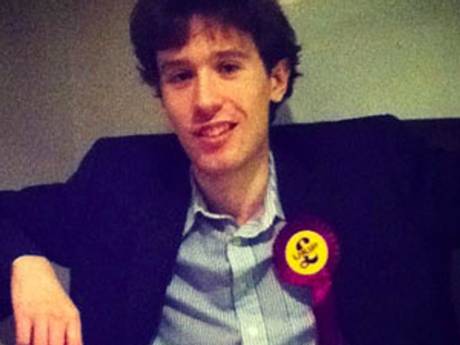
    Olly Neville, former chairman of the Youth Independent (YI), UKIP’s youth organisation was unceremoniously fired in January for expressing his support for gay marriage on the World at One programme on BBC Radio 4.

    Olly NevilleFollowing his sacking, Mr Neville claimed UKIP was “on the wrong side of history” on gay marriage and proceeded to publicise on Twitter emails that were sent him by party leaders.
    The Gay UK chats with Mr Neville about his sacking, UKIP and what it is like to be catapulted into the media spotlight.

    Why did you first join UKIP?
    I joined UKIP because I am a libertarian, and they are a self-described libertarian party. UKIP’s manifesto had a few decent policies – flat taxes, low regulation, tax cuts for the poorest, mainly economic things whereas most other party’s manifestos were dire at best. When I joined their policy on issues like Equal Marriage was a free vote. I thought UKIP were what they said they were, genuinely libertarian leaning, a party that genuinely wanted to shrink the state, and supported internal debate as Nigel Farage (leader of UKIP) said it did. I never realised I would be quite so wrong.

    What was your first formal position within the party?
    I first was elected Young Independence Elections officer in around August 2011, I went on to become Social Media Director in March 2012.

    When were you first elected to the role of Youth Chair?
    I was elected November/December time.

    How long did you hold the position?
    About a month.

    What are your reasons for supporting gay marriage?
    Ideally, I would like to see marriage de-nationalised or privatised – so no state involvement at all. However that option is not on the table, if the state is going to be involved at all it should do it equally. I see no legitimate reason why the rights of one group in society should be denied. Simply put I have found no good arguments against equal marriage, whereas there are many very good reasons – equality of opportunity, equality before the law, the state having no right to interfere in agreements between two consenting partners etc. Sexual orientation is no basis to deny people access to marriage. If two people want to get married and a religion or a venue is happy to let them do so then no one has any right to stand in their way.

    Why do you think UKIP have adopted an anti-gay marriage stance?
    In my eyes their opposition is pure political opportunism. They changed the policy to oppose equal marriage because they thought they could win votes. They wanted to woo angry socially conservative members off the Tories, and get some headlines. Being the only significant party to oppose Equal Marriage beside the BNP was also sure to get UKIP media attention. It’s not a principled stand it’s a short-term grab for votes and attention.

    How did you respond to that policy being decided and what stopped you from leaving the party?
    At the time I was on the Young Independence Council – the executive of the youth wing. Pretty much everyone on it opposed the policy and disagreed with it. YI is a lot more socially liberal than the main party. I opposed it but being in UKIP you put up with a lot of nonsense policies – the immigration one for example or the idea that we need to double the military budget. Young growing parties have teething stages and bad policies come in. I didn’t realise that UKIP were going to make the policy quite so central, indeed I didn’t realise that until the party chairman angrily emailed me telling me how central the policy was after my interview. That was shocking, I hadn’t expected UKIP to try and win so much political capital out of actively denying rights to minorities. I didn’t leave because the youth wing was still very sensible, the future of the party as I saw it were behind equal marriage, let the angry social cons have their day for now.

    Did you anticipate the reaction you had from party leaders after the comments you made on the BBC?
    No, the interview with the BBC was about 10-15 minutes long and mainly about the growth of YI. The comments on equal marriage were not a central part of the interview. But even so I didn’t think UKIP would go quite so crazy, after all Nigel Farage talks about legalising drugs, Paul Nuttall talks about bringing back the death penalty etc, Nigel had said that he believed in free speech in the party and indeed the UKIP party rule book states officers are allowed to voice their own opinions. I didn’t think they’d agree but I never expected so much vitriol.

    What made you tweet the emails you had from party leaders?
    When it got leaked that I had been fired for supporting equal marriage there was quite a reaction. Whenever people criticise or go against UKIP their equivalent of the SNP’s ‘cyber-nats’ come out in force on Twitter to attack those that disagree, usually quite passionately and aggressively. There were all sorts of defences used by UKIP’s online members. The emails from the party Chairman show quite clearly why I was fired. I tweeted them to provide clarity.

    Do you regret having done so?
    Not at all, I wanted everyone to see why I had been removed, for standing up for something I believe in.

    How did it feel when your fellow colleagues’ resigned in protest over your sacking?
    It was actually really unexpected. I’d felt pretty isolated when getting bombarded with angry emails from party higher ups so when suddenly a load of people said that they were leaving too it was nice to know that I was supported, that other people who could look at the situation objectively found the parties treatment of me beyond the pale as well. Many of the people who left I already really respected within UKIP and YI and so for so many of the parties young ‘big hitters’ to leave at the same time really made me realise that it was good to take a stand on your principles as people would respect you for it. The fact so many people left from high up in YI that the council has had to shut down until the next elections really spoke volumes about how wide the gap in opinion as between ‘old’ UKIP and the Youth Wing.

    Are you still a member of UKIP?
    Absolutely not

    Do you belong to another political party?
    No, I am done with compromising. Being in UKIP was a huge compromise that ultimately blew up. I would rather stick to my principles than toe party lines. The way UKIP changed its view on gay rights just to win over a few angry Tories and get a few more points in opinion polls really hammered home how principles have no place in politics and no party really has any. UKIP are like all the others, willing to sell out for a sniff of power. I don’t want to be in anything like that.

    What is your view on the Conservative party’s pledge to leave the European Court of Human Rights?
    I’m Eurosceptic but Europe and the EU has never been a high priority of mine, just like it isn’t a high priority of most of the electorate. As an anarchist I’m not a fan of any centralised bodies, be it EU, ECHR, UN etc but there are so many much bigger issues in my opinion. It’s a bit of a sideshow to the real issues but that’s what a lot of politics is.

    Has the UKIP sacking had an effect you personally or professionally?
    Not hugely, obviously it catapulted my name into the media for a few days, which was a bit weird. Finding my picture in the metro on my way to work was a bit of a double take moment. I had a lot of people – former employers and friends I hadn’t talked to for a while contacted me to congratulate me on taking a stand. I also got a lot of positive feedback on the Internet, apart from the UKIP tribalists obviously. Strangely no one at my work seems to have realised it happened, it was my second day at a new job when it came out and my phone didn’t stop ringing the whole time.

    Do you think UKIP’s strong showing in the Eastleigh by-election demonstrates public support for UKIP’s position on same-sex marriage?
    With pretty much every poll showing overwhelming public support for Same Sex Marriage I doubt it. People vote on big issues like the economy, welfare, education. UKIP wins votes because it positions itself as an anti politics party. It’s anti establishment, anti that notion of corrupt careerist MP’s. I think UKIP does very well setting itself up as a party for the disillusioned and the angry, not just those angry at politics in general but those from former parties who feel let down – whether its Labour for deserting the working man, the Tories from deserting ‘right wing principles’ or the Lib Dems for deserting civil liberties. UKIP promises all things to all people – its un-costed Manifesto promising £600bn in spending cuts but only outlining about £40bn in spending increases demonstrates that.