In a first, Justine Greening became the first female cabinet member of any government to come out as being in a same-sex relationship in 2016.
The then UK Secretary of State for International Development, Justine Greening opened up about her sexuality when she announced on Twitter that she was in a “happy same-sex relationship” in June 2016.
Today's a good day to say I'm in a happy same sex relationship, I campaigned for Stronger In but sometimes you're better off out! #Pride2016
New research shows that 25 per cent of LGBT+ people remain closeted and nearly half are not fully open at their place of work as the majority of workers feel unsupported by their bosses.
Research from Accenture shows that a massive 86 per cent of LGBT+ employees feel unsupported by their workplace, leading to around a quarter of LGBT+ people to remain closeted.
The Accenture ‘Getting to Equal’ research, which surveyed more than 28,000 employees and business leaders across 26 countries, reveals that in the UK less than half (41%) of LGBT+ employees are fully open about their gender identity, expression, or sexual orientation at work. More worryingly, approximately one in four LGBT+ employees (26%) remain totally closeted.
“Perception gap” between bosses and LGBT+ employees
The research also reveals a significant perception gap between how UK business leaders perceive their workplace culture compared to LGBT+ employees. Globally, 68% of leaders feel that they create an empowering workplace environment where employees can be themselves, however, just 14% of LGBT+ employees currently feel fully supported by their employer when it comes to issues like gender expression and sexual orientation at work.
Globally, almost three quarters (71%) of LGBT+ employees say that seeing LGBT+ employees in leadership positions is vital to helping them thrive and that the outward support of their non-LGBT colleagues is important to their ability to enjoy being at work.
“It has never been more important to hear and understand the experiences of minority groups”
Rebecca Tully, Inclusion and Diversity lead at Accenture in the UK said: “At a time when we are acutely aware of ongoing social injustices, it has never been more important to hear and understand the experiences of minority groups. Though we don’t have all the answers, our research highlights the fundamental questions we need to be asking when it comes to making the workplace more inclusive for LGBT+ people. It’s important for leaders to act now and strive to create a culture where LGBT+ employees not only rise professionally, but also where they feel safe, supported and able to be themselves.”
As part of the research, Accenture has identified the top cultural issues businesses need to address now to start building a more inclusive workplace culture for LGBT+ employees and other minority groups: Getting To Equal 2020:Pride, Visible Growth; Invisible Fears.
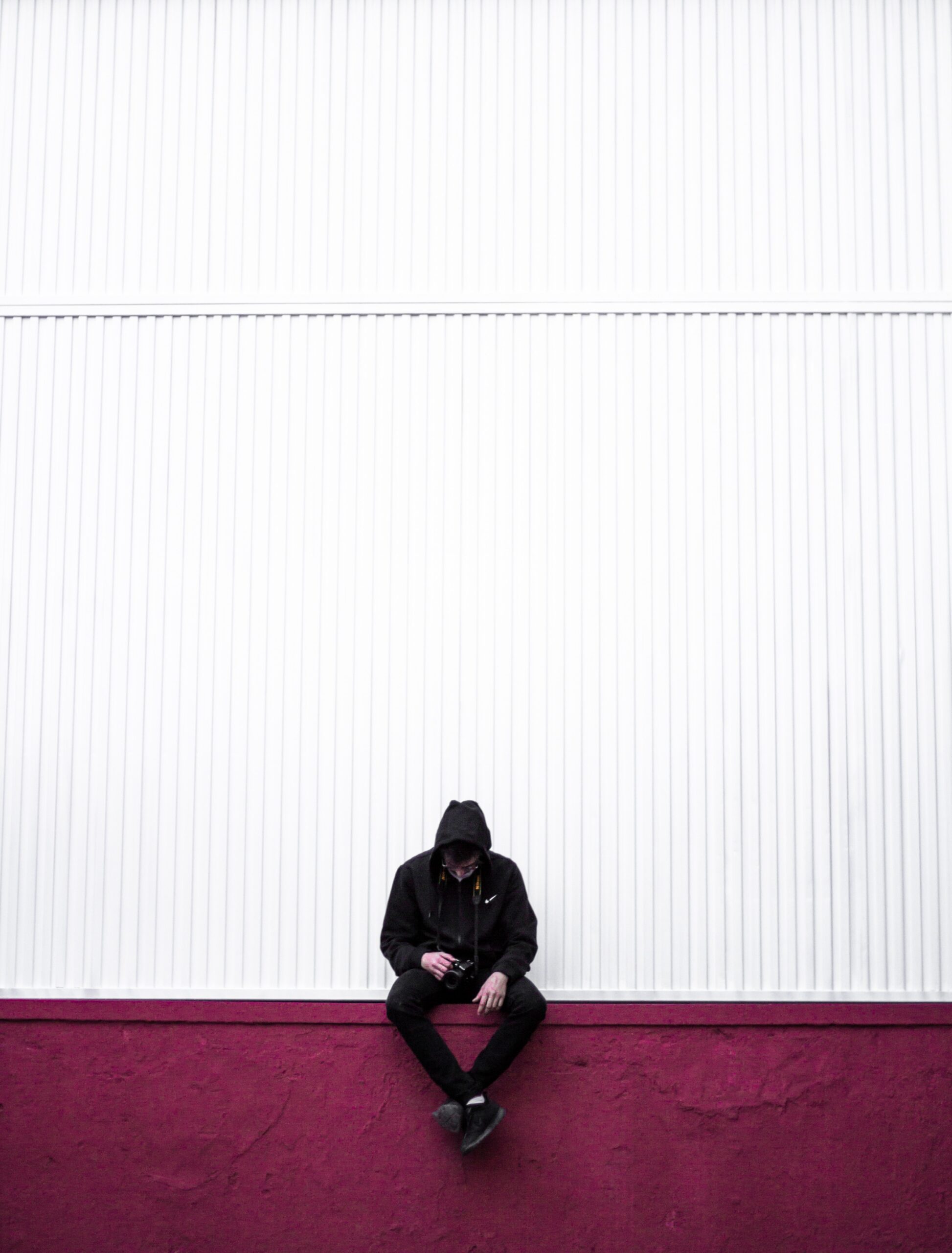
I’m not sure what I’m trying to achieve by writing this column tonight, but I opened up my MacBook to try to get some feelings that I’ve had for a while on paper whilst they’re swirling around my head. From the start of my writing this column to you guys, I said from the start I wanted to be honest with you. This may be seen by some as being too honest, and to be fair if your reading this – you are very lucky. I’ll probably toy with the decision to post this about a dozen times.
I’m going to start by linking this to an article from the Huffington Post that I recently re-read about Gay Loneliness. When I read it back in 2017, it had a really profound effect on me. It was like looking into a mirror. The fear of rejection constantly rules my life; I’ve become a people pleaser, and everything that I do is to please other people. I crave acceptance from people, and I think it’s made me incredibly needy. Gay men are primed to expect rejection – it’s almost as if we are constantly analysing social situations for ways that we might not fit into them. Does the rejection we faced in our younger selves intensify and grow even more as we grow up and develop into adulthood?
Let’s be completely honest, it’s difficult being a gay man, but we make it even harder for ourselves! Will that ever change?
This was a Sunday night when I reread that article for the first time in 2017, and I started to think and analyse in my head why I had such a strong emotional response to it. I came to the conclusion that I actually hate myself.
I know the word hate is a very strong word, but at this time, I lack the use of any other word to describe how I feel right now.
I’ve never really felt happy with the way I’ve looked. I know that being the size I am is putting me at a disadvantage within the gay community. As gay men, we are obsessed with the way we look, and how we present ourselves to the wider community. Most young gay men’s introduction to sex and relationships is from gay porn. All the models and stars of gay porn are toned, with a great six-pack, we see them going at it like rabbits – for young impressionable people, that is what they see as the norm, so they then feel like they have to have that. They have to have the perfect body, and the perfect sex lives.
I do work out as much as a can. The lockdown has been really hard for me. Within the first week of lockdown, my diet just went completely out the window and I was eating so much shitty food that I piled about half a stone straight back on. I enjoy going to the gym, it gives me a motivation to go and put some effort in. I got myself a personal trainer to help me, and he worked wonders for me for the first couple of months, losing 4 stone in 3 months, which I was really proud of, and it showed in my confidence levels and I could finally start to buy clothes that I knew I’d look good in. Now, it’s the case that I buy clothes that I would like to wear, for the sole purpose that I hope that something will click in my head and it will encourage me to go further to look a certain way so I don’t look like a complete twat whilst wearing them. That’s a pretty bad way to go.
At the age of twenty-seven, I am yet to experience a long-term relationship. I began at this point to ask the question of what exactly it is. What does that mean? A short-term relationship can be about exploring yourself or trying something new, but a long-term relationship is really about growing closer and closer. That, for me, includes not just daily communication via text, email or in person, but also intimacy.
I then started to think; well – there must be something wrong with me, right? It’s not normal not to have that in your life – halfway to middle age and you’ve yet to experience that – there’s definitely something wrong with me. I didn’t think there was anything wrong with me to be quite honest. I thought I was perfectly normal, if not incredible, an independent millennial and that I didn’t need another man to satisfy me – or let alone define who I was a person.
I guess I would say I’m picky when it comes to me. I have a type, many people do, however it seems to me that I don’t fit into those people’s type. It feels that I am sometimes I am constantly chasing a dream I might never reach. I’ve always wanted the drop-dead gorgeous husband, the two kids, the house in Suburbia with a white-picket fence. I’ve always had a thing for older men, a bit of stubble, a cheeky smile, a bit of dad bod, but in good shape with a killer sense of humour and someone that I can spar and have banter with.
I’ve always hated the term “beauty is in the eye of the beholder”. I guess on some levels I don’t feel beautiful. I don’t feel worthy compared to other people. I know you shouldn’t compare yourself to others but in this community, there really isn’t any choice. We’re always being force-fed information on how we can improve our lives and become better people. How to look better. How to dress better. I guess there is a wall in my head, and I can’t see over that wall. We put walls up to protect ourselves, to block out the pain of rejection, of confusion. It’s easy to build these walls – but even harder to pull down the bricks one by one. Sometimes we don’t want to take down the brick, because for god-knows how long it’s helped and protected us – taking down that brick is like holding a mirror to ourselves and sometimes it’s not nice to look at.
I think it’s safe to say that the queer community is one of the highest risks group for depression, anxiety and substance abuse. Many members of the gay community have learnt that our little community can be very harsh with each other and with ourselves for trying to fit into one of those boxes. 100 per cent I have had to deal with it myself.
My size has also had a serious impact on my sex life. I don’t feel comfortable naked, everything just hangs and that makes things difficult in the bedroom for me. I think I developed a fear of sex when I came out of the closet. I didn’t really have anybody teach me what to do. I literally learned how to have sex from watching Gay Porn, which is a really unhealthy thing to do. My first time was a really horrendous experience, and it’s something I don’t want to relive. It’s rare that you come across a guy who is comfortable or attracted to bigger guys – the years of constant rejection really did fuck me up.
As the lockdown restrictions start to ease and life beings to get back to new normal. I need to get my head into the game. I need to make some positive choices in my life and work out a way of sticking to them. I’ve said every weekend for the last god knows how long that I’m going to quit smoking, and yet every Monday morning, after having my morning coffee is the next thing, I reach for is a packet of cigarettes and my lighter. Is it will power, or a lack of? Is it an addiction? I thought I had a bit of a drinking problem until lockdown happened, and I managed to go 88 days without having a drink, which for me is a huge amount of time. Lockdown should’ve been the time where I made those conscious decisions to change my life and do something about it, and yet all I did was sit around on my arse and eat through copious amounts of Dairy Milk.
I know I’m not alone in all of this. I know there is a large per cent of the community who struggle from various disorders, such as anorexia, bulimia. Shit, there’s that word I didn’t want to use. Disorder. It’s such a dirty word. Maybe I have an eating disorder myself? I can’t stop eating sometimes. I try to hide it around other people. I’m really self-conscious at BBQ’s or at running buffets about what I put on my plate – because I want to portray something other than the truth to the outside world. I’m a secret eater. I don’t let people see what I shovel down my throat sometimes. We all eat our feelings sometimes, but it becomes so dark you can’t always see the woods from the trees.
When I set out to write this column today, I didn’t know what I wanted to achieve. I wanted to open up about my struggles and hope that maybe something would click inside me to allow me to want that change; and actually, I think it might have done. I think it’s because I’ve admitted, for the first time, that I have a problem with addiction and food. I am addicted to food. I’ve now got to look to putting this into practice and make the conscious effort to change. Where I go from here, I don’t know; but they do say that acknowledging the issue is the first step to dealing with it.
As a community how do we fix it? I’m not sure I’ve got an answer for that, but if you are struggling with any mental health issues, be it anxiety, depression, food issues, there is help out there for you. They are there for you to talk to – find a close friend and confide in them, it might seem like a massive step to make, but trust me, you will find things become easier when you do it.
So here I am. The first step, to the first day of the rest of my life. I’m sure I’m going to fall off the wagon at some point in the future, but let’s just see what happens, shall we? I know that if I want to experience happiness, I need to make that change. It’s all about the journey, right?
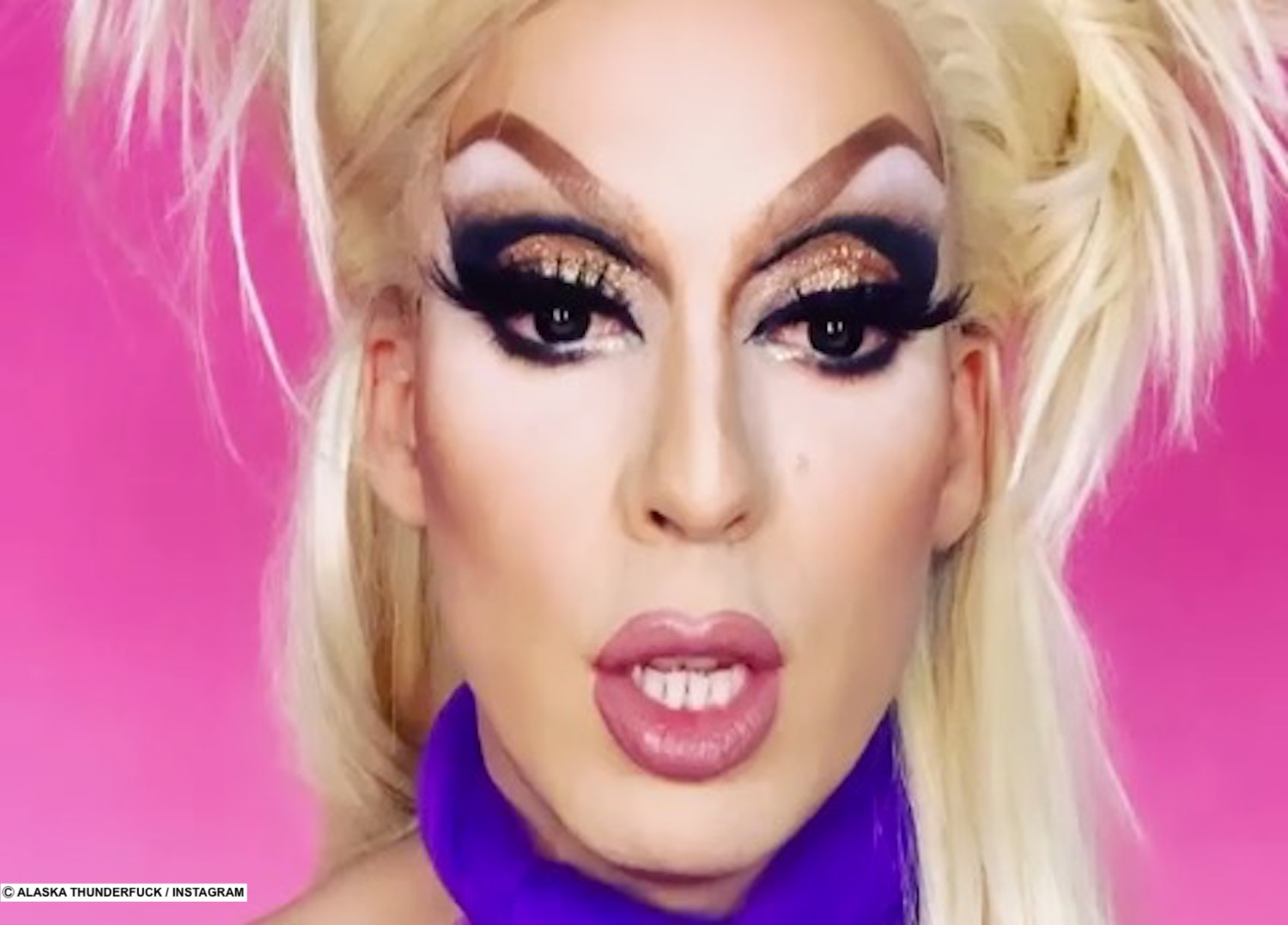
Drag Race favourite Alaska Thunderfuck has issued a statement in which she addresses her past actions including jokes about sexual assault, trans issues and race.
In the statement on Twitter, the performer admitted that although it was never her intention to cause harm, her intention was not important adding, “it was my privilege that allowed me to only get away these things but be applauded for them”.
Alaska rose to fame during the 5th series of RuPaul’s Drag Race, where she placed runner up. Since then she has amassed a worldwide audience of over 2 million on her social platforms, including Instagram and Twitter.
“I used racial and transphobic slurs and made jokes about sexual assault”
“In past performances, I used racial and transphobic slurs and made jokes about sexual assault. I have also used racist imagery in past looks”.
She continued, “I apologise. I’m deeply sorry for the hurt and damage that I caused in making these stupid harmful negligent choices.
“I take full responsibility for everything I have done in my past. I have learned that is essential to use my art and my privilege and my platform to make people empowered, uplifted and strong”.
Lockdown has generated a lot of negative tweets. About people, governments and society in general.
A recent study of over 100 celebrities who run and maintain their own Twitter accounts has found that two of our favourite gay icons top the lists of positive and negative tweeters.
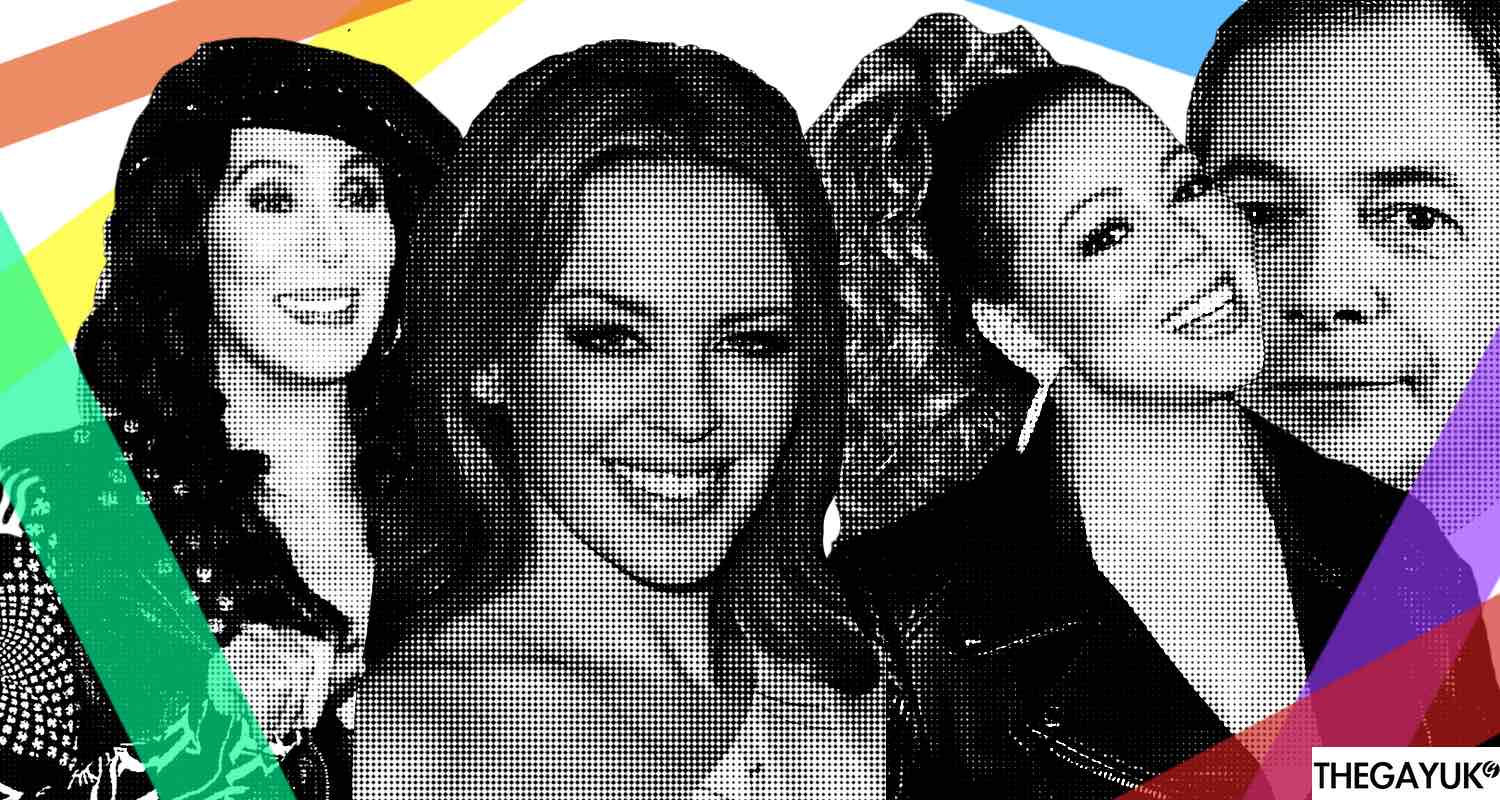
While Kylie sits on top of the positive list, with 89.7 per cent of her tweets skewing positive, Cher (gawd love her) is number 3 on the negative list, with only 51.3 per cent of her tweets skewing positively, she follows Nigel Farage and Piers Morgan.
Nigel Farage and Piers Morgan were the most negative celebrity tweeters during lockdown.
Meanwhile, Nigel Farage tops the polls for the most negative tweeter under lockdown, joined by Piers Morgan and Cher.
The research was conducted by digital agency Evoluted, who took the 200 most famous personalities in the UK (according to YouGov) and filtered the list down to 131 who are active on Twitter and clearly run their accounts personally.
The agency then collected their tweets, quoted tweets and retweets that had been posted since March this year in order to evaluate the content that the person was putting out to all of their followers.
Evoluted then used the bing lexicon method to attribute positive or negative meaning to the words used across all tweets, in order to analyse which tweeters were more positive than others.
A positivity percentage was then assigned to each account – this was created by taking the ratio of positive words used on their timeline by the total number of negative and positive words.
James Stone, Content Specialist at Evoluted, said, “We aim to be as thorough and accurate as possible within our research and our team really enjoyed carrying out this study.
“It’s extremely interesting to see which celebrities are using their platforms to display positivity and which ones heavily feature negativity.”
Research also ranked the jobs of the most positive celebrities, revealing that sports personalities, musicians, TV personalities, actors and public figures made up the top five.