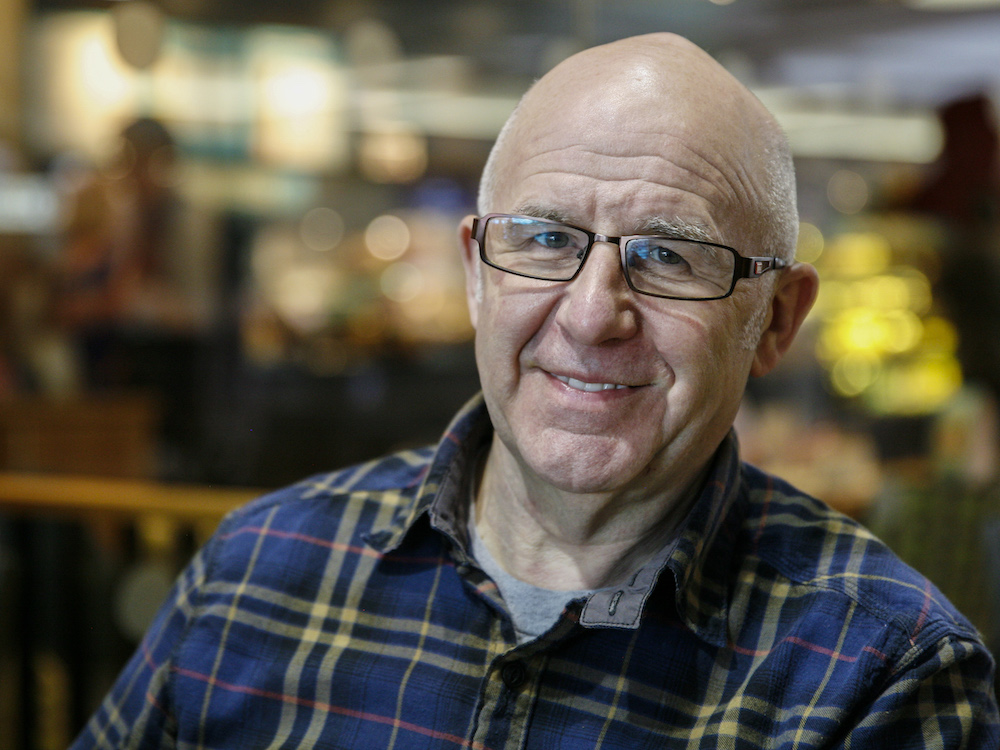
Author: Greg Jameson

  • COMMENT | Why we should be ashamed of the intolerance and double standards of the left

    There’s much gnashing of teeth from leftists that the Conservatives are trying to hop into bed with the ‘homophobic’ DUP of Northern Ireland in order to prop up a crap minority Tory government.
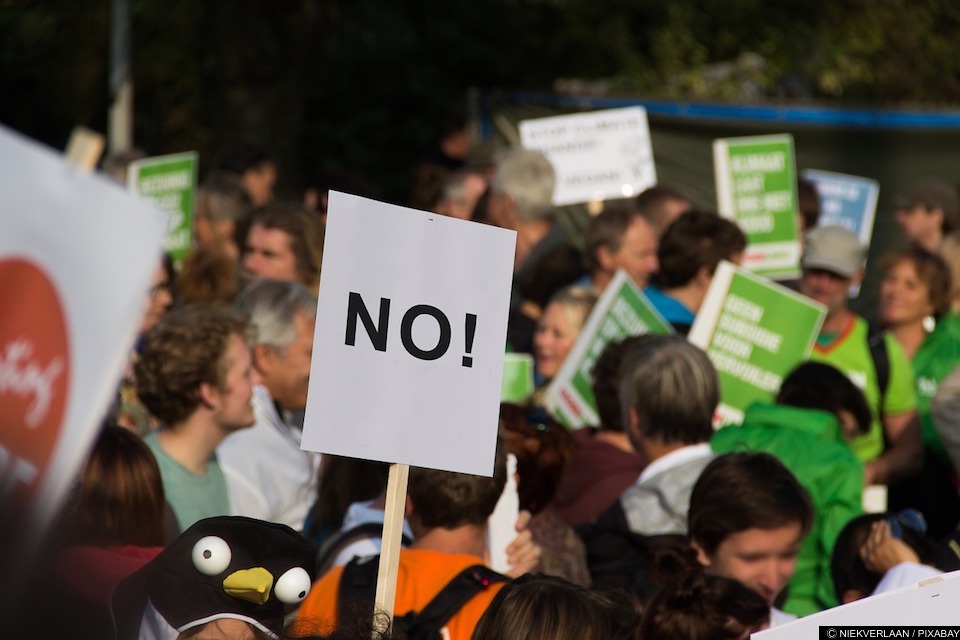
    What short memories they have. Gordon Brown, the most recent Labour Prime Minister (the party has now lost three consecutive General Elections) tried and failed to strike up a deal with the socially conservative DUP during the last hung parliament of 2010. Were any leftists moaning about that at the time? The vitriol then was about Tory David Cameron entering No. 10. He brought us same-sex marriage. I married in 2015. Thank you, Dave.

    Predictably, social media provocateurs began to point out an inconsistency at play amongst the left and its relationship with socially conservative religious views. Journalist Brendan O’Neill wrote in a piece for The Spectator:

    “And all the while we have Labourites like Jeremy Corbyn mixing with Islamist groups that share all these same social views, except in an even more extreme form. Yet the people beating the streets over the DUP say nothing. What a double standard”.

    The point made is that the views of many British Muslims are socially conservative and what many would consider ‘homophobic’. It’s part of their religious tradition. Ditto the religiously-inspired views of the DUP. The left appears to find one socially acceptable but not the other. The left can rightly claim the DUP, as part of the establishment, has more political power and social influence within the UK than various Islamic groups such as the Muslim Brotherhood and the Muslim Council of Britain. But none of these groups is especially representative.

    In Northern Ireland, marriage equality, still not a reality, has overwhelming public support.

    The relationship between the hard left and hardline Islamists is not that difficult to explain. Far from being liberal, tolerant and peaceful, the supporters of the hard left, now emboldened by a Labour Party under the control of far-left extremists (who attract Communist followers who believe the wrong side lost the Cold War), have become utterly vicious towards anyone who doesn’t entirely fall into line with their ideology. Ditto the more extreme versions of Islam. Rather than focus on the DUP, we should find more concerning the British Government’s ties to Saudi Arabia, a country with a regressive regime and a Sunni majority that persecutes religious minorities, including minority Islamic sects such as the Ahmadiyya Muslims who campaign for peace and against extremism. This persecution led to UK shores, with the murder of much-loved shopkeeper Asad Shah by a Sunni extremist that shocked and appalled the nation.

    Neither the hard left nor hardline Islamist groups are all that keen on free speech. The left attempts to stifle the free press with campaigns like Stop Funding Hate, an attempt to prevent opinions they don’t like from being published. The first thing Communist countries always do is to bring the press under state control in order to police what other people think. In a similar fashion, an intolerant small minority on the fringes of Islam show a reluctance to allow any criticism of their faith; an intellectual right that ought to be taken for granted in a free society. This can be seen in, for example, the fatwa against Salman Rushdie for writing The Satanic Verses and the accompanying protests in the UK through to the protest in London organised by the Muslim Action Forum over Charlie Hebdo’s cartoons of Muhammad a month after the murder of Charlie Hebdo satirists.

    “Many of us in the gay community have been hoodwinked into thinking that the left is on our side and the right hates us; and some of us have even fallen for the idea that the political left is morally virtuous whilst the political right consists solely of bigots, racists and the intolerant. This is palpably untrue.”

    Many of us in the gay community have been hoodwinked into thinking that the left is on our side and the right hates us; and some of us have even fallen for the idea that the political left is morally virtuous whilst the political right consists solely of bigots, racists and the intolerant. This is palpably untrue. Let’s not forget that the Labour Party only last year mourned left-wing dictator Fidel Castro, who set up labour camps for his gay Cuban citizens. Jeremy Corbyn called Castro a “champion of social justice“. It’s hard to imagine many Cubans, least of all gay Cubans, agreeing with his sentiments. Cuban Gloria Estefan strongly disagreed.

    As a community, we should be more consistent in calling out political associations with homophobic regimes and ideologies both at home and abroad. There is an unhelpful tendency on the left to call out domestic homophobes, but generally only when they are white and Christian, and to turn a blind eye or fudge excuses for everything else. We should also strive to be better than illiberal far left. The ugly General Election brought up many statuses such as, “If you’re thinking of voting Tory, unfriend/unfollow me now,” on timelines. Such sentiments ought to send a shiver down the spine of someone who considers themselves “liberal”, because their views are actually those of the hard left. Anyone on the left should stop and think if they truly agree with Shadow Chancellor John McDonnell’s politics – a man who claims that the London Riots of 2010 represent “the best of our movement”.

    “We should not be unfriending or unfollowing people who have opinions we disagree with.”

    We should not be unfriending or unfollowing people who have opinions we disagree with. There are troubling moral issues with giving your vote to either Tories or Labour that must be faced with honesty. We should respect people’s rights to be free and make their own political choices, determined by their unique circumstances. Gay people come in all shapes, sizes, and political persuasions. Homophobia, alas, exists on every part of the political spectrum. Let’s at least be consistent and expect the same of our politicians, and rise above the intolerance and outrage culture the far left thrives in and perpetuates.


    Opinions expressed in this article may not reflect those of THEGAYUK, its management or editorial teams. If you’d like to comment or write a comment, opinion or blog piece, please click here.

  • Interview | Steven Dehler

    Steven Dehler is the blond-haired, blue-eyed model with a super-finely-sculpted physique familiar from a range of magazine covers and photo shoots, especially for underwear brands such as Timoteo, Freedom Reigns and Marco Marco. He also appeared in the steamy car wash Andrew Christian video.

    It’s hard to miss Steven Dehler if you’re in West Hollywood (WeHo) because if he’s not modelling then he’s generally go-go dancing at The Abbey, one of the best-known gay clubs in the world. It’s not uncommon for the likes of Elton John and Lady Gaga to pop in whenever they’re in town.

    THEGAYUK caught up with Steven and found that even in his native Los Angeles, known for its glamour and body beautiful, he stands out from the crowd with his good looks, graceful movement and natural charisma. Steven’s an intelligent guy with many talents – he’s a classically trained pianist – but he’s focussed on his modelling career. As we grab a coffee, Steven, fresh from the gym and glowing beautifully, tells us he’s recently been busy expanding his portfolio and working with a range of photographers. “You change your image just a little bit and all of a sudden everyone wants to shoot with you!”

    We ask what he looks for in a photographer. “I just want to do something that’s different. I can only do so many photoshoots at the beach.”

    The underwear labels he models for are identifiably gay brands, and we ask if being gay has influenced his career in any way. “When I first started modelling they told me not to tell anyone I was gay because they want you to be accessible to everyone and not shut off a female market,” Steven recalls. “Now, it’s a bit different. A lot has happened in the gay community in the last few years, so it’s certainly not a hindrance in the way it might have been ten years ago. Being gay has helped for modelling for gay-oriented things. Male underwear modelling has picked up a lot.”


    https://www.instagram.com/p/BR_Ndjqh4qP/?taken-by=theonlysteven&hl=en

    With thoughts of Steven in underwear now pressing, it’s hard to retain our professional cool, but we ask him if it’s a drag having to maintain his Olympian god-like physique. “It’s a lifestyle,” says Steven. “I work out all year round because it keeps me healthy and sane. I go to the gym, put in my headphones and zone out during my workout. I don’t see it as a chore: I see it as my break from reality.”

    Given his dedication to his profession, we ask if Steven had always intended to model. “No, actually in High School I was very awkward – super skinny with a really bad complexion and completely dorky.” We find this difficult to believe, but Steven elaborates. “When I was in my late teens I met my best friend. She was a model from the age of fourteen. She suggested I get into it and I was like, ‘You’re crazy!’ But then we did a photo shoot together in Palm Springs. After college, I came back to LA and picked it up again.”

    So how did he develop his confidence? “Dancing helped with the quality of shots. At first, you don’t know how to move, but with modelling, you’re always moving, and that takes a while to get comfortable doing.”

    NEXT: PAGE 2/2

  • OPINION | The Ashers Baking verdict, and why gay cake is just the thin end of the wedge

    So the McArthurs of the Ashers Baking Company in Northern Ireland have lost another appeal against their conviction. They remain guilty of discrimination after refusing to bake a cake with a message in support of gay marriage and were justifiably sued.

    Good. It’s high time governments stopped offering up LGBTQ people as sacrifices to appease the wrath of the faith communities (sorry – to appease the religionists’ angry deities). Enough is enough.

    Shouldn’t court rooms be hearing more important cases than that of a bakery refusing business to a customer? Shouldn’t gay people just shrug their shoulders, say “Live and let live,” and whistle their way to the next bakery in town to try their luck there?

    No, and no. I’ll explain why.

    It’s vaguely amusing but also disconcerting that many people commenting on media websites running with this story keep asking (as if to indicate an equivalence) if Jewish bakers should be forced to make cakes with pro-Hitler messages on them. Whilst we can all agree that Jews make the best-baked goods, what these apologists for bigotry are truthfully pointing out is that it is as offensive to some religious people to provide a service to gay people as it is for a Jew to be goaded about the Holocaust. Do these woolly-minded accommodationists (who includes Peter Tatchell amongst their ranks) think all bigots should be appeased? Can racist B&B owners dust down their 1960’s “no blacks, no Irish, no Jews” signs and pin them in their windows? No, as usual, it’s only the gays that are fair game.

    There is a wider issue in identifying this problem too, because as good, progressive pluralists, we’re all supposed to ‘respect’ religious traditions, even though very little respect is usually forthcoming the other way. Gay people should not lose sight of how big a threat religion is to our liberties, and, in many countries in the world, even our lives.

    It’s no accident that Italy was the last western European country to recognise gay relationships in law for property and inheritance rights, and even then with the manipulative Catholic Church breathing its unedifying signatures of fire, brimstone and hellfire in the background.

    This is no minor quibble about pastry. The Church of England – our state religion – voted unanimously against marriage equality: their fear was, as always, concerned with not causing a rift in the Anglican Communion; far better to throw gays under the bus than to stand up for common human decency. In Northern Ireland, where religion holds more sway, in order to appease the greater number of bigots, gay marriage remains illegal. In more religious places still, such as many Commonwealth and all Islamic countries, homosexuality is illegal, and often punishable by death. The more religious a country, the worse things are for LGBT people. That’s why this is no small fight, and the stakes in cases like this are high.

    The arguments in favour of the McArthurs’ discrimination are pretty poor. The McArthurs suggest that to make a cake with a pro-gay message would indicate their endorsement of it. What rubbish. Do executives of all commercial channels personally endorse every advertiser and their associated products they run with? Does every publisher endorse the point of view of every author they publish? Of course not.

    Not only that, but how on earth in modern pluralistic societies would we ever get anywhere if every crazy belief from every religionist had to be accommodated by the rest of the human population? So much of this is excuse-mongering. The gays are an easy target of religionists because we remain their favourite bogeyman: I wonder if the McArthurs previously refused cakes to divorcees, or to members of other faiths, or even other denominations? I’m guessing not. The hypocrisy of being fussy over your own faith’s regulations is the speciality of zealots everywhere.

    How have we arrived at this ridiculous state of affairs? Appeasement has a lot to do with it. Religious lobbies are loud and well-organised, and governments are always keen to throw them a bone to win a few votes. They are used to being able to treat LGBT people as sub-human. They’ve gotten away with it for so long. Look at the comments threads of any news story about this, and you’ll see that homophobia is one of three remaining socially acceptable bigotries amongst centrists and leftists (sexism and anti-Semitism being the others).

    The problem, too, is that you can’t reason with extremist religionists. When you have a situation where a partially-educated adult can reject the obvious facts of evolution and cosmology in favour of a view of the world that says it was formed a few thousand years ago, and that humans were divinely created (Zac Efron, maybe, but most of the time, give me a break), then they’ll choose to quote Leviticus rather than see the humanity of LGBT people.

    Hence the presence of the McArthurs outside the court room today, expressing their bewilderment at having lost the case (in fact, only Mr McArthur spoke. The little wife kept entirely silent by his side, presumably knowing her place, whilst her husband tub-thumped and pointed to the sky, to help the casual viewer determine the alleged location of his angry celestial overlord), and suggesting that to have baked the cake would have been a ‘sin’.

    A sin.

    We’ve arrived at this verdict today because religious fundamentalists choose to whittle down the entirely of our lives and our relationships to one word – sin. It matters that we fight for the small rights like not to be discriminated against in the provision of goods and services because we have the right to be treated as human, and we should not have to apologise for our very presence. When religious people can look at a loving gay couple and see only sin, then that is a dark and dangerous societal problem and one that responsible governments should seek to address, and intervene where necessary. When religious people can think that the best thing a gay couple can do is to break up, throw away their love in favour of celibate lives, or lives of horrible deceit, entering into faux straight relationships, before they are willing to accept us, then we can know that there is no point in attempting reason, because they will never accept us.

    That’s why equality legislation exists, and why individual human rights should always be favoured over and above ideologies. People are more important than ideas. Whatever the religious think, sexuality isn’t chosen. Crazy beliefs are.

    I wear the battle scars from this. Simply marrying the love of my life tore my family in two, and the devastating consequences rumble on. So often there is no accommodation where religion is concerned. So let’s not be sanguine that the Irish voted for marriage equality – it doesn’t mean that gay people from Catholic families are now free from bigotry, abuse and rejection. I’m living testament against that fantasy. There are battles remaining to be fought and won.

    We should have no quarrel with progressive faith leaders like Dave Tomlinson, who opposes the actions of his community’s leaders and wants to change hearts and minds. Gay charities should seek dialogue with faith communities, and gay people less cynical and less hurt by religion than me might be able to make some progress into reaching a place where our existence is not an affront to the faithful and our relationships and marriages are not reduced to notions of ‘sin’.

    Don’t fool yourself though, there will be plenty of other casualties along the way.

    But let’s celebrate the verdict today. The McArthurs failed, which indicates that their side is losing the larger argument, and people are more swayed by reason than by superstition (either that, or their deity is on our side too).

    So yes, the cake matters. Taking ordinary human interactions for granted is a hallmark of a civilised, tolerant, accepting society. It’s time the religious grew out of their sulk and joined the adult table. If they can stop being offended by the existence of gay people, they may actually learn something about human compassion they won’t find in their holy books.


    Opinions expressed in this article may not reflect those of THEGAYUK, it’s management or editorial teams. If you’d like to comment or write a comment, opinion or blog piece, please click here.

  • Mind Matters

    We talk about our physical well-being all the time; discussing everything from our gym and dieting regimes through to our sexual health and exploits. Our mental health is all too often overlooked, even though LGBT people are known to suffer disproportionately more from poor mental health compared to the straight population. Recovery can be a long and arduous road, so it’s important for anyone suffering from poor mental health to be able to access the help they need.

    One charity that knows all about that is the LGBT Foundation. We spoke to Lucy Rolfe, the Wellbeing manager, and asked why the clinic was set up. She told us that not everyone suffering from a mental health issue is comfortable using their GP as the first port of call.

    “There are a lot of people who’ve had a negative experience accessing a mental health service. Either they’ve felt they can’t be open about their sexuality or they’ve been met with an uncomfortable silence. Sometimes the professional has been directly homophobic. That can put people off accessing support that they need. Even if they’ve not had a negative experience they might be too nervous or too frightened about coming out to their GP. If they can’t be open about themselves they may have difficulty explaining why they are experiencing mental health problems.”

    Undiagnosed mental health problems can result in a whole host of negative consequences, including efforts to self-medicate, and that’s something Lucy told us more about.

    “When people are struggling to cope, alcohol is very accessible. In Manchester we know that the village in the city centre where we’re based is the heart of the LGBT community social life. We provide spaces other than bars and clubs. People can go where it’s not based around socialising with alcohol, or going clubbing where there may be drugs around.”

    Lucy sees drug and alcohol abuse as a consequence of efforts to become part of a community.

    “Often we get people who come into the village on their own, and in other parts of the country they may not know anyone else who is LGBT. One of the easiest ways to meet people is to go to a bar or a pub. Many are nervous about meeting new people and deal with that using alcohol and sometimes drugs as a confidence booster. It’s very easy to fall into that unhelpful cycle and pattern. We’ve run a befriending service for round about four years now, and that’s aimed at people who are isolated. Isolation can have a massive impact on mental health.”

    Even the act of coming out in the first place can, for some, prove a traumatic experience with a build-up of stress before informing friends and family. As Lucy tells us,

    “When you’re worried how friends and family may react, you can feel incredibly isolated. It’s that 1% of doubt that someone will react negatively that can prevent you from coming out.”

    We asked Lucy if her long experience of talking to gay people with mental health issues had given her an awareness of the triggers that we should be aware of.

    “Many people come to the LGF because they’ve experienced some kind of prejudice, discrimination or bullying, and in some of the worst cases some of our clients have been victims of hate crimes. That can have long-term psychological impacts.”

    We can have a supportive family, but still suffer homophobic abuse in the workplace or from neighbours, which at least partially accounts for higher rates of mental health issues even for gay people from accepting and stable backgrounds. Those of us from conservative or religious backgrounds are in an especially high-risk category, and can be victim to their own internalised homophobia. Lucy told us,

    “If people of faith hear their religious leaders saying being LGBT is wrong, then that can be really difficult.”

    So with rejection by family and peers, experience of homophobia and repressive backgrounds high on the list as triggers for a spectrum of mental health-related conditions, we wanted to know if there was any good news that might eventually see LGBT people sharing the same degree of good mental health as the rest of the population.

    Lucy told us that people can start to recover,

    “When they know they don’t have to suffer alone, that mental health problems affect a large percentage of us, and that help is available”. The first step is always finding the help you need. “People who come to us may look at the website first, and then might call our helpline and may then eventually pop in and see us face to face. For some people, that process can take months. It’s all about building trust.”

    Find out more about the LGBT Foundation and access their advice on mental health.

  • Interview | Dave Tomlinson

    Interview | Dave Tomlinson

    Meet Dave Tomlinson, the ‘Bad Christian’ on a mission.

    CREDIT: (C) Lissy Tomlinson
    CREDIT: (C) Lissy Tomlinson


    Dave Tomlinson is a self-styled ‘Bad Christian’ whose church is unapologetically inclusive and whose books reach out to those on the fringes of faith, and even to outsiders. You may recall the media frenzy and raised eyebrows in some circles when he took the funerals of Great Train Robbers Bruce Reynolds and Ronnie Biggs. He’s also a controversial figure to some in the Anglican community for his positive and progressive stance on same-sex relationships and marriage, which he has outlined in two books, How to be a Bad Christian and The Bad Christian’s Manifesto.

    Religion and all things gay generally get along about as well as the Wicked Witch of the West and a sudden downpour. That’s why we were fascinated to learn that there’s an Anglican vicar fighting our corner, and taking on his own church in an effort to change attitudes and doctrines.

    We spoke to Dave at his church, St Luke’s in Holloway, London. He is genial and calm, which comes after a lifetime of preaching love and acceptance. He speaks with a warm voice that holds traces of a Liverpool accent, but he’s also prepared to stand up for his principles, and he spoke with great passion about how he wants to affect change in the Church of England in favour of celebrating gay unions.

    CREDIT: (C) Lissy Tomlinson

    We asked him what he thinks conservative Christians’ beef is with homosexuality. “An awful lot it, within the church, but also society as a whole, is fear. Fear of difference. It’s a desperate sign of insecurity in any society that can’t accommodate and live with difference.”

    But won’t conservative Christians just quote scripture and claim the argument is closed? “It’s all tied up with a very literal reading of the biblical texts, but the bible is the product of an age that no longer exists,” Dave explains. “I think what we now experience in same-sex relationships probably hardly existed at that time. There’s a very strong argument to say that all of the texts that the bible addresses that you can link to same-sex relationships involve some form of abuse; and not the loving, equal relationships that we have today. Sodom and Gomorrah, where the word ‘sodomy’ comes from is a horrendous story about rape. It would be incredible to think all of the men of the city were gay: it was all about abuse and power.”

    With constant threats of schisms in the Anglican Community, we wondered if the arguments about homosexuality will ever show any signs of simmering down. “It’s not surprising that there are arguments in the church: there should be. But sometimes I think we’re having the wrong arguments. How can we still be arguing about same-sex relationships? It’s an argument that’s over now, really, to any sensible people.” We can only agree with Dave, and ask him about his own parishioners. “We’ve a lot of gay people and gay couples in this church, and I can’t for the life of me see any difference between what they experience and aspire to in their lives and relationships and what I do in my life. It’s an absurdity to me and what’s getting my goat at the moment is that we’ve now reached a point where same-sex marriage is accessible, and any church can make the choice to conduct same-sex marriages in their churches: except the Church of England! I’m outraged by that, and it can’t last.”

    CREDIT: (C) Lissy Tomlinson

    Outrage is one thing, but does Dave think we’ll ever see gay Christians being married in Anglican churches? “Definitely, because ultimately right conquers. It’s just a matter of time.”

    We ended our chat feeling upbeat, and we met many of Dave’s parishioners. As we chatted to them, it was clear than in St Luke’s, they’d found a spiritual home. For some, they’d returned after years outside the church. Whatever your religious beliefs (or lack of), through his sermons and writings, Reverend Dave offers something in stark contrast to what the gay community has come to expect, simply by reaching out with a spirit of inclusivity.

    You can read more about Dave Tomlinson’s inspirational and spiritual thoughts in How to Be a Bad Christian and The Bad Christian’s Manifesto, which are published by Hodder & Stoughton. Follow Dave on Twitter @goodluker.