Author: Joseph Mellors

  • COMMENT | Are gay people more creative?

    There’s a common speculation gay people are more creative. This is foremost rooted in the observation that gay people are over-represented in creative pursuits. But is this speculation true? And if it is, why are gay people more creative? Let us discuss.

    The idea of over-representation is an interesting one. It emerged anecdotally but has attracted scholarship in recent years.

    In 2016, London School of Economics published their analysis of datasets from the 2008-2010 American Community Survey and the 2008-2009 U.S. National Longitudinal Study of Adolescent Health to comment on this. They found that gay people are “drawn to a different set of occupations”. Among those with the highest proportion of gay workers are creative ones: producers and directors, urban and regional planners, and web developers.

    Their analysis suggests that gay people tend to be attracted to occupations with higher levels of social perceptiveness. This is based on the idea that knowing how to read social cues might be an important skill for gay people to acquire as they are more likely to have experienced the threat of discrimination from a young age.

    Now for a quick lesson in creativity. Creativity is an inherently social process. The idea that it is a solitary process has fallen out of favour. We now appreciate that creativity emerges from dialogue, interaction, and practise with others. Though Kafka worked in solitude, his work was the product of his relationship with his father. His creative output is therefore the product of a social process.

    It is thus unsurprising that the experience of gay people and its impact on social processes may affect their creativity too. At present, there is little hard evidence though. There are only a couple of major studies on sexual orientation and creativity.

    The first, by Christine Charyton, a professor of psychology at The Ohio State University, published in 2007, reviewed the historical, empirical, and present literature existed on the relationship between sexual orientation and creativity. The study concluded that there is little evidence to support that speculation that gay people are more creative.

    The second, carried out by Sultan Idris Education University, published in 2013, assumed that gay men share more typically female personality traits to disentangle the speculation. The idea behind this being that females are more creative than males. However, its findings mirrored the study by Charyton. It concluded that there is no ‘gay advantage’ to being creative.

    Embed from Getty Images Embed from Getty Images Embed from Getty Images

    It is acknowledged that more research is needed to draw definitive conclusions though. Current research is limited and its scope narrow. Indeed, the latter study measured only self-perceived creativity. The idea of being well-qualified to be creative by being skilled in reading social cues is one possible avenue for future research.

    The truth is we don’t really know whether gay people are more creative. The speculation that they are is compelling though. I am left thinking that we need to continue to approach the question from new directions. Are gay people more inclined to creativity because of the escapism it provides? Or is queer culture fundamentally creative in its quest to break the mould?
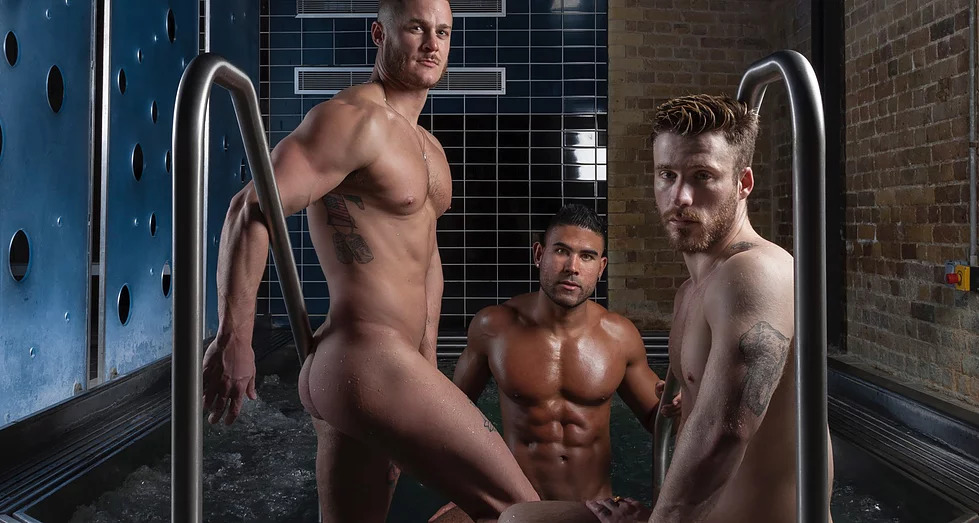
  • Is there a future for gay saunas? An interview with Pleasuredrome

    Is there a future for gay saunas? An interview with Pleasuredrome

    Joseph Mellors chats with Chris, the Brand Manager at London’s Pleasuredrome sauna, about the future of gay saunas.

    Ah, good ol’ gay saunas. Whether you love them or loathe them, there’s something undeniably curious about them. I know that it sounds odd, but I describe myself as somewhat of a gay sauna geek. (I repeat, I know it sounds odd.) But the fact that they attract such an array of commentaries, makes them, well, intriguing.

    Not sure what I’m talking about? Allow me to explain a little. At one end of the spectrum, it is said that gay saunas provide much-needed safe spaces to explore both social and physical sexuality. At the other end of the spectrum, it is said that gay saunas must be closed down for the community to be “taken seriously”. And, of course, there are many commentaries in-between.

    This said, it is only natural that I have become interested in the widespread closure of gay saunas in recent years. Why so many saunas have closed, or are closing, is not an easy question to answer. It is argued that a whole host of economic and sociocultural reasons are at play. But generally speaking, increasing business rates and rents, and the proliferation of gay apps and websites, are cited as the main reasons.

    This being the case, I am led to question whether or not there is future for gay saunas. To investigate, I interviewed Chris, the Brand Manager at London’s Pleasuredrome sauna.

    “The one common reason [why people come] I would say, is that they want a real-world connection, which in this day and age is increasingly harder to have, despite the apps and ease of hooking up.”

    When questioned about the future of gay saunas, Chris said, “There will always be a need to escape the realities of the world to unwind and relax. In London, several saunas have closed down, but I suspect that this is more to do with rising rates and rent than popularity. At Pleasuredrome, we have never been busier! Hence why we are currently undergoing an expansion to increase the size by 50% at the end of this year.”

    I then asked Chris about the tendency for saunas to be shunned as ‘sleazy’. He responded, “We find more and more of our customers come to Pleasuredrome to socialise and be in a safe gay space.

    CREDIT: © Artmim Depositphotos

    “Some want a massage. Some are not out yet and want to discover what it is like to be intimate with other gay men. Tourists, locals, young and older gay men all come.

    “The one common reason [why people come] I would say, is that they want a real-world connection, which in this day and age is increasingly harder to have, despite the apps and ease of hooking up.”

    After this, we discussed some of the more negative critiques about gay saunas. “I am not sure how the closure of gay saunas is a positive sign. The closing down of any LGBT businesses due to gentrification, increased rents and rates, is harmful for the next generation, who may wish to explore their sexuality in a like-minded community.

    “The less venues for them to access, the less chance they will have to do this. It is the same in publishing. If gay magazines like Attitude were to close down, the next generation would only have the mainstream press.

    “It would be a sad day if LGBT venues, including gay saunas, were to disappear.”

    “Whether or not the gay and bisexual community need to rally to sustain saunas is hard to say because, ultimately, businesses will stay open when they have customers.”

    Towards the end of the interview, I asked Chris whether or not the community should try to save gay saunas. He said, “Whether or not the gay and bisexual community need to rally to sustain saunas is hard to say because, ultimately, businesses will stay open when they have customers. The same goes for gay bars, clubs, shops, and magazines.”

    He added, “Lots of gay men are disenfranchised with dating apps and social media, and are going out, specifically to gay venues, more often.”

    (C) BIGSTOCK

    My interview with Chris has left me feeling positive about the role of gay saunas in our community. To hear first hand about how gay saunas provide safe spaces for men to explore their sexuality, especially for those who may not be able to, or may not feel able to, explore it in the outside world, evoked admiration. It has also led me to believe that we really need to move beyond the ‘sleazy’ stigmatisation of these venues.

    More pertinently, the planned expansion of Pleasuredrome has left me feeling slightly more optimistic about the future of gay saunas. Many gay saunas may have closed, or be closing, but Pleasuredrome, at least, seems to be a firm fixture on the scene.