Author: Mark Turner

  • MOTORCYCLE  REVIEW | Zero SR/S Electric

    MOTORCYCLE REVIEW | Zero SR/S Electric

    Electric motorcycles; The future or the devil’s work? An inevitability or a passing phase?

    Ever since I visited one of Europe’s largest electric motorcycle dealers, English Electric Motor Co, I have been hooked. They graciously facilitated my inauguration to electric motorcycles.

    There is, however, no substitute for living with a bike, so Zero was kind enough to lend me their SRS press bikes for a while, to give me an opportunity to do a real-world review.

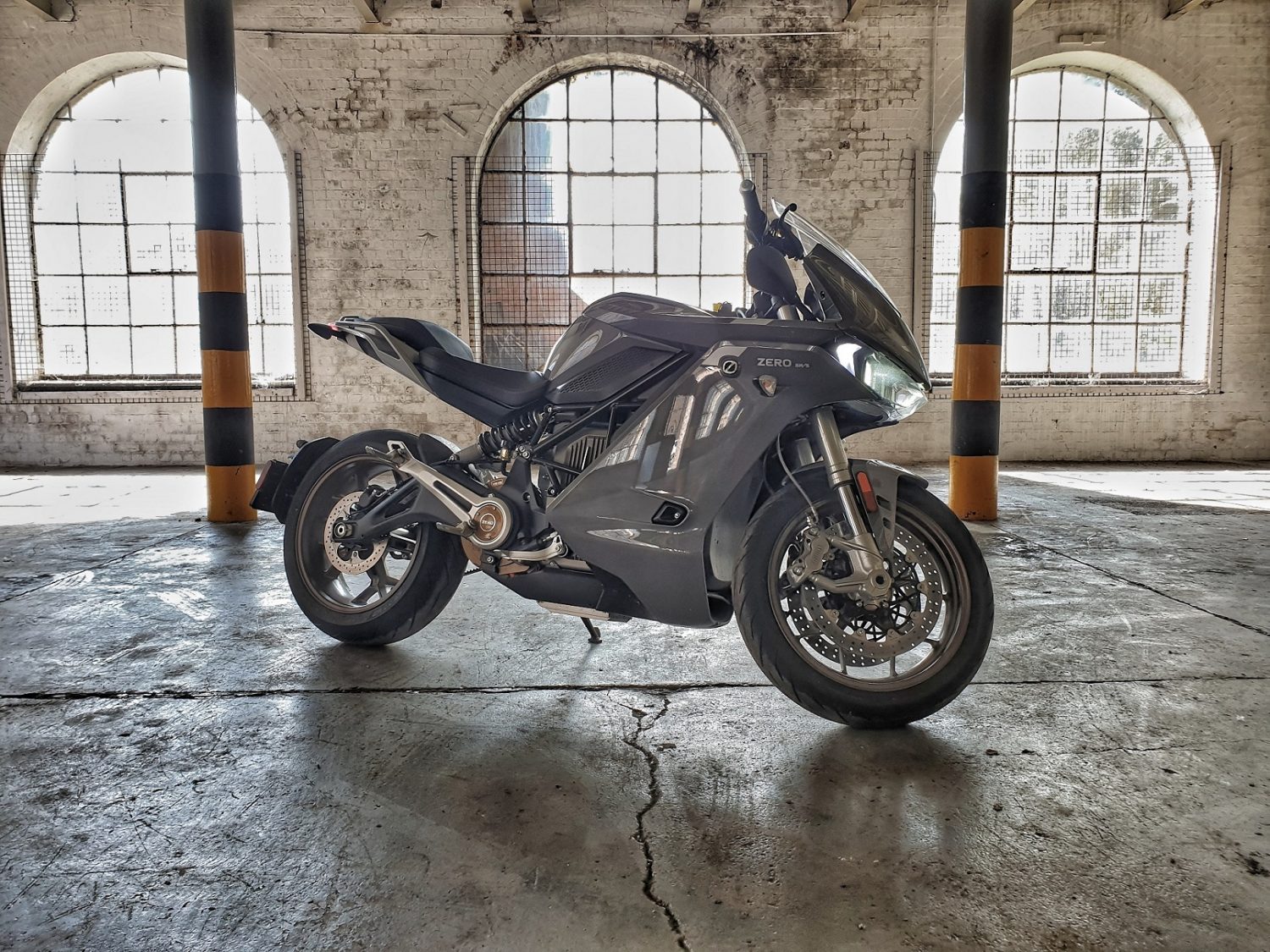
    Zeros’ SRS is a fully electric motorcycle, like all of their bikes, and in the Zero stable, the SRS is the biggest, most expensive, most capable bike they make.

    Let’s run through some statistics. This bike weighs 230kg, which is around 20kg heavier than a conventional ICE (Internal Combustion Engine) motorcycle. For example, the Suzuki GSX-S1000 is 209kg and the Yamaha MT10 is 210kg, not bad at all.

    Power is deceptive and stated as 110bhp, which doesn’t sound like much. Don’t let this dampen your enthusiasm, rest assured you won’t be disappointed in the performance from this SRS. To add some perspective, a Ducati Panigale V4 makes 123Nm torque, the BMW 1000RR makes 100Nm torque. The Zero SRS make 190Nm of torque… yes… 190Nm!! Make no bones about it, in sport mode, this bike is seriously fast.

    Bear in mind also that the power and torque from an electric motor are delivered in a different way to an ICE engine. On a traditional motorcycle, as revs build, generally power builds too. With an electric drivetrain, the power and torque are linear, meaning you have very strong power available from the moment you twist the throttle if you want it.

    Interestingly, it carries its weight quite low. Most of the weight is in the battery and motor, which is all below your knees. What would be the fuel tank on an ICE bike, is the storage box for the charging cable on the SRS.

    Let’s talk about range. It’s usually one of the first questions people ask about electric motorcycles generally. It’s actually really hard to answer. This isn’t an excuse or me trying not to answer. There are a lot of factors that affect the range, such as temperature, riding style, type of roads and more. Batteries perform worse in hot weather for example and if you ride aggressively and in sport mode all the time, your range will suffer. The same applies to sustained high speeds such as motorways or dual carriageways, where the constant draw on the battery takes a toll on the range.

    When I first collected the bike, I inevitably selected sport mode and spanked it for a few miles, quickly discovering the negative impact this had on the range. Fast forward a few days and by riding a bit more carefully, switching modes to soften the power and regenerate electricity in traffic, I could easily see 110 miles+ on a mix of roads.

    Talking about rider modes, there are 5 on the SRS. You have the full-fat Sport mode which lets you have all of the power with reduced regenerative braking. You still have ABS and traction control though (which is a good thing). Next is Street mode, which offers slightly reduced power and increased regenerative braking. This mode is great for general riding. Next is Eco mode which restricts power and offers maximum regenerative braking. Top speed is restricted to 75mph. I use this is traffic to extend the range when there’s no point in using street or sport modes. There is also a rain mode which has the softest power delivery and least amount of regenerative braking. Rain mode is designed for low traction conditions.

    Lastly, there is Custom mode. This is a mode that you can personalise, for example, maximum power with increased regenerative braking. You can also rename it. The team at English Electric Motor Co customised theirs and called it Beast mode.

    Zero have taken a fairly traditional approach to styling on the SRS. They could have taken a more radical, futuristic approach, but I really like it, it looks great. There are some neat touches like the mirrors. They are mounted low on the fairing below the handlebars and actually look under your arms. It sounds odd but they are very effective. Quality of components is construction is outstanding. The bike is excellent and feels very premium and it’s the easiest bike to ride. Controls are absolute simplicity with no clutch, no gears and just brakes and throttle. The throttle is progressive and very smooth.

    Handling is superb, this thing corners so hard. It’s a little short, but I like that, it helps to deal with the poor condition of our roads. The suspension is fully adjustable Showa front and rear and brakes are J-Juan radial callipers and are excellent.

    “How long does it take to charge?” is another common question. Let’s do some man maths. The battery is 14.4kwh. Think of it as a fuel tank. If you charge up from a domestic 3 pin plug, you will see a charging rate of 2.3kwh. That means that every hour, 2.3kwh flows into the 14.4kwh battery, simple. Think of kwh as litres if you like. If the battery was empty, on a 3 pin plug it would take just over 6 hours to fully charge, which you would typically do at night when the electricity is cheap.

    The maximum rate you can charge the battery is 6.6kwh on a type 2 fast charger such as the ones at supermarkets, shopping centres and fast-food restaurants. This means, if it was completely empty and you used any fast charger, regardless of the rating, it would charge the SRS at 6.6kwh and it would fully charge in just over 2 hours.

    In reality, it is unlikely that people will fully charge ‘on the go’, but instead, maybe top-up.

    On one of my rides, I stopped at a shopping centre in Milton Keynes and topped up for 30 odd minutes. In that time I increased the battery charge by 20%. It was simple and free.

    Another big bonus of running an electric motorcycle is running costs. At home, you will probably pay something like 6p/kWh for your electricity. Let’s say 10p for the sake of man maths. If you charge at home, from a 3 pin plug, at night, a 14.4kwh battery will cost £1.44 to charge. Even better, if you charge at a shopping centre or McDonald’s on a fast charger, it’s usually free.

    In addition to the minimal running costs, servicing is a far more economical affair. Remember, electric drivetrains are simplicity themselves. Very few moving parts, just an electric motor. No gearbox, no complicated engine with hundreds of moving parts. Servicing tends to be consumables such as brakes, tyres, drive belt and so on. The battery has a 5-year warranty and after that, is expected to last the lifetime of the motorcycle if looked after correctly.

    To sum things up, the Zero SRS really is a great motorcycle. It is outrageous if you want it to be, or it can be a pussycat. It’s incredibly easy to ride and very well built. It’s pretty practical but not suitable for everyone. I love it and am very pleased to have had the time to get to know it.
  • CAR REVIEW | Subaru Levorg

    CAR REVIEW | Subaru Levorg

    Rating: 4 out of 5.

    Subaru has kept things very simple with the Levorg. There is one body style, one engine option, one trim level and one gearbox.

    Actually now there are 2 engine options, but we’ll come to that.

    The body style is estate car, the trim level is GT, the engine is a 2.0 L petrol boxer engine which produces 147bhp and 198Nm torque and the gearbox is a lineartronic CVT (constantly variable transmission). This is basically an automatic gearbox but doesn’t have set gear ratios like a conventional automatic gearbox.

    With the Levorg, Subaru seems to have had a keen eye on active and passive safety. This is a very safe car with a 5 start Ncap rating.

    Literature and advertising around the Levorg point towards the active and passive safety features of the Levorg. To that end, it has just about every safety aid that you can find on modern cars. For example, it has Subaru’s EyeSight which is a form of driver-assist technology, a vision system working through a pair of cameras at the top of the windscreen monitoring the outside world, which feeds into the safety aides in the car adaptive cruise, pre-collision braking, pre-collision throttle management and lane keep assist with saw warning.

    This is a lovely car to drive, very smooth and the suspension is on the comfortable side of sporty. It’s not softly sprung which would bounce you around, but it’s not to stiff so doesn’t jar you or crash over potholes.
    Although the 2.0L boxer engine produces 147bhp, maybe it’s the CVT gearbox, but it isn’t fast. It’s fine around town, with plenty of initial acceleration, but when the road opens up and you want to press on, there’s not a great deal there. Then again, that’s not what the Levorg is about.
    Subaru symmetrical all-wheel drive is standard. On the Levorg it is a road-biased system which means it doesn’t have the off-road electronics like x-mode. Symmetrical all-wheel drive means that the drive shafts are all equal lengths and the engine and gearbox are placed further back for better weight distribution. This means power is transferred to all of the wheels equally, resulting in better road holding. The boxer engine also sits low, keeping the weight low, reducing body roll. It works well and holds the road very well.

    It doesn’t have a great deal of ground clearance, and there is a subtle body kit on the car, so I wouldn’t be keen to take it off-road like the Forrester for example.

    The interior is excellent. Our test car had covered something like 11k miles and was like new. No rattles or squeaks and nothing broken, it really is a quality interior. The seats are full leather front and rear and are electrically adjusted and heated. They really hug you and are quite sporty but are nicely shapes and very comfortable. When you climb in, it feels great.
    You will find leather on the seats as mentioned, on the doors and centre console and some on the dash. Where there isn’t leather, the plastics are a high-quality soft touch.

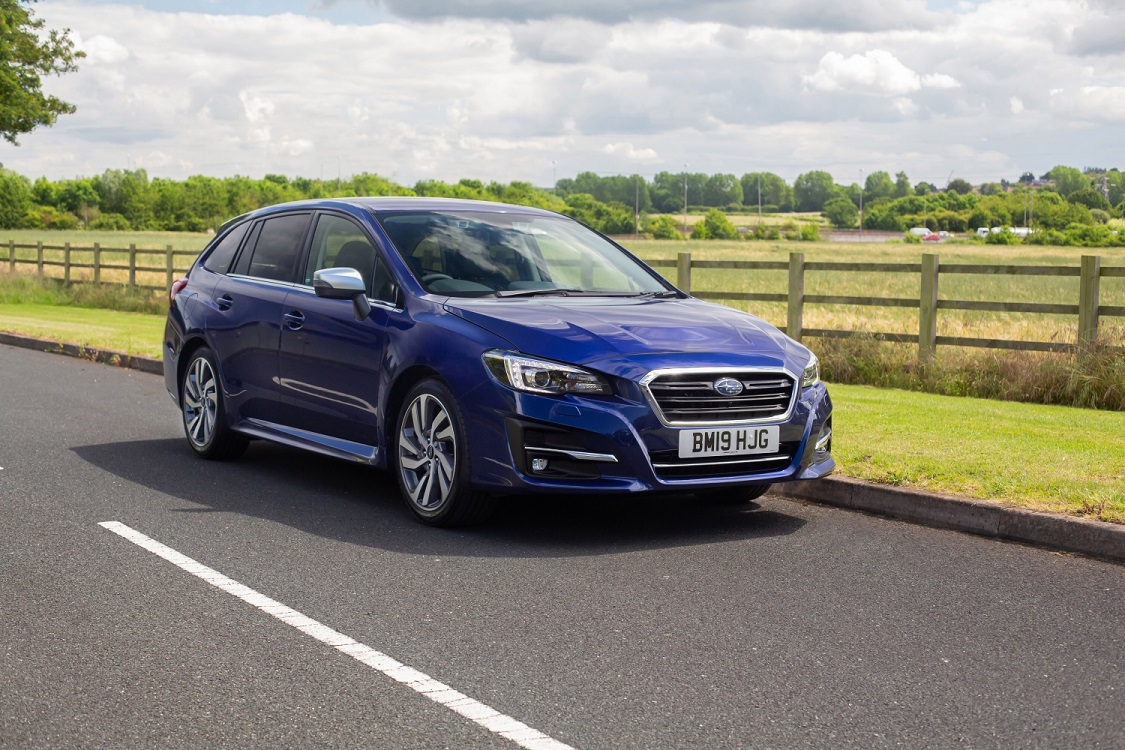
    Our test car came in dark blue pearl, which I felt really suited the car. Exterior styling is sleek and sporty, but if I had one criticism I would say it’s a little anonymous.

    In summary, the Levorg drives well, is well priced, looks good, it’s not quick and handles well, in fact, it could easily handle more power I’d say. Maybe one day we’ll see an STi version.

    Subaru Levorg prices start at £34,770

  • MOTORBIKE REVIEW | Suzuki V-Strom 1050 XT

    MOTORBIKE REVIEW | Suzuki V-Strom 1050 XT

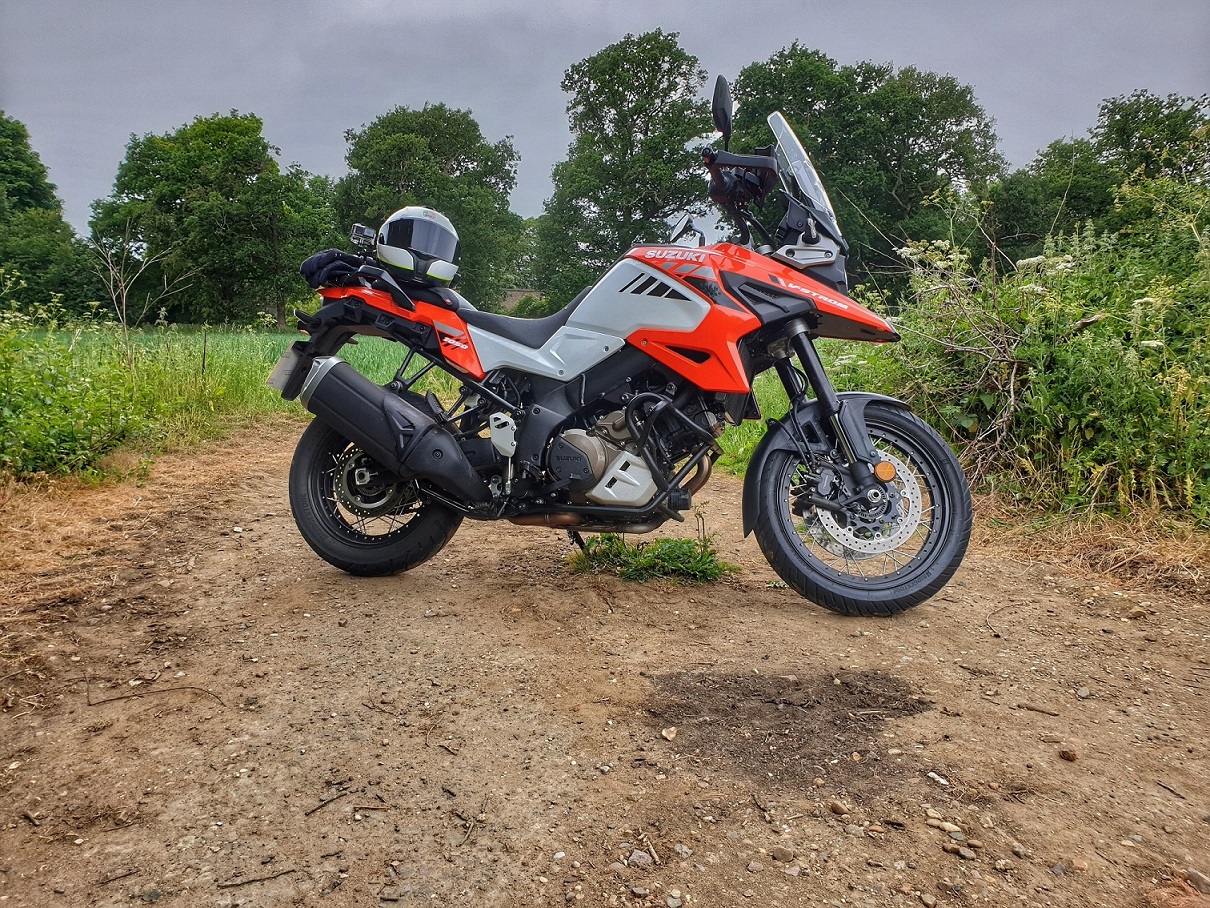
    Suzuki’s entry in the adventure bike fraternity is the V-Strom, previously also known as the DL.

    This latest 2020 incarnation is known as the 1050.

    It’s a 1000cc v-twin adventure-tourer although actually, it’s a 1037cc v-twin.
    This is a good engine that has been around for a while now, first making an appearance in the TL1000R in 1997, a legendary bike. It also featured in the SV1000 which was a surprisingly good bike. A friend of mine had an SV1000. He fell off it in front of us all once, wheelying it. His excuse was he had just polished it and the seat was slippery.

    Now, the engine takes pride of place in the V-Strom 1050, making 106bhp and 100Nm torque. This is an increase of around 6bhp on last year. Peak power is now at 8,500 rpm and peak torque is at 6,000 rpm, which is 2,000 rpm higher up the rev range than the previous model.

    Suzuki has played with things like the cam timing and pushed the torque further up the rev range which makes this new incarnation of the V-Strom a lot of fun.

    There’s a 6-speed gearbox but no fancy quick shifter. There is a slipper clutch of sorts thanks to Suzuki Clutch Assist System (SCAS) which also makes the clutch very light in operation. 

    The throttle is fly by wire and is very smooth. I didn’t experience any snatchy or jerky behaviour, it’s very polished, which leads us nicely into the electronics. There are a host of sensors, from lean angle sensors to crank sensors, wheel speed sensors, gear position sensors, gyroscopic sensors and more, which provide information for the various electronic systems on the bike. This information is used by systems such as the ABS and traction control.

    You can choose between 3 rider modes, 3 traction control settings and 2 ABS settings. You can’t actually turn ABS off which may be an issue for more serious off-roading, but honestly, this is probably more of a touring bike than a hardcore adventure bike.

    The suspension is 43mm, USD, fully adjustable KYB forks, and a KYB shock with rebound and preload, which all works very well, the suspension is great. There’s also a remote preload adjuster just behind your left thigh, great for adding some preload if you’re carrying a pillion.

    It’s surprisingly fast when you consider it only has 106bhp, and there’s a satisfying rush of power in the upper rev range. It’s great fun to ride.

    Brakes are excellent with 310mm discs at the front with four-pot radial callipers and outback is a 260mm disc with a single-piston calliper. They offer great feel and really are superb brakes.

    At 247 kg it’s not a featherweight but it carries the weight well. Pushing around the workshop it felt pretty big, but as soon as you are on the move, the weight disappears. On the move, the V-Strom 1050 feels agile and handles really well.

    I’m a fan of the old V-Strom, I remember I had one on test in 2018 and loved it. I even took one around Bruntingthorpe which was fun, scraping the pegs on a V-Strom on track.

    The range is a positive attribute with this bike. Suzuki has fitted it with a 20L tank. When I picked the bike up, it was full and the range was showing as 201 miles. With just under half a tank left, the range was showing as 99 miles.

    Overall, this is a great bike. It’s fun, it’s pretty fast and it handles really well. It’s comfortable enough to be able to ride long distance with no trouble too.
    If there was a criticism, it would only be that the V-Strom lacks some of the toys that some of the heavyweights in the adventure bike sector have; electronic suspension and the like.

  • AGV SportModular Carbon Fibre Flip Front Helmet – Review

    AGV SportModular Carbon Fibre Flip Front Helmet – Review

    I’ve always used full-face helmets, and always sports bike/race style lids.
    Open face helmets have never really appealed and I wouldn’t consider not wearing one, no matter where I was.

    When AGV offered to let me try their SportModular flip front lid I was a bit sceptical, but I’m always open to new ideas, so thought I’d give it a go.

    There’s a lot going on with the AGV SportModular so let’s start with a bit of a run down about the helmet and its features.

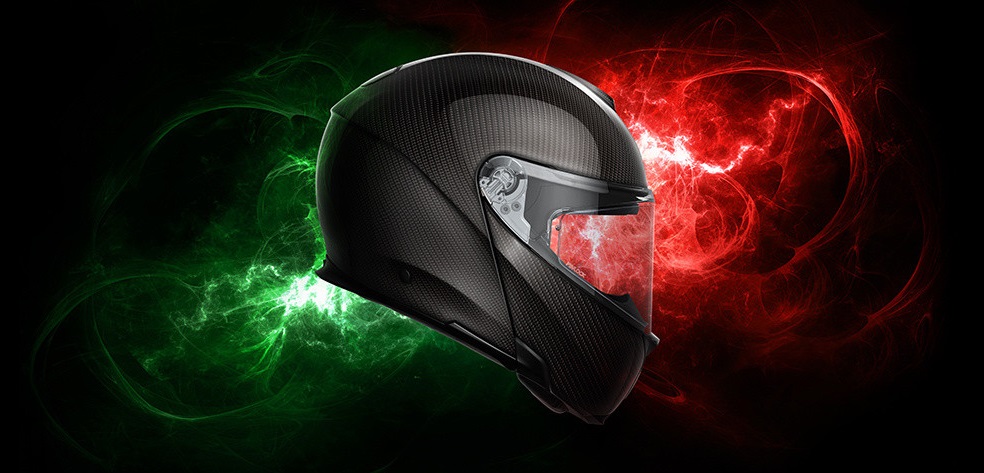
    This is a 100% full carbon fibre shell, even the flip part of the helmet is full carbon, unlike many other flip front helmets. This is no easy task, it’s a very complex shape and tolerances need to be tight. The end result is a very strong and light helmet. It has the same impact resistance as a race helmet such as AGVs own Pista GP R (Rossi’s helmet) but with the practicality of a flip-up helmet. Another benefit of the full carbon fibre shell is that it looks stunning.
    Another benefit of carbon fibre construction is the weight or lack of it. AGV has created a flip front helmet with outstanding impact resistance and lightweight, just 1295kg (for the smallest size. The bigger sizes will weigh more).

    To open the front, there is a simple forward hinging latch under the centre of the chin. This has been designed to prevent accidental openings and is simple to use, even with winter gloves and incredibly strong.

    Ventilation is effective and simple too.

    You have a centre chin vent which works by sliding up to close or down to open, nice and easy, even in winter gloves. You have a centrally positioned vent on the top which again slides back to open and forward to close, nice and easy, and there is an exhaust combined with a kind of flip-up spoiler which is supposed to reduce turbulence too. With the vents open, you are rewarded with a pleasant and noticeable little breeze through the helmet.

    The visor has AGVs patented multistep visor lock mechanism and patented extra quick release system. This means it locks in the closed position and is opened with a button at the bottom edge of the visor in the centre. You lock the visor fully closed, or in a slightly open position which means as the speed increases, it won’t snap shut on you. It’s also an optic class 1 visor, so the best visual quality there is, and its scratch proof.

    You will also benefit from the pinlock 120 which is included with the SportModular, and my helmet was delivered with a tinted visor which is an option. Both are excellent additions. The tinted visor is great for the recent fantastic weather, but as the sun turned to rain, it wasn’t too dark. Changing the visor is simple with AGVs patented multistep visor lock mechanism. It’s simplicity itself to use and very secure. It also has an incredible 190-degree field of vision.

    Pinlock is actually a new experience for me but was a bit of a revelation. It’s really easy to fit and is very effective. If you haven’t used it, it’s like fitting double glazing to your visor. There are pins at the edges of the visor and a kind of secondary visor fits on the inside on your main visor, with a small silicon edge to make a seal. The end result is a visor that almost never mists up. It’s a simple but very effective system.

    Finally for the visors, in addition to all of this stuff, there is an internal, flip-down sun visor. You flip it down by using a simple slider on the left-hand side of the helmet, on the bottom edge at the side. You push the little slider back and the anti-scratch sun visor drops down. Slide it forward and the visor flips back up. I’ve got a big nose and wear glasses and it was fine. It almost touched my nose, but not quite.

    AGV have fitted the SportModular with a fully-removable lining as you would expect. There is a removable skull cap that can be removed, reversed and replaced, and has a warmer and a cooler side.
    To keep your head safe in the event of an off, there is a five-part EPS (expanded polystyrene) insert that provides differing densities at the top, front, rear and sides.

    SportModular comes with two chin skirts, so you can create a tighter seal, or remove it altogether. The lining allows for glasses wearers to use the helmet comfortably and there are removable pads by your ears to allow the fitment of an intercom or communication device.

    AGVs SportModular is available in eight sizes from XXS – XXXL and in a range of colours and finishes. Mine is the Ray Carbon/White/Yellow Fluo.

    What’s it actually like to live with? Well, I’ve used it for a while now in all kinds of weather and on various bikes. I’ve probably covered a couple of thousand miles in everything from heavy rain to glorious sunshine.

    Several observations spring to mind. One of them is the weight. Despite the integral sun visor and flip front, it’s a light helmet. Saying that I add weight unfortunately but sticking an action camera to it, and also a Cardo PackTalk Bold communication system. Despite this, it’s still a very comfortable helmet and can easily be worn for hours at a time.

    As a newbie to flip-up lids, it took a moment to get used to it. I’ve always thought they looked a little odd, but actually they are a great idea.

    I was worried I might look a little odd until I pulled up at some lights and a custom Harley pulled up next to me, low, fat back tyre, loud and the dude riding it was pretty damn cool. As I looked over to give him a sheepish nod, I saw he had a flip front helmet, flipped up.

    Generally, I keep it closed, but when it’s really warm and at low speed, in traffic, I flip it up and it’s great. Also, when I stop or at petrol stations, I flip it up and can talk without shouting to be heard.

    I found the flip front easy to open and close, but the visor is a little fiddly with winter gloves on.

    Talking of noise, it’s a bit noisy. Not bad but certainly not whisper quiet. You should wear earplugs at speed although I have fitted the Cardo so can’t. I’ll do a separate review of the Cardo shortly for you all.

    When all is said and done, It’s a really nice helmet, well made and with some great features. In my experience, it was comfortable and practical and I really like it.

    https://sharp.dft.gov.uk/helmets/agv-sport-modular/
  • CAR REVIEW | Kia Stinger 3.3 GTS

    CAR REVIEW | Kia Stinger 3.3 GTS

    Rating: 5 out of 5.

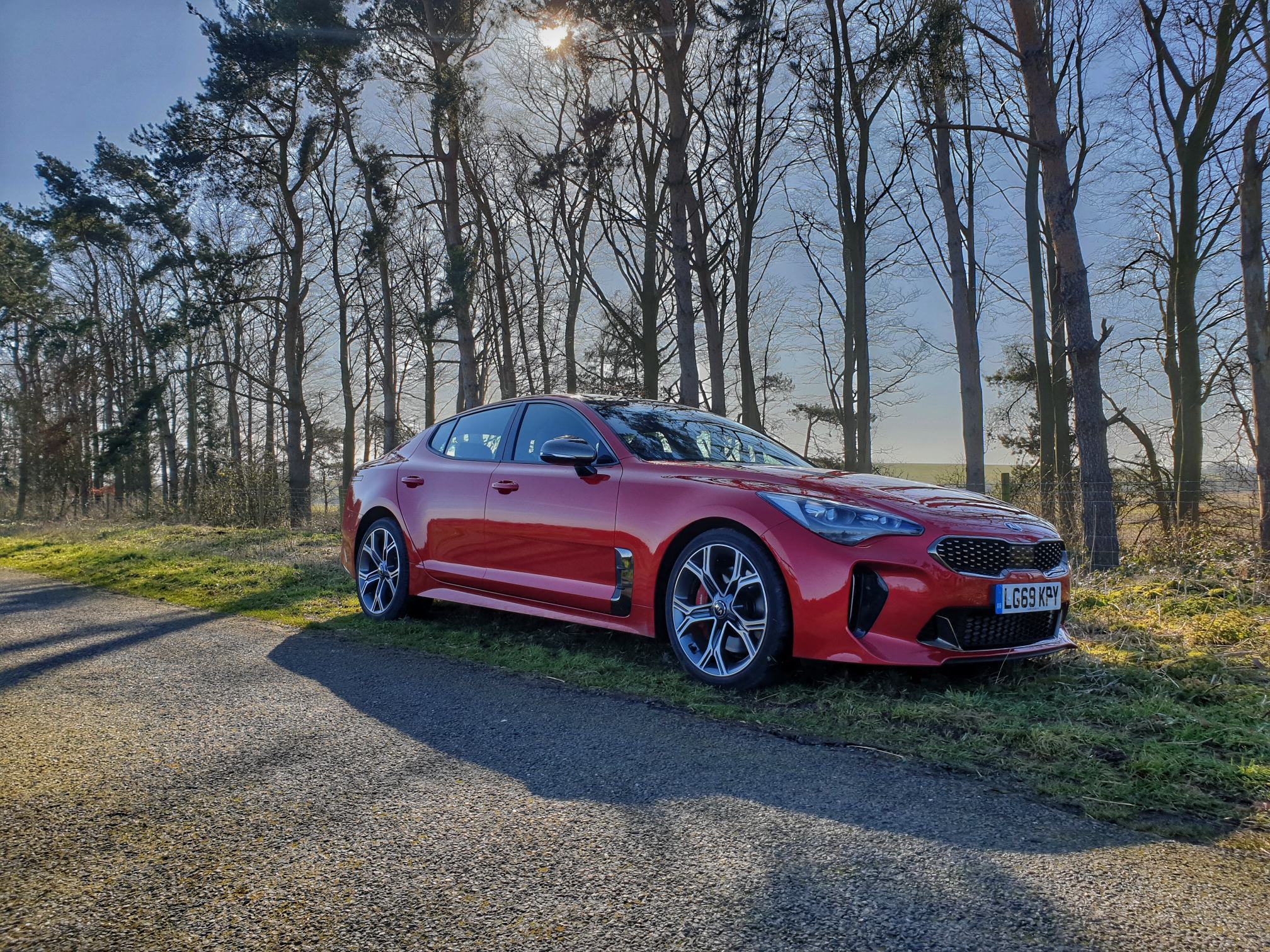
    This week I have been enjoying the Kia Stinger GT-S.

    Kia describes the Stinger as a halo performance model. They say it is a GT car and not a hard-edged sports car.

    I read a very cool quote from chief designer Gregory Guillaume (Gee-ome) which said: “the Stinger has nothing to do with being first to arrive. This car is all about the journey. it’s about passion.”

    Stinger is a new direction for Kia, taking them into a new market sector. A 5 door, 5 seater fastback style grand Tourer. It is also their first Rear Wheel Drive car in the UK.

    Our Stinger is the GT-S which means it has the all aluminium, 3.3 litre twin-turbo V6 engine, producing 361bhp and 510Nm or torque.

    Interestingly, it makes peak power at 6,000rpm but…..makes its torque between 1500rpm and 4,500pm. 1500rpm! What this means is the engine is very tractable and you don’t need to rev it to get the most out of it, which is how a GT car should be. 0-62mph comes up in just 4.7 seconds and the top speed is 168mph

    The Interior is beautiful. It’s not brash or ostentatious, it’s elegant and dignified. I would describe it as somewhere between a dull Audi interior and an unnecessarily conspicuous Mercedes Interior.

    Seats, armrests, steering wheel, dashboard and gear shifter are all upholstered in plush Nappa leather. The centre console, Interior door handles & pedals have a brushed aluminium finish and there is a beautiful suede headlining.

    Both front seats are electrically adjustable and heated and cooled and the driver’s seat has a huge amount of electric adjustment for lumbar and bolsters.

    I actually found the seats firm but fantastically comfortable over a long distance. There’s plenty of room and they are very supportive.

    Suspension on the Kia is excellent. McPherson struts at the front with multi-link rear suspension. It’s also Blessed with DSDC: Electronically controlled, Dynamic, Stability, Damping, Control

    The car adjusts the suspension on the move, controlled by acceleration, braking and steering sensors. The driver can change the characteristics of the whole car by using the Mode Selector on the centre console.

    There are 5 modes: Smart – Eco – Normal – Sport – Sport+.

    Each position of the drive mode selector noticeably changes the characteristic of the car.

    I’m sure you’ve seen this kind of thing before. Steering, gearbox and throttle become more responsive, suspension firms up and the whole car takes on a more sporty attitude.

    In the Kia Stinger, the modes feel like well spaced gear ratios. They offer a very progressive, increased level of driver involvement by reducing the electronic intervention and increasing the fun factor, culminating in the full fat Sport+ mode.

    However, even Sport+ has some electronic involvement. It will go sideways but the car still has your back.

    If you really want to be a no holes barred hooligan, you can completely turn off traction control and stability control with another button on the centre console.

    Brakes are fantastic. Kia have blessed the Stinger with 350mm discs on the front and 340mm on the rear, both with massive calipers. The braking force is epic and the feel is excellent. When you first press the brake pedal, Initial bite is quite gentle. There is no snatching or jerky braking, it’s nice and gentle. When you apply more pressure, the braking force increases significantly. In short, the brakes are excellent, they are the best of both worlds: easy to use around town, and provide immense stopping power when needed.

    As a GT car, the Stinger really works. You can easily cover hundreds of miles in comfort, cocooned in a beautifully built cockpit, accompanied by the sweet but subtle song of the all aluminium V6. Slip the drive mode selector to ‘comfort’ and enjoy the relaxed, brisk journey.

    Turn the drive mode selector to Sport+ and you can drive it like you stole it. If you turn traction control off, you can pretend you’re a bad guy in a movie being chased by the superhero. It’s fast, poised, you can slide the rear end at will and be a total hooligan if you want.

    The chassis is fantastic. Whether you are cruising in comfort or being a lunatic in sport+, the car is never nervous and always feels predictable and controllable.

    One of the most striking features of the Stinger is the price. This 3.3 GT-S is the top of the range car with all the toys. It is only £41,646.24. There are very few options available, the standard car has all the toys as standard.
    To get something like an Audi S5 with a similar specification, you would be somewhere in the region of £62,000. I would have the Kia in a heartbeat over the Audi.

    If I had a concern, it would be over residual value. I would expect a BMW or Audi to have a stronger residual but, I don’t know.

    This Stinger is very, very good and in my opinion, better than any financially equivalent GT car.

  • CAR REVIEW | Mitsubishi L200 Barbarian X

    CAR REVIEW | Mitsubishi L200 Barbarian X

    Rating: 5 out of 5.

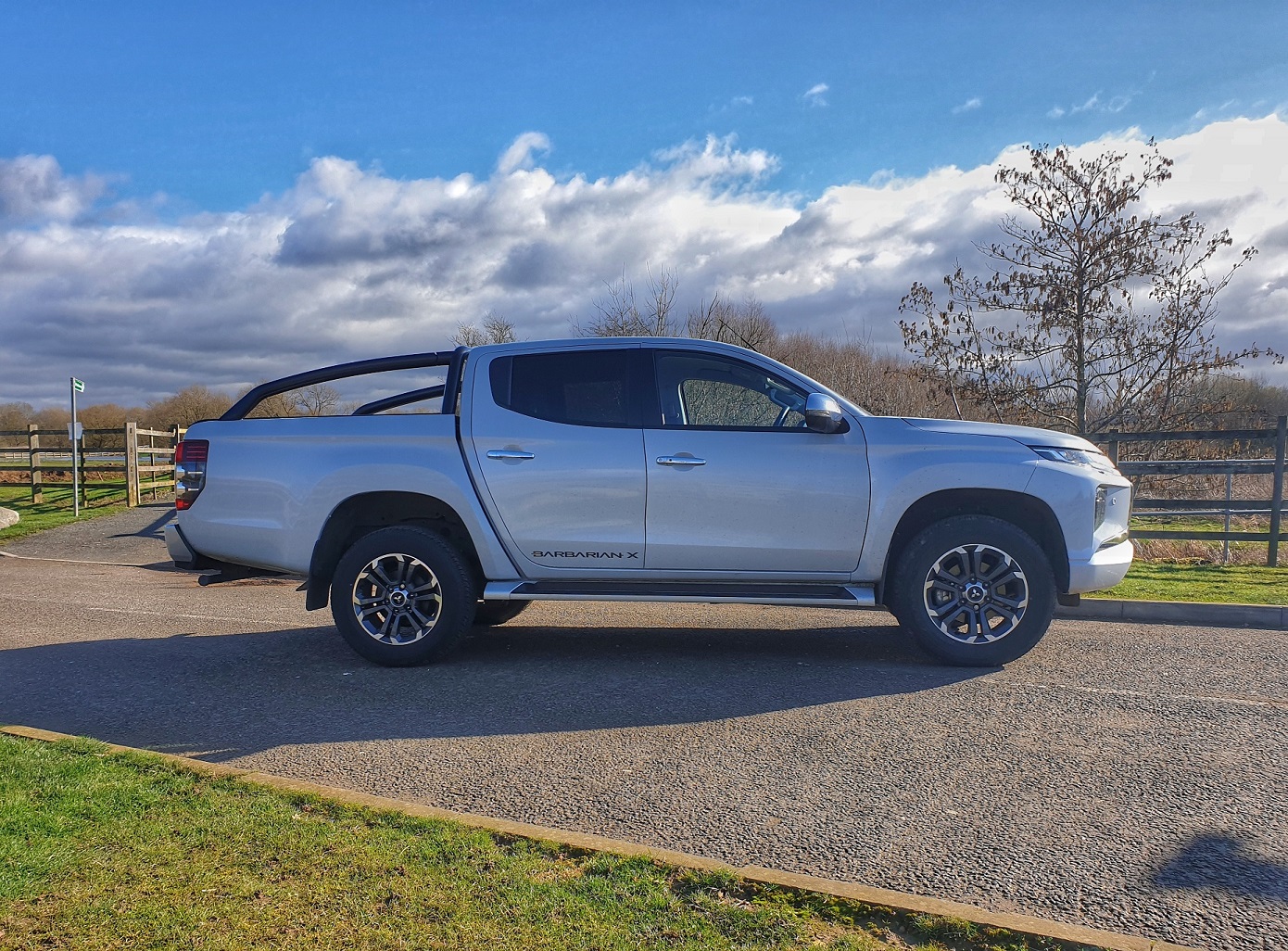
    The Mitsubishi L200 Barbarian X is the latest in our series of lifestyle pickup reviews.

    Mitsubishi’s L200 is now in its 6th generation with production beginning way back in 1978, and worldwide production topping five million vehicles so far.

    If you’re looking for a pickup, you will be interested in some or all of the statistics, so here we go;
    There is an all-new 2268cc all-aluminium turbo diesel 4 cylinder engine producing 150bhp and 400Nm torque. Gearbox options are the new 6 speed automatic or a 6-speed manual.

    The payload is up to 1080kg and gross train weight (GTW) is 6100 kg.
    Curb weight for the L200 is 1935kg and the towing capacity is 3100kg with a twin axle trailer.

    At just under 5.3m long, this is a long vehicle and certainly doesn’t fit into a small, modern parking space. Width is 1.8m and feels no wider than most of the traffic around you. Lastly, the bed length is 1850 on this model.
    List price on the L200 starts at around £21,000, rising to £32,000 for what you see here, the Barbarian X.

    Solid axle and leaf spring at the rear and double wishbones and struts at the front.

    It wasn’t all that long ago that a pickup was simply a work tool. I remember early L200’s, Ford Rangers and many others, being pretty agricultural and basic. Over time, manufacturers have added more and more creature comforts. These days, manufacturers generally include at least one well-appointed, lifestyle type pickup in their range.

    Mitsubishi is no exception with their L200. This Barbarian X model is like a luxury SUV inside.

    Barbarian X comes with leather and Alcantara upholstery. The seats have sixpack quilted stitching, and leather features on door cards, centre console, armrest, and rear seats. The interior plastics are high quality and soft touch and after several thousand press fleet miles (aka hard miles) the interior is fresh, unmarked and doesn’t squeak or rattle.

    Exterior styling is a bit contentious. In a time when manufacturers seem to be trying to soften the styling on pickups to make them less aggressive, Mitsubishi decided on a more bold approach to the styling. The front is particularly striking with angle and straight lines dominating. They call is dynamic mesh. One thing is for sure, it’s an imposing sight in your rearview mirror.

    Side steps have been raised, in fact, the whole vehicle rides higher.

    Pickups have generally lacked in creature comforts over here. In the last few years, things have certainly changed, and this L200 boasts an impressive list of active safety aids. Partly lead by legislation and partly by customer expectation, o modern pickup is very well specified. This Mitsubishi has every active safety aid you would find on a modern car. Mitsubishi proudly state this barbarian X has class-leading active safety.

    As you would expect, there is a touch screen infotainment system. It’s not the last word in refinement but works well and has a good stereo.

    What’s it like to live with and drive? It has a poor turning circle and is a little bit bouncy over potholes, to be honest. Mitsubishi have stiffened the suspension over the previous generation. There are stiffer springs but in my humble opinion, the damping could be better. It works much better with a bit of weight on the back and is very smooth then. Let’s put this into perspective. This L200 is a pickup, designed to work for a living. It’s also a serious off-road tool with increased ground clearance over the previous model and a host of off-road features such as a low range gearbox and locking diffs. It’s also a luxury SUV and all for £32,000. Bearing that in mind, there is bound to be a compromise. Saying it’s compromised seem unfair though, it’s very nice to drive. I did 5hrs on the road in it one day with absolutely no issues or complaints. It was a lovely place to be.

  • CAR REVIEW | Isuzu D-Max Blade; The Rugged Gentleman

    CAR REVIEW | Isuzu D-Max Blade; The Rugged Gentleman

    Rating: 5 out of 5.

    There are lots of good pickups on the market today, In fact, the line between pickup and SUV is becoming increasingly blurred with every new pickup released.

    You could argue that Isuzu is one of the founding fathers of the modern pickup. Farmers and workers across the globe who need a serious workhorse have preached the word of Isuzu for years.

    Isuzu introduced us to the D-Max in 2012, and it became the standard for rugged reliability and a serious workhorse. That is still the case, however, these days there is a rich vein of luxury running through the D-Max family. We have been fortunate enough to test several of the D-Max family; the mad Arctic trucks variant, the very cool XTR and now the Blade.

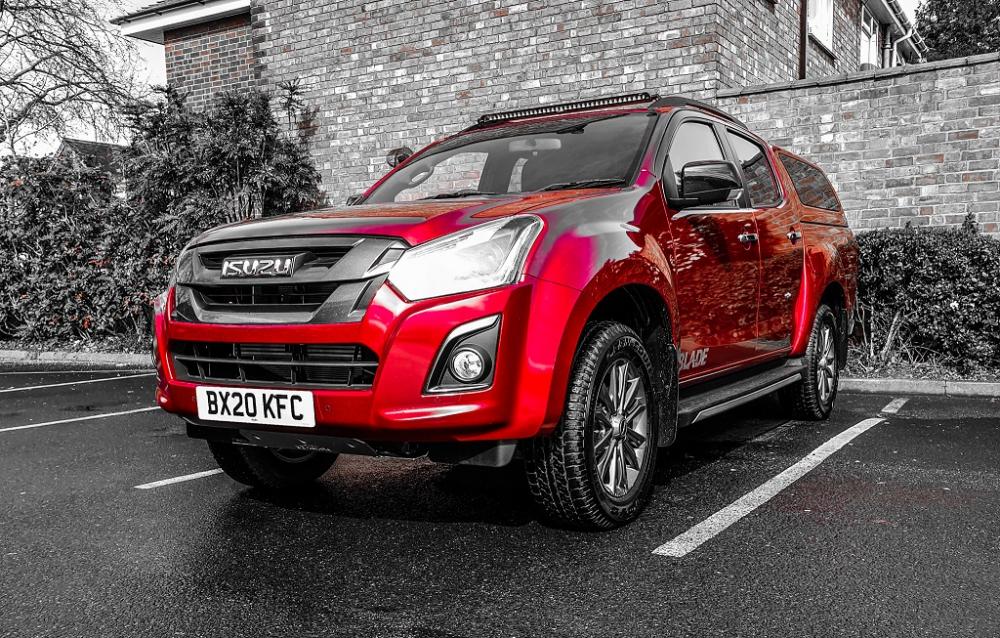
    Our test vehicle is the D-Max Blade which is a double cab with all the toys.

    Talking about toys, the range-topping D-Max Blade has plenty. In terms of practicality; LED projector headlights, rear load liner, roof bars, side steps, tailgate damper, privacy glass rear windows and ours had the excellent colour coded Aeroklas canopy.

    Another cheeky little option ours had was the roof-mounted lazer light bar. You really need to see this to believe it, it literally turns night into day.

    Inside, the D-Max Blade is a very nice place to be. Standard specification is very generous and includes such luxuries as; front and rear parking cameras, climate control, leather upholstery with heated front seats, 18″ alloy wheels, and a great infotainment system.

    Isuzu has fitted the Blade with a 9″ multifunction touchscreen with DAB Radio and Bluetooth® connectivity (Apple CarPlay™ & Android Auto™) including Satellite Navigation. This features nine speakers (2 x front door, 2 x rear door, 2 x tweeters, 2 x roof mounted & 1 subwoofer) and a selection of USB ports and a HDMI port. It has a great sound and is easy to use.

    As we have come to expect in modern cars, there are a host of electronic aids, and you know how these manufacturers love their acronyms, so brace yourself. Some are active safety, some have a more practical use, for example; ESC (Electronic Stability Control), TSC (Trailer Sway Control), ABS (Anti-Lock Braking System), EBD (Electronic Brakeforce Distribution), BAS (Brake Assist System), HSA (Hill Start Assist), HDC (Hill Descent Control), and Front, Side & Curtain SRS Airbags. I warned you there were a few. What this tells us is that the D-Max Blade is a very safe and capable pickup.

    The 1.9-litre four-cylinder diesel engine puts out a little over 160bhp and a hefty 360Nm of torque, delivered between 2000 and 2500rpm, ensuring the D-Max has plenty of get it done power. Talking of working for a living, the D-Max will haul 1098kg which is more than most of its rivals and it’s is rated to tow a braked trailer up to 3500kg, so it will easily tow the race car trailer or boat.

    On the road, the Blade is imposing as you would expect. It has huge ground clearance, tall tyres and isn’t light. Steering is slow and progress is generally sedate, but I love it. It’s essentially a big 4×4 and drives as you would expect. It rides well, better than some others I’ve driven only beaten by the Mercedes X Class (soon to be discontinued) and the Nissan Navara. The Blade has a solid rear axle and leaf springs at the rear with struts at the front and rides well. The suspension seems well balanced and does a good job of isolating the occupants from the horrors of our appalling roads, and you feel like you could go anywhere in it.

    We felt obliged to test the Blade’s off-road ability and oh my, this is serious. Isuzu builds the D-Max to perform, and it is fantastic off-road. You would have to do something pretty crazy to get stuck in this.

    To summarise, Isuzu’s D-Max Blade is a very well-engineered, well-proven, luxurious pickup that drives well and looks good. It has great standard levels of equipment.

    The only thing to consider is that the D-Max has been around for a while and there is a new model waiting in the wings.
    A new Blade starts at £28,814 CVOTR* + VAT.

  • CAR REVIEW | Vauxhall Corsa Elite Nav Review

    CAR REVIEW | Vauxhall Corsa Elite Nav Review

    Rating: 4 out of 5.

    The Corsa name was first unleashed onto the British public in 1993. Here, it superseded the Vauxhall Nova and had the model reference Corsa B. Over in Europe, the Nova was known as the Opel Corsa (Corsa A) but let’s not get bogged down with the details.

    It’s hard to appreciate the impact the humble Vauxhall Corsa has had on the automotive world. It’s not a particularly revolutionary, but man it had an impact.

    How many young kids have learnt to drive in a Corsa, or had a Corsa as a first car? Maybe you had one as a first car? As it happens, I have a Corsa C parked outside the house as I write this. It’s no2 son’s first car.

    In 2017, PSA bought the Vauxhall brand from GM and has been busy rejuvenating the brand since then. 

    This all-new Vauxhall Corsa is a result of the new PSA influence and is based on the EMP1 platform, the same platform that the excellent Peugeot 208 is built on.

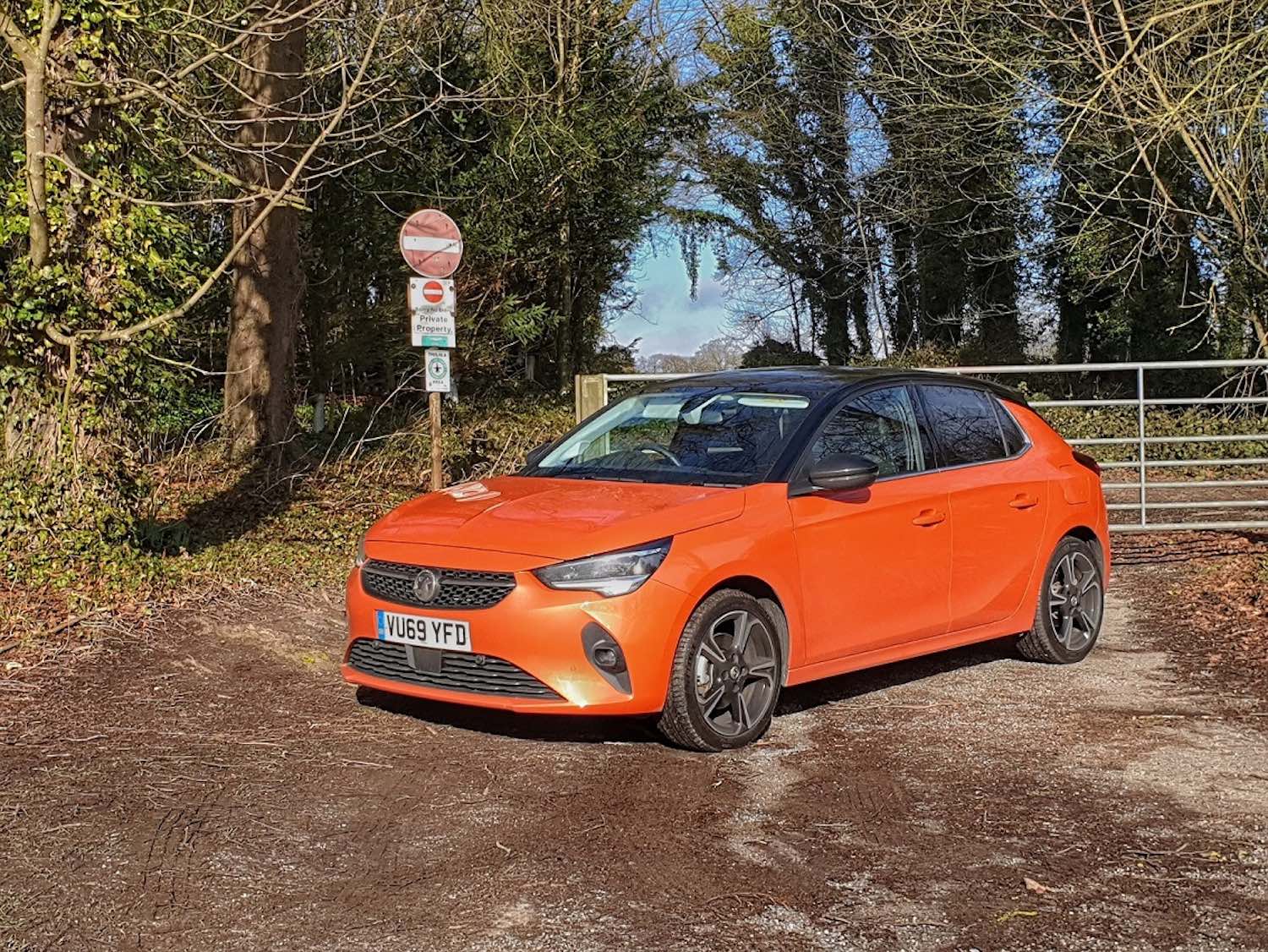
    Our press car was the well-appointed Elite Nav, fitted with the 1.5 Turbo Diesel engine. It’s a peppy and frugal unit, producing 102PS (100bhp) and giving back up to 70mpg. You also have the choice of two petrol engines (75PS/74bhp non-turbo or 100PS/99bhp turbocharged) and even an electric variant.

    It had the 6-speed manual gearbox rather than the 8-speed automatic gearbox. My preference is a manual and it’s a good gearbox that suits the car.

    Vauxhall offers the new Corsa in 6 trim options. Ours was the Elite Nav, top of the family tree. This is a well-appointed car with standard equipment including; 10-inch colour touchscreen, IntelliLux automatic LED Matrix Headlights, 17-inch alloy wheels, keyless entry and start, adaptive cruise control, leather seat trim with driver seat massage function and front heated seats, auto wipers, power-folding door mirrors, front and rear parking sensors, a panoramic rear-view camera, privacy glass, black roof and much more. Very impressive for a small car.

    Vauxhall list up to 53.3mpg on petrol engines, with C02 from just 93g/km C02. With the diesel engine, up to 70.6mpg and from 85g/km CO2. This diesel Corsa was had a 0-60mph time of 10.2 seconds.

    Vauxhall’s new Corsa is fun to drive. I’m not a small guy and if I had a couple of criticisms, it would be that the driver’s seat was a little small. I found it a little short in leg support and not high enough at the back. Having said that, I’m not the target audience for this car. Also, the interior was very black.

    It has a great chassis, comfortable and fun, it works really well. 

    I enjoyed the diesel, it’s a good engine that suits the car. I’m keen to try the full-electric version, I think it would be a really good, fun car to drive. The new Corsa has a really good chassis and with an electric powertrain, should be very interesting. 

    In summary, the new Vauxhall Corsa is a good looking, well built, well-equipped car. It’s fun to drive, practical and economical. There’s a range of incentives and finance deals to make the Corsa a great buy too.

    It’s a tough sector with plenty of competition. Renault Clio, Volkswagen Polo, Ford Fiesta and of course the Peugeot 208. I’m no Clio or Polo fan and find the Fiesta a bit bland. The 208 could be a problem for the Corsa though.

    Vauxhall’s new Corsa starts from £15,925.00, with the Elite Nav starting from £30,310.00.

  • CAR REVIEW | DS7 Crossback

    CAR REVIEW | DS7 Crossback

    Rating: 5 out of 5.

    In 2009 PSA the parent company of Peugeot Citroen and now Vauxhall resurrected the DS name. They used it to denote certain models in the range as premium: for example the Citroen DS3 Citroen DS4 Crossback. It was always part of the Citroen range, then in 2015 PSA decided that they would make the DS a stand-alone luxury brand, a halo brand if you will. 

     DS7 Crossback reviewed

    On face value, the DS7 Crossback is just a large SUV. There are a lot of them about, 5 seats, nice interior, nothing particularly unusual or special. 

    However, what PSA has allowed to happen under the DS brand, is something a bit fresh and unique, something a bit more fun. 

    They have injected some fun and style back into motoring. It’s a really lovely place to be.

    The DS7 Crossback is typically French in its ride and handling. By that, I mean French cars are renowned for having excellent ride quality and the DS7 is no exception.

    It rides very well, very supple, soaking up the bumps with ease, but at the same time it’s poised, it handles well and it turns in sharply. I don’t know how they do it, to be honest.

    This model is the Premium and sits exactly the middle of the range. It has a 1.5 litre turbo diesel engine that produces 130 bhp and 300 Nm torque, so it isn’t desperately fast but it’s perfectly adequate.

    The DS7 interior is a beautiful thing. Nappa leather upholstery adorns front and rear seats which are electrically adjustable and have a built-in massage function. 

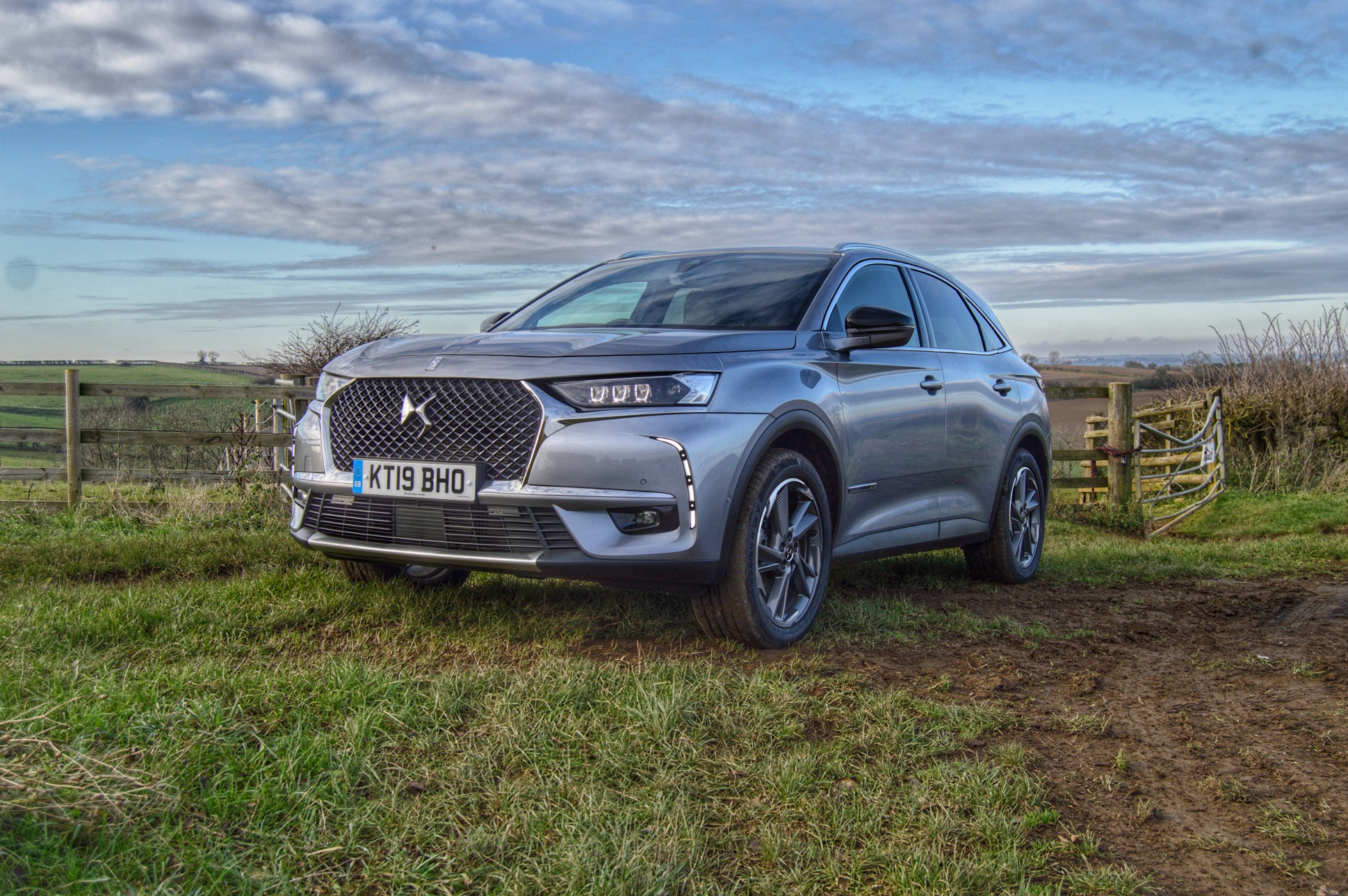
    You will find Nappa leather on the dashboard, on the door cards and on the centre console, all with a diamond quilted pattern stitched into the leather. That diamond is a DS styling trait and you will see it repeated on the switchgear, the headlights, exterior styling, in fact all around the car.

    Headlights are fascinating. That sounds odd I know, but on the DS7 you have LED projector headlights and when you look through the headlight lens, there are three individual projectors. When you turn the car on the three individual projectors do a little dance for you. They rotate 180 degrees, one at a time, then rotate back again, ready to do their job. 

    This is not just for show, the projector headlights turn with you as you steer, shining light onto parts of the road that would otherwise have been left in darkness until you arrive. An attribute carried over from the original Citroen DS 21 way back in the ‘60s

    Why should we settle for something that is nothing more than transport? Something that is perfectly good at its job just isn’t good enough anymore, as no end of faceless, soulless, boring SUVs out there. They pretty much all do the same job and they do it very well. They’ll take you where you are going, it will be comfortable and generally reliable.

    Is this enough? I just think it’s time for us to enjoy our cars again. 

    Can’t we have something that funky, fun, chic and adventurous? Life’s too short to drive boring cars, that’s what they say, and I think DS has taken that on board.

  • CAR REVIEW |Lexus RX-L Takumi 

    CAR REVIEW |Lexus RX-L Takumi 

    Rating: 5 out of 5.

    Lexus is a brand synonymous with luxury automobiles. They are the luxury vehicle division of the Japanese automaker Toyota.  

    The Lexus brand originated in 1983 and has been making luxurious and outstanding cars ever since. 

    ‘We design to provoke, with bravery, courage, and confidence. We ignore the thinking of the crowd, always exploring new concepts, new outcomes, and new ways to express ourselves.’ 

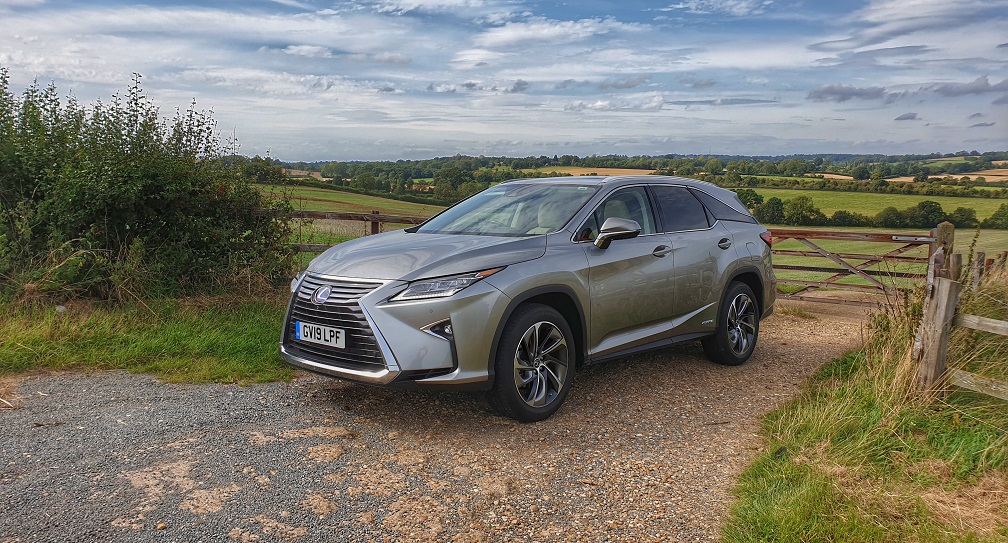
    I recently had the opportunity to try the new Lexus RX-L for a week. RX-L is their first seven-seat model in Europe. It’s an SUV with a focus on luxury. The Lexus RX-L is an elegant and spacious seven-seat SUV, engineered to make sure every passenger is pampered and protected. The build quality is excellent with top quality materials used throughout and fit and finish that most manufacturers can only dream of. 

    RX-L is a luxury SUV with the added benefit of being a Hybrid.  

    If you don’t currently drive a hybrid and haven’t owned one before, they’re very simple. The RX-L doesn’t need to be plugged in, it is self-charging. You just drive it like you would any other automatic. There are 4 driving modes that you can select; 

    • EV – encourages the car to be powered solely by the battery when city driving 
    • Eco – evens out harsh accelerator inputs and reduces the output of the climate control system 
    • Normal – the default drive setting for everyday motoring 
    • Sport – draws additional power from the battery to help boost acceleration. 

    At low speeds, in town for example, the car will run on silent electric power alone, only using its petrol engine when you call for more power or if the stored battery power is used. The CVT automatic gearbox (continuously variable transmission) is smooth and seamless. Altogether, this makes the RX-L very pleasant to drive.  

    The Lexus RX 450hL has a 3.5-litre direct-injection V6 petrol engine producing 259bhp at 6,000 rpm and 335Nm of torque at 4,600rpm. There is also a small additional boost from the electric motors which pushes the total output of the hybrid powertrain (engine and electric motors combined) to 308bhp.  

    The RX 450hL features the sophisticated Lexus proactive E-Four all-wheel-drive system. This means that in normal use, the RX-L is rear wheel drive to save energy. When required, the all-wheel-drive system transfers power to all wheels as needed. There is also a regenerative element to the system, so under braking or deceleration, the car generates electricity. 

    Takumi specification RX-L’s are fitted with adaptive variable suspension (AVS). 

    This system controls the damping force of each shock absorber in response to road surface conditions and driver inputs. For example, on a rough road, AVS instantly switches to a more compliant setting to maintain ride comfort. When cornering, the damping force firms up to help reduce body roll. It rides very well as a result but you wouldn’t call it sporty. 

    RX-L is based on the RX. Lexus have cleverly extended the rear section of the body by 110mm to create room for 2 additional seats. This has been achieved with no compromise in comfort for the other occupants. There’s tri-zone climate control and a console with two cup holders and air conditioning controls for the 2 rear seats.  

    Accessing the rear seats is simple. A one-touch lever tilts the seatback forward and slides the seat smoothly forward.  

    Semi-aniline leather upholstery is standard throughout and the front seats are heated and ventilated, 10-way electrically adjustable with memory function including 4-way lumbar support.  

    The steering wheel is heated and there are front and rear USB chargers and a wireless phone charger. 

    Infotainment is taken care of through a 12.3” touchscreen multimedia display with Lexus navigation. Music comes through the 15 speaker Mark Levinson® surround sound system. For me, one of the coolest features about the system is that the audio system has neat, machined aluminium knobs.  

    I really liked the colour head-up display (HUD) which projects information onto the base of the windscreen in your eye line, about adaptive cruise control status, speed limits and pre-collision system warnings.  

    As we know, Lexus makes incredibly safe cars and the RX-L is no exception. To support this, there is a suite of safety and driver aids.  

    Lexus Safety System+ is a multi-feature, integrated safety package that delivers exceptional levels of active safety and driver assistance to help prevent accidents. There are several elements to the Safety System+; 

    • Pre-Collision System. Uses a front-mounted camera and radar to detect vehicles and pedestrians. It warns of danger, adds braking force if needed and ultimately can brake autonomously if it needs to. 
    • Dynamic Radar Cruise Control helps the driver maintain a safe distance from the vehicle in front. 
    • Lane Keep Assist (LKA). 
    • 3-Eye LED Headlamps with Automatic High Beam, Adaptive High-beam System for headlights and LED Cornering Lamps. 
    • Road Sign Assist system reads the road signs. 
    • 360-degree Panoramic View Monitor through cameras helps with parking. 

    And more…… 

    High quality, soft, semi-aniline leather upholstery covers seats, doors and centre consoles, excellent quality soft-touch plastics top the dash making the interior a luxurious and extremely pleasant place to be.  

    Styling is divisive. It’s bold and unique but it has its critics. I liked it. I wasn’t convinced at first, but I really like how Lexus has been brave enough to style something distinctive and immediately recognisable as a Lexus.  

    To summarise, this is a great car. It’s luxurious, practical, relatively economical and easy to live with.  

    It’s not sporty but that suited me.  

    Fuel Combined WLTP (mpg)34.4 – 34.4 

    CO2 Combined (g/km) 138 

    5 years/60,000 mile cover for both hybrid battery and other hybrid components. 

    3 years/60,000 miles manufacturer’s warranty. 

    RX-L from – £54,145.00 otr 

    RX-L Takumi £62,000 otr 

  • TECH REVIEW | Jabra 65t – True Wireless Earphones

    TECH REVIEW | Jabra 65t – True Wireless Earphones

    Rating: 4 out of 5.

    I’ve been using a pair of Jabra 65t earbuds for a while now and they have become pretty invaluable. Going out without them feels as bad as leaving your phone at home. 

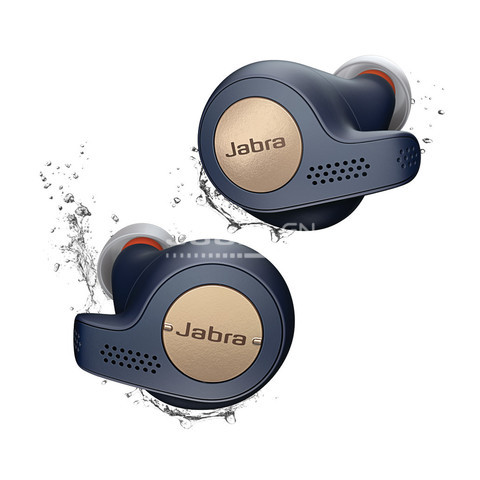
    Aesthetically, the Elite 65t is a pretty compact pair of earbuds and are well shaped to sit, largely, flush with your ears. They are supplied with 3 pairs of ear gels, I use the largest. They fit snugly and have never fallen out or even come loose while I’ve been using them. The 65t’s are comfortable and light and actually, you don’t even notice you are wearing them.

    I think that’s the beauty of these earbuds. They are so convenient, so easy to use, they become essential.

    You can of course use the Jabra 65t as a handsfree kit. Jabra’ four-microphone technology seems to be effective in reducing wind noise. There are perforations on the body of the buds with mics inside to supply ambient sound. The amount of ambient sound can be controlled by the app and we’ll come to that in a minute.

    The Jabra Sound+ app is the perfect companion to your Jabra earbuds and allows you to customise your sound so your music and calls experience always suits your surroundings. Through the app, you can personalise your experience by customising the way your sound is delivered. You can choose your preferred voice assistant from Amazon Alexa, Siri® or Google Assistant™. I use the Google Assistant installed on my phone to keep things simple.

    Sound quality is very good. There is a deep warm sound which was a pleasant surprise. Earbuds are so small, it is often difficult to get enough bass due to the size of the speakers. In this case, the speakers are 6mm for example. However, the sound quality is excellent for earbuds.

    The Jabra Elite 65t earbuds and charging case are made entirely out of plastic. I have used some with a metal case that tend to feel a bit more premium, but these headphones still feel like a premium product and the case is very practical, durable and fun. The lid is a bit of a pain at first, hard to open. You quickly discover that the lid has a cool, spring-loaded hinge that needs to be pushed back, then flipped up. 

    The earbuds sit neatly inside and an LED signifies they have made connection and are charging.

    Battery life is great at up to 5 hours. Perfect for long drives or a boring meeting. The case provides a further 2 full charges. That’s a serious amount of battery life. The case is charged via a micro USB.

    Controlling the music and playback is simple. Fingertip controls give you easy access to core functions. On the right earbud, you can control: play/pause music, answer/end call, reject call double-press the button when you receive an incoming call, voice assistant. on the left earbud, you can control: volume up/volume down, next track, previous track.

    When you crack open the case and remove the buds, they turn on automatically. Wireless performance is excellent and you can connect more than one device which is a great feature. I have two phones so this works well for me.

    Through the app, you can control a range of functions from updating the software, customising the sound through the inbuilt equaliser, modify your call settings by adjusting how much of your own voice you want to experience on a call for a natural, comfortable sound and adjusting the amount of ambient sound you let in.

    You can also select from a range of presets for situations like commuting, relaxing, and others, although the 65t’s can sense if you are stationary, moving, in a quiet place and more, and it will select the correct preset for that situation. Oh, there’s also a handy ‘find my Jabra’ function in case you lose them too.

    If I had to criticise, I would say the case doesn’t feel as premium as other earbuds I’ve used but is tough and durable. The earbuds themselves are smooth and on occasion, I have almost dropped them. 

    Other than that, they’re great. I use them every day and always have them in my pocket.