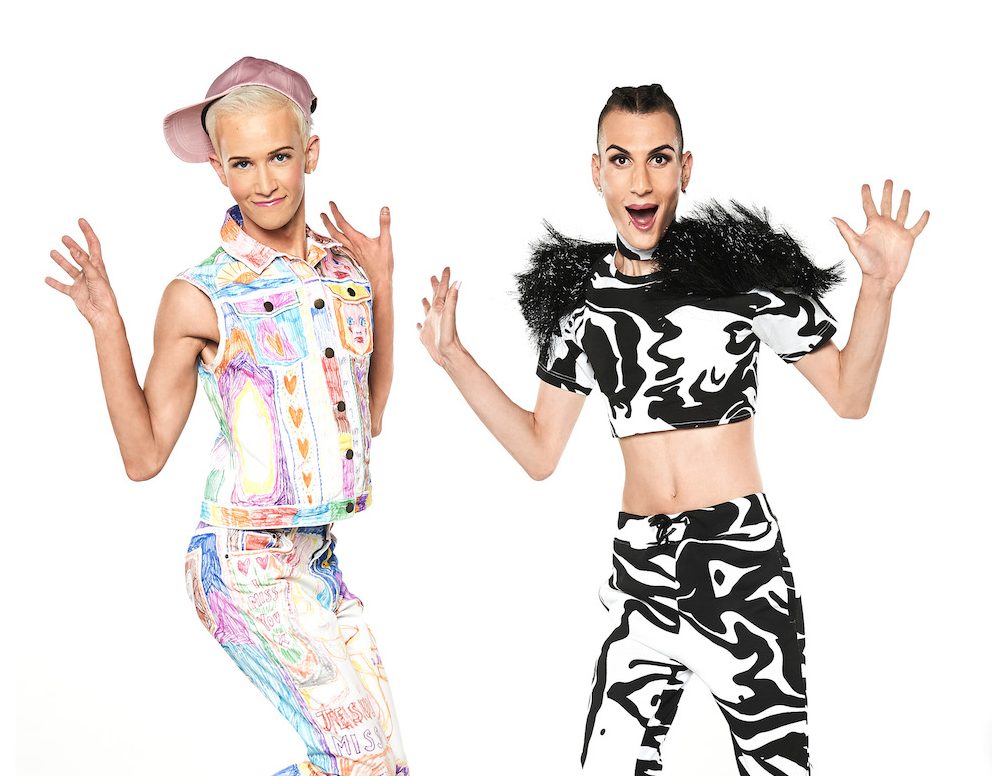
Category: Comment

  • OPINION | Is Anti-Bullying Week more necessary than ever thanks to the US Election?

    This is the week after Donald Trump became President Elect. It is also Anti-Bullying week.

    The new president says people who are bullied “gotta get over it”.

    The new president has often mocked those who are different on numerous occasions, including people who are disabled or “fat” – in his eyes.

    His attitude has changed the world and has made things even rougher for children often mockingly labelled “special snowflakes”. Young LGBTAQ children, young girls, minorities. The sensitive, and especially the empaths. An empath is someone who is highly sensitive and attuned to the emotions of other people. Not only do empaths notice the positive and negative emotions around them, but they can even absorb them and take them onto themselves. (Find out more on http://yourzengrowth.com/empath/)

    I am a mild empath (it is what has driven me into psychology, given me a need to help people.) Lately, I’ve felt overwhelmed by the hurt and confusion and division in the world, most of this created by the internet.

    Social media has done a lot to both bring groups together and separate at the same time.

    “Let’s face it, a lot of interpersonal communication isn’t so personal anymore. Interpersonal definition has been changed by the Internet and technology. There’s always a screen between us, isn’t there? However, most of us still find that interpersonal communication is far less stressful when we perform it via digital channels. That’s because when we’re online, we don’t have to worry about misreading body language cues. We also don’t have to feel uncomfortable or embarrassed for having an unpopular opinion in our social circle”, says Joshua S.

    This is true and this has given rise to people grouping together to bully others in the most spiteful way and create online movements that move into the real world: you can radicalise entire groups while you’re laying on the sofa in your underpants. Radical Islam and Alt-Right groups are the biggest examples, but school children too can group together to bully the weakest one in their class relentlessly. Online bullying means that it never stops: you can be bullied day and night! This week another child committed suicide because of this.

    Online bullying means that it never stops: you can be bullied day and night! This week another child committed suicide because of this.

    With the new president himself being a well-known internet bully and those that follow him training and organising themselves to bully and attack anyone who is against him this will only get worse.

    Already this week, as with Brexit, the bullying that started online is seeping into the real world with attacks on people and buildings.

    Anti-bullying week is needed more than ever: everyone should use this week to warn of the dangers of online bullying because they can have big consequences. Words can hurt deeper than we can ever imagine and lead to worldwide damage and the loss of our most beautiful snowflakes.

    To protect them, the world and ourselves we must form our own group as a blanket of protection against hatred now and in the future.


    Opinions expressed in this article may not reflect those of THEGAYUK, it’s management or editorial teams. If you’d like to comment or write a comment, opinion or blog piece, please click here.

  • THE GAY DAD DIARIES | Buying bras…

    THE GAY DAD DIARIES | Buying bras…

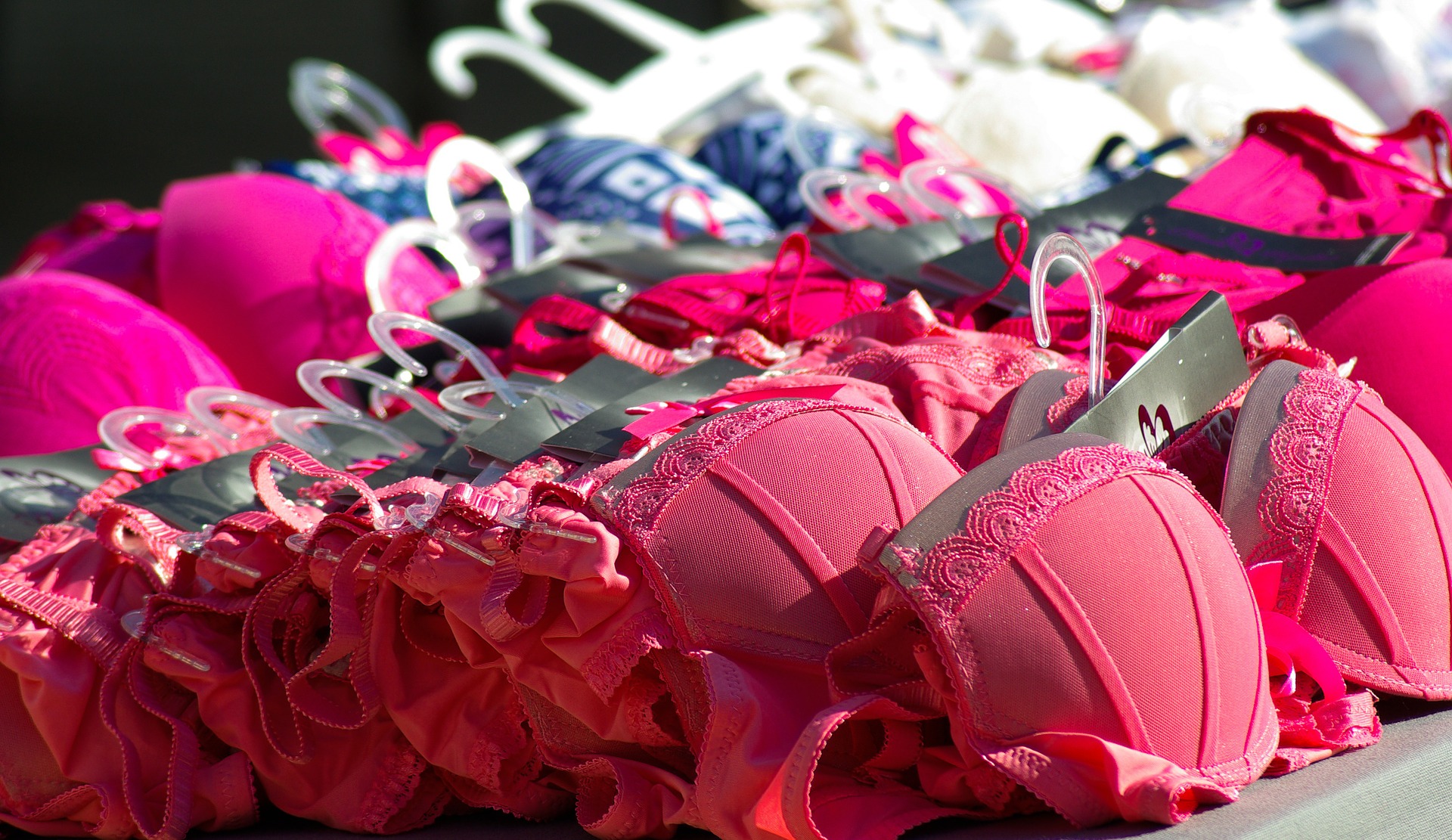
    Being a dad is hard, being a gay dad harder; being a gay dad to a teenage daughter is mind boggling. This week it has mainly been about bras. Now as a gay man of nearly forty with a rapidly increasing waistline and a rapidly receding hairline the last place you expect to find yourself is in the teenage underwear section of M&S. My daughter has decided this week she needs support in a certain area.

    The extent of my underwear shopping consists of logging on and ordering Calvin Klein 3 pack of briefs still in a medium, just.

    The choice of colour is red, black or white but I have been known to push the boat out and buy some pink on occasion. Now I am thrust into this world of uplifts, padding and underwire. The choice of colour and styles is overwhelming as the aisles and aisles of bras stretch out in front of us.

    At this point I think both me and my daughter are both feeling a touch embarrassed so I do what any gay man worth their salt would do and engage the services of the friendly female shop assistant. This would surely ease the tension all round and allow my daughter to be fitted with her underwear properly and allow us to exit in as short a time as possible.

    how to buy a bra if you're a gay dad
    CREDIT: jackmac34 / pixabay / CC

    After explaining why we are here I safely deposit my daughter with the shop assistant only to hear at earth shattering levels, “I am not putting a bra on in front of her!” Pulling my daughter aside I make clear there is no reason to change in front of the assistant she is merely there to help and ensure the bra fits.

    Drama avoided, I take a seat in the men’s section and await the return of both. After what seems like an eternity they return with several items discreetly wrapped with nothing more for me to do than pay the bill.

    We both have a sense of relief as we leave the shop. Bras bought and no more to be said on the subject. Or so I thought. On returning home, like any girl after a shopping trip, she disappears upstairs to try on her newly purchased items. Then the voice from beyond, “DAD! DAD! these bras don’t fit me.”

    That’s it for this week. I’m done with bras. Next week periods…


  • COMMENT | Why is it so difficult for men to hold hands in public?

    For the past six years, I’ve been touring a performance called ‘Walking:Holding’  where one person at a time is taken on a walk through the town and invited to hold hands with a range of local participants along the way. Next week I will be presenting this work in Leeds as part of Compass Festival with Live Art Bistro.

    Walking Holding
    CREDIT: Rosanna Cade

    The impetus for the performance came from my own experience of holding hands in same-sex couples and the complexity I discovered in this seemingly simple action. Across six years of touring the work to various towns across Europe, there have been many different experiences and reactions to the piece and the idea of holding hands with strangers. More often than not, there has been a lot of fear and tension around the action of two men holding hands in public.

    Recently there have been two incidents of male audience members attending the performance and then refusing to hold hands with the men on the walk. In two other instances in the past two months, male/male couples have been called names or laughed at while taking part in the performance.

    We have had many discussion around how our culture affects the way in which we view acceptable forms of intimacy in public, and also what we consider to be natural traits for men or women. I’ve worked with men from Nigeria and India, who talk about holding hands between male friends being common as a form of brotherly love. In western society, it seems that physical contact such as holding hands has been framed as feminine and therefore, perhaps, weak.

    Sadly there are many gay men who I talk to as part of the project who don’t feel safe enough to hold hands with other men in public. Ultimately, though, the performance is about challenging the idea that anyone should have to hide who they are, and hopefully inspiring those who haven’t felt confident enough before to change their behaviour.

    We toured to Dublin in 2013, and I felt that there was an accepted sense of homophobia in the city. Two gay men had been beaten up in the city centre about a week before I arrived, and there was a palpable tension in the air following this. A lot of the gay people that I spoke to said they would never feel comfortable expressing their sexuality in public, and carried a certain resignation and acceptance of that. However, for some of them the experience of taking part in Walking:Holding was transformative. Firstly, it broke a threshold – they held hands with another man and nothing bad happened. It also gave them a sense that they should be able to hold hands, that it shouldn’t be a privilege. They said they the experience had given them a whole new perspective.

    Walking Holding
    CREDIT: Rosanna Cade

    Here is an account from a recent participant:

    “I suffer with social anxiety and agoraphobia meaning that I find it hard to leave the house without a purpose. I took part in Walking:Holding in Leith this summer. In the workshop, I was asked to walk outside and hold hands with one of the other male participants. He was the first man I have ever held hands with in daylight since being a child. There may have been some late night occasions when I’ve been drunk, but never in the broad light of day.

    “It’s amazing how daylight illuminates things. It felt like there was a spotlight on us, and everything was heightened. I identify as being a-gendered so don’t feel like a man but I’m aware of what I present. To the outside world, we looked like two big beardy men holding hands. We spoke about how we felt like we were doing something wrong. We both felt frightened but we also felt protected by each other, at the same time as realising we were protecting the other one. This experience was intense but through holding multiple people’s hands across the week of doing the performance it became much less extraordinary and I felt braver with every new hand that I held.

    “The thing that made me the most emotional was that it changed my perception of myself. It gave me more confidence because both men and women were saying we look like we could be in a relationship. It doesn’t mean that now I can just go out and find a partner, but it gave me a kind of confidence that people don’t mind being seen with me – I’m not as bad as I thought I was. They were proud of me of those few moments.

    And from the male artist Laurie Brown who has collaborated with me on the project many times:

    “I’ve been involved with Walking:Holding now for over 5 years, so naturally I’ve held countless strangers hands of all kinds of backgrounds. Being involved with this piece has allowed me to empathise with others on a totally new level. It has challenged every prejudice I had and continue to have, and it reminds me of how massively different people’s experiences are of the same world. It is also a reminder of the immense joy vulnerability can bring. Holding someone’s hand can be really revealing, both of the other person, but also about yourself. When you hold someone’s hand and really focus on that experience it’s impossible to be bored, it’s never simple, and it is never the same.

  • COLUMN | The Gay Dad Diaries

    COLUMN | The Gay Dad Diaries

    Being a dad is hard, being a gay dad harder; being a gay dad to a teenage daughter is mind boggling.

    CREDIT:  CC0 Public Domain / artursfoto
    CREDIT: CC0 Public Domain / artursfoto

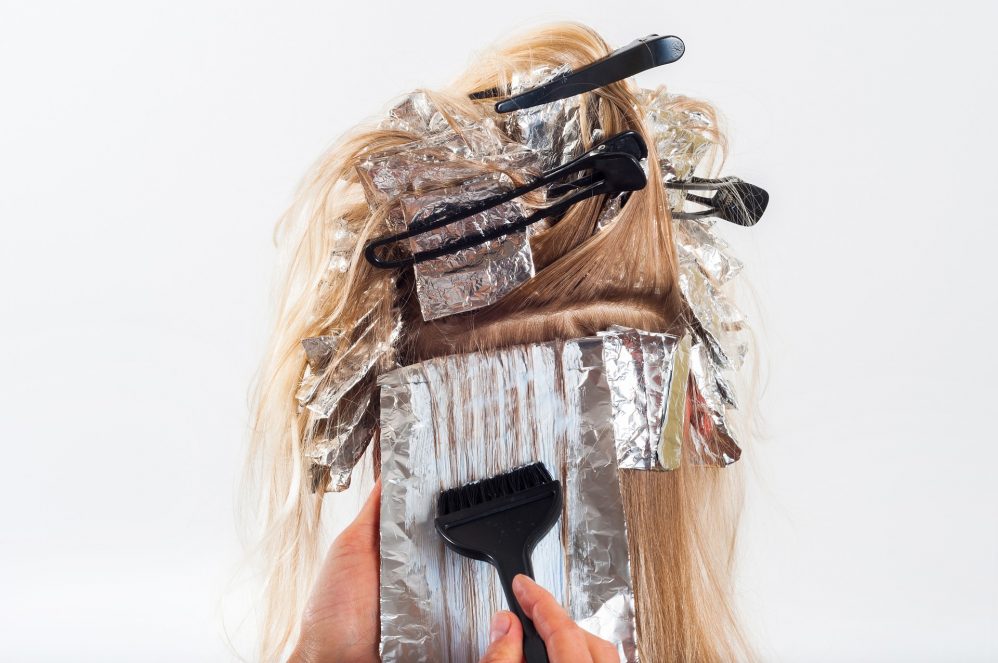
    This week it has mainly been about hair. Now the extent of my knowledge of hairdressing extends to getting a pubic-looking perm through my flowing locks back in the 90s.

    This wasn’t in any top salon but in the back kitchen of my friend’s house with a home perm kit and her Grandma’s rollers. So when my daughter boldly announced that for her upcoming birthday she would like “highlights”, I thought how difficult can it be?

    Going to the barbers is easy – you turn up, wait your turn, have a session on the clippers a smudge of gel and off you go.

    First, you have to find a salon. But I had this bagged, a quick post on Facebook and my Mummy friends who may or may not have completely natural hair colour advised me of a few places to try. Having made this decision I contacted them to get a price, as even I am not stupid enough to think it’s a £9.00 trim with a £1.00 tip. The science of hair colour, however, means there is no price list, a consultation is required. The consultation duly booked, I headed to the salon with my daughter.

    Even as a gay man, this world of women’s hairdressers was a revelation to me. Foils, full head, half head, natural colour, dip dye. The stylist was talking a foreign language. Now my daughter, who at home has no reservations in expressing her vocal opinion, was too slightly overwhelmed. She sat in the chair and nodded politely at every question asked of her without confirming one way or another, what she actually wanted. This seems to be the way with women’s hair.

    So after sitting in the chair failing to agree or disagree with anything and flicking through a colour chart, much like the ones you get in B&Q to choose paint samples only with little sections of hair, we are booked in for a full head of foils on said birthday. The stylist has confirmed she will, “Keep it natural.”

    Whilst making no comment in the salon my daughter said, “It better not be natural, I want people to notice I’ve had my hair done.”

    To top it off, I am still no wiser on the price. It will depend on the cut and the type of colour used so anywhere between £65.00 and £100.00.

    Imagine if the barbers charged dependent on the clipper guard used?

    That’s all for this week, I’m done with hair. Next week we are shopping for bra’s…

  • OPINION | The Ashers Baking verdict, and why gay cake is just the thin end of the wedge

    So the McArthurs of the Ashers Baking Company in Northern Ireland have lost another appeal against their conviction. They remain guilty of discrimination after refusing to bake a cake with a message in support of gay marriage and were justifiably sued.

    Good. It’s high time governments stopped offering up LGBTQ people as sacrifices to appease the wrath of the faith communities (sorry – to appease the religionists’ angry deities). Enough is enough.

    Shouldn’t court rooms be hearing more important cases than that of a bakery refusing business to a customer? Shouldn’t gay people just shrug their shoulders, say “Live and let live,” and whistle their way to the next bakery in town to try their luck there?

    No, and no. I’ll explain why.

    It’s vaguely amusing but also disconcerting that many people commenting on media websites running with this story keep asking (as if to indicate an equivalence) if Jewish bakers should be forced to make cakes with pro-Hitler messages on them. Whilst we can all agree that Jews make the best-baked goods, what these apologists for bigotry are truthfully pointing out is that it is as offensive to some religious people to provide a service to gay people as it is for a Jew to be goaded about the Holocaust. Do these woolly-minded accommodationists (who includes Peter Tatchell amongst their ranks) think all bigots should be appeased? Can racist B&B owners dust down their 1960’s “no blacks, no Irish, no Jews” signs and pin them in their windows? No, as usual, it’s only the gays that are fair game.

    There is a wider issue in identifying this problem too, because as good, progressive pluralists, we’re all supposed to ‘respect’ religious traditions, even though very little respect is usually forthcoming the other way. Gay people should not lose sight of how big a threat religion is to our liberties, and, in many countries in the world, even our lives.

    It’s no accident that Italy was the last western European country to recognise gay relationships in law for property and inheritance rights, and even then with the manipulative Catholic Church breathing its unedifying signatures of fire, brimstone and hellfire in the background.

    This is no minor quibble about pastry. The Church of England – our state religion – voted unanimously against marriage equality: their fear was, as always, concerned with not causing a rift in the Anglican Communion; far better to throw gays under the bus than to stand up for common human decency. In Northern Ireland, where religion holds more sway, in order to appease the greater number of bigots, gay marriage remains illegal. In more religious places still, such as many Commonwealth and all Islamic countries, homosexuality is illegal, and often punishable by death. The more religious a country, the worse things are for LGBT people. That’s why this is no small fight, and the stakes in cases like this are high.

    The arguments in favour of the McArthurs’ discrimination are pretty poor. The McArthurs suggest that to make a cake with a pro-gay message would indicate their endorsement of it. What rubbish. Do executives of all commercial channels personally endorse every advertiser and their associated products they run with? Does every publisher endorse the point of view of every author they publish? Of course not.

    Not only that, but how on earth in modern pluralistic societies would we ever get anywhere if every crazy belief from every religionist had to be accommodated by the rest of the human population? So much of this is excuse-mongering. The gays are an easy target of religionists because we remain their favourite bogeyman: I wonder if the McArthurs previously refused cakes to divorcees, or to members of other faiths, or even other denominations? I’m guessing not. The hypocrisy of being fussy over your own faith’s regulations is the speciality of zealots everywhere.

    How have we arrived at this ridiculous state of affairs? Appeasement has a lot to do with it. Religious lobbies are loud and well-organised, and governments are always keen to throw them a bone to win a few votes. They are used to being able to treat LGBT people as sub-human. They’ve gotten away with it for so long. Look at the comments threads of any news story about this, and you’ll see that homophobia is one of three remaining socially acceptable bigotries amongst centrists and leftists (sexism and anti-Semitism being the others).

    The problem, too, is that you can’t reason with extremist religionists. When you have a situation where a partially-educated adult can reject the obvious facts of evolution and cosmology in favour of a view of the world that says it was formed a few thousand years ago, and that humans were divinely created (Zac Efron, maybe, but most of the time, give me a break), then they’ll choose to quote Leviticus rather than see the humanity of LGBT people.

    Hence the presence of the McArthurs outside the court room today, expressing their bewilderment at having lost the case (in fact, only Mr McArthur spoke. The little wife kept entirely silent by his side, presumably knowing her place, whilst her husband tub-thumped and pointed to the sky, to help the casual viewer determine the alleged location of his angry celestial overlord), and suggesting that to have baked the cake would have been a ‘sin’.

    A sin.

    We’ve arrived at this verdict today because religious fundamentalists choose to whittle down the entirely of our lives and our relationships to one word – sin. It matters that we fight for the small rights like not to be discriminated against in the provision of goods and services because we have the right to be treated as human, and we should not have to apologise for our very presence. When religious people can look at a loving gay couple and see only sin, then that is a dark and dangerous societal problem and one that responsible governments should seek to address, and intervene where necessary. When religious people can think that the best thing a gay couple can do is to break up, throw away their love in favour of celibate lives, or lives of horrible deceit, entering into faux straight relationships, before they are willing to accept us, then we can know that there is no point in attempting reason, because they will never accept us.

    That’s why equality legislation exists, and why individual human rights should always be favoured over and above ideologies. People are more important than ideas. Whatever the religious think, sexuality isn’t chosen. Crazy beliefs are.

    I wear the battle scars from this. Simply marrying the love of my life tore my family in two, and the devastating consequences rumble on. So often there is no accommodation where religion is concerned. So let’s not be sanguine that the Irish voted for marriage equality – it doesn’t mean that gay people from Catholic families are now free from bigotry, abuse and rejection. I’m living testament against that fantasy. There are battles remaining to be fought and won.

    We should have no quarrel with progressive faith leaders like Dave Tomlinson, who opposes the actions of his community’s leaders and wants to change hearts and minds. Gay charities should seek dialogue with faith communities, and gay people less cynical and less hurt by religion than me might be able to make some progress into reaching a place where our existence is not an affront to the faithful and our relationships and marriages are not reduced to notions of ‘sin’.

    Don’t fool yourself though, there will be plenty of other casualties along the way.

    But let’s celebrate the verdict today. The McArthurs failed, which indicates that their side is losing the larger argument, and people are more swayed by reason than by superstition (either that, or their deity is on our side too).

    So yes, the cake matters. Taking ordinary human interactions for granted is a hallmark of a civilised, tolerant, accepting society. It’s time the religious grew out of their sulk and joined the adult table. If they can stop being offended by the existence of gay people, they may actually learn something about human compassion they won’t find in their holy books.


    Opinions expressed in this article may not reflect those of THEGAYUK, it’s management or editorial teams. If you’d like to comment or write a comment, opinion or blog piece, please click here.

  • Column | The Burden Of Survival

    When you hear of somebody surviving an accident, recovering from an illness or defeating odds there are always the same buzzwords. We say we are blessed or thankful or grateful. Those who enquire get regaled with the story of our hurdles as people earnestly hold our hands and thank God for your still being on Earth. The one word you never hear mentioned is ‘burden’.

    When I was born, the doctors immediately knew something was wrong. My body was contorted, my ear was deformed, my foot was clubbed to the extent where they had to immediately cut my hamstring to loosen the tightness. I was operated on as they battled to save me. This deformed boy and his twin sister. My sister recovered quickly from the harshness of a caesarian section but for me, it was just the beginning. My parents sat, solemn, as they were told the boy they dreamed of would not be long on this Earth. He would never walk, talk or crawl. They sat frozen, as they were told I had a two year life expectancy.

    Then my third birthday came. And I could crawl, I began to walk and I could talk. My parents, like others, believed it was a miracle. They believed that God had shined a light on their son. They sat, operation after operation, wondering if the miracle would finally run out. Like they were in a pay and display parking bay and the metre was near empty. But I would return. Scarred, sure, but alive. The miracle kept on being a miracle. And so the baby became a child, whose parents were told would never be able to feed himself, began getting good grades in school. My parents looked on in proud amazement with each examination certificate, each award, each monumental step they thought they’d never see. And with this came the burden. To always do more and be more. Their child, their miracle.

    My parents never put this pressure on me. Nor did anyone else. But boy do I feel the expectation. You begin to feel invincible. I have been through operations where I have flatlined on the table, where they once intubated me with such force it pushed my teeth forward requiring braces. I have felt the grip of asthma, cruelly squeezing my lungs of their last breath. I have overcome so many hurdles, and it’s hard not to think there’s a reason. I don’t believe in God but how many times does one person get to cheat Death? To defy the odds? But with each time, the burden got greater. The burden to be something that makes a difference in the world.

    This ambition has led me down so many paths, has forced so many mistakes. It has seen me desperate for affection and make some poor decisions, just to be noticed. I want to believe that me being alive makes a difference in the world so that, if the miracle runs out, it was all worthwhile. So every misstep hurts that little bit more. Coming out as gay hurt a little bit more because it felt like I was disappointing others. It makes me give things up way too soon because I constantly feel like I’m running the clock. That I have to get to some sort of finish line.

    I believe that I have met the true love of my life. He felt like the missing piece, my true second half. But he came with his demons and I tried to stand by him but when it looked like our relationship wasn’t going to be PERFECT, I backed off. I began to grow tired of his low moments, I grew angry that he didn’t have the same ambition I did. He wanted to be happy but he had his own battles to face, so he wasn’t. My need to both be the best boyfriend and HAVE the best boyfriend added pressure. It pushed him away. And now I struggle to even date because I don’t believe anybody could match him in my mind or my heart.

    Then, in March, I almost died. It was discovered that I was a insulin dependant Diabetic. My Doctors had confused the symptoms for a stomach virus and my body began shutting down. I was told I was around two days away from death. This has added a whole new aspect to my life. My body is black and blue with the bruises from injections. My fingertips glow red with the endless pricking and drawing of blood I have to do. And I’m exhausted. Mentally and physically. This has broken me. People keep telling me that I’ll get used to it, that it’ll become normal but I implore them to try injecting themselves five times a day and feel normal. I am tired of having to be careful, frightened of what might happen. And then, there’s the burden. That I have been given the freedom to live, as long as I take my medication. Years ago, when Diabetes was unknown, people just died. It killed them fast. Now I have the responsibility of being grateful for the power of modern medicine. So when I feel down and exhausted, I feel ungrateful and selfish too.

    Nobody ever talks about the burden of surviving. But I’ve experienced operations and rehab, pain and heartbreak and near-death and recovery. And as I get older, the burden of survival somehow lessens. Because with each new day, life teaches me that I have no control over what’s going to happen. So the burden slowly chips away to reveal that, deep down, the only thing I need to feel is lucky. And all I can do is my best to remember that. To breathe in and feel the air in my lungs because no matter how I feel when I wake up, I must always try to take a moment to feel blessed, to be grateful and to give thanks. Because, the crux of it all is: I’ve survived.

    Opinions expressed in this article may not reflect those of THEGAYUK, its management or editorial teams. If you’d like to comment or write a comment, opinion or blog piece, please click here.

  • OPINION | Just because you’re gay doesn’t mean you aren’t a homophobe

    OPINION | Just because you’re gay doesn’t mean you aren’t a homophobe

    Homophobia is alive and well in 2016… And it’s not just straight people who are guilty of it.

    If you keep up to date with the news, you may have seen the article about homophobic attacks in the UK rising by 147% since the Brexit vote. While I’d love to say that it’s simply a dramatic headline that has no truth in it, I cannot do that. My own experiences tell me that homophobia is alive and well in 2016. I believe we should be concerned.

    Earlier this month I attended the UK Pride Organisers Network (UKPON) conference in Birmingham. As the chair of Warwickshire Pride, it was great to be part of such a positive, inspiring weekend. We learnt, shared and supported each other in order to achieve our common goals. It was during the conference that the aforementioned article appeared online, detailing the rise in hate crimes against LGBT+ people since the Brexit vote. It really brought home the fact that Pride is still needed and that it continues to have a purpose. Then something happened to me that confirmed this again.


    As I was walking back to my hotel, a group of people were heading towards me. They were clearly drunk and being quite rowdy. As I walked passed them, one of them looked at me and shouted: “are you a f***ing queer?”. Normally I’d be inclined to challenge such a person, but common sense told me to put my head down, ignore him and walk away quickly to avoid there being a more serious confrontation. Part of me was disappointed that I chose to react in that way, but sometimes it’s better to be safe than sorry.

    When I got back to my hotel room, I felt upset that within Birmingham’s gay village someone had shouted something homophobic at me. Surely that is somewhere LGBT+ people are relatively safe, but apparently, that’s not the case.

    Something else that happened on the same weekend was the appearance of Bratavio on the X Factor. As a friend of Bradley Hunt, I was excited for him. It was then that I began to see some of the comments that he and Ottavio Columbro were receiving online. Much of the trolling was homophobic in nature, with some people even wishing death on Bratavio. It was yet another example of homophobia being rife in the modern day. Despite great strides forward in terms of legal equality, I sometimes feel that socially we are going backwards.

    However, the thing that disappoints me the most about the hatred and homophobia aimed at Bratavio is the fact that so much of it has come from other gay people. One would hope that gay people would be supportive of each other and celebrate our differences, as we know what it’s like to be put down for being who you are. But no, that’s not the case. The mountain of homophobia coming from gay people is sickening, with many branding Bratavio embarrassing to the gay community. I have to disagree. In fact, my view is that it’s those trolls who are the real embarrassment to gay people.

    Of course, I may be slightly biased as I happen to know one-half of Bratavio, but ultimately celebrating people for who they are is a big part of who I am. Having an opinion is one thing, but abuse and homophobia are never ok.

    So what’s the answer? I’m not sure I have it. It’s clear that hate crime laws need to be tightened and that there needs to be a zero-tolerance approach to homophobia. This is something our government and police forces need to action as a matter of urgency. We cannot continue to live in fear and should not have to deal with this kind of abuse in 2016.

    As for the gay people being abusive towards other gay people, that’s a whole other kettle of fish. The cracks within our LGBT+ family appear to be widening and I worry about where we are going to end up. As I’ve said before, our community is eating itself from the inside out. With so much hatred being directed at our community, we should be sticking together, not turning on each other.

    Follow Daniel Browne on Twitter


    Opinions expressed in this article may not reflect those of THEGAYUK, it’s management or editorial teams. If you’d like to comment or write a comment, opinion or blog piece, please click here.

  • Editor’s Letter | My Coming Out

    I was 20 and at university. It was the week before Christmas and I got dumped. We’d been dating for a year and a half. He was my first love and we had just broken up. It had been a difficult, secretive and tumultuous relationship. I was still fiercely in denial about my sexuality and he was basically a big gay fog horn. Looking back, I was quite jealous of that.

    My insistence that our relationship remained in the closet along with me, would eventually tear us apart. I was so afraid of coming out. Sitting in my parents’ living room, huddled in the corner, I couldn’t eat. I couldn’t sleep, I was the walking dead. It’s not quite the image you have for your coming out moment, but as my Mum looked at me, with a worried look, my heart began to beat wildly, I knew this would be the moment. “What’s wrong?” she asked. “Ben* has gone,” I choked.

    Not getting it, she replied, “That’s okay, he’ll be back after the holidays…” “No, he’s really gone,” and with that the floodgates opened. Puzzled she looked at me, and asked, “Is there something you need to tell me?” Through sodden eyes, a clammed up throat, a raging headpounding, I told her that he had been my boyfriend. She sat quietly and listened. She listened as I told her about our relationship. She listened as I blamed myself for this and that. She listened as I wailed that I would never love again. She listened as I started to make coherent sense again.

    I looked up. Wondering what the response would be… And then, thoughtfully, she started to sing. “You’ve got to wash that man right out of your hair…” In that moment, my darkest moment (so dramatic) she had made everything okay. We laughed, (well I was doing that blubbery laughing thing). She knew – I mean she had known from the age of three, but telling her when I felt I couldn’t tell anyone was big, one of the most important moments of my life. It was the moment that I could start living more truthfully.

    *Name changed

    Have you got a coming out story, share your story on our Coming Out archive

    Opinions expressed in this article may not reflect those of THEGAYUK, its management or editorial teams. If you’d like to comment or write a comment, opinion or blog piece, please click here.

  • OPINION | Is NHS England’s decision to fight PrEP provision homophobic?

    Is latent homophobia behind NHS England’s decision to fight the recent High Court judgement on the provision of PrEP?

    I’ve been quiet about PrEP for a while now, but earlier this year, at the National HIV Nurses Association conference in Manchester, I spoke passionately in favour of its implementation for those most at risk of HIV, angry at the way the NHS was attempting to wriggle out of commissioning PrEP by claiming it was the responsibility of local councils, none of which were likely to be able to afford it.

    Furthermore the NHS refused to offer any support to those of us on the PROUD study who would no longer have access to PrEP. Well things have moved on a bit since then. In August, in a huge victory for the National Aids Trust, who brought the case, the High Court ruled that the NHS does have a responsibility for commissioning PrEP. In his summing up, Mr Justice Green stated that,

    “No one doubts that preventative medicine makes powerful sense. But one governmental body says it has no power to provide the service and local authorities say they have no money.

    “The claimant is caught between the two and the potential victims of this disagreement are those who will contract HIV/Aids but who would not were the preventative policy to be fully implemented.

    “In my judgment the answer to this conundrum is that NHS England has erred in deciding that it has no power to commission the preventative drugs in issue.”

    Unfortunately, NHS England responded that they would appeal the decision with a cynically worded statement to the effect that PrEP was, “to prevent HIV transmission particularly for men who have high risk condom-less sex with male partners”.

    The NHS also stated that they would not now be able to confirm funding for treatments and services in levels three and four, which  just happen to include treatments for children who are deaf and have cystic fibrosis. Not surprisingly the statement resulted in some of the most vituperatively questionable headlines in recent years from, predictably, the Daily Mail, but also in The Times.

    Not only was NHS England giving out inaccurate information, but it was failing in patient responsibility by pitting one patient group against another, and one has to ask what was the motive behind issuing such a sensationalist statement.

    I am beginning to think someone at NHS England has a personal axe to grind. In the event, Ian Green, Chief Executive of the Terrence Higgins Trust, wrote a strongly worded letter to NHS England’s Chief Executive, Simon Stevens, expressing extreme “concern” with the wording of the NHS press statement.

    He concluded that,

    “PrEP is not a moral issue. PrEP is a treatment which can stop a population with ongoing major health inequalities from contracting a life threatening disease with lifetime treatment costs of up to £380,000. That is all and it should be treated as such.”

    As it happens, NHS England have now issued a statement to the effect that they have launched a consultation into the future of HIV-preventing PrEP, though the statement document notes that the consultation is being run without prejudice to the outcome of their appeal following a judicial review, and that their contention is still that it is not responsible for commissioning PrEP.

    In the meantime, NHS England’s latest proposal that it will routinely commission PrEP for the treatment of adults at high risk of HIV acquisition is good news indeed.

    Those considered at high risk and covered by the policy are high risk men who have sex with men, or MSM (a phrase I dislike intensely, though it seems we are stuck with it for the moment), trans women and trans men who have had anal sex without a condom in the last three months and are likely to again in the next three months; also partners of people living with HIV where they are not known to be on successful HIV treatment, and heterosexuals assessed to be at similar high risk to MSM.

    Those of us already on the PROUD study also received some good news when Gilead, the company which produces Truvada, agreed to provide the drug free of charge for existing PROUD participants for the next six months.

    I know I’ve banged on about it before, but I am convinced that the reason we are still having to fight for the implementation of PrEP, why we are even having this discussion at all, comes down to latent homophobia and a distaste for what we do in bed, and that moral judgements are getting in the way of facts.

    We already know that getting people with HIV onto treatment as soon as possible means that they can’t pass on the virus. Coupled with making those most at risk immune, we have a real chance here of bringing down HIV infection rates considerably. In San Francisco, a two-pronged strategy, using TasP (treatment as prevention) and increasing access to PrEP resulted in a staggering 34% reduction in new infections between 2012 and 2014, a figure that is likely to increase as the new treatments take effect.

    Yes, PrEP is expensive, though the price will come down considerably once Truvada comes out of patent in 2017, but, it is far more expensive to treat someone with HIV for the rest of their lives.

    And we’re not even taking into consideration the hidden costs of dealing with mental health issues that invariably follow a positive diagnosis. Now as it happens, my situation has changed over the last year or so. Whereas, when I started on PrEP, I was having lots of sex with multiple partners, I am now in a monogamous relationship and don’t need to be on it anymore.

    And here’s the point.

    HIV is something that will be with you for the rest of your life. PrEP is something you might need at certain points in your life. What’s more, the Ipergay study in France came up with a different model from the daily regimen. They found that if you took 2 pills prior to having sex, and then one more for two days afterwards, you would still be protected, which is something that would work for people who have organised sex lives.

    On the other hand PEP (post exposure prophylaxis), as I hope everyone knows, has been available for some time now. I was on it twice before going onto PrEP.  I know of people who are accessing PEP three or four times a year, which is already costing the NHS more than putting these people onto PrEP; and I’m now hearing about guys presenting themselves for PEP several times a year in an attempt to stock pile Truvada to use as PrEP. This too is far more costly than putting them on PrEP.

    It is my fervent hope that NHS England will lose their appeal and we can finally begin to bring down the escalating increase in new HIV infections in this country.

    Follow Greg Mitchell on Twitter


    Opinions expressed in this article may not reflect those of THEGAYUK, its management or editorial teams. If you’d like to comment or write a comment, opinion or blog piece, please click here.
  • OPINION | The Strange Case of Phi Phi O’Hara

    This article does contain spoilers for All Stars season 2.

    With RuPaul’s Drag Race All Stars 2 having just broadcast its latest episode, with a dramatic twist, a hoo-hah has erupted between the shows makers and one of its star turns. In this case, it’s Phi Phi O’Hara aka Jaremi Carey.

    Phi Phi was the villain of season 4, her attitude was terrible, and some of the stuff she said was borderline offensive. She came across as spoiled, narcissistic and bratty. So it was with trepidation that I went into All Stars 2 knowing both her and series 5 villain Roxxxy Andrews would be appearing.

    From the get go, Phi Phi was determined to redeem herself and distance herself from the behaviour that put her amongst the elite of the most hated queens to ever grace the show. Tyra Sanchez (Season 2 winner) and Roxxxy Andrews also hold that dubious title, but Roxxxy is far more insidious than the other two and her vile bullying of Jinkx Monsoon leaves me unable to watch Season 5 because of how uncomfortable it makes me.

    I must admit I did have some preconceived ideas about Phi Phi and didn’t think that I would feel any different about her this time round. However I was pleasantly surprised, she seemed to have upped her game, her drag style had changed from a pageant queen, to a more refined style, and her cosplay costume was fantastic. But there was the lingering niggle, that the show seemed to exploit.

    The way it was shown and talked about was that Phi Phi was deliberately trying to play mind games with some of the other contestants, by saying Roxxxy’s idea to play Sophia Vegara in The Snatch Game could be problematic because her Spanish accent wasn’t as thick as Vegara’s. She actually advised Andrews to work on the accent a little more, and make it thicker, and therefore funnier. A couple of episodes later, and allegedly she was back to her old tricks, this time talking about the fact that Ginger Minj’s dress was a big dress to be dancing around in. Again I didn’t really see it as playing mind games, more just stating a fact and giving Ginger a heads up to ensure she took it into account while dancing. But the other queens, who may or may not have had the same ideas about Phi Phi, seemed to take these statements from Phi Phi as some kind of way of sabotaging the contestants and messing with their heads, and these soundbites were helpfully inserted throughout the episodes.

    Another bone of contention was that from the start the queens had agreed that with the new twist of themselves having to do the elimination instead of RuPaul, they would base it purely on judges critique of that particular challenge and runway presentation only, and not previous wins, or losses. Phi Phi was very vocal about sticking with that idea, and when Alyssa Edwards decided to break the chain, and voted to send Ginger home, despite Ginger getting overall better judges comments, Phi Phi wasn’t happy about it, and voiced so.

    The episode broadcast where Alyssa was sent home, during the after elimination talk, Phi Phi decided to let it be known that Alyssa had been trying to influence both her and Alaska to send either of the other two in the bottom three home because she hadn’t been in the bottom as much herself, yet she had received the worst critique for both her challenge and runway look. In this case both Alaska and Phi Phi had chosen to eliminate Alyssa, but the way it was presented made it look like Phi Phi had chosen Alyssa out of spite for not having stuck with the agreed upon way of elimination previously. Looking back at what was said, it’s more that Phi Phi was saying Alyssa, did the worst, yet she was trying to save herself by throwing the others under the bus, so she was voted off for simply getting the worst judges comments. In the latest episode broadcast, Phi Phi and Alyssa hashed it out, and while there was obviously still a lot of tension there, they mutually agreed to bury the hatchet.


    Since the episodes have aired, Phi Phi has been getting a huge amount of hate online. People have been insulting her and sending death wishes to her. If Phi Phi had been the total and utter bitch she had been previously, I would’ve been among the first to call her out on it because I detested her first time round, but I haven’t seen her do anything that calls for such vitriol. Yes she can be feisty, and a little bitchy, but all of them are to one degree or another and some more than others. It has obviously affected her quite badly, and as of the time of writing, she is not attending the re-union show because she feels the show has misrepresented her quite badly.

    I also can’t totally agree with her blaming editing because she has actually said the stuff she says, but I believe it has been taken far worse than it was intended, and the reactions to it by the other contestants could well have been based on their own ideas of who Phi Phi O’Hara is.

    To me Phi Phi has made a concerted effort to break away from the idea that people have of her, and this time round I really don’t have a problem with her at all. I even started following her on Twitter. But one gets the feeling that Drag Race Phi Phi, live performing Phi Phi and Jaremi Carey are totally different people. Reading through Twitter, a lot of her fans who have met her have said she’s actually friendly, and very interactive with them and will spend a lot of time at meet & greets taking photos and talking. But distancing from Phi Phi, Jaremi the man has obviously been incredibly affected by this, and feels very hurt by the way the show has represented him and how the viewers have received him. He has since said that aside from the already booked shows remaining for the year, he will not be performing as Phi Phi again for a while, and wants to concentrate on being Jaremi, and releasing music.

    I don’t think that the show has intentionally set out to hurt Phi Phi, and I don’t pretend to know the process that goes into making it, and Phi Phi has revealed a lot went on off camera that nearly made her quit the show, but she was eliminated this week by both returning queens Alyssa and Tatianna. However I think some of the viewers have read into everything Phi Phi says with far more of their own biases than the show intended to put across, and the viewers who hate her, will always find a way to hate her. I believe for Phi Phi, blaming the shows editing process is easier than delving deeper into the reasoning behind why people have reacted the way they have. My own personal opinion is that she did herself no favours with how she was on Season 4, and that has left a bad mark on the viewers, and some will never get it out of their heads that Phi Phi is a terrible person, and see everything she does as false. I for one have been able to separate how she was on Season 4 and how she is now. I think there is far more to Phi Phi O’Hara than the general viewers have seen.

    Phi Phi did come across as awful in the past, but for me, she hasn’t actually done anything that has annoyed or angered me this time round, and I think people need to stop looking at every single thing Phi Phi says or does as something negative.


    The opinions expressed in this article may not reflect those of THEGAYUK’s editorial or management. If you’d like to join the conversation or write an opinion piece, please click here.

  • COLUMN | I’m like Trump… When people probe me… I Lie

    In Gay We Trust: The Vulnerability Of Living Proud

    Lao Tzu once said that “he who doesn’t trust enough will not be trusted”. He focussed on the importance of a mutual trust, an understanding, that for people to be open to you, you must equally be as open to them. But when you spend your life lying, and eventually get burnt, how can you ever open up again?

    Being “in the closet” is how every not-out gay man is referred to. This metaphor that says you’re hiding secretly away, watching through the gap in the doors, waiting to see when it’s safe to come out. The reality is much more different. Not being out is like being trapped in your own mind. I remember it clearly; the fear that you’ll let slip, that you’ll say the wrong thing or something will give you away. I remember going shopping with my family, fearing the self-checkout will scream out “unexpected homo in the bagging area”. It was a lonely time, a time of isolation. I was out to all my friends in school but I lived in fear of word getting back to my parents. I’d place trust in “friends” who eventually would spread word until everyone knew I was gay.

    My parents would ask me leading questions. I think they’d always known I was gay. Instead, I learned to lie. I would tell people I wasn’t gay and, selfishly, would get girlfriends to prove I wasn’t. The problem is, the more often you have to lie, the better you get at it. The lies were helpful to me when I broke up with my first boyfriend. My entire world had torn apart. I would cry every night, I couldn’t concentrate in school. Seeing his face every day as he sat opposite me was like a dagger inside. I had nowhere to place my hurt, my aggression or my confusion. But I couldn’t turn to my parents because then they’d know the truth about it all. They’d know I was gay, they’d know I had a boyfriend and that I hid it from them.

    When I eventually came out to my parents, things weren’t easy at first. Although I believe they knew, they struggled with the revelation and what it meant for my future or at least, the future they’d always imaged for me. Eventually, they got over their hang ups and are now incredibly supportive. They now want me to be open to them, to tell them about my life but I’ve spent so many years hiding it from them, even now I struggle to open up. I’m constantly asked about my love life, who I’m dating or what I get up to but I find myself shrugging it off out of a reflex action. I grew up in a society where being gay was negative and that you should tell no-one. You don’t just get over that. The problem is, when you can’t tell your parents what is happening, you end up raising yourself when it comes to certainly subjects. I taught myself about flirting, falling in love, break-ups, sex and safety. The difficulty being I had to learn from my mistakes. It hardens you, it makes you closed off and invulnerable. So, when you’re 26 and people tell you to open up more, it’s difficult.

    I am honest about superficial things. I talk openly and, somewhat graphically, about sex. I joke on Facebook about my ‘sad’ life. But I’m very rarely vulnerable. At 26, I have had 3 real relationships. My trust and my heart has been broken each time. I’ve had friends betray me, even recently. With every betrayal I face, the higher I build my wall. I’m like an emotional Donald Trump. Instead, when people probe me about how I am, I lie. In March, I discovered I was a type 1 diabetic. I discovered this by being rushed to hospital and told I was two days away from dying. I have spent months learning to deal with injections and appointments, risks and dangers. Yet, if you ask me how I am, I’ll probably tell you I’m fine. I’ll smile, make a joke and let you get on with your day. Because that’s what I do. Because if I tell you the truth, if I make myself vulnerable, it’ll just be a case of ‘when’ and not ‘if’ you betray me.

    The close friends in my life have had to give so much of themselves to me before I could let them in. They’ve had to be patient and kind and so vulnerable themselves. I know everything about my close friends and sometimes it can seem like I’m trying to get ammunition on them. When I feel ready to get close to someone, I ask to hear their secrets. I probe them about their lives. Because the truth they speak and the vulnerability they show is the only thing that can thaw the ice inside me. For months, they are very patient and slowly, I can allow myself to be vulnerable.

    I want to think it’s not too late for me to learn to trust more but I fear ever being considered naive or to place my trust in people who don’t deserve it. My first boyfriend got himself a girlfriend. My second boyfriend told everyone I had made the whole relationship up and the third one ran away with the circus (a whole other article, I assure you). Each of these moments, so pivotal in my life, added another brick to the wall. I just hope that some day, as the scars of my past fade, I’ll learn to trust again.

    I am no longer the closeted gay boy fearing being outed. I am a grown man who needs to learn to open up. I believe that pride comes before the thaw, that to be vulnerable and honest, to be truly myself is not proof of my naivety nor any emotional stupidity but is simply what it is to be human.

    Opinions expressed in this article may not reflect those of THEGAYUK, its management or editorial teams. If you’d like to comment or write a comment, opinion or blog piece, please click here.