Category: Wellness

  • A Re-Think Of HIV And Its Treatment

    A radical re-think is underway in the area of HIV, its prevention and its treatment.

    While we are seeing what feels like an ever increasing reduction in support for LGBT across the world, and something of a religious backlash underway in so-called civilised societies, we are also seeing breakthroughs in treatments and therapies for HIV, provided the people who need it are given access to the treatments.

    A consortium of groups including the European Aids Treatment Group (EATG), Global Network of People Living with HIV (GNP+) and the National Aids Manual (NAMS) issued a joint statement on 27/12/2014 to encourage, almost demand the basic human rights of individuals to choose their treatment – especially in terms of preventative treatments.

    Their statement calls for the choice to start treatment belonging to the individual concerned, and not the state, doctor or charity. This is so that treatment is seen as a benefit to the individual, and not to aid anyone else or further their agenda. HIV treatment has been proven to increase life expectancy and should be available to anyone who wants or needs it, without social stigma or fear of legal reprisals.

    The above is true in certain regimes – Greece in 2012 introduced mandatory testing for some women, in 2013 it was re-introduced and gave the police the right to stop anyone they suspect of being HIV+ and forcibly testing them. Botswana is another country currently considering mandatory testing. Add these to the recent legislative changes in Russia and these measures can only serve to drive HIV underground and prevent those who need treatment from obtaining it.

    Repressive regimes have shown time and time again that their stance against LGBT is linked to HIV, and as a result the most vulnerable in their societies are denied basic healthcare and endanger the global fight against HIV and its spread. Some of the worst regimes (Russia/Ukraine) have some of the lowest proportion of people on treatment, but the highest mortality rates.

    Antiretroviral Therapy (ART) has been shown to decrease the chances of passing the disease by 96%, as one of the biggest issues facing someone HIV+ is the risk of passing the disease to someone else. ART has been proven to effectively render the patient non-infectious. This doesn’t negate the need for standard prevention (condoms, etc) but goes a long way towards that day.

    The recent statement release by this consortium is simply that – a statement that shows the common sense approach on offer there – but one that is constantly under threat from narrow minded legislation that will, inevitably, do more damage than good.

    As the statement says, ART itself will not end the epidemic, but it is an essential component. I am no expert in this field, and more than willing to listen to anyone who is – I grew up alongside this disease, have lost friends and lovers to it and the prospect of it getting hold of newer generations when we have, within our grasp, the tools to help eradicate it, is nonsensical and abhorrent.

    Go over to the site and add your voice. If you have questions, ask them, get this topic back on the agenda and up for discussion, alongside the erosion of LGBT rights worldwide. But don’t forget, HIV is a virus that hits people, not sexualities!

    You can see and sign the statement at:

    www.HIVt4p.org
  • COMMENT | Has social media taken over your life?

    The use of electronic communication over the past 5 to 10 years has boomed. Most of us use mobile phones and the majority of under 30-year-olds have smart phones. Computers are an integral part of our lives. Few send letters now. Most communicate through instant messaging and emails.

    Although these forms of communication are very useful they can also cause anxiety, encourage poor self-esteem and can be all-consuming to the extent of affecting friendships and work. The jury is out on whether texting and emailing is addictive, but for some their lives do seem to be controlled by social media.

    Here’s a test for you. What’s the first thing you do in the morning – look at your phone for messages? Have you ever gone out and forgotten your mobile? How did you react when you found out? When you last went out for a meal with friends did you or they read or respond to a text? How did that make you feel if it was them? If you have done more than one of these you are probably overly attached and might need to break that control.

    Research is beginning to show that social media may affect our self-esteem. You start comparing what you are doing and what your friends are doing and if their life feels more interesting you begin to think you are boring and wonder why they are friends with you. Your self-esteem drops. In some cases, to counteract this, you may make stories up and, if not careful, get trapped in a web of lies.

    This over-consuming need to be online and letting others know what you are doing can be tiring. You constantly need to portray an image and can seldom be yourself. Let’s agree that it is exciting to know what others are doing, if they are being chatted up or if their work is boring. But we all need time out. Time to be ourselves. Time to recharge.

    The hyper-state of involvement in others’ lives that technology brings can train us to be constantly online so that we don’t miss out. But as a species we have not yet evolved to be so inundated with information about others. Our own lives are complicated enough for us to deal with without constant bombardment from others.

    We need to rest our minds. So why not take control again of your life? Why not go straight to the shower in the morning and look at your phone when you have got ready to go out? Why not have a half day a week (to start with) when you will not be on-line and let everyone know this is what you are doing? It will be hard but this is just an indication of how attached and out of control you have become.

    Holidays are useful ways to rest the mind. To give it time to recharge. These time-outs are very beneficial and help to prevent stress and breakdowns. How about turning off your phone for half the day every day and focus on those you are with? It is great to tell everyone what you are doing on holiday. It can make you feel important. But how about becoming mysterious and keeping them wondering by holding back sending too many messages.

    Technology is great but it also has to work for you. It is there to serve us not for us to become its slave. Communicate electronically but remember face-to-face communications builds better relationships. Try to spend time with friends and lovers and give them your undivided attention.


    Opinions expressed in this article may not reflect those of THEGAYUK, its management or editorial teams. If you’d like to comment or write a comment, opinion or blog piece, please click here.

  • GMFA calls for HPV jab for 357000 secondary school boys

    Sexual Health Charity GMFA have called on the UK Government to provide a HPV Vaccination to 367,000 12-year-old boys in the hope of protecting them against HPV-Related Cancers

    · HPV infection in men is associated with up to 90% of anal cancers, 60% of penile cancers, and 75% of tonsillar and base-of-tongue cancers.
    · A massive 64% of parents surveyed in a YouGov poll agreed that boys should be offered the HPV vaccine.

    GMFA, one of the biggest sexual health charities in the UK and HPV Action has called upon the government to offer boys HPV Jabs – which will protect them against HPV-Related cancers – such as anal cancer.

    Girls in the UK are already vaccinated.

    GOVERNMENT SHOULD ACT FAST
    HPV Action, a coalition of 25 patient and professional organisations, says, “The Government should act immediately to end the serious future health risks facing boys from some of the UK’s fastest growing cancers.” HPV is commonly known to be the primary cause of cervical cancer in women, but it is also a real and rapidly growing health threat to UK men and especially to gay men.

    VACCINE MOST EFFECTIVE
    Matthew Hodson, Chief Executive of GMFA, adds: “GMFA supports HPV Action’s call for HPV vaccination to be universal. The vaccine is most effective when it is given to pre-adolescents, before the age when most young gay men feel able to be open about their sexuality, even if they have accepted it. The current policy of providing the vaccination to young girls but not to young boys may help prevent heterosexual men from getting HPV sexually but provides no protection for gay men and only limited protection for bisexual men. Gay men are more likely to acquire sexually transmitted infections, including HPV, and so the current policy amplifies existing health inequalities and contributes to the high prevalence of cancers within the gay population.”

    CANCER
    In 2012 HPV accounted for 40,392 new cases – a 15% increase since 2003 of genital warts. In men HPV is associated with up to 90% of anal cancer, 60% of penile cancers and 75% of tonsillar and base-of-tongue cancers.
    Tristan Almada, who co-founded The HPV and Anal Cancer Foundation after losing his mother to HPV-related anal cancer in 2010, said: “I want to prevent the horror my family went through from ever happening to anyone else again. We have that opportunity today via universal HPV vaccination. The UK should be a leader, not a laggard, to the rest of the world.”

  • PHE warns of Shigella Dysentery rise in gay and bisexual men

    A new campaign to warn gay and bisexual men about the risk of Shigella dysentery is being launched today by Public Health England (PHE) in partnership with Terrence Higgins Trust (THT), as new figures show a surge in cases likely to have been sexually-acquired over the past 12 months.

    * Shingella is a serious gut infection
    * Can cause prolonged diarrhoea and stomach cramps
    * Can be caught through Oral sex and Rimming

    In the UK, Shigella flexneri usually affects similar numbers of men and women and is linked with overseas travel, but 2013 data show an excess of more than 200 cases of the infection in men with no or unknown travel history, compared to women. London is most affected.

    GUT INFECTION
    Shigella is a serious gut infection causing severe, prolonged diarrhoea and stomach cramps. Among gay and bisexual men, Shigella is usually passed on through the faecal-oral route during sex, either directly or via unwashed hands – only a tiny amount of bacteria can spread the infection.

    Symptoms often develop around 1-3 days after sex, including:
    · Frequent and explosive diarrhoea lasting more than 48 hours
    · Stomach cramps
    · Feeling feverish with flu like symptoms
    · Some people report vomiting
    · Feeling weak and tired (accompanying the gastrointestinal symptoms)
    Men experiencing Shigella symptoms are advised to visit their GP or a clinic, specifically mentioning Shigella and requesting a stool sample test. The infection is treatable with antibiotics. Risk of infection can be reduced by avoiding oral contact with faeces during sex and washing hands thoroughly and showering after sex.

    Interviews with gay and bisexual men who caught the infection through sex found links to high numbers of partners, often met anonymously online or at sex parties. For many, using drugs, such as mephedrone, methamphetamine (crystal meth), ketamine and GBL, before or during sex led to lowered inhibitions and riskier sex. Worryingly, one in three men using these drugs had injected them (known as ‘slamming’). Most of the men interviewed had not heard of Shigella before and thought they had food poisoning.

    CAUSES OF SHIGELLA
    One of the men interviewed, who got Shigella through anal-oral sex (‘rimming’), said: “Getting Shigella was the lowest point in my life. I suffered uncontrollable bloody diarrhoea with severe stomach cramps. The ferocity of symptoms and dehydration headaches made me think I was going to die. Initially I blamed it on a bad curry and held off visiting my GP for a week, but really wish I had gone straight away. Although it was treatable with antibiotics, the illness cost me a fortune as I had to take six weeks off work on statutory sick pay.”
    As part of the awareness campaign, posters and leaflets are being distributed in nightclubs, saunas and other gay venues, plus sexual health clinics, highlighting the symptoms of Shigella, how it is transmitted and how to avoid it.

    ON THE RISE
    Dr Gwenda Hughes, PHE head of STI surveillance, said: “Shigella is on the rise, so it is vital gay and bisexual men know about it and how to avoid getting it. We’re also seeing increasing HIV and gonorrhoea diagnoses among gay and bisexual men in the UK – indeed, most of the men with Shigella had been diagnosed with other STIs including HIV. This is a reminder how important it is to use a condom when having sex with casual and new partners.”

    Cary James, Head of Health Improvement at Terrence Higgins Trust, said: “Although on paper the number of documented cases of Shigella are quite small, the concern is that not all cases are being reported. Men with symptoms who haven’t heard of Shigella before might assume it’s a particularly bad case of food poisoning. However, the infection can be dangerous, even more so if you’re already living with HIV or Hep C. We would urge anyone who is experiencing symptoms, or who’s concerned they may have been at risk, to call our free helpline THT Direct or visit www.tht.org.uk/shigella.”

    Dr Hughes continued: “The Shigella awareness campaign is part of a broader commitment to helping improve the health of gay and bisexual men, including exploring the links between health and drug use. The level of injecting drug use is a particular concern as we know that this puts men at greatly increased risk of blood-borne viruses such as HIV and Hepatitis C”
    Individuals worried about Shigella or their drug use can find out more on the Terrence Higgins Trust website – including finding a local service to visit for further advice. www.tht.org.uk/shigella

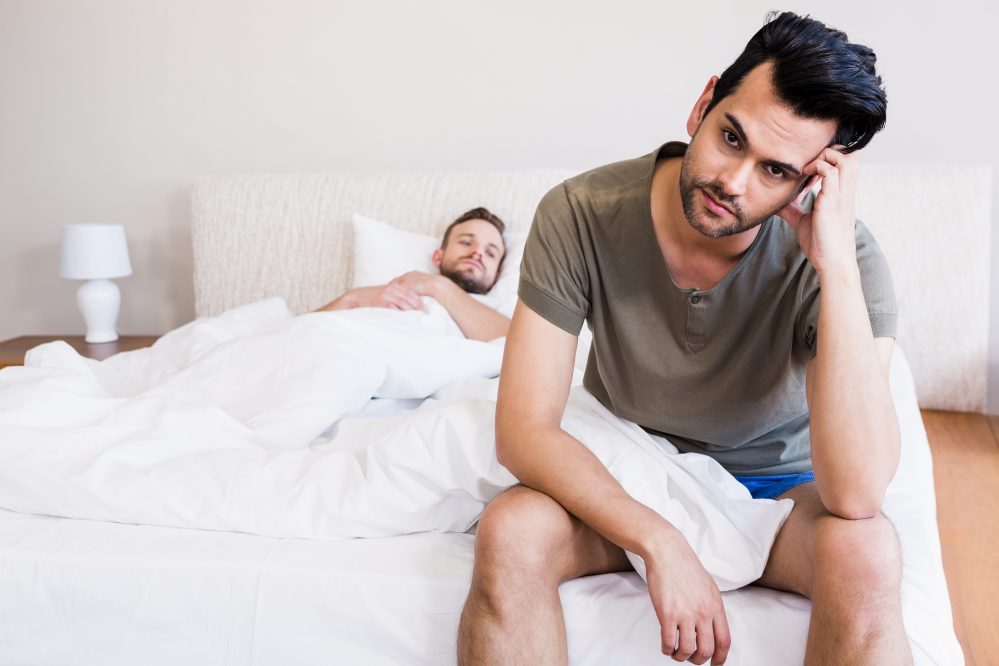
  • ADVICE | When he enters me… I lose my erection

    ADVICE | When he enters me… I lose my erection

    Hi guys

    I’m having erection issues. I’ve been in relationship for three years and the sex is still great and I get aroused and stiff quickly and solidly but on a number of occasions recently, as soon as he enters me, I lose my erection. What can you advise?

    cheers

    Jon

    Dear Jon,

    Thank you for your question. Firstly be reassured that plenty of people have issues like this so you are not alone.

    We have a specialist service at 56 Dean Street for people who suffer from erection problems, however, you would need to be referred in by your GP. You can get him to do this directly with a letter, or we have a form which you can collect and ask the GP to fill out before sending it back.

    Hopefully, this helps!

    Jenna

  • Terrence Higgins Trust Appoints New CEO

    Dr Rosemary Gillespie appointed as Chief Executive of Terrence Higgins Trust.

    HIV and sexual health charity Terrence Higgins Trust is pleased to announce the appointment of Dr Rosemary Gillespie as its new Chief Executive.
    Dr Gillespie joins the charity from the role of Chief Executive of international HIV awareness charity AVERT. Her previous roles have included Deputy Chief Executive and Director of Policy and Research for Breast Cancer Care, and Chief Executive of the Roy Castle Lung Cancer Foundation.

    Dr Gillespie said: ‘I am delighted to have been appointed as Chief Executive of this outstanding and iconic charity. I look forward to working with staff and volunteers in the next phase of development, growth and innovation, as we face new challenges in the fields of HIV and sexual health, and continuing attempts to eradicate prejudice and discrimination.’

    Professor Chris Bones, Chair of Trustees at Terrence Higgins Trust, said: “The Trustees are delighted to have secured Dr Gillespie as the new CEO. She brings a remarkable combination of clinical practice, health management and charity leadership at a critical time for our development. No organisation can stay still in the current economic climate and Dr Gillespie’s track record of successful change and innovation across a number of sectors will help us meet the challenges ahead in both HIV and the wider area of sexual health.”

    The recruitment process was provided by executive search firm The Talent Business, working on a pro bono basis. Kate Harrison, Partner at The Talent Business, said: ‘The Talent Business is used to leading ‘C Suite’ talent searches on a daily basis, but it has been a particular pleasure to partner Terrence Higgins Trust in the search for a new CEO. From the outset I believe we had real alignment in what was needed from the future leader of the charity, and both the process and outcome were designed innovatively as a result. I believe the organisation deserves an inspirational leader to help it grow to the next level, and this appointment should help secure a bright future from a bright past.’

    Dr Gillespie will begin her role as Chief Executive on Tuesday 1st April. Paul Ward will remain in post as Acting Chief Executive until March.

  • Gay and Bi Men In Norwich Urged To Wrap It Up

    Rise in syphilis cases among gay and bisexual men in the Norwich area.

    (more…)

  • 14 ways to beat bullying

    This month it’s been anti-bullying month here at THEGAYUK. Bullying takes many forms: Name-calling, making negative comments on your work, making someone feel worthless, physical abuse are just some examples.

    So we’ve put some tips together to help anyone out there who might be being bullied. It doesn’t matter if you’re being bullied at school, college, university, work or home.

    Remember if you are being bullied remember it’s not your fault.

    Write Everything Down
    Keep a log of every incident; write down the date, time, location, what happened, what they said and any witnesses that were around.

    Tell Someone
    Tell someone in authority and ask them what they intend to do about it. Tell them any fears you have about reprisals from the bully.

    Someone you trust, like a family member or a friend can also be useful. It means that you’re not dealing with the problem on your own; a problem shared is a problem halved.

    Get Support
    Don’t try to deal with it and your feelings about it all on your own. Get some support. Consider counselling for some additional support around your feelings.

    Know Your Rights
    All educational settings have anti-bullying policies. Some employers have these as well. Even if your employer doesn’t they will have Equality & Diversity Policies as well as other relevant policies. Read them.

    There will also be procedures for investigating and dealing with bullying – so have a look at these as well.

    Know your rights. Nobody has a right to bully another. Make authority figures aware that you know you’re rights.

    Don’t Let It Get To You
    Try to not let the things the bully says or does get to you. Bullies bully for a variety of reasons, but it’s always about their issues, not yours.

    Try Not To Show A Reaction or Smile
    Don’t let the bully see that they are getting to you. To do this, try to give them no reaction or smile. You know that phrase: Smile – it confuses people.

    Walk With Confidence
    Use your body language to make you look larger. Stand with your legs apart, your back straight and your chest pushed out slightly. Have your arms slightly away from your body and loose by your sides. Head up as you walk looking straight ahead. This does take a bit of practice but try practising in front of a full-length mirror. Believe it or not, this is how most bullies walk.

    When we see someone walk like this, especially a bully, we do the opposite with our body language. We make ourselves as small as possible including hunching our back, pulling our arms in close and looking down at the ground. Try to remember to keep this confident body language, even when you see the bully.

    The only time to avoid using body language to make you look larger is in the event of a physical assault. In that case, have your side to the perpetrator, as this will give them less of a target. In the event of a physical assault, get yourself out of the situation as soon as you can and to a place of safety.

    Remember nobody has the right to be violent towards you; likewise, you don’t have the right to be violent towards anyone else. All physical assaults should be reported to the Police.

    If It’s CyberBullying
    If the bully is sending you messages, texts, images and videos, keep them all. Don’t respond to any messages and make good use of privacy settings. Block/Ignore the bully and report them to the social media provider. If the messages get particularly abusive report them to the Police (this is why you need to keep all the messages as evidence).

    Take Sensible Steps To Keep Yourself Safe
    Keep yourself safe by carrying a mobile phone, personal attack alarm and being aware of your surroundings. Never walk home on your own and always try to stay with someone when travelling around the setting where you come into contact with the bully.

    Involve The Police
    Any violence or physical assault should be reported to the Police.

    If the bullying is homophobic or racist in nature you can report it to the Police as a hate crime. Hate crime also covers bullying that is related to disability religion, ethnicity or transgender identify. Find out more about hate crimes on the True Vision website.

    Come up with Good Coping Strategies
    We all have different coping strategies. Some good ones are: taking up sports or martial arts (these are particularly empowering and you learn to defend yourself as well), talking to people, expressing how you feel creatively (e.g. writing, music, drawing, making movies, etc.). All of these activities also raise your confidence and self-esteem – something that bullies try to damage or destroy.

    Avoid Drugs & Alcohol as a Coping Strategy
    There is research that links drugs and alcohol misuse to bullying as a coping strategy. Avoid using drugs or alcohol to cope with the bullying. It might make you forget or feel happier in the very short term (for the night), but the next day the bullying often seems a much bigger problem.

    Know that It Gets Better
    Bullying is a massive issue. Many people get bullied. Remember that the situation you’re in now won’t last forever. There will be a time that the bullying will stop.

    Avoid Becoming The Bully
    There’s some research that shows that some people who have been bullied, later become bullies. Don’t let it happen, you’re better than that! Remember how it felt to be bullied. If you’re in a position to safely stand up to a bully that’s bullying someone else – do.

    If you’re affected by bullying please check out our resources page for further help and support.

  • 15 Ways To Spend A Pleasurable Evening

    With the dark nights closing in, the routine this time of year can feel a bit monotonous. So we’ve come up with 15 pleasurable ways to spend an evening.

    Depending on your own personal preferences some of these activities might be your idea of absolute pleasure or excruciating pain. Still, hopefully, this list will inspire you to do something different and fun that will break up the routine.

    15. Spending Time with your Family
    Whether it’s seeing my mum, catching up with my brothers, sister, or my nephews it’s always great to spend time with the family. With life being so busy an unexpected catch up is always welcome. So why don’t you text or call your family and see what they’re up to tonight?

    14. Getting on the Consoles
    Dust off and switch on your Xbox, PS3 or even the Wii and rediscover an old game. Spend the night shooting zombies, being a manager of your own football team and playing online with people from across the world. You never know, you might even make a few new online friends.

    13. Ordering A Takeaway
    Treat yourself to some delicious food from your local take away. Best of all – don’t stress about the calorie intake, just enjoy.

    12. Cinemas or A Night in Watching Films
    Venture out of the house to the Cinemas for the latest flick. Alternatively pop in your favourite DVD’s at home for a cosy night in.

    11. Hitting The Gym
    We all know the gym is good for you, but many of us don’t go often enough. Burning off that excess energy at the gym has two main benefits. First, exercise releases endorphins that make you feel amazing. Second, you’re guaranteed to sleep well.

    If you make it a regular thing, you only add to the benefits. Think: loosing weight, tighter body, more muscle mass and more stamina.

    Plus there’s an opportunity to see that fitty that frequents the gym. You never know, you may even get talking to him and he may end up becoming your workout buddy.

    10. Reading A Good Book
    Reading a good book is like being transported into a whole different world; your imagination is ignited and you become totally absorbed.

    9. A Romantic Meal Out, or A Meal Out with Friends
    If you’re in a relationship, take the time out to have a romantic meal for two out at your favourite restaurant. If you’re single, drag one or three of your friends along to try a new restaurant.

    8. Ten-pin Bowling, Laser Quest or Both
    Find your local bowling, laser quest or both and book a night out of competitive gaming for you and your mates. Choose your team carefully, though – as the losing team is buying the drinks!

    7. Taking A Dance Class
    My friend and I took up Salsa Dancing a few winters ago and we were useless at it. I honestly haven’t laughed that much in ages; we both came out with bellyache from laughing so much at each other.

    So take a dance class, even if you’ve got two left feet like me. You can also find some same-sex dance classes that cater for gay people.

    6. Meditation
    Meditation may not be the first thing that springs to mind when you think of a pleasurable evening but bare with me here. Imagine low lighting, a scented candle (or three) and a guided meditation CD that makes you feel completely relaxed and slightly giddy from the visualisation.

    I think relaxation can be pleasurable in itself, especially with the amount of stress we all have in our lives. I’ve spent many evenings doing mediation because I finish feeling absolutely blissful and if that feeling of bliss isn’t pleasurable, then I don’t know what is.

    5. Having Sex
    Spend an evening having sex! But rather than the usual quickie, make a night of it and take it slow.

    Light some candles, sprinkle some rose petals and get the baby oil out. Give your partner a naked massage using the oil and resist the urge to step things up a gear.

    Take the time to get to know every part of his body and let the tension slowly build, until climax.

    4. A Few Social Drinks
    Find out all the latest gossip by having a good chinwag with friends over a few social drinks. Just make sure that you know your limit if it’s a work night.

    3. Visit the Roller Ring or go Ice-Skating
    Visiting your local roller ring or ice skating may bring back memories of falling on the floor or on to solid ice, but you’ll enjoy it once your there. They usually have flashing disco lights and great music for you to skate to!

    2. The Theatre
    Book tickets and go and see a production at a theatre. It gives you something to look forward to and there are some absolutely fantastic shows on.

    1. Being Creative
    There’s nothing better than creating something. Whether you’re into making music, creating collages, painting, writing, do whatever takes your fancy. Even if you don’t think you’re that good at it, just do it for the love of it.

  • REVIEW: The Massage Show

    As this month is Pleasure and Pain month at TheGayUK, I thought I’d return to a theme that is rather dear to my heart. As many of you will know, I practice tantric massage, which is something that very much comes under the umbrella of pleasure. The Massage Show is the brainchild of sex and relationship expert, and sensual masseur Colin Richards, and a few days ago I was fortunate enough to be invited along to experience one of his shows.

    (more…)

  • English Gay Youth Twice As Likely To Smoke And Drink Hazardously

    A study by University College London has concluded that young lesbians and gays in England are twice as likely to drink and smoke.

    Young people who identify their sexuality as lesbian or gay are twice as likely to have smoked than their heterosexual peers, according to new research published by BMJ Open. They were also more likely to have consumed alcohol and at more hazardous levels.

    The research data was accumulated from data of over 7600 participants. This representative sample of school students entered the study at age 13 or 14 and they were followed for 5 years. The participants were asked about their smoking and alcohol use.

    At the age of 18/19 they were asked about their sexual identity.

    Young people who identified as LGB which accounted for around 3.5% of the sample were twice as likely to have smoked and used alcohol.

    Gay or lesbian participants were more likely to say that they drank alcohol frequently (more than weekly), and report hazardous alcohol drinking patterns (frequent intoxication).

    Dr Joanna Semlyen, one of the authors of the studied said,

    ‘There are several reasons why LGB young people may be more likely to smoke tobacco and drink alcohol hazardously and we do not, as yet, due to lack of research, have definitive evidence as to what the reasons are, however, we suspect that the impact of homophobia and heterosexism within society, in addition to the possible experience of homophobic bullying whilst at school, may lead to what we call ‘minority stress’ or in increased low self esteem which young people then perhaps seek to alleviate with smoking and/or alcohol.’

    Bisexual participants were more likely to have smoked but had similar alcohol use patterns to their heterosexual peers.

    Lead researcher Dr Gareth Hagger-Johnson, from the UCL Department of Epidemiology and Public Health, said,

    “Our research shows that despite recent social change, young people today who identify as gay, lesbian or bisexual are twice as likely to have smoked as their heterosexual peers. Gay and lesbian young people also appear to have more frequent and more hazardous alcohol drinking patterns than heterosexuals. Smoking and drinking alcohol frequently and hazardously can lead to chronic disease in later life, and so we should be worried about these health inequalities in this minority group and the longer term consequences they may face.”

    “From a public health perspective, we need to understand why young gay, lesbian and bisexual people are more likely to engage in risky health behaviours than their heterosexual peers,” continued Dr Hagger-Johnson. “This will need to involve longitudinal research, following a large sample of lesbian, gay and bisexual young people over time. We are concerned that ‘minority stress’, resulting from homophobia and heterosexism, might lead people to self-medicate symptoms of anxiety and depression with cigarettes and alcohol.”

    When asked whether the government or the health service could do more to interface with young LGB, Dr Semlyen said,

    ‘As a researcher and LGBT Health Psychologist, I would like to see the routine collection of sexual orientation data within population based health and well-being studies and as part of the NHS’ own routine identity data collection. This would allow us to accurately determine the health inequalities being experienced by this group and, by virtue of being included, would go a long way to indicate to LGBT people that their health is being considered. LGB people want to be counted in surveys. Indeed we noted the question in this study had a very low refusal rate.’


    If you have been effected by issues in this article and wish to talk to someone visit: http://www.alcoholics-anonymous.org.uk