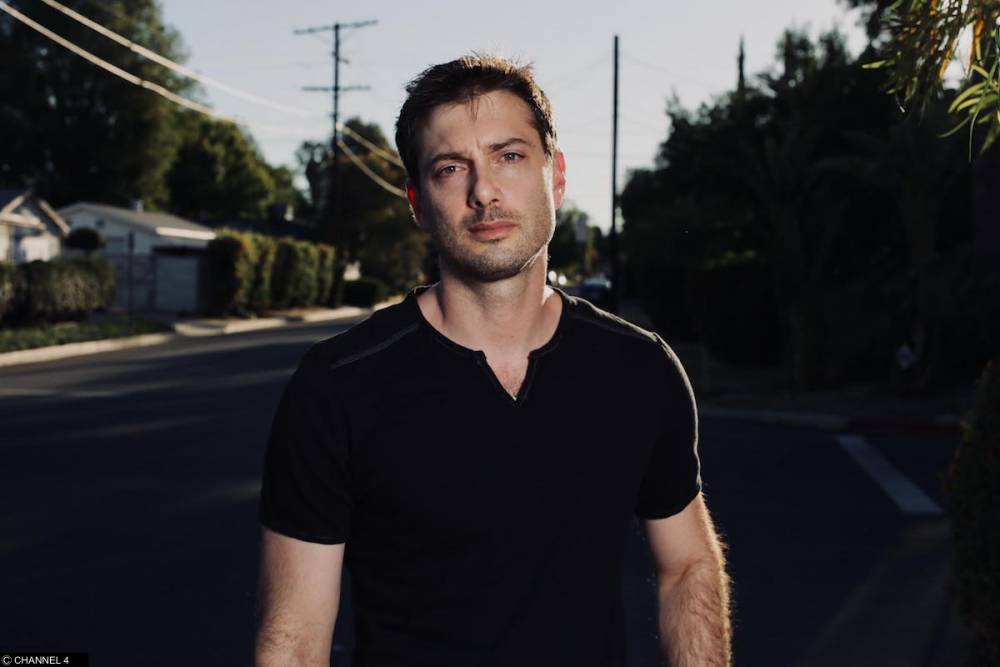
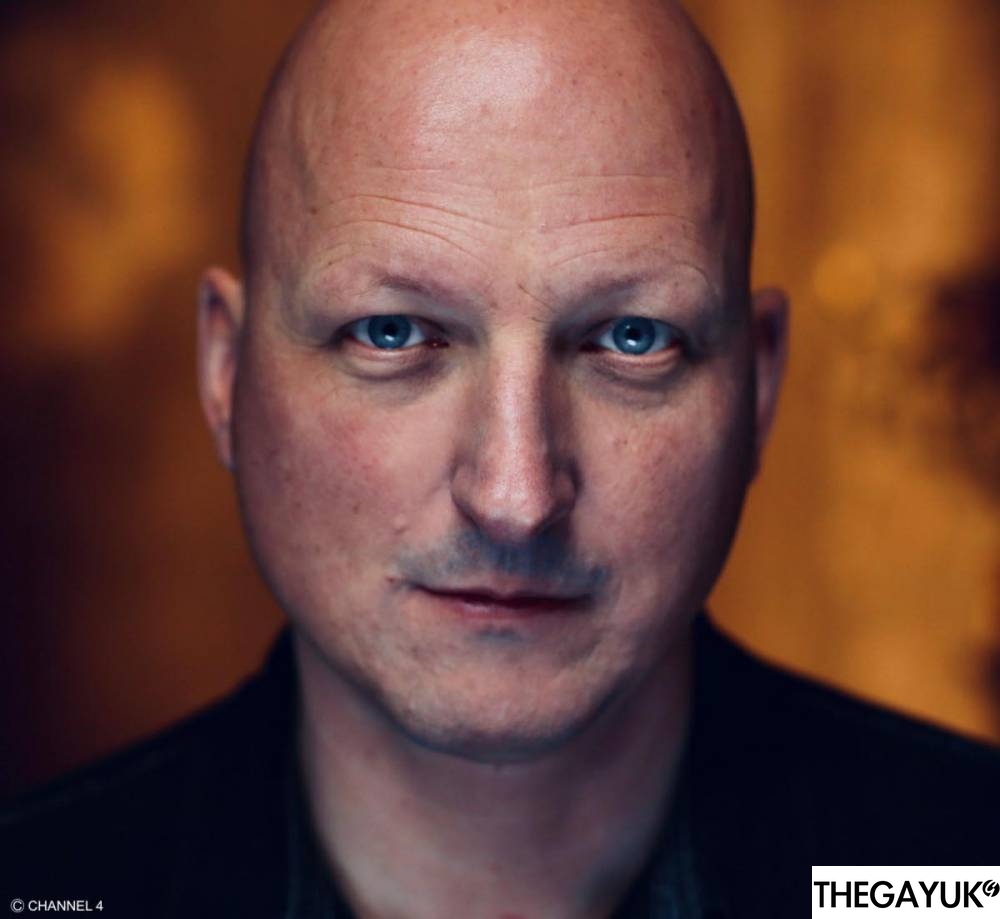
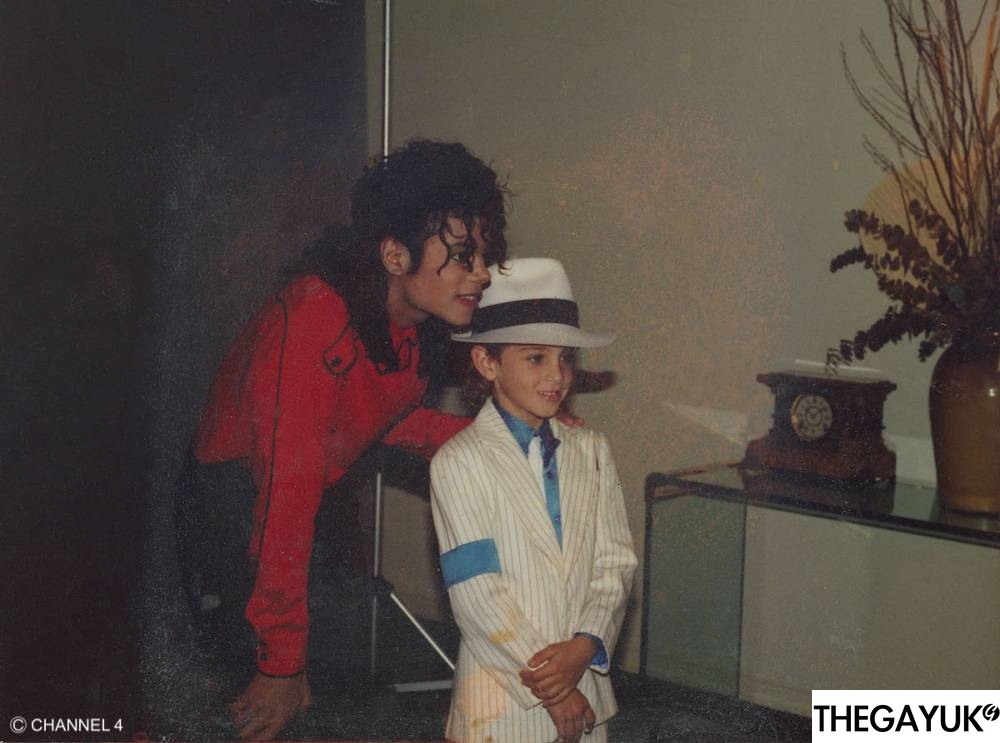
Filmmaker Dan Reed talks about his filmmaking and about how he captured the stories of Wade Robson and James Safechuck and their life with Michael Jackson.

Q: You are no stranger to controversial subjects in your documentaries, as you have made films about child predators, terrorists, and international politics. How did you approach the subject matter of this film, which takes place in the world of pop culture and celebrity?
A: Well, the first point is, that this is not a film about Michael Jackson. It’s about two very ordinary families whose paths crossed with Jackson’s, and the incredible aspirations that he represented. The families fell in love with those good things, not understanding the long-lasting impact this relationship would have on their children and families.
In my storytelling, I don’t choose to criticize Jackson directly or comment on his actions, motives, or reasons why. I’ve left it quite neutral, deliberately. But make no mistake, the story is one of a criminal sexual predator.
I wanted people to understand that when a child is groomed by a predator, it’s a very complex relationship. The parents are manipulated. It’s all very gentle and often manifested as love to the child. The families still hang onto the mentorship, love and attention that Jackson brought into their lives, and find themselves grappling with the contradictions of their relationship. LEAVING NEVERLAND: MICHAEL JACKSON AND ME is about both what Michael Jackson gave to them, and what he took away.
The focus of the documentary is deliberately narrow. I did interview former detectives and prosecutors from the two principal investigations into Jackson, but I realized that the families’ telling of the story was so complete already. The changes within the family – mothers and sons, sisters and brothers, husbands and wives – become the echo chamber of the story. You feel like you are inside the family, and I felt that interviews from the public sphere would break that spell and place us back on the outside.
Q: What did you bring from your previous filmmaking experience that helped you find the focus of this documentary?
A: I come from a world of war zones and crime and undercover work, places where I must show the hidden drama, the inner workings and the realities of the things that people don’t see in the headlines. These are the kinds of events that fill us with horror but are often portrayed in a very simplistic way by the 24/7 news media. Making the documentaries about terrorist attacks for HBO, for instance, I used extraordinary archival material and many months of exhaustive research to create a detailed account, told through intimate personal stories, of world events that people think they already know about.
In many of my more recent films, these stories are in the past tense, and this is really about the drama of the interview, the human face and voice, which I treat with great care. You get a kind of intimacy in the account and the testimony, and the relationship with the interviewer, and that’s something I’ve fallen in love with – the power of testifying, the power of speaking out. The ability of a subject being able to say, “I’m not just going to repeat the official version, but my version, with all of the rich complexity of my own experience.”
Q: It’s also quite an ambitious way to tell the tale – really limited to archival footage and a small number of sit-down interviews with family members, told in two 120-minute parts.
A: It’s four hours long because it’s a story that takes four hours to tell in a way that makes it fully understandable in all its complexity. We’re involving our audience in the lives of these families and trying to get them to understand all the complicated family dynamics that evolved over years. Why was it the mothers never realized? How could this have gone on for so long? Why didn’t Robson or Safechuck tell anyone? And why have they decided to speak about it now, after denying it for so long? The answer to all of that is made plain in the film, but you need to watch the whole thing. So much of it is in the nuance of individual behaviour, relationships, and of the bonds between people. You must go on the journey of these relationships to see how all this went down in detail. We are asking people to dedicate some time to best understand and process this extraordinary testimony.

Q: What was it like working with Safechuck and Robson, whose stories are incredibly complex as they sort through their contradictory feelings for Michael Jackson?
A: I interviewed them in February 2017, before I interviewed anyone else. Prior to interviewing them, I was willing to give them the benefit of the doubt, but not ready to accept anything at face value. As a journalist and a filmmaker with 30 years’ experience, I approached them with a degree of skepticism, until I knew I could have some confidence, and that what they said was consistent and entirely credible.
I interviewed Robson first. He’s been on television many times, and he is a very good storyteller – very sharp. We quickly struck up a comfortable relationship speaking very candidly and emotionally about everything. I interviewed him for three days, and my instinct very early was that he was telling the truth. Still, I challenged every aspect and detail of the story, looking for corroboration, interrogating every detail and looking for internal inconsistencies in his account. Then I began to understand what he had been through. I realized – and this was a shock – that from the age of seven he had been very much in love with Jackson, and that this sincere love for his abuser had shaped much of his future behaviour. Wade was very precise, composed and confident. He had already talked about the abuse once in public in an interview with Matt Lauer, but this was the first time he spoke about it in so much detail. And it’s really the detail that opens the way to understanding his story.
With Safechuck, however, it was the first time he had ever talked to a journalist in his life. His story was completely unheard, and you could really sense him feeling his way through the two days of interviews. You can see from the tone of his testimony that he’s trying to find words, trying to come to terms with the memories, the conflicting feelings of admiration and horror, and it’s a lot more tentative. You can really feel the inner turmoil. The two subjects complement each other very well, and they’re perhaps the most remarkable interviews I’ve ever done because of that.
Joy and Stephanie, their mothers, were not initially eager to share their story, but they showed a tremendous amount of courage, willing to open up about the mistakes they made. They provide the most essential context for the story of their sons’ sexual relationship with Jackson, of which they were entirely unaware, although it happened right under their noses. Now that they have seen the film, I think they get a sense of how powerful it is to witness someone speaking the truth. They’ve said that they hope their courage can help others speak up, giving permission to other victims and parents who have been fooled by sexual predators.
Q: Jackson is so ubiquitous as a cultural icon that despite the detail with which the film supports the stories told by James Safechuck and Wade Robson, there are likely to be those who want to overlook, minimize or even ignore the claims of those who have accused Jackson of predatory behavior.
A: During my research, I spoke to one veteran California investigator who had been involved in more than 4,000 child sexual abuse cases, including the 1993 LAPD investigation into Jackson. He claimed that the star’s MO “fit the true pattern of a paedophile.” Safechuck and Robson describe the classic, step-by-step playbook: you insert yourself into the family so that you can ultimately isolate and separate the child. You charm the parents, usually flattering the mother while keeping the father at a distance until you can substitute yourself – remember, Robson talks about wanting Jackson to be his “real father.” Privately, with the child, you undermine the parents, particularly the mother, which Jackson did to both boys, encouraging them to blame their mothers as their marriages started to fall apart. You become everything to the child: father, brother, mentor, then sexual abuser. The child is overwhelmed and can’t reach out and connect to the things that had previously formed their identity. The veteran detective also pointed out that it’s not unusual for victims to stay silent until many years after the sexual abuse has ended, once emotional and behavioural problems begin to surface.
Leaving Neverland: Michael Jackson and Me, 6th & 7th March at 9 pm on Channel 4