Tag: Foreign and Commonwealth Office

All the latest breaking news on the Foreign and Commonwealth Office. Browse THEGAYUK’s complete collection of news, articles and commentary on the Foreign and Commonwealth Office.

  • UK’s government updates advice for LGBT travellers to Brunei

    UK’s government updates advice for LGBT travellers to Brunei

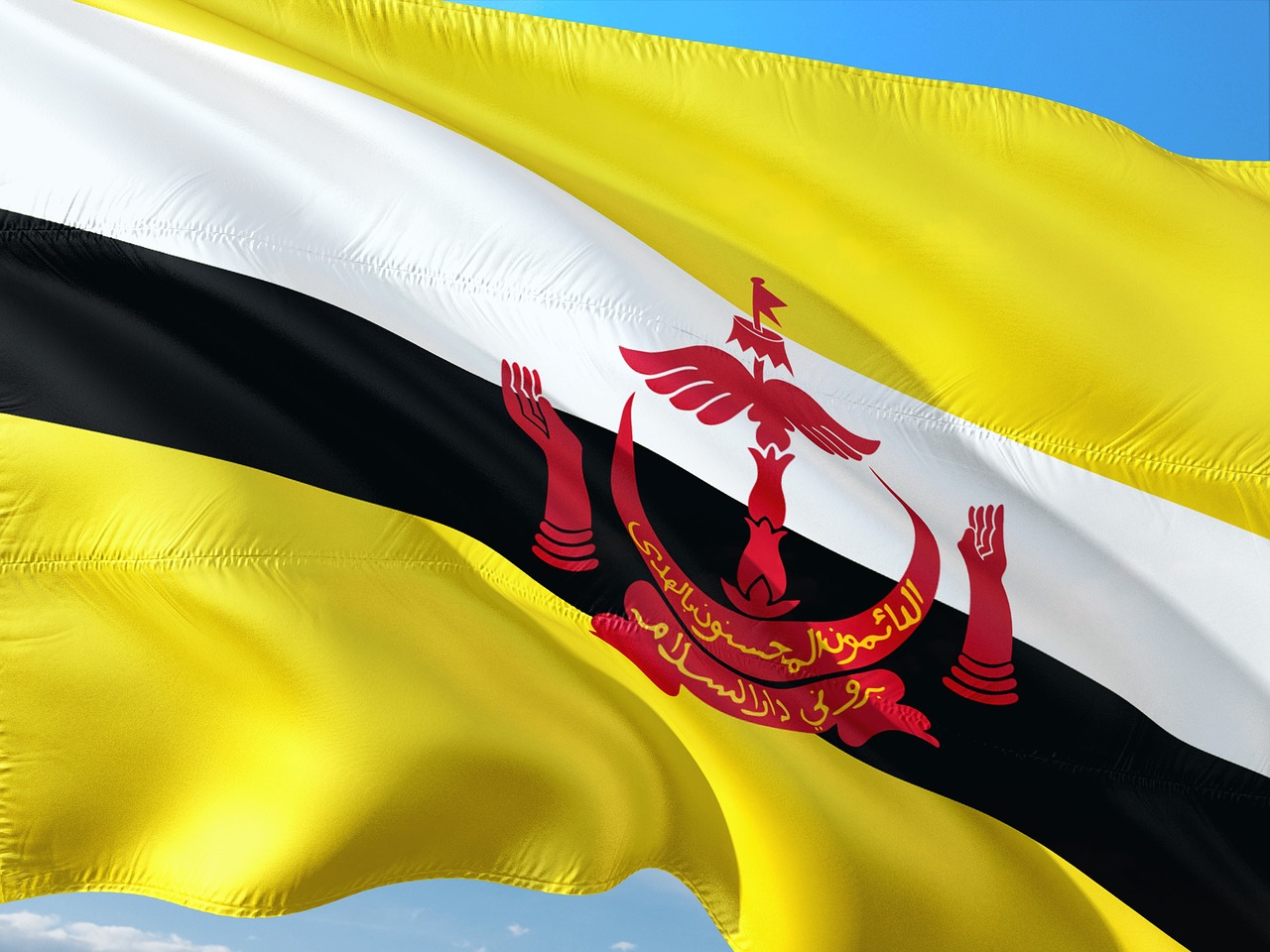
    The UK government has updated its travel advice for its LGBT citizens planning to take a trip to Brunei following on from the introduction of the death penalty for homosexual acts.

    1966666 / Pixabay

    The UK’s Foreign and Commonwealth Office (FOC) has updated its travel advice to LGBT+ people planning to travel to Brunei – after legislation recently changed in the nation, which affects LGBT+ people.

    Brunei has now adopted a law which allows for the death penalty, death by stoning, to be used on men who are found having same-sex sexual relations with each other.

    The UK Government’s advice warns travellers, “Homosexual activity is illegal” and warns travellers to “find out about the local laws and customs of the country and area you’re visiting.

    “In some countries, homosexuality and/or homosexual relations are illegal and can be subject to severe penalties”.

    The office also suggest, “invest in a good guide book – many specialise in advice to LGBT travellers”

    Not all laws or punishments will affect non-Muslims in the region.

    The adoption of sharia-based laws in the Muslim majority country means that Muslims found guilty of engaging in gay sex will be stoned to death, those who are not Muslim may receive lengthy prison sentences. The law also means that anyone found guilty of committing adultery or trying to denounce Islam or insulting the Prophet Muhammad will also be dealt with the death penalty.

    Those found guilty of theft will have their hands amputated. Not all laws or punishments will affect non-Muslims in the region.

    Homosexuality is already illegal in Brunei and is one of 35 of 53 nations of the Commonwealth in which homosexuality is illegal. It is the second of those nations to make the “crime” punishable by death.


  • Queens Wants To Tackle Exclusion In The Commonwealth

    The Queen has spoken about how countries in the Commonwealth needs to tackle inclusion in the forthcoming year.

    The Queen has written a letter which stresses the need to “support those in need” and to support others who “feel excluded” throughout the Commonwealth.

    Although the Queen fails to mention LGBTI people specifically, many LGBTI people who live within the Commonwealth live in countries where there are laws against homosexuality. Including two which call for the death penalty, Brunei and Northern Nigeria.

    The Commonwealth has in the past come under scrutiny from the LGBT community as many of 53 member countries, over 40, still have laws against homosexuality or have laws which fail to protect LGBTI people. There are two countries which still have the death penalty as a punishment for homosexual acts and 18 which imprison people for homosexual acts.


    The Queen wrote,

    Today, and in the year ahead, the theme An Inclusive Commonwealth is an inspiration for us all.

    Let us give it practical effect by supporting those in need and those who feel excluded in all walks of life.

    By doing so, we will continue to build a truly representativeCommonwealth community.

    Each of us has cause to celebrate the sense of belonging expressed in our 2016 theme: An Inclusive Commonwealth.

    Our recognition of this value, and the wisdom of mutual respect for each other, is set out in the Commonwealth Charter. Its opening words, ‘We the people of the Commonwealth’ convey the conviction that individuals, as well as governments, build and shape our success.

    Being inclusive and accepting diversity goes far deeper than accepting differences at face value and being tolerant.

    True celebration of the dignity of each person, and the value of their uniqueness and contribution, involves reaching out, recognising and embracing their individual identity.

    – HM THE QUEEN
    Earlier in the year, MP Chris Bryant spoke about the UK’s anti-gay legacy which can be seen across the Commonwealth,
    He said,


    “Somebody told me one of the most shocking statistics that I’ve heard in my life, which is that 90 per cent of the people that live in the Commonwealth, with British legacy therefore… live in a country where homosexuality is still illegal.

    “Ninety per cent. That’s what we’ve given the world as our historic legacy.”

    The Queen’s message will be included at the annual Commonwealth Day service at Westminster Abbey.

  • Gay Brits Can Now Marry In 24 New Countries

    The Foreign office has confirmed that LGBT brits can now marry at 24 British consulates in 24 countries around the world.

    (C) TheGayUK
    (C) TheGayUK

    Gay Brits who wish to get married aboard will now have the choice to do so in 24 countries including, Azerbaijan, Bolivia, Cambodia, Chile, China, Colombia, Costa Rica, Dominican Republic, Estonia, Germany, Hungary, Japan, Kosovo, Latvia, Lithuania, Mongolia, Montenegro, Nicaragua, Peru, Philippines, Russia, Serbia, and Vietnam.

    The FOC said the number of countries where same-sex couples could wed was limited to 24 because “British missions are only able to provide a same sex marriage service in countries where it is not possible for British nationals to have such a marriage under local law and where the local authorities have given permission for the missions to conduct consular marriages of same sex couples.”

    Same-sex couples will now be able to marry at the British consulates in Russia, despite its archaic anti-gay law and Azerbaijan, which currently carries one of the lowest ILGA ratings for LGBT equality in Europe.

  • UK Government does not support Sochi boycott

    Foreign Office rules out Government supported boycott of the Russian Winter Olympics in Sochi.

    In an email received from the Foreign and Commonwealth Office (FCO) by petitioners who asked the Government, to make a political statement to the Russian Government about their anti-gay laws, by officially boycotting the 2014 Sochi Winter Olympics, has said it ‘does not support a boycott.’

    Over 13,000 people have signed the petition that was created by Sean Robertson earlier in the year.

    In June President Putin signed into law, a bill that could see anyone discussing homosexual relationships to anyone under the age of 18 sentenced to a prison term or fined.

    In September the Russian Government moved one step closer to introducing a bill that would remove children from gay parents.

    The statement from the FCO reads:

    As this e-petition has received more than 10 000 signatures, the relevant Government department have provided the following response:

    ‘The Government wants to see an open and inclusive games at the 2014 Russian Winter Olympics and Paralympics in Sochi, but we do not support a boycott. The Prime Minister believes we have a better chance of influencing Russia by engaging and challenging prejudices than by boycotting.

    ‘We share concerns about changes to the law in Russia prohibiting the promotion of “non-traditional sexual relations” to minors. In effect, the law could prevent the LGBT community in Russia from fully enjoying the right to freedom of expression and peaceful assembly. The Prime Minister set out these concerns with President Putin in a meeting in St Petersburg on 6 September, making clear the strength of feeling in the UK and that it was in Russia’s interests to tackle discrimination.

    ‘British officials at all levels have been lobbying on the LGBT law since the first regional “homosexual propaganda” law was tabled. As well as raising the subject in bilateral meetings, we have actively supported LGBT issues in Russia for some years, including through involvement in the annual Queerfest in St Petersburg and funding for the Side-by-Side LGBT film festival held across Russia.

    ‘More broadly, we regularly make clear to Russia that human rights are universal and should apply equally to all people, as part of our overall engagement on human rights with the Russian authorities, including at the 2013 UK-Russia Human Rights dialogue in May and in the Foreign Secretary and Minister for Europe’s regular discussions with their Russian counterparts.

    ‘We have updated our travel advice for Russia to inform British Nationals of the new LGBT law. We review this advice regularly and will update further as necessary. We are committed to providing a modern and efficient consular service for visitors to Sochi.

    ‘Human rights will continue to be a central part of the UK-Russia relationship and we will continue to raise our concerns and encourage Russia to tackle discrimination and homophobia.

    ‘This e-petition remains open to signatures and will be considered for debate by the Backbench Business Committee should it pass the 100 000 signature threshold’

    The petition is still open and the deadline is 15th January 2014. If you wish to sign it click here.

  • UK Government updates advice for LGBT travellers to Russia

    The UK’s Foreign and Commonwealth Office (FCO) has updated its advice for gay, lesbian, bisexual and trans travellers to Russia after new anti-gay laws take effect in Russia.

    After TheGayUK contacted the FCO on Friday last week, the Government has updated its advice for LGBT travellers to Russia.

    A Spokesperson for the FOC said:

    “We have updated our travel advice for Russia to reflect the new law and to give British travellers the information they need to make their own informed decisions about travelling to Russia. The travel advice can be found at: https://www.gov.uk/foreign-travel-advice/russia.”

    The advice on the FOC website includes a warning from the FCO against travelling to Chechnya, Ingushetia and Dagestan and the districts of Budyonnovsky, Levokumsky, Neftekumsky, Stepnovsky and Kursky in Stavropol Krai.

    The news comes as 4 Dutch tourists were detained in Russia after being suspected of promoting homosexuality after the Russian government signed a law banning the promotion of “non-traditional sexual relationships”