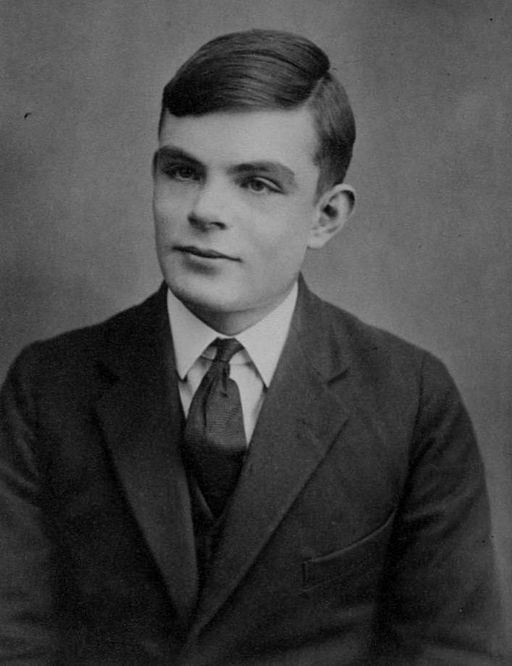
Tag: Gay Pardon

All the latest breaking news on Gay Pardon. Browse THEGAYUK’s complete collection of news, articles and commentary on Gay Pardon.

  • Read First Minister Nicola Sturgeon’s full speech on pardoning men convicted for gay sexual activity

    Here’s the full speech that was given by First Minister, Nicola Sturgeon, setting out Scotland’s apology to gay men convicted of sexual activity which is now legal.

    Presiding officer,

    I am grateful for this opportunity to address the chamber. Today marks an important milestone in achieving true equality for Scotland’s LGBTI community.

    This morning, the Historical Sexual Offences (Pardons and Disregards) (Scotland) Bill was published.

    Scotland has travelled so far in recent years, in relation to LGBTI equality, that it still shocks us to recall that as recently as 1980 – well within my lifetime – consenting sexual activity between men was still classed as a criminal activity in this country. And the age of consent was only lowered to 16 in 2001, two years after this parliament came into being. Before then, hundreds of people in Scotland were liable to be convicted as criminals, simply for loving another adult.

    Presiding Officer, the words inscribed on this Parliament’s Mace set out the values which we seek to uphold and promote – integrity, wisdom, justice and compassion. Yet even within the lifetime of this parliament, this nation’s laws have created suffering and perpetrated injustice.

    The legislation we have published today addresses that injustice. It provides an automatic pardon to men convicted of same-sex sexual activity that would now be legal.

    In addition, the bill establishes a new procedure, so that people can apply to the police for their offence to be disregarded from criminal records. This means it will never appear on a disclosure certificate.

    The legislation therefore has both a symbolic and a practical value. The pardon sends an unequivocal message to anybody convicted of an offence for an activity which is now legal. The law should not have treated them as criminals and they should not now be considered as such. Instead, this parliament recognises that a wrong was done to them.

    And the disregard has an important practical consequence. It allows people to ensure that their past criminal record will no longer have an impact on their day to day life. And that will change people’s lives.

    At present, as the Equality Network and others have highlighted to us, there are some people convicted merely of showing love and affection to their partner, who still have to explain their criminal record every time they move job or apply for a promotion. That is unacceptable and we are determined that it will end.

    So the bill we are publishing today rights a historic wrong.

    However Presiding Officer, I want to go further today and do something that legislation on its own cannot do. A pardon is, of course, the correct legal remedy to apply for the convictions we are talking about today – but the term “pardon” might still, to some people, imply that Parliament sees them as having done something wrong. That is, after all, a common context in which a pardon might be granted.

    However, as all of us know, that is not the case here. For people convicted of same sex sexual activity which is now legal, the wrong has been committed by the state to them, not by the individuals. Those individuals deserve an unqualified apology, as well as a pardon.

    That apology can only come from the government and from Parliament – not from the justice system. After all, the courts, prosecutors and the police were enforcing the law of land at the time.

    The simple fact is that parliamentarians in Scotland over many decades supported or, at the very least, accepted laws which we now recognise to have been completely unjust.

    Those laws criminalised the act of loving another adult; they deterred people from being honest about their identity to family, friends, neighbours and colleagues; and by sending a message from parliament that homosexuality was wrong, they encouraged rather than deterred homophobia and hate.

    So today I, as First Minister, categorically, unequivocally and wholeheartedly, apologise for those laws, and for the hurt and the harm that they caused.

    Nothing this parliament does can erase those injustices. But I hope that this apology, alongside our new legislation, can provide some comfort to those who endured them. And I hope that it provides evidence of this parliament’s determination, in so far as we can, to address the harm that was done.

    The final point I would make is that while today’s legislation marks an important milestone in Scotland’s progress towards LGBTI equality, our journey is not yet complete.

    Considering how recently it is, that the laws I have just discussed were in force, it is remarkable, and indeed inspiring, that Scotland is now considered to be one of the most progressive countries in Europe when it comes to LGBTI equality.

    Indeed, one of the proudest moments of my 18 years as an MSP – and, I know, one of the proudest moments for many MSPs across this chamber – was in February 2014, when people from all parties came together to support equal marriage.

    But as all of us know, until we live in a country – in fact, until we live in a world – where no young person suffers hate or fear or discrimination or prejudice, simply because of their sexual orientation or their gender identity, then we have still got work to do.

    That’s why have promised to improve our gender recognition legislation. We know that we need to ensure that it reflects the experiences and the needs of transgender and intersex people.

    It’s why I attach such importance to the Scottish government’s work with the TIE campaign – ensuring that our young people do not have to fear bullying in school.

    It’s also why we are reviewing hate crime legislation – to ensure that our laws provide the right protections against bigotry and hatred.

    And it’s why I hope that today’s apology – in addition to its specific significance for gay men – sends out a wider signal to the LGBTI community. The Scottish Government and the Scottish Parliament are utterly committed to delivering true equality for LGBTI people in Scotland. Wherever there are societal, cultural, legislative or regulatory barriers to achieving that, we will seek to remove them. We will never again accept laws or behaviours which discriminate against you and hurt you.

    And so although today is a day for looking back and apologising for past wrongs, it is also a day which points to a better future.

    And it is a day when this chamber promotes, and lives up to, our shared values – integrity, wisdom, compassion and justice.


  • Gay Scottish Men Who Had ‘Illegal’ Sex Pardoned


    Due to licensing this article must be read on our website

    Scotland is on the verge of pardoning thousands of gay men once convicted for having sex. Under Scottish law, consensual homosexual acts between men were considered a crime until 1981. A new bill would pardon everyone who was prosecuted under those laws, living and dead. (more…)

  • LEGAL CLINIC | Following the Turing Law, Am I entitled to claim for unfair dismissal and wrongful imprisonment?

    A reader asks now that the Turing Law is a reality, can he claim for unfair dismissal from the army and wrongful imprisonment.

    Am I entitled to claim for unfair dismissal and wrongful imprisonment?

    I am 55 years of age.

    I joined the army at 19. In 1983 I was court martialed for gross indecency, sentenced to 6 months in military prison and discharged with disgrace. Under the Turing law, I have since received a royal pardon and my record wiped clean both by the Home Office and the Ministry of Defence.

    My question is: Am I entitled to claim for unfair dismissal and wrongful imprisonment?

    John (Name changed)

    Dear John,

    Thank you for your question. I’m very glad to hear you’ve been able to use “Turing’s Law” to obtain a statutory pardon.

    Although the effect of the conviction being disregarded means the conviction should in all circumstances be considered as never having happened, the pardon itself does not retroactively change the status of the then applicable law. This means that, unfortunately, you cannot take any action for wrongful imprisonment because, according to the laws of the time – unfair as they were, the action taken by the court martial was lawful. Neither can you pursue the issue in terms of employment law. Court martial decisions are not covered by the Employment Tribunal (which is the only place you can pursue unfair dismissal claims) and in any event, claims have to be brought within three months of dismissal.  Employment law is incredibly restrictive at the moment and is generally thought to favour the employer over the worker.

    This means that, unfortunately, you cannot take any action for wrongful imprisonment because, according to the laws of the time – unfair as they were, the action taken by the court martial was lawful. Neither can you pursue the issue in terms of employment law. Court martial decisions are not covered by the Employment Tribunal (which is the only place you can pursue unfair dismissal claims) and in any event, claims have to be brought within three months of dismissal. Employment law is incredibly restrictive at the moment and is generally thought to favour the employer over the worker.

    You have suffered a great deal and I know you will be disappointed that this legal advice is not more positive. The key with employment law today is to act quickly and anyone suffering from discrimination at work because of their sexuality should to take advice from a trade union or a solicitor as soon as they can. Even if you are not a member of trade union now, or at the time of the discrimination, you should still contact a local union rep as they can help you nonetheless.

    Check your household insurance too: sometimes it will cover legal services without you realising. No one should have to suffer any detriment at work because of their sexuality, or any other characteristic that has nothing to do with their job, so if you are suffering in this way, please seek help.

  • Alan Turing Law is ‘hugely historic” and “deeply emotional”

    The Alan Turing law has been welcomed by John Leech, the pardon architect and campaign leader.

    More than 75,000 people criminally convicted of homosexuality have today been pardoned under the “Sexual Offences (Pardons Etc.) Bill 2016-17”, known informally as the “Alan Turing Law”.

    The decision has been warmly welcomed by the architect of Alan Turing’s pardon, former Liberal Democrat MP John Leech, who said,

    “For years I have campaigned and fought for this moment.

    “This is a hugely historic, proud and deeply emotional day, but it is certainly not before time.”

    Mr Leech submitted several motions to parliament and campaigned hard to secure Alan Turing’s historic pardon, stating that it was “utterly disgusting and ultimately just embarrassing” that the conviction was upheld as long as it was.

    He added today,

    “I hope this will provide relief to all those that suffered with this awful and unjust burden for so long.

    “It’s an enormous step forward for LGBTQ+ history.”

    Alan Turing was a pioneering English computer scientist and mathematician whose groundbreaking work is thought to have brought WWII to an end four years early.

    However, at a trial in 1952, Turing admitted to “acts of gross indecency” before being sentenced to chemical castration. His conviction meant he lost his security clearance and was forced to stop work at Bletchley Park.

    Aged just 41, he was found dead from cyanide poisoning in 1954 with a half-eaten apple by his side. An inquiry concluded that it was suicide.

    In 2013, Alan Turing was given a posthumous royal pardon and an official apology by former Prime Minister Gordon Brown, following a high profile campaign led by the former Manchester MP John Leech.

    Today, it is under Alan Turing’s name and legacy that the injustice of so many is finally brought to an end.

    Following the success of his campaign, Mr Leech turned to securing the pardon for the 75,895 other gay, lesbian, bisexual and transgender people who were unfairly convicted for similar offences.

    It was in Manchester, in 1952, that Turing was arrested for having sex with another man, whilst much of his ground-breaking scientific work was conducted at the University of Manchester. Today, mathematics students at the university attend lectures in the building proudly bearing his name.

    Mr Leech added,

    “I believe Alan Turing would be truly overwhelmed to see tens of thousands of people rightfully vindicated in honour of his name.”

    It is predicted that Turing’s work saved the lives of an estimated 14 to 21 million.

    Mr Leech said Turing’s persecution “by the state for being gay was a scandal that shouldn’t have ever been allowed to stand”.

    The first motion Mr Leech submitted called for a recognition of the “vital contribution made by Alan Turing to Britain’s war effort” and “regrets that following his years of national service he received a criminal conviction for having a sexual relationship with another man”.

    It added that there were 75,895 other gay, lesbian, bisexual and transgender people who were unfairly convicted for similar offences and called on the Government to ensure that they too received pardons.

    The former Liberal Democrat MP of ten years, John Leech, wrote to the SNP MP John Nicolson, who sponsored the Sexual Offences bill, to thank him for “seeing the campaign through to its very end”, adding that it was a “deeply emotional day for him and his team” who have fought for this moment for years.

  • Thousands of gay and bisexual men posthumously pardoned from old sexual offences

    Thousands of gay and bisexual men posthumously pardoned from old sexual offences

    Thousands of gay and bisexual men have been posthumously pardoned by the UK’s government.

    gay men posthumously pardoned over historic sexual offences

    Thousands of men who were charged with offences of now abolished sex offences will be posthumously pardoned by the government. The pardon effects those men who have since died and does not include those who are still living.

    It is believed that only men who have died with have their charges pardoned.

    The law is dubbed the Turing Bill, after scientist Alan Turing. Alan Turing was convicted in 1952 of “gross indecency” with a 19-year-old man. He was chemically castrated. He died two years later from cyanide poisoning in an apparent suicide. He was pardoned in 2013 with a posthumous royal pardon.

    Speaking about the historic pardons, Justice Minister Sam Gyimah called it a ‘truly momentous day’. The MP was heavily criticised last year after he filibustered a proposal forwarded by SNP MP John Nicolson, who suggested that the Turing Bill should “‘prioritise the living’. Sam Gyimah claimed that it would be very difficult to distinguish between those who had been convicted of offences that are still illegal and those that have now been abolished, such as homosexuality.

    Homosexuality was decriminalised in the UK in stages, with the law change in England and Wales in 1967, in Scotland in 1982 and in Northern Ireland in 1982.

    Those similarly convicted but still alive will also receive pardons if they have successfully applied for a disregard, or in future successfully apply for a disregard under the Protection of Freedoms Act.

    This is a breaking news story. Please click refresh to get the latest update.

  • 75,000 to be awarded a Governmental pardon for the criminal act of being gay

    75,000 to be awarded a Governmental pardon for the criminal act of being gay

    The Government is to hand pardons to tens of thousands of deceased gay and bisexual men who you were criminally convicted of homosexuality.

    Alan Turing
    Public Domain


    The UK Government is to start issuing pardons for gay and bisexual men who were convicted of the crime of homosexuality. The Ministry of Justice said that no individuals cases would be singled out.

    Homosexuality was decriminalised in the UK in stages, with the law change in England and Wales in 1967, in Scotland in 1982 and in Northern Ireland in 1982.

    Former Liberal Democrat MP for Manchester Withington, John Leech, who led the successful campaign to pardon Alan Turing, has today secured an agreement with the Government which will grant a posthumous pardon to tens of thousands of gay and bisexual people convicted under long abolished sexual offence laws.

    The decision to accept the amendment has been warmly welcomed by the architect of Alan Turing’s pardon, Cllr. John Leech, who said,

    “For years I have campaigned and fought for this moment and I’m completely overwhelmed that this is finally coming to a positive end.

    “This is a deeply profound and emotional day for my team and I.”

    Those similarly convicted but still alive will also receive pardons if they have successfully applied for a disregard, or in future successfully apply for a disregard under the Protection of Freedoms Act.

    The Government will add their name to the Liberal Democrat amendment to the Policing and Crime Bill that when passed will finally grant the long-awaited pardon to over 75,000 people.

    This has been a long-fought campaign for John Leech who first raised the issue in the Houses of Parliament and began campaigning in 2011.

    Mr Leech submitted several motions to Parliament and campaigned hard to secure the historic pardon, stating that it was “utterly disgusting and ultimately just embarrassing” that the conviction was upheld as long as it was.

    In 2013, Alan Turing was given a posthumous royal pardon and an official apology by former Prime Minister Gordon Brown, following the high profile campaign led by John Leech.

    Following the success of his campaign, Mr Leech turned to securing the pardon for the 75,895 other gay, lesbian, bisexual and transgender people who were unfairly convicted for similar offences.

    Alan Turing was a pioneering English computer scientist and mathematician whose groundbreaking work is thought to have brought WWII to an end four years early.

    However, at a trial in 1952, Turing admitted to “acts of gross indecency” before being sentenced to chemical castration. His conviction meant he lost his security clearance and was forced to stop work at Bletchley Park.

    Aged just 41, he was found dead from cyanide poisoning in 1954 with a half-eaten apple by his side. An inquiry concluded that it was suicide.

    It is predicted that Turing’s work saved the lives of an estimated 14 to 21 million.

    Mr Leech said Turing’s persecution “by the state for being gay was a scandal that shouldn’t have ever been allowed to stand”.

    The first motion Mr Leech submitted called for a recognition of the “vital contribution made by Alan Turing to Britain’s war effort” and “regrets that following his years of national service he received a criminal conviction for having a sexual relationship with another man”.

    John Leech concluded: “This is an enormous step forward for LGBTQ+ history and I believe Alan Turing would be truly proud to see tens of thousands of people rightfully vindicated in his name.”

    Leader of the Liberal Democrats, Tim Farron MP, added: “The Liberal Democrats continue to be the strongest voice on equality in and out of Parliament.

    “This was a manifesto commitment which even in opposition, thanks to the tireless work of John Leech alongside our MPs and peers, we have been able to deliver on.”

  • Duke and Duchess of Cambridge Reject Campaign For Gay Pardons

    Prince William and his wife Kate have refused to join the movement to pardon gay men who were criminalised in the UK for being gay, despite a huge campaign led by Benedict Cumberbatch and Stephen Fry.

    The campaign is seeking the pardon of around 49,000 men who were prosecuted for their sexuality, a crime that was highlighted in the blockbuster film, The Imitation Game, starring Cumberbatch, who portrayed Alan Turing. Alan Turing was a computer scientist who in World War II cracked the infamous enigma code, which helped to bring about a swifter end to the war against the Nazis. Sir Winston Churchill described the code breaker as having “made the single biggest contribution to the Allied victory in the Second World War”.

    Around 15,000 men are still estimated to be alive.

    Within years of this great achievement, Turing was convicted of Gross Indecency, and his punishment was to be chemically castrated. Within two years he had committed suicide.

    In 2009, Gordon Brown posthumously pardoned Turing with an “unequivocal apology”. Four years later the Queen granted a pardon under the Royal Prerogative of Mercy. Campaigners are asking that pardons like these be extended to all men who were charged and convicted of these homophobic laws.

    In a letter to the Government, which was published in the Guardian, campaigners called for royal family to add their support to the cause, saying,

    “The UK’s homophobic laws made the lives of generations of gay and bisexual men intolerable.

    “It is up to young leaders of today including the Duke and Duchess of Cambridge to acknowledge this mark on our history and not allow it to stand.

    “We call upon Her Majesty’s Government to begin a discussion about the possibility of a pardoning all the men, alive or deceased, who like Alan Turing, were convicted.”

    A spokesman for the Duke and Duchess of Cambridge said the issue was a matter for the government and they would not make any public comment on it.

  • Code Breaker Alan Turing pardoned by the Queen

    The Queen has posthumously pardoned ‘Code Breaker’ Alan Turing under the Royal Prerogative of Mercy.

    Alan Turing, a World War II hero has been granted a posthumous pardon by the Queen. He was prosecuted and sentenced to chemical castration in 1952 for ‘gross indecency’ after it was found he was in a relationship with a man.

    Two years later in 1954, Turing killed himself.

    David Cameron said,

    ‘Alan Turing was a remarkable man who played a key role in saving this country in World War Two by cracking the German Enigma code

    ‘His action saved countless lives. He also left a remarkable national legacy through his substantial scientific achievements, often being referred to as the father of modern computing.’

    Human rights campaigner Peter Tatchell has written to the Prime Minister urging a new inquiry into the death of the scientist Alan Turing, who has just been granted a royal pardon for his 1952 conviction for homosexual relations.

    ‘The government should open a new inquiry into the death of gay war-time code-breaker, mathematical genius and computer pioneer Alan Turing, including an investigation into the possibility he was murdered by the security services,’ said Peter Tatchell, Director of the human rights advocacy organisation, the Peter Tatchell Foundation,

    ‘The security services would have been very fearful that Turing was vulnerable to blackmail and anxious that he might pass information to the Soviets, as did the British nuclear scientist Klaus Fuchs, who was convicted in 1950 of assisting the Soviet Union’s atomic programme. There was an irrational, paranoid fear that other leading scientists might also aid the Soviets.

    ‘Although there is no evidence that Turing was murdered by state agents, the fact that this possibility has never been investigated is a major failing. The original inquest into his death was perfunctory and inadequate. Although it is said that he died from eating an apple laced with cyanide, the allegedly fatal apple was never tested for cyanide. A new inquiry is long overdue, even if only to dispel any doubts about the true cause of his death.

    ‘Turing was regarded as a high security risk because of his homosexuality and his expert knowledge of code-breaking, advanced mathematics and computer science. At the time of his death, Britain was gripped by a MacCarthyite-style anti-homosexual witch-hunt. Gay people were being hounded out of the armed forces and the civil and foreign services’