Tag: Harvey Milk

All the latest breaking news on Harvey Milk. Browse THEGAYUK’s complete collection of news, articles and commentary on Harvey Milk.

  • TODAY IN LGBT HISTORY | Harvey Milk murdered

    TODAY IN LGBT HISTORY | Harvey Milk murdered

    American politics was filled with a sea of heterosexual faces, sometimes fiercely homophobic, but mostly irreverent towards the gay community, that was until Harvey Milk entered the political arena.
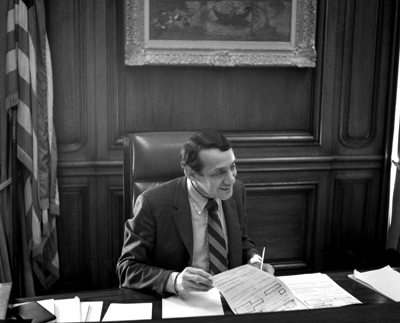
    Daniel Nicoletta – Provided by author, Daniel Nicoletta

    Harvey Bernard Milk was born in the cold and wet winter of 1930, his birthplace was Woodmere, a small, hard-working, middle class, close-knit hamlet in Nassau County in the state of New York. After graduating in 1951, Milk joined the United States’ Navy, during the Korean War, he served aboard a rescue submarine, the USS Kittiwake – and later transferred to San Diego to serve as a diving instructor. He was discharged from the Navy in 1955.

    Harvey Milk could be described as one of life’s wanderers until he moved to San Francisco he was a teacher, an actuarial statistician, a researcher, and a presidential campaigner, he worked in investments and for a theatre company.

    He was a drifter, moving from California to Texas to New York and back again, without a steady job; eventually, Milk with his then-partner Scott Smith opened a camera shop on Castro Street in San Francisco with their last $1,000.

    He moved from New York City to San Francisco in 1972, amid a mass migration of gay men to the Castro District. The gay’s growing political and economic power ensured that people like Milk could take advance to promote their interests.

    Initial political aspirations

    Embed from Getty Images

    Milk ‘s initial reception by the already installed gay political establishment could be described as cold, Jim Foster who had been active in gay politics for ten years resented Milk asking him for endorsement to becoming a City Supervisor, Foster told Milk,

    “There’s an old saying in the Democratic Party. You don’t get to dance unless you put up the chairs. I’ve never seen you put up the chairs.”

    Undeterred Milk won the support and endorsement of local gay bars and business owners, who had become disillusioned by the slow-moving pace of the already visible gay political movement.

    Milk had an inimitable political style; his exuberant speeches and his astute media skills earned him significant press during the 1973 election, however, he failed to win.

    Although Milk was a newcomer he had shown flair for leadership, he was starting to be taken seriously as a candidate and decided to run again as a City Supervisor and started using his camera store as a centre of activity in the Castro neighbour. The community rallied around Milk and voluntarily helped run his campaigns for him.

    This time round Milk came 7th in the election, just one place away from earning a Supervisor seat.

    First openly gay commissioner in the US

    Embed from Getty Images

    Milk became the first openly gay commissioner in the United States after the newly elected Mayor George Moscone appointed him to the Board of Permit Appeals in 1976 where he worked just 5 weeks in the job before running for the California State Assembly.

    Milk was described as a man of mixed temperament and of disorganisation. His campaign volunteer database comprised of just scraps of paper and his campaign manager’s assistant was an 11-year-old girl.

    His accounting was erratic, reportedly grabbing fistfuls of cash from his store’s cash register. He was prone to amazing outburst of momentary temper before shouting excitedly about something else. Described as manic, one could not fault the man for his dedication and general good humour.

    In 1977 his last campaign to become a City Supervisor, Milk’s showboating, handshaking and manic campaigning tactics won him a position, but with his victory came the distinct threat of assassination. He began to record his thoughts for preservation in case he was killed, stating, “If a bullet should enter my brain, let that bullet destroy every closet door”.

    Headliner

    Embed from Getty Images

    As the first openly gay, non-incumbent man in US history his swearing in as City Supervisor made national headlines, giving the gay community a positive visibility that it hadn’t enjoyed before. He started in office sponsoring a civil rights bill that outlawed discrimination based on sexual orientation, it was met with no opposition apart from Dan White, who Milk had increasingly bad relations with after Milk switched his vote in supporting a health facility for troubled adolescents be placed in White’s District.

    His personal life at the time was one filled with sadness; he had long split with Smith and had begun a relationship with a man 18 years his senior; Jack Lira who hanged himself after being consumed with sadness with the anti-gay campaigns of Anita Bryant and John Brigg.

    The John Briggs Initiative known as Proposition 6 would have made the firing of any gay teacher or public school employee who supported gay rights mandatory. Brigg’s stated that gay teachers wanted to recruit and molest children; Milk refuted this with statistics compiled by law enforcement that most paedophiles were identified as heterosexuals.

    Brigg’s campaign came off the back of singer Anita Bryant’s “Save Our Children” campaign in Florida which repealed a law which ended discrimination based on sexual orientation.

    During the summer of 1978, gay pride marches found their attendance level rise, with over 250,000 people attending San Francisco’s Gay Freedom Day Parade. This is where Milk gave an impassioned ‘Hope Speech’

    “On this anniversary of Stonewall, I ask my gay sisters and brothers to make the commitment to fight. For themselves, for their freedom, for their country … We will not win our rights by staying quietly in our closets … We are coming out to fight the lies, the myths, the distortions. We are coming out to tell the truths about gays, for I am tired of the conspiracy of silence, so I’m going to talk about it. And I want you to talk about it. You must come out. Come out to your parents, your relatives.”

    Even though Anita Bryant’s campaign had been successful in Florida, Brigg’s initiative failed by more than a million votes. In San Francisco alone 75% voted against the proposition.

    Who was Dan White?

    Embed from Getty Images

    On 10th November 1978, Dan White resigned stating that the yearly salary of $9600 was not sufficient to support his family, days later he asked Mayor Moscone for his resignation to be withdrawn, although the Mayor initially agreed, after further consideration and consultation with the other city supervisors, Moscone was persuaded to install someone who represented White’s district which was growing in ethnic diversity.

    On 27th November 1978, Harvey Milk would wake for the last time, in his beloved adopted town of Castro.

    Half an hour before the press conference in which Mayor Moscone was to announce White’s replacement, White entered City Hall with a gun undetected and made his way to the Mayor’s office. Witnesses recall hearing shouting, between the two men followed by four gunshots.

    White had shot Moscone once in the shoulder, once in the chest and twice in the head.

    Embed from Getty Images
    Embed from Getty Images

    After reloading his gun, White intercepted Milk – an argument ensued, followed by more gunshots as he emptied 5 hollow-point bullets into Harvey Milk’s head and body.

    The President of the Board of Supervisors, Dianne Feinstein found Harvey Milk and identified both bodies.

    It was Feinstein, who announced to the press,

    ‘Today San Francisco has experienced a double tragedy of immense proportions. As President of the Board of Supervisors, it is my duty to inform you that both Mayor Moscone and Supervisor Harvey Milk have been shot and killed.”

    Milk was 48 and Moscone was 49.

    Milk’s legacy is still felt to this day, in the last year of his life, he empowered gay people to be more visible; to help themselves to end the discrimination and violence against them. In his final statement during the taped prediction of his assassination he said,

    ‘I cannot prevent anyone from getting angry, or mad, or frustrated. I can only hope that they’ll turn that anger and frustration and madness into something positive, so that two, three, four, five hundred will step forward, so the gay doctors will come out, the gay lawyers, the gay judges, gay bankers, gay architects … I hope that every professional gay will say ‘enough’, come forward and tell everybody, wear a sign, let the world know. Maybe that will help.

    Although his time in politics was relatively short, Milk’s untimely death at the hand of Dan White, ensured that Harvey Milk would forever be held up as one of the most powerful and iconic men of politics the world has ever seen.
  • TODAY IN LGBT HISTORY | Harvey Milk speechwriter and author Frank M Robinson dies

    TODAY IN LGBT HISTORY | Harvey Milk speechwriter and author Frank M Robinson dies

    Frank M Robinson was credited with writing some of Harvey Milk’s most emotive speeches.

    Frank M Robinson was 87-years-old when he died in 2014.

    Born in 1926, Frank M. Robinson moved to San Franciso in the 1970s where he became a speechwriter for Harvey Milk. He also had a small role in the Dustin Lance-Black film Milk.

    He was the author of 16 books, 3 of which were made into films, The Power, The Glass Inferno (made into The Towering Inferno) and The Gold Crew.

    One of Robinson’s most famous speeches was the one entitled “You’ve Got To Have Hope” which is credited to helping fuel the LGBT+ movement’s rhetorical power in the US. The speech is famous for its first line: “My name is Harvey Milk and I’m here to recruit you”, which was in response to a claim by TV star Anita Bryant that gay people were trying to recruit young people.

  • 40 years ago today, Harvey Milk was murdered

    American politics was filled with a sea of heterosexual faces, sometimes fiercely homophobic, but mostly irreverent towards the gay community, that was until Harvey Milk entered the political arena.

    Daniel Nicoletta – Provided by author, Daniel Nicoletta

    Harvey Bernard Milk was born in the cold and wet winter of 1930, his birthplace was Woodmere, a small, hard-working, middle class, close-knit hamlet in Nassau County in the state of New York. After graduating in 1951, Milk joined the United States’ Navy, during the Korean War, he served aboard a rescue submarine, the USS Kittiwake – and later transferred to San Diego to serve as a diving instructor. He was discharged from the Navy in 1955.

    Harvey Milk could be described as one of life’s wanderers until he moved to San Francisco he was a teacher, an actuarial statistician, a researcher, and a presidential campaigner, he worked in investments and for a theatre company.

    He was a drifter, moving from California to Texas to New York and back again, without a steady job; eventually, Milk with his then-partner Scott Smith opened a camera shop on Castro Street in San Francisco with their last $1,000.

    He moved from New York City to San Francisco in 1972, amid a mass migration of gay men to the Castro District. The gay’s growing political and economic power ensured that people like Milk could take advance to promote their interests.

    Initial political aspirations

    Embed from Getty Images

    Milk ‘s initial reception by the already installed gay political establishment could be described as cold, Jim Foster who had been active in gay politics for ten years resented Milk asking him for endorsement to becoming a City Supervisor, Foster told Milk,

    “There’s an old saying in the Democratic Party. You don’t get to dance unless you put up the chairs. I’ve never seen you put up the chairs.”

    Undeterred Milk won the support and endorsement of local gay bars and business owners, who had become disillusioned by the slow-moving pace of the already visible gay political movement.

    Milk had an inimitable political style; his exuberant speeches and his astute media skills earned him significant press during the 1973 election, however, he failed to win.

    Although Milk was a newcomer he had shown flair for leadership, he was starting to be taken seriously as a candidate and decided to run again as a City Supervisor and started using his camera store as a centre of activity in the Castro neighbour. The community rallied around Milk and voluntarily helped run his campaigns for him.

    This time round Milk came 7th in the election, just one place away from earning a Supervisor seat.

    First openly gay commissioner in the US

    Embed from Getty Images

    Milk became the first openly gay commissioner in the United States after the newly elected Mayor George Moscone appointed him to the Board of Permit Appeals in 1976 where he worked just 5 weeks in the job before running for the California State Assembly.

    Milk was described as a man of mixed temperament and of disorganisation. His campaign volunteer database comprised of just scraps of paper and his campaign manager’s assistant was an 11-year-old girl.

    His accounting was erratic, reportedly grabbing fistfuls of cash from his store’s cash register. He was prone to amazing outburst of momentary temper before shouting excitedly about something else. Described as manic, one could not fault the man for his dedication and general good humour.

    In 1977 his last campaign to become a City Supervisor, Milk’s showboating, handshaking and manic campaigning tactics won him a position, but with his victory came the distinct threat of assassination. He began to record his thoughts for preservation in case he was killed, stating, “If a bullet should enter my brain, let that bullet destroy every closet door”.

    Headliner

    Embed from Getty Images

    As the first openly gay, non-incumbent man in US history his swearing in as City Supervisor made national headlines, giving the gay community a positive visibility that it hadn’t enjoyed before. He started in office sponsoring a civil rights bill that outlawed discrimination based on sexual orientation, it was met with no opposition apart from Dan White, who Milk had increasingly bad relations with after Milk switched his vote in supporting a health facility for troubled adolescents be placed in White’s District.

    His personal life at the time was one filled with sadness; he had long split with Smith and had begun a relationship with a man 18 years his senior; Jack Lira who hanged himself after being consumed with sadness with the anti-gay campaigns of Anita Bryant and John Brigg.

    The John Briggs Initiative known as Proposition 6 would have made the firing of any gay teacher or public school employee who supported gay rights mandatory. Brigg’s stated that gay teachers wanted to recruit and molest children; Milk refuted this with statistics compiled by law enforcement that most paedophiles were identified as heterosexuals.

    Brigg’s campaign came off the back of singer Anita Bryant’s “Save Our Children” campaign in Florida which repealed a law which ended discrimination based on sexual orientation.

    During the summer of 1978, gay pride marches found their attendance level rise, with over 250,000 people attending San Francisco’s Gay Freedom Day Parade. This is where Milk gave an impassioned ‘Hope Speech’

    “On this anniversary of Stonewall, I ask my gay sisters and brothers to make the commitment to fight. For themselves, for their freedom, for their country … We will not win our rights by staying quietly in our closets … We are coming out to fight the lies, the myths, the distortions. We are coming out to tell the truths about gays, for I am tired of the conspiracy of silence, so I’m going to talk about it. And I want you to talk about it. You must come out. Come out to your parents, your relatives.”

    Even though Anita Bryant’s campaign had been successful in Florida, Brigg’s initiative failed by more than a million votes. In San Francisco alone 75% voted against the proposition.

    Who was Dan White?

    On 10th November 1978, Dan White resigned stating that the yearly salary of $9600 was not sufficient to support his family, days later he asked Mayor Moscone for his resignation to be withdrawn, although the Mayor initially agreed, after further consideration and consultation with the other city supervisors, Moscone was persuaded to install someone who represented White’s district which was growing in ethnic diversity.

    On 27th November 1978, Harvey Milk would wake for the last time, in his beloved adopted town of Castro.

    Half an hour before the press conference in which Mayor Moscone was to announce White’s replacement, White entered City Hall with a gun undetected and made his way to the Mayor’s office. Witnesses recall hearing shouting, between the two men followed by four gunshots.

    White had shot Moscone once in the shoulder, once in the chest and twice in the head.


    Embed from Getty Images


    Embed from Getty Images

    After reloading his gun, White intercepted Milk – an argument ensued, followed by more gunshots as he emptied 5 hollow-point bullets into Harvey Milk’s head and body.

    The President of the Board of Supervisors, Dianne Feinstein found Harvey Milk and identified both bodies.

    It was Feinstein, who announced to the press,

    ‘Today San Francisco has experienced a double tragedy of immense proportions. As President of the Board of Supervisors, it is my duty to inform you that both Mayor Moscone and Supervisor Harvey Milk have been shot and killed.”

    Milk was 48 and Moscone was 49.

    Milk’s legacy is still felt to this day, in the last year of his life, he empowered gay people to be more visible; to help themselves to end the discrimination and violence against them. In his final statement during the taped prediction of his assassination he said,

    ‘I cannot prevent anyone from getting angry, or mad, or frustrated. I can only hope that they’ll turn that anger and frustration and madness into something positive, so that two, three, four, five hundred will step forward, so the gay doctors will come out, the gay lawyers, the gay judges, gay bankers, gay architects … I hope that every professional gay will say ‘enough’, come forward and tell everybody, wear a sign, let the world know. Maybe that will help.

    Although his time in politics was relatively short, Milk’s untimely death at the hand of Dan White, ensured that Harvey Milk would forever be held up as one of the most powerful and iconic men of politics the world has ever seen.
  • 10 gay and bi guys whose careers boomed at 40

    Sometimes it can feel like the world’s media is fixated on the achievements of the under 20s. The careers of those who are beyond the age of 25 don’t seem relevant, well we disagree.

    Here are 10 gay and bisexual men whose careers totally bloomed after the age of 40, although some of them were already doing well before that!

    RuPaul, TV star, Drag Queen and Recording Artist

    Embed from Getty Images

    Okay so RuPaul was already a star in his twenties, but, during the late 90s and 00s Ru’s career somewhat stalled. However the resurgence of Drag and more importantly, the part that Ru’s show Drag Race has played in giving drag its second wind puts Ru back on top.

    Anderson Cooper, News Anchor and Reporter

    Although Anderson has always been successful, thanks to his family line, (he’s an heir to the Vanderbilt empire) it wasn’t until he became the news anchor at CNN in 2003 that his star stock took off and he’s become steadily more and more successful since then. He’s now one of the most recognisable faces of news TV.

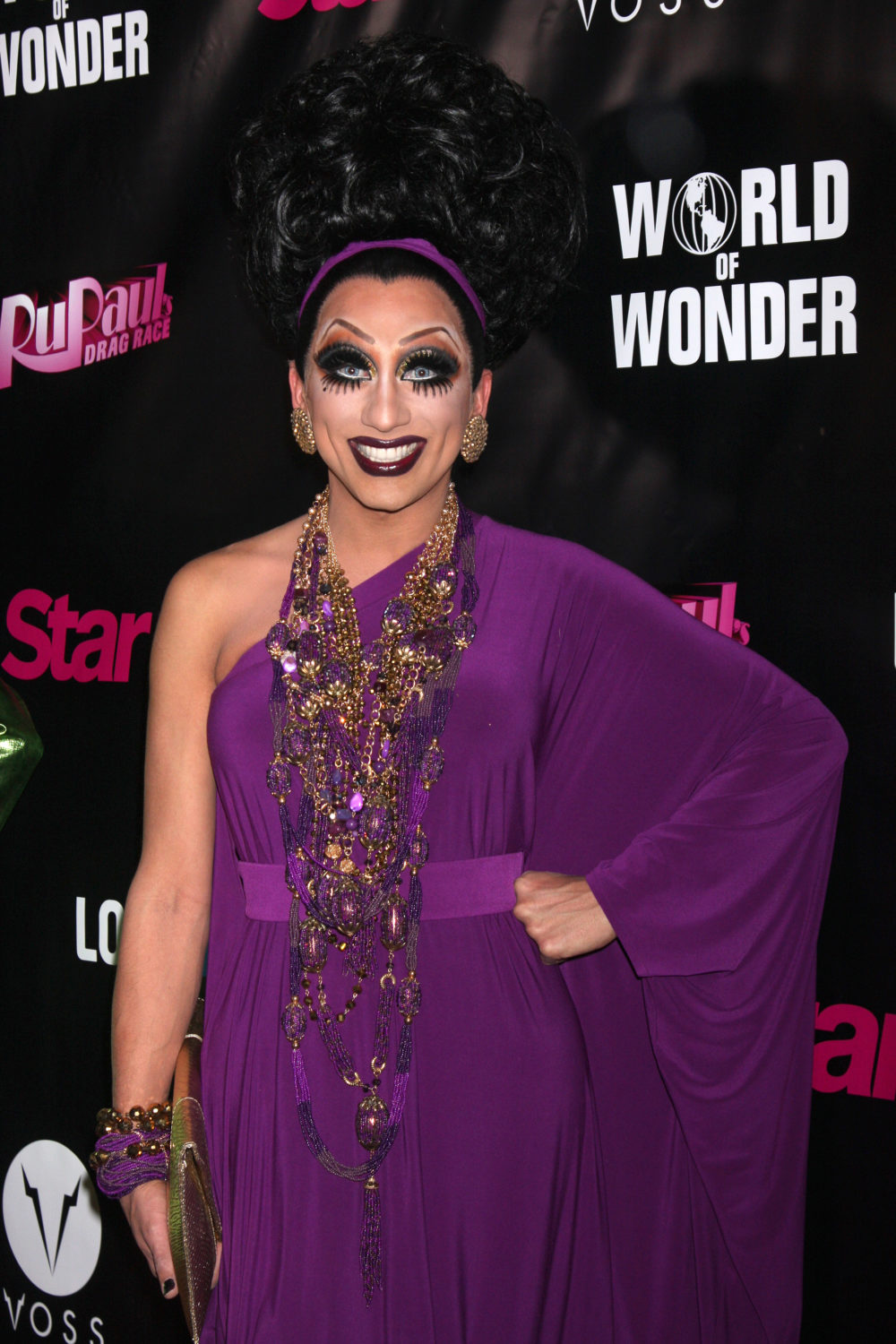
    Bianca Del Rio, Drag Queen

    CREDIT: kathclick / Bigstock

    Bianca Del Rio / Roy Haylock was actually in his late 30s when his appearance and winning of RuPaul’s Drag Race made him a household name. Since turning 40 Roy and Bianca have been travelling the world performing in countless venues – Bianca even has her very own comedy feature-length movie, Hurricane Bianca.

    Giorgio Armani, Fashion Designer
    Embed from Getty Images

    We tread carefully here, as Giorgio hasn’t come out officially as gay or bisexual, but an interview in Vanity Fair in 2000 shed some light on his sexuality, when he said, “I have had women in my life. And sometimes men”.

    Giorgio’s star was late rising. He showcased his first collection in 1975, when he was 41. Giorgio topped our richest list in 2015.

    Calvin Klein Fashion designer

    Embed from Getty Images

    It wasn’t until the 80s that Calvin Klein clothing and the man himself became the fashion king that he is today, after all his company changed the way the world viewed underwear, anyone who has seen those Mark Walberg underwear pictures will know what we’re talking about. Although Calvin had success in his formative years, he was well into his 40s when it was arguably his underwear ranges and fragrances that turned his successes around.

    Tim Cook (Apple), CEO of Apple / Businessman

    Embed from Getty Images

    Tim Cook became a household name when he took over the top job at Apple and he was into his 50s. He came out as gay in October 2014, becoming one of the most successful out CEOs in history.

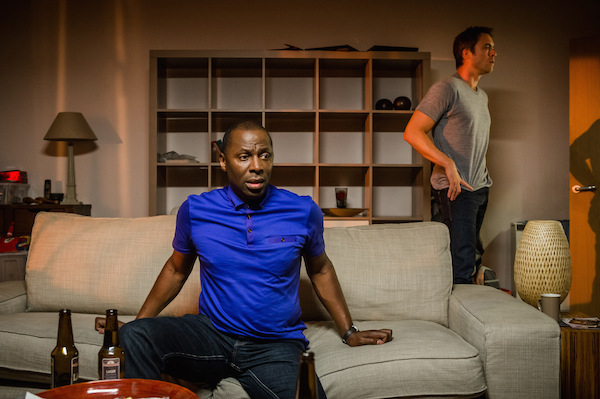
    Cyril Nri,  Actor

    Cyril Nri
    CREDIT: Ben Blackall / Channel 4

    Star of Channel 4’s Cucumber in 2015, Cyril, 54, starred in The Bill from 2002 until 2006. His career went astronomical again when he starred in Russell T Davies’ Cucumber making him a household name in the UK. SPOILER: His graphic murder in the show became one of the most talked about moments in queer TV history.

    Harvey Milk, Politician

    Embed from Getty Images

    Harvey was known as one of life’s drifters, that is until he decided to go into politics in his mid-40s. Although only in the political arena for a few years before his murder at the age of 48, Harvey’s contribution to the LGBT movement has long been heralded as significant.

    Embed from Getty Images

    Dan Bucatinsky, Actor & TV Producer
    In 2005 Dan helped bring The Comeback starring Lisa Kudrow to the world, cementing his position as a go-to producer in television. In 2013 he won a Primetime Emmy Award for his involvement in the hit TV drama Scandal.

    Nick Denton Former (Gawker) Editor and Media Owner

    Nick Denton, 49, was the founder of Gawker, which was one of the most powerful blog collectives on earth. In 2007 when he was 40 he entered the Sunday Times Rich List with an estimated worth of £140m. However, in 2016 Gawker ran into legal troubles and closed.

  • 10 Guys Whose Careers Exploded After Turning 40

    Sometimes it can feel like the world’s media is fixated on the achievements of the under 20s. The careers of those who are beyond the age of 25 don’t seem relevant, well we disagree.

    Here’s 10 gay and bisexual men whose careers took off after the age of 40, although some of them were already doing well before that!

    RuPaul

    TV star, Drag Queen and Recording Artist

    Okay so RuPaul was already a star in his twenties, but, during the late 90s and 00s Ru’s career somewhat stalled. However the resurgence of Drag and more importantly, the part that Ru’s show Drag Race has played in giving drag its second wind puts Ru back on top.

    Anderson Cooper

    News Anchor and Reporter

    Although Anderson has always been successful, thanks to his family, it wasn’t until he became the news anchor at CNN in 2003 that his star stock took off and he’s become steadily more and more successful since then. He’s now one of the most recognisable faces of news TV.

    Bianca Del Rio

    Drag Queen

    Bianca Del Rio / Roy Haylock was actually in his late 30s when his appearance and winning of RuPaul’s Drag Race made him a household name. Since turning 40 Roy and Bianca have been travelling the world performing in countless venues – he even has a film coming out…

    Giorgio Armani
    Fashion Designer

    We tread carefully here, as Giorgio hasn’t come out officially as gay or bisexual, but an interview in Vanity Fair in 2000 shed some light on his sexuality, when he said, “I have had women in my life. And sometimes men”. Giorgio’s star was late rising. He showcased his first collected in 1975, when he was 41. Giorgio topped our 2015 Richest list.

    Embed from Getty Images

    Calvin Klein

    Fashion designer

    Fashion DesignerIt wasn’t until the 80s that Calvin Klein clothing and the man himself became the fashion king that it is today, after his company changed the way the world viewed underwear. Although Calvin had success in his formative years, he was well into his 40s when it was arguably his underwear ranges and fragrances that turned his successes around.

    Embed from Getty Images

    Tim Cook (Apple)
    CEO of Apple / Businessman

    Tim Cook became a household name when he took over the top job at Apple and he was into his 50s. He came out as gay in October 2014, becoming one of the most successful out CEOs in history.

    Cyril Nri
    Actor

    Star of Channel 4’s Cucumber in 2015, Cyril, 54, starred in The Bill from 2002 until 2006. His career went astronomical again when he starred in Russell T Davies’ Cucumber making him a household name in the UK. His graphic murder in the showcase became one of the most talked about moments in queer TV history.

    Harvey Milk
    Politician

    Harvey was known as one of life’s drifters, that is until he decided to go into politics in his mid 40s. Although only in the political arena for a few years, before his murder at the age of 48, Harvey’s contribution to the LGBT movement has long been heralded as significant.

    Embed from Getty Images

    Dan Bucatinsky (The Comeback)
    TV Producer and Actor

    In 2005 Dan helped bring The Comeback starring Lisa Kudrow to the world, cementing his position as a go to producer in television. In 2013 he won a Primetime Emmy Award for his involvement in the hit TV drama Scandal.

    Embed from Getty Images

    Nick Denton (Gawker)
    Editor and Media Owner

    Nick Denton, 49, is the founder of Gawker, one of the most powerful blog collectives on earth. In 2007 when he was 40 he entered the Sunday Times Rich List with an estimated worth of £140m.

  • Unsung Gay Heroes In History

    We look back into history and highlight other unsung gay men who have made an incredible different to our lives.

    Alan Turing (1912–1954)
    Alan Turing was a British pioneering computer scientist, mathematician, logician, cryptanalyst, philosopher and mathematical biologist. During the Second World War, Turing worked for the Government Code and Cypher School (GC&CS) at Bletchley Park, Britain’s code-breaking centre. For a time he led Hut 8, the section responsible for German naval cryptanalysis and created the Turing Machine which decrypted the “unbreakable” German Enigma code. Turing’s pivotal role in cracking intercepted coded messages enabled the Allies to defeat the Nazis in many crucial engagements, including the Battle of the Atlantic. It is said by some historians that Turing’s work at Bletchley Park shortened the war by two to four years and saved approximately fourteen million to twelve million lives. Nevertheless, Turing led a sheltered and castigated life due to his homosexuality. Whilst he was briefly engaged to fellow Bletchley Park worker Joan Clarke, it was a purely plutonic relationship and they soon divorced. Turing was prosecuted by the police in 1952 for homosexual acts, when such behaviour was still criminalised in the UK. He accepted treatment with oestrogen injections (chemical castration) as an alternative to prison and became incredibly depressed. He committed suicide in 1954. Turing’s wartime heroics were not celebrated until he received an official pardon from Prime Minister Gordon Brown in 2009 following an internet campaign, and then a further royal pardon from Queen Elizabeth II in 2013. From 9th March, 2015, the biopic of Alan Turing’s life and heroics, THE IMITATION GAME, will become available on Blu-ray and DVD courtesy of StudioCanal.

    Bayard Rustin (1912-1987)
    Bayard Rustin was the brain behind Martin Luther King Jr. and the civil rights movement in 1960s America. Rustin was one of the driving forces behind the Congress for Racial Equality and the Southern Christian Leadership Conference (SCLC). Most significantly, Rustin organized the 1963 March on Washington — where King gave his legendary “I have a dream” speech. However, due to his homosexuality and his membership in the Communist Party, he has often received short shrift from historians and his integral role in the civil rights movement is often overlooked. At the time, Rustin selflessly avoided the limelight because he knew that elected officials and politicians would attempt to discredit the civil rights movement by pointing out his sexual and political leanings. Rustin was also heavily involved in the anti­–Vietnam War and gay rights movements before his death in 1987.

    Sergei Diaghilev (1872-1929)
    Sergei “Serge” Diaghilev was a Russian art critic, patron, ballet impresario and founder of the Ballets Russes, but also one of the first outspoken and unapologetically gay men of the early 20th century. Sergei Diaghilev reshaped that epoch’s ideas about art and performance, and was a pioneer in adapting new musical styles to modern ballet. He created the Ballets Russes mainly as a showcase for his lover and protégé Vaslav Nijinsky, who is still considered one of the greatest dancers who ever lived. Diaghilev had exquisite tastes, bringing the work of such artists as Balanchine, Picasso, Pavlova and Cocteau onto the stage in his cutting-edge productions, which were often unabashedly erotic. After the Russian Revolution of 1917, Diaghilev was condemned as an especially insidious example of bourgeois decadence and his contribution to Russian art was written out of history by the Soviets for more than sixty years.

    Larry Kramer (1935-present)
    Every movement needs a voice of anger and righteousness, and when the AIDS pandemic hit, the gay community was lucky to have Larry Kramer, whose editorials and plays (particularly The Normal Heart) demanded that the government take action and that gay men take responsibility for their health. A fascinating author and a rabble-rouser in the best sense, Kramer continues to be a vital and often infuriating presence. Kramer co-founded the Gay Men’s Health Crisis (GMHC), which has become the world’s largest private organization to raise funds for and provide services to people stricken with Acquired Immune Deficiency Syndrome (AIDS).

    Harvey Milk (1930–1978)
    Harvey Milk was an American politician who became the first openly gay person to be elected to public office in California when he won a seat on the San Francisco Board of Supervisor.
    Milk moved from New York City to settle in San Francisco in 1972 amid a migration of gay men to the Castro District. He ran unsuccessfully for political office three times. Nevertheless, his theatrical campaigns earned him increasing popularity, and Milk won a seat as a city supervisor in 1977. Milk served almost 11 months in office and was responsible for passing a stringent gay rights ordinance for the city. On November 27, 1978, Milk and Mayor George Moscone were assassinated by Dan White, another city supervisor who had recently resigned but wanted his job back. Despite his short career in politics, Milk became an icon in San Francisco and a martyr in the gay community. In 2008 a Hollywood biopic Milk, starring Sean Penn, honoured Harvey Milk’s transformation of San Fransisco into a mecca for LGBT Americans and in 2009 Milk was posthumously awarded the Presidential Medal of Freedom.

    The Imitation Game is out on Blu-ray, DVD and digital download platforms now , courtesy of StudioCanal

  • GAY HISTORY: Unsung Gay Heroes In History

    We look back into history and highlight other unsung gay men who have made an incredible different to our lives.

    Alan Turing (1912–1954)

    Alan Turing was a British pioneering computer scientist, mathematician, logician, cryptanalyst, philosopher and mathematical biologist. During the Second World War, Turing worked for the Government Code and Cypher School (GC&CS) at Bletchley Park, Britain’s code-breaking centre. For a time he led Hut 8, the section responsible for German naval cryptanalysis and created the Turing Machine which decrypted the “unbreakable” German Enigma code. Turing’s pivotal role in cracking intercepted coded messages enabled the Allies to defeat the Nazis in many crucial engagements, including the Battle of the Atlantic. It is said by some historians that Turing’s work at Bletchley Park shortened the war by two to four years and saved approximately fourteen million to twelve million lives. Nevertheless, Turing led a sheltered and castigated life due to his homosexuality. Whilst he was briefly engaged to fellow Bletchley Park worker Joan Clarke, it was a purely plutonic relationship and they soon divorced. Turing was prosecuted by the police in 1952 for homosexual acts, when such behaviour was still criminalised in the UK. He accepted treatment with oestrogen injections (chemical castration) as an alternative to prison and became incredibly depressed. He committed suicide in 1954. Turing’s wartime heroics were not celebrated until he received an official pardon from Prime Minister Gordon Brown in 2009 following an internet campaign, and then a further royal pardon from Queen Elizabeth II in 2013. From 9th March, 2015, the biopic of Alan Turing’s life and heroics, THE IMITATION GAME, will become available on Blu-ray and DVD courtesy of StudioCanal.

    Bayard Rustin (1912-1987)

    Bayard Rustin was the brain behind Martin Luther King Jr. and the civil rights movement in 1960s America. Rustin was one of the driving forces behind the Congress for Racial Equality and the Southern Christian Leadership Conference (SCLC). Most significantly, Rustin organized the 1963 March on Washington — where King gave his legendary “I have a dream” speech. However, due to his homosexuality and his membership in the Communist Party, he has often received short shrift from historians and his integral role in the civil rights movement is often overlooked. At the time, Rustin selflessly avoided the limelight because he knew that elected officials and politicians would attempt to discredit the civil rights movement by pointing out his sexual and political leanings. Rustin was also heavily involved in the anti­–Vietnam War and gay rights movements before his death in 1987.

    Sergei Diaghilev (1872-1929)

    Sergei “Serge” Diaghilev was a Russian art critic, patron, ballet impresario and founder of the Ballets Russes, but also one of the first outspoken and unapologetically gay men of the early 20th century. Sergei Diaghilev reshaped that epoch’s ideas about art and performance, and was a pioneer in adapting new musical styles to modern ballet. He created the Ballets Russes mainly as a showcase for his lover and protégé Vaslav Nijinsky, who is still considered one of the greatest dancers who ever lived. Diaghilev had exquisite tastes, bringing the work of such artists as Balanchine, Picasso, Pavlova and Cocteau onto the stage in his cutting-edge productions, which were often unabashedly erotic. After the Russian Revolution of 1917, Diaghilev was condemned as an especially insidious example of bourgeois decadence and his contribution to Russian art was written out of history by the Soviets for more than sixty years.

    Larry Kramer (1935-present)

    Every movement needs a voice of anger and righteousness, and when the AIDS pandemic hit, the gay community was lucky to have Larry Kramer, whose editorials and plays (particularly The Normal Heart) demanded that the government take action and that gay men take responsibility for their health. A fascinating author and a rabble-rouser in the best sense, Kramer continues to be a vital and often infuriating presence. Kramer co-founded the Gay Men’s Health Crisis (GMHC), which has become the world’s largest private organization to raise funds for and provide services to people stricken with Acquired Immune Deficiency Syndrome (AIDS).

    Harvey Milk (1930–1978)

    Harvey Milk was an American politician who became the first openly gay person to be elected to public office in California when he won a seat on the San Francisco Board of Supervisor.

    Milk moved from New York City to settle in San Francisco in 1972 amid a migration of gay men to the Castro District. He ran unsuccessfully for political office three times. Nevertheless, his theatrical campaigns earned him increasing popularity, and Milk won a seat as a city supervisor in 1977. Milk served almost 11 months in office and was responsible for passing a stringent gay rights ordinance for the city. On November 27, 1978, Milk and Mayor George Moscone were assassinated by Dan White, another city supervisor who had recently resigned but wanted his job back. Despite his short career in politics, Milk became an icon in San Francisco and a martyr in the gay community. In 2008 a Hollywood biopic Milk, starring Sean Penn, honoured Harvey Milk’s transformation of San Fransisco into a mecca for LGBT Americans and in 2009 Milk was posthumously awarded the Presidential Medal of Freedom.

    The Imitation Game is out on Blu-ray, DVD and digital download platforms now , courtesy of StudioCanal

  • Harvey Milk speechwriter and and author Frank M Robinson dies, 87

    Frank M Robinson, who was a renowned science fiction and thriller writer has died at the age of 87 today.

    Born in 1926, Frank M. Robinson moved to San Franciso in the 1970s where he became a a speechwriter for Harvey Milk. He also had a small role in the film Milk.

    He was the author of 16 books, 3 of which were made into films, The Power, The Glass Inferno (made into The Towering Inferno) and The Gold Crew.

    Dustin Lance Black paid tribute to the author saying, ‘This morning FRANK M. ROBINSON left this world. He was Milk’s speech writer, an acclaimed sci-fi author and was like a father to me. To say the earth feels made of quicksand lately makes it sound too solid. Frank, I’ll miss your thunderous laughter, your protective love and your razor sharp writer’s mind. #HarveyMilk’

    A note on Frank’s website notes meeting Dustin Lance Black and the making of Milk saying, ‘An amazing experience. They had a guy picked out to play me–met him later on–and then Sean Penn, Gus van Sant (director), and Lance Black (screenwriter–smart, talented, a workhorse and friendly) came over to the house and Penn interviewed me for an hour and a half about Harvey (I used to be Harvey’s speechwriter). Afterward, took them all to dinner at an upscale Burmese restaurant on Castro. Sean had to leave early and I entertained Gus and Lance with tales about Rogue and Playboy. Naturally they were fascinated (translation: bored stiff).’

  • Six of the best gay icons of film

    Whether you’re looking for a film about a gay icon or whether it is a gay icon in a starring role, the cinema is the perfect place to track down your favourite idol.

    The question of what defines someone as a vintage icon is a difficult one, whether it is their looks, their sexuality, their personal life or their work for equal rights. But taking the definition in its widest sense, here are six of the best films which, for various reasons, are perfect examples.

    Evita

    Icon statusMadonna is undeniably a gay icon for many reasons. A long and successful career and a devil may care attitude combine with her longstanding dedication to bringing gay rights to the attention of the public. Whether it is by dressing up as a boy scout, in her song lyrics, in the company she keeps or by expressing her sexuality through her creative output, she has been prominently in the public eye when it comes to issues of equality, HIV and AIDs or commenting upon change.

    The film – What could be better than Madonna doing what she does best in this film which is, in essence, a two hour music video? But in the expert hands of director, Alan Parker, Madonna gives a career defining performance as Eva Peron, a poor villager who sleeps, manipulates and carefully plots her way to the arms and bed of the Argentinian President, becoming adored by the people and a strong political influence behind the scenes. But all the time, her self-serving ways are never far from her and as the people around her start to realise her motives, a split in the country and the political party starts to appear. Based on the concept album and subsequent stage show by Tim Rice and Andrew Lloyd-Webber, this is a sumptuously filmed movie with a golden globe winning performance from Madonna, who has never been better in an acting role, excellent support from Antonio Banderas and a soundtrack which you just can’t help singing along to.

    Further suggested viewingIn Bed with Madonna; I’m Going to Tell You a Secret; A League of Their Own


    The Colour Purple

    Icon Status – Whoopi Goldberg has a cult following in America and is a prominent activist for gay rights. In 2010, Whoopi joined Cyndi Lauper for the launch of the Give A Damn campaign, to raise awareness of LGBT discrimination. She frequently defends the LGBT community on her talk show The View and in 1987 spoke at the historic March on Washington for Gay Rights. In 2013, she has been honoured by the Human Rights Campaign as the 2013 recipient of the organization’s Ally For Equality Award, which is “given to allies outside the LGBT community who stand up on behalf of equality for all Americans”. But she is also an Academy Award winning actress, singer, songwriter, and comedienne and, to top that list off, has appeared in the Absolutely Fabulous special “Gay”.

    The Film – Adapted from the novel by Alice Walker, the Colour Purple tells the story of a black woman, Celie, growing up in 1930’s Georgia. Forced into marriage and living under the hand of her tyrannical husband, known as Mister, the film follows her transformation from a shy and awkward youth to empowered and a strong and independent woman. She empowers herself by being surrounded by people who love, support and care for her. She also forms a friendship with, and a deep love for, a beautiful and sultry lounge singer, Shug, and the two women form a bond which allows Celie to realise that she does not have to be the person that she has been told she has to be. This simply stunning film was adapted from the Pulitzer Prize winning novel, was directed by Steven Spielberg and was nominated for 11 Academy Awards. This touching and beautiful film is an often forgotten gem.

    Further suggested viewingGhost; Sister Act; Made In America.


    Milk

    Icon Status – Harvey Milk was the first openly gay politician to be elected into public office in California. Initially, gay rights were not at the forefront of his agenda, but as his time in politics grew, so did his passion for the subject. During his relatively short 11 months in office, he passed a stringent gay rights ordinance for the city of San Francisco (where he lived), using the increasing political and economic power of the Castro District (San Francisco’s gay village) to push through changes. Tragically assassinated in 1978, he remains an icon and martyr in the San Francisco community and has been described as “the most famous and significantly open LGBT politician ever elected in the United States”.

    The Film – Starring Sean Penn, the film tells the story of the political career and the tragic end to the life of Harvey Milk. Addressing his movements into politics, detailing his political battles against the limitation of the rights of gay people and his ideals in life, the film was a critical and commercial success. Securing a total of 8 Academy Awards, Penn won an Oscar for best actor in a lead role and the film also won for best original screenplay. Released in 2008, at the time when California were debating Proposal 8, an anti-gay marriage proposal which in some way mirrored the anti-gay rights legislation in Proposal 6 which is addressed in the film itself, it proves that the themes explored from the 70’s are as relevant today as they were then.

    Further suggested viewingThe Times of Harvey Milk (a 1984 documentary).

    Rebel Without A Cause

    Icon Status – James Dean has long been considered a gay icon. His rugged, chiselled good looks, his masculinity and his status of the epitome of cool set him apart from other actors of his era. There were questions about his ambivalent approach to sexuality and debates about his sexuality have long been circulated. He is alleged to have slept with both men and women, but whether that was true and if so, whether it was for pleasure or to forward his career will forever remain a mystery. When asked if he was a homosexual, he replied “No, I am not a homosexual, but I am also not going to go through life with one hand tied behind my back”. The Gay Times Readers’ Awards have previously cited him as the male gay icon of all time. He is often said to be the epitome of cool and effortlessly projected an image of rebellion, non-conformity and, more importantly, living his life how he wished to live it.

    The Film – Dean plays Jim Stark, a 17 year old young man who moves with his family to LA where he runs into difficulties with the local gang, finds love with a beautiful young woman and becomes a father figure to a 15 year old local trouble causer. He is increasingly frustrated by his family who don’t understand him and finds himself drawn into a feud with the local gang leader which results in tragic consequences. The film about confused, middle class adolescents was seen as an antithesis of the films around the time which depicted delinquents in the urban slums. Dean radiates charisma in his role and the film was ground-breaking in its portrayal of the moral decay of American youth.

    Further suggested viewingGiant; East of Eden.


    Burlesque

    Icon Status – Cher has been a stalwart of the idolisation of gay men for many years, especially in the USA. Her ability to transform her image and her musical style, coupled with her catchy, camp tunes, her high-spirited stage shows and her daring and non-conformist attitude confirm her icon status. But aside from her ability to not take herself too seriously (her appearance in Will & Grace is evidence of this), her music and her acting career, she is also a strong advocate for gay rights (supporting both the community and the parents of GLBT people) and has publically supported her oldest child, Chaz Bono who stated that he was transgender in 2009.

    The Film – Ali Rose, (Christina Aguilera), a young country girl with an extraordinary singing voice, leaves her dead end life in small town rural America and heads to LA to make her fortune. She stumbles across a Burlesque club, run by a good natured and motherly woman called Tess (Cher). Within the amber tinged bar, she finds employment, friendship and a very attractive roommate, Jack Miller (played by the ridiculously handsome Cam Gigandet). Amazed at her remarkable talent, Tess makes her the star of the show. But can the novelty of singing live save the cash strapped club from a hostile takeover and will Jack and Ali ever admit their true feelings for each other? This film is corny and cheesy, but has a charm all of its own. It has a paper thin and highly predictable plot. But that is not the reason to watch this film. The skimpy and seductive costumes coupled with the exuberant and energetic burlesque musical numbers (performed with an almost overdose level of camp), mark the tone of the film. There are two icons for one in here, (both Cher and Aguilera have a huge gay following) and you get a naked Gigandet hiding his modesty under nothing but a packet of cereal. Throw in one of Madonna’s backing dancers and add Cher belting out a power ballad and you have a cheesy campfest which should be watched for what it is, which is just damn good, but terribly corny, camp fun.

    Further suggested viewingMoonstruck; Mask; Mermaids.


    Gods And Monsters

    CREDIT: © tanka_v| Depositphotos
    CREDIT: © tanka_v| Depositphotos

    Icon Status – The outstanding Sir Ian McKellan has appeared in many successful films, been in Coronation Street, played the Dame in pantomime, has performed on stage in the West End, Broadway and worldwide and is an openly gay man who is prominent in his active campaigning for equal rights. He has won numerous awards for his acting career and appeared in blockbusters like the X-Men series and The Lord of the Rings films, but has also done less mainstream films, such as his update of Richard III. Since coming out in 1988, Sir McKellan has often spoken and written about gay issues. He is a co-founder of Stonewall UK. He has had a high level presence at Gay Pride events in London and around the world and states that his most urgent concern is legal and social equality for gay people worldwide. Coupled with that, he is one of the nicest people you could wish to meet and always makes time for people at Pride events. How could this talented and dedicated man fail to make a list of vintage icons?

    The Film – Gods and Monsters is the story of James Whale, the gay 1930’s film director, best known for making the Universal Pictures version of Frankenstein. This film follows the latter part of his life, when Whale is a fragile figure, who is physically and emotionally slowly giving up. He reminisces about gay pool parties of his youth and teases a star struck fan that comes to interview him for a magazine. But his new gardener, Clayton Boone, (played by Brendon Frasier) is a young, attractive and muscular straight man and he and Whale strike up an unlikely and, at times, uneasy friendship. Asking his young muse to pose nude for his life drawing, Whale’s obsession with his friend deepens. But to what end? Sir McKellan was nominated for a Best Actor Academy Award for his performance in this film, and rightly so. The film oozes class and explores the nature of the relationship between Whale and Boone in a sensitive manner. The film draws you in with its subtlety and culminates in an emotional gut punch. It is the perfect vehicle for demonstrating what an exceptional actor Sir McKellan is.

    Further suggested viewingWalter; Richard III; X-Men; Apt Pupil; The Lord of The Rings.

  • Six quotes that made Harvey Milk Great

    Six quotes that made Harvey Milk Great

    Harvey Milk would have been 83 years old if Dan White hadn’t killed him in 1978. Today Harvey Milk Day is celebrated to remind us all how incredible his achievements were and to give all LGBT people around the world Hope.

    (C) BIGSTOCK

    “It takes no compromise to give people their rights…it takes no money to respect the individual. It takes no political deal to give people freedom. It takes no survey to remove repression.” – Harvey Milk

    “If a bullet should enter my brain, let that bullet destroy every closet door.” – Harvey Milk

    From a tape recording he made when he predicted his assassination:

    “All young people, regardless of sexual orientation or identity, deserve a safe and supportive environment in which to achieve their full potential.” – Harvey Milk

    On the rights of the young:

    “Hope will never be silent.” – Harvey Milk

    “The only thing they have to look forward to is hope. And you have to give them hope. Hope for a better world, hope for a better tomorrow, hope for a better place to come to if the pressures at home are too great. Hope that all will be all right. Without hope, not only gays, but the blacks, the seniors, the handicapped, the us’es, the us’es will give up. And if you help elect to the central committee and other offices, more gay people, that gives a green light to all who feel disenfranchised, a green light to move forward. It means hope to a nation that has given up, because if a gay person makes it, the doors are open to everyone.” – Harvey Milk

    Tape recorded, said in the last year of his life.

    “All men are created equal. No matter how hard they try, they can never erase those words. That is what America is about.” – Harvey Milk

  • HARVEY MILK | A gay icon who changed the face of gay politics

    HARVEY MILK | A gay icon who changed the face of gay politics

    American politics was filled with a sea of heterosexual faces, sometimes fiercely homophobic, but mostly irreverent towards the gay community, that was until Harvey Milk entered the political arena.

    Embed from Getty Images

    Harvey Bernard Milk was born in the cold and wet winter of 1930, his birthplace was Woodmere, a small, hard-working, middle class, close-knit hamlet in Nassau County in the state of New York. After graduating in 1951, Milk joined the United States’ Navy, during the Korean War, he served aboard a rescue submarine, the USS Kittiwake – and later transferred to San Diego to serve as a diving instructor. He was discharged from the Navy in 1955.

    Harvey Milk could be described as one of life’s wanderers until he moved to San Francisco he was a teacher, an actuarial statistician, a researcher, and a presidential campaigner, he worked in investments and for a theatre company.

    He was a drifter, moving from California to Texas to New York and back again, without a steady job; eventually, Milk with his then-partner Scott Smith opened a camera shop on Castro Street in San Francisco with their last $1,000.

    He moved from New York City to San Francisco in 1972, amid a mass migration of gay men to the Castro District. The gay’s growing political and economic power ensured that people like Milk could take advance to promote their interests.

    Initial political aspirations

    Embed from Getty Images

    Milk ‘s initial reception by the already installed gay political establishment could be described as cold, Jim Foster who had been active in gay politics for ten years resented Milk asking him for endorsement to becoming a City Supervisor, Foster told Milk,

    “There’s an old saying in the Democratic Party. You don’t get to dance unless you put up the chairs. I’ve never seen you put up the chairs.”

    Undeterred Milk won the support and endorsement of local gay bars and business owners, who had become disillusioned by the slow-moving pace of the already visible gay political movement.

    Milk had an inimitable political style; his exuberant speeches and his astute media skills earned him significant press during the 1973 election, however, he failed to win.

    Although Milk was a newcomer he had shown flair for leadership, he was starting to be taken seriously as a candidate and decided to run again as a City Supervisor and started using his camera store as a centre of activity in the Castro neighbour. The community rallied around Milk and voluntarily helped run his campaigns for him.

    This time round Milk came 7th in the election, just one place away from earning a Supervisor seat.

    First openly gay commissioner in the US

    Embed from Getty Images

    Milk became the first openly gay commissioner in the United States after the newly elected Mayor George Moscone appointed him to the Board of Permit Appeals in 1976 where he worked just 5 weeks in the job before running for the California State Assembly.

    Milk was described as a man of mixed temperament and of disorganisation. His campaign volunteer database comprised of just scraps of paper and his campaign manager’s assistant was an 11-year-old girl.

    His accounting was erratic, reportedly grabbing fistfuls of cash from his store’s cash register. He was prone to amazing outburst of momentary temper before shouting excitedly about something else. Described as manic, one could not fault the man for his dedication and general good humour.

    In 1977 his last campaign to become a City Supervisor, Milk’s showboating, handshaking and manic campaigning tactics won him a position, but with his victory came the distinct threat of assassination. He began to record his thoughts for preservation in case he was killed, stating, “If a bullet should enter my brain, let that bullet destroy every closet door”.

    Headliner

    Embed from Getty Images

    As the first openly gay, non-incumbent man in US history his swearing in as City Supervisor made national headlines, giving the gay community a positive visibility that it hadn’t enjoyed before. He started in office sponsoring a civil rights bill that outlawed discrimination based on sexual orientation, it was met with no opposition apart from Dan White, who Milk had increasingly bad relations with after Milk switched his vote in supporting a health facility for troubled adolescents be placed in White’s District.

    His personal life at the time was one filled with sadness; he had long split with Smith and had begun a relationship with a man 18 years his senior; Jack Lira who hanged himself after being consumed with sadness with the anti-gay campaigns of Anita Bryant and John Brigg.

    The John Briggs Initiative known as Proposition 6 would have made the firing of any gay teacher or public school employee who supported gay rights mandatory. Brigg’s stated that gay teachers wanted to recruit and molest children; Milk refuted this with statistics compiled by law enforcement that most paedophiles were identified as heterosexuals.

    Brigg’s campaign came off the back of singer Anita Bryant’s “Save Our Children” campaign in Florida which repealed a law which ended discrimination based on sexual orientation.

    During the summer of 1978, gay pride marches found their attendance level rise, with over 250,000 people attending San Francisco’s Gay Freedom Day Parade. This is where Milk gave an impassioned ‘Hope Speech’

    “On this anniversary of Stonewall, I ask my gay sisters and brothers to make the commitment to fight. For themselves, for their freedom, for their country … We will not win our rights by staying quietly in our closets … We are coming out to fight the lies, the myths, the distortions. We are coming out to tell the truths about gays, for I am tired of the conspiracy of silence, so I’m going to talk about it. And I want you to talk about it. You must come out. Come out to your parents, your relatives.”

    Even though Anita Bryant’s campaign had been successful in Florida, Brigg’s initiative failed by more than a million votes. In San Francisco alone 75% voted against the proposition.

    Who was Dan White?

    Embed from Getty Images

    On 10th November 1978, Dan White resigned stating that the yearly salary of $9600 was not sufficient to support his family, days later he asked Mayor Moscone for his resignation to be withdrawn, although the Mayor initially agreed, after further consideration and consultation with the other city supervisors, Moscone was persuaded to install someone who represented White’s district which was growing in ethnic diversity.

    On 27th November 1978, Harvey Milk would wake for the last time, in his beloved adopted town of Castro.

    Half an hour before the press conference in which Mayor Moscone was to announce White’s replacement, White entered City Hall with a gun undetected and made his way to the Mayor’s office. Witnesses recall hearing shouting, between the two men followed by four gunshots.

    White had shot Moscone once in the shoulder, once in the chest and twice in the head.


    Embed from Getty Images


    Embed from Getty Images

    After reloading his gun, White intercepted Milk – an argument ensued, followed by more gunshots as he emptied 5 hollow-point bullets into Harvey Milk’s head and body.

    The President of the Board of Supervisors, Dianne Feinstein found Harvey Milk and identified both bodies.

    It was Feinstein, who announced to the press,

    ‘Today San Francisco has experienced a double tragedy of immense proportions. As President of the Board of Supervisors, it is my duty to inform you that both Mayor Moscone and Supervisor Harvey Milk have been shot and killed.”

    Milk was 48 and Moscone was 49.

    Milk’s legacy is still felt to this day, in the last year of his life, he empowered gay people to be more visible; to help themselves to end the discrimination and violence against them. In his final statement during the taped prediction of his assassination he said,

    ‘I cannot prevent anyone from getting angry, or mad, or frustrated. I can only hope that they’ll turn that anger and frustration and madness into something positive, so that two, three, four, five hundred will step forward, so the gay doctors will come out, the gay lawyers, the gay judges, gay bankers, gay architects … I hope that every professional gay will say ‘enough’, come forward and tell everybody, wear a sign, let the world know. Maybe that will help.

    Although his time in politics was relatively short, Milk’s untimely death at the hand of Dan White, ensured that Harvey Milk would forever be held up as one of the most powerful and iconic men of politics the world has ever seen.