Tag: Jamal Gerald

All the latest breaking news on Jamal Gerald. Browse THEGAYUK’s complete collection of news, articles and commentary on Jamal Gerald.

  • 12 LGBT+ celebs describe their coming out

    12 LGBT+ celebs describe their coming out

    Here are some of our favourite coming out stories and thoughts from the celebrities we’ve asked about their coming out experience.

    Courtney Act, Drag Queen and TV Presenter

    CREDIT: Courtney Act

    I grew up in suburban Brisbane, I didn’t really realise I was gay until I was 18 and in Sydney. I guess I remember having posters of the Spice Girls and having a crush on Leonardo DiCaprio, but I didn’t really attribute it to being gay because schoolyard slagging, like poofta and faggot seemed like something negative with those things, and I didn’t feel negative about who I was. So I never really attributed being gay to who I was, until Sydney.

    My friends took me to Stonewall, which is a bar in Sydney, and I just remember like being, “hang on, all of these people are gay, this newspaper, this is a gay newspaper!” I just remember that very first night, it all just made sense, and I was like: Oh I get it! That night I had my first kiss and went home with my first boy all on one night – and they were two separate people!

    My Mum and Dad came to Sydney and we were having dinner and I was talking about friends who were drag queens and boys with strange names like ‘Girl Craig’ and I remember my Mum asking, whether if one of them was my “special friend…” there was that awkward moment at the table, and Dad was like, “I’m going to get a drink…” and we all sort of stood up and left the table.

    The next day we didn’t talk about it again. I remember calling my friend and like crying in the bathroom not knowing what to do and going to my friend’s house. I remember a time, struggling coming out to my parents and my own gender identity, I didn’t know whether I wanted to be the archetype ‘gay underwear model’ or be a woman because I was doing drag and I had a lot of people telling me that because I was so pretty I should take hormones and live as a woman and I know I felt very confused about everything. The next day, at the only job I’ve ever had in my life, like a ‘real’ job, I was working at an internet café and I went home for lunch, I guess I had a bottle of wine in the fridge, and I sat there eating lunch at home drinking a bottle of wine, watching Touched By An Angel on television, I just remember like crying, I guess it was inspired by Touched By An Angel, but the cry went much deeper than that. I remember it was just like howling. I sent Mum a text, this is the year 2000, so the advent of text was a new thing, and I texted I AM GAY. She wrote back, ‘That’s nice dear see you at dinner!’

    So that night at dinner my Dad said that he had lived with 6 drag queens back in the 70s, I asked him to stop there; I felt that one revelation was enough for the night.

    Jamie Lambert, Collabro singer and LGBT advocate

    Issue 20 Cover Jamie Lambert

    Jamie came out via a tabloid newspaper after appearing in Britain’s Got Talent

    I was already out as a person. I wasn’t a sort of person who was in the closet. I’ve been out for years. I never really came out. I was just me. The reason I felt like I had to do it was because I thought Dan (Wootton) would handle this perfectly.

    I think The Sun was brilliant about it. I knew they would do a good story, so I thought they were the ones to go with. Let me tell you the issues I have. I think it’s very brave for people to come out via YouTube, but I do dream of a world where that isn’t necessary anymore.

    The reason I did choose The Sun, I made them have the headline: My Parents Always Knew rather than Jamie From Collabro Comes Out, because I wasn’t coming out. I’m perfectly happy with myself and I always have been. I think the stars that do it on YouTube are very brave and I give all credit to them, but I do dream of a world where we don’t have to do that anymore.

    Danyl Johnson, Former X Factor star

    Danyl Johnson was seemingly outted on national TV by a judge on the X Factor

    I went down to Dannii’s (Minogue) dressing room the next day, no one was there. She was a bit upset, and I said, “What’s the matter? Are you okay?” She apologised to me. She was reading stuff on Twitter and someone tweeted, “Every time you out a fairy, another fairy dies.”

    That stays in my mind and why Dannii was upset. It was like my life was the weirdest thing.

    A couple of months beforehand, I’m in a classroom teaching kids, then one moment I’m standing in Dannii’s dressing room watching her reading messages on Twitter. It was the most surreal moment ever. It was never intentional. It was taken completely the wrong way.

    I didn’t really take it to heart. I don’t think it’s the same story in her book, but oh well…

    Ms Kasha Davis
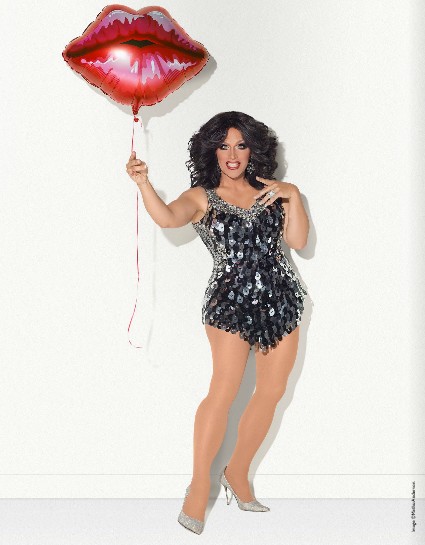
    Kasha Davis

    Was first married to a woman and so was his husband… They fell in love

    It really is, and you know, what’s so wonderful about the entire experience is that we both grew up around the same time frames in, you know, the seventies and eighties, where in the US, it was very much so, you lived a closeted life. There were no gay people, and if you were, you were just kind of like in the closet. It just wasn’t very accepted, especially in the small towns that we grew up in. Both of us really essentially married our high-school sweethearts, and then tortured, we were tortured. Ended up realising in time that this obviously wasn’t fair to ourselves, but certainly not to our wives.

    So really we were both sitting and dreaming of this life that we wanted to have, like we had with our ex-wives, with a home and the kids, but with a man. It was time to be honest with ourselves. I prayed for this Prince Charming, and there he was silently praying for the same thing, and there we were. Now it’s ironic how many similar situations we’ve had growing up, but it’s nice to have some similarities there that we really were both dreaming of the same thing.

    Jamal Gerald, Actor

    Picture Credit – Mark West

    Coming from a very religious background has helped Jamal create powerful art which challenges homophobia.

    Religion told me I was a sinner, an abomination. I was told by people in my school that I was going to go to hell. I used to pray to God to pray the gay away. But as I grew older, I was able to balance myself and my religion. I believe in the concept of a god, but I am of the view that I can believe in God; but because my race is so important to me I find it hard to believe in the bible, primarily because of the history of colonialism and the use of the bible in that process. When I look at the link between colonialism and the Bible, it is not something that I want to embrace or accept.

    My black heritage and my identity as a black man is something that is more important to me than my sexuality is; and the way in which the bible was used during that period of time was wholly unacceptable. For me, it remains a symbol of repression in many ways. It was used to repress the black community many years ago and, in my experiences as a younger person, it was used to repress my sexuality – but despite that, it doesn’t prevent me from embracing the idea of a higher power.

    Nebraska Thunderfuck, Drag Queen

    MacKenzie Claude
    CREDIT: Nick San Pedro

    Marine turned drag queen

    Well I enlisted under Don’t Ask, Don’t Tell, so I was open in my personal life, but when I joined the military I was advised to go back into the closet and I did. This was going to be a career that I was embarking on and I didn’t want anything to get in the way of my hard work and my commitment. With Don’t Ask, Don’t Tell, if the wrong person found out that you were gay, or suspected you of being homosexual, they could present that to the chain of command and there would be an investigation that would take place. You could be discharged from the military simply for being homosexual.

    So imagine that not everyone is comfortable with homosexuality. I was completely in the closet for the first two years and it was very challenging because I would be in class or in the hall and I would hear conversations that would take place. All these people were from all over the United States, from all walks of life, brought together with a common goal, but they still have their opinions.

    Janet Devlin, Singer and Former X Factor star

    CREDIT: Supplied

    Came out in an ASK.fm question session.

    It was a thing in my head, I knew always really. So I didn’t think twice, that was just the way it was. I didn’t want to make a big deal about it, what’s the biggie?

    Kelly Mantle Drag Queen and Actor

    (C) Gregory Keith Metcalf / Supplied

    Not all small-town America coming out stories are tragic

    My parents are like my best friends. They have been so supportive and are so amazing. That was the great thing about it, is people assume. They say, “Well, growing up in this small Oklahoma town, with this masculine football coach as your dad, he must have pressured you to play football.” Then, “Honey, he took me out on a football field once and threw the ball at me and I’m playing with my hair and just completely missed the ball.

    Tom Bosworth, Olympian

    One of the very few out, openly gay athletes.

    I was kind of half out at school, you know, a few of my friends knew. I spoke to them at quite a young age, probably about 14 or so. It got leaked. One of my friends wasn’t too tactful, I’m afraid. I decided to deal with it head on and not just deny it and admit it because I knew one day that I would just have to admit it again anyway. That certainly put me off speaking to my parents about it or anything like that because teenagers and kids, you know, they can be nasty, whatever it is. Had a bit of trouble at school and suffered quite a bit of bullying for a long period of time. I guess for about a year, it was just non-stop. It meant I spent a lot of time on my own and kind of hiding from people but I stand by it now. I don’t hold anything against anybody. Everybody’s looking for a weakness in somebody else at that age because they’ve got their own concerns about themselves. It certainly made me stronger and it made me a better person I think.

    Aaron Frew, Big Brother star
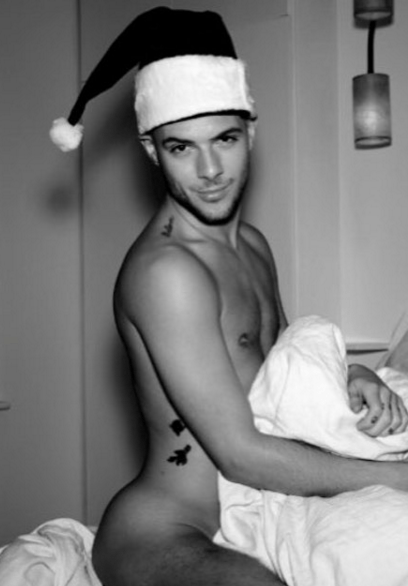
    CREDIT: Aaron Frew Twitter

    Wasn’t out long before appearing on national TV

    I only just come out to my mum a couple years ago and it’s still like a weird topic for us, so when I came out and went home straight away I was really scared but yeah she’s been really supportive. The last thing she said to me before I left was, “Aaron you’ll always be a winner in my eyes”. She’s been really supportive and I’m really blessed with that.

    Kavana, Singer and Big Reunion star

    CREDIT: ITV

    90’s heartthrob came out via email on a TV show

    Well, I was out to my family and friends, but I’ve not done anything in the public eye worth to even talk about it. It was old news to me, but this show is about your story. It was important. I just wanted to lay my cards on the table.

    Adam is very good at the group email thing, coming from his MP’s background – everyone CC’d in. We were day 4 into rehearsals and it was just getting more awkward and awkward. ‘Are you seeing anyone Kav? – Are you married’? I just couldn’t get the words out as ridiculous as that sounds.

    Kenzie still doesn’t believe I’m gay for whatever reason. I could turn up singing The Wizard Of Oz in ruby slippers and he’d be like: ‘You’re not gay’. Adam was like ‘I knew it, I knew it…’ and I was like ‘you can’t talk – you’re the campest one of the group!’ So there was a lot of banter, but it was fine… Every group needs a gay don’t they?

    Wayne Dhesi, Founder of RUComingOut.com

    It changed my life and enabled me to become who I am today – the real me. It enabled me to be more confident and achieve more than I ever would have done if I’d have stayed in the closet.
  • INTERVIEW |  Jamal Gerald – Taking Back the FADoubleGOT

    INTERVIEW | Jamal Gerald – Taking Back the FADoubleGOT

    Confrontation of prejudice is not always easy, but is essential in breaking down barriers. At 22 years old, Jamal Gerald, a black, gay, performance artist is embarking on his first UK tour with the provocatively named show “FADoubleGOT”.

    Picture Credit - Jamal Gerald
    Picture Credit – Mark West


    Using his one man show to tell his own personal story of the highs, lows and in-betweens of growing up as a black gay man, Jamal draws on his experiences to confront the use of prejudicial language and anecdotally tells tales of sex parties, hook-up’s, relationships and Grindr dates; mixed in with candid accounts of surviving periods of self-loathing, experiences of racism and homophobia and of his internalised conflict between his religion and his sexuality. Following opening his tour at Doncaster CAST Theatre, Jamal spoke exclusively to TheGayUK about the themes of the show, why provocative theatre remains relevant and how Freddie Mercury changed his life.

    TGUK – You have chosen quite a provocative title for the piece

    JG – Yes, and it was very deliberate for a number of reasons. It stems from a friend of mine who I met at a festival  who texted the word to me during an argument. I was astounded that someone would not only use that word towards someone who was a friend to them, but that they had typed it; they had spelt it out letter by letter – F-A-double G-O-T – and just how hurtful a word it was. But then it’s also about seizing ownership of the word for the LGBT community; about taking possession and disempowering the word by taking it back. Queer was used as an insult historically, but in recent years it has been taken back by the LGBT community and turned into a positive label. I wanted a title to reflect one of the aims of the show, which is about confronting and challenging the audience to look at issues of prejudice, racism and homophobia.

    TGUK – Why do you think pieces of theatre like this are still important?

    JG – Things have changed a lot, but there is still a way to go before prejudice is eradicated. Theatre is an art which has the power to do many things, and it is not just about being entertained. Of course, I want audiences to be entertained when they come to the show, but also I want them to be challenged; to look into themselves and to look at their own experiences, regardless of where their experiences lie. For the LGBT community, I hope that they will see glimpses of themselves reflected in my experiences. For straight audiences, I would hope that they either see some of the experiences that members of the LGBT community have to go through, which they themselves may not have experienced first-hand; or for them to see the impact of prejudice upon the victim. I also want younger people who may be struggling with their sexuality to come to the show and see that they are not alone; that their feelings are not unique; that they are not isolated. There are a lot of us out there, and despite the confidence that some people exude, for the vast majority of gay men and women, there has been that fear, that self-loathing and ultimately that transition into acceptance of their sexuality.

    TGUK – You owe a lot to Freddie Mercury, don’t you?

    JG – Freddie was the catalyst for my self-acceptance; the flamboyance and confidence he exudes made me realise that I could be the person who I wanted to be. I think most people have “a Freddie” – whether it is a person in the public eye, a friend, a family member or even an experience or moment where everything seems to suddenly fall into place.

    TGUK – You have a real mix of influences in your life, your mother is from the Caribbean, you were born in Boston, Massachusetts, and you moved to Leeds when you were 11. How did you find your voice with such a varied influence of cultures?

    JG – My mother is a very traditional Caribbean woman; religious, larger than life, joyous and uplifting. My experiences in America helped to shape a lot of my perceptions about myself and those around me and being brought up in Leeds, I do have a lot of “Northern mentality”. I am, in many ways, still finding my voice, and I think that every day brings something new to shape you as a person and as an artist. I am fortunate to have so many different influences from my family, friends and those around me.

    TGUK – How did you reconcile your religious upbringing with your sexuality?

    JG – Religion told me I was a sinner, an abomination. I was told by people in my school that I was going to go to hell. I used to pray to God to pray the gay away.  But as I grew older, I was able to balance myself and my religion. I believe in the concept of a god, but I am of the view that I can believe in God; but because my race is so important to me I find it hard to believe in the bible, primarily because of the history of colonialism and the use of the bible in that process. When I look at the link between colonialism and the Bible, it is not something that I want to embrace or accept. My black heritage and my identity as a black man is something that is more important to me than my sexuality is; and the way in which the bible was used during that period of time was wholly unacceptable. For me, it remains a symbol of repression in many ways. It was used to repress the black community many years ago and, in my experiences as a younger person, it was used to repress my sexuality – but despite that, it doesn’t prevent me from embracing the idea of a higher power.

    TGUK – One of the themes of your show is about your experiences as a black gay man. How has your ethnicity and your sexuality shaped your experiences of life?

    JG – I have received so much acceptance and positivity about both of those things that it is hard to express some of my experiences without sounding like a cynic. The positive experiences do outweigh the negative ones, but during the show, I talk about my experience at a sex party, where a guy I was with only wanted to sleep with me because I was black and made a mood spoiling comment (when we were in the moment) about my ethnicity; and I do a section in the show about my experiences on Grindr, where the fact that I was black was often the predominant issue. It’s the usual stereotypes and prejudices; I’d get messages saying “Is it true what they say about black men?” or “I’ve always wanted to be with a black guy”; it made me realise that they didn’t necessarily want to be with me as a person, but that being black was just fulfilling a fetish for these men. It brought home to me the way in which black men can be perceived at times by others, almost as a commodity rather than a person. Racial fetishism is a subject which is not often talked about and it is another wall I want to break down with the show.

    TGUK – Have you experienced more racism or more homophobia?

    JG – It’s difficult to say; there have been times in my life when things have gone through phases. When I was at school, it was more about homophobia, as I went to a school in Leeds which was quite diverse, so ethnicity was not a particular problem. But as I went into higher education; it became less about my sexuality and more about my race. I have experienced both at the same time – when I was at school, someone wrote “Go home to Jamaica, Batty Boi” on our dustbin . That hurt – a lot. Given that my family is from Montserrat, it was an attack on my heritage and on my sexuality. I am naturally quite a flamboyant person, but I can hide my sexuality; I can’t hide the colour of my skin, so I would guess that would perhaps identify my ethnicity as the most obvious target. That said, I still identify myself as a black man first and a gay man second. When you look at the news about what is happening in America at the moment, with the rising racial tensions both politically and on the streets; and you look at the terrible tragic events in Orlando only a few months ago, both racism and homophobia are very much alive and predominant in society.

    TGUK – When you are on stage performing this piece, you lay yourself bare, both metaphorically and literally. How does it feel to relive highs and lows of your life night after night on stage?

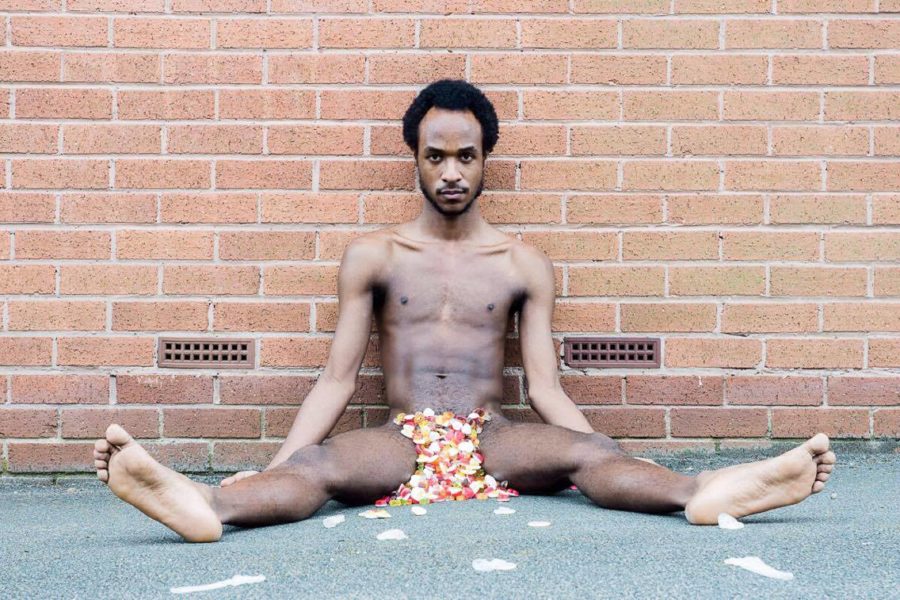
    JG – It can be emotionally draining and it can be cathartic. Despite its simplistic presentation, it is quite a deep piece. I talk about things which are really difficult for me; such as my internalised homophobia as a younger man; the moment I came out, my experience in the church and about relationships which have hurt me in one way or another; but that is counteracted by the fact that I also talk about the positivity I have experienced. It’s not just about reliving the hard times; it is also about constantly remembering and reinforcing the positive steps on the journey which have led me to where I am today. By performing the majority of the piece in just a pair of short, black, tight trunks, it shows that I am hiding nothing, that I am open and honest. There is nothing to hide behind on the stage, not even clothes, and it is about reflecting that I am quite literally exposing my life, my thoughts, my experiences to the audience.

    TGUK – You use a lot of symbolism to tell your story

    JG – There is a section where I eat a raw onion in the show. On a simplistic interpretation, it may look like the usual analogy of an onion having layers and about how that is reflective of me as a person, which may look almost cliché. But it is deeper than that; the symbolism behind it is that, as anyone who sees the show will tell, I hate onion and consuming it is symbolic of ingesting something that I hated, of my repressed sexuality as a youngster and of my internalised hatred of who I was as a result of my cultural experiences growing up. The piece has a lot of aspects which have multiple meanings and it is for the audience to draw out their own conclusions about what the piece is saying. My show is, in some ways, a gift to the audience. They can take it and use it how they want. They can accept the gift and enjoy it, they can appreciate it, pass it on, re-gift it or put it in the cupboard – but it is something I offer to them with a genuine intention; what they then do with that is up to them.

    TGUK – You end the show painting yourself in the colours of the rainbow flag. Why chose that piece of symbolism to round off the show?

    JG – I wrote a poem some years ago where I used the line “ripping rainbows apart” and I wanted to bring that line to life. But also because the rainbow flag is a symbol reflecting both sexuality and colour, which is what this piece is about. It felt a natural way to bring the piece full circle. Ending the show embraced in the colours of the rainbow flag feels comfortable and is about how, despite their differences, the LGBT community do embrace each other. The flag gives us protection and a sense of togetherness. How else could I end the show except for showing the unity and the positivity of the LGBT community as a whole?

    FADoubleGOT is currently on tour, calling at The Hive in Shrewsbury (30.09.16); Hackney Showroom in London (04.10.16), as part of the And What? Queer Arts Festival; Live Art Bistro in Leeds (14.10.16); Camden People’s Theatre in London (18.10.16 and 19.10.16) and Theatre Deli in Sheffield (17.11.16). You can follow Jamal on Twitter at @JamiBoii and on Tumblr at http://jamalgerald.tumblr.com/ . Many thanks to Doncaster CAST Theatre (www.castindoncaster.com) for facilitating this article.