Tag: Movie Genre Documentary

Welcome to our extensive Documentary film reviews.

  • FILM REVIEW | The Internet’s Own Boy: The Story Of Aaron Swartz

    ★★★★★ | The Internet’s Own Boy: The Story Of Aaron Swartz

    This is the story of a charming and selfless information prodigy that strived to use his talent to make this a freer and better world for which he ended up paying for with his life.

    Aaron Swartz was born in Chicago, the middle son, of successful middle-class Jewish parents. Inquisitive from birth, he taught himself to read by the age of three and by the time he reached High School he despaired of his teachers who he complained taught him less than he could read up in an hour. At 13 he won a competition for young people who created non-commercial websites for which the prize included a trip to M.I.T. From then on, there was no looking back for him.

    From there the young genius played a major part in the development of the basic Internet protocol RSS and also co-founded Reddit which became the most popular social news website in the world. His work brought fame in the online communities and also wealth (when Reddit was sold) but this affable young man couldn’t have been less interested in either. What did excite him was social justice and political organising that focused on working to free up inaccessible information online that he believed belonged in the public domain and should be available to all without charge. It was what would prove to be his undoing in time.

    Without Swartz’s involvement it is most unlikely that the Stop Online Piracy Act would have been defeated in Congress, but when he set about copying almost 5 million academic articles from JSTOR (Journal Storage) Database at M.I.T. events did not go his way. Swartz maintained that as these articles had been financed from public funds they should be freely available. When he was caught, JSTOR chose not press any charges but the Federal Government did and very aggressively pursued Swartz and indicted him with a total of 13 felonies. To its shame, M.I.T. just stood on sidelines and did nothing.

    The beauty of Brian Knappenberger’s rather wonderful documentary of this extraordinary young man is that he makes a concerted effort to show not only why the online community was in awe of his seemingly unlimited talent, but by including his very supportive and proud family and friends, he showed what an exceptionally nice person Swartz was too. This very unassuming man was magnanimous and both reserved and quiet but he seemed to blossom as more people called on him to help. He was a passionate thinker who used the same logical approach he employed when programming also in how tackled any social injustice he came across.

    Why he took his own life is never really explained in the movie, but what is very clear from listening to all the evidence is that was a wasted life cut short. However his memory just doesn’t live on with his loved ones, and with the online community who are in awe of all his inventions and achievements. In 2013, a Bill was introduced to finally reform the ambiguous and outdated Anti-Hacking Law that the Government used so mercilessly against him. The Bill is called Aaron’s Law, as well it should be.

    Unmissable.

    Available on Netflix
  • FILM REVIEW | I Am Divine

    ★★★★★ | I Am Divine

    As Jeffrey Schwartz’s excellent new documentary I Am Divine is released in the UK, The Gay UK’s film critic Roger Walker-Dack caught up with legendary filmmaker John Waters for a few personal words about his muse and great friend Divine.

    John told us ‘When it comes toI Am Divine I have let Jeffrey be the one to speak, as it’s his film in this instance he’s the one who deserves the attention. I’m STILL shocked that Divine is dead! Divine had a great life in the UK, and he’d be thrilled that the film is being so well received.’

    Glen Milstead aka Divine was unquestionably John Water’s finest actor and muse. Not simply because of his talent that was as outsize as his physique, but because like Waters he was both totally fearless and dared to push the boundaries of bad taste as far as he possibly could. And he did it all in such outrageous style and unfettered enthusiasm that made him such an iconic cult figure.

    In filmmaker Jeffrey Schwartz’s new very upbeat documentary into this unique entertainer and character, we learn that Divine had always dreamt of being a movie star since he was a kid who had been picked in and bullied at school as being both effeminate and fat. And he did deservedly become one and was just about to parlay his major underground success into the mainstream with a (non-drag) part in a nationally syndicated TV sitcom when he dropped down dead in Hollywood after a massive heart attack the very day before filming was due to start. He was just 42 years old. Manager, Bernard Jay poignantly claimed that as Divine was at the peak of his career, he had at least died happily.

    Divine and John Waters both grew up in Baltimore and met when they were teenagers. They made anarchic campy home movies together at the beginning with exaggerated characters in outrageous situations with hyperbolic dialogues. They were never meant to be shown outside of their wee band of local actors that included Mink Stole, Edith Massey, and David Lochary (the latter becoming a big love of Divine’s life before his own untimely death). But word got out and soon people were clamouring to see the films that got bigger and even bolder.

    Water’s ‘trashy trilogy’ ‘Pink Flamingos’, ‘Female Trouble’, and ‘Desperate Living’ cemented Divine’s reputation as a movie diva, in particular, Flamingos which earned him the title of ‘the filthiest person alive’ after the notorious scene where he actually ate dog faeces. And after these successes, he also started to diverse his career taking starring roles in Off-Broadway shows, and becoming a very successful disco recording star. He added a whole new meaning to the word ‘fierce’!

    Many of the interviewees that Schwartz included gave Divine great credit for expanding the concept of the drag queen from brash female impersonator into something much larger, more subversive and less gender specific. Yet without a single exception, none of the TV chat show hosts that interviewed him could deal with the fact that Divine was sitting opposite them in men’s clothing calmly stating that ‘she’ was a character that he played and not the person he actually was off the screen.

    Matinee idol Tab Hunter recounted the joy he had at working with Divine on two very successful movies ‘Polyester’ and ‘Lust in The Dust’. These were followed by ‘Hairspray’, which turned out to be Divine’s biggest hit and very last movie.

    Schwartz beautifully captures both the joyous nature of Divine’s flamboyant life and also the great sense of sheer enjoyment he had. He includes the completely tasteless clip from ‘Eat Your Makeup.’ in which Divine played Jacqueline Kennedy in a grotesquely amusing re-creation of the Kennedy assassination just two years after the event. But he also shows the scene from ‘Multiple Maniacs’ where Divine’s character is raped by a giant lobster! A perfect epitaph.

    Someone said towards the end of the movie … ‘after him, no-one can ever now be called Divine … he OWNS that title’. Too true.

    An unmissable flawless movie.

    The fabulous UK and Irish Cinema and VOD release of I Am Divine is one week away!

  • FILM REVIEW | Uncle Howard

    FILM REVIEW | Uncle Howard

    ★★★★ | Uncle Howard

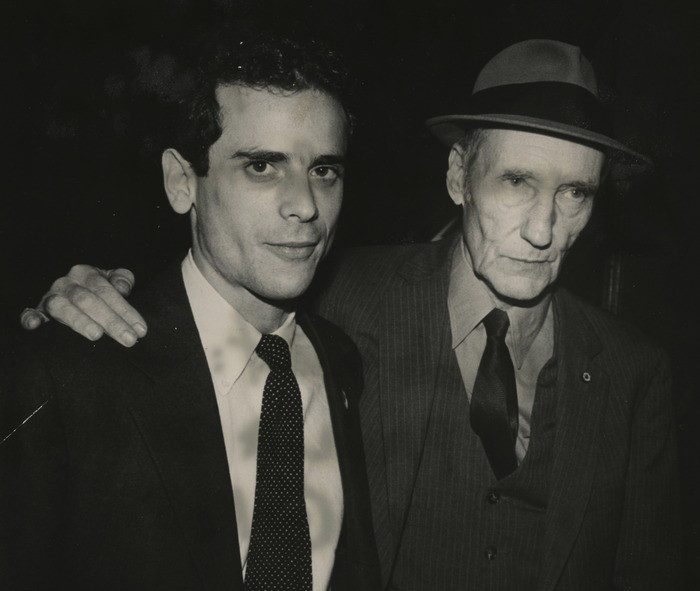
    Howard Brookner was three days shy of 35 when he died of AIDS in 1989.

    Who was Howard Brookner? He was an American film director and famous for his college thesis documentary on William S. Burroughs – the American novelist who was also a member of the beat generation. Brookner also wrote and directed the feature-length film Bloodhounds of Broadway – a period comedic ensemble that starred several big names including Matt Dillon, Jennifer Grey, Anita Morris, Julie Hagerty, Randy Quaid, and Madonna.

    But Brookner was more than just a film director – he was also an uncle, an uncle to Aaron Brookner. And Aaron has made a film about his uncle in a moving documentary simply titled Uncle Howard.

    Aaron, 35 years old, was inspired by his uncle to make movies. In the documentary we see home video footage of Howard hanging out with Aaron when he was a kid, with Howard parading Aaron around on his shoulders. These scenes are touching and sentimental because it sets the tone of the short relationship Aaron had with his uncle, an uncle who passed away when Aaron was only 8-years-old, an uncle who made such an impression on him that decades later Aaron would want to make a documentary about him. Aaron’s early memories of Uncle Howard included being on the set of Bloodhounds of Broadway, a film that turned out to be Howards only major studio film, and unfortunately, he passed away before its release.

    Aaron wanted to seek out Howard’s original film footage for his Burroughs documentary, and found it in a place called The Bunker in lower Manhattan, the former home of Burroughs. There are scenes of Aaron watching the old tapes which are then inter-spliced with the actual film footage, which gives us, and Aaron, a glimpse of the early work of his uncle, an uncle with high doses of passion and talent. The old footage also includes glimpses of Allen Ginsberg and Andy Warhol, while both new and old footage shows Jim Jarmusch, with Howard in the 1980’s, and then with Aaron in the present day.

    The writer Brad Gooch gives us a raw insight into his ten-year relationship with Howard, while discussing the loss of Howard and many friends during the height of the AIDS pandemic, scenes that are emotional, touching and sentimental. But what most pulls at the heartstrings is Aaron’s conversations with Howard’s mother, Elaine, who walks down memory lane with Aaron about the life of Howard and how he was taken from them at such a young age. Uncle Howard is a film with a personal touch, and Aaron has successfully delivered a fitting tribute to an uncle who died way too young.

    I wish I had an Uncle Howard.

  • FILM REVIEW | Eden, It Is About The Music

    If you’re a big fan of garage and dance music, then you’re gonna love ‘Eden,’ a film about one of the pioneer DJ’s of the French underground dance music scene, with a great soundtrack. ★★★★

    (more…)

  • FILM REVIEW | Sherpa

    FILM REVIEW | Sherpa

    Sherpa | ★★★★★

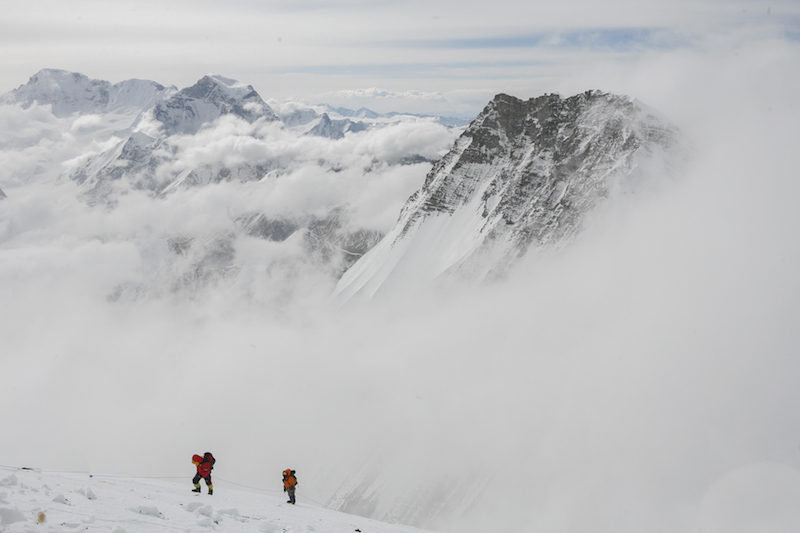
    A very moving story about the men who risk their lives to help others reach the top of Mount Everest is told in the excellent documentary ‘Sherpa.’

    Sherpas are an ethnic group from Nepal’s mountainous region, high in the Himalayas. It’s also a surname in a culture that mostly doesn’t assign surnames to its people.

    Sherpas are highly regarded as elite mountaineers and experts in their local areas, and because they live in very high altitudes, they get hired to serve as guides for expeditions in and around the Himalayan Mountains, especially expeditions up Mount Everest. Sherpas are tasked with carrying all the necessary expedition equipment up (and down) the mountains. And as for expeditions up Mount Everest, Sherpa’s go up and down the mountain about 30 times. They also have to go through the Khumba Icefall, a dangerous and constantly moving block of ice that is the first hurdle in climbing the mountain. The term Sherpa made it into the cultural lexicon in 1953 when Sir Edmund Hillary and Tenzing Norgay became the first people to reach the summit of Mount Everest, in a year that was the Coronation of Queen Elizabeth. Norgay was referred to then as a Sherpa, and he was awarded the George Cross, while Hillary was Knighted. Norgay gave the name Sherpa a currency that is synonymous with climbing.

    In ‘Sherpa,’ filmed in 2014, Director Jennifer Peedom set out to make a documentary from the Sherpas’ point of view, she wanted to observe up-close, how, and why the relationship between foreign climbers and Sherpas have shifted and soured since the euphoria of 1953, especially after 2013’s ugly brawl when a climber made a derogatory remark to a Sherpa at 21,000 feet, causing a fight between the climbers and the Sherpas. What the filmmakers got instead was to capture the worst tragedy in the history of Everest, and the subsequent days that would change the mountain forever.

    The filmmakers embedded themselves with a commercial expedition run by New Zealander Russell Brice’s company Himalayan Experience. Brice had four returning clients after they had failed to reach the summit in 2012, so the pressure was on to get them to the top. There was also a team of 25 Sherpas, managed by Phurba Tashi Sherpa, who Peedom was able to interview before the climb. We see him as he prepares to make history by being the first person to summit Mount Everest 22 times; his wife and mother are also seen voicing their concern about him climbing the mountain they refer to as Chomolungma.

    But at 6:45 a.m. on April 18th, 2014, a 14 million kg block of ice crashed down onto the climbing route through the Khumbu Icefall, killing 16 Sherpas. This disaster changes the Sherpas’ lives, shatters the dreams of the climbers, puts into question future expeditions, and changes the focus of Peedom’s documentary. It was the worst tragedy on Everest. Peedom captures the Sherpas united in grief and anger while everyone rushes to implement a rescue plan. But it turns into a Sherpas versus Westerners showdown as the Westerners want to control the rescue and recovery while the Sherpas want to included in retrieving their own. Peedom captures the tension and the drama, all at Base Camp, at 17,598 feet.

    ‘Sherpa,’ beautifully directed by Peedom, who also directed 2006’s Everest: Beyond the Limit, was ready to tell the story of the relationship between the Sherpas and the foreigners on Everest. After the avalanche she tried to make sense of it all, and captured on film the unfolding situation, and the Nepalese Government’s slow reaction to the tragedy. Peedom follows the story as it unfolds as she and the rest of the crew inadvertently witnessed and documented a historic event.

    She also beautifully interweaves the back-stories of those who risk their lives for the sake of others – the Sherpas. Her crew capture the beauty and the landscape of the region, while at the same time capture moments of disaster and anger and sadness, it’s a compelling and must see documentary. The Best documentary of the year.

    On April 25, 2015, there was a massive earthquake in the Nepal region killing over 9,000 people. It was the worst natural disaster to strike Nepal in 80 years. It triggered an avalanche on Mount Everest that killed 19 people, and aftershocks took place, which further put into question the future of climbing Mount Everest ever again.

    Sherpa won the Best Documentary Awards at the London Film Festival. It’s now out in cinemas.


  • FILM REVIEW | Chemsex

    A hard-hitting and eye-opening look at gay men and their sexual lifestyles is on full display in the new documentary ‘Chemsex.’ ★★★★

    It’s not all gay men, but, as the documentary tells us, it’s but a few who go on drug binges, coupled with lots of unsafe sex, that last all weekend. And it’s these men who are more than likely to become infected with HIV.

    We meet several of these men. One of the first is Dick, who is not shy to tell us about his sexual exploits, while on drugs, and freely admits that he’s just taken drugs before the camera crew arrives (a couple of the guys interviewed admit to this). We also meet clean cut Simon, a well-educated man who happens to be a geneticist. He’s had a hard time beating the temptation to take part in drugs and unsafe sex. He also admits that he’s HIV+, but he’s also a denialist who doesn’t believe that he’s got it. We then meet Enrique, a 30-something good looking Spanish man who says he was a commercial banker for 10 years but lost everything because of his chemicals habit.

    After losing pretty much everything, including his job, he resorted to prostitution to make money. More importantly, we meet David Stuart, Substance Use Lead, GUM/HIV Manager at Soho’s 56 Dean Street Clinic. We see his discussions with Simon, who he tells to try to go a week, and two weeks, then another without taking drugs. Stuart is the voice of reason in ‘Chemsex.’ He’s there as an advisor, and also as a friend, to many of his patients. Stuart bluntly says in the film that him and a friend used to regularly do cocaine while he was hooked up to a IV drip while he was close to death with an HIV illness many years ago. No doubt his experience with both HIV and drugs enables him to relate to his patients at the clinic. And his program at the Clinic is one of its kind and is being used as a model for clinics in the country.

    It’s a disturbing documentary. Not only after hearing about these men’s behaviour but also to digest the fact that there are organised private parties for men who want to combine unsafe sex and various types of drugs. We meet one party organiser who opens up his home to the cameras, and we see the men who are there, engaging in unsafe sex all around the house, with most of them openly taking drugs, mostly provided by the host.

    Of the estimated 107,800 people living in the UK with HIV, 24% are undiagnosed and possibly spreading the virus. And men who have sex with men have the highest risk of infection in the UK and, in 2013, they accounted for 54% of new diagnoses. One in 11 gay men in London is living with HIV. And a record high of 3,360 gay men were diagnosed with HIV in 2014. It’s statistics like these that make you wonder why gay men partake in drugs and unsafe safe, with Chemsex being the term for this. Directors William Fairman and Max Gogarty spectacularly highlight this epidemic in the gay community in a very powerful and potent film about the underworld of modern gay life with it’s easy access to sex using mobile apps and the internet, and drugs.

    Statistics in a chemsex study from 2014 by 56 Dean Street Clinic showed that 3,000 gay men accessing the clinic each month are using recreational drugs, though not necessarily wishing to address their drug use. 100 new gay men access specific ChemSex support each month; 70% of these reported no ‘chem-free’ sex in previous six months while 98% had never accessed statutory drug use support.

  • FILM REVIEW | Chemsex

    A hard-hitting and eye-opening look at gay men and their sexual lifestyles is on full display in the new documentary ‘Chemsex.’

    It’s not all gay men, but, as the documentary tells us, it’s but a few who go on drug binges, coupled with lots of unsafe sex, that last all weekend. And it’s these men who are more than likely to become infected with HIV.

    We meet several of these men. One of the first is Dick, who is not shy to tell us about his sexual exploits, while on drugs, and freely admits that he’s just taken drugs before the camera crew arrives (a couple of the guys interviewed admit to this). We also meet clean cut Simon, a well-educated man who happens to be a geneticist. He’s had a hard time beating the temptation to take part in drugs and unsafe sex. He also admits that he’s HIV+, but he’s also a denialist who doesn’t believe that he’s got it. We then meet Enrique, a 30-something good looking Spanish man who says he was a commercial banker for 10 years but lost everything because of his chemicals habit.

    After losing pretty much everything, including his job, he resorted to prostitution to make money. More importantly, we meet David Stuart, Substance Use Lead, GUM/HIV Manager at Soho’s 56 Dean Street Clinic. We see his discussions with Simon, who he tells to try to go a week, and two weeks, then another without taking drugs. Stuart is the voice of reason in ‘Chemsex.’ He’s there as an advisor, and also as a friend, to many of his patients. Stuart bluntly says in the film that him and a friend used to regularly do cocaine while he was hooked up to a IV drip while he was close to death with an HIV illness many years ago. No doubt his experience with both HIV and drugs enables him to relate to his patients at the clinic. And his program at the Clinic is one of its kind and is being used as a model for clinics in the country.
    It’s a disturbing documentary. Not only after hearing about these men’s behaviour but also to digest the fact that there are organised private parties for men who want to combine unsafe sex and various types of drugs. We meet one party organiser who opens up his home to the cameras, and we see the men who are there, engaging in unsafe sex all around the house, with most of them openly taking drugs, mostly provided by the host.

    Of the estimated 107,800 people living in the UK with HIV, 24% are undiagnosed and possibly spreading the virus. And men who have sex with men have the highest risk of infection in the UK and, in 2013, they accounted for 54% of new diagnoses. One in 11 gay men in London is living with HIV. And a record high of 3,360 gay men were diagnosed with HIV in 2014. It’s statistics like these that make you wonder why gay men partake in drugs and unsafe safe, with Chemsex being the term for this. Directors William Fairman and Max Gogarty spectacularly highlight this epidemic in the gay community in a very powerful and potent film about the underworld of modern gay life with it’s easy access to sex using mobile apps and the internet, and drug

    Statistics in a chemsex study from 2014 by 56 Dean Street Clinic showed that 3,000 gay men accessing the clinic each month are using recreational drugs, though not necessarily wishing to address their drug use. 100 new gay men access specific ChemSex support each month; 70% of these reported no ‘chem-free’ sex in previous six months while 98% had never accessed statutory drug use support.


  • FILM REVIEW: The Program, Not A Winner In My Book

    Director Stephen Frears brings us the rise, and fall, of cycling champion Lance Armstrong in the new film ‘The Program.’

    (more…)

  • FILM REVIEW | I Am Chris Farley

    American Comedian Chris Farley was only 33 when he died of a cocaine and morphine overdose a few days before Christmas in Chicago in 1997.

    The new documentary I am Chris Farley tells his rapid ascent to stardom and his even quicker descent to a life of alcohol and drugs, and eventually to an early death.

    ‘I am Chris Farley’s’ was made in conjunction with the estate of Chris Farley, so the producers had access to all of the relevant people in Chris’s life, including his family, friends, and fellow comedians and television co-stars. From his days as an unknown comic at Chicago’s Second City Theatre (where lots of famous comics got their start), from where he was plucked to be on the popular NBC sketch comedy show Saturday Night Live (SNL) for five seasons, to eventually following the path of former SNL’ers to star in movies.

    Chris’s brother Kevin Farley (who is also a producer of the film, and is also a comedian) reminisces about his brother Chris during his stand up comedy act. Kevin then talks about their lives growing up in Madison, Wisconsin, where they had a normal life, with a father who gave his boys a lot of freedom. Kevin talks about Chris’s life in high school and college and laughs about the way in which Chris would throw himself to the ground and do pushups to impress women. While Chris did graduate from college and worked for a time for his father at the Scotch Oil Company in Madison, he didn’t get his professional start in comedy until he joined Ark Improv Theatre in Madison. It was clear then that Chris was the stand out star, footage from his shows display a comedic style that surpassed his costars. Even when he went on to be part of Chicago’s Second City Theatre, his on stage presence was larger than life. But it wasn’t until he got to SNL that he was able to display his true comedic talent, with the aid of professional comedy writers in an intense weekly live television show setting.

    Farley was a member during one of SNL’s peak times, and his fellow cast members included Adam Sandler, Mike Myers and David Spade. Not only did Chris outshine and outperform his fellow cast members, he was the one who provided the huge laughs on the show, whether in his role as ‘motivational speaker,’ to a skit where he auditions for Chippendales alongside host Patrick Swayze (in which Farley takes off his top to reveal a huge belly), to any role that he was given, Chris was truly the funny man. But according to the people who knew him, he was also a softee, a very sincere guy who would take a liking to everyone, and everyone would take a liking to him. SNL creator and Executive Producer Lorne Michaels talks, at length, about how he mentored Chris in his early days of being on the show. Myers talks about the times they spent together on the set and how Chris was the nicest and most sincere guy there. But it’s David Spade who brings the best of the memories of Chris in the film – they both started at SNL at the same time, so they shared the incredible feeling of being first-timers on the historic television show. Spade mentions many funny moments he and Farley shared together on the set, including the many times when Chris would walk into his shower at work, stark naked (with his penis tucked in) and proceed to give Spade a huge hug – Spade says this was just the kind of man Chris was. Spade and Farley would eventually break out of television and into films. And after they were released from their SNL contracts in 1995, they made the films Tommy Boy and Black Sheep, both critically panned but made lots of money. But in between these films, Farley’s personal life was not as shiny as his professional life.

    Drug and alcohol problems led him to rehab an astonishing 17 times. Michaels was instrumental in trying to help Farley overcome his habit, but it was a demon that Farley was unable to kick, which led to his premature death where he was found on a linoleum floor in his apartment in Chicago. Eerily enough, John Belushi, another overweight comedian who got his start at SNL and became a huge movie star (Ghostbusters, The Blues Brothers), also died at the age of 33, of a cocaine and heroin overdose, in 1982.

    I am Chris Farley is a best of Chris Farley documentary that shows the best of his professional work. We are also treated to his spot on the David Letterman Show where he bounds onto the stage, making sure you knew he was in the room, his hair all over his face, clenching his fists, and then in true Chris Farley fashion, falling over backwards in his chair.

    While the documentary doesn’t really explain why Farley got involved in alcohol and drugs in the first place (perhaps no one knew), it’s a very good tribute to a celebrity who died way before his expiry date.

    “There’s a category of people who I’ve worked with who are infuriatingly talented’ – Michaels says – “and Farley was one of them.”

    I Am Chris Farley is now available to buy on Blu-Ray and DVD.


  • FILM REVIEW | Iris

    “I don’t like pretty!” 93-year-old idiosyncratic fashion maven Iris Apfel remarks, in an enchanting new documentary by Albert Maysles.

    Iris acknowledges that she was never a conventional beauty but that has hardly stopped her pursuing her passion for style and becoming one of the most original and daringly dressed women in New York. As Maysles films her on and off for the past four years he captures not just her remarkable talent for putting the most unexpected and stunning outfits together for her daily ensembles, but he also reveals a captivating quick-witted charmer with an insatiable appetite for living life to the full.

    Iris, married to her centenarian husband Carl for the past 66 years, lives in her mother’s Park Avenue apartment crammed with racks and racks of clothes. These, she explains were bought to be worn and not simply to be collected. She mixes chic with cheap and the results are always fabulous.

    She and Carl ran a very successful interior design business for years and their clients include many of the occupants of The White House over the years, in one charming scene she quickly stops Carl spilling the beans about (how difficult) Jacqueline Kennedy was.

    She was already well-known by New York’s fashion insiders but then in 2005 the Metropolitan Museum of Art mounted what they thought was a small exhibition of Iris’s clothing and jewellery which turned out to be an unexpected phenomenal success. Doors were suddenly opened to her including commissions to do collections for the Home Shopping Network and becoming a Visiting Professor of Fashion for the University of Texas.

    She was now, in her own words an octogenarian starlet and she put some of this down to the fact the Exhibition had provided the world with much-needed fantasy and glamour. Iris never does anything petite: everything must be big and bold. “Colour is so important: it can raise the dead,” just one of the statements that just trip off her tongue as she spouts forth about her beliefs. What Maysles is quick to spot though is that despite the seemingly incessant flow of opinion, Iris refuses to take any of it seriously.

    Towards the closing scenes of this delightful docu-portrait of the woman Bergdorf Goodman called, “the rare bird of fashion”, Iris claims that her two best traits are curiosity and having a good sense of humour. “I could never be a friend of anyone who wasn’t either”, she added.

    Frankly it’s hard not to like someone as engaging as Iris who comes out with such plums as “my mother worshipped at the altar of the accessory.” By the end of the movie you may not want to actually worship at the altar of Apfel, but you will be very sorely tempted.

    P.S. This sadly was the last work of the great documentarian Albert Maysles who died just days before the movie was screened at the Miami International Film Festival.

  • FILM REVIEW | Tab Hunter Confidential

    ★★★★★ | Tab Hunter Confidential

    Tab Hunter was and still is at the age of 83-years old a stunningly handsome man.

    When he was a teen idol in the 1950s he was the ultimate clean-cut, all-American boy and seemingly butter would not melt in his mouth. He was Warner Brothers Studio’s biggest box office movie star for at least three years of his tenure there. Surprisingly, we learn from this documentary, that Tab’s sexuality didn’t play a part in the ending of his Hollywood career. It was the actor’s own desire to buy himself out of his studio contract. Even though he was a major star, Hunter was extremely unhappy with the lightweight fluffy movies that he was always having to make.

    Tab Hunter Confidential is based on the memoir that Hunter penned with film historian Eddie Muller in 2005. It is a lively account of how this handsome matinee idol, with a rigid set of principles, coped with his dramatic professional and personal life. His sexuality, although hidden from the public in the early days, was no deterrent for studio mogul Jack Warner who never raised the subject. He was simply happy that Hunter was such a moneymaker for him. When on one occasion Hunter’s privacy was sacrificed to save Rock Hudson from being exposed, Warner defended him with a blunt, “Today’s headlines are tomorrow’s toilet paper.”

    With his career fading, Hunter resorted to dinner theatre and whatever work he could get to scrape by until his career got a second wind in the 1980s when he co-starred in Polyester with Divine.

    The most interesting part of the story is Hunter’s romances ranging from ice skater Ronnie Robertson to actor Tony Perkins, the latter who managed to break his heart and steal a role that he had coveted. In an era when homosexuality was not only illegal but could also destroy lives, Hunter resisted taking the well-worn path of other closeted gay men in the public eye who had marriages of convenience. True, he very publicly ‘dated’ many starlets and took part in many photo spreads in fanzines with them, but he resisted the pressure to opt for the easy way out by getting wed.

    Hunter a very devout Catholic explains his dilemma at the time: “If you were with a man you would be sinning, and if you were with a woman you would be lying.”

    He did, as Debbie Reynolds confirmed, make the right choice and he eventually was able to come to terms with his sexuality by accepting the Church’s teaching on love and self-acceptance.

    Some 30 years ago, Hunter aged 53 met a 23-year-old man called Allan Glazer who became his partner, and now after three decades together Glazer is a producer of this documentary which may be a reason why there is little of him in this movie. Since Hunter’s second movie with Divine in 1985 Lust In The Dust, he has settled down to a life away from the spotlight on his ranch with Glazer raising horses.

    Emmy Award winner Jeffrey Schwarz directs the movie, and this is his fourth documentary of a gay icon (Vito, Jack Wrangler and Divine). Schwarz shows a genuine affection for his subjects and the portraits he paints are very insightful and totally riveting. He reintroduces this disarmingly charming man to those of us who have memories of Hunter growing up, and present him to a new generation, who will see him as a role model that they can look up too.


    The Tab Hunter DVD is available to buy