A newly married French gay couple journey to America to find a surrogate in the moving documentary ‘Ghosts of the Republique.’
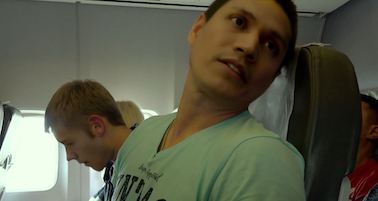
It was love at first sight for Aurelien and Nicolas when they meet at a gay club in Paris. They wind up getting married and such begins the film and their journey. It’s 2014 and estate agent Nicolas and flight attendant Aurelien make a perfect couple, while both their parents have accepted the fact that their gay sons would never be parents. Even Nicolas’s mother is happy to now have two sons but upset that she’ll never be happy as she’ll never have a grandchild.
However, Aurelien and Nicolas do want to have a child, but they face serious obstacles – the most difficult one being that the French government does not allow surrogacy. It’s a government that passed same-sex marriage in 2013 but is not quite progressive enough. Aurelien and Nicolas are so determined to be parents that they fly to Las Vegas to start a family of their own through international surrogacy. They search high and low for an egg donor and also a surrogate to carry the egg to produce a child. They interview several local women, make decisions, and proceed with the process.
It’s a process that’s complex, full of loopholes and uncertainty, and where every step has to go perfect and according to plan. Getting their non-French born baby back into France and establishing French citizenship is another hurdle to tackle. We go through the highs and the lows with Aurelien and Nicolas in the documentary – it’s an emotional ride made bearable by the charming couple who desperately want a baby, and we see them travel back and forth from France to the US several times to check in their baby mama.
Ghosts of the Republique, directed by American Jonathon Narducci, provides us with much joy and drama in this sweet and touching story of Aurelien and Nicolas.
Ghosts of the Republique is now available on Amazon Prime, iTunes and other platforms.
In the new documentary film Bare, these men are whittled down to eleven who rehearse and perform the premiere of Belgian choreographer Thierry Smit’s new dance piece ‘Anima Ardens.’ Director Aleksandr M. Vinogradov’s captures the auditions, and rehearsals, in this documentary that is both revealing, sexy and fun. Filmed in Brussels, the men, all presumably professional dancers, jump at the chance of working with Smits, a well-known choreographer who set up his own company in 1990, and who has created over 30 dance performances. His dance pieces are contemporary, with fusions of pop, queer and often provocative aesthetics included.
The eleven men have no problem getting naked. One, during the early stages of the audition, raises the question as to why the camera is in the room. The explanation is that a documentary will be made about this process answers the question, and the show goes on. However we really don’t get to know any of the dancers individually, and Smits, front and centre, also remains an enigma. But combining Smits with the dancers in their daily struggle to get the dance moves correct, with Smits not quite knowing exactly what he is looking for, brings mystery and drama into play.
All the dancers are very sexy, of course especially when naked, but after a bit, the nudity becomes almost invisible (but not quite) and it’s the performance piece they are rehearsing that takes centre stage because it’s unconventional. All the dancers appear to be very comfortable with each other, and near the end, they are all very playful in the showers as they clean up after a day of rehearsal. And Bare cleverly ends as the first performance of ‘Anima Ardens’ begins. Lucky for us, just a quick Google search will lead you to see the actual dance piece in its entirety.
Bare is indeed bare; it’s sexy, raw and in your face.
Bare held its world premiere at Hot Docs and has also been featured at Cinema Diverse, Doc NYC and DocEdge.
Look for it hopefully at UK film festivals in 2021.
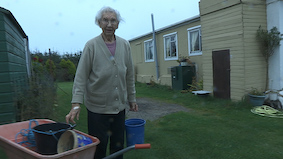
Trump built his Aberdeenshire, Scotland golf course in 2012, disturbing the land and making life hard for the people who didn’t want to sell their land to him. One of these people is 96-year-old Scottish widow Molly Forbes who the billionaire says reminds him of his own Scottish mother. She scoffs at this. She is no Trump lover, and neither is filmmaker Anthony Baxter. But Trump was cruel enough that he had her water supply cut off because the pipes to her water supply ran through his golf course property, so for five years Forbes, and her son and his wife who lived nearby, had no running water. In interviews with Trump himself and his son Donald Trump Jr., we see the Trumps pretend to care but in reality, they don’t, and actually lie to the cameras in true Trump style.
Filmmaker Anthony Baxter was arrested and thrown in jail when he first discovered the water supply to Molly and her family had been cut off by Donald Trump’s workers while constructing a luxury golf resort near Aberdeen. The charges were thrown out and the police forced to issue an apology. However Baxter is astounded to learn Molly and her son Michael – who Mr Trump branded ‘a pig’ – is still without a reliable water supply half a decade on.
However, when the film was completed, the Trump Organization threatened any cinema that showed it. The US distributor then pulled out – denying the film a proper theatrical release or broadcast. But now Journeyman Pictures is releasing the film worldwide.
You’ve Been Trump Too is a remarkable document of what we know about the man who runs America – he is a liar, crook and as Forbes, son Michael says – “full of bullshit.” It’s a film about the little people who stand no chance against the Trumps, especially against a man as evil and conniving as Trump.
You’ve Been Trump Too is the film Donald Trump doesn’t want you to see. Hopefully with the U.S. election coming up soon, the world will be rid of him.
David France is quickly becoming one of the best documentary filmmakers of our generation.
In 2012 he brought us the riveting How to Survive a Plague – about the early years of the AIDS epidemic and the ACT UP activists who fought for their lives. Then came 2017’s The Death and Life of Marsha P. Johnson, about a well-loved drag queen and gay activist who was found dead off the West Side Piers in Manhattan in 1992. Now he brings us another important documentary for and about the LGBT community – Welcome to Chechnya.
The film follows David Isteev, who along with the Russian LGBT Network, helps gays and lesbians escape from Chechnya, a country where, in 2017, its government started a gay purge where over 100 men were (allegedly) detained and subject to torture, with many being murdered. This had kicked off because in February 2017 a gay Chechen man had been arrested for drug offences and arresting officers discovered contact information for other gay men on his phone. These men were caught, and they, in turn, turned over more names to the authorities, escalating to a point of crisis. But not only were these gay men subject to arrest and torture, Lesbians were also subject to the same fate.
In the documentary, David attempts, by all means, to free ‘Anya’ who is seeking help because her uncle has threatened to tell her father, who is a high-ranking Chechyan government official, that she is a Lesbian if she doesn’t have sex with him.
But the focus of this harrowing documentary is the Moscow safe house where these refugees are taken to temporary accommodation to play the waiting game until a country, any country, can take them in. The focus of the documentary is our hero 30-year-old Grisha. He was arrested and tortured in Chechnya but managed to escape, and left the country. But it left his family vulnerable to the authorities so they, in turn, were smuggled out of the country into a safe house.
Grisha is reunited with his boyfriend ‘Bogdan’ in scenes that are emotional and loving – these two men really care and love each other. But Grisha doesn’t want to remain silent and anonymous the rest of his life, he wants to come out publicly to expose the Chechnyan Government for the atrocities they inflicted on not just him but on perhaps what could be hundreds of victims.
The film also introduces us to the brave Olga Baranova, who helps the refugees in the safe house with any and all that they need. She is like a mom (she herself has a young son) to the occupants.
While Anya is successfully smuggled out of the country, she is placed in an apartment and told not to go out – but after three months it appears that she is getting extremely restless and very lonely.
Meanwhile Grisha and his family are quickly moved to another country after suspicious people knock on their door and threaten to come back the next day. It’s harrowing, and director France was very fortunate to have not only Grisha’s family but the others allow him to film them in, at times, situations that could’ve exposed them. Some airport scenes, filmed undercover, are nail biting.
All of the subjects in the film have had their faces digitally disguised to protect them. This is such the fear that they have. While Chechnya technically is a federal republic of Russia, it appears to have self and independent rule by Ramzan Kadyrov, who appears to have waged an operation to ‘cleanse the blood’ of LGBT Chechens. He is shown in interviews in the documentary denying there are any LGBT people in his country. But he is shown in a photo with Zelim Bakaev, a Chechen pop-singer, who, in August 2017 disappeared after going back to Chechnya to attend his sister’s wedding. His mother has demanded justice but the government has not even started an investigation. He is presumed dead.
France’s access to these people is just incredible. Also incredible is that over two years, the Russian LGBT Network has managed to resettle 151 people fleeing Chechnya, many of them coming through the shelter. Welcome to Chechnya is an important documentary not just for our community but for the world to know what exactly takes place in Chechnya to our own people.
Welcome to Chechnya
In Russian, Chechen and English with English subtitles Not rated Running time: 1 hour, 47 minutes Playing: 8 p.m. June 30 on HBO; also available on HBO Now and HBO Max BBC iPlayer.
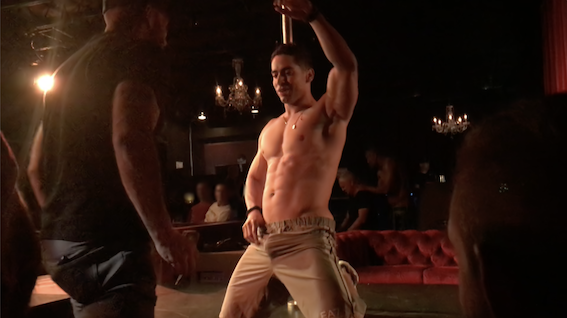
Step into the sexy world of male strippers in the new titillating documentary All Male, All Nude: Johnsons
Johnsons is not the name of one of the strippers – it’s the name of a male strip club in Fort Lauderdale. Well not actually Fort Lauderdale but a community within called Wilton Manors – Americas second gayest city per capita.
In a follow up to the popular 2017 feature documentary ‘All Male, All Nude,’ director Gerald McCullouch introduces us to the all too hot, sexy, and young male strippers of all nationalities at Johnson’s.
Owned by Matt Colunga, an award-winning bodybuilder who has been in the male entertainment industry for 23 years, we see that Johnson’s is the perfect place to work if you want to be a male stripper. The strippers can make as much as $500 on a good night – and perhaps even more if they go to the ‘private’ rooms with a customer. But everything here is on the up-and-up, no risqué business takes place here, where Matt really cares for his strippers, even to a point to make them take a breath test before they leave the club after their shifts.
We meet the adorable hot and sexy Alexander, 26, who spends his days dressed as Spider-Man creating fun for children at kids parties and then spends his nights stripping down to his G-String for gay men, and others including one young man who decided to become a cosmetologist when he decided he did not want to strip anymore.
Also, there are single fathers and young men putting themselves through college with their stripping income, to entertainers in the adult film world – all sorts of men who are working hard for the money. While the focus in the documentary is not on the customers, it’s them who keep this place going, and packed most nights.
‘All Male, All Nude: Johnsons’ is exactly what it says on the tin – it’s sexy, nude and all-male!:)
There’s a lot to take away from Michael Moore’s brand new documentary Fahrenheit 11/9 from the Flint Water Crisis, school gun violence the rise of Trump and how maybe the democrats aren’t as people-friendly as you might hope.
It’s the day after watching Fahrenheit 11/9 and my mind is still whirling. Michael asks (of Trump’s presidency) at the beginning of the film, “How the fuck did we get here?” and it’s a question many are asking.
But Moore’s troubling documentary takes us through history lessons and finds a way to link a number of big button issues and it doesn’t quite work, but you’ll be left with an uneasy feeling in the pit of your stomach.
In the two hour and a bit film, Moore manages to squeeze in the water crisis in Flint Michigan, the Parkland School shooting, the Bernie Sander’s vote scandal, the teachers’ strike, President Obama’s undermining of US citizens, Bill Clinton’s republicifcation, The New York Times‘ political bubble and of course, the rise and rise of Donald Trump.
It’s pretty full-on and you may be left with a sense of foreboding for the future of civilisation, but Moore doesn’t disappoint with the breadth of research undertaken for this documentary.
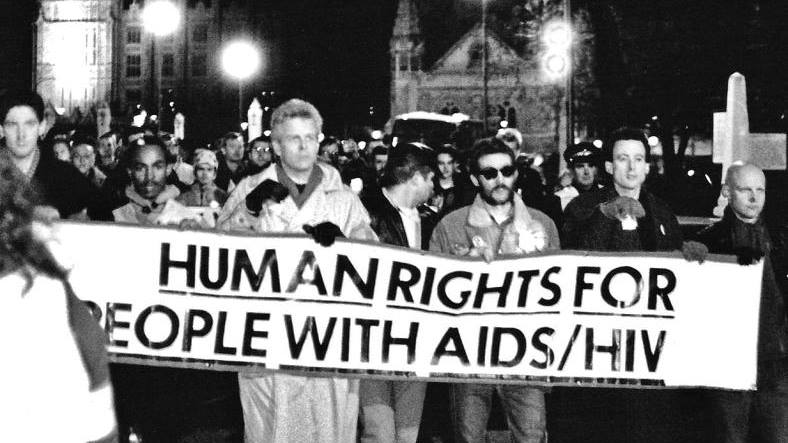
AFTER 82 is a new documentary about the AIDS crisis and the people who were affected by it most, is now available on VoD.
These men tell their stories of what they went through, what it felt like to receive a death sentence, and why they can’t really understand why they are still here after having lost so many friends and lovers in the 1980s and 1990s. We also hear from some of the women who were also in the front lines of the early days of the epidemic.
Narrated by Dominic West, Ben Lord and Steve Keeble’s compelling documentary looks back to the very early days of the pandemic when there were no medications available and a positive HIV test meant almost certain death.
The documentary features interviews with the actor Jonathan Blake (portrayed by Dominic West in the BAFTA-winning film Pride) who has lived with the virus for over 30 years. Dr Rupert Whitaker, who was still a teenager when he fell in love with Terrence Higgins, recounts their relationship, and Higgins’ subsequent death.
Lord Norman Fowler describes, with actual footage, of his visit to AIDS wards in San Francisco and sees for himself how the US was not dealing with the disease very well. He was part of Margaret Thatcher’s government and is the only man to have changed her mind about the then escalating crisis in the UK.
Thanks to his persistence and massive campaign surrounding HIV/AIDS during the 1980s HIV infections started to decline. Lisa Power OBE, who co-founded Stonewall, provides testimonies and insight to an era where hysteria from fear spread across the world through lack of knowledge and understanding. And Gary Brough, so eloquently and movingly tells his own personal story of having the disease in his 20’s and how now, in his 50’s, he has a mortgage, is in a civil partnership, and is thinking about retiring after having lived so long with the disease.
AFTER 82 is a moving documentary about stories that need to be told, and the ones told in this documentary are just a few of thousands of stories that have yet to be told.
“There’s a massive number of trans women who have been murdered, and they’re yelling out from their graves for justice”.
Director David France makes stunning a return with The Death And Life Of Marsha P Johnson, and it’s devastatingly relevant as dozens of trans women, particularly of colour, are murdered every year across the globe.
In 1992 Marsha went missing she was last seen on the 4th July, two days later her body turned up in the Hudson River, New York. Police and an autopsy ruled her death a suicide, but friends and relatives believe that she would never end her own life.
Was her death an accident, suicide or something more sinister? This is the question that activist and crime victim advocate Victoria Cruz from the New York Anti-Violence Project has set out to determine as she launches her own investigation into the death of one of New York‘s most prominent LGBT figures.
Marsha was and is, without a doubt, one of the leading activists who created the modern LGBT+ rights movement in the USA. The film also pays kind tribute to another unsung hero of the movement, Sylvia Rivera who died in 2002. Previously unseen, fascinating footage of Rivera shows her to be a formidable character and unrelenting trans and gay rights advocate. Her life was cut short at the age of just 50 of complications from liver cancer.
Documentary maker David France, whose other notable work includes, How To Survive A Plague, uses stock and archive footage and touching interviews with those who knew Marsha to haunting effect, bringing alive the formative years of the burgeoning gay rights movement in New York, following the Stonewall Riots in the summer of 1969.
Vivienne Westwood – she truly is an icon, punk, activist and an inspiration to us all. Westwood called this documentary mediocre, but she is far from mediocre.
Clothing Designer Vivienne Westwood has denounced the new documentary about her saying that the film does not at all focus on her activism but instead is ‘made up of archive fashion footage.’
In the first few minutes of Westwood: Punk, Icon, Activist, Westwood tells the camera, and the interviewer, that she doesn’t want to talk about certain important bits of her life. And that pretty much sets the tone for the rest of this 83-minute documentary.
Filmmaker Lorna Tucker spent three years with the fashion designer trying to get Westwood to tell her life story, and the documentary could’ve been so much more, but we still are presented with a fascinating look at a fascinating woman who changed the course of British fashion with her non-conservative designs and her extreme personality.
Westwood: Punk, Icon, Activist, glosses over her younger years, and spends more time in the present where she presides over a global empire that she still can’t believe it’s gotten as big as it has – she doesn’t even know what half her staff does. But that’s the job for Austrian Andreas Kronthaler, who was her former fashion student and is now her husband and creative director for the brand. The documentary shows Westwood in her day-to-day life; looking over models wearing her designs, attending store openings where she says she’s not quite convinced she likes them or not, and shows Westwood cycling around London on her bike when she really should be chauffeured about in a limousine. We see snapshots of her life before she became famous, and the ex-council flat in Clapham where she lived for 30 years until 2000, and her two sons speak at times not so glowingly about their famous mother. Less is mentioned about her time with Malcolm McLaren and the clothing shop where she made punk clothes in the 1970s known as SEX which was controversial and radical for its time. Perhaps that’s a topic for another documentary.
But what’s most fascinating about Westwood: Punk, Icon, Activist is her clothes. Whether shown in the workshops or on the fashion runways all over the world, the clothes are really a work of beauty, unique in every sense of the word. And so is Vivienne Westwood – she truly is an icon, punk, activist and an inspiration to us all. Westwood called this documentary mediocre, but she is far from mediocre.
‘Westwood: Punk, Icon, Activist’ is in UK cinemas on Friday, March 23rd.
Twelve Holocaust survivors, tell, in vivid detail, the horrors they suffered in the concentration camps during WWII in the new documentary Destination Unknown.
These men and women were lucky enough to have lived through, and survived, the suffering and the horrors in the Treblinka, Mauthausen and Auschwitz-Birkenau concentration camps. They tell about losing their mothers, fathers, brothers and sisters, and how, now 70 years after the liberation of the camps, they are still haunted by the memories.
We get to meet Ed Mosberg, who was 13 years old when the war started, and who lost all of his family, and how, 70 years later, him and his wife, who is in a wheelchair, visit Mauthausen Camp for the first time since they were liberated, with Ed wearing a prisoner’s outfit. His wife bittersweetly tells him that he never really left the concentration camp. Then there is Polish Eli Zborowski, who survived the war by being hidden by a local family, and Stanley Goglover, who had to remove his Auschwitz tattoo to completely erase the memories of his time in the concentration camps.
Roman Ferber speaks in perfect English as he remembers when he was three years old that all of a sudden his Polish nanny disappeared only because she was not allowed to work for a Jewish family. The memorable story of couple Victor and Regina Lewis, who knew each other before the war and who, after the war, being the only members of their families to survive, ended up reconnecting and eventually getting married. Plus some of the lucky survivors who ended up on Schindler’s list and who thus were not sent to the camps get to tell their harrowing tales.
Destination Unknown just doesn’t concentrate on death, the documentary also highlights these people’s amazing lives after the war, how they got married, had kids and even grandchildren, and how they created their own families after the horrible crimes against humanity that took place under Adolph Hitler’s short but devastating regime.
Destination Unkown, completed in 2016, uses rare unseen archive footage from the war, as well as the participant’s own home video footage, to tell their individual stories of fear, hope, survival and courage. After 14 years of tracking down and talking to survivors, Producer Llion Roberts, along with Director and Editor Claire Ferguson, have made a documentary that is both memorable and still necessary, with an incredible and moving soundtrack. Sure there have been dozens and dozens of books, films and documentaries on this subject, but it’s a subject matter that still needs to be told for each survivor has their own story to tell, unique, frightening, courageous, and just as important, perhaps even more so, than anything in the news today.
When Patrick Moote proposed to his girlfriend on camera at a baseball game the video of her brusque rejection went viral on YouTube within days.
It wasn’t the fact that he had been so unceremoniously dumped in public that upset him, it was the reason she gave for her refusal. It really hit poor humiliated Patrick below the belt when she told him it was just because his penis was too small. It’s the nightmare scenario that every man, straight or gay, lives in fear of. Our genitals are after all, how we measure our manhood.
Patrick, despite earning his living as a stand up comic in New York, didn’t find his predicament funny in the least but it did empower him to embark on a quest to discover how small is small, and what could possibly be done to make his member more memorable. Full credit for him for going so public on an issue that most men would totally shirk away from, and he started his journey by going back and re-visiting old girlfriends to get their take on his love tool.
They only confirmed the opinions of what medical professionals he later consulted, diagnosed as a ‘smaller than average’ penis. Patrick bared his soul (not body though) to total strangers to get a pop vox on their take on what stigma this ‘affliction’ would mean to them. And in an awkward conversation, his embarrassed father admitted that it was probably a hereditary condition anyway.
Now Patrick decided to visit any corner of the world where there may be a solution to his dilemma. His trips to Korea, Taiwan, Thailand and Papua New Guinea were both funny and stressful as poor Patrick witnessed all the bizarre treatments that seemed to result in no more inches but a great deal of pain. Our hearts are in our mouths as he tried lifting weights by his testicles and also when he is on the verge of actually injecting some dodgy looking serum into his balls. Ouch!
The documentary of Patrick’s search is nothing less than a sheer delight: mainly because he has this endearing quality of naiveté and unfiltered honesty publicly exposing himself on a topic most men would never ever dream of even mentioning to their closest friends. It ends up being so much more than the size of his phallus but the importance of Patrick being comfortable with who he really is. It was a brave undertaking and one that was so worth sharing, especially as it ended on such a high note.