Tag: Parenting

All the latest breaking news on parenting. Browse The THEGAYUK’s complete collection of features and commentary on parenting and the LGBT+ community.

  • INTERVIEW | Coming out the kids – Linda’s Story

    Here at THEGAYUK this month it’s all about Coming Out. We’ve spoken to two parents about their experiences of Coming Out to their children. Both of these parents were concerned about the impact of telling their story on themselves and their family and asked for their identities to be protected. So throughout this article pseudo names are used for both the parents and the children.

    The first is Linda, a 55 years old mother from Glasgow, Scotland. Linda has two now-adult children her daughter Julie, 37 years old and her son Darren, 34 years old.

    Tell us, how did you Come Out to your children?Mine had a whole load of baggage built in; my relationship with my adult children was affable but inevitably affected by their marred childhood. And it was, thanks to a violently bipolar father, and a mother who must have appeared to pay more attention to him than to them.

    Difficult to cite diversionary tactics, although this was often true; he was perfectly capable of inflicting cruelty on them to make me suffer; obvious confrontation gave him power. Not the whole story, of course; I admit that I was a dutiful and pragmatic parent, rather than the sort of warm, cuddly mother that my own mum was.So after my husband’s death and my subsequent ecstatic love affair with my beautiful partner, it became apparent that I would need to tell the kids.

    I dreaded it.

    I prepared. Rehearsed. Lost sleep. Imagined worst-case scenarios. But it had to be done; I’m gay, whatever their reaction, I told myself; and I can’t keep it secret forever. This was at a moment when diplomatic channels were open and the climate looking propitious for the announcement, but that almost made it worse, in that there was so much more to lose.

    Things will always be tricky. But these things have to be worked at, and at least hailing frequencies are open.
    What were you worried about before you Came Out?

    I feared yet another barrier to add to the issues they already had with their father and me as parents.
    How old were your children when you Came Out to them?

    Julie was 29 and Darren was 27.

    Has it made you closer to your children?

    No, we’re not closer. I’m on good terms with both, but there are always underlying reservations.

    Neither of them is homophobic, but bear in mind that even liberal children can be shocked to think that their parents actually have sex – eeeeeew! – let alone a form of sex with which they may not be too familiar!
     

    Have any of your children told their friends or partner about your sexuality?

    I told Julie my daughter’s partner. He was totally cool with it. Darren my son presumably told his wife.

    Both children’s partners have always been supportive and affectionate. I have no idea whether my children have told their friends; possibly not, since my being a lesbian has never been considered a suitable topic for conversation with them.
    They wouldn’t hide it if asked, but as I don’t present as particularly butch and visit rarely, I’d be surprised if anyone would be that interested.
    Have they spoke to you about how they felt when you Came Out to them?

    As I gather from other people, individual children will take it differently, and so it proved. The elder, Julie claimed that it had been a matter of conjecture for some time, and that the news was neither a bombshell nor any big deal.

    The younger Darren operates on two levels: a saying level and a thinking level. Once I made it clear that my partner was not a 70s-style, aggressive, possessive, stuff-it-down-your-throat stereotype, the saying level was cautiously satisfied. Unfortunately, despite an outwardly liberal stance, I believe that his thinking level may have sustained another degree of separation.

    Did you access any sources of support before or after Coming Out to them?

    No. I cope with my own sh*t, apart from sharing (some of) it with my partner. I internalise. I also write, which is an excellent form of therapy!

    What advice would you give to other parents thinking about Coming Out to their children?(a) Do it.

    (b) If geographically possible, do it by stealth.

    Condition the kids to being used to seeing you with your friend, introduce the partner to family occasions, Christmas dinner etc., till the assumption of partnership is subliminally planted. Then mention something in passing that will leave them in no doubt, and move on, as if it were a given.The big, dramatic announcement is something I would avoid, if I had to do it again!
    Of course, if you’ve discovered your sexuality but don’t have a partner, telling the kids that you’re just off down to the leather bar or lesbian singles night could be a mistake…

  • OP ED | Action (Wo)Man

    Tesco has become the second major retailer to be criticised in recent months for gendering the sale of its children’s toys.

    Boots previously displayed science toys for boys and ‘domestic games’ or Tea Sets for girls. Clearly boys or men do not drink tea and girls cannot be expected to understand the science behind every day things? It is not only sexist, it is socially damaging

    Segregating toys by gender, and denying children the chance to develop their interests, damages formative education and perpetuates gendered constructs into later learning. The World Bank’s 2012 report on Gender Equality and Development argues that it is “stereotypes within the education system, norms governing gender roles in the household that constrain a woman’s choice of occupation.” Indeed, early learning impacts educational and academic choices and leads to limited talent pools for ‘atypical’ occupations.

    Children’s author Megan Peel writing in the Guardian highlights that “Boots is a science-based company that employs many female pharmacists, opticians and chemists and should know better than to discriminate in this way.” Indeed Science, Technology, Engineering and Mathematics (STEM) suffers from low representation of women in their sector and therefore compete for the few candidates in order to attract a diverse workforce. A 2011 report by the U.S. Department of Commerce found only one in seven engineers is female and less than 20 percent of bachelor’s degrees in computer science go to women, even though female graduates hold 60 percent of all bachelor’s degrees. Industry news site The Engineer suggests that women constitute just 8.7% of professional engineers in the UK – much lower than China where more than a third of engineers are women. So Tesco’s defending of their chemistry sets as ‘for boys’ and toy cookers as being ‘for girls’ is aggravating existing gender imbalances; which are clearly socially constructed.

    What also perplexes me – why is it always down to the women to challenge unconscious bias? I watched the BBC Breakfast covering this story and Suzanna Reid proudly asserted that ‘there is nothing wrong with a boy playing with dolls’ but she was met by a stifled sneer from Bill Turnbull who quickly deflected to a spokesperson from @LetToysBeToys. Even the sample of ‘everydaypeople’ spoken to on the street reflected a very gendered approach – one man said that he didn’t expect a boy to play with Barbie while a young mother (her baby boy in tow) said ‘if he wants a doll, he’ll have a doll!’ Why do men feel they have to police gender?

    This also has further implications for the LGBT communities. Men feel they are expected to reinforce the differences between them and women, with gay and bisexual men seeming to blur these boundaries; whether through alternative choice of toys, clothing or employment.

    The Gay British Crime Survey 2008 conducted by Stonewall highlights that the majority of victims of homophobic hate crime are young gay men, administered by males under the age of 25. For me gendering toys is homophobic and misogynistic, the two often linked. Every gay friend of mine at university had a My Little Pony. In fact when I had my tonsils out as a child I was rewarded with a toy of my choice – and what did I choose? Yes, a My Little Pony. Despite some initial reservations, my parents did not deny their child his wish and I feel that their support for my ‘different’ behaviour has helped my creativity and ability to seek out what I really want in life, rather than what I feel is expected or demanded of me.

    Institutional gendering of toys perpetuates negative and limiting constructions of gender. They also reinforce the binary of male or female, thus excluding those along the gender spectrum leading to the disproportionately high levels of isolation, depression and suicide amongst the transgender community. The National Centre for Transgender Equality (NCTE) estimates that between 30-50% of the transgender community has attempted suicide at least once. Although this is not immediately correlated with gender construction alone, it does highlight one barrier to be overcome by those transitioning between one gender and the other, especially when considering the young.

    The EverydaySexism.com site lists reams and reams of cases where prejudice against the gender spectrum is enacted on a daily, and often unchallenged, basis. Much of the examples are ignored or disregarded as too widespread, low-level or unchangeable. But if we all do not challenge these consistent inequalities and unfairness then they will not change. It is not ‘petty’ to demand equal pay (as it was deemed until 1975), women and men are not simply ‘acting up’ if they do not want to be spoken about as sexual objects and it is not acceptable as a mother or father to deny your daughter a science kit or your son a tea set; if they prefer an Action Man or Barbie then at least you have a child who knows and speaks their mind – isn’t that what a self-fulfilled adult is all about?


    Opinions expressed in this article may not reflect those of THEGAYUK, its management or editorial teams. If you’d like to comment or write a comment, opinion or blog piece, please click here.

  • UK Surrogacy Law And The Need For Change

    In this article, being our last in our series on surrogacy, we round up with a summary of issues to be alive to, when considering surrogacy as the correct option for parenthood.

    (more…)

  • How Can I Bring My Child Home After Surrogacy

    How Can I Bring My Child Home After Surrogacy

    You have done it! You have made the long journey on an international flight and you now have your surrogate baby in your arms. Life is perfect, your family is complete. You and your partner are parents, either for the first time or again and you are both smiling from ear to ear.

    (more…)

  • How And Why The USA Is A Viable Option For UK Intended Parents

    Following on from our last article on surrogacy, our fourth article is going to focus in more depth as to why the USA may be the most suitable option to consider, if surrogacy is the chosen method of parentage for you.

    (more…)

  • Dad’s Acceptance Letter To Gay Son Is Beautiful

    After just two days on the internet, this father’s letter to his gay son, goes viral.

    (more…)

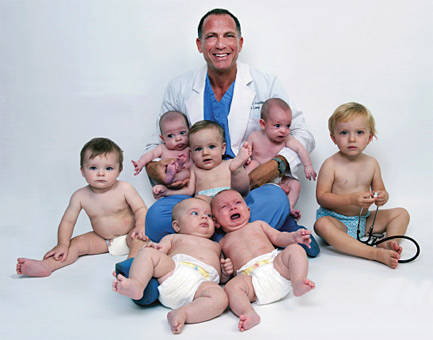
  • INTERVIEW | Dr Gad Lavy, The Surrogacy Doctor

    INTERVIEW | Dr Gad Lavy, The Surrogacy Doctor

    Following on with our detailed surrogacy articles we chat with Dr Lavy from the New England Fertility centre who assists LGBT families from the UK to find a Surrogate in the US.

    Doctor Gad Levy

    What is you’re involvement in the surrogacy process for couples?

    The third party reproduction team at New England fertility institute and I have been assisting LGBT families for over 15 years to have babies. I usually meet with couples initially either in person or via Skype.


    How would a gay couple who’ve decided they would like to have a child go about starting the process?

    We explain the entire process, and how the couple will find both a surrogate mum and an egg donor. A good start would be to attend one of our group meetings.


    How many couples from the UK each year start the surrogacy process?

    We have many couples from all over Europe, including the UK, travel to the US every year.


    Does it become a more complex process for UK couples who wish to have a Surrogate from the US?

    We always work side by side with an attorney versed in reproductive law. This attorney will assure the couple that the baby can be brought home safely and within the legal requirements of the home country of the intended parent dads


    What would happen to the couple’s rights if the surrogate decided to keep the baby?

    It is not possible for the surrogate to keep the baby. Hundreds of babies are born through surrogacy every year in the US. There has never been a case where the surrogate can become the legal parent.


    If two men wished to have a child yet not know which was the biological father are they allowed to mix deposits in a kind of lottery?

    Usually the biological dads each create a set of embryos. In many cases, the couple chooses to put an embryo from each dad into the uterus of the surrogate. 40-50 percent of those cases produce twins. It is sometimes necessary to do a DNA test on the child(ren) for legal purposes and birth certificate. An attorney must be consulted in all cases.


    At what age does the child need to reach before the couple are allowed to bring him or her back to the UK?

    The couple can usually bring their baby home no more than 30 days after the birth.


    Is it harder for gay couples to find a surrogate in the US?

    No it is not harder for gay couples to find a surrogate in the US. We work very closely with Circle Surrogacy, a gay friendly surrogacy agency located in Boston mass. They match up to 100 gay couples every year with American surrogates.


    You cannot pay a woman to have a child for you in the UK whereas you can in the US. Is there an average price or donation for a surrogate mother?

    The average compensation to a US surrogate is 20,000 dollars.


    Does this increase if you require an egg donor and a surrogate mother?

    The average cost to do the medical procedure using an egg donor and surrogate is about 40,000 dollars.


    Once the child is delivered and the new fathers are back home in the UK, is there a support system to help answer the inevitable questions on how to raise the child?

    Yes, both New England fertility and circle surrogacy have a network of gay families that can be of assistance with any questions regarding raising of children in a gay family home.


    Do you ever keep in touch with the new families you’ve helped to create?

    Yes of course we keep in touch with our families!


    Where can people go to read more information about what you do and your services?

    We always refer perspective parents to our website for more information: www.nefertility.com


    Dr Lavy will next be in London on the 15th March 2013 where a group meeting will take place. To book your free place at the meeting click here.

  • What Are The Differences Between Surrogacy In The UK Vs. The USA

    What Are The Differences Between Surrogacy In The UK Vs. The USA

    Surrogacy is increasing its viability in being the choice of many individuals who wish to have a child.

    (more…)

  • The Importance Of A Surrogacy Agreement For Same-Sex Couples

    In our second article for this series on surrogacy, we want to take a look at the importance of the Surrogacy Agreement: a document that is very often not even thought about and contemplated. (more…)

  • Are You Considering Surrogacy?

    Are You Considering Surrogacy?

    Over the course of the next 12 weeks, Pinder Reaux & Associates Ltd, a specialist Family Law firm will bring to you a series of six interesting and eye opening articles about surrogacy.

    The first article, will present the basics of surrogacy: what it is and how it works. In later weeks, more in depth issues will be dealt with in detail allowing you to decide whether surrogacy is the right option for you.


    What is Surrogacy?

    Surrogacy is when another woman carries and gives birth to a child for you. Surrogacy can be an emotionally intense and legally complex arrangement; however it is growing in popularity among parents as a way of having children and possibly, may be the right option for you and your partner.


    Why consider surrogacy?

    You and your partner may choose surrogacy if you are unable to carry your own pregnancy. You may also be considering surrogacy because of recurrent miscarriages; a health condition which could mean that pregnancy and/or birth could be dangerous; your (or your partner’s) womb is abnormal (whether since birth or after a hysterectomy); fertility treatments (such as in vitro fertilisation- IVF) have failed, You may be in a same-sex relationship and therefore cannot have your own children or it simply may be your method for having children.


    How does surrogacy work?

    There are two different types of surrogacy:-

    1. “Straight surrogacy”

    A surrogate mother will conceive after being artificially inseminated with the intended father’s sperm. This woman will then carry the baby and surrender all of her legal rights to the baby, to the biological father and his partner when the baby is born. In this instance, the father’s partner (the new mum), can then apply to legally adopt the baby.

    2. “Host surrogacy”

    A surrogate mother carries a donated embryo to term. The embryo is conceived through IVF or a similar method. This means the baby can be the biological child of you and your partner, and the surrogate merely carries your baby for you until birth.


    Is surrogacy legal in the UK?

    Yes, as long as no fee, apart from expenses, is paid to the surrogate. However, it is illegal to advertise for a surrogate or for a surrogate to advertise, and it is against the law for a clinic to find a surrogate for you.


    What are the legal issues surrounding surrogacy?

    Surrogacy law in the UK is complex and there are many legal issues to consider. This is the case whatever your personal situation (single, married, cohabiting or in a same-sex relationship or civil partnership) and you should be clear on your rights from the outset of the procedure.

    Surrogacy arrangements are not legally enforceable and criminal sanctions restrict advertising and prohibit commercial surrogacy organisations in the UK. However many couples enter into surrogacy contracts with the surrogate in order to ensure each party is aware of what is expected of them and to limit the risk that something may go wrong. Although these agreements are not legally binding they are being considered as persuasive authority in the family courts and therefore it is better to have one in place, rather than nothing.

    The surrogate mother will be the legal mother of the child unless or until parenthood is transferred to the intended mother through a parental order or adoption after the birth of the child. This is because, in law, the woman who gives birth is always treated as the mother. If the intended parents wish to become the legal parents of the child, they may either apply to adopt the child, or apply for a parental order.

    If you do not apply for either a parental order or adoption, this will leave you (as the new parents) without the right to consent to medical treatment or immunisations, register the birth of your baby or apply for a passport for your child. Essentially, the effect of the parental order and/or adoption is to transfer the rights and obligations of parentage to the intended parents, providing certain conditions are met.

    The application for a parental order must be made to the Court within six months of the birth of the child. For many new parents, the time following the birth of your baby will be busy and stressful and before you realise, your baby will be reaching its first birthday. It is therefore important to protect and activate your legal rights to your child prior to the six month period elapsing. Similarly, you should also act quickly if an application for adoption is required; to limit any risk your surrogate could change her mind.


    Do you apply for a Parental Order or Adoption of your child?

    To register your legal rights to your child, you will either apply for a Parental Order or Adoption Order. The application you make will depend on your family’s situation.

    To obtain a parental order, either you or your partner must be genetically related to your baby i.e. be the egg or sperm provider. Couples must be husband and wife, civil partners or two persons who are living as partners.

    If you and your partner cannot apply for a parental order because neither of you are genetically related to your baby (donor egg and donor sperm or donor embryos were used), then adoption of your baby is the only option available to you.

    If adoption order is required, then a registered adoption agency must be involved in the surrogacy process. This is why it is important to get legal advice before you decide to embark on surrogacy.


    Have you identified the right surrogate?

    Every couple wants a healthy child and therefore identifying the right surrogate mother is an important decision for many couples.

    Many will want to know that the surrogate is in good health and does not smoke and/or drink and agrees not to do so when carrying their baby.

    Others will enter into a strict arrangement as to what the surrogate can and cannot do during pregnancy in order to limit any possible health risk to their unborn child. Couples will also usually pay the surrogate’s expenses along with additional legal and agency fees if a contract is involved. Expenses can include travel, maternity clothes and loss of earnings.


    What happens if I do not enter into a surrogacy agreement?

    If you proceed without a surrogacy agreement, known as an informal arrangement, you as the donor or the intended parent could be in a vulnerable position. The likely scenario that can arise giving justification to a formal process can include: the surrogate deciding to keep the baby herself; refuse to give you contact; playing an active role in the child’s upbringing even though she agreed not to etc.

    A formal arrangement sets out all the agreed terms before anything has been done. Although this is not binding or legally enforceable, it will clearly set out your intentions and the family courts are showing some sympathy to these arrangements.

    You should consult an experienced Family Specialist Lawyer on the matter of drafting an agreement embodying your intended terms for the carrying of your baby how best your child’s future health can be protected.

    Having a child through surrogacy will be one of the most important decisions you will make in your life-time. It is therefore fundamental to you and your child’s future that you consider the matter very carefully before proceeding.

    You should be confident that any and all decisions you are making in respect of your future child are in place and every possible scenario has been considered. Here at Pinder Reaux & Associates we have a specialist team of family lawyers that can answer any queries you may have in respect of the procedure and legal position. We can also draft the Surrogacy Agreement in accordance to your tailored needs.

    If you are considering using a surrogate or would like to discuss the issue of surrogacy in further detail, please contact us and we will be happy to discuss the matter with you.

    Make sure you do not miss our next article in a fortnight’s time in which we explain why a surrogacy contract is so important.

    Go to the legal clinic home

  • Elton John And David Furnish Have 2nd Baby

    Legendary superstar Elton John and his partner have had their 2nd baby.

    (more…)