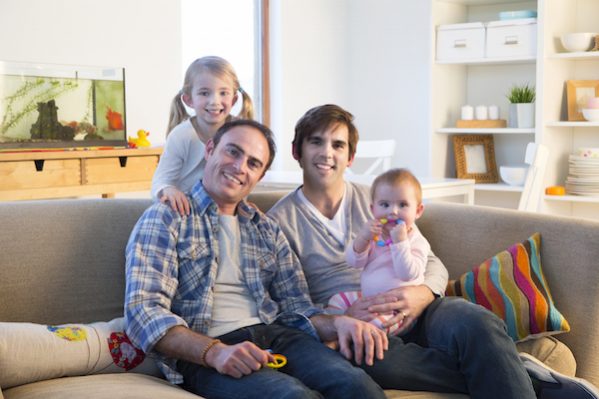
After seeing his son kiss another lad in town, one dad took to Reddit to ask on how he should speak to him about it.
He laid out the situation like this,
“I saw my son (16) kissing his “best friend”. I didn’t tell my wife because she will probably hate him because of it but how could I? I really love him he’s my son after all and I don’t mind him being gay.
My question is how can I help him when he comes out and should I tell him to hold it back with his mom?”
Well, let’s just hold on a minute there as we refreeze our melted hearts. This guy might be up for dad of the year award.
Never ones to fail, guys of the AskGayMen forum, did not hold back on their advice.
Don’t confront…
With one suggesting that the dad didn’t “confront him” and that the boy would “tell you when he’s ready… but maybe you can work it into a conversation that you’re okay with it”
While another suggested that being subtle was everyone’s friend, “just be a lot more subtle than you initially think. It’s probably front and centre in his mind, so he will be very sensitive to the subject”.
While another echoed. “If I were your son I wouldn’t want to be confronted (that’s just me tho) if I’m not ready to come out I don’t want others outing me, imo you should create a supportive environment and low-key and subtly let your son know that you are lgbtq+ supportive”.
Confronting the homophobes
Confronting homophobes and homophobia in a public setting was suggested by the commentators, to show that he was supportive of the gay community. Photo by fauxels on Pexels.com
On the subject of his wife, one user suggested that the dad should “confront people who say homophobic things or at the very least say you disagree and explain your position. This will show your son that he doesn’t have to be afraid of talking about these kinds of things with you.”
The dad replied, “I never said anything against it. But I’ll definitely do it the next time.”
Apparently up to 60 per cent of people in the UK are unaware that LGBT+ people can foster children!
National independent fostering provider, Five Rivers Child Care, is calling on the gay community to consider local fostering opportunities, after a damning report shared at the start of 2020 has shown a record number of children are in care.
According to Government statistics, there are currently 78,150 children in the care system across England and another 7,200 foster carers are needed to meet demand and provide loving homes to vulnerable children and young people.
Ahead of LGBT+ History Month, which aims to promote the visibility of the LGBT+ community throughout society, Five Rivers is challenging a common misconception that sexual orientation prevents gay, bi and trans people from fostering.
Over 60 per cent of people across the UK are unaware that gay couples or those from the LGBT+ community are eligible to foster.
If just one per cent of the LGBT+ became foster parents there’d be no children waiting for a home
Commenting on the need for more LGBT+ foster carers, Martin Leitch, Head of Fostering Operations at Five Rivers Child Care, said: “There’s a desperate need for more people to enter the fostering industry. With nearly 80,000 vulnerable young people in need of a safe home we want to challenge misconceptions that might prevent LGBT+ members from fostering.
“It’s extremely important to have a diverse range of foster carers across the country to reflect the diverse nature of the children and young people entering the care system and provide role models from all walks of life. We have some amazing LGBT+ carers who are enriching children’s and young people’s lives every day and encourage anyone who would like to do the same to get in touch.”
People from all walks of life can become foster carers as long as they are over 21 years of age. This includes single people, co-habiting couples, same sex couples and people living in rented accommodation – the only requirement is a private bedroom for each foster child.
For those in the LGBT+ community, creating a family is not straightforward. Biology and the law have to both be considered long before a baby is conceived.
Surrogacy is now very much de rigueur, and, in the last five years, the UK has seen an exponential increase in the number of Parental Order applications following surrogate births. My firm is only too aware of this, as we have a vast number of clients from the LGBT+ community choosing to start their families through surrogacy.
The law governing surrogacy dates in part from the 1980s when attitudes towards surrogacy itself, and the LGBT+ community, were vastly different from what they are today. The law reforms announced by the Law Commission and The Scottish Law Commission on 6 June 2019 are therefore very much welcomed by all involved, but particularly by LGBT+ families.
As it stands now, when a child is born through a surrogacy arrangement, whether they are born here in the UK, or abroad, if the intended parents wish to live with the child in the UK, then an application must be made in the UK courts for a Parental Order. The Parental Order will then extinguish the legal status of the birth mother (and her spouse if she has one) and confer legal parentage on the intended parents. Without that order, the birth mother will remain legally responsible for that child. The intended parents, who in reality are the only parents the child knows, have no legal standing to make crucial decisions, such as consent to medical procedures for their child, as they have no Parental Responsibility.
It will also change the UK birth certificate to ensure that the intended parents’ details are instead recorded.
In order to be eligible to apply for a Parental Order, at least one of the intended parents must be domiciled in the UK, at least one of the intended parents must have a biological connection to the child, the child must live with the intended parents, they must be over 18, have made the application within 6 months of the child’s birth, have the surrogate’s (and her spouse’s) consent and only reasonable expenses must have been paid to the surrogate. Since January 2019 it is now possible for single people to apply for a Parental Order, but the above criterion must still apply and those separated can utilise recent ground-breaking caselaw, achieved by this firm, that if intended parents are separated an order can still be achieved as ‘living’ together can apply to two homes.
The glaring fault with the Parental Order process is the requirement to have to apply for it in the first place. From the moment of birth, up until that Order is granted, the child, and the intended parents live in limbo. Speak to any surrogate and they will tell you that they want to carry the child to enable other people (often LGBT+ people), who can’t have a child in the usual way, to have a family. They do not want to be legally responsible for that child, yet the law keeps them entwined despite (usually) no biological connection and no intention to be so responsible. The surrogate bears the child for the intended parents on trust that they will make that application for a Parental Order which will then extinguish her legal responsibilities.
As for the intended parents, until that Order is made, they are, in the eyes of the law, not legally related to their child. Yet in reality they wanted the child, they love the child and they care for the child. Why should that child, and the intended parents, be in that limbo position? It leaves many risks, that Wills and insurances can mitigate, but the uncertainty of 100% protection during this period is difficult for all the parties.
Proposed new laws
The Law Commission and The Scottish Law Commission have recognised this failure and have committed to reforming the law. The consultation into surrogacy law is currently open until September 2019 and their proposals include a new pathway to parenthood which would recognise the intended parents as the legal parents from birth. With the new pathway, the ‘work’ would be done pre-conception. This would include finding the surrogate, medical checks, enhanced criminal records checks, independent legal advice and implications counselling for all parties, then a written surrogacy agreement and an assessment of the welfare of the child. Once the child is born, the intended parents will be the legal parents (without the need to make a court application) subject to the birth mother objecting within a defined period. If the surrogate does object, then the intended parents would need to make an application for a Parental Order in the usual way.
However, this new pathway would not be applicable to international surrogacy arrangements. Instead, the proposal is that recognition would be on a “country by country” basis and that there should be a streamlining and shortening of the process of obtaining a passport or a visa for the child born overseas so that that process begins before birth.
These proposed reforms to the current surrogacy legislation have been welcomed by the LGBT+ community as well as by the community of surrogates. The proposed reforms will enable the law to reflect the reality of these new families and ensure that the child is legally protected and cared for by their intended parents from the moment of birth.
The sad passing of Sharon Bottoms Mattes, 48, in January this year shone a spotlight on LGBT+ rights in the 21st century, and how far attitudes and family law have changed abroad and in the UK.
In what was a terrible example of the injustice to same-sex couples and their children is the American 1994 case involving Mattes, who lost custody of her son after the court ruled that she was an unfit mother because she was in a same-sex relationship. The details of this case are as shocking today as they were at the time.
In the UK, societal attitudes towards same-sex parents has changed considerably over the past 25 years. Thank goodness, because this has been both to the benefit of couples, children and the emotional welfare of other family members.
Yet family law is struggling to keep up with what some have deemed to be the ‘modern family’, and unfortunately prejudice and inequality still remains for LGBT+ couples and parents.
Of course, in the last 25 years so much has changed. Civil partnerships were introduced in 2005. This was followed by same-sex marriage in 2014. This granted the same rights as married heterosexuals. This ended the appalling treatment same-sex couples had received. For those in a civil partnership or same- sex marriage who have a child both parents have parental responsibility. Yet there is still inequality that exists.
Since 2005 unmarried couples were given the right to adopt. Equalities legislation passed in 2006 to ensure that there would be no discrimination on the grounds of sexual orientation when going through the adoption process.
When it comes to surrogacy, same-sex couples can apply for a parental order if they have their child via a surrogate and one parent is genetically related to the child. If couples are not in a civil partnership or married they must be living as partners in an enduring family relationship if they wish to apply jointly.
Single parents have been able to apply since 3 January 2019. Yet our surrogacy law are dangerously behind when it comes to the needs of modern families, leaving couples vulnerable to exploitation or worse, losing their child.
It is important that family law keeps up with the needs of families today, and continues to progress so LGBT couples and their families hold equal rights.
Linda Lamb, Solicitor and Director at LSL Family Law
The worrying statistic shows that there’s a long way to go in order to normalise the idea that LGBT+ people can become foster parents.
Across the UK, around 60 percent of people were unaware that LGBT+ people are eligible to foster children.
According to Five Rivers Child Care, there are over 900 children and young people who need foster homes across London yet there are common misconceptions around who is eligible to foster, from age through to living circumstances and sexual orientation.
Over 60% of people across London and the UK as a whole are unaware that same-sex couples or those from the LGBT+ community are eligible to foster. A misconception Five Rivers Child Care is keen to eliminate this February, which marks LGBT History Month, in a bid to recruit more foster carers from currently underrepresented communities.
Misconceptions
In addition to serious misconceptions surrounding LGBTQ rights to foster, a further 60 percent of people across the UK believe that those in rented accommodation are unable to foster, and 40 percent of us believe that those without their own children wouldn’t be allowed to be foster carers.
Commenting on the findings, Martin Leitch, Head of Fostering Operations at Five Rivers Child Care, said, “The findings from our recent research paint a massively outdated picture of the fostering industry but it highlights that more needs to be done to reach those within LGBTQ communities to tell them about the career opportunities available to them in fostering. And it’s not just a career, it’s a life choice. It’s deciding to change the life of a vulnerable young person that otherwise might not have a home or a family. It’s extremely important to have a diverse range of foster carers across the country to reflect the diverse nature of the children and young people entering the system and provide role models from all walks of life. We already have some fantastic carers from the LGBTQ community who are enriching children’s and young people’s lives on a daily basis.
“We want to make it common knowledge that anyone can foster, providing they have a spare room and they are over the age of 21. A foster carer is not determined by whether they own a house, or whether they’re married or have children. Single people, those in rented accommodation, those with disabilities and those from the LGBTQ community all have the opportunity to make great foster carers.”
The TV star, Andy Cohen has become a father and shared an adorable photo of him and his son, whom he has named Ben.
Taking to social media, the TV personality Andy Cohen said, “WOW! This is my son” and published a beautiful black and white picture of him alone with his son, whom he has named Benjamin Allen Cohen after his own grandfather, Ben Allen.
Letting his fans know a little more about his son, Andy revealed that his son was a healthy 9 lbs and 2 ounces and 20 inches long!
He wrote, “WOW! This is my son, Benjamin Allen Cohen. He is9 lbs 2 ounces !! 20 inches !! Born at 6:35 pm, PT. He is named after my grandfather Ben Allen. I’m in love. And speechless. And eternally grateful to an incredible surrogate. And I’m a dad. Wow”
Andy revealed that he was going to be having a child via surrogate back in December 2018, when he said, “Family means everything to me and having one of my own is something I’ve wanted in my heart for my entire life and while it has taken me longer than most to get there, I cannot wait for what I envision will be my most rewarding chapter yet”.
I am really concerned after reading about a man in the papers who donated sperm to a lesbian couple some years ago who is now being chased by the CSA who is demanding he pay towards the child’s upbringing, even though he’s not on the child’s birth certificate.
I’m in a similar situation. I donated sperm to a couple 10 years ago – and I’m wondering if they have any rights to make me pay for their child. I’ve never met the child and I’m no longer in the couples’ life as I moved towns a few years back.
My name isn’t on the birth certificate and I’ve not been a part of the child’s life at all. If they wanted to, could they get in contact with the CSA and make me pay?
Are there any legal protections for men like me?
Paul in Leicester
Dear Paul,
The answer to this question is dependent on whether you donated the sperm through a registered Human Fertilisation & Embryology Authority (HFEA)-licensed clinic; if you did then you are not financially liable for the child, nor do you have any parental responsibility for the child, equally you have no say over the upbringing of the child. If this is the case, the birth mother will be the legal mother and her civil partner or wife will be the “second legal parent” (but not “mother” as the law does not allow a person to have two legal mothers).
If you donated the sperm without using a HFEA-licensed clinic as an intermediary (such as an informal agreement between friends or through an internet agency) then you could be deemed to be the child’s legal father (whether or not you are named on the birth certificate) and could be obliged to financially support the child as necessary. Ultimately, the child’s mother may be able to bring a successful claim through the Child Support Agency (CSA).
If you feel that it is likely action will be taken against you, it is best to be proactive. In my experience the worst thing you could do is bury your head in the sand and hope it goes away. Sometimes a simple offer of some contribution towards the maintenance of the child will avoid often lengthy, expensive court proceedings.
I would advise however that you seek the advice of a specialist solicitor in this area who would be much better placed to give you a clearer picture of your obligations.
Have you got a dilemma for our team of experts? Write to us here.
This response is not intended to constitute legal or other professional advice and should not be relied on or treated as a substitute for specific advice relevant to particular circumstances. Individuals should always seek legal advice from a professional which is specific to their unique set of circumstances.
There must be something in the water in Celebland as Ricky Martin and his husband, Jwan have just announced they are daddies again.
CREDIT: kobby dagan/ bigstock
Ricky Martin has become a father with his husband, Jwan. Taking to Instagram the singer revealed that the pair were “beyond happy” and had become fathers to a beautiful baby girl.
That takes the Martin-Yosef brood up to three children, although Ricky’s first two children were born before Jwan and he tied the knot.
Ricky revealed on Instagram that they had become parents to a “beautiful and healthy baby girl”, who they named Lucia Martin-Yosef. The singer said, “It has been a special time for us and we cant wait to see where this stellar baby will take us. Both her beautiful brothers and me and Jwan have fallen in love with Lucia”
The former Nsync singer turned presenter Lance Bass has announced that he and his husband, artist Michael Turchin are planning on being dads in 2019. But he revealed that the process has taken a very long, long time.
Speaking to Page Six, Lance said, “The most surprising part about the surrogacy process was how long this takes” and admitted that he and his husband are on their sixth donor already.
Speaking on his own process Lance revealed, “We had several friends going through this and it took a little while but I think we’ve broken the record for how many donors we’ve gone through. We’re on donor number six right now and we don’t even know if that one’s gonna work. So, it has been a lot longer than I thought. But, hey, here’s to a 2019 baby!”
The former singer and artist have even found it hard to find a donor. Lance explained that he’s even considering tweeting to his large fan base to find one. He said, “You would think I would get so many offers for eggs but not many people have come to me with their eggs! I think I’m going to have to tweet it out right now!”
The US talk show host Andy Cohen has revealed that he’s going to be having a baby with a surrogate mother.
In his latest show, Andy Cohen revealed some very personal, but exciting news that he’s going to be having a baby. He said, “I’ve always tried to be as transparent as possible about my life,
“I over share and I expect everyone around me to do the same and tonight I want you to be the first to know that after many years of careful deliberation, fair amount of prayers and the benefit of science, if all goes according to plan, in about six weeks time, I’m going to become a father thanks to a wonderful surrogate who is carrying my future.”
The talk show host didn’t reveal any information about the child’s due date, gender or anything about the child’s surrogate mother.
“Family means everything to me and having one of my own is something I’ve wanted in my heart for my entire life and while it has taken me longer than most to get there, I cannot wait for what I envision will be my most rewarding chapter yet,’ he said.
“To the viewers at home, I call you my friends at home because we are friends. You have supported me through almost 10 years night after night,’ he said.
“This has been an incredible, joyous journey with you all. I am grateful to live my dream every day and grateful to you for coming along for the ride. I don’t take any of it for granted.”
Georgia’s Senate has passed a bill that could enable child welfare organizations to stop same-sex parents from adopting on grounds of religious beliefs, in what rights advocates have called a “dangerous step backward.” (more…)