Tag: Toyota

All the latest breaking news on the automaker Toyota. Browse THEGAYUK’s complete collection of news, articles and commentary on Toyota.

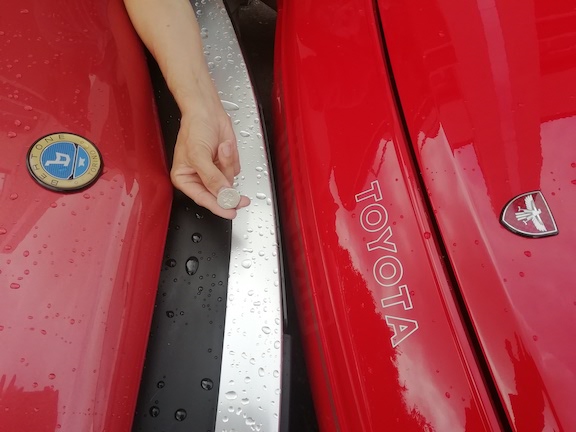
  • CLASSIC CARS | The Fiat X1/9 Vs. the MR2 MK1

    CLASSIC CARS | The Fiat X1/9 Vs. the MR2 MK1

    Two-seater Toss Off

    For as long as time has begun, from the ’70s to be exact, the Fiat X1/9 has always been compared to the TR7. And this is true of the classic press too. Wedge-shaped with pop-up headlights, that is where the similarities end. The X1/9 comes out well in these tests but I fear this is because there are many that disliked BL’s wedge or the agro that went with it. 

    The TR7 died in 1981. The X1/9 carried on, unchallenged until 1984 when suddenly you could hear the X1/9’s market share fall apart much like what happened to the car itself after its first winter. 

    Launched in 1972, the X1/9 saw very little development. The main changes came in 1979 with larger US federal style bumpers and a 1500cc engine from the Strada. There were some changes to paint schemes and specs but overall, very little changed.

    Suddenly, Japan enters stage left. It comes to the party with its MR2. A dinky looking 2 seater with a rev-happy 1600cc engine packed with 16 valves and twin cams. It was what the X1/9 had been calling out for. 

    Toyota’s new car was a runaway success. What it lacked in practicalities over the X1/9, it more than made up for it by keeping up with the new hot hatches on the block. There was even competition in-house from the Corolla GT-i 16. Basically the same engine dressed in a 3 door hatchback style. It was competent and reliable but didn’t set the pulse racing with its Corolla looks.

    The X1/9, having surpassed the128 3P and still going strong considering Fiat’s Strada Abarth offering, it had finally met its match. Back to back, in everyday situations, both cars are similar. The engine sits behind you and both are vocal. In those traffic light Grand Prix trials, it’s quite fun. On a run, it can be both tiring. Both cars come with low gearing though it feels like the MR2 has the lower set of ratios. Using the Fiat Strada engine and gearbox, the X1/9’s are just a little bit taller all round.

    Those lower ratios are no bad thing though. The MR2, with its 16 valve engine has 3 stages of power delivery like boiling an egg. 1-3000 it’s all gentle, warm, nothing really happens. 3-4000 and something is happening. There are bubbles at the bottom of the pan and it’s getting hot. 4000 and beyond and it’s boiling. Stomp on the throttle and you feel a shove from the 128bhp engine that will happily spin up to the red near 8000rpm.

    There is no such gauge to be had from the X1/9. It’s 85bhp is way off what the Toyota has. All is not lost though. Despite its twin choke carb fed single cam unit, it develops all of its 87Ib/ft of torque lower at 3200rpm. This makes the X1/9 a more flexible car than you would expect and feel the more rapid in the twisty bits. It’s far easier to keep the power on. 

    With maximum bhp’s coming up high on both engines, it’s where the torque is that counts. The X1/9 doesn’t have to have the engine singing loudly to get where it wants too quickly. In contrast, the MR2 needs to be spinning at 5000rpm to get its 105 Ib/ft. The downside to the 16valve engine is that it needs revs to get the power.

    You’d expect the handling to be similar for both cars too. Well no. They differ in quite a lot of ways and both are winners and losers. Where overall comfort comes into it, it is the X1/9 that wins. Its ride from the all-round MacPherson struts is soft and comfortable. This makes it the more civilised cruiser over long distances despite its cramped cockpit and close to the controls driving position.

    On the other hand, the cornering safety goes to the MR2. Approaching its limits, it will gently understeer and the steering wheel will communicate this back to the driver effectively. The X1/9 has no such virtue. Instead, you can be caught between a rock and a hard place. It’s near-neutral handling is great. The steering loads up and its adhesion with the road is lost. Be quick though because the steering is not as quick in the rack as it is in the MR2, nor is it as light. And this issue is down to 1 factor alone. The MR2 wears wider 185 section tyres with a lower sidewall. The Fiat’s 165 sections cannot compete with 185’s.

    So who did it better? Both have plus sides over the other. At its limit, the X1/9 will try and kill you. You can’t drive it without 100% concentration all the time. The MR2, on the other hand, will allow you to be foolish and reward you without going backwards into a ditch unless you are really stupid. 

    It’s like the Minogue sisters, you can’t, apparently, like them both. The MR2 is like Danni. It can be a little bit diva and a little bit pop in as much as it will satisfy you no matter what your mood. The X1/9 is Kylie. It’s full-on disco diva, 100% of the time. Just don’t show it her years with Deconstruction records. It gets messy, much like its handling can. 

    Which would I choose? I’ve had a liking for both since I was a child. I just happen to own the Fiat. Having now driven both in almost all driving situations, (the MR2 I did manage to get on the Silverstone racetrack) would I change my own X1/9 for the MR2? If I had the chance to use it more, I would. The MR2, despite its lack of luggage carrying ability, is the more useable car. It’s both fun and easy to live with. It doesn’t feel as delicate as the X1/9 and that also goes for all-round weather ability. 

    It’s just that my X1/9 tends to spend a lot of time looking at me from the garage, not broken I might add, and much like its handling on the limit, its looks are a killer!

    Many thanks to Toyota GB’s Graham Bothamley for the loan of the MR2 from their heritage fleet.
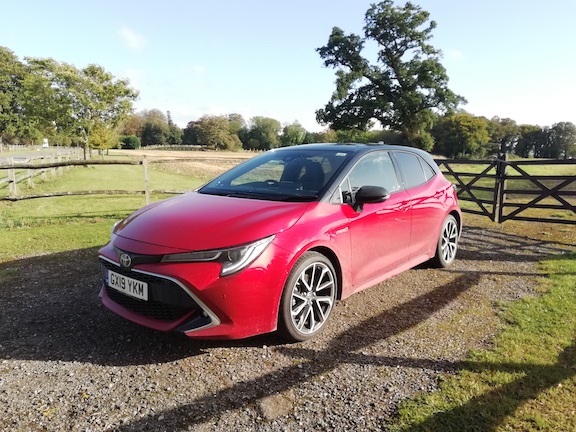
  • Quick Drive. Toyota Corolla Excel 5dr 2.0 Hybrid

    Quick Drive. Toyota Corolla Excel 5dr 2.0 Hybrid

    Rating: 4 out of 5.

    What Have We Got?

    Toyota and their never-ending array of hybrids brings back an old name with a modern twist. The Corolla is back. And back with a bang it would seem. We take one out for a drive around the lanes of Basingstoke.  

    Driving

    First thing that becomes apparent with the 2-litre petrol engine mated to the hybrid drive system in the Corolla is its normal driving ability. Only recently have I started to like the CVT gearbox system Toyota use. The Yaris showed a big improvement over the previous system. 

    Therefore I wasn’t sure what to expect in the Corolla. Not to get too complicated in describing it, I’ll say that for the most part, it felt like a normal automatic gearbox. It changed up and down like a normal auto box and this, in turn, made it rather nice to drive.

    And its “normal” behaviour could be had for much longer than any hybrid drive I’ve experienced from Toyota to-date. Only when you press on with the throttle to the floor does the CVT traits come through with the engine revving away upfront in a subdued vocal fashion. 

    This all goes in its favour too. The chassis is compliant and quiet and able to carry the Corolla around quickly. One thing that is missing is excessive body roll or body roll at all for that matter. It feels very planted to the road.

    Inside

    The cabin, nicely styled in a normal design from Toyota was pleasant to be in. Plastics where it mattered felt much better than previous models have shown. This it would seem was Toyota’s attempt to catch up with the market leaders from Europe and finally, they seem to have worked out what the Europeans want and where to place the quality materials. This is something Toyota haven’t always done well. 

    Living With It

    It would seem Toyota have a lot of high hopes for the return of the Corolla. In bringing it back, it looks like there is a new design language being adopted that is suited to European tastes. Its looks are both stylish and sophisticated. Despite its big grill and angled light units, it’s nice to see a softer-looking face to a car. 

    The hybrid drive systems are easy to use and altogether it feels a much better car.  It raises the theory of hybrid drive systems being good to actually being very good. It’s taken some time but finally, Toyota has made a better way.  

    The Verdict

    It comes at a price and this time Toyota are not messing around. For £29k, they have made a car that challenges some of your preconceived ideas of Japanese cars and turns them on their head. It’s still a Toyota so expect it to be more reliable than anything else out there, it’s just now it has a more familiar feel to it that you’ll greatly appreciate. The Corolla of the 70s had Europe worried.

    Once again, the Europeans are going to be on the run.

    The Japanese have done it again.    

    The Lowdown

    Car –  Toyota Corolla Excel 5dr 2.0 Hybrid

    Price – £29,075 (as tested)

    MPG – 50.43 – 60.62 mpg (WLTP combined)

    Power – 178bhp (total output)

    0-62mph –  7.9 seconds

    Top Speed –  112 mph

    Co2 – 89 (g/km)

    All pictures (C) Stuart M Bird 2019

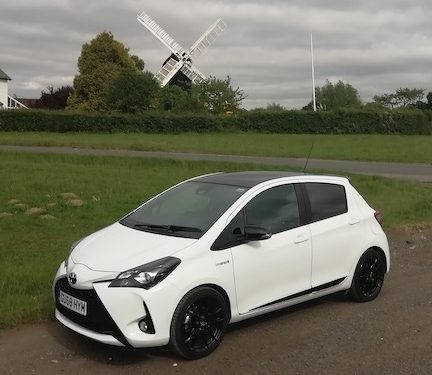
  • CAR REVIEW | Toyota Yaris GR, the hybrid hustler

    CAR REVIEW | Toyota Yaris GR, the hybrid hustler

    ★★★★☆ | Toyota Yaris GR

    What Have We Got?

    Here we have Toyota’s Yaris GR Sport fitted with hybrid technology. It’s also fitted with tuned suspension for a more sporty feel. It’s divided opinion. THEGAYUK had a go and here is what we thought of it.

    Driving

    I’ve not been kind in the past when describing Toyota’s CVT transmission systems but that is going to change. I rather liked this, unless you floor the throttle, then it shows up all the traits of the CVTs woes of engine revving away. 

    It’s a strange mix really for a 1500cc petrol engine with 16 valves and twin cams making just 98bhp. The engine is quite lacking in sparkle and feels a little lazy. Here then is the bonus for your lazy engine, the extra oomph given by the electric motor. Even at high speed, press the throttle and the engines high revs do at least translate to make progress faster.

    The ride has come in for some criticism for being too hard. Taken from the rapid GRNM model, I personally found it totally acceptable and ideal for when you want to use the chassis potential. It is a fun car to hustle around on the right roads.

    Inside

    Sadly, the Yaris of old is no longer to be seen in the new model. And that means no dashboard innovations. It’s all become a bit ‘normal’ though typical of Toyota, the layout is logical. However, I am puzzled as to why the infotainment screen flashes up changes to the heating system when you can clearly see the selected temperature in the digital display within the heater control panel.

    The suede faced GR badged bucket seats are just fine by me. An absolute joy for the derrière to sit in. They offer ample support in all directions. And they don’t encroach into the rear legroom area either. I found there to be more than adequate space for my 6’ frame in the rear seat. Much better than some larger cars out there too.  

    The boot is ok for this size car. My biggest problem I have are the poorly painted areas around the boot shuts. 

    Living With It

    It’s not as engaging to drive as the name would suggest. You do lose your buzz after a while though. Despite there being the option to use some engine braking assistance when selecting ‘B’ on the gear shift, it isn’t enough to hold it back and therefore you are having to dab the brakes more than you would with a conventional gearbox or selectable automatic. And a shame too because you just can’t quite exploit the fun handling. 

    The economy is good as a city slicker. It’s a little less so on the motorway though thankfully, unlike some of the CVT systems, the engine doesn’t need to sing for its supper.   

    The Verdict

    Once you get over the asking price, the Yaris GR Sport makes for a fine city car. There are the typical road noises I’ve now become accustomed to in Toyota’s hybrid cars though thankfully, at speed, it gets quieter. 

    And this is what the Yaris does so well, it goes about its business quietly and efficiently.  

    Love

    Seats

    Ride/handling compromise 

    Town economy

    Loathe

    Price

    Not engaging enough

    High-speed economy

    The Lowdown

    Car –  Toyota Yaris GR Sport

    Price – £ 19,840 (as tested)

    MPG – 55.98 – 60.14 mpg (WLTP combined)

    Power – 98/74 BHP/kW

    0-62mph –  11.8 seconds

    Top Speed –  103 mph

    Co2 – 89 (g/km)

  • Taking A Toy Boy To Silverstone With Toyota GB

    Taking A Toy Boy To Silverstone With Toyota GB

    Toy Boy Toyota

    ‘He’s my toy boy, toy boy. I’m out with my toy boy, toy boy. And when I get to take him home, I know he’s gonna love me right’

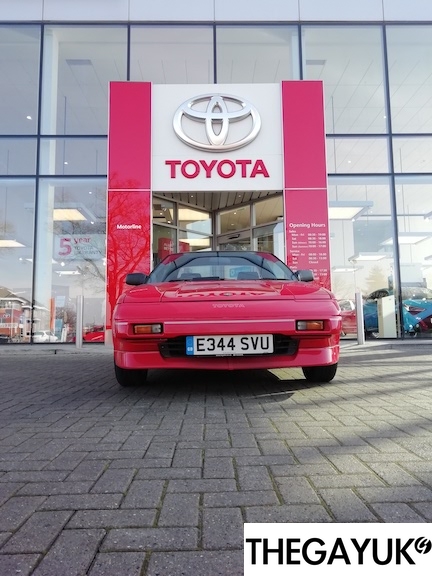
    Now don’t worry, I’ve not lost the plot. I was fortunate one week in February to be given the keys to Toyota GB’s Mk1 MR2. It came with Toyota’s state of the art cassette player and I found a mixtape with Sinitta’s hit ‘Toy Boy’ and if ever there was a song that suited a car, it was this.

    It all started after I contacted Graham from Toyota press about a future article I was planning to write about the MR2 Vs Fiat X1/9. He suggested I come over, collect the car and take it to an event Toyota GB had organised at Silverstone with the Vintage Sports-Car Club (VSCC) called the Parallel Pomeroy Trophy. It dates back 70 years and was devised to find the best GT car. For Toyota, it consisted of 4 tests. I couldn’t really say no now could I.

    All that was needed was to collect the car and pay the £30 entry fee that was going towards Toyota’s chosen charity for the past couple of years, Guide Dogs for the Blind. Toyota has been sponsoring the training of 4 dogs and lifetime costs of one. That’s around £55,000. https://www.guidedogs.org.uk

    The MR2 was collected and a look around some of the heritage fleet Toyota keep was shown. The MR2 was a lovely little car and had undergone an extensive restoration that also came with some words of advise about being sympathetic to the newly built engine. So no pressure there then considering the weekend Toyota had planned!

    Tests centred around a slalom handling course, flat out short distance and a series of forward-backward-forward etc strip where you had to stop within the boundaries of some pre-set cones. Penalties were issued if you messed it up. Suffice to say, I did. Twice! Annoyingly. 

    In total, there were 38 Toyota’s ranging from a 1971 Corolla coupe to the 2018 Yaris GRNM with everything in-between included 4 generations of Prius and a Hilux. All this was made even more serious when we were issued with number decals to apply to our cars. All road going cars (the rules stated that ALL entrants must be road legal) were instantly turned into race cars. Applying numbers to a car just makes them racy. The MR2 had sharp looks, an engine making borborygmi noises behind you and sporting potential to start with. The immaculate 1973 Crown estate however didn’t. 

    That said, it didn’t stop Eddie Bellringer beating me and the MR2. His times showed commitment at EVERY level. If I’m honest, I got beaten by practically everything out there including Steve Cropley from Autocar magazine in an Mk1 Prius. That said, Alan Bradley from the Motoring Podcast, in his Yaris GRMN, also got beaten by the Crown Estate.

    This was the first Parallel Pomeroy event PR and social media manager, Scott Brownlee and his team had organised and it went very well, even down to the weather. There was however only two Toyota PR team members taking it for the team. Product and technical, Mr Richard Seymour in an iQ and PR student, Mary Nicholls in a Prius. She also beat me in a Prius.  

    Well, let’s not leave you in suspense. Richard in the iQ won. The smallest car with the smallest engine with the impossibility of positioning a car with a cone within the wheelbase won the event. Which went to show that Richard of product and technical either knew his stuff and the iQ or it was a fix? Either way, it’s a long way to fall when you are at the top, I’m wondering what Toyota could put him in next time.

    An MR2 perhaps?

    As for me, it was a blast and a really good day was had by all those who attended. So it is with great thanks to the Toyota GB team for letting me have the MR2 for a few days prior to the event. 

  • The Good, The bad and the Ugly. Toyota Yaris 1999 – 2005

    The Good, The bad and the Ugly. Toyota Yaris 1999 – 2005

    The Good, The Bad and the Ugly.

    Embed from Getty Images

    An irrelevant look at a certain car.

    The Toyota Yaris 1999 – 2005

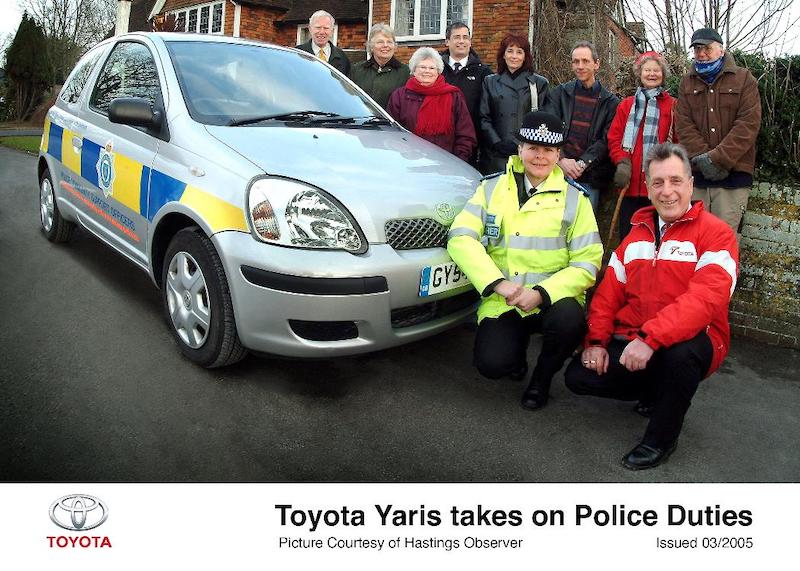
    The Toyota Yaris, the Greek goddesses of charm and beauty. Well not quite. According to Wikipedia, “Yaris” is derived from “Charis”, the singular for Charites. And this thankfully is as complicated as Toyota’s little toaster on wheels gets.

    Her beauty didn’t last long because you might have noticed that almost ALL Yaris’s have a dented panel below the rear bumper. You do wonder if they actually came from the factory like that.

    OK, I’m being unfair and what I am about to write pretty much gives the game away. The Yaris isn’t a bad car. And despite its oddball looks, it’s not ugly either. Here is a car that was miles away from the dull forgettable Starlet that it replaced. You might want to Google “Starlet” because you would have forgotten what it looked like by now.

    Walk around the Yaris and you’ll greet its cutesy looks with affection. Its rounded face and slabby sides were in keeping with the populous of the time in that we were all getting a bit portly. What we needed was to walk more. What you needed was a car that broke down.

    Embed from Getty Images

    The Yaris didn’t break down. You just couldn’t stop the bloody things. So reliable were they, that they won customer satisfaction awards all over the place. Here was a city car that didn’t cost much to buy, cost even less to run and could be abused like no other car. If ever there was a car that made the manufacture absolutely no money in after sales, here it is.

    Getting inside was a doodle too. Big wide doors on the 3 door, or slightly smaller doors on the 5 door, opened up the grey cabin. The driving position was high too. It gave good visuals and speaking of visuals, it also came with a far-out digital pod, slap-bang in the middle of the dashboard. This was a revelation. Digital displays were still alienating customers, others had tried and failed. Toyota gave a 2 finger salute and shoved it in there. It worked. It was crystal clear. You couldn’t wish for anything better.

    Embed from Getty Images

    And the ride wasn’t that bad either for a shopping cart. It all worked well. So you would expect this to be a massive sales flop. A little Toyota with a high driving position that’s easy to get into, surely only the granny brigade bought these. Absolutely not. It was universally approved by all.  

    There is no escaping it, the Yaris is a good car. 

  • MOTORING | My week with the 4×4 Tamiya Toyota Bruiser

    MOTORING | My week with the 4×4 Tamiya Toyota Bruiser

    A week in Toyota Toy Town

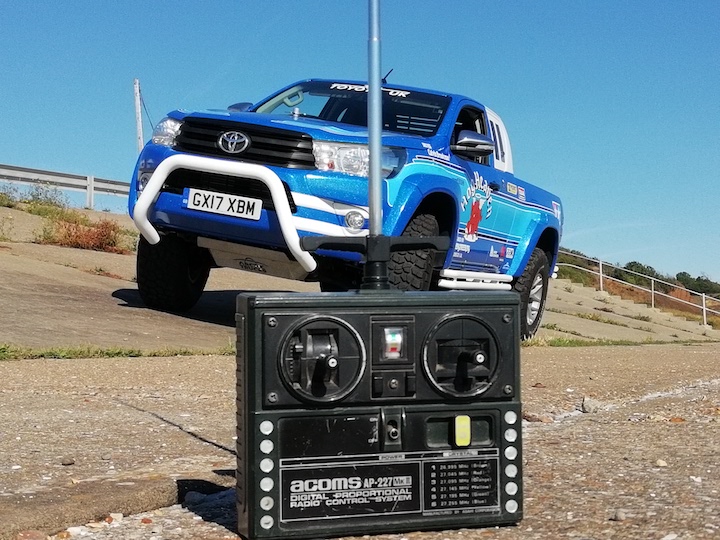
    I’ve just spent the past week pretending I was Calvin Brookman. Never heard of him? Then you need to brush up on your Tamiya history. Calvin was the driver of the Tamiya 1985 model 58048, the Toyota 4×4 Bruiser. Now bizarrely for Tamiya, this model never came with a driver so for all intents and purposes, he looked exactly like me. How uncanny.  

    Fast forward 32 years or 471 models later and Tamiya has re-released the much often drooled over model that most of us wanted from the top shelf. To celebrate this release and an almost 40-year partnership Toyota have with Tamiya, Toyota GB set about turning their current Hilux Extra Cab vehicle into a real-life homage to the Tamiya model.

    I met with my R/C hero in the carpark at work. It sat there as bold as brass. You couldn’t miss it and did I laugh. This thing is a bit of a monster. Subtlety is not its strong point and yet it does have an air of soft cuddliness about it. We’ve all taken our favourite R/C model to bed and this 1:1 scale model is no different. I got it dirty and washed it for crying out loud. I just didn’t want it going home dirty! 

    Toyota has done an amazing job in its recreation. In doing this they have also done something else to the Hilux which I’ll discuss later. A snazzy wrap of camp sparkling blue and Bruiser graphics would fall flat on there face if it wasn’t for the fact that this truck has been given the kiss of the lift by Arctic Trucks. Gone are the standard Hilux 265/65 17 wheel combo for a more robust 305/80 17 mix. It’s a lot of chunky rubber. 

    There’s also a reworking of the bits underneath too, with uprated Fox Shox suspension and to maintain the speedometer accuracy, they reworked the differential gearing. Quite important this when on the M23 with average speed cameras in operation.  

    Now you won’t find any of the extras on the Bruiser in the Toyota Hilux accessory brochure. Toyota teamed up with model maker Robert Selway who had the task of adding the all important on/off switch as well as the bumper bars. 

    So the time arrived for me to slide the switch to ‘on’ and roll out with my battery pack fully charged. OK so the switch wasn’t that in the rear bed but the ignition key in my hand and this isn’t powered by batteries but a 150bhp 2.4-litre diesel engine going through a 6-speed manual gearbox. 

    One thing that becomes apparent is the tyre noise. Over 40mph and these things make more noise than RuPaul’s Drag racers at full bitch.

    Girl, they are chatty! That, however, is the only fault and even then it’s hardly a problem. This new set up makes the Hilux even better to drive than the one we tested in 2017. There is less pitch and the ride is more compliant. There is an element to understeer if you press too hard and an amount of tail out in the wet. Like any pick-up though, 4 wheel drive is best selected in the wet when the rear is light of a load.

    And you best get used to the stares the truck gets. It’s not for the shy. Like a secret cult, those who know give you the thumbs up or a knowing nod. It’s appreciated. This is when you suddenly really start to fall in love with the truck. It lacks the luxury features of the Hilux Invincible but this is only because they are not available on the extra cab model. Shameful really because this model with its mini suicide rear doors really is a handsome beast.  

    Now down to the nitty-gritty. Would I have one? No is the answer. It’s just too big to park in the high street. And it is totally unnecessary for me in this guise. My daily commute route had to be altered to accommodate its bulk. That said, just look at it. What’s not to love? I tell you what, not a lot. The wheels are impossible to curb and the thing sort of glides over speed bumps. Toyota GB, I’ll swap you my much-prized Sand Scorcher? I WANT THIS!

  • CAR REVIEW | Toyota Hilux

    ★★★★ | Toyota Hilux

    Toyota Hilux review

    Hi Ho, Hi Ho, it’s off to work I go with Loadsa Unadulterated Xpression.

    OK, that is a crap intro for a vehicle that is anything but. This thing can seriously take a lot of it. This vehicle really is the king of the pick-ups.

    I was in a bit of a quandary when I took delivery of Toyota’s new Hilux. I’d trapped a nerve in my shoulder and the prospect of a harsh ride associated with pick-ups didn’t feel me with much joy.

    I can say that THEGAYUK covered 200 comfortable miles in the Hilux. It’s not luxurious by any stretch of the imagination. In fact, the front and rear behave like Dr Jekyl and Mr Hyde. The front is soft and composed. The rear is a bit jiggly. That’s how it is with a fully functioning pick-up truck.

    I like trucks but in the everyday sense of the word, the Hilux isn’t the best as a poser mobile. The Nissan Navara does that better. The Hilux is a working vehicle. Take a look at any worldwide disaster and you’ll see plenty of Hilux’s new and old on both sides of the law doing what they do best and that is carry whatever is needed to wherever they need to get to. There are many “classless” vehicles out there but non-so-classless as the Hilux.

    You see despite my little moan about it not being the best in cold harsh terms, it is. Toyota has two particular things in this segment of the market that are essential and that is reliability and dependability.

    That reliability just cannot be matched. Think of the original Land Rover. It was simple to put together. It did the job. Sadly it got complicated. A working vehicle needs to be fit for purpose including abuse beyond all limits. Despite not being filled with the latest gadgets for the price, the Hilux isn’t basic. The interior looks and feels purposeful to the job. The stitching on top of the dashboard gives a sense of craftsmanship when in fact it is moulded plastic. The door cards are plastic panels with a token of luxury with a fabric insert on the arm rest. You could put your garden sprinkler on in this to wash it down. It would still work.

    The Hilux also has dependability. That go-any-place skill hasn’t come overnight. It has taken 49 years and now 8 generations to get here. If in those 49 years of being a load lugger, you become too complacent and don’t meet the expected needs, a reputation for failing then spreads quite fast.

    People LOVE the Hilux. A friend has the last generation model. She will not part with it. I’m not sure if that is good news for Toyota or not that she won’t upgrade but it shows the admiration she has for her Hilux. She works with horses and needs to cross some pretty awful terrain and hills. Her previous 4×4 spent more time in the repair shop than on the farm. We now see her once a year for the Hilux yearly service.

    The service intervals are short. 10,000 miles or annual service. Quite short when compared to some in this segment. Servicing on a regular basis as is seen on my friends truck proves dependability of her truck.

    I didn’t get the chance to take the Hilux off-road. I did find a badly rutted path made by a muck spreader. I didn’t realise it was a muck spreader until l got home. The air lingered that night in the Avenue. That still didn’t stop me poking my nose underneath. This press vehicle has seen some action. The belly pan showing sign of doing what it does best and that’s protecting vital mechanical items. It’s a testament to Toyota then that despite this evidence the rest of the undercarriage looks up to the task and despite being a new vehicle showed no signs of damage. Vital items such as prop shaft and electrics are high out of the way. Only the exhaust is vulnerable and having sensors built in for monitoring emissions it’s anyone’s guess how well these items are protected.

    On the road, it was surprisingly easy to drive. Navigating it around the lanes where l live and in town was quite easy. The auto box doing all that was needed. There was a little turbo lag from rest that l wasn’t too keen on. That moment’s hesitation can sometimes be annoying. What it didn’t do however was lift the inside rear wheel when pulling out from junctions. Something l have noticed other pick-ups doing too easily. So on the Hilux, there was no need to select 4 wheel drive. There is something to be said about a limited slip rear differential in an unladen pickup.

    Motorway driving was effortless. Because of the isolation of rear wheels in the cabin, there were only 2 wheels that were able to transmit road sounds inside. I didn’t notice any. And the engine itself, all 2393 of diesel cubic capacity making 148bhp at 3400rpm and 400Nm of torque from 1600 to 2000rpm was subdued unless pushed. Torque is the key figure here and it’s torquey. On the motorway, it will thunder along quietly at legal speeds barely going outside of this range and for overtaking it’ll pick up speed and motor. The in-line 4 will become vocal when pushed during kick-down of the 6-speed auto box and then settle down to a whisper when cruising again.

    It’s a big vehicle. The rear bed of the Hilux has increased making it even longer than the last model. Unlike the cheaper Navara, Toyota doesn’t have 360-degree cameras or reversing sensors fitted to this vehicle. It needs it. The reversing camera fitted is OK. The yellow lines do line up, it’s just that the extremities do get a little lost. It didn’t, however, stop me parking within an 1 inch from the bumper of my bus.

    I’m not in the workman trade so for me, there is little to recommend the Hilux for use as an everyday vehicle unless that is I want something that has a reputation that exceeds that of all the other trucks out there. 18 million Hilux’s have been sold around the world. Yep, that’ll do it. SOLD.

    Love

    Economy
    Reputation
    Ease of driving

    Loathe

    Quite expensive
    Lack of equipment
    Noisy when worked hard

    The Lowdown
    Car – Toyota Hilux Invincible D/C 2.4L
    Price – £32,645 (as tested)
    MPG – 36.2mpg (combined)
    Power – 0-62mph – 12.8 seconds
    Top Speed – 106 mph
    Co2 – 204 (g/km)

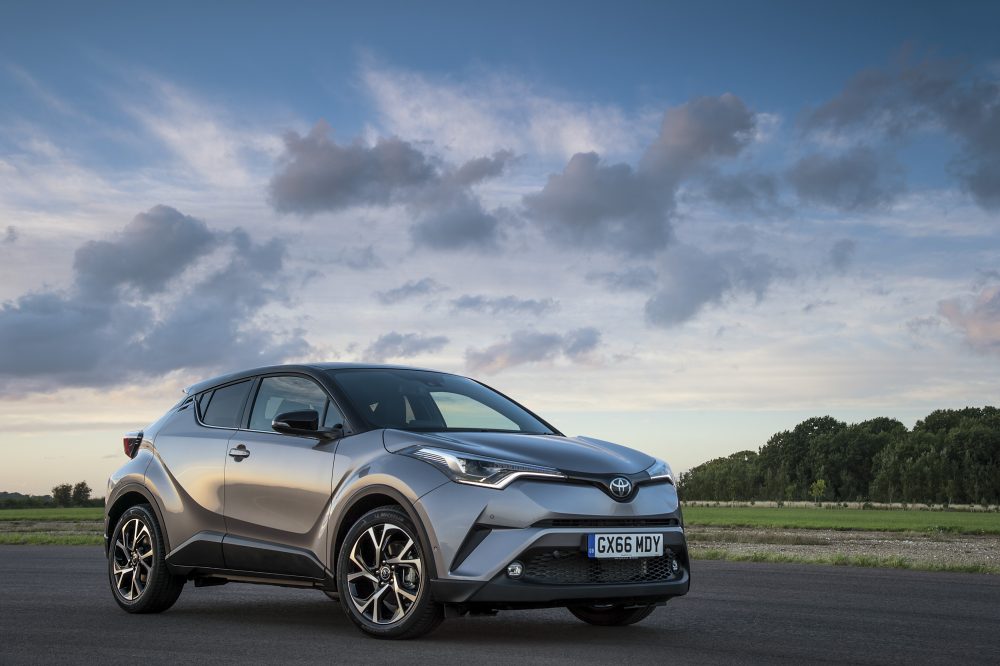
  • CAR REVIEW |  Toyota C-HR Excel Hybrid 1.8 CVT

    CAR REVIEW | Toyota C-HR Excel Hybrid 1.8 CVT

    ★★★★ | Toyota C-HR Excel Hybrid 1.8 CVT

    Never before has a car arrived into the avenue and caused quite a stir like that caused by the new Toyota C-HR.

    Next door has been looking to trade in the BMW 3 series for one while those opposite are also considering one to replace their Nissan Duke. 

    Prepare to see more of them because they are good and I’ll tell you why.

    The C-HR arrived brandishing the ‘Hybrid’ moniker and I had a few grumbles. Mainly that it would have a CVT gearbox and like the Prius, it would be noisy. It’s not a Lexus so I wasn’t expecting Lexus levels of serenity.

    On the first drive home, I ate some humble pie through a closed cake hole. It was surprisingly quiet even down to road noise. With the exception of rough and worn out roads, you would struggle to hear more than a gentle tyre roar.

    That drive home also happened to be on a horrendous Friday night. It was dark, wet and everyone was rushing to get home while trying to avoid the fouled up M25. The C-HR was a safe choice that evening. For your £28,885 it had all the usual pieces of kit that you would want. Adaptive cruise, blind spot alert and lane assist.

    This serenity heightened the enjoyment of driving the C-HR.

    I was summonsed to my sisters over the weekend and the 2 hours drive each way was an enjoyable experience. It’s not the most engaging car to drive. Handling at first is a bit of a puzzler. It plays it too safe. Fundamentally, it understeers first and scrabbles away any excess speed in corners if pushed. At first, it feels a bit lacklustre. That is until you look at the speed you approached the corners in. It travels faster than you think it actually going so you become thankful that the C-HR is a little safe.

    These gemstones and fluid surfaces of the body make a bold statement. Toyota is pinning a lot on this kind of architectural visual, love it or hate it. In the current climate of grey designs of similarities, it visually hits you. To quote Toyota, “C-HR’s combination of faceted, gemstone-like shapes with fluid surfaces and elegantly integrated detailing creates a delicate balance of precision and sensuality”. 

    Now I am perplexed at that description. Cut through all of that and just say the exterior architecture shows it to have muscles, angular poise and function. In the real world, its striking visuals don’t add up. It isn’t sporty despite its coupe-esque looks on top of a crossover.

    I like the door handle position. In a normal position, it would look out of place. What l don’t like though is the rest of the rear door. The large pillar within the door and the handles placement all make for a really small rear door window. Sitting in the spacious rear with surprisingly good headroom that belies the shape, your view of the outside world is somewhat limited. Large C-pillars and black colours make for a claustrophobic environment for those in the rear. What you do notice from the rear seat is the architecture of the headlining. I’ve never paid any attention to it in any car this side of a 70’s Rolls Royce Camargue.

    What I did absolutely love the most about the interior was the large infotainment screen. What made it even better is that it’s angled more towards the driver. It’s only ever-so-slightly done by a few degrees, making the screen very easy to read very quickly. A quick glance at the screen is all that is needed to find what you wanted to look at. The dashboard display is also typical Toyota and made to be easily read at a glance. 

    Most screens are centralised in a position to accommodate left and right-hand drive models. Let’s hope more start to do this.

    The ride is compliant and smooth. It restored my faith in the Toyota brand that they can make a hybrid that is quiet. The stereo is a little quiet too. Even on the loudest settings it wouldn’t blast out a Kylie tune. 

    My real quibble here though falls to the CVT gearbox. I just don’t like how they work. It’s not their working per se because in normal usage it works well. What ruins it is the moment you become the press-on motorist in a hurry. 

    The 1798cc engine does a great job in propulsion. Maximum torque of 142Nm is there at a useful wide range from 3600 to 4000 rpm. It’s just that you don’t really need to hear all of it and its 97 horses galloping at a higher 5200rpm as it spins away. Why Toyota can’t fit a step up or down system as fitted to the Lexus belies me. Or why they couldn’t give it a better automatic is beyond me. Always a better way Toyota say, a 9-speed auto would be better.

    I’m being hyper critical really and for a good reason. I don’t want to award the C-HR well and not warn of this pitfall. Try it and you might think I am talking rubbish. It’s a good car. I’d have one. It’s well thought out in design. It will carry you in the grimmest of weather on the foulest of days. There will be no fuss made. There are cars out there for more money that can’t do what this Toyota did for me on that Friday. It had me won over within the first 10 miles and it will you too.

    Love

    Ergonomics

    Economy

    Design

    Loathe

    CVT gearbox

    Small rear windows

    Stereo isn’t loud enough

    The Lowdown

    Car – Toyota C-HR Excel Hybrid 1.8 CVT

    Price – £28.885 (as tested)

    MPG – 72.4mpg (combined)

    Power – 120bhp @ 5200rpm petrol (bhp 90 for electric motors)

    0-62mph – 11 seconds

    Top Speed – 105 mph

    Co2 – 87(g/km)

  • CAR REVIEW | Toyota Prius Business Edition Plus

    ★★★ | Toyota Prius Business Edition Plus

    Manufacturers since the 1980s have teased us with electric and hybrid technology. No one though had the balls to actually do it. Toyota was the first to give us a hybrid car as a stand alone product called the Prius. It looked like nothing else in the Toyota showroom. In fact, it looked like nothing else anywhere.

    This next statement makes me feel so old. The Prius is now 19 years old. Toyota should be celebrated for this motoring milestone. It was a gamble. It ended up being a game changer. Now the Prius is not the only hybrid out there.

    The few hybrids l have driven have only taken me very short distances so when the opportunity came for me to test one l wasn’t sure what to expect. Toyota gave THEGAYUK two to test. The Lexus RX450h and the Prius. Both new models.

    The Prius was a disappointment. My ears are quite literally screaming from driving it. l had high hopes for the car that brought hybrid technology to the masses but in this latest incarnation, it has left me a little cold. For a car costing less than half of what the Lexus RX450h cost you could say l am being picky. I wish I was. It’s not that the Prius is a bad car. It really isn’t. Huge advances have been made in the 4 generations of Prius since 1997. The Prius has one major flaw.

    The Prius is whisper quiet. On start up, there is no engine noise. The dashboard comes alive with animation and illumination. You select drive via a crystal blue knob where the gear stick would be and you surge forward under electric motion. And here is lays the problem. It’s so noisy! Even at low speeds, noise from the tyres and differing road surfaces barge into the cabin. I’ve not known anything like it. To those outside, all they hear are their thoughts and screams when they shout out because they didn’t hear the Prius creep up on them. It isn’t even as if the 215/45 17 Bridgestone Turanza tyres are highly rated in noise. Fuel economy rated at C with road noise of 69 decibels. All pretty standard stuff for a branded tyre.

    Noise aside it is an amazing car. At speed on the motorway, it does settle down into a world of its own. There is no wind noise. The Continuously Variable Transmission gearbox settles down into a long-legged stride. It is here that the Prius makes sense. CVT gearboxes are not known for being quiet and when pushed the 1800cc engine will emit audible noise as it spins up to its peak 97bhp at 5200rpm. Then with the powers of hybrid, it settles down to a wafting machine.

    Because the main fascia of the dashboard sits in the middle of the car it is almost too easy to ignore it. It tries to give you all the information you need in a slimline display. It does work well. Thankfully there is a heads-up display that isn’t affected by sunlight coming in through the windscreen. What didn’t work for me was the hybrid display that kept clashing with the speed limit display. I wanted to know when I was in EV mode (electric vehicle) or not. The speed limit display was annoying. It wasn’t as if it hadn’t also appeared on the facia screen. It could thankfully be turned off.

    The 4th generation Prius makes no apologies for its looks. It’s bold and striking. I like it. Actually, I like it a lot. So many cars at the moment are starting to look the same again. Toyota appears to be designing a car, screwing up the paper, unfolding it and making the result. A good job is done too. After 19 years on the forecourt, the Prius can now wear its “in your face” looks with pride. The second and third gen Prius’s were awkward yet safe. They never made the grade. This one, however, looks like a spaceship. The problem it will have is within its extremities of the corners. Lights mounted into the bumpers are very vulnerable. Thanks to the auto brake and sensors, you won’t break them, but others misjudging their parking will. What doesn’t work in design is the rear wiper. There is a large unswept area. Probably not such a problem in a left-hand drive model.

    The Prius as a driver’s car was also something I didn’t quite expect. This is, after all, an uber economy car. There is a gauge on the dashboard that scores you out of 100. At best I managed 89. With some serious gun-ho motoring you can get that down to 8! For that, you have to drive like the wind. I have been witness to this. It was during this spirited ride as a passenger that first made me appreciate the Prius before I even had one. It does not pretend to be a sports car but the weight bias of the engine in the front and batteries in the rear must play a part in the making of a finely balanced chassis. Never underestimate a Prius driver as a slow doodler when you see one in motion. Chances are the owner doesn’t actually know just how good it is.

    The Prius is a good car. With the economy that is achievable, it is a clear winner in almost every respect. It’ll seat 5 and carry you all relatively cheaply wherever you want to go. It’s just that the inside needs to reflect the quietness of the outside. Toyota is capable of achieving this. I just wish they had with this Prius.


    Likes
    Economy
    Looks
    Dashboard

    Loathes
    Cabin noise
    Vulnerable extremities of the lights
    Rear visibility

    The Lowdown
    Car – Toyota Prius Business Edition Plus
    Price – £25,995 (as tested)
    MPG – 94.1mpg(combined)
    Power – 97bhp @ 5,200 petrol (142bhp @ 3600rpm electric)
    0-62mph – 10.4seconds
    Top Speed – 114 mph
    Co2 – 76 (g/km)

  • CAR REVIEW | Toyota GT86

    Toyota has produced plenty of icons over the years. From the bruising twin-turbo Supra as seen in The Fast & The Furious to the lightweight and nimble MR2 sportscar or legendary Landcruiser, the Japanese marque has catered well for the petrolhead. Does the GT86 live up to this tradition?

    First impressions on this occasion are slightly skewed by the test car’s distinctly non-standard appearance. Designed for the Goodwood Festival of Speed and inspired by early 80’s ‘IMSA’ racing Celicas, it boasts glitzy gold 18” wheels from Rota, a performance exhaust from Miltek and V-Maxx lowering springs. The stripes are in vinyl and completely removable (not that I’d want to) making the GT86 stand out anywhere your drive it. If I’m honest, it’s Marmite on wheels and I love it. That the standard car already has a chiselled, muscular appearance with an aggressive front and pert bottom doesn’t hurt. Add the stripes and it’s like a real-life Hot Wheels toy.

    Look past the warpaint and you’ll see the features that make the GT86 such a temptation for those who love to drive. Up front is a 2.0 litre ‘flat’ (so called because the pistons travel horizontally instead of vertically) four engine powering the rear wheels through a six-speed manual gearbox. An automatic is available but seems a little out of place in such a focussed driving machine. A super-low seating position and unusual engine contribute to a centre of gravity just 18 inches above the tarmac, figures a Porsche would be proud of. Out back there’s also a limited slip differential to provide plenty of traction or easily controlled drifts if you prefer.

    Inside there is technically room for four but only on short trips or if you really hate your rear seat passengers. More important are the two heavily sculpted front seats that hold you in place perfectly, small yet chunky steering wheel and a giant rev counter right in front of you. The short reach to the stubby gearlever confirms that this is an environment that’s been geared towards the driver. Thumbing the starter button brings the engine noisily to life with a distinctive burble from the giant rear exhaust pipes. The gear change is mechanical feeling, direct and for the most part very enjoyable apart from the odd notchy moment.

    Those expecting serious firepower will be disappointed, the non-turbo engine produces 197bhp at a giddy 7,000rpm. You really have to rev this motor to get the best from it, while it’ll mooch along with less than 2,000rpm on the dial you need over 4,000 before it really wakes up. Even if you do poke it with a stick, the 0-60mph time of 7.4 seconds is only on par with a BMW 320d. Straight line speed isn’t really the point of a car like the GT86 though. The modest power output means you can use more of the performance more of the time without expecting flashing blue lights in your rear view mirror. It also prevents the car from being too intimidating when it comes to cornering, something it does exceptionally well.

    Even at low speeds, you can feel there is virtually no slack in the suspension, steering or gearbox. Up your pace and you find the GT86 corners with barely any roll and is beautifully balanced. Apart from a slightly sticky feeling around the straight ahead, the steering is very well weighted and fast too. Even with all the electronic nannies turned on you can feel the rear of the car pushing you around corners, given a private track (or deserted roundabout) and you’ll find it’s, even more, fun beyond the limit. A stab of throttle in the first couple of gears can unstick the rear tyres and get you sideways. This is not something to be feared though, a quick flick of the wrists on the steering will catch it by which time you’ll be grinning like a complete idiot.

    Downsides? Well those use to a premium German cabin won’t be bowled over by the GT86’s interior. Although everything seems well made, some of the plastics look a bit cheap compared to a VW or Audi while the overall design is a little behind as well. Those after cheap running costs should look elsewhere too, I averaged around 28mpg while carbon emissions sit at 164g/km for the manual. Ride comfort and general usability also suffered at the hands of the modifications on this car. Over a succession of bumps the GT86 could bounce you almost out of your seat and speed bumps had to be taken at a crawl. Parking was a stressful activity thanks to stretched tyres that left the polished lip of the wheel with no protection from curbs; I managed to avoid damaging them but needed a gangplank to get to the curb most of the time. Then there was the noise, fantastic if you were going for it but the exhaust drone at motorway speeds coupled with the tyre roar and wind noise got old fast. No doubt a standard GT86 would be more agreeable on a day to day basis if a lot less dramatic.

    If you think of a car only as a method of transportation to get you from A to B then the GT86 is not for you. Space is limited in the back, it’s expensive to run and not at all comfortable. If however, you see cars as a thing of pleasure that beg to be driven, the little Toyota will be right up your street. From the moment you approach the GT86 to the moment you glance back towards it as you walk away it makes you happy. For some, the modifications may be too much but for me its pure theatre, I’m smitten.

    PROS

    Handling

    Looks

    Noise when driving hard

    CONS

    Uncomfortable over rough tarmac

    Thirsty

  • Top Ten Motoring News This Week From Corsas To Teslas

    After complaints were made about an ‘ugly yellow car’, a local resident’s Vauxhall Corsa, ruining photographs of a Cotswolds’ village, Vauxhall have come up with an optional camouflage net for the car. Available in Flaming Yellow, Flame Red, Lime Green and Chilli Orange, they claim the bizarre accessory ‘has been designed specifically for use near National Trust premises and chocolate box Cotswold villages’. I think Vauxhall may be taking the p*ss somewhat.

    (more…)