Tag: Trolling

All the latest breaking news on Trolling. Browse THEGAYUK’s complete collection of news, articles and commentary on Trolling.

  • Bobby Norris to give evidence to MPs over online trolling

    Bobby Norris to give evidence to MPs over online trolling

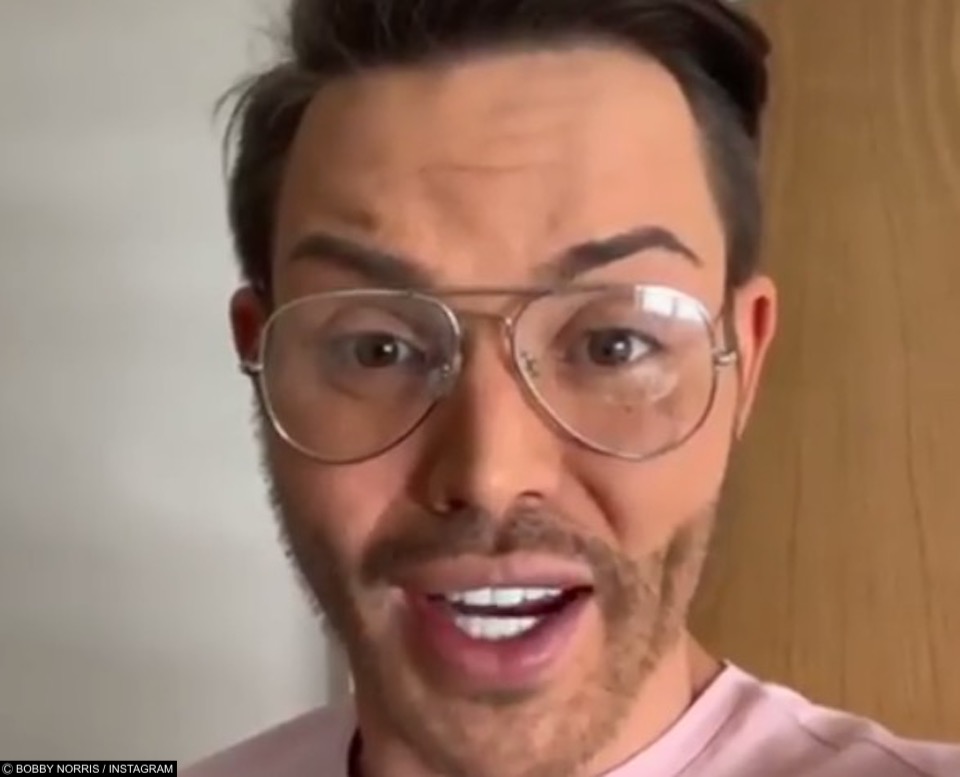
    TOWIE star Bobby Norris is about to give evidence to politicians over his petition to “hold online trolls accountable” for their abuses.

    Norris has spoken openly and numerously on his horrific encounters with hateful trolls – many of whom focus on his sexuality and his looks.

    He created a petition on the official government petitions site in 2019, and it gained over 133,000 signatures.

    The petition, titled “Hold online trolls accountable for their online abuse via their IP address” calls for abusers to have their access to social media blocked by internet service providers and social media companies.

    The evidence session, taking place during Mental Health Awareness Week, will see MPs speak to the reality TV personality about his petition on tackling online abuse. The session will also see Bobby discuss his personal experiences of homophobic abuse since first appearing in the public eye in ITV2 show The Only Way is Essex in 2012.

    He will now talk to the Peititon’s committee over video link to discuss online trolling.

    Bobby is vital for awareness

    Catherine McKinnell MP, Chair of the Petitions Committee, said:

    “I’m pleased that Bobby is able to share his personal experiences of online abuse with the Committee during Mental Health Awareness Week.

    “Highlighting these issues in Parliament is so vital for raising awareness, and can shine a light on the action that can be taken to help stamp out this all too common problem. 

    “Online abuse can affect anyone, and takes many forms. It is a subject that is very close to my heart, and something that the Petitions Committee investigated extensively in the last Parliament.

    “But with online abuse as prevalent as ever, and Coronavirus meaning people are on social media more than ever, it is imperative we take steps to tackle online abuse and stamp it out.”

    The evidence session is the first step from the Petitions Committee in their new inquiry on tackling online abuse. The inquiry will consider issues raised in a number of petitions from the last Parliament and follow up on the Committee’s previous inquiry into online abuse and the experiences of disabled people. More details on the inquiry will be announced following the session.  

  • Katie Price Is Naming And Shaming Harvey’s Online Trolls

    Katie Price Is Naming And Shaming Harvey’s Online Trolls

    Former Celebrity Big Brother winner Katie Price is naming and shaming online trolls targeting her son Harvey.

    (more…)

  • Government Offers New Online Tool To Deal With Online Anti-Gay Abuse

    A new website tackling online abuse aimed at women and lesbian, gay, bisexual and transgender people is launched today.

    • Internet site aims to help people struggling with online abuse.
    • Women and Equalities Minister says the site is proof that the government is determined to tackle discrimination.

    A government funded, but created by Galop site is aimed at stopping online abuse was launched today with a view to help wipe out online trolling.

    Charities with a combined 161 years of experience in anti-violence work collaborated to provide answers for people struggling with online abuse. The news comes after it was announced in October 2014, that internet trolls could face up to two years behind bars for their crimes.

    The website aims to provide advice for anyone who is falling victim to online abuse. It aims to “empower people facing sexist, homophobic, biphobic or transphobic abuse online.”

    Nik Noone, Galop’s CEO said:
    “Evidence suggests that over one million people in the UK face online abuse each year. Whilst online abuse can affect anyone, women and LGBT people often experience abuse as a result of their sex, gender identity or sexual orientation.

    “We’ve all seen a growing number of high profile examples of online abuse in the news. Our casework here at Galop also evidences an increasing trend, the impact of which can have far reaching consequences. This project is about ensuring that protection from harassment and abuse against women and LGBT people in the real world exists in the online world too.”

    Women and Equalities Minister Nicky Morgan, who voted in opposition to the same-sex marriage bill in 2013, said:

    “This new site will provide practical advice for women and LGB&T people on how to recognise abuse, what steps to take to report it and how to get offensive content removed. It is another sign of our determination to tackle discrimination in all its forms and to creating a fairer society for everyone, regardless of sexual orientation or gender identity.”

  • Internet Trolls May Face Up To Two Years In Prison

    Internet trolls who target people with abusive or offensive material online will face up to 2 years in prison.

    Internet trolls who target people with abusive or offensive material online will face up to two years in prison and the police will have more time to investigate cases as part of the government’s commitment to protecting victims of crime.

    In the past a number of high profile celebrities such as Rylan Clark, Duncan James, Boy George and Joe McElderry have all suffered at the hands of online trolls.

    The government is changing the law to increase the maximum sentence for the offence of sending certain items with the intent to cause distress or anxiety. This will mean more serious offences can be dealt with in the Crown Court and there will not be a time limit for police and Crown Prosecution Service to bring a prosecution.

    THREE YEARS TO BRING PROSECUTIONS

    Alongside this, the government is also changing the law to allow up to 3 years, as opposed to 6 months as previously, to bring prosecutions against people for using the internet, social media or mobile phones to send menacing messages.

    Justice Minister Chris Grayling said,

    “The sending of abusive messages or material online can cause absolute misery for victims and we need to make sure that people who commit these awful crimes are properly punished.

    “We already have offences in place to deal with this appalling behaviour, but we’ve toughened up the law to make sure these crimes can be properly investigated and those who commit the most serious offences face a longer prison sentence.”

    Changes to the law will be made through the Criminal Justice and Courts Bill, currently going through Parliament. This comes on top of a raft of government measures to support victims. Next year, victims’ rights to tell the court how their crime has affected them will be set out in statute; a new nationwide Victims’ Information Service will be set up to ensure better information and support; and millions of pounds will be invested in improving the court experience.

    Crucially, we will also develop plans to require advocates to undergo specialist training before taking part in sexual abuse or rape trials, which will make going to court easier and less distressing for victims. All vulnerable victims and witnesses will also be given greater opportunity to give evidence away from the court building, and we will work towards rolling out pre-trial cross examination for child victims nationally, subject to the evaluation of on-going pilots.

    The government also provides £4.4 million annually to fund rape support centres and has met its commitment to open 15 new support facilities across the country since 2010.

  • OPINION | Attacked For Being Gay or Attacked For Being There?

    In my last article I talked about the rise of online ‘trolls’ but something that has been around for much longer than trolls are perpetrators of hate crimes; either through the press or via the traditional old fashioned face to face method.

    Unfortunately it’s something that goes on far too frequently and has probably even gone on in front of you without you ever realising. But what is a hate crime? And how is a hate crime any different from any other sort of threatening or violent behaviour?

    In a previous life I used to work in a gay bar and you would get all walks of life through the door on any given night. Some nights, namely mid-week when drinking on a school night is usually a bad idea, it used to be fairly quiet and it gave you the opportunity to catch-up on any cleaning or get chatted up by the regulars. Well, they would try to chat you up… can’t blame them for trying right?

    One night however a guy came in who, on the face of it, seemed like a general body from the street that was coming down to the local gay bar to escape the wife / girlfriend / home life; someone that you wouldn’t turn away or guess that they were out to cause trouble or had issues. As the night went on he became more and more frustrated and pushy with staff and customers so was eventually asked to leave. Upon leaving (after much protest and farting about) he proceeded to through all 16 odd stone of himself against the bar door in an attempt to break it down all the while shouting profanities. When that didn’t work, he moved onto the bin outside and tried to throw that against the bar windows.

    Somehow he missed the windows (I’m still not sure how) and as if by magic (or really bad luck) managed to hit and dent the front bonnet of my car.

    Now, anyone that takes any pride – at all – in their car would know the pain and distress that I went through in that moment. What had my car done to him? And how did he know it belonged to me? Or was it a case of “wrong place, wrong time”?

    The police were called, he was duly arrested and statements were taken and on the whole the support the police provided was fairly helpful and engaging. However, when it came to processing the attack under a relevant law it was classed as ‘criminal damage’ and not as a hate crime. This baffled me somewhat as it transpires he wasn’t escaping the family home for evening but instead had just been ‘released’ from the local homeless shelter and was, by all accounts, looking for a target for his next attention fix. The argument at the time was that they didn’t have enough evidence to prosecute under hate crime legislation however there was more than enough for criminal damage and were more likely to get a positive result at the Magistrates Court.

    In that regard they were correct, it went to court and he was forced into a programme, several hours community service and forced to pay mine and the bars repair bill and a small amount of compensation. While I don’t question the outcome (as he was made to pay) for me it raises questions of, well has the reporting of hate crime become a side thought because it just doesn’t lead to “justice”? In this instance, we were more likely to get “justice” by pursuing another criminal offence? What do you need to do therefore to prove that a crime is a hate crime?

    Another example was of a local magazine (although the more accurate term is “local rag”) that usually printed ‘laddish’ type articles designed to make the lads laugh and girls look at the wedding and pampering adverts that were often in there. Usually it printed run of the mill every day jokes or funny stories, nothing that would cause mass offence. Except in one addition, the editor decided to print an article on “10 signs that you aren’t manly”, or something along those lines. One of which stated that if you looked after yourself, or went down the gym or took care of your appearance in any way you were clearly not worthy of the title ‘real man’, and was indeed a ‘homo’.

    A few local LGBT groups, including myself as a private citizen and some friends, all wrote to said editor and asked, politely, that he issue a retraction and reconsider his general approach to the tone of his magazine. These emails and letters went ignored for a week or two until instead he chose to publish each and every one of them and add his own personal commentary about how we all lead sad lives and ‘trust the homos to get their knickers in a twist’.

    Naturally we weren’t happy, even more so as he had just printed out letters with no prior notification or consent (Data Protection breach anyone?). We complained to the local police and were quoted some clause of the Hate Crimes law that said what he had done didn’t qualify as a hate crime. If I recall, they were trying to say that because he hadn’t targeted a person it didn’t qualify? But he was targeting a group of people? Surely that’s what a hate crime is? (Apparently not).

    We also wrote to the Press Complaints Commission who said that because he wasn’t registered into their “opt in” regulation that they couldn’t help or intervene. All we could do was encourage people not to buy the magazine and seek support from some of the shops that had the stands in the windows and doorways. We couldn’t stop him from circulating his nonsense but at least we stopped it being handed out in key places in town.

    Apart from the incident at the bar I have never suffered a “major” hate crime against me. For this I am very appreciative, but I ask myself the question – what about all the times someone has called me “FAGGOT” or hurled abuse because I’m walking to the cinema holding my boyfriend’s hand? Technically would these be classed as hate crimes? They never cause offence to me personally because I don’t value or respect their opinion. Therefore it just washes right off my back. But when you see some of the nastiness in this country (or indeed the world), not only to the LGBT community but also ethnic minorities and social classes, you think why would you do such a thing? Where does that “hate” come from? What has caused you to hate in such a way?

    Last time I checked the LGBT community wasn’t an historic empire that had occupied your lands, or been slave owners or even caused any wars. So what makes a “hate criminal” do the things he does? Should we feel sorry for them as they clearly have some deep rooted issue that uses any distinction as a scape goat to vent at?

    I’ve always been curious about why people do the things they do. Why someone is shy, or why someone is confident. Sometimes its genetics, but sometimes it’s what their life has made them. And in these instances what sort of a life could create such a willingness to hate in such a way?

    By the way, is it a crime to flirt with a police officer when he’s taking your statement? I didn’t mean to, he was just very nice and comforting in my time of need. I don’t think he noticed… well he didn’t arrest me or even ask me out for a drink. Which is a point, must work on my flirting strategy…


    Opinions expressed in this article may not reflect those of THEGAYUK, its management or editorial teams. If you’d like to comment or write a comment, opinion or blog piece, please click here.

  • COLUMN | Sorry, Did You Really Mean To Say That?

    I was talking with a friend the other day, and something smacked me in the face that, in some ways, caught me off guard. (And no, it wasn’t anything rude – mores the pity).

    She said that comments were being made about her through social media by an ex who was, by all account, saying things that were untrue and generally being a nasty piece of work (that was me being polite). However, it got me thinking about why someone, anyone, would say such things when they hadn’t be hurt or attacked, and I doubt very much that they would repeat the comments in the “real world”.

    Every day, both via that lovely medium of social media, and in the real world we say things that, quite often, we don’t actually mean or truly understand what they mean.

    In the online world (or t’intenet as I call it) for example, “trolls” stalk the social media lands, looking for innocent (or not so) recipients to throw flippant comments at. Why would anyone do that? In the real world you don’t do that. (Or maybe that’s a sport I didn’t do when I skipped sports at school?). Anyone deliberately looking for someone to hurl abuse at would, (I hope) quickly find themselves in trouble with either the police or decent human beings. But online, that doesn’t seem to happen. People of all walks of life seem to produce comments and statements that they often don’t truly understand or even acknowledge the impact of.

    Remember when Justin Bieber was being a little princess (I would say that to his face) and all of a sudden death threats were being posted online and all sorts of really nasty comments. Don’t get me wrong, I’m not his biggest fan, but really? Death threats? He’s a pop star not a mass murderer or war criminal… and besides, if he dies that hot body dies with him (my mind wonders far too much).

    Is “trolling”, as its known, something new? Or is this just another way for people to make themselves seem big, make big statements then walk away from their responsibilities as if it means nothing. In the real world we see this sort of thing it all the time. Parents abandoning kids; drivers leaving the scene of a car accident; teenagers not admitting to smoking to their parents when they stink of it; dating someone and dropping them via text, the list goes on and on.

    If you’re a teenager and rebelling against your mum for smoking then stand up and be counted. Yeah I smoked, yeah it was horrible, no I won’t be doing it again. I did it with my parents, got shouted at but got respected for taking ownership of my “behaviour” and choices. Just as today, If I do something wrong I’ll say that I have. Just as if I make a decision, I won’t hide from it; I’ll stand up and be counted for it. But then, I’m always being told that I’m a little bit weird
    In the gay community especially trolls will sit online in the chat rooms and spout their poison for any and all reasons that happen to come up that day. I remember being on one particular chat room and watching a “troll fight” unravel on my screen between 2 ‘users’ that by all accounts should have better things to do with their time. To this day I have no idea what started the ‘fight’ and I don’t think even they know. Again, would they do it in real life? Maybe they would, I’ve seen a fair few ‘cat fights’ start in exactly that way.

    But what would happen if we all really did understand and truly mean what we say and do? What would the world be like if every word or action produced by us was meant to be and understood by us? Would the world be a better place? Would trolling still go on online? Or would any form of online trolling simply be seen as the effect of being annoying or controversial? Defending as opposed to attacking.

    Or would the world just be filled with walking dictionaries where everything is “acceptable in accordance with an agreed parameter” and everyone simply didn’t say anything to each other as it’s much simpler to just keep shtum. Or would it be the nicer place that we all aspire for? Would arguments about gay rights actually have counter arguments that state the truth and not some deep repressed fear or misunderstanding? Would dating on the scene actually go back to the good old days of dating when a date was exactly that, and not a “let’s be Bfs right away” which it seems to be at the moment.

    Who knows, I suspect that if we want the ability to say what we want, when we want it and to whomever we want we have to take the bad with the good. And again, if we want to be “free” people then we have to allow the people to say what they feel, not what they mean.