Tag: UK

  • PETER WHITTLE | I Have Never Come Across Homophobia In UKIP

    PETER WHITTLE | I Have Never Come Across Homophobia In UKIP

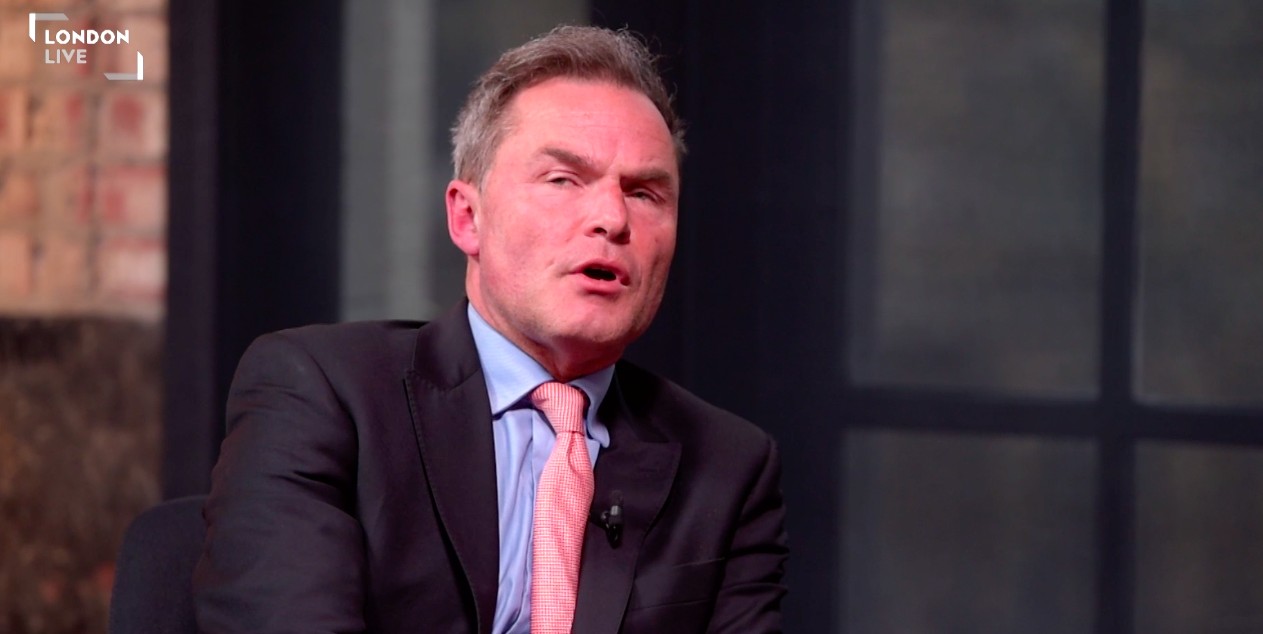
    London’s only gay mayoral candidate has said that he has never come across homophobic in his party, UKIP.

    CREDIT: LondonLive

    Openly gay London mayoral candidate Peter Whittle has told London Live that he’s never heard homophobia in UKIP – despite Councillor David Silvester infamously suggesting that bad weather in the UK was being caused by gay marriage and candidate for cabinet Alan Craig calling LGBT activists the ‘Gaystapo’.

    London Live, the capital’s TV channel, interviewed, Peter Whittle last night for its new weeknight London Mayoral election show, London Votes. Daisy McAndrew, spoke to the UKIP candidate for Mayor of London who suggested he had never heard any homophobia in UKIP.

    Peter also thinks that there is nothing homophobic about his party, even when presented with the controversial remarks from UKIP south west candidate for cabinet, Alan Craig.


    ADVERT

    [adinserter block=”1″]


    Alan Craig referred to LGBT activists as the ‘Gaystapo’ in a blog post published in 2011. He said,

    Their gay-rights storm troopers take no prisoners as they annex our wider culture, and hotel owners (here) and (here), registrars (here), magistrates (here), doctors (here), counsellors (here) and (here), foster parents (here), grandparents (here), adoption agencies (here) and traditional street preachers (here) and (here) find themselves crushed under the pink jack-boot.

    CREDIT: LondonLive

    When asked to comment on Mr. Craig’s comments, Mr. Whittle denied that there was homophobia in UKIP saying and said that Mr. Craig was ‘entitled to his own view’.

     “It tends to prove that in fact there is nothing homophobic about my party. I am the only gay candidate standing for mayor.”

    “Ok, I have shared a platform with this guy. I don’t necessarily agree with his remarks, I for example believe in gay marriage. I’m fine with gay marriage. There are people in my party who are not.

    “I am the Mayoral candidate, I’m number one on the list, I have never come across homophobia in UKIP. There are lots of gay people in UKIP, we have our own LGBT section in UKIP.”

    “The guy is entitled to his view.”

    “The party absolutely accepts what the law is now, it’s not even an issue anymore – the reason for that opposition, was never against civil partnerships, ever. They were worried that basically the EU – remember my party  is based on an opposition to the EU, would force churches or what have you through the European Court of Justice to hold ceremonies, it’s actually something more to do with Europe.”

    London Votes, weeknights at 6pm – Freeview 8, YouView 8, Sky 117 and Virgin 159


  • THEATRE REVIEW | Doctor Faustus

    ★★★| Doctor Faustus

    Picture Matt Humphrey

    The story of Doctor Faustus, the man who sells his soul to the devil, is an enduring one that translates well to the modern age. People can become elevated to giddy heights and accrue endless riches and advantages in the realms of celebrity and politics through seemingly mysterious and nefarious means. It’s still tempting to wonder what kind of pact they might have made whether spiritual or, more realistically who they’ve trampled on and betrayed along the way. The truth is probably less titillating and more prosaic. Doctor Faustus was originally published over 400 years ago but retains its relevance.

    The original author Christopher Marlowe is an Elizabethan enigma; dying in a much speculated upon pub brawl at the age of 29. His writing contained openly queer characters, complex romantic relationships and overtly homoerotic prose. Was he a gay man, a spy or a wily criminal? The speculation has lasted centuries along with his plays.

    “Doctor Faustus” opens with a gloomy dwelling with a Hieronymus Bosch style twist of hellishness. Dark figures loiter, hands reach around doors and faces are pressed against the windows. Naked figures move forward, blood flows and sedated looking humans in stained underwear creep around the set. Take your eyes off Kit Harrington (which isn’t easy as he’s incredibly handsome) for more than a few seconds and more horrors appear. Figures appear halfway up the walls, lurch out of doorways and materialise as if from nowhere. It’s actually really quite terrifying. This isn’t a production for the feint hearted. The warning list on the way in is quite impressive with a list of what horrors await you. Instead of the usual ‘theatrical haze’ and ‘strobe lighting’ there’s an itinerary that would make Mary Whitehouse turn in her grave.

    Kit Harrington proves that he can really act with an incredibly powerful performance. He’s also almost naked on a few occasions and that’s no bad thing. Jenna Russell (last seen in ‘Grey Gardens’) is on her usual top form as Mephistopheles. There’s also a very able supporting cast, a stunning and cunning set by Soutra Gilmour and appropriately intense sound and lighting design.

    All good so far but sadly the good stuff is very good and the bad stuff is very cringe-worthy. The Elizabethan script works as does the modern script by Colin Teevan but the two don’t blend together well. In fact, they positively jar. The modern allusions to celebrities and politicians are a little painfully awkward and the humour often falls flat. The second act starts with Jenna Russell singing “Bat Out of Hell”. It’s a bizarre beginning but definitely a sight worth witnessing. The action then flails somewhat and the atmosphere is shattered with skits that often feel silly, although fortunately the play always manages to pull itself back.

    Strongly recommended to see some amazing work from the lead actors (provided you can cope with violence, blood, faeces and sex) but ultimately, Dr Faustus fails to deliver all that it promises.


    Doctor Faustus plays at the Duke of York’s theatre until 25 June.


    @chrisb715

  • THEATRE REVIEW | Funny Girl

    ★★★ | Funny Girl

    CREDIT: Johan Persson

    Is there anything Sheridan Smith can’t do?

    She’s now playing Fanny Brice in the new West End musical Funny Girl, but Smith has done quite a bit in her short 34 years. Already an OBE, Smith has won tons of awards for her work both on stage and on television. She’s won two Laurence Olivier Awards (Legally Blonde in 2011 and Flare Path in 2012) and one television BAFTA (Mrs. Biggs in 2013). Smith has also been featured in several films in the past few years, including the recent The Huntsman: Winter’s War and 2013’s Powder Room and The Harry Hill Movie. But it’s her role as Brice in Funny Girl that’s bringing Smith more plaudits and acclaim.

    In a role Smith starred in last year to sell out crowds at the Menier Chocolate Factory, it’s now transferred to the Savoy Theatre for a short 6 month run. Smith plays Brice, a role which made Barbra Streisand famous (and which won her a Tony and an Oscar), so Smith has huge shoes to follow. And does she fill them? Not even close.

    Fanny Brice is the true story of a young Brooklyn born Jewish girl with huge stage aspirations. The real Brice was born in 1891 to Hungarian immigrants who had arrived to the US as children but managed to make a life for themselves and their children in Brooklyn. So Smith’s job is to make you forget Streisand’s Brice and reinvent the character to make it her own. And she does in her own way. She’s charming and lovely and can sure belt out a tune. Songs made extremely memorable by Streisand – ‘People’ and ‘Don’t Rain on My Parade’ – are sung by Smith, good enough for this production, but not very memorable. And we’re supposed to believe that the handsome, debonair, charming (and con man) Nick Arnstein (Darius Campbell – perfect in the role) falls in love with her and not for her money. She’s so in love with him that she certainly can put up with his gambling habits and dubious investments. But even Brice can’t figure why he’s fallen for her, and neither can the audience.

    Brice does find fame and fortune as a performer, with a proud Jewish mother (Marilyn Cutts) by her side all the way, living her dream by being employed by the great Florenz Zlegfield (Bruce Montague). But the crux of the show is the relationship between Brice and Arnstein, it’s a volatile one but not quite believable, and it’s a shame that the show isn’t more about Brice’s talent and less about the relationship. Smith is given her moments, and she gives it all she’s got, a bit over the top at times (her Brooklyn Jewish accent is a bit over exaggerated at times).

    There are no amazing sets, and no showstopping numbers as in most musicals. But great costumes and an excellent supporting cast, with classic musical numbers, makes Funny Girl worth a look.

    It’s not a very memorable production but it’s clearly a star vehicle for Smith, and she makes it her own.

    Funny Girl plays at the Savoy Theatre until October 2016, 0844 871 7687

  • THEATRE REVIEW | FOLK

    Holy, Unholy and everything in between. Folk was heavenly humorous but had also many notes of devilish charm that tickled many funny bones in the audience.

    (more…)

  • THEATRE REVIEW | My Mother Said I Never Should

    ★★★★ | My Mother Said I Never Should

    CREDIT: Savannah Photographic

    My Mother Said I Never Should is an award winning debut play written when the author was just 25. It was chosen as one of the most significant plays of the twentieth century by the National Theatre and is, apparently, one of the most performed plays by a female artist. Yet, strangely it hasn’t been seen on a major London stage since the 1980s. Maybe plays about the relationships between women still don’t have commercial appeal? It’s a shame that it’s not been revived before but director Paul Robinson and producer Tara Finney have more than rectified that and have resurrected a thing of beauty and power.

    The stage is almost bare with stark white backgrounds and hints of furniture. Piles of television sets suggest eras and portions of scenery, helping to frame the action in the non-linear structure. The four women start the play as sinister schoolgirls (which could be excruciating to watch but is actually cleverly done), chanting rhymes and plotting to kill mummy. The play then evolves into a series of scenes from the lives of four generations of women in Manchester helped by subtle lighting and sound changes.


    ADVERT

    [adinserter block=”1″]


    It’s a standard potboiler plot that could be found in a fat Catherine Cookson novel or a television soap opera: difficult marriages, terminal illness and illegitimate children. The script is cleverly written, though, and although the storyline veers towards mawkish sentimentality at times it always steers back and feels lifelike and moving rather than trite.

    Maureen Lipman is magnificent as Doris, a fearsome mother, grandmother and great grandmother. There’s depth to her character as she progresses through stern 1940s mother in the Blitz through to a more benign and charitable but still waspish old lady sunbathing with her pop socks off in the garden. She delivers her lines with skill and inhabits the role beautifully. Caroline Faber is convincing as her at times put upon daughter. Katie Brayben (who played Carole King to critical acclaim in the musical Beautiful) portrays Jackie with skilful restraint and Serena Manteghi is suitably boorish yet ultimately wise as Rosie.

    The play will resonant with a wide variety of people. Provided you had a mother/grandmother/aunt/sister or daughter then it’ll be hard not to reflect on your own experiences whilst you watch this. The yearning to be loved and approved of is innate and powerful. Don’t expect a tragic, visceral weepy though. There are so many comedic moments and killer lines that the blow of the deeper hurts being presented is softened suitably.

    This is a strong production with a skilled cast and high production values and is a welcome return to form for The St James Theatre. Highly recommended entertainment with underlying resonance.

    My Mother Said I Never Should plays at the St James Theatre, Victoria until 21st May 2016, 0844 264 2140


  • The Hottest Musical You’ll See This Spring

    The Hottest Musical You’ll See This Spring

    Now we don’t usually run much theatre preview content here at THEGAYUK, but when this little promo hit our desks we only thought of you…

    Devilish photo 1

    Dear Reader… Just feast your eyes on this promo for a brand new show called Devilish. It’s a new British musical with music by BB Cooper, and book and lyrics by Chris Burgess starring Alex Green (the guy in the photo) as Angel.

    Once Angel has savoured the delights of Clapham North, London, he decides he wants to become a human. And thus starts his odyssey through a metropolitan mire of corruption.

    Cute and innocent, he is lured into appearing on a ‘Freak Idol’ TV show and is lusted after by fans everywhere. 

    We can’t imagine why <insert horny devil face>


    ADVERT

    [adinserter block=”1″]


    It was inspired by John Ruskin’s comment that an angel appearing on earth would be shot on sight. H.G Wells wrote a novel called ‘The Wonderful Visit’ based on this observation, but now a new team of writers offer their musical take on this premise.


    ALSO READ: Patrick Stewart dragged up and it’s slightly amazing…

    ALSO READ: David Gandy’s Instagram is giving us some serious feels.


    The show begins on May 10th at the Landor Theatre

  • OP ED: In The Bar Of A Tokyo Hotel By Tennessee Williams Lethal Lounge Lizardry!

    Ever felt the fabulous joys of faux-suicide? Ever wanted to? Arguably, Peter Pan said it best; ‘To die will be an awfully big adventure’. Damn right.

    No wonder gay art-gods galore have jacked, inhaled or orally abused hardcore narcotics and been half in love with easeful death. And, truthfully, what’s not to like? What paltry social thrills can possibly beat the incomparable rush of cheating death by mere micrograms again and again? It’s faux-suicide as a bizarre, repeat leisure option, the manic craving for ultimate euphoria trumping possible fatality every time. An intoxicating, irresistible dynamic, it’s one squarely shaping the brilliant, barbiturate addict core of an incomparable gay dramatist – Tennessee Williams. Time and again, Williams’ protagonists ache for a transcendent escape, and time and again, mundane necessity intervenes.

    But forget clichéd preconceptions of blowsy, theatrical transvestism, of Tennessee ventriloquising unresolved angst and frantic, female denials of time and lost desirability via his leading ladies. The real Tennessee, as acclaimed director Robert Chevara’s astonishing revival makes clear, is as savagely modernist as uncompromising, enfant terrible Sarah Kane. Especially, post-1957 and a chance, street-walking meeting with gay maverick author Yukio Mishima, Williams’ language became a forensic instrument of lethal brevity. Or, more probably, the meeting simply reactivated a pre-existing precision; Williams’ first play, Not About Nightingales, has a demotic bite worthy of Harold Pinter.

    So forget Blanche Dubois’ ‘kindness of strangers’; this set-up’s as brutal as a gangland massacre, with no baroque, hothouse excess in speech or decor. A ravishingly raked, minimalist set comprises a full-length bar back-stopped with disquieting, lava-lamp patterns in queasy motion. It’s an aptly sinister, imminent emotional killing field for William’s cast, celebrity artist Mark and viciously embittered wife, Miriam.

    Appropriately – given William’s lifelong adoration of feminine beguilement – Miriam’s given the bloodiest share of the verbal meat, which, quite meticulously, she tears to vindictive shreds. Bored, and blatantly sexually promiscuous, she’s superbly played by vintage Stephen Berkoff muse Linda Marlowe, as severely, facially elegant as an Egon Schiele sketch.


    ALSO READ: THEATRE REVIEW | In A Bar In A Tokyo Hotel


    But crucially, the full potency of Williams’ witches’ brew only fully gels with one truculent ingredient – Mark. Played with bedraggled magnificence by David Whitworth in a suit spattered with kinetic, Jackson Pollack-style paint splashes, he’s an alcoholic void howling for impossible sublimity. Hopelessly shipwrecked on the shores of his own, hugely self-denigrated talent, vain, manic and despairing, he completes tonight’s savagely theatrical autopsy.

    It’s uncomfortable viewing, of course; almost hateful, even, as a dead, but co-dependent marriage fuels impotent speech drained of love, life or hope. All shot-gun, gnomic haikus, Mark and Miriam are plainly the warring sides of Williams’ psyche, his most shockingly direct self-portrait yet. But never remotely predictable – even in his least assured work – Williams suddenly extends this brutal marriage, implicating audiences lounging imperiously smug offstage. Shockingly, we’re immediately complicit in a vile, incest ménage of pointless sex, vapid euphoria and maddeningly absent, inner meaning.

    Still – to quote two infamous, patron saints of mediocrity – we’ve only just begun. For Williams, a Marquis de Sade of self-recrimination, this is barely entry-level abuse. If the semantic violence, so far, has lashed like a frenzied, sexually-crazed serial killer, the tone, the comportment, has been impeccably restrained. Almost, it’s old-world depravity, as seductive as Truman Capote elisions, a constant slippage of imminent catastrophe between word and action tautly drawn throughout. Then – with no prior warning – the directorial gloves slip off with the shattering force of a guillotine decapitation.

    Mark, in cardiac arrest, dies onstage, and Miriam, her fixed rock irretrievably gone, instantly collapses inside herself. Stark, brutal and visceral, it’s an ejected, projectile pregnancy moment, all possible futures splashed bloody and impotent wall to emotional wall. In one indelible, theatrical moment for the ages – Miriam, utterly vacant, declaring ‘I have no plans and nowhere to go’ – director Robert Chevara creates a harrowing tour-de force worthy of Samuel Beckett at his bleakest. Intriguingly, however, one suspects Chevara’s barely begun to hit his interpretive stride, and the best – wherever it may lead – is surely yet to come.


    by Fraulein Sasha de Suinn | @MsSashaDarling


    Opinions expressed in this article may not reflect those of THEGAYUK, its management or editorial teams. If you’d like to comment or write a comment, opinion or blog piece, please click here.

  • NHS Will Now Reconsider PrEP After Legal Threat From AIDs Charity

    The NHS in England has said it will now reconsider its position on PrEP prescription for gay men and other high risk groups after a legal threat from leading AIDs charity, the National AIDS Trust (NAT).

    (more…)

  • THEATRE REVIEW | Closer by Circa, Udderbelly London

    THEATRE REVIEW | Closer by Circa, Udderbelly London

    ★★★★ | Closer by Circa, Udderbelly London

    CREDIT: © Luke MacGregor
    CREDIT:
    © Luke MacGregor

    (more…)

  • UK’s Odd Of Winning Eurovision Are Now 50 to 1

    UK’s Odd Of Winning Eurovision Are Now 50 to 1

    The UK’s entry for Eurovision 2016 have seemingly terrible odds.

    CREDIT: BBC

    Joe and Jake may be cute, but their song isn’t doing it for the bookies as William Hill puts the duo’s odds of winning at 50 to 1. To make matters worse the book maker is giving odds of  8 to 1 to come last.

    CREDIT: BBC

    William Hill spokesman Rupert Adams said,

    “Things are not looking good for the duo chances and we think they are unlikely to feel like having a selfie at the end of the competition,

    “They could well get humiliated again.”


    ADVERT

    [adinserter block=”1″]


    The band’s chances of winning have slumped since February when bookies were giving the UK odds of 20 to 1.

    The UK hasn’t won the Eurovision Song Contest since 1997, when Katrina And The Waves were triumphant with the anthemic Love Shine A Light.