Author: Chris Bridges

  • THEATRE REVIEW | Confessional

    THEATRE REVIEW | Confessional

    ★★ | Confessional

    CREDIT: Simon_Annand
    CREDIT: Simon_Annand

    If a play is ‘rarely performed’ or ‘an undiscovered gem’ then be wary. There’s often a good reason for that: it’s usually because it’s not a very good play. “Confessional” was an early draft of Tennessee Williams’ later 1972 play “Small Craft Warnings” and is a sprawling elegiac piece laden with dramatic speeches. It concerns a group of low life characters in a bar in a grotty seaside town. Its main point of interest is for scholars and connoisseurs of his work in that this is the first of Williams’ plays where he felt able to include openly gay characters.

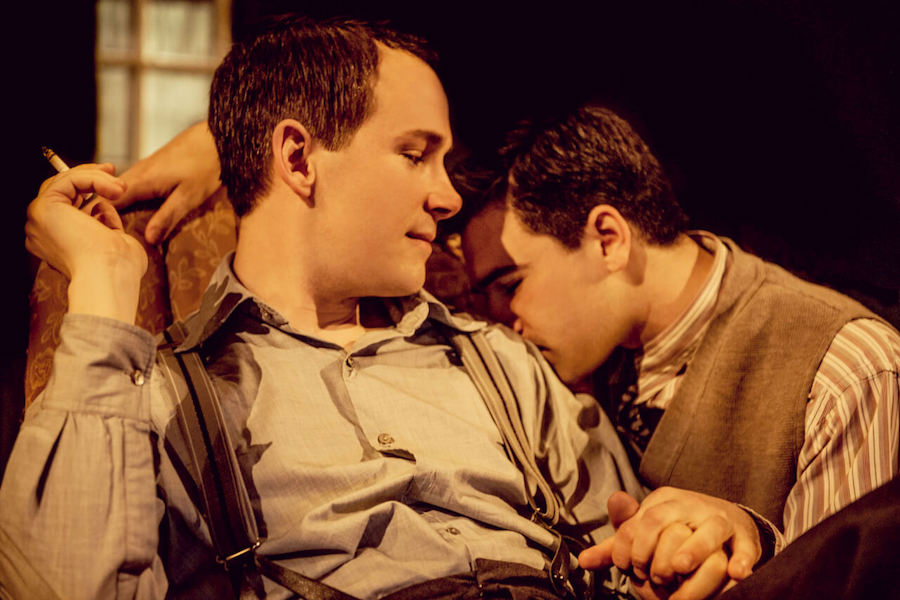
    The bar is populated by the usual suspects that mark Williams’ later works: a drunken and angry woman, a swaggering stud who has a name for his penis, an alcoholic doctor and a washed up older gay man with a boy who’s he picked up at the roadside. They rant, cry, shout and ramble. It’s beautiful in parts and there are poetic moments but on the whole it feels a bit of a mess.

    Director Jack Silver has transposed the action from 1950s American to a pub in Southend in the present day with mixed results. The theatre has been transformed into a pub with the audience dotted around at tables and on banquettes with the actors roaming amongst them. Justin Williams’ set is pitch perfect. This is a pub that you’d probably walk in and walk out of again in a hurry. Sticky looking tables, beer and a burger offers and a sense of dilapidation: it’s a pub we’ve probably all been in and wished we hadn’t. The characters fit in well and you can imagine a pub like this being stalked by enraged beautician Leona yelling at her good for nothing going to seed Chav man Bill and her promiscuous weeping friend Violet.

    Where the concept flounders is the language. Characters talk in a style befitting of 1950s Southern California and use old-fashioned America language that doesn’t translate well to the present day. The Jukebox has mournful violin music that Leona plays on repeat. There’s something distinctly dated about their attitudes and stances too/ It often feels jarring and stylistically wrong.

    The play is still worth seeing for three reasons: the concept, the set and the acting. The cast are universally strong and there’s something magnetic about Lizzie Stanton and Gavin Brocker (and I don’t just mean his too tight clothing or references to his cock which he has named ‘Junior’). The set is a witty and authentic interpretation. The third factor is the concept of the actors having free range. There’s a script and a set and actors. The rest is the actors’ choice on the night. They stand where they want, cry or don’t cry and choose just how dark or how funny the play is on any given night. Surprisingly, this works and there’s a strong chemistry that comes across with a naturalistic feel to the piece in spite of the incongruous language. That’s quite a feat given such lacklustre raw material.


    Confessional plays at the Southwark Playhouse until the 29th October
  • THEATRE REVIEW | Boys In The Band

    THEATRE REVIEW | Boys In The Band

    ★★★★ | Boys In The Band

    1the-boys-in-the-band-mark-gatiss-jack-derges-cdarren-bell

    “There’s one thing to be said about masturbation: you certainly don’t have to look your best”

    What was shocking to American theatre audiences in 1968 (and cinema goers in 1970 when the film was made) isn’t going to be daring or titillating anymore. The only thing that’s shocking is that viewers less than 50 years ago would be so outraged by a play about a group of gay men having a party with a lasagne and salad instead of Crystal Meth.  So what does ‘The Boys in the Band’ have to offer to the contemporary viewer? The answer is that the issues facing the men are scarily pertinent, still. The play came under fire from some for its negative portrayal of gay men but there’s something chillingly familiar about these boys.

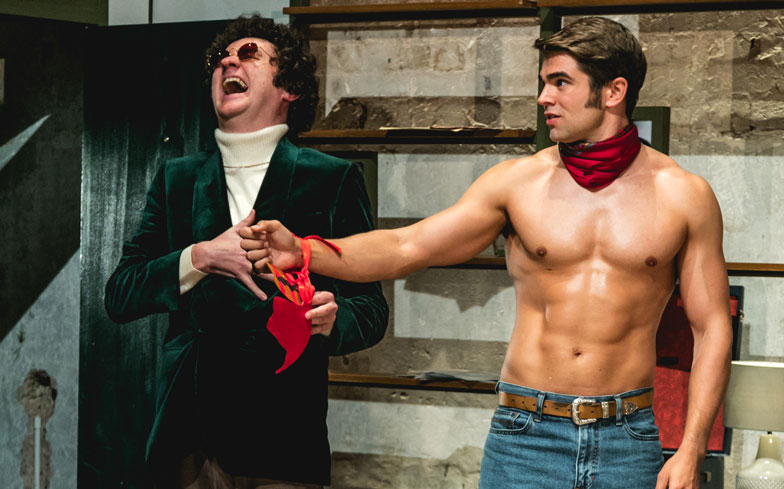
    Uptight materialist Michael (Ian Hallard) has a drink and spending problem, although he’s currently on the wagon from the booze. He’s hosting a birthday party in his New York apartment for waspish self-proclaimed ‘pock-marked fairy Jew’ Harold (played by Hallard’s real life husband Mark Gattiss). Camp and flamboyant Emery has hired a muscular hooker as a gift. Soon to be divorced father of two, Hank is trying to make his relationship work within the constraints of monogamy whilst his partner Larry’s has a distinct inability to keep it in his pants in a world where sex is freely available. Bernard is struggling with the casual racist jibes of his friends and bookish Donald (Daniel Boys) is undergoing analysis to help him come to terms with being gay.

    I don’t know about you but these are a lot like the people in my social circle. Issues with drugs and alcohol, poor self-esteem, self-hatred, shame, looking down on effeminate gays, cruising the saunas too much, open-relationships versus monogamy versus the compromise of the odd threesome here and there? The boys of 1968 might have had different drugs and clothes and lived in a more oppressive society but the songs remain the same.

    It’s a funny play, starting with a sit-com-like first act where a random heterosexual re-surfaces from Michael’s past and lands at the party like a fly in the ointment. There are one-liners that pack a punch and Gattiss is the master of the arch eyebrow movement and gives a seemingly effortless performance as Harold.  Act Two is darker and becomes a sub ‘Who’s Afraid of Virginia Woolf’ as the men get steadily more drunk and play a caustic party game. The climax is poignant and dark in equal measures and there are some deeply affecting moments.

    Despite the odd patch where the script is heavy-handed, shows its age and the occasional clunky plot device flails, overall this is a great play and a worthwhile revival with a triumphant staging from director Adam Penfold. Well worth a visit.

    After the run at The Park Theatre in London the play moves to Manchester from the 3rd to the 6th of November, Brighton from the 8th to the 12th and Leeds from the 14th to the 19th of November.


    Follow Chris Bridges on http://www.twitter.com/chrisb715Twitter

  • THEATRE REVIEW | Kenny Morgan at the Arcola Theatre

    THEATRE REVIEW | Kenny Morgan at the Arcola Theatre

    ★★★★ | Kenny Morgan

    If you missed “Kenny Morgan” this summer then you have a second chance. The play is back for four weeks at The Arcola Theatre in Dalston and remains an evocative and beautiful treat of a play with a host of polished performances.

    Theatre review for kenny thomas
    CREDIT: Idil Sukan


    Kenny Morgan was a young actor who had had a promising career in 1940’s British films. He had also had an on/off relationship for ten years with Terrence Rattigan, a high profile British playwright. In 1949 Kenny gassed himself to death in a down at heel Camden Town flat that he was sharing with a young actor who he’d left Rattigan for. Terrence Rattigan’s play “The Deep Blue Sea” echoes Kenny’s story to a degree but with gender switching to suit the times (and the Lord Chamberlain’s office).

    Set in a mould encrusted flat with gas pipes defining the space, this play depicts Kenny’s despair. Sounds grim but it’s not. It’s witty and warm as well as devastating. Paul Keating is superb as Morgan, delicately easing us into his despair and leaving the audience frustrated and helpless but never less than sympathetic. Mike Poulton’s script is tight and detailed and achieves a difficult task: retaining dramatic tension even when we know the inevitable ending. The dialogue and set feel wholly authentic, transporting the viewer to 1940s London along with its restrictions. There’s something claustrophobic and terrifying about Kenny’s world where being gay is illegal and can land you in prison, as can attempting suicide.

    Although Kenny is a different beast from most of us in contemporary Britain, there are plenty of parallels and as well as the beauty of the piece; this makes it well worth a visit. Who hasn’t felt heartbroken and despairing and been laid low by loving the wrong man? Kenny has fallen for a man who doesn’t even claim to love him, has stopped sleeping with him and is still sleeping with women and men behind his back. Not an unusual story. Neither is the story of his relationship with Rattigan. Unable to be out in public Rattigan maintained elaborate ruses to keep his homosexuality both from the public and from his family. I’m sure I’m not the only one who’s met men like that? Who hasn’t struggled to understand someone else’s depression or even their own? Although his misery is tangible, it’s difficult not to want to try to solve Kenny’s issues.

    The play isn’t as bleak as it sounds on paper. There are fine comedic moments and the pace is brisk. There are also touching moments of human kindness as the people around Kenny try their best to help. My recommendation is to just see this. You’re unlikely to see a finer play with a gay theme any time soon.

    Kenny Morgan plays at the Arcola Theatre until 15th October


    Follow Chris Bridges on Twitter

  • GAY THEATRE: The five shows you need to watch this Autumn

    GAY THEATRE: The five shows you need to watch this Autumn

    London is bursting at the seams with theatre and this autumn is looking particularly gay. Here are 5 things that are on my radar for the cooler weather to come.

    Boys In The Band
    The Classic One:
    “The Boys in the Band” is having a revival at the Park Theatre, London. Mr and Mr, Mark Gatiss and his husband Ian Hallard are appearing in this overdue revival of a classic gay play from 1968. Self-loathing gay man Harold isn’t happy about aging and is in for an interesting birthday night as the drinks flow too freely and one of his close friends has bought him a hot male hooker for the night. The play shocked straight audiences when it first played. It also divided gay audiences with some seeing it as a making headway in the fight for gay rights and others seeing it as a negative portrayal of waspish queens wallowing in self-pity. Not so different from some of the reactions to the way the media presents gay men in the 21st century. See what you think for yourself. This should be a corker.

    Previews: 28 Sep 2016. Runs from 4th Oct 2016 (7:00pm) until: 30 Oct 2016

    The Historical One:
    Kenny Morgan returns for a second run at The Arcola in Dalston, London. Mike Poulton based this play around the events that inspired Terrence Rattigan to write his work The Deep Blue Sea. In 1949 Rattigan’s on/off lover, the eponymous Morgan, gassed himself to death after struggling with diminishing success in his acting career and a turbulent love affair. It’s a fascinating glimpse of what life for a gay man might have been like in the post-war period and there’s a stellar turn from Paul Keating as Morgan. TheGayUK saw this first time around and I gave it a thumping good 4 stars.

    Run at the Arcola Tuesday 20 September – Saturday 15 October. They also have Pay What You Can Tuesdays (tickets in person from 6pm – limited and subject to availability).
    The Fringey One:
    The tiny Hope Theatre in Islington is perched above a pub on Upper Street and this month has these short morsels on offer, lasting 90 minutes in total. Two Short Plays About Gays are Middle Aged Rent which is about a teenager lost in the maze that was Eighties London, long before mobile phones, social media & Grindr. How he comes out, both literally and figuratively, is the focus of this new piece, specifically written to premiere at The Hope. The Diva Drag is a bittersweet story of love and (possible) reconciliation.  Do you go to your homophobic mother’s funeral, or go on stage as her instead?

    Sounds like a fascinating hour and a half in an intimate setting. Theatre in this small a venue can be visceral and fierce so here’s hoping for both.

    Runs at The Hope until 24th of September

    The Eclectic One:
    And What? is the newest (and only) pan-London Queer Arts Festival on the block, featuring 130+ artists and more than 25 events in 15 venues throughout September and October. Covering the North, South, East and West of the Capital And What? brings you everything from Visual arts to Circus, International drag Superstars to LGBTQI film and Performance Art to Dance.

    Expect edgy, scary, hilarious and some just plain wrongness (or you should demand your money back). That’s what a good fringe fest should be all about. I’m drawn to Return to Grey Gardens. I’m a sucker for RuPaul’s Drag Race star Jinkx Monsoon. Who doesn’t love a narcoleptic Jewish drag queen?

     
    The Immersive One
    Tennessee Williams’ plays speak to gay men in an inimitable way. Faded Southern Belles, repressed men and domineering matriarchs and all that passion and desperation? It certainly chimes chords with my past, present and future. Due to the constraints of his times, Tennessee’s plays didn’t feature openly gay men. This play features two and this version is semi-immersive (semi-immersive sounds good to me. It implies voyeurism with no interaction). The audience gets to spend the evening with a bunch of shameless lowlifes in a run down bar. It’s been re-imagined as taking place in a seaside bar in Essex. Sounds genius to me. William’s always gives good value and this one sounds utterly intriguing.

    Catch it at The Southwark Playhouse from the 5th to the 29th of October.

    Follow Chris Bridges on Twitter

  • THEATRE REVIEW | Punkplay

    ★★★ | Punkplay

    punkplay at the Southwark Playhouse
    CREDIT: Helen Murray

    “…there are no actual rules except the ones we choose to live under. You need to eat, drink water, sleep now and then. The rest is negotiable.”

    There’s a celebration of punk this year in London. But what exactly is ‘punk”? A 40 year-old music genre, a lifestyle choice or a way of thinking? Commerce would have you believe it’s a look that you can emulate by spending cash on the high street. It’s way more complex than any of those definitions. “punkplay” relates Punk to the lives of two teenage boys who are feeling conflicted and struggling to see how they fit into 1980’s American society.

    Duck’s father wants him to enlist in the army to learn discipline and awkward and ungainly Mickey wants to find where he fits into the scheme of things and snog the face off schoolmate Sue Giki. He’s also keen to learn about sex from Duck. The boys linger in Mickey’s bedroom, making up band names, calling each other faggots and surrendering to feelings of disaffected rage. They’re on roller-skates too, all the way through the play. Don’t ponder this one too much. It makes sense by the end. They fight over a girl, insult each other and French kiss: usual teenage boy stuff.

    It’s hard to capture the anarchic and chaotic feel of punk without resorting to clichés but the mostly novice team here have managed to do this with verve and a resounding freshness. It’s uncomfortable viewing, claustrophobic and raucous with bursts of comedy. Naturally, there are blasts of music as the boys riff on an electric guitar and hammer at drums.

    This isn’t a play that will suit everyone but it has a soul and a message and it’s one that grabs the viewer. It’s one of those plays that gains something from being reflected upon and the ending redeems everything that went before. There’s a peculiar beauty to the piece and it has a witty symmetry. The play left me thinking of how “punk” relates to “queerness” and gay identity. Lack of rules and negotiable norms? I’ll take some of that.

    Punkplay runs at the Southwark Playhouse until the 1st October

    Follow Chris Bridges on Twitter

  • THEATRE REVIEW | Vanities: The Musical

    THEATRE REVIEW | Vanities: The Musical

    ★★★★ | Vanities: The Musical

    Imagine an afternoon Channel 5 film full of ‘women’s issues’. Or one of those novels that you take on holiday, read, instantly forget and then leave in the hotel room when it’s over. Syrupy sweet and wholesome but emotionally stirring on some levels. Predictable yet mildly intriguing and easy to digest but enjoyable nonetheless. That’s “Vanities” in summary. Oh, I almost forgot to mention: it’s also tremendous fun.

    Review of Vanties the musical
    CREDIT: Pamela Raith


    The story follows the friendship between three women through being High School cheerleaders in 1963 (yes, it’s American. Very American), living together in a sorority house at university in Dallas, reuniting in their late twenties in New York and finally meeting again as they are hitting 40 back in Texas. Joanne is traditional and wants to be a wife and mother, Kathy is driven and organised and wants a career as a sports teacher and Mary just wants adventure (a.k.a. sex and travel). There we have it in three handy female stereotypes: earth mother, career woman and bitch/whore. Naturally. There’s infidelity, hurt, alcoholism and nervous breakdowns plus the odd abortion, betrayal and blazing row. It’s soapy, light and watchable.

    There are, however, various qualities that elevate Vanities above this form. Firstly, the songs: they’re almost a parody, aping the girl groups of the 60s and 70s with tones of Bacharach, The Supremes and The Shangri-Las. Kirschenbaum’s lyrics are witty and amusing and although they’re not the most memorable riffs, they’re easy to listen to, raise a smile and work well in the context. Racky Plews’ choreography echoes the styling of the music and there are some moves worthy of a lip-syncing runner-up in RuPaul’s Drag Race.

    Secondly: the cast. Lizzy Connolly, Ashleigh Gray (a previous Elpheba in the Wicked U.K. tour) and the lovely Lauren Samuels (who was award nominated for ‘Bend It Like Beckham’) are all equally strong and carry the show with ease.

    Thirdly, the staging: the tiny space of Trafalgar Studios 2 is transformed into a shifting, overtly feminine space full of the cluttered paraphernalia of girlhood. The show works well at such close quarters, given the minuscule cast and scrutinised emotion.

    A 2009 sickly saccharine musical that was based on a 1974 Broadway comedy and that has never managed to hit this side of the pond? It may not sound like the best proposition for a good night out. Sit back, relax and this hollering, dancing all female group will show you just how wrong that assumption would be. Just don’t take your straight male friends. I’m not entirely sure that they’re going to ‘get’ this one. School of Rock or Groundhog Day, anyone?

    Vanities: The Musical plays at the Trafalgar Studios until 1st October 2016

    Follow Chris Bridges on Twitter

  • BOOK REVIEW | The History Of Us

    BOOK REVIEW | The History Of Us

    Jonathan Harvey is a writer with stature. He penned the gay classic Beautiful Thing and writes for Coronation Street as well as creating the high camp sit-coms Gimme Gimme Gimme and Beautiful People. Sadly, this novel doesn’t live up to his prior reputation.

    The History of Us Book review


    Based in Harvey’s hometown of Liverpool, the story follows three friends at two points in time. In 1985, teenage Adam is dreaming of a writing career, Jocelyn wants to be a singer whilst Kathleen’s dreams are a bit more mundane: she wants to be an embalmer. It’s all mooning over boys (Adam’s gay), mooching around and listening to Alison Moyet in teenage bedrooms. Fast-forward to 2015 and Adam’s writing career has floundered, Kathleen is a failed flight attendant who has a drink problem and Jocelyn has met a sticky end after a career as a professional bitch and celebrity Twitter troll (think Katy Hopkins but meaner).

    The strongest sections of the book are the in the first half where the narrative switches between the back streets of Liverpool and Adam and Kathleen’s current lives in London. The humour is twisted and wry and when it works raises the odd snigger but never a real belly laugh. The problem comes in with the arc of the story line. It starts to peter out and feels woolly and unfocused and the humour drops down a notch or two until by the end of the novel it’s non-existent. This gradual shedding away of the comedy to reveal something darker would work well if the story line didn’t fizzle out along with it.

    Harvey’s knack is often in presenting unsympathetic characters but the ones in this novel feel wooden and tired. The story switches between characters but their individual voices don’t feel strong enough to carry the plot. It’s a book that doesn’t find its place at all. It sits neither as effective comedy, drama or thriller.

    A disappointing dud of a book.

    Out 8th September 2016, Order from Amazon

    Follow Chris Bridges on Twitter

  • THEATRE REVIEW | Britten in Brooklyn, Wilton’s Music Hall, London

    THEATRE REVIEW | Britten in Brooklyn, Wilton’s Music Hall, London

    ★★ | Britten in Brooklyn

    CREDIT: Darren Bell
    CREDIT: Darren Bell


    During the early years of World War Two, Benjamin Britten lived in exile in a townhouse in New York with his friend, the poet W.H. Auden and a shifting cast of artists and writers. The composer was criticised by the British press for his ‘avoidance’ of the war and faced a tribunal for conscientious objection on his return in 1942. Whereas Auden embraced his sexuality and was having an affair with a younger man, Britten was still struggling somewhat with his in the oppressive environment of 1940s England. Add to this mix some of the other residents: bisexual writer Carson McCullers hiding out from her husband, hitting the bottle and chasing after women and burlesque stripper Gypsy Rose Lee, trying to write a crime thriller. The potential for a fascinating story is all there on a plate. Sadly, writer Zoe Lewis and director Oli Rose have somehow made a dull play out of an intriguing piece of history.

    The play feels oddly old fashioned (and not in a good way). There’s something twee and tedious about the drunken party games and fumbling. The cast seem like they’re in a void and in spite of Cecilia Carey’s excellent set there’s no atmosphere at all. The four lead actors try to recreate a thriving Bohemian arts scene of hedonistic parties (which isn’t easy with four people) and instead it feels like a staid afternoon tea that anyone in their right mind would exit sharply. There’s a whole ‘You don’t have to be mad to work here but it helps!” and “Looks how eccentric we all are!” vibe that actually just feels incredibly tiresome.

    The venue of Wilton’s Music Hall (a Grade 2 star listed music hall from 1859) is gorgeous and is an echoing chamber of a space. Dom James’ sound design is beautiful when it’s in evidence: clanging boat engines, New York traffic in the background and distant music. Sadly, this isn’t very often and for most of the play the actors have no backing at all, adding to the strangely sterile environment.

    The saving grace of the play is Ryan Sampson who gives a strong central performance as Britten. He’s convincing in his vulnerability and manages to show glimpses of pain through a veneer of genteel awkwardness. The actors playing Gypsy Rose Lee (Sadie Frost), Auden and McCullers also perform ably but are saddled with a lacklustre script that feels two-dimensional.

    If you know a little about these fascinating characters then you’ll leave knowing about as much as when you came in. If you know nothing at all then you’ll be perplexed. It’s a shame that this didn’t pull it off. As the strippers told Gypsy “You Gotta Get a Gimmick”. Maybe the team here should heed that advice.

    Follow Chris Bridges on Twitter

  • THEATRE REVIEW | Unfathful at Found 111

    THEATRE REVIEW | Unfathful at Found 111

    ★★★★ | Unfaithful at Found 111

    UNFAITHFUL_1_Sean_Campion_Niamh_Cusack___Ruta_Gedmintas_Matthew_Lewis_Photo_Marc_Brenner

    What happens when your once passionate relationship starts to become stale and sexless? In the case of Tom and Joan, you sleep with a stranger, tell your wife about it and then wait for the explosions of bitterness, venom and rage. Oh…and the retaliation.

    Found 111 is a pop up theatre on Charing Cross Road in an old college building. It’s hosted critically acclaimed hits including ‘The Dazzle” with Sherlock’s Andrew Scott and “Bug” with the luscious James Norton. It’s a tiny space and in the case of issues about sex, for once, small is good. This play works well in a cramped environment. It’s a hilarious and excruciating 75-minute trawl through moments in the lives of two couples as they lurch around a bed on the stage. This is a voyeuristic and intimate experience that is as painfully uncomfortable as it’s intriguing. Thankfully, it’s very funny too which helps.

    Niamh Cussack (of the Cussack acting dynasty) shows her pedigree and is monumental as the wronged wife. She’s a delicious mixture of seething, uncontained anger contrasted with insecurity and hurt. She’s magnetic and is almost impossible to draw your gaze away from. She’s more than ably accompanied by Sean Campion as her feckless and beaten-down by life husband. They have the best lines in the play and Joan and Tom are well rounded and fascinating in their ordinariness.

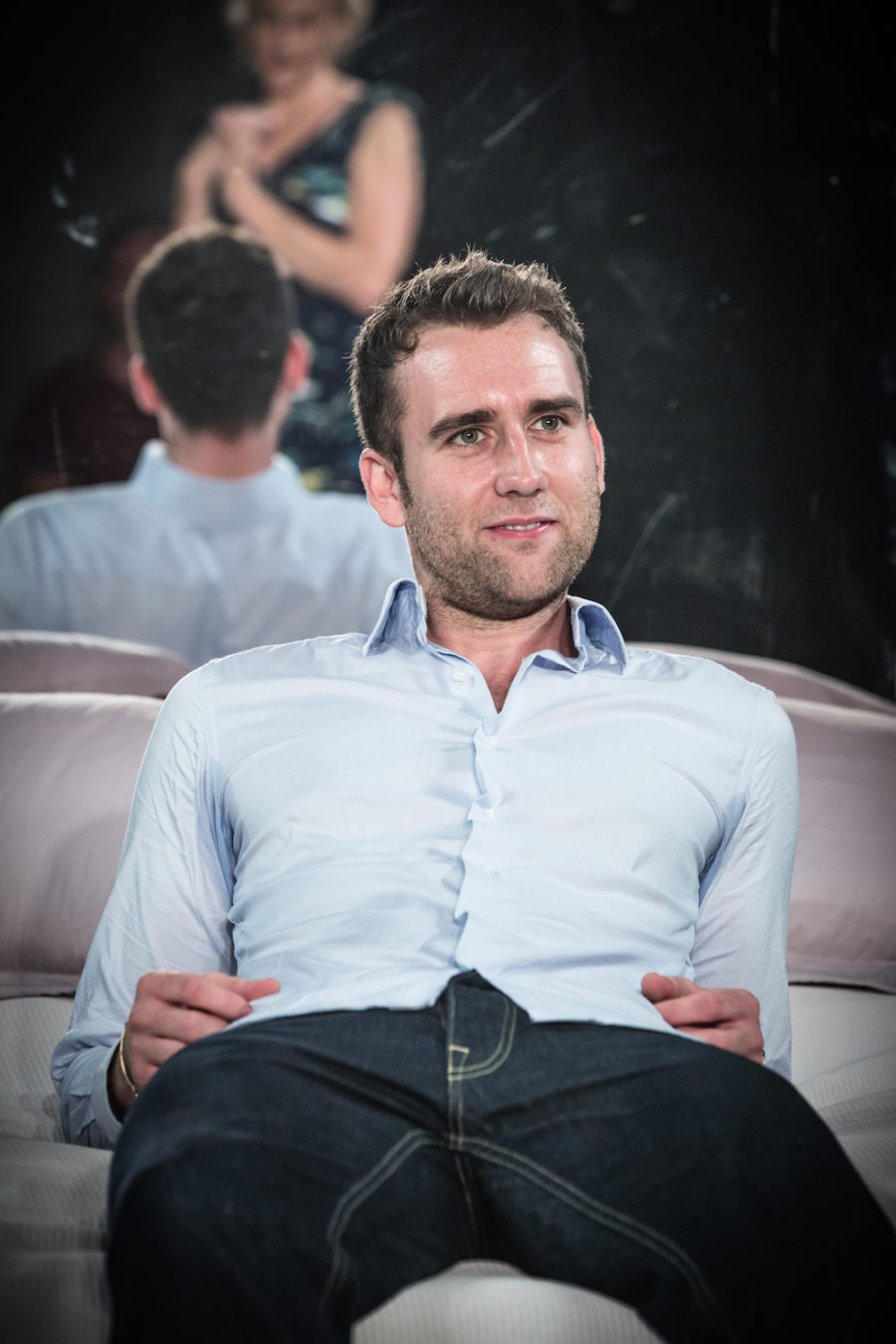
    Matthew Lewis (Harry Potter’s Neville Longbottom all grown up and buff) and Ruta Gedmintas play less instantly credible characters. They eventually flesh out (as well as getting flesh out) and in spite of a slightly creaky plot, become almost plausible. Lewis plays a well-hung male hooker with a heart and Gedmintas plays his lost-soul girlfriend, so bored with her life that hooking up with middle aged men in bars seems a diverting pastime.

    Owen McCafferty’s script is tight and engaging with no slack moments and the characters are mostly resonant and sympathetic. This isn’t a Whitehall farce or a night at the musicals but there’s something thrillingly earthy about the whole experience. Theatre in microcosm with a stellar central performance like Cussack’s is a rare opportunity and one to be embraced.

    Unfaithful plays at Found111 until 8th October

    Follow Chris Bridges on Twitter

  • THEATRE REVIEW | Allegro, Southwark Playhouse

    ★★★★ | Allegro

    CREDIT Scott Rylander


    With Allegro, the charming space at Southwark Playhouse sees the UK premiere of a dusty old 1947 musical. Thanks to the partnership of Thom Southerland and Danielle Tarento (Titanic, Grey Gardens, Dogfight and Parade) this forgotten piece has had the cobwebs blown off it, regained its sparkle and is a welcome find rather than a lacklustre piece of tat from the store cupboard of musicals that should stay dormant.

    Rodgers and Hammerstein’s musicals have been entertaining theatre audiences since the early 1940s when they hit the scene with Oklahoma. The pair went on to score a string of hits with The Sound of Music, The King and I and South Pacific among many others. Given their continued critical and commercial success it was a surprise when Allegro floundered and failed to win over American audiences when it premiered. Theories abound as to why this was: a misguided choreographer/director, a storyline ahead of its time or too radical a departure from accepted musical theatre form. Whatever the reasons, it’s resulted in something quite extraordinary for us in that we now have a ‘new’ musical from an iconic writing duo to enjoy.

    The storyline isn’t the strongest around, the intention of the show being to tell a simple tale of an all American everyman. It’s a little flawed, has the odd flabby moment in Act One and is occasionally too sentimental for modern tastes but has an endearing core message. None of that matters though and it’s easy to overlook the cracks in the core material. The genius of the show lies with the team behind it. Southerland has stripped back the show and presents it on a pared down set of almost perpetually moving ladders and platforms with a cast of sixteen and an eight-piece band. The cast form the musical equivalent of a Greek chorus, commenting on the life of small town doctor Joseph Taylor Jr. as he moves from birth through to an early mid-life crisis at 35 with individual members stepping forward and taking on the roles of significant people.

    Unlike the ill fated first run where a reputedly Gorgon like choreographer reigned havoc, the choreography is one of the key factors that makes this performance work. Lee Proud makes use of the limited space and the company move with panache, seamlessly augmenting the narrative. The ensemble singing is as strong as the individual numbers and really packs a punch. Some killer numbers and an accomplished cast combine to make this a winning show. Gary Tushaw as Joseph is handsomely wholesome without being nauseating and Kate Bernstein is particularly enlivening as his waspish nurse, Miss Lipscombe. Her take on “The Gentleman is a Dope” is a sight and sound to behold.

    Forget Jesus Christ Superstar. If this team continue to breathe life into shows that are as dead as Lazarus then we’ll definitely be hailing them as a the new Messiahs of musical theatre.

    Allegro plays at Southwark Playhouse until 10th September

    Follow Chris Bridges on Twitter

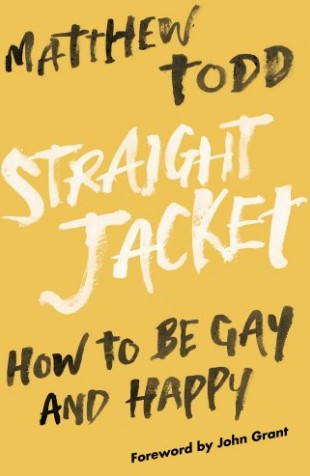
  • BOOK REVIEW | Straight Jacket: How To Be Gay And Happy, Matthew Todd

    BOOK REVIEW | Straight Jacket: How To Be Gay And Happy, Matthew Todd

    ★★★★ | Straight Jacket: How to Be Gay and Happy

    There’s a problem with gay men. There’s definitely a problem with gay men. We’re legal now with an equal age of consent. We can get married and adopt children, dance in the streets at Pride events and hold hands in Central London. We even pop-up on television dramas from time to time looking as far removed from the stereotypical 1970’s mincing queens as is possible. Yet, we have higher than average rates of mental illness, addiction and suicide; often struggle to maintain relationships and many are filled with corrosive self-hatred.

    I’m a self confessed gay man with issues. Like a lot of people, gay or straight, I’ve cycled through a few addictions before reaching middle age. Prescription medications, a car-crash relationship with alcohol and a lot of not always fun casual sex were my main vices. I’ve suffered with depression and anxiety and am an expert at obsessive thinking who’s had a shed load of therapy.

    When I heard about this book by Matthew Todd (the witty and wise ex Attitude editor and writer of the play Bells and Whistles) I embraced it with open arms. Luckily, it definitely hugged me back.

    Todd certainly knows his stuff. He uses statistics, case studies, anecdotes and interviews to present his argument and it’s a compelling one. Intermingled with this is Todd’s own story and the book is part memoir, part discourse on the problems facing gay men in 21st century life. Todd grew up in 1970’s Croydon, escaped and lived to tell the tale.

    He also struggled to rein his life in after becoming too dependent on alcohol to numb the pain of his darker thoughts.

    Todd’s main premise is that our culture and society leads gay men to live with deep-seated feelings of shame and then offers wonky solutions such as casual sex and alcohol. He examines the ways this affects us and focuses on how having low self-esteem can lead to problems such as over-eating, gym addictions and drug abuse. His scope is wide ranging and it’s a fascinating read. This isn’t a dry tome and is never preachy but is compelling and readable with a perceptive gaze. It’s a warm and caring book but one that’s also disturbing.

    There are frequent reminders too that it’s not all issues and problems. Lots of gay men are happy and healthy. We don’t all indulge in risky behaviour and walk around under black clouds. Some of us enjoy drugs and alcohol in moderation. There’s no disapproval or moralising here. Even if you’re one of the luckier ones and are beautifully balanced, it’s an enlightening study.

    The final portion of the book loses focus and momentum a little but is still worth perusing. Overall this is an important book and is relevant, resonant and reassuring. I’d recommend this to every gay man or to everyone who knows one.

    Available on Amazon