Author: Chris Bridges

  • THEATRE REVIEW | This Is Living

    ★★★★ | This Is Living

    Alice and Michael are soaking wet and alone in a field by a river at night. Alice can’t remember what bought them there and wants to go home. The problem is that Alice can’t go back again and the big question is what bought them to this point.

    CREDIT: Alex Harvey-Brown


    Liam Borrett’s exploration of grief and loss is very impressive. The real achievement isn’t the story itself or the dissection of the aftermath of tragedy but in the characterisation. Alice and Michael are a couple in their late twenties, married with a young daughter. You almost certainly know them. Alice is outspoken, wilful and brimming with unrealised ambition. Michael is a little gauche and awkward and completely in awe of Alice. Michael Socha (E4’s Aliens, This Is England, Being Human) and Tamla Kari (The Inbetweener’s Movie, The Musketeers) are remarkably good and both give robust and forceful performances.

    We see their lives together through a series of potent and cleverly inter-cut flashbacks: their clumsy first meeting on a bus via drunken nights and bad dancing after a lot of Echo Falls, through to the news that Alice is carrying the baby that Michael so desperately wanted. The beauty of the characters is how familiar and ordinary they feel and the celebration of how seemingly ordinary people have extraordinary traits and fascinating stories within the routine of daily life. Sarah Beaton’s waterlogged set leaves the viewer feeling cold and damp and clever sound and lighting design allows for the brisk flow back and forth between past and present.

    The play has a lot of funny moments and Kari’s depiction of Alice’s seemingly brash Northern charm complements Socha’s devastating but understated portrayal of Michael’s ungainliness. The script is tight with a few minor slack moments. The painful subject matter is depicted with charm and grace and rarely feels unbearable but is still devastating and painful to watch.

    The play seemed to initially lose focus slightly after the interval but soon regained the mood and may perhaps have been carried better as a one-act piece. Nevertheless, this is an incredibly powerful piece of theatre and a chance to see two very talented actors realise the potential of a beautiful script. This is also Socha’s West End debut. He stated in a recent interview that he was feeling nervous. He needn’t have worried.

    This Is Living plays at The Trafalgar Studios until 11th June
     

    @chrisb715

  • BOOK REVIEW | Gay Life Stories

    BOOK REVIEW | Gay Life Stories

    ★★★★ | Gay Life Stories

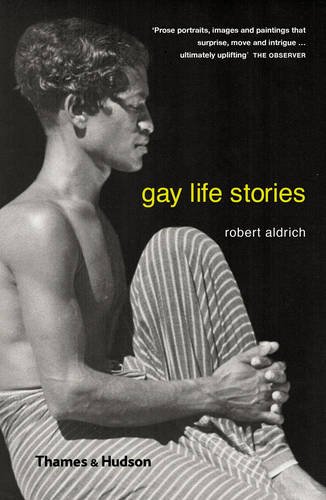
    Gay Life Stories

    A book about gay and lesbian history could easily be a dark and painful read. It would be a huge understatement to say that the LGBT community haven’t had an easy ride throughout world history and a retrospective of people’s stories could be depressing and bleak.

    Robert Aldrich, a professor of European History, has, however, managed to produce a compendium of a selection of fascinating life stories that is often inspirational and joyful to read.

    The book is beautifully presented with paintings, drawings and reproduced archival documents. Aldrich has chosen key figures from history including figures from the art, politics and literature amongst many others.

    The range is comprehensive and sometimes surprising. The figures described range from the ancient world to the twentieth century and from the well-known to the more obscure. Each chosen historical figure gets a short but comprehensive and well-written chapter. Aldrich outlines the stories of over 80 figures in 289 pages.

    There’s such a wide range of people in the book from the expected and well-known (Frederick the Great, Harvey Milk and Michelangelo) to the less well documented (the first man to be burned at the stake for sodomy, for example).

    It’s not a book that is easy to sit and read cover to cover but one that you’re more likely to dip in and out of.

    Depending on your interests then some of the sections will vie for your attentions more than others but Aldrich’s skill is to make each story feel relevant and a part of the rich history of gay and lesbian culture. This is a must read for any LGBT person.


    BUY NOW FROM AMAZON

  • THEATRE REVIEW | Abominations

    THEATRE REVIEW | Abominations

    ★★ | Abominations

    CREDIT: Robert Piwko / www.robertpiwko.co.uk

    CREDIT: Robert Piwko / www.robertpiwko.co.uk

    Jeff is a married man with a fetish for wrestling. He’s walked out on his religious but shrewish wife and is hiding out in his hometown in southern England where he’s having a fumble with grieving youngster Malcolm. By coincidence, Malcolm’s boss is Jeff’s Biblical claptrap spouting father.

    Is a play about a secretly gay married man still relevant in 2016? Sadly it is. It’d be naïve to think that being gay in contemporary British society was accepted by everyone and that gay men weren’t still suppressing their sexuality and trying to hide in plain sight. Any foray into gay life will tell you that the phenomenon of the closeted gay man is still very much present. You can’t spend more than five minutes on a hook-up app, the Internet or in a sauna without tripping over a married man or two. The issues in the play are still prevalent. Gay men might be able to marry and public opinion might have moved on but people are still prejudiced and still spout obscure parts of religious tracts to justify this. Some people are still so affected by the prejudices of others that they suppress their natures and try to be things that they aren’t.

    In spite of this there’s something dated feeling about “Abominations”.

    The problem with the play isn’t the subject matter but the dialogue and characterisation. Whilst Jeff feels generally convincingly drawn and credible, his wife feels like a two-dimensional throwback to a dated sit-com. Malcolm is an earnest ukulele-playing buffoon who reveals few other character traits than naivety and rather than endearing, is more of an irritant. The dialogue is stilted and quaint at times. Scenes are short with awkward shuffling pauses. In spite of some well-drawn sections the sum of the play is much less than its parts and fails to gel. The comedy often falls flat and sits awkwardly with the more intense and better-written scenes.

    The saving grace of the piece has to be the stunning central performance from Alexander Hulme as Jeff. He handles the part with style, imbuing the character with credibility and hinting at the shifting emotional landscape of a man unravelling. He’s all swagger and brittle chav charm but manages to give glimpses of something deeper and darker with a softer core. He’s also very easy on the eye and displays a lot of flesh that distracts the viewer. In the midst of the play there are some genuinely moving scenes between Jeff and his father and Gary Heron displays some fine acting that ably supports Hulme in his role.

    This is definitely a play that had potential and there are glimpses of unrealised style and impact. The well-written lines stand out and there are scenes that have real power. Sadly, the finished overall product felt almost as tired and lacklustre as the location of the theatre: Camden High Street.

    Abominations plays at the Etcetera Theatre Until the 29th of May 2016


  • THEATRE REVIEW | Doctor Faustus

    ★★★| Doctor Faustus

    Picture Matt Humphrey

    The story of Doctor Faustus, the man who sells his soul to the devil, is an enduring one that translates well to the modern age. People can become elevated to giddy heights and accrue endless riches and advantages in the realms of celebrity and politics through seemingly mysterious and nefarious means. It’s still tempting to wonder what kind of pact they might have made whether spiritual or, more realistically who they’ve trampled on and betrayed along the way. The truth is probably less titillating and more prosaic. Doctor Faustus was originally published over 400 years ago but retains its relevance.

    The original author Christopher Marlowe is an Elizabethan enigma; dying in a much speculated upon pub brawl at the age of 29. His writing contained openly queer characters, complex romantic relationships and overtly homoerotic prose. Was he a gay man, a spy or a wily criminal? The speculation has lasted centuries along with his plays.

    “Doctor Faustus” opens with a gloomy dwelling with a Hieronymus Bosch style twist of hellishness. Dark figures loiter, hands reach around doors and faces are pressed against the windows. Naked figures move forward, blood flows and sedated looking humans in stained underwear creep around the set. Take your eyes off Kit Harrington (which isn’t easy as he’s incredibly handsome) for more than a few seconds and more horrors appear. Figures appear halfway up the walls, lurch out of doorways and materialise as if from nowhere. It’s actually really quite terrifying. This isn’t a production for the feint hearted. The warning list on the way in is quite impressive with a list of what horrors await you. Instead of the usual ‘theatrical haze’ and ‘strobe lighting’ there’s an itinerary that would make Mary Whitehouse turn in her grave.

    Kit Harrington proves that he can really act with an incredibly powerful performance. He’s also almost naked on a few occasions and that’s no bad thing. Jenna Russell (last seen in ‘Grey Gardens’) is on her usual top form as Mephistopheles. There’s also a very able supporting cast, a stunning and cunning set by Soutra Gilmour and appropriately intense sound and lighting design.

    All good so far but sadly the good stuff is very good and the bad stuff is very cringe-worthy. The Elizabethan script works as does the modern script by Colin Teevan but the two don’t blend together well. In fact, they positively jar. The modern allusions to celebrities and politicians are a little painfully awkward and the humour often falls flat. The second act starts with Jenna Russell singing “Bat Out of Hell”. It’s a bizarre beginning but definitely a sight worth witnessing. The action then flails somewhat and the atmosphere is shattered with skits that often feel silly, although fortunately the play always manages to pull itself back.

    Strongly recommended to see some amazing work from the lead actors (provided you can cope with violence, blood, faeces and sex) but ultimately, Dr Faustus fails to deliver all that it promises.


    Doctor Faustus plays at the Duke of York’s theatre until 25 June.


    @chrisb715

  • THEATRE REVIEW | My Mother Said I Never Should

    ★★★★ | My Mother Said I Never Should

    CREDIT: Savannah Photographic

    My Mother Said I Never Should is an award winning debut play written when the author was just 25. It was chosen as one of the most significant plays of the twentieth century by the National Theatre and is, apparently, one of the most performed plays by a female artist. Yet, strangely it hasn’t been seen on a major London stage since the 1980s. Maybe plays about the relationships between women still don’t have commercial appeal? It’s a shame that it’s not been revived before but director Paul Robinson and producer Tara Finney have more than rectified that and have resurrected a thing of beauty and power.

    The stage is almost bare with stark white backgrounds and hints of furniture. Piles of television sets suggest eras and portions of scenery, helping to frame the action in the non-linear structure. The four women start the play as sinister schoolgirls (which could be excruciating to watch but is actually cleverly done), chanting rhymes and plotting to kill mummy. The play then evolves into a series of scenes from the lives of four generations of women in Manchester helped by subtle lighting and sound changes.


    ADVERT

    [adinserter block=”1″]


    It’s a standard potboiler plot that could be found in a fat Catherine Cookson novel or a television soap opera: difficult marriages, terminal illness and illegitimate children. The script is cleverly written, though, and although the storyline veers towards mawkish sentimentality at times it always steers back and feels lifelike and moving rather than trite.

    Maureen Lipman is magnificent as Doris, a fearsome mother, grandmother and great grandmother. There’s depth to her character as she progresses through stern 1940s mother in the Blitz through to a more benign and charitable but still waspish old lady sunbathing with her pop socks off in the garden. She delivers her lines with skill and inhabits the role beautifully. Caroline Faber is convincing as her at times put upon daughter. Katie Brayben (who played Carole King to critical acclaim in the musical Beautiful) portrays Jackie with skilful restraint and Serena Manteghi is suitably boorish yet ultimately wise as Rosie.

    The play will resonant with a wide variety of people. Provided you had a mother/grandmother/aunt/sister or daughter then it’ll be hard not to reflect on your own experiences whilst you watch this. The yearning to be loved and approved of is innate and powerful. Don’t expect a tragic, visceral weepy though. There are so many comedic moments and killer lines that the blow of the deeper hurts being presented is softened suitably.

    This is a strong production with a skilled cast and high production values and is a welcome return to form for The St James Theatre. Highly recommended entertainment with underlying resonance.

    My Mother Said I Never Should plays at the St James Theatre, Victoria until 21st May 2016, 0844 264 2140


  • THEATRE REVIEW | Closer by Circa, Udderbelly London

    THEATRE REVIEW | Closer by Circa, Udderbelly London

    ★★★★ | Closer by Circa, Udderbelly London

    CREDIT: © Luke MacGregor
    CREDIT:
    © Luke MacGregor

    (more…)

  • THEATRE REVIEW | In the Bar of a Tokyo Hotel

    ★★★ | In the Bar of a Tokyo Hotel

    CREDIT: Scott Rylander

    A middle-aged woman sits in a bar in a Tokyo hotel waiting for her husband; knocking back cocktails, sexually harassing the waiter and throwing out barbed comments. Her speech is unfiltered and whilst lyrical at times is also staccato and brutal at others. She sits well within the ranks of Tennessee Williams’ characters: a brittle yet beautiful monster who is bemoaning the onset of old age and so tightly coiled that an unravelling of some sort is inevitable. In short, she’s simultaneously a joy and a horror to watch.

    Tennessee Williams’ late play “In the Bar of a Tokyo Hotel” was met with a hostile critical reaction when it was first staged in 1969 and has rarely been produced since. It’s a shame that this work has floundered out of sight, as there’s much merit to it, despite its flaws. Written at the start of his final descent into addiction and depression’ it’s an unusual play with absurd elements and strange patterns of speech. The characters are unsympathetic at times, the dialogue isn’t easy to follow and the interactions are surreal. Yet, it’s also a very funny play in parts and there are moving aspects to the scenario. As the play progresses it becomes easier to fall into the patterns of the dialogue.

    Director Robert Chevara has bravely mounted this version and done so with aplomb. The movement and rhythm is perfectly captured in his use of a well-chosen cast and a stylish set. The great Linda Marlowe plays Miriam with spiky coolness and is pitch perfect. She careers round the vertiginously steep stage on heels like a terrifying Gorgon crushing everyone in her path yet flashing hints of her underlying vulnerability. Andrew Koji is desperately handsome as the deadpan barman, gritting his teeth as Miriam shamelessly fondles him. Alan Turkington puts over the waspish campness of Leonard with style. Yet beneath all this lies an imperfect play that just doesn’t quite rise to the occasion.

    If you’re a fan of Williams’ work then this play is an interesting addition to the body of his work. Within the period piece hallucinatory style there are echoes of characters, themes and styles that will be familiar. If you’re a newcomer to his work then it’s still worth a try.

    Even at his less than best Williams is a monumental writer and always worth revisiting.

    In the Bar of a Tokyo Hotel plays at Charing Cross Theatre until the 14th May 2016

    @chrisb715

    (more…)

  • THEATRE REVIEW | Bug

    ★★★★★ | Bug

    In a run down motel room in Oklahoma City, cocktail waitress Agnes is killing time, hitting the bottle and smoking a little crack with her lesbian friend R.C. Hiding from her violent ex and trying to numb the pain of her past; the evening takes a sudden unexpected turn when a stranger arrives.

    CREDIT: Simon Annand

    Found 111 is an intimate new theatre space on Charing Cross Road that perfectly suits Tracy Letts’ gripping and claustrophobic 1996 play. The audience are all around the four sides of the tiny motel room and the actors are within touching distance. The airless heat of the room built up as the tension ramped higher and it becomes appropriately oppressive. By Act Two the audience itches and scratches and bristles with tension as the characters descend into a deranged scenario. Theatre doesn’t often feel as real as this. The play is gruesome, disturbing but darkly comical which is what you’d expect from Letts; the author of hit films Killer Joe and August: Osage County.

    There was a major distraction for me in Bug in the form of the handsome James Norton (Happy Valley, War and Peace, Grantchester) who was playing the stranger. He was so close to me at points, stripped down to a pair of baggy boxer shorts and displaying an admirable torso, that I almost had to sit on my hands before a restraining order was issued. My lustiness aside: Norton is a very fine actor. It’s a testament to his skills that in spite of his ubiquitous presence on our televisions, he subsumes the character with ease and his familiar face doesn’t make the viewer think of his other roles. He portrays a brooding ex-soldier with a polite gentlemanly manner and a burgeoning psychosis. He doesn’t miss a beat and unfailingly does justice to this tightly scripted piece.


    CREDIT: Simon Annand

    Equally superb is his co-star Kate Fleetwood (Medea, High Society, London Road). She’s all spiky edges and nervous tics as she prowls the room in hot pants and heels, toking on cigarettes and swigging wine. Any actor or actress who can draw my attention to their face whilst James Norton is on stage wearing very little, has to be a skilled practitioner indeed. Fleetwood is hypnotic and the interplay between the two characters is a master class in top quality acting.

    This is definitely a 5 star show. Credit has to go to director Simon Evans for bringing this twenty-year-old piece to life and making it feel so fresh, vibrant and relevant. This isn’t an evening’s light entertainment but nor is it doomy and grim. There’s plenty of humour too. Just expect to leave the theatre feeling a little itchier and a little sweatier than when you first arrived.

    Bug is playing at Found 111, London, until 7th May.


    @chrisb715

  • THEATRE REVIEW | The Father

    THEATRE REVIEW | The Father

    ★★★★★ The Father | Now eighty years old, Andre was once a tap dancer. He lives with his daughter Anne and her husband Antoine in Paris.

    (more…)

  • THEATRE REVIEW | The Maids, Trafalgar Studios

    THEATRE REVIEW | The Maids, Trafalgar Studios

    ★★★★★ The Maids | Two young maids are dressing up in their mistress’ clothes, shoes and jewelry.

    (more…)