Author: Chris Bridges

  • THEATRE REVIEW | Blanc de Blanc, London Hippodrome

    THEATRE REVIEW | Blanc de Blanc, London Hippodrome

    ★★★★★ | Blanc de Blanc

    Blanc de Blanc is the new circus show in the cabaret theatre at London’s
    iconic Hippodrome Casino. From the team behind the sublime LIMBO and
    Cantina, it’s described as an evening of ‘breathless abandon’ and they’re not lying. It’s a dazzling spectacle of pure madness.

    Imagine if Bob Fosse’s disaffected dance hall girls from Sweet Charity met with the bawdy performers from The Kit Kat Club in Cabaret and decided to mix it up by throwing in a smattering of MTV style gyrating and twerking. If you add in the attendees at a fetish ball, the clientele of an underground Parisian bar from the 1930s and some wasted dancers from an Ibiza foam party then you’ve maybe envisioned part of it. That sounds like an unholy mess but it really isn’t. It’s bizarre but it works.

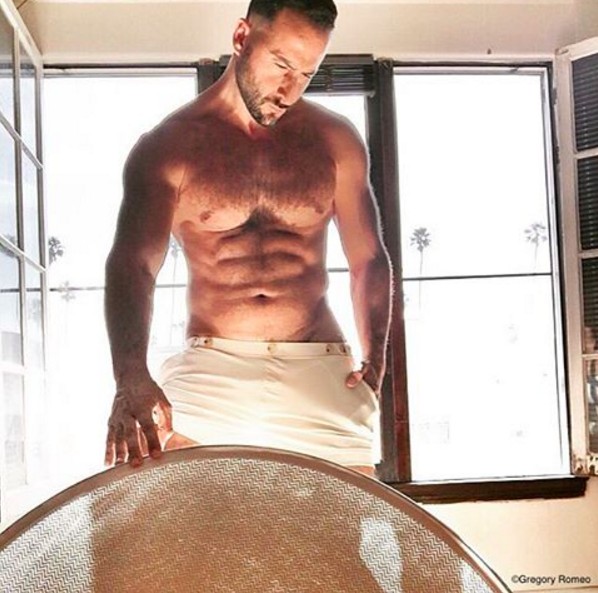
    Loosely linked by the celebration of champagne drinking, the show is hosted by French beefcake and model Monsieur Romeo and his sidekick contortionist and post-modern clown Spencer Novich. The show contains the inevitable repertoire of cabaret standards. There’s trapeze work, hoop spinning and contortionism as well as plenty of nudity and things being inserted into or pulled out of places you might not want to even think about.

    There’s the usual stuff that makes you gasp, laugh and say “Eurgh” as well as marvelling at the performer’s skills (and their beauty). The difference between this and a standard burlesque or circus evening is the style. Everything is done with panache. Choreographer Kevin Maher and director Scott Maidmont’s production is a sight to behold. It’s not surprising as between them they’ve worked with J-Lo, Madonna and Britney (to name but a few). It’s all deliciously camp and self-mocking and tremendous fun.

    The styles gel together and the show segues well between acts with a great build up to a frenetic finale. It’s raucous but restrained and even in the most absurd moments retains some dignity. It’s like an unfettered club night but one where you have to be a member and have a propensity for the darker things in life to be allowed in.

    They even manage to make a 5-minute pause for the audience to pop up on the stage to take selfies with the cast not seem too brash. If you’re looking for a good night out with attitude then you won’t go far wrong with this show.

    Blanc de Blanc plays at the Hippodrome Casino until 29th August


    Follow Chris Bridges on Twitter

  • THEATRE REVIEW | Savage, Above The Arts Theatre, London

    ★ | Savage

    PR Supplied

    Denmark is a country that has a long history of tolerance to gay men and same sex relationships were legal from 1933. With the German occupation of Denmark in World War Two, Copenhagen saw many of its previously openly gay men having to hide and flee. Dutch doctor Carl Peter Vaernet believed that he’d found a cure for this ‘disease’ of male homosexuality.

    The Nazis’ belief that being gay was an ‘abnormal existence’ that should be eradicated were sympathetic to his own and he was allowed to experiment on men in Buchenwald concentration camp. His methods were brutal with enforced injections of hormones into men’s testicles.

    There’s been a worrying emergence of far right wing groups in recent times and with politicians with links to religious ‘gay cures’ or terrible voting records on LGBT rights emerging from their creepy backwaters in quests for power, it’s a good time to be reminded of the lessons from history. Indeed, British history isn’t squeaky clean and in the 1990s the prime minister apologised for the enforced chemical castration of 49,000 men during the mid twentieth century.

    Unfortunately, well intentioned though Claudio Macor is in examining this subject matter, the play fails to engage or shed any new light on history. He focuses on a gay couple, one of who is arrested and experimented upon. Alongside this he offers a contrast to their situation by showing the relationship between a secretly gay, Champagne swilling Nazi officer and a cabaret artiste who he is keeping prisoner. The script feels messy and poorly written with lines that often feel melodramatic and trite. The Nazi general struts about, boasting of torture like something from a cartoon, people stare wistfully into the distance and utter philosophical lines about life and love with misty eyes. This should be a painful play to watch because of its theme but instead is excruciating for other reasons.

    The actors are too broad in their gestures for such a small and difficult space and the production is stagey with little hint of reality or genuine emotion. Only Nick Kyle as half of the gay couple manages to make much of the unwieldy script. On a positive note there are some excellent costumes from Jamie Attle and the set by David Shields is clever in making use of a limited area.

    Sadly this is definitely one to give a miss. You’ll learn more about the subject matter from a quick read of Peter Tatchell’s 2015 Guardian article and save yourself a couple of unentertaining hours.


    Savage plays at The Arts Theatre Upstairs until 23rd July 2016

  • INTERVIEW | Philip Ridley

    INTERVIEW | Philip Ridley

    East London born Philip Ridley has had a varied and prolific career. Trained at St Martin’s College, he’s won multiple awards for writing and or directing both plays and films. He’s also written for children and is a successful photographer, songwriter and artist. Since his first play, The Pitchfork Disney launched twenty-five years ago, his work has at times been considered shocking and controversial by some and has divided critics. Chris Bridges spoke to him just prior to the debut of his new play, Karagula.

    PR Supplied
    PR Supplied

    CB: I’ve seen quite a few of your plays over the years and this feels like a departure from the previous urban dramas. What inspired the genre of this play?
    PR: Well it’s always tricky to know where something starts. I don’t think there’s a big eureka moment. You never know what you’re doing in the process of doing it. Sometimes I’m half way or two thirds through something before I realize “oh I’m involved in a new project” That’s what it is I’m working on. So I suppose lots of bit and pieces were flying around and it might just be the fact that for the past few plays things have been fairly minimalist. They’ve been fairly stripped back. There’s been one of two actors or a few actors on a bare stage with no props, no sound effects, no lighting cues, no music, nothing. It’s all been stripped back to the minimum, so perhaps there was something brewing that I was unaware of that was going to throw me into a different direction and boy, have I… this is a different direction! This is over 70 speaking parts.

    CB: I’ve read articles that label you as an experimentalist in theatre form and this sounds like a big experiment with the gender mix, the ethnicity, and the secret location.
    PR: I always want to scare myself a little and do new things. I don’t want to feel that I’m repeating myself or going down a path that I’ve been down before so I deliberately throw myself out of my comfort zone as soon as I feel safe anywhere I get out of it.
    What can I say about the secret location? Well the decision to do that evolved. It wasn’t a masterpaln that we had. By mutual consent of all of us concerned we knew that we wanted to find a different kind of space for this and most of the theaters with before wasn’t going to work for this. We needed somewhere that gave us a different space. It wasn’t going to work is a proscenium arch space. The play is too wild for that. We needed more entrance and exit points for people to come on and surprise people. The longer we were deciding where to do it, the more the idea grew. The play is a bit of mystery thriller in itself, so why don’t we make the whole experience a bit of a mystery thriller and say it’s going to be done in a secret location. Everyone got quite excited by that idea.

    I’ve always been pretty passionate about the idea of when you go to see a stage play the whole evening, the whole process of going should be theatrical, the moment you leave your front door you should be on a journey towards something. I think this helps contribute to that.


    CB: You wrote about a homophobic murder in 2000 in Vincent River. Do you think that we’ve become too complacent about where we are in society now?
    PR: I say this to young people the whole time. Don’t be complacent about where we are because it can all snap back in our face very quickly. I still get little homophobic comments that people don’t even register as being homophobic.

    You find it a lot in the lexicon. The words people use to describe certain things. We’re suppose to be living in these liberal times but I saw on the internet, this thing came up, “15 Famous Celebrities that still haven’t admitted to being gay…” The choice of the word “admitted” you know it’s a hair’s breath away from “confess”.

    That kind of lingers on. It’s still there. I agree there’s certain areas where that if you’re with your boyfriend perhaps you’re not now that intimidated about or scared or that worried about holding hands or kissing as you walk down the street, but believe me there’s still lots of areas where you are… You kind of instinctively find yourself unlocking your hands with your lover, without even knowing it. There’s still a long way we’ve got to go and we’ve got to be fighting it at every level. I used to go on gay pride marches where people on the pavement used to spit in your face as you walked past – yes we’ve moved on from that, but it’s by no means a battle won. It’s a battle in progress.

    CB: In the past critics have sometimes counted the number of walkouts from the audiences in your plays…
    PR: I’ve never written anything with the aim of shocking anyone. As if I sit down at my desk and think, well it’s about time that I wrote something that’s going to make people walk out of my stage play. All I’ve done right from the beginning is be honest with the journey that I’m on with a play. I haven’t censored it. I’ve tried to get rid of the policeman in my head and be completely honest about how I see life and how I see the world and what I think human nature is. Now if that ends, when it’s presented to an audience with disturbing them or shocking them, I can’t help that. I’ve just been honest.

    Karagula is running now at Styx. Read our review here

    Read more in Issue 21 out next week. Download our Magazine for FREE to read the interview for free when it hits the newsstand.

  • THEATRE REVIEW | Dancing with the Devil

    ★★★ | Dancing with the Devil

    Josh Brandao and Nicolai Kornum
    Josh Brandao and Nicolai Kornum

    Rudolph Nureyev was one of the greatest ballet dancers of the 20th century. His colourful life and volatile personality make him a fascinating study and a perfect subject for drama. Aletta Lawson has taken an inspired premise of looking at Nureyev’s life in retrospect via his dying delusions. Starting in his Parisian flat in the early 1990s we see Nureyev in his early 50s, weak and frail, in denial about his imminent death from an AIDS. related illness. He opens and closes a jewellery box, conjuring up hallucinations of his most famous dance partner Margot Fonteyn (who sits on a lit podium like a ballerina on a spring in a child’s music box). His memories drift back to his early life, through to his present illness.

    The program contains a writer’s note stating that the play isn’t intended to be a biography. Bizarrely, the play then runs as a biography with a whistle stop and often superficial imagining of key events in Nureyev’s life. We briefly glimpse a troubled childhood, the discovery of his talent, his defection to the West, his love affair with Eric Bruhn and some of the more show-business aspects of his stardom. It’s a lot to fit into ninety minutes and the play suffers for this, often failing to have impact or to convincingly engage with emotional events.

    Benny Maslov is spookily reminiscent of Nureyev and he works well within the confines of an often-clumsy and occasionally mawkish script. The moments where he dances are illuminating and captivating although sadly sparse. He captures a multi-faceted character perfectly, veering from petulant arrogance, passionate perfectionism through to glimpses of vulnerability and fragility.

    There are some good scenes such as the one where Rudolph and Eric first meet or the occasional interactions with Nureyev and Fonteyn. Sadly, these are few and far between and the play feels bogged down by its awkward dialogue and occasionally clumsy presentation. Some of the accents feel like they belong in terrible 1980s sit-com ‘Allo ‘Allo and the acting is variable with some uncomfortable moments that are painfully pantomime where the comedy falls entirely flat.

    This is worth seeing for Maslov’s performance alone but that aside this is a 5 star performance from an accomplished actor and dancer in a 2 star play.

    Dancing with the Devil plays at Sadlers Well until 29th of June 2016

  • THEATRE REVIEW | Karugula

    ★★★ | Karugula

    What is “Karugula” and what is this play about? I’m not sure that you’ll leave this play with a definitive answer and you may well not even care but it’s an epic journey in this dark imagining of a dystopian world. Prom kings and queens are ritually shot dead, strange cults rule and a twisted version of the Kennedy assassination is a legend that has influenced society as the grassy knoll is reverentially mentioned. This is a sprawling and pleasantly confusing play with non-linear storytelling and a cast of seventy characters played by nine actors in a constantly changing set.

    Philip Ridley has been knocking audiences sideways and winning multiple awards for his ‘in-yer-face’ plays since The Pitchfork Disney in 1991. He’s elicited wide ranging critical responses and there are fables of fainting audience members and people stalking out of theatres in disgust. However, to look at his plays as ‘shock’ pieces would be to misunderstand and cheapen his work. His worlds are violent and terrifying but his skill is in integrating horror with the everyday world that we know. His work draws you in politely and then grabs you with an icy hand and refuses to let go. He’s also witty and wise, with a wry sense of the state of the world. Karagula is no exception. Ridley fans have learnt to never know what to expect from each new play. Here he’s crafted a fable reflecting modern society and the world’s political tensions but has set it the framework of an apocalyptic science fiction story. Much like Alistair McDowell’s ‘X’ and Anne Washburn’s ‘Mr Burns’ that both recently divided critical opinion; this is an unusual theatrical foray into an infrequently explored genre.

    Cheerleaders chant about assassinations, 1950’s housewives brag of murders in pink kitchens and milkshake parlours aren’t places you’d really want to be. Figures in white clothing inhabit starkly lit interrogation boxes and talk of concentration camps whilst Mad Max style renegades pick over ruins. It’s tongue in cheek and thankfully self-mocking throughout. There are insane touches reminiscent of a 1970’s Doctor Who episode intercut with David Lynch style eeriness. The science fiction references are frequent. Extremism, jingoism and patriotism abound. It’s a mad, mad world but one not far removed from our own. The dialogue is perplexing, odd and hilarious. Ridley’s hallmark style of slowly imbuing the innocuous and banal with sinister overtones works well here.

    The play is overlong at over three hours and is by no means perfect with uneven tones and scenes that feel extraneous. Emotion is rarely poignant or moving (with the exception of a beautiful scene surrounding a mother who’s daughter was taken from her). It’s housed in a disused ambulance station in Tottenham Hale. The production is shaky at times and Shawn Soh’s constantly changing set and the script’s moving focuses of action although impressive, are too distracting. Regardless of any flaws, the acting is skilled and Jethro Cooke’s throbbing ambient soundtrack is a suitable accompaniment.

    Overall it’s an intriguing play but feels less accessible and immediately beguiling than some of Ridley’s prior work.

    Karugula plays at the Styx Theatre until the 9th of July 2016

    Follow Chris Bridges on Twitter

  • THEATRE REVIEW: This Much (or An Act of Violence Towards the Institution of Marriage)

    “A wedding is just paying lots of money so that your friends will treat you like a famous person for a day” ★★★

    (more…)

  • THEATRE REVIEW | Titanic

    The 1997 Broadway musical of “Titanic” may have shared an inaugural year with the showy and special effect laden film by James Cameron but thankfully there’s not so much as a hint of Celine Dion. Saying that it does seem to go on and on in places, much like her poor heart. ★★★

    (more…)

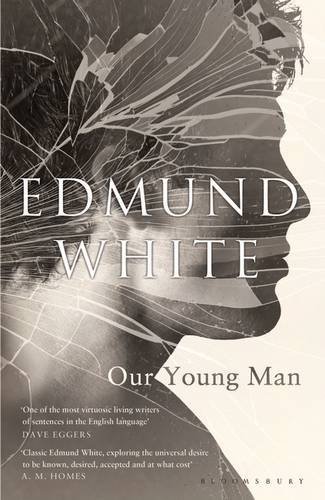
  • BOOK REVIEW: Our Young Man

    BOOK REVIEW: Our Young Man

    Edmund White has been the grand chronicler of the lives of gay men since the early 1970s. His seminal work ‘A Boy’s Own Story’ is a literary classic that is essential reading for every gay man or indeed everyone who can turn a page. ★★★★

    Our Young Man - Book

    (more…)

  • THEATRE REVIEW | Stella

    How difficult was it to be a gay man with a penchant for dressing up in drag in Victorian England? The answers provided by ‘Stella” might surprise you. ★★★★

    (more…)

  • INTERVIEW | Neil Bartlett

    Alone in a silent room, a man waits for a knock on his door. As the minutes tick by, he remembers a life filled with daring and laughter, with parties and heartbreak – a life spent searching for the courage to be himself.

    Inspired by the true story of the strange life and lonely death of Mr. Ernest Boulton – one half of the infamous Victorian cross-dressing duo Fanny and Stella – Stella is an intimate meditation on the fine art of keeping one’s nerve as the lights go out. Performed amidst the newly restored splendours of one of London’s oldest surviving music-hall interiors, it is a theatrical love-letter to a truly remarkable person.

    Neil Bartlett has been one of Britain’s most individual writers and theatre-makers for over thirty years. His early work included the now-legendary Sarrasine and A Vision of Love Revealed in Sleep; from 1994 to 2005 he was Artistic Director of the Lyric Hammersmith. Since leaving the Lyric he has made controversial new work for the National, the Manchester International Festival, the Edinburgh Festival – and the Royal Vauxhall Tavern. Stella is his first original theatre piece in London for over three years.

    I first became aware of Stella (Ernest Boulton) when I read Neil McKenna’s 2013 book Fanny and Stella. The story is both titillating, hilariously funny and devastatingly sad and I was instantly fascinated to learn more. I was excited to hear that Neil Bartlett has written a play based on the life of Stella and that this is being shown as part of the London International Theatre Festival in the beautiful setting of Hoxton hall in London’s East End.

    CHRIS BRIDGES: For those who don’t know anything about Ernest Boulton can you tell us a little more about him?
    NEIL BARTLETT: The real Stella was called Ernest Boulton, and he was born in Tottenham in 1848. His parents tried to get him to settle down to a career as a bank clerk, but by the age of twenty he was living a very different kind of life than the one they had planned for him. When he wasn’t trolling the West End in tight trousers and full slap , he was working as a drag performer under the name of Stella. On stage he was billed as a female impersonator, but offstage he could also pass as a woman. His lover – an aristocrat Tory MP, no less, one Lord Arthur Pelham-Clinton – rented Stella a flat just off the Strand, and there the two of them slept in a double bed and told the servants that they were  man and wife. As if that wasn’t enough of an outrage, Stella also went out on the town without Arthur, trolling the pavements of the Strand for trade while dressed as a far less respectable kind of lady.

    In the spring of 1870, this glamorous lifestyle all went disastrously wrong; Stella was arrested in full drag after having been spotted using the ladies’ toilet in a West End theatre. Remarkably, she got off. The charge was conspiracy to commit a felony – i.e, sodomy – and though there was ample evidence that Stella was an outrage, there was no evidence of actual buggery on the night in question. What is even more remarkable is what happened next. Instead of hanging her head in shame, Stella immediately went back out on tour with her drag act; less than a year later, indeed, she had changed her name, dyed her hair blonde and was playing in New York, just off Broadway. So much for the idea that all Victorian homosexuals were unhappy victims! The work in New York dried up as she lost her looks, and Stella eventually came back to Britain to tour in the lower rungs of the provincial variety circuit, sticking it out until shortly before her death in London in 1904.

    Ernest had some hideous experiences and his story is a sad indictment on how the Victorians treated gay and transgender men. Would you describe ‘Stella’ as a tragedy?
    When I first discovered Stella’s story – which was way back in the dark ages of the 1980s, when I was researching my first book, Who Was That Man? about queer life in Victorian London – it was the young Stella who I identified with – the young fearless queen, sticking two fingers up at the world with her frocks and shamelessness. I was, after all, a young queen myself, and knew quite a bit about the pleasures and perils of trolling the West End in drag. Now I’m the same age that Stella was when she died, it is her courage as an older queen that intrigues me most. What kind of nerve did it take to play all those games with gender and identity in a century where no vocabulary existed to describe what you dreamt of being?

    What kind of nerve did it take to tour for all of those years, way past the time when her looks had started to go? Most of all, what kind of nerve did it take to make her final journey – we know that Stella died in the National Hospital, on Queen Square in Holborn, so having lived all her life in frocks, her final identity must have been that of an anonymous patient in a man’s jacket and trousers.

    I think Stella has a lot to teach us about courage, about keeping your nerve – so I suppose by bringing her back to life in this show I’m trying to give her a chance to pass on some of the lessons her life taught her. The show is dark, and funny – and uplifting.

    Picture shows: Richard Cant

    You’ve previously written about life for gay men in 1890 and compared this with your own life in 1980 in your novel Who Was That Man? Do you think there are parallels between the time of Ernest’s trial in 1871 and life in 2016?
    Now is a great time to be telling Stella’s story. Sometimes she was a drag queen, sometimes a flaming fairy, sometimes she was a passing “lady”, sometimes she looked and behaved exactly like a pre-surgery, pre-hormones cross-dressed MTF (Male to Female) sex-worker. She challenges all ideas that “identity” is a destination; she was on a journey until the day she died. I think that’s an idea we’re very open to right now, now that trans and non-binary people are doing all this amazing work to open our eyes and hearts and minds. Stella really asks to think about what matters more; who you are, or how you are. For me, Stella’s true “identity” was her courage.

    How did you approach researching and writing the play?
    I read everything that has survived – all of the letters and bits and pieces that were preserved in the trial transcripts – and I also spent a lot of time in the British Library tracking down the scripts of the plays that Stella acted in when she was on tour (there are some lines from some of them tucked away in my script)– and I looked at all the photos of her that have survived. That girl did like a photographer’s studio! Just as importantly, I talked to the friends of mine who – like Stella – live and/or work in bodies and gender identities different to the one they were assigned at birth. Fabulous people – Justin V Bond , Scottee, Rebecca Root, Jo Clifford….and some of the things they told have found their way into my Stella’s mouth.

    Picture shows: Oscar Batterham

    One of the things I loved reading about was Fanny and Stella’s language. The Victorian phrases slang terms were colourful in the extreme. Do we get hear much of this in the play?
    There are fragments of Stella’s original voice in the play – but it’s not a history lesson. I’m really trying to put the audience in the same room as her and just let her talk… though I must say, she does have a sharp turn of phrase at times, like every queen I’ve ever known.

    Hoxton hall is a stunning place. Quite a coup to show the play in such a pertinent place. Can you tell us more about the venue?
    Hoxton Hall one of London’s best kept secrets – a jewel, hidden away half way up Hoxton High Street. Stella is a very intimate show, all about being in the same room as this extraordinary creature, and so it felt right to find somewhere small and secret – also, of course, Hoxton Hall is very much the kind of place that Stella would have played – it’s an actual Victorian musical hall, complete with cast iron balconies and red velvet curtains.

    For this piece I wanted to go back to the way of making queer theatre that I used when I first started back in the 1980s, with shows like A Vision Of Love or Sarrasine – find somewhere fabulous and then lure the audience there after dark with the promise of a touch of naked flesh, a bit of cheap costume jewellery and a truly haunting story from our queer past. Since the 19080s my career has taken me to big theatres, the National and the RSC and all that, but I think I’m happiest  in the dark with an audience of queers and a truly magical space.

    Finally, if Ernest were alive today what do you think he’d be doing?
    Misbehaving at the Shadow Lounge wearing a fabulous outfit that somebody else had paid for.

    Stella plays at Hoxton Hall from 1 – 18 June 2016, 2.30pm and 7.30pm

    Post show events:
    Panel discussion post-show on the 7th of June with Neil Bartlett, Jonny Woo, Jo Clifford and more
    Dialogue Theatre Club on the 9th of June hosted by Maddy Costa and Jake Orr

    Follow Chris Bridges on Twitter
  • THEATRE REVIEW | Kenny Morgan

    ★★★★ | Kenny Morgan

    One of Terrence Rattigan’s best known and most moving plays, “The Deep Blue Sea”, has a disturbing and fascinating genesis.

    Written in 1952, the play concerns itself with well-to-do Hester who has left her safe but dull marriage for a dashing young airman and is living in desperate poverty, battling depression and rejection. Writing about gay relationships (which were illegal until 1967) would have been taboo and a highly dangerous move so he penned a story that was based on the events that had happened in his life but changed the relationships to heterosexual ones.

    Rattigan’s on and off secret lover of almost ten years, the eponymous Kenny Morgan, left him for a bisexual actor. His once promising film career floundered, his finances dwindled and he slipped into depression, killing himself in 1949.

    The play opens in a worn round the edges Camden Town boarding house. Kenny (Paul Keating) is lying in front of the gas fire having failed to commit suicide. The dank cellar of the Arcola perfectly houses a set that is utterly convincing and is complete with grimy net curtains, frayed carpets and a lingering taint of too many cigarettes smoked. The dialogue follows suit too and feels genuinely late 1940s. The script is a slow burning one and starts with a camp and amusing skittishness with a cast of inquisitive, prurient and concerned neighbours trying to help Kenny. The pace is pitched perfectly and the notes of tragedy soon emerge as Kenny hurtles towards his horrible fate.

    Paul Keating gives a moving performance as the conflicted and disturbed Kenny and is ably supported by a strong cast. Simon Dutton is a suitably suave and rigid Rattigan and Pierro Niel-Mee is Kenny’s rakish yet ultimately sympathetic lover Alec. There’s great comic relief from Marlene Sidaway as his elderly landlady.

    This is essential but sometimes heart breaking viewing and a moving glimpse into a world that seems a lot longer than 67 years ago. Mike Poulton’s skill as a writer is to make it easy for the modern gay man to empathise with the characters and their horrible predicament in a country blighted by anti-Semitism and misunderstanding of mental illness that was a potentially ruinous place for a gay man. However, he presents a more rounded view of the era also where alongside prejudice and bigotry there were pockets of sympathy, warmth and tolerance too. Difficult as Kenny’s life seems and as taut as Rattigan’s predicament was, it’s also comforting to see that there were ways of living under and around the law.

    Kenny Morgan plays at the Arcola Theatre until the 18th June

    @chrisb715