Author: Jack Strange

  • Valley Boys Like Boys – Growing up Gay in the Welsh Valleys

    Valley Boys Like Boys – Growing up Gay in the Welsh Valleys

    As I drive through the Welsh town of Pontypool I’ve lived in since I was born, with a population of approximately 36,000 people, I’m surprised to see a rainbow flag flying high outside the civic centre in the middle of the town. It’s LGBT history month, but the flag doesn’t just stay up during February. Instead, it has become a permanent feature, flying proudly with the Welsh flag and the European Union flag.

    Whilst the future of the flying European flag is uncertain, the rainbow flag is there to stay. In this tiny Welsh town, it is almost historic. I’m a 23-year-old Welsh boy that struggled with coming to terms with my sexuality.

    Wales’ track record of LGBT rights is a little bit hazy, but in 2018 The National Assembly for Wales was recognised as the top employer in Wales for LGBT employees. This sort of movement is quite a good sign of how Wales has changed over the years. We have gay clubs that are thriving, venues that host drag queen shows, and the smaller towns are beginning to accept what is normal. Just last year, Newbridge Memorial Hall hosted a drag queen event.

    Growing up gay in Wales, I found it incredibly difficult. The town I live in is rather behind the times: we have poverty, we have more empty shops than booming ones, and the people who live here are rather set in their ways. We’re a country run mostly by Labour, yet my area voted leave, and many conversations I hear are in support of a Tory government and a hard Brexit.

    As I grew up, the rather cliché saying of ‘knowing I was different’ rang true. I didn’t get along with ‘the lads’. I’d rather stand on the railings singing Girls Aloud – mainly Nicola’s lines; I was always Nicola – than play football. I got taunted for being a ‘girl’.

    It hurt, but being young I didn’t really know what that meant. Then, through secondary school, I experienced almost daily taunts of ‘gay boy’, ‘faggot’ and ‘bender’. As puberty kicked in and feelings for guys intensified, so did the bullying, as hormones raged in every teenage boy in school, and the idea of a ‘queer’ being anywhere near them repulsed them. I remember experiencing comments from teachers. PE teachers would always treat me like a stereotypical ‘gay boy’ that would rather be brushing my hair than learning the rules of football. I remember a few of my PE classmates disappearing for a class to go on a drama trip. To snickers from the rest of my class, my teacher said, “so all the poofs have gone off to watch show tunes.”

    No one blinked an eye at this comment.

    Lisa McNally is a mother from Cwmbran, South Wales. She witnessed her son, Lewis, now twenty years of age, experience homophobic bullying. She agreed to talk to me to discuss her son’s bullying, as she thought it was important that parents who are aware of their children’s sexuality should be there to support them. “I have a son who grew up in Cwmbran and attended the local comprehensive school. He endured daily abuse from his peers and from the teachers. When I attended the school, I was informed by several teachers that Lewis should not tell people he was gay, and that he wouldn’t be bullied.”

    When Lisa questioned why such a comment had been made, the teachers told her that her son would not be received well in the community. “I was told to remember that Cwmbran was still a village and ‘forcing the gay agenda’ wasn’t warmly received.”

    “I have walked through school with Lewis to chants of ‘faggot’, ‘gay boy’, ‘bummer’, and I have endured this when walking through the town centre with Lewis, too. He ignores them. I found it hard to do so.”

    Such was the regularity of her son’s bullying that Lisa visited the school Lewis attended in the hopes of stopping his heavy bullying. “I have walked through school with Lewis to chants of ‘faggot’, ‘gay boy’, ‘bummer’, and I have endured this when walking through the town centre with Lewis, too. He ignores them. I found it hard to do so.”

    Lisa notes, however, that when the pair shopped in Cardiff, there were no comments and barely any stares from the people in the city centre. It paints an image that whilst city centres were more forward thinking, small Welsh towns were still very much being left behind. Due to Lewis’ bullying, he dropped out of school and left with no education. Lisa described that her son felt suicidal, and whilst better now, he did suffer with depression. Lewis said that ‘being made to go to school every day’ made him feel vulnerable, and his experience was a ‘living hell’.

    Once I was out of school, like Lewis, I began to accept who I was and embrace it. It wasn’t until I started working as an eighteen-year-old that I was confident to admit that feelings for guys were there. I began by admitting to my friends. Yet I was still afraid of declaring that I was gay; the liberation of saying I liked both sexes was a step in the right direction.

    Matthew Cleverly, an actor originally from Pontypool but moved to London to study, realised he was bisexual when meeting a group of like-minded individuals. Being in the same year as me in the same school, Matthew and I observed the treatment of those individuals that did ‘come out’. ‘Looking back I remember a few of my friends coming out as LGBTQ+ and although some were accepted by friendship groups and families relatively easily, others were harassed, bullied and rejected.’

    Matthew reflects that as he grew up in the Welsh valleys, he suppressed a part of himself. “I didn’t grow up queer in Wales. It was only after I moved out that I realised what was always there. I’d moved to London to go to drama school, and was also, at that point in a four-year relationship with a girl. It wasn’t until I was given the freedom to move away from the judgement of a small-town, Welsh community, and was thrust into a supportive, creative environment, in which I had to constantly self-analyse, that I began to discover and accept the other side of myself.

    “I realised that I had taken the path of least resistance my whole life,” Matthew continues. “And although the relationships I had were real and loving, I hadn’t been fully there because I was always concealing a piece of myself – even from myself.”

    Matthew believes that part of his reasoning for not acknowledging his bisexuality was because of a lack of LGBT role models. ‘Not having strong queer role models definitely aided in me not coming out for so long. In a place such as small-town Wales, feeling different can be so much more isolating, because you can’t see anything beyond your circumstance. It’s important to remember that although you may feel you’re not in the right place now, you will find your tribe eventually, and they will love you for exactly who you are.’

    Finding my own tribe was a key feature in my acceptance. Some of my best friends were also ‘experimenting’ with the same gender, and being able to talk honestly to people after so many years of hiding feelings was like a freedom movement.

    rihaij / Pixabay

    At eighteen, I began to go out on the nightclub scene. In the town of Newport, I’d regularly have a group of same-dressed looking boys glaring at me from across the dance floor as I dared sing along to Miley Cyrus. I’d have people double take when they saw me kiss a man. Going out on nights out in my hometown was a whole other story. When waiting at the cash point one night, stood alone and not doing anything remotely attention seeking, a guy across the road shouted at me, “OI, FAGGOT!” Mature and annoyed by this, I turned to leave. But he wasn’t done. He shouted, “Yeah, that’s right. Fuck off before I punch you.”

    At the same time, I discovered Cardiff’s gay scene. With new friends, I would go out and play the field. Cardiff was a lot more liberating than that of Pontypool or Newport.

    Jennie Scrivin, from Pontypool, found solace in Cardiff’s gay scene when she was discovering that she was a lesbian. “There wasn’t a lot of gay people when I was growing up. Coming out was hard. Would I be accepted? I’d spend every night out on the gay scene, but that was in bigger cities, not my little town. I felt like I finally fitted in.”

    At eighteen, Jennie came out and is now in a relationship. Older, and out, Jennie remarks that attitudes are beginning to change. “It’s not a taboo word anymore. I just hope it continues to become more and more accepted.”

    I have to stress that growing up during my teenage years, I really did find it difficult to come to terms with who I was. I turned to a blade to keep my emotions at bay, and to cope with who I was I regularly sought solace in online webcam sites, where there were men and teenagers like me that felt the same. As I got older, I accepted who I was. I soon admitted that I was gay, rather than bisexual, and when I told my parents, they really couldn’t care less. I think my dad nodded and then said, “What do you want from the chip shop?”

    Small Welsh towns still have a lot to do to promote inclusivity. When working in a pub in the town in 2016, I would regularly hear homophobic slurs. To the people saying them, they were just jokes. But to a gay bartender who had overheard, I had to bite my tongue. To promote inclusivity, Welsh towns could support those who are growing up gay that may feel afraid to tell anyone who they are. When I was younger, there were no support groups. Whilst I suspect many older adults such as teachers realised I was gay before me, I was never questioned on it in a nice way or made to feel like I could talk to someone about how I felt.

    Yet every time I drive past the rainbow flag in the centre of my small town, I feel that sense of pride. I remember that there are people there that accept me for who I am and that flying a flag of many colours not only represents the gay people in my town, but the lesbian, bisexual, transgender and the queer community.

    A small Welsh town that I call home is opening their arms and embracing change, and that is something we must all support.
  • COMMENT | The Only Goal Football Needs is to Support its LGBT Players

    Newspaper The Sun has reported that a premier league footballer has ‘paid to keep his male lover quiet’.

    There is almost always talk of a footballer being gay. In 2018, we still don’t have a premier league footballer that is out and proud. Of course, there are some footballers that have announced their sexuality, but it comes after retirement when they’re no longer at the top of their game.

    And that’s a problem.

    According to The Sun, the premier league star who has not been named, offered to pay his fashion worker lover to keep quiet. The sum offered is rumoured to be £10,000. The Sun goes on to say that the footballer in question has a child with a female partner, and is bisexual. The male lover in question is said to be a 21-year-old fashion worker, who has also remained anonymous.

    Instead, the 21-year-old chose to speak anonymously to raise awareness of the continued homophobia and taboo surrounding male football players. He has said: ‘It isn’t the players that are the problem — although he is guarded with who knows. It is because of the backlash from the fans that he is terrified of it coming out.’

    The football player has reportedly told close friends, some of who are footballers themselves, and has been greeted with support, but he is terrified of the fans, of the heckle calls being shouted from the stadium.

    In 2018, should we not be more focused on the ability of a footballer’s talent to score goals, to win for their team, than their sexuality?

    Unfortunately, whilst that is what we should be focussing on, it seems fans have another agenda. In a 2013 dossier, Brighton fans reported hearing these chants: ‘You’re from a town full of gays and we hope you all die of AIDS.’

    It doesn’t make ‘juicy gossip’ to hear of a male footballer coming out as gay. I’ll admit, it is interesting, and it’s natural to want to know who that man is. But the pressure he must be under tells us that forcing him out is wrong. Instead, the attitude towards gay men on the pitch needs to change.

    It isn’t as though that isn’t happening. In 2013, the first LGBTQ fans group for a major football group – in this case, Arsenal – was set up. Since then, there are more than 30 LGBTQ groups offering support to both fans and in the closet football players.

    Meanwhile, Welsh Rugby player Gareth Thomas, who came out as gay after retiring from the sport, said that if a footballer were to come out today, they would be ‘walking into the unknown’.

    Whilst the FA are maintaining they are encouraging their players to ‘be themselves and support their teammates to do likewise’, we are still lacking any prominent out and proud football players that are still at the top of their game.

    The problem, of course, is not with the footballer player themselves. They are surrounded by men who are telling them to conform, to play the game and are idolised by men all across the world. In some countries where these footballers play, it is illegal to be gay, with some countries allowing a death penalty. Whilst not all of the football audience are homophobic, trolling chants about gay men can appear to be incredibly daunting. Surveys have shown that three-quarters of football fans don’t care if a player is gay or bisexual.

    What is also the problem is no one wants to be first. Peter Tatchell, a gay rights campaigner, said: ‘To allay the anxieties of individual players, the Professional Footballers Association should organise a simultaneous coming out by several stars. That way, no single player would have to deal with the media and public reaction. There would be safety in numbers.’

    With rumours in the past linking Ashley Cole to another player, a rumour he distanced himself from publicly and assuming the player in recent reports is someone entirely different, there would, of course, be enough players to come out together. The problem with this happening is internal struggles.

    We live in a society where an open, gay football player would be what we need. An influential man with a following of both straight and gay football players would really do wonders. LGBTQ groups would feel included, and awareness could be raised to the industry of football as a whole, and the problems that need to be dealt with and overcome.

    It’s easy to say that a footballer should lead the way in coming out, but it’s easy to forget the internal struggle of coming out.

  • Here’s Why Wales’ LGBT Sexual Education is Important

    Here’s Why Wales’ LGBT Sexual Education is Important

    Having lived and grown up in Wales my whole life, sexual education during secondary school was a massive let down, not only for me and my LGBT peers past and present, but also the straight community…

    CREDIT: © tomwang Depositphotos

    When teaching pubescent teenagers about sexual intercourse in secondary school PSHE classes, the teacher was always greeted with snickering laughs, comments from the lads and jokes cracked by some lame guy.

    As Wales prepares to give sex education in Wales school an LGBT inclusive over-haul, I was reminded of my own experience of sexual education.

    Wales have announced plans to have a major overhaul of their sexual education in schools, planning to change their current curriculum. By doing this, Wales will be ‘leading the way’ in sexual education, something that is extremely important.

    The changes would mean the subject would be renamed to ‘relationships and sexual education’, and were announced by Wales’ education secretary, Kirsty Williams. Williams has said that the days of traditional sex education were ‘long gone’.

    30 years ago, section 28 was introduced, which banned the ‘promotion of homosexuality in schools’. Now, 30 years later, Wales is moving forward to include an LGBT inclusive subject in sexual education. The teaching will focus on issues such as consent, domestic abuse and diversity.

    The new education curriculum will come into force in 2022, and will be taught to children from five to sixteen years of age. The subject will now be embedded in the curriculum, instead of being taught as a separate subject.

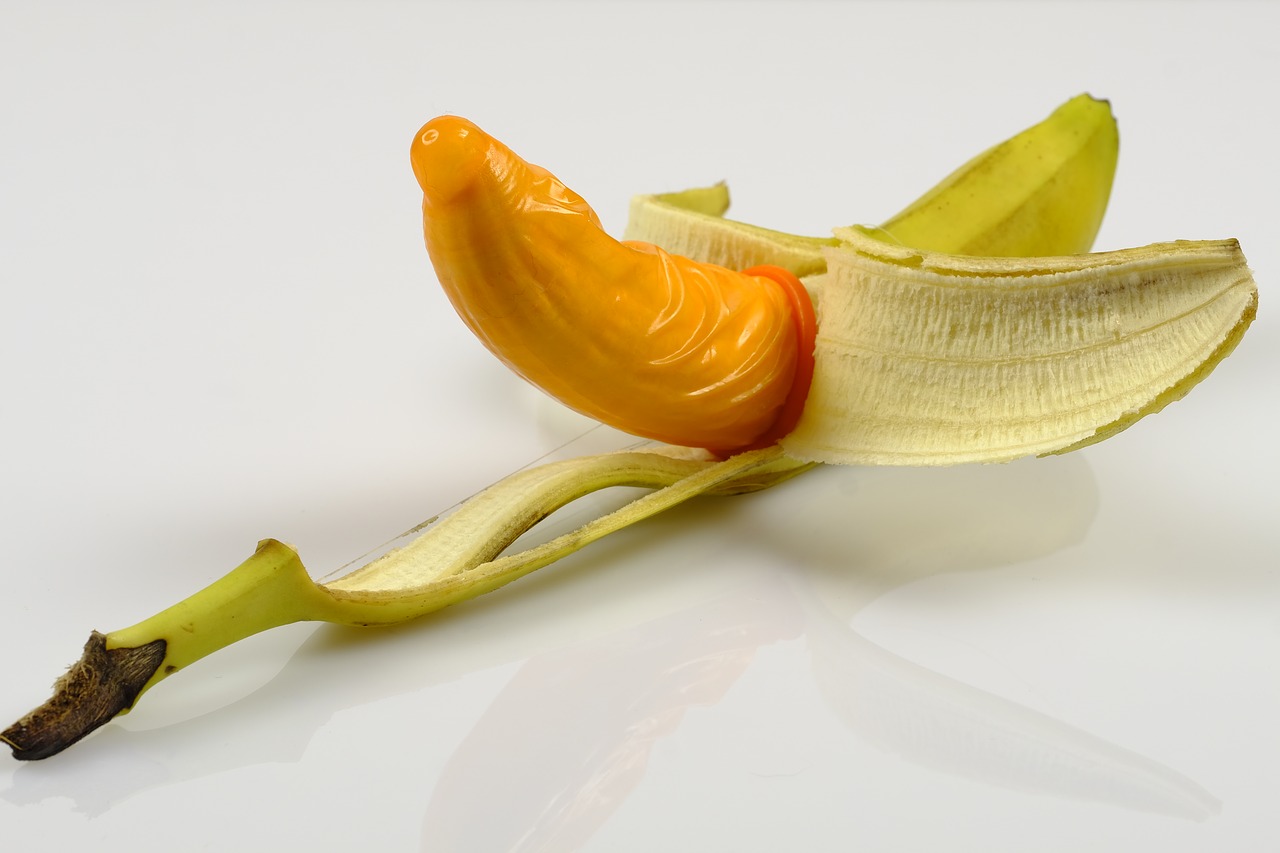
    Bru-nO / Pixabay Is learning how to put a condom on a banana all that helpful?

    Kirsty Williams said, ‘The world has moved on and our curriculum must move with it. Sex should never be taught in isolation for the simple reason that it is about so much more than just sex; it’s also about relationships, rights and respect and that must go hand in hand with a much broader understanding of sexuality. Anything less does a disservice to our learners and teachers.’

    Stonewall Cymru, and LGBT charity were pleased with the announcement. Their director, Andrew White, has been campaigning for this change for a while. White said: ‘It’s great news, particularly as this week is the anniversary of the introduction of section 28 and our research shows that a majority of LGBT young people here in Wales have heard nothing about LGBT issues in the classroom.

    ‘The legacy of section 28 unfortunately still lives on and this change will go some way to readdressing the balance.’

    He then went on to say that these discussions should be in the classroom, as talking about it online could spread false information. ‘If we don’t, those conversations will happen on the web with sometimes unreliable sources.’

    As a Welsh gay male, it’s important to see this change happen. It’s even better to see that my country, who have sometimes been a bit behind on LGBT rights, particularly in places such as the valleys, are the leading country to be putting this forward.

    When I was in education, my sexual education consisted mainly of STD’s and how to avoid them, and I was always taught about wearing a condom before having intercourse with a woman. We were taught how to put a condom on a banana, and we also saw how condoms are packaged. We learned briefly about the female reproductive system, and how the egg is fertilised, but one thing we never touched on was LGBT sexual relationships.

    As I discovered my sexuality, online porn websites were my education. Whilst I didn’t take scenes literally, understanding that whomever you have sex with must consent, it has been noted that people who watch porn may get lines blurred between what is acceptable in a real-life sexual relationship. Having consent taught in education systems is extremely important, for both heterosexual and homosexual people. Personally, I think what also needs to be taught is that sexuality is now being seen as fluid, as well as being young and confused. I didn’t truly accept who I was until I was 18/19.

    Sexual education must also discuss alcohol and sex. Many encounters are under the influence of alcohol, and some are above board and others are sadly not. This must be covered, as ignoring the problem doesn’t achieve anything.

    When I was young and watching pornography, I discovered how men have sex. I was able to tell how a condom went on by watching a porn star put one on. Whilst my body image confidence went down, I still took something away from porn other than a fun time. I learned how sex happens, and how it can work, albeit if it was edited together and the stars had no chemistry.

    But learning from porn, whilst useful to me personally, is not how we should be learning as LGBT people. Even now, the transmission and treatment of HIV is rather hazy to me, and as a teenager finding sexual partners, I worried myself sick about contracting what I thought at the time to be a deadly disease. Being taught in school that HIV, whilst being deadly without treatment, is now easily treatable with correct medication, and also being taught easily preventable with the right methods, would have saved me a lot of time growing up. It would also be nice to see HIV being discussed openly as a disease that affects everyone, regardless of their sexuality. I still feel like many people see it as ‘a gay man’s disease’.

    So whilst my sexual education taught me that pizza men would result in a sexual experience, I’m happy to see that Wales will now teach a new generation that sex doesn’t work like that.


    Opinions expressed in this article may not reflect those of THEGAYUK, its management or editorial teams. If you’d like to comment or write a comment, opinion or blog piece, please click here.

  • Why I Care for The Royal Wedding

    Why I Care for The Royal Wedding

    On Saturday, our Prince Harry becomes a married man, to actress Meghan Markle. Columnist Jack Strange writes why he’s raising a glass to the new married couple..

    Tumisu / Pixabay

    If you didn’t know about this, then that’s understandable, seeing as it hasn’t been mentioned anywhere.

    Oh wait, it’s been just about everything. The past week, in the build-up to the wedding, we’ve seen interviews with camera crews setting up outside Windsor, and we’ve also watched a real-life soap unfold regarding Meghan’s dad, who sadly won’t be at the wedding because of a heart problem.

    Today, it was announced that Prince Charles will walk Meghan down the aisle.

    It’s all very excessive to be talking about when you consider it’s only two people getting married, but of course, these aren’t your typical people.

    They’re our monarchy; a royal family that have been in the public eye their whole lives. We’ve followed Harry since he was born, seeing him lose his mother tragically at such a young age, and seeing those pictures that leaked from Vegas.

    Harry is undoubtedly our most down to earth royal. He’s a younger generation that has fought in the army, fighting for our country, and working endlessly to meet different people in different countries to enrich things such as the Commonwealth.

    Meghan Markle, on the other hand, is a young woman that has lived her life in the limelight and happened to meet Harry because of a blind date. Undoubtedly, Meghan is feeling the pressures of this new limelight that has been put upon her. She can no longer act, and she even had to delete social media. Now, Meghan has to fit the role of a royal. Regal, helpful, a Good Samaritan.

    But what we have with Meghan and Harry is something unusual. We have an American marrying into a family that have been traditionally British, albeit with German ancestors. It’s unusual, too, for Meghan to have had a public career before this. During the 2016 election, Meghan spoke out against Trump, an opinion that she will probably have to put aside now that she is such a public figure. What could have once been seen as problematic to the diplomacy of royalty has now been modernised.

    Let us also not forget that The Royal Family bring the British economy a good source of income. Abolishing them, or dismissing them would be foolish. This wedding between Harry and Meghan alone will boost our economy by £1billion.

    That £1billion comes from things such as tourism, PR, money spent in restaurants and on merchandise.

    The whole world is watching the United Kingdom right now, and broadcast around the globe.

    We should also see this as a testimony to our history. We are alive to witness history. Sure, it ‘may just be a wedding’, but it’s a wedding between two people that have the influence to change how we live, and how the world functions.

    As humanitarians, both Harry and Meghan have a responsibility to uphold. Not only are we seeing two people in love tie the knot, but we’re celebrating something good.

    We have bigger problems to face, sure, but for one day we should focus on the good. We should enjoy an enrichment of culture.

    I, for one, wish the new couple a happy wedding day!

  • Men Care More for Appearance than Mental Health

    A recent study has found that men are more concerned about their physical appearance than they are about their mental health. 

    In a week that highlights mental health issues in the population, suicide prevention charity, Samaritans, have discovered that 41 per cent of men spend less than an hour a week looking after their mental health. 16 per cent of men are unconcerned with their physical appearance. 

    The survey was carried out with male grooming company, The Bluebeards Revenge. 

    The survey also found that 66 percent of men spend 1-4 hours a week looking after their physical appearance, whilst only 44 percent of men dedicate time to their mental health. 

    It is a stark reminder that whilst more people are being encouraged to talk about their problems, men still find it hard to speak up. A recent campaign launched by This Morning and Project 84 brought to light that 84 men a week take their own lives. 

    But how are us men meant to de-stress and focus on our feelings, when society still tells us to simply ‘man up’, to not ‘be a pansy’, and continuously disparages any emotional feelings we dare to show? 

    The research by Samaritans found that reading was the most popular de-stressing activity, followed by walking and running. 

    The frightening research has prompted Samaritans to work closely with The Bluebeards Revenge to encourage more men to speak up on the issue. Now, if you open up cartons supplied by The Bluebeards Revenge, a life saving message from The Lions Barber Collective and Samaritans can be read. 

    Nick Gibbens, a spokesperson for The Bluebeards Revenge said: 

    Men are much less likely to seek support for mental health issues than women and this needs to change. Suicide is also the single biggest killer of men under the age of 50 in the UK and, in 2016, 76% of people who died by suicide in the UK were male.

    Our research shows men are still much more interested in their physical appearance than their mental wellbeing, and we are in a unique position to change this and get more guys to open up and talk about their feelings.

    Upon opening one of our product cartons, men are presented with the vital information they need to actively improve their mental health, allowing them to find the right support to help them improve their lives and fight stigma.

    Meanwhile, Paul McDonald, Samaritan’s Director of External Affairs said: 

    Looking after your emotional wellbeing as well as your physical health is fundamental. Three times as many men kill themselves as women, so it is crucial that men find ways of looking after themselves emotionally, and get into the habit of looking after each other. It is as important as learning to read and write.

    Common problems that affect mental health: 

    The survey looked into what causes the mental health worries for the men, and discovered that financial worries were at the top of the list. That was then followed by relationship problems, family concerns, work pressures and finally poor physical health. Twenty-nine per cent of the participants said social media was a big factor in their mental health. 

    The survey was conducted with 18 to 65 year old men, and the number of participants were 2,124. 

  • Should Rita Ora Have Apologised for Girls?

    When Rita Ora announced a song with Cardi B, Charli XCX and Bebe Rexha, the world imploded, and we were ready for a huge collab that hasn’t been seen since “Lady Marmalade”.

    Should Rita Ora Have Apologised for Girls?
    Progressive or regressive? Lyrics from the song, Girls.

    Whilst not quite on the level of “Lady Marmalade” – an opinion not shared by me – the song came out on Friday and was consumed quickly by fans of the four rising members in popular culture. But many people were quick to say that song was offensive to the LGBT community.

    The track references Rita Ora’s sexuality as a bisexual woman. Lyrics in the song include ‘I’m 50/50 and I’m never gonna hide it’, and talks about an experience with a girl called Lara. After the release, many people were quick to voice their concerns with the lyrics, believing it to be exploitative and even tone deaf.

    When I first heard the song, I appreciated the way the song fit the pop mould, but lyrics such as ‘red wine, I just wanna kiss Girls’ did seem problematic even to me. Yet I was misinformed and did not realise that Rita Ora is actually bisexual, instead hearing the lyrics and thinking that the song was pandering to a straight male fantasy.

    After finding that out, I realised that the song was not intended to be harmful, but the world of Twitter continued to discuss the song.

    Pop star Hayley Kiyok tweeted that the song did ‘more harm than good’, with followers agreeing that the lyrics were clumsy, even if not intended to be, and gave the wrong impression to straight men. The pop star continued to say that the song ‘belittles’ the community, stating that she doesn’t need alcohol to show love of the same sex.

    Yet other Twitter users didn’t think the same way, stating that they didn’t even think of how it could be interpreted. Such was the debate and ‘backlash’, Ora took to Twitter to apologise to her fans. In her statement, shared on Twitter, Rita says that the song ‘was written to represent my truth and is an accurate account of a very real and honest experience in my life. I have had romantic relationships with women and men throughout my life and this is my personal journey.’

    Rapper Cardi B also tweeted about the backlash, saying the song was never intended to cause harm, and even revealed that she has been with many women.

    Whilst I admit that I thought the song could indeed be problematic, I was seeing it from the angle of many others, that lyrics glorifying a bisexual female relationship could cater to people that only believe women’s bisexuality is ‘a phase’. Yet seeing Rita explain the situation, it’s pretty clear to see that she is writing from personal experience, and why is that a bad thing? It may be because until now, the general public had no knowledge of Rita’s sexuality. But should that really matter? A certain One Direction member can continuously hint at bisexual relationships himself, yet never disclose his sexuality, but instead of backlash, the man gets elated feedback from excitable fans.

    Sexuality is a very complex situation, and we all have different experiences in discovering who we are, and realising the people we like. It’s important that the idea of being PC, of analysing everything to a point where backlash can literally ruin a career, does not infringe on artistic expression.

    Whilst the lyrics in Girls are a little clumsy, it’s important to remember where they come from; a young woman that has become an LGBT ally, expressing who she is, and writing songs about her own experiences.


    Opinions expressed in this article may not reflect those of THEGAYUK, its management or editorial teams. If you’d like to comment or write a comment, opinion or blog piece, please click here.

  • In the age of #MeToo, is it right to be lusting over topless men on Instagram?

    In the age of #MeToo, is it right to be lusting over topless men on Instagram?

    As a twenty-three-year-old twink, you might think life in gay culture is bliss. But the rise of popularity on Instagram has given rise to topless men with muscle, unabashedly showing off their abs, pecks and gorgeous tans.

    Adam Rickitt body
    CREDIT: Adam Rickitt / Instagram

    I’m a young man that likes what he likes, and unfortunately, I’m a sucker for a handsome man with a six-pack. I follow a lot of men on my feed, and whilst I know they’re unattainable, it’s still fun to look.

    But in the wake of the #MeToo movement, bringing awareness to sexual assault and harassment to women, I begin to wonder if objectifying these men is going to become problematic. Aren’t we just as bad for lusting over images of topless men? Of course, the main difference here on Instagram is these men are living their best lives, and they’re uploading photos for the endless stream of attention they receive from their thousands of followers, or so we’re led to believe.

    The constant stream of cocktails on the sandy beaches of a faraway country, of sunglasses and shorts whilst I, watch a snow storm, ignites not jealousy, but instead a sense of longing. According to a recent survey, Instagram was rated the top social media app that is bad for one’s mental health. Is it any wonder that a discovery like that has been found?

    We so desperately want to quit our mundane, often dead-end jobs, for a life that seems so much better. So desperate are we that we forget that social media shows us only the good. Who uploads a photograph of them with a massive spot, dribble down their chin and from a bad angle?

    Instead, we plump for Valencia filters, with airbrushed skin and cleverly crafted digital tans. The social media culture we live in has given us the best of the best, forever making us feel like we have to keep up. When we can’t, we sink lower, finding the ebb of sadness.

    Goodness, we’ve got a bit sad here, haven’t we? For a first article, you’d think I’d show you my best side! But then I’d be playing up to the picture-perfect lifestyle you see plastered all over Instagram.

    For men, it’s hard to discuss body confidence issues. It’s not talked about often, and so we tend not to mention it. I’m one to say I have body confidence issues, and I’m sure there would be others out there that say I have no right to be self-conscious about the way I look. But I do, and it’s common for people of all shapes and sizes to have those issues.

    A common problem for men is the fear that their size is just not good enough. Straight men know their girlfriends or potential partners will discuss a ‘perfect size’, and in the gay community, we also discuss men’s sizes. The myth of the penis size is a strange one. On one hand, many people simply don’t mind. On the other, it’s preference. Body confident Instagram men show off everything, and leave very little to the imagination. With strict Instagram guidelines on nudity, the toned gods have found ways around this, showing blurs and imprints in the tightest fabrics you could ever see. It’s very unlikely to see anything other than a hand full in images like this.

    It’s easy to believe that the hot men we see on Instagram don’t think like this. We imagine them earning money for every post, spending a second in the gym and getting a killer body, and spending hour after hour taking in culture, relaxing by pools, and drinking refreshing drinks. It’s easy because that is all we see of these complete strangers.

    We don’t know their lifestyle, not really. We see what they want us to see. It’s hard to remember that when we’re sat in a dilapidated house, wondering how we’re going to afford rent at the end of the month.

    If you ever feel like you are comparing yourself to others, it’s time to find that unfollow button, and click unfollow. Take some time away from the glossy too busy to model men, and instead focus on what’s around you.