Author: Paul Szabo

  • THEATRE REVIEW | Mamma Mia, The Marlowe Theatre, Canterbury

    ★★★| Mamma Mia 2017 National UK Tour

    REVIEW | Mamma Mia, The Marlow Theatre, Canterbury

    Sophie is determined to have her father walk her down the aisle at her forthcoming wedding. After finding out that there are three potential guys who may be her father, she invites them all to the forthcoming nuptials; but will she find out which one really is her father, and how will her mother react when three of her former lovers all turn up unexpectedly?

    Currently on its first ever UK tour, Mamma Mia is a show which needs little introduction. Based around the hit songs of Abba, the show has been a phenomenon for many years and continues to pack out theatres with its sunny setting, perfect pop and feel-good factor.

    The show feels as warm as the weather in the Greek setting to the story, with a set made up of a backdrop of brilliant blues and two moveable parts to the set which transforms the locations of the story very well. The lighting design is well conceived, the costumes include some spandex and stomping platform boots, and the whole thing is fairly seamless in its presentation.

    Sadly, for such a slick and polished production, the lead cast was disappointing; with both the acting and singing not being of a standard one would expect from such a huge show. Someone in the foyer joked “at least we won’t have to listen to Pierce Bronson sing tonight” (referring to his much-maligned performance in the film version of the show); but at times, his dulcet tones may have been a blessing. It is the ensemble cast who really shone in terms of their enthusiasm, singing and dancing; with more gorgeous gals and hunks in trunks than you can shake a stick at; and an abundance of muscular and ridiculously attractive young men in the ensemble with vast amounts of six packs, biceps and perfect pecs on display.

    But the real star of the show is the music, and with a soundtrack which plays out like your ABBA Gold CD, there are more than a few songs here that you will know every word to. There are some storming numbers, which work really well; “Money. Money, Money”, “Mamma Mia” and “Does Your Mother Know” are good ensemble pieces, and the collision of the stag and hen do’s to “Voulez Vous” was an enjoyable highlight; with this show reminding you of just how good ABBA really were.

    But where the show really succeeds is in the fact that it remains an absolute crowd-pleaser and presents itself with a real sense of fun. It’s a show which cranks up the camp, ditches the story and plot and goes all out to enjoy itself. It’s not perfect by any stretch, but by the time the crowd are on their feet singing and dancing at the end, you know that you have had a good couple of hours of escapism and managed to kick-start your summer.
    Mamma Mia plays at The Marlow Theatre, Canterbury until 29th July 2017 
    Review taken from the Sheffield Theatre’s production.
  • THEATRE REVIEW | Miss Meena And The Masala Queens – West Yorkshire Playhouse

    ★★★| Miss Meena And The Masala Queens – West Yorkshire Playhouse

    Miss Meena’s drag club is on the brink of closing; and like Miss Meena herself, it is tired, run down and needing a boost. But two strangers are about to enter Miss Meena’s life, both of whom have very different consequences for her. With people that she can trust, and people she can’t, close by, Miss Meena must decide whether or not the show will go on.

    CREDIT: David Fisher

    Tackling the difficult subject of sexuality and drag in the British Asian community, Miss Meena is a socially relevant piece of theatre and one which serves both the purposes of being entertaining, but also telling the seldom heard stories of the British Asian drag community. The story is in many ways very familiar, and there are a number of elements which make the narrative and the characters feel a little like a British Asian combination of the Priscilla and Burlesque movies.

    From the small cast, Raj Ghatak stands out, with a heartfelt performance as the titular character; and there is some decent support from Jamie Zubairi as Munni; whist Nicholas Prasad fills out the sling backs nicely as Shaan.

    But it is the writing that really shines through, and whilst the story is a narrative which is familiar, it is the detail within the characters and the universal themes of conflict for the gay community which shine through. Most of the characters struggle with their sexuality or their identity in some way, and each of them tackle their internal struggle differently. There is a real theme of family running through the show, from the perspective of both family in the traditional sense, but also the family made up of those we chose to surround ourselves with. There is also a relevant and valid social comment about the LGBT community having a safe space to go to; and the purpose of that space; whether it is to express themselves, away from a repressive family environment, or whether it is somewhere to be supported by those who understand the impact of such repression.

    That said, and despite the themes, the show remains uplifting, comedic and fun, with some great Bollywood lip-synch numbers which serve the purpose of being musical interludes rather than narrative progression, some physical comedy, a few snappy one-liners and a genuine warmth that resonates from the stage. By the time the show concludes in a cascade of glam, sparkle, saris and a bhangra version of a gay anthem, the characters really do feel like old friends.

    Miss Meena and the Masala Queens is a relevant, entertaining and socially progressive piece of theatre.

    Miss Meena and the Masala Queens is currently playing at West Yorkshire Playhouse, Leeds until Saturday 17th June 2017. Visit www.wyp.org for details. You can read our interview with Pravesh Kumar, the director, here


  • INTERVIEW | Pravesh Kumar – Placing British Asian Drag in the Centre of the Stage.

    Kinky Boots, Priscilla Queen of the Desert and La Cage Aux Folles. There are plenty of shows out there which involve men dressing as women, but there is only one show out there that looks at the subject from a British Asian perspective; “Miss Meena and the Masala Queens”. Looking at the challenges loves, lives and families of British Asian drag queens, director Pravesh Kumar boldly takes a subject which is seldom spoken about amongst the Asian community and places it squarely in the centre of the stage. Pravesh spoke to TGUK about family, heart and sparkle, Bollywood and becoming “fishy”.

    TGUK – Miss Meena and the Masala Queens is certainly unique; can you tell us about the show?

    PK – Without giving too much of the story away, it is about Miss Meena, a once famous and fabulous drag queen, who has lost his sparkle and glitter and who is running a washed up and out of date club. The club is about to close until a new arrival brings back a glimmer of hope, but the arrival of another stranger leads to Miss Meena questioning everything that he ever stood for. It is a joyous show about celebrating diversity and individualism. It is a British Asian story with real heart and sparkle, and most importantly, it is a story which has never been told before.

    TGUK – Was it a difficult show to get off the ground?

    PK – It has been in my head for a while but I wanted to wait until we were really ready to tell it. The LGBT British Asian story is one which is very rarely told, and so it took a long time to get the backers to put their weight behind it. Shows such as these are often seen as niche or too risky, so it did take a while to get the production up and running. A lot of these types of productions end up in small studio theatres, but we are proud to say that we have placed this production on the main stages of theatres.

    TGUK – How authentic are the stories you are telling?

    Originally, the idea for the show came from the fact that I have really wanted to tell this story for a long time. As a gay man, I have been on the gay scene for many years, so from my point of view, it was a really important story for me to tell. Harvey Virdi (the writer) and I were really excited about both the concept and the project. It was a very even collaboration between the two of us, and we spent a year interviewing drag artists, and we very quickly realised what the story would be about. In short, it all comes back to family and the meaning of family. A lot of the artists that we spoke to were people who had been disowned by their families because of their sexuality, so from very early on, we knew that that family would have to be one of the central themes.

    TGUK – How reflective of the British Asian community is the story?

    PK – What is really interesting is that different communities are at different parts of their “gay evolution”; the British Gay Asian community is still at the very early stages. There are other people within the community who are like me, and who are out to their family and friends, but we found that most of the gay men we spoke to were not out to their families. Even though this is a story which is difficult to tell, what really came through in our research was that there are a lot of younger and middle-aged people in the British Asian gay community who were not in touch with their families because of their sexuality. The show does talk about what are often seen as very taboo subjects, and about the experiences of some of the British Asian gay community, but the tone is light enough to get the British Asian communities and the gay communities to engage. There are families coming to the show saying “I would never normally come and see this type of show, but thank you for telling this story”. It is important to be having the conversation about the issues raised in the play and we wanted to make sure that we did not shy away from the truth, and not cover it up. We were really keen to produce a show which played to more than just the converted, we wanted to produce a show which would play to an audience who wouldn’t normally come and see things like this. There is a large gay contingent in our audiences but also a very big Asian family audience coming to see it, so it is really opening up the issue of homosexuality and cross-dressing in the Asian community

    TGUK – How did you involve the Gay community in your preparation for the piece?

    PK – We initially did some work with a well-known British Asian drag queen, who really helped us to get into the Gay community and that led to this being a story which really does come from the heart of the community.  Whenever we do new writing, we try to make sure it is organic and truthful. We have to speak to the people whose story we are telling.  We were trying to find the real truth of the people who were kind enough to talk to us, not just to engage with them on a superficial level.

    TGUK – There are a number of plays doing the rounds at the moment about drag or cross dressing, what makes Miss Meena different?

    PK – It is a play about the human story behind the glam, and it is about people who just happen to be drag queens. It is an untold story of a community which is never really seen on theatre stages. Some of it is Bollywood drag, and that is really unique in itself, but it is more than that, it is also telling a story about something which is part of someone’s personality. The drag is not just cabaret; it is how the characters express themselves as individuals. Whilst the show is entertaining, the sequins and saris are not there just for entertainment or novelty value, it is an intrinsic part of the characters being portrayed.

    TGUK – The show has a number of show stopping Bollywood moments, what do you think is the enduring appeal of Bollywood?

    PK – Bollywood is larger than life, an over the top kind of effervescent musical format that most British Asians are in love with. It’s a really lovely way of expression – just about every drag queen that we saw were inspired by Bollywood Queens. Bollywood is just so colourful, glamorous and sparkly.

    TGUK – Were you tempted to use live singing rather than lip-synching in the show?

    PK – we wanted to stick with the lip syncing, as all of the British Asian drag queens lip-synch – that’s the reality. Whilst the cast of the show can all sing, we wanted to be true to the story we were telling. The musical numbers really are a hugely entertaining and were great fun to put together.

    TGUK – Is there a difference between the British Asian drag queen performances compared to the western drag queen performances?

    PK – I think that there is. Western drag queens often camp up their performances, but with the British Asian scene, the guys are female impersonators, so I think that there is a big difference between British drag and British Asian drag. British Asian drag queens present themselves as essentially female impersonators; they present themselves as being very beautiful, very decadent and inspired by Bollywood, they are not going for the “man in female clothes” look, the parody of people in the public eye or the comedic element of drag, they are trying to look as “fishy” as possible, which is the British Asian drag term for looking as feminine as they possibly can.

    TGUK – Can you sum up the play in three words?

    PK  – I would have to say heartfelt, funny and sparkly.

    Miss Meena and the Masala Queens is playing at West Yorkshire Playhouse, Leeds from the 13th to the 17th June 2017. For details and tickets, visit www.wyp.org.uk .

  • THEATRE REVIEW | Dirty Dancing – Sheffield Theatres and National Tour

    ★★★| Set in the 1960’s, Frances “Baby” Houseman goes to Kellermans holiday camp with her family. She befriends the staff of the camp and develops a crush on charismatic dance teacher, Johnny Castle. When Johnny’s dance partner cannot perform at a show at a local hotel, Baby steps in to ensure that they do not lose their jobs. But as Johnny and Baby rehearse, they fall in love and learn more from each other than just the dance moves.

    Based on the hugely popular film of the same name, Dirty Dancing hits the stage with a show which follows the story of the film very closely, with the bulk of the script being comfortingly recognisable from the film. There are some additional scenes thrown in, which mainly expand on the political changes in the 60’s and some which flesh out the relationship between Baby and Johnny; whilst the show’s music came from a combination of both live and pre-recorded tracks, including “Hungry Eyes”, “Love Man” and “(I’ve Had) The Time of My Life”

    Katie Eccles and Robert Colvin took the lead roles of Baby and Johnny, and had some chemistry between them; and they were supported by a broadly competent cast of singers, dancers and musicians. Unsurprisingly, the dancing was better than the acting, but given that the show’s main focus is the musical numbers it doesn’t cause too much of a problem.

    The show has been given a major overhaul, and is all the better for it. This production has a vibrant lighting design and has ushered in a luxurious, well designed and thoroughly detailed set which transform smoothly without ever interrupting the story; whilst the show has been sexed up a little with a few more bare chests and muscular arms on display. Overall, the production values here are very high and very impressive.

    But where the show really succeeds is in its ability to bring the movie to life and recreating it on stage. All of the familiar lines, plot points, dance routines and songs are there and there is something very comforting about watching such a faithful recreation of the movie. For those who have not seen the film, the show is a good introduction to the world of Kellermans. For established fans of the film, the show will be hard to beat.

    The show is currently playing at Sheffield Theatres (www.sheffieldtheatres.co.uk) until the 10th June 2017, before continuing on its extensive national tour, calling in at a number of venues including  Edinburgh, Bristol, Manchester, Leeds and Liverpool between now and September 2017.  Visit www.dirtydancingontour.com for details.

  • THEATRE REVIEW | Mamma Mia – Leeds Grand Theatre and National UK Tour

    ★★★| Mamma Mia – Leeds Grand Theatre and National UK Tour

    Mamma Mia Theatre Tour Review

    Sophie is determined to have her father walk her down the aisle at her forthcoming wedding. After finding out that there are three potential guys who may be her father, she invites them all to the forthcoming nuptials; but will she find out which one really is her father, and how will her mother react when three of her former lovers all turn up unexpectedly?


    Currently on its first ever UK tour, Mamma Mia is a show which needs little introduction. Based around the hit songs of Abba, the show has been a phenomenon for many years and continues to pack out theatres with its sunny setting, perfect pop and feel-good factor.

    The show feels as warm as the weather in the Greek setting to the story, with a set made up of a backdrop of brilliant blues and two moveable parts to the set which transforms the locations of the story very well. The lighting design is well conceived, the costumes include some spandex and stomping platform boots, and the whole thing is fairly seamless in its presentation.

    Sadly, for such a slick and polished production, the lead cast was disappointing; with both the acting and singing not being of a standard one would expect from such a huge show. Someone in the foyer joked “at least we won’t have to listen to Pierce Bronson sing tonight” (referring to his much-maligned performance in the film version of the show); but at times, his dulcet tones may have been a blessing. It is the ensemble cast who really shone in terms of their enthusiasm, singing and dancing; with more gorgeous gals and hunks in trunks than you can shake a stick at; and an abundance of muscular and ridiculously attractive young men in the ensemble with vast amounts of six packs, biceps and perfect pecs on display.

    But the real star of the show is the music, and with a soundtrack which plays out like your ABBA Gold CD, there are more than a few songs here that you will know every word to. There are some storming numbers, which work really well; “Money. Money, Money”, “Mamma Mia” and “Does Your Mother Know” are good ensemble pieces, and the collision of the stag and hen do’s to “Voulez Vous” was an enjoyable highlight; with this show reminding you of just how good ABBA really were.

    But where the show really succeeds is in the fact that it remains an absolute crowd-pleaser and presents itself with a real sense of fun. It’s a show which cranks up the camp, ditches the story and plot and goes all out to enjoy itself. It’s not perfect by any stretch, but by the time the crowd are on their feet singing and dancing at the end, you know that you have had a good couple of hours of escapism and managed to kick-start your summer.

    Mamma Mia is currently playing at Leeds Grand Theatre (www.leedsgrandtheatre.com ) until Saturday 8th July 2017. Leeds play host to the forthcoming tours of Wicked and The Band; and present the World Premiere of Kay Mellor’s Fat Friends in November 2017. The show then continues on its national tour, calling in at Canterbury, Bournemouth, Brighton, Aberdeen, Sunderland, Oxford, Glasgow, Llandudno, Northampton, Wolverhampton and Sheffield. Visit  http://www.mamma-mia.com/uk-tour/index.php for details and tickets.


  • FILM REVIEW | The Naked Civil Servant

    ★★★★| The Naked Civil Servant

    Produced in 1975, The Naked Civil Servant is based on the autobiographical work by the self-proclaimed “England’s Stately Homo”, Quinten Crisp; who lived an openly gay lifestyle in 1930’s London, when homosexuality was illegal and his lifestyle was more than frowned up. Determined to live his life how he wished, Crisp’s journey through Belgravia, Chelsea and Soho is charted in this compelling TV drama.

    Naked Civil Servant review

    Despite being over 40 years old, the film remains essential viewing for its social relevance and its fascinating insight into LGBT history. There are points in the film which garner feelings of disbelief, such as Crisp being excused from the army during the Second World War, on the basis that he was diagnosed by a psychiatrist as “suffering from a sexual perversion”. Crisp was subject to prejudice both from the “roughs” (the ‘queer bashers’), the police and even from the members of the underground gay scene, who were terrified that Crisp’s flamboyant and feminine presentation would out them or place them at risk of imprisonment. But in the face of such difficulties, Crisp continued undeterred, refusing to be anything other than himself, as he promoted himself as the self-appointed spokesman for the cause.

    Lauded for the quality of the acting, John Hurt’s award-winning performance as Crisp is quite simply outstanding, and given that the film opens with Quinten Crisp introducing the piece; you realise as the programme unfolds, just how perfect Hurt’s performance really is, nowhere more evident than in the scene where Crisp is forced to defend himself in Court for approaching men in the street. There is good support from John Rhys Davies and Patricia Hodge, and the film remains a great piece of drama, with wonderful period details and one which never really shows its age.

    Re-released on DVD and Blu-Ray; the film has been digitally remastered, meaning that the picture quality and soundtrack has never been better. The Blu-Ray is presented both in the original picture format and in widescreen, and comes with a number of extras including a very interesting World In Action profile on Crisp, a commentary with John Hurt, a making-of documentary and an interview from 1979 with Crisp himself.

    Highly relevant, highly informative and highly recommended, The Naked Civil Servant is released on DVD and Blu Ray from Network Pictures on the 5th June 2017.


  • THEATRE REVIEW | Northern Ballet’s The Boy In The Striped Pyjamas – CAST Theatre and National Tour

    ★★★| Northern Ballet’s The Boy In The Striped Pyjamas

    Based on the best-selling book, The Boy in the Striped Pyjamas tells the story of two boys; Bruno, the son of a concentration camp Commandant and Shmuel, a young Jewish prisoner; as they befriend each other from opposing sides of the barbed wire fence.

    Boy In The Stripped Pyjamas review

    Whilst a ballet based on the Holocaust may not seem an obvious choice, Northern Ballet’s production is well conceived. Utilising a muted colour palette alongside an original score which is laden in strings and piano to create a real sense of foreboding; the ballet is surprisingly well paced and despite its setting, manages to find some gentle and rather tender moments amongst the difficult subject matter, nowhere more evident than in the burgeoning friendship between the two boys.

    Never straying very far from the original source material of the children’s book, Daniel de Andrade’s choreography is straightforward and uncomplicated; conveying the narrative without fuss and providing a clearly defined demarcation between different characters and scenes, which ultimately leads to the production of a ballet which is readily accessible to the whole family.

    Matthew Koon impresses with his portrayal of Bruno, conveying the character’s innocence and bringing to his performance a child-like vivaciousness, which contrasts nicely with Filippo Di Vilo’s suitably understated portrayal of the hopelessness of Shmuel. However, it is Mlindi Kulashe’s performance as The Fury, which stands out; bringing a menacing presence and an incredible suppleness which comes across in his technically impressive performance.

    Given the setting of the story, the ballet has the potential to be divisive in terms of its appropriateness; but Northern Ballet have produced a rather simplistically presented piece which handles matters with sensitivity and respect, and brings with it a genuine emotional punch which is derived from its narrative and characterisations.

    The show had its world premiere at CAST in Doncaster (www.castindoncaster.com)  before commencing its national tour calling at Wolverhampton, Leicester, Richmond, Aylesbury, Stoke, Bromley. Leeds and Hull. Visit www.northernballet.com for further details.

  • THEATRE REVIEW | La Strada – Sheffield Theatres and London’s West End

    ★★★ |  La Strada – Sheffield Theatres and London’s West End

    Based on the film by Frederico Felini, La Strada is set in the heart of the Italian Countryside, and tells the story of the Gelsomina, who becomes the assistant to a travelling showman, Zampano, as they move from town to town trying to earn their keep. But things change when they join a travelling circus and they meet Il Matto, a clown, who teaches Gelsomina that there is more to life than her current existence and encourages her to find herself.

    La Strada is a show with a very European flavour and a real feel for the source material, being Fellini’s classic 1950’s Italian film. The music is a broadly uplifting fusion of gypsy, jazz and folk, providing a jaunty soundtrack which melts into the story rather than providing standalone moments, and whilst the show is billed as a musical, it would perhaps be better pitched as a drama with musical interludes.

    Overall, the show carried with it an impressive presentation. Sally Cookson’s direction is distinctive and stylish, with a slew of innovative theatrical techniques, carefully choreographed movement and almost constant activity on and around the stage. The set has a feeling of 1950’s European cinema, with its muted colour pallet and its use of shadows and silhouettes, and the provision of the on-stage musicians added a nice touch. Feeling almost cinematic in its staging, the show does has a certain magic about the way in which it presents itself.

    La Strada boasts a large international cast, led by Audrey Brisson and whilst the performances were functional, they never really excelled. The story is filled with pathos and it is bold in its attempt to portray what is effectively a road movie on a single, static set. The pacing of the show is very slow and the narrative is thin, almost only allowing the audience to glimpse snapshots of the character’s lives, rather than allow them to join them on their journey;  which is where the production struggled overall and where the emotional punch of Fellini’s film was somewhat lost

    La Strada is a show which is a luxurious, visual feast, but one which has a low-key narrative, and a steady pace; and is a more high-brow musical  for people seeking an alternative to the saccharine-coated West End extravaganzas or the traditional staples of musical theatre. It is very much style over substance, but may well reward the patient audience member.

    La Strada is currently at Sheffield Lyceum Theatres (www.sheffieldtheatres.co.uk) until 27th May 2017, before transferring to the West End, playing at The Other Palace in London from the 30th May to the 8th July 2017. Visit www.theotherpalace.co.uk/whats-on/la-strada for details.


  • THEATRE REVIEW | The Faaaabulous Ceri Dupree Show – National Tour

    THEATRE REVIEW | The Faaaabulous Ceri Dupree Show – National Tour

    ★★★| In this one man, twenty-one woman show, the Faaaabulous Ceri Dupree brings an evening of glitz, glamour and variety to the theatre. Featuring a combination of original songs, colourful characters, female impersonations, anecdotal comedy, an abundance of feathers and sequins, quick fire one liners and healthy dose of tongue in cheek sardonic barbs aimed at members of the audience, the show is unashamedly old school drag.

    Photo Credit – PR supplied

    Taking the scattergun approach to comedy, there was a good mixture of comedy, ranging from gentle observations to the slightly risqué to the downright crude, with the vast majority of the gags hitting the spot. Throw into this, a slew of characters, from Dame Edna Everage to Camilla Parker Bowles, from Shirley Bassey to Mary Hopkins and from Amy Winehouse to Gladys Pugh, there were plenty of laughs to be had.

    The show is a bit of a mixed bag in terms of success. Parts of the act were hilarious – such as the Dame Edna section, which involved copious amounts of ribbing members of the audience, whereas the Amy Winehouse impersonation fell rather flat and garnered little response. Some of the jokes were probably around when Bernadette was touring with Les Girls, and some of the relevance of the characters, such as Gladys Pugh (from Hi-Di-Hi) and Mary Hopkins would be lost on many of the younger members of the community (although gays of a certain age (like me) will find it hilarious).

    But that said, the show shone brightly in the main, especially with the original songs, some hilariously blue and innuendo filled humour, a song-laden second act and genuine warmth resonating throughout. With drag standards all present and correct, Joan Collins, Shirley Bassey, Kathyrn Jenkins, Charlotte Church and even the Queen don’t escape unscathed. As the show rounds to a close with the mirror balls spinning and the audience on their feet for a rousing rendition of I Am What I Am, you know that you are firmly in the campest of floorshows.

    The show is pure cabaret, of the ilk which is reminiscent of the old days of variety in the style of Hinge and Bracket or Danny La Rue.  What makes the show stand out is that it does away with the bitchiness and backstabbing and places the fun and entertainment value of drag squarely in the centre of the stage. Whilst there is very little here that you won’t have seen before if you had been knocking around the scene in the eighties, the show ups the ante of the pub cabaret circuit and delivers a quality and style of show which is becoming harder to find on the scene.

    Slick, polished and with more laugh out loud moments than anticipated, this is a show which will either take you back to your youth, or show you how it used to be done properly.

    The Faaaabulous Ceri Dupree Show was reviewed at CAST in Doncaster, who have a varied and packed programme of shows and is a cultural gem in the heart of the city. Visit https://castindoncaster.com/ for details. The show is on national tour and details can be found at http://www.ceridupree.co/index.html

  • THEATRE REVIEW | The Curious Incident Of The Dog In The Night-Time, UK Tour

    ★★★| The Curious Incident Of The Dog In The Night-Time, UK Tour

    Christopher Boone, a 15 year old boy, discovers that his neighbour’s dog, Wellington, has been killed by someone (the poor dog having been stabbed with a garden fork), and sets off to find out who the culprit is. But Christopher has Asperger’s syndrome, which makes his perception and functioning very different to other boys his age and as the truth behind Wellington’s death starts to be revealed, it leads Christopher to embark on a remarkable adventure.

    The show is based on the hugely successful book by Mark Haddon and has been a West End and Broadway hit. Utilising a virtually empty stage, the presentation of the show was intriguing, using screens on the back and sides of the stage, almost framing the show in a cube, reflective of Christopher’s constraints in his functioning. Lights flicker like the firing of neurons in his brain, and black and white projections are used to show both his thought process and to set the scene. The show, like the book, is written from Christopher’s point of view and the presentation effectively places the audience members squarely into the centre of his mind and thoughts. The simplicity of the set is reflective of the way in which Christopher perceives the world and worked very well. There were pieces of carefully choreographed movement throughout, and the scene where Christopher arrives in London and is overwhelmed by the overstimulation of his environment is very well done. In this show, less certainly is more, and the monochrome set nicely mirrored Christopher’s rather binary thinking.

    But placing the style and presentation to one side, the most impressive aspect of the show was the central performance of Scott Reid. Reid’s portrayal of Christopher Boone was highly accomplished – mixing the complexities of the characters personality, his physical traits and a childlike innocence which combined to provide a rounded and believable performance

    The show, and in particular, the first act, is very well written, with a script which imports large chunks of text from the book to provide a faithful adaptation of the source material. Despite being bleak at times, the show was filled with gentle humour; and created a world with a myriad of characters that come in and out of Christopher’s life which nestle alongside the well-crafted moments of dramatic tension and emotionally powerful scenes.

    The show has won a slew of awards, including 7 Olivier Awards and 5 Tony Awards, and it is easy to see why. There is a lot of depth to the play, exploring the adult world of interpersonal relationships through a simplistic and innocent perspective.

    The Curious Incident of the Dog in the Night-time is currently playing at Sheffield Lyceum Theatre until Saturday 20th May 2017 (www.sheffieldtheatres.co.uk) before continuing on its national tour until 10th July 2017. For further details, visit http://www.curiousonstage.com/tour/

  • THEATRE REVIEW | Shirley Valentine – National Tour

    THEATRE REVIEW | Shirley Valentine – National Tour

    ★★★★ | Shirley Valentine – National Tour

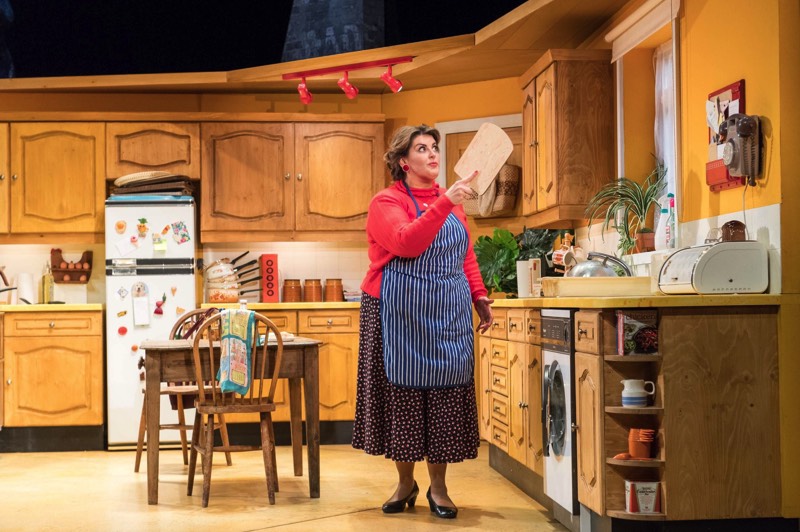
    Shirley Bradshaw is a bored housewife from Liverpool, who has brought up her children, is trapped in a loveless marriage; and who spends her days talking to the kitchen wall and dreaming about Shirley Valentine, the girl she used to be before she was married. So when her best friend offers her the chance to head to Greece for a holiday, Shirley reluctantly takes it, and over the course of her holiday, she rediscovers her zest for life, falls in love with the idea of living and realises that it’s never too late to be yourself.

    PR Supplied

    Jodie Prenger, who is perhaps best known for winning the role of Nancy in BBC’s I’d Do Anything, is impressive in this one-woman show, where she delivers the monologue beautifully; injecting life into the script and forming a believable and likeable take on the character. Her delivery is natural and enjoyable and her comic timing is surprisingly good. It is a formidable task to hold the attention of the audience when you are the only person on stage for the best part of two hours, but Prenger manages it with ease and displays the underlying vulnerabilities hidden beneath the bold veneer of the housewife in a performance which makes you feel like you are catching up with an old friend.

    That said, even with such a good performance from Prenger, the real star here is Russell’s writing itself. Shirley Valentine is a heart-warming story of self-empowerment and a show which remains as beautifully crafted, witty, funny and well observed as it ever was. Throughout this monologue, what Russell creates is an instantly familiar character that you simply can’t help but warm to immediately, as her straightforward look on life is presented via a series of genuine laugh out loud moments which seamlessly flow into moments of calm reflection and sadness as Shirley takes stock of her life.

    But the most surprising thing is how a script about a bored middle-aged housewife written in the mid 1980’s can so easily relate to today’s gay community. What Shirley Valentine realises is that there is an abundance of joy in living your life for yourself, not for others; and that that it is never too late to be yourself or to be the person that you want to be – a theme that many gay men and women will undoubtedly recognise.

    Shirley Valentine is an engaging and enjoyable piece of theatre and, despite the shifting political and social landscape in the 30 years since the play was written, its message still resonates today; and you can’t help but leave the theatre with a warm glow.

    Shirley Valentine is currently at Sheffield Theatres (www.sheffieldtheatres.co.uk) until 29th April 2017 before continuing on its national tour up until 23rd September 2017. Visit http://shirley-valentine.com/ for full details