Category: Answers

  • Who were the Orlando Pulse nightclub shooting victims?

    Here are the confirmed names of those who lost their lives in the mass shooting at Pulse nightclub, USA.

    Stanley Almodovar III, 23 years old

    Amanda Alvear, 25 years old

    Oscar A Aracena-Montero, 26 years old

    Rodolfo Ayala-Ayala, 33 years old

    Antonio Davon Brown, 29 years old

    Darryl Roman Burt II, 29 years old

    Angel L. Candelario-Padro, 28 years old

    Juan Chevez-Martinez, 25 years old

    Luis Daniel Conde, 39 years old

    Cory James Connell, 21 years old

    Tevin Eugene Crosby, 25 years old

    Deonka Deidra Drayton, 32 years old

    Simon Adrian Carrillo Fernandez, 31 years old

    Leroy Valentin Fernandez, 25 years old

    Mercedez Marisol Flores, 26 years old

    Peter O. Gonzalez-Cruz, 22 years old

    Juan Ramon Guerrero, 22 years old

    Paul Terrell Henry, 41 years old

    Frank Hernandez, 27 years old

    Miguel Angel Honorato, 30 years old

    Javier Jorge-Reyes, 40 years old

    Jason Benjamin Josaphat, 19 years old

    Eddie Jamoldroy Justice, 30 years old

    Anthony Luis Laureanodisla, 25 years old

    Christopher Andrew Leinonen, 32 years old

    Alejandro Barrios Martinez, 21 years old

    Brenda Lee Marquez McCool, 49 years old

    Gilberto Ramon Silva Menendez, 25 years old

    Kimberly Morris, 37 years old

    Akyra Monet Murray, 18 years old

    Luis Omar Ocasio-Capo, 20 years old

    Geraldo A. Ortiz-Jimenez, 25 years old

    Eric Ivan Ortiz-Rivera, 36 years old

    Joel Rayon Paniagua, 32 years old

    Jean Carlos Mendez Perez, 35 years old

    Enrique L. Rios, Jr., 25 years old

    Jean C. Nives Rodriguez, 27 years old

    Xavier Emmanuel Serrano Rosado, 35 years old

    Christopher Joseph Sanfeliz, 24 years old

    Yilmary Rodriguez Solivan, 24 years old

    Edward Sotomayor Jr., 34 years old

    Shane Evan Tomlinson, 33 years old

    Martin Benitez Torres, 33 years old

    Jonathan Antonio Camuy Vega, 24 years old

    Juan P. Rivera Velazquez, 37 years old

    Luis S. Vielma, 22 years old

    Franky Jimmy Dejesus Velazquez, 50 years old

    Luis Daniel Wilson-Leon, 37 years old

    Jerald Arthur Wright, 31 years old


    ALSO READ:  49 killed in gay club massacre in Orlando

    ALSO READ: Man arrested in NY after allegedly shouting he’d come back to gay bar “Orlando style”

    ALSO READ: Nearly one-quarter of LGBT+ people afraid to go out onto the scene after Orlando attack

  • ANSWERS | What Does MTF Mean?

    MTF is an acronym often used in the trans community to describe someone’s transition from male to female.

    What does MtF mean?

    The acronym MTF sometimes stylised as MtF, within the transgender community means Male to Female.

    A MtF person is someone who was born with male physiology and characteristics and was brought up as male. When they start their transition to live as their desired gender identity, in this case – female, the process could be described as MtF – but this not always the case.

    FTM or FtM is the reverse of this – Female to Male.

    ALSO READ: What does the I in LGBTQI stand for

    ALSO READ: What does the P in LGBTQIP stand for

    Can you better describe this? Use the comment section below to expand the discussion.

  • What Is IDAHOT?

    What Is IDAHOT?

    May 17th is an important day for LGBTI people across the globe.

    CREDIT: nito-bigstock
    CREDIT: nito-bigstock


    On May 17th 1990, the World Health Organisation (WHO) declassified homosexuality as a mental health disorder. It was a landmark moment for the global gay community – as medical professionals no longer viewed people with sexualities different from the mainstream to be mentally ill.

    It was the first time that a world-wide organisation made the claim – many other countries own medical counsels had declassified homosexuality as a mental disorder many years earlier.

    For instance, in 1968 the UK’s government declassified homosexuality as a mental illness.

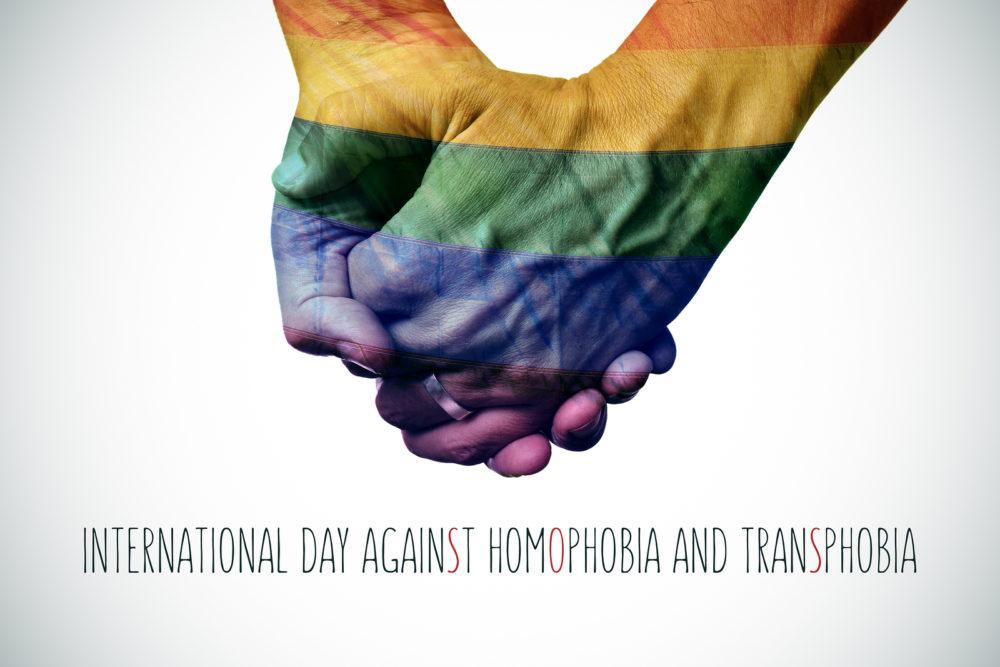
    IDAHOT stands for the International Day Against Homophobia, Transphobia and Biphobia. It was created in 2004 to bring attention to discrimination, abuse and the experience of LGBTI people across the globe. The day is celebrated in 130 countries. There are a reported 1,600 events organised to mark the day.

    It is not a centralised campaign, meaning that people from around the world are encouraged to celebrate the day in any way that they wish.

    Originally the day was known by the acronym I. (International) D. (Day) A. (Against) HO. (Homophobia). In 2009 the word transphobia was added, making it: IDAHOT, however it is still pronounced “Idaho”, like the US State, by most people.

    In 2015 Biphobia was added – but the acronym has not been changed which the organisers of the day have called “an imperfect solution, but a necessity for communications consistency.”

    Use the comment section below if you’d like to add to this article.


  • Where In The World Is Homosexuality Punished By The Death Penalty

    Where In The World Is Homosexuality Punished By The Death Penalty

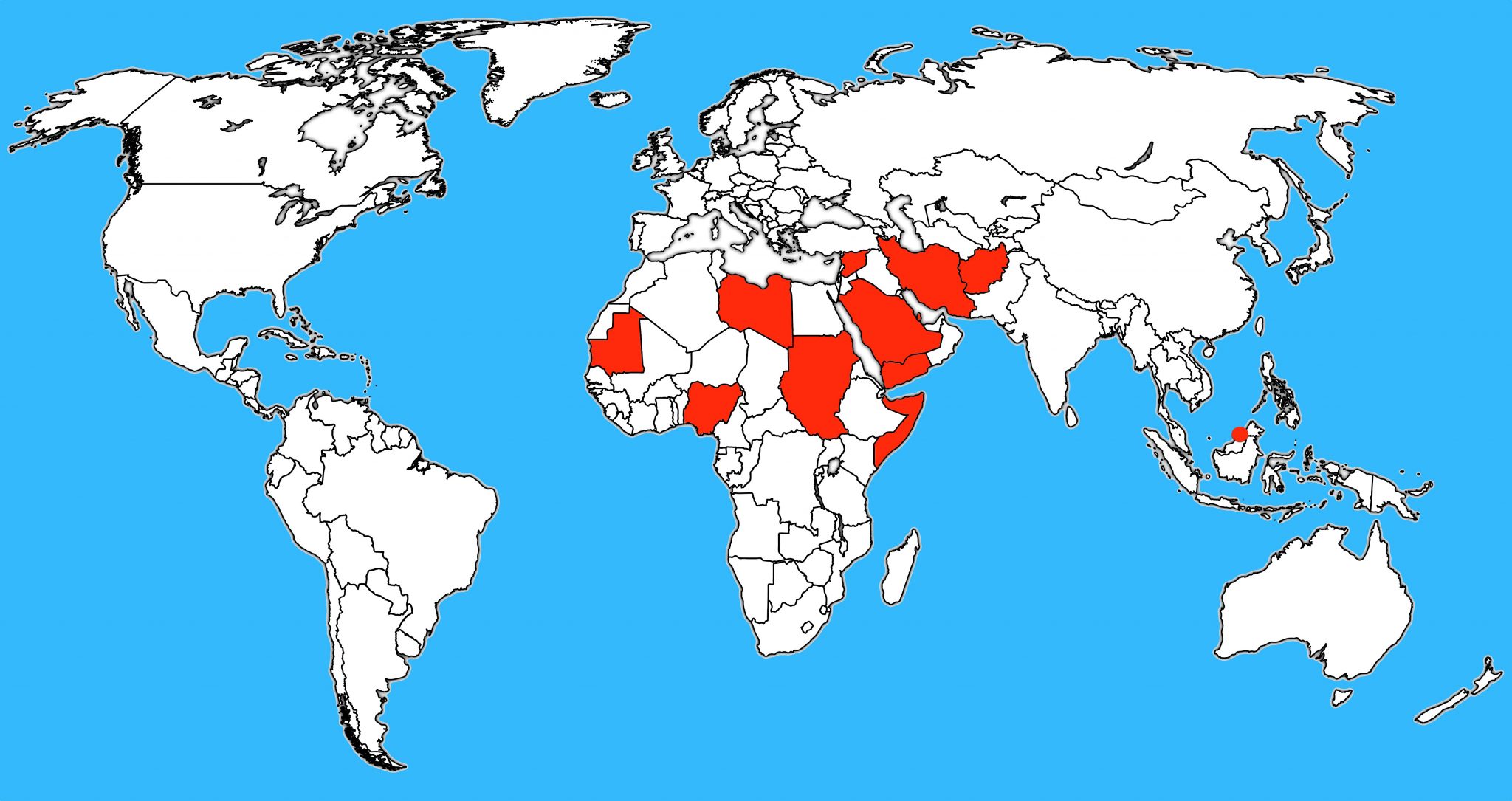
    There are many countries and states where homosexual acts could land you the death penalty. Of these countries, all are located in Central Africa or in the Middle East.

    Where In The World Is Homosexuality Pubishable By Death
    CREDIT: TheGayUK

    There are the countries places on earth that have specific laws which call for the death penalty of those who are found to have engaged in homosexual acts.

    Afghanistan

    Men could face execution but are more likely to receive long prison sentences. No executions are known to have been handed out since the end of the Taliban rule.


    Brunei*

    Gay men in Brunei could be stoned or given 10 years in prison if found guilty of homosexual acts.


    Iran

    In Iran gay men can be lashed up to 74 times for “immature men” and the death penalty for mature men of sound mind – and where the acts were consenting. Women can be lashed 50 times and can face the death penalty after their fourth conviction.


    Mauritania

    Homosexuality is against the law in Mauritania and could attract the death penalty however there have been no public executions since 1987.


    Qatar

    In Qatar, gay men may face execution if they are Muslim otherwise men can face fines and a prison sentence which lasts 7 years.


    Saudi Arabia

    A second conviction of homosexuality in Saudi Arabia will land a death penalty. For first offence, men can face fines, castration, flogging, prison and torture.


    Sudan

    Homosexuality has been illegal in Sudan since 1899. Death penalty occurs on the third offence for men and four offence for women.


    Yemen

    Married men can expect to be stoned to death if caught having same-sex relations. Unmarried men will receive 100 lashes or one-year imprisonment.


    Libya

    Gay men could face death in Libya.


    Nigeria

    Homosexuality is illegal in some states of Nigeria and could attract the death penalty. These states include: Bauchi, Borno, Gombe, Jigawa, Kaduna, Kano, Katsina, Kebbi, Niger, Sokoto, Yobe, and Zamfara


    Somalia

    Homosexuality is illegal in Somalia and could attract a death penalty.


    Syria

    The actual penalty that gay men should face for homosexual acts is a prison for up to 3 years, however, due to the rise in ISIS a highly advertised death awaits those found guilty of engaging in same-sex sexual acts.


    Iraq

    Despite homosexuality not being illegal in Iraq, there have been reported executions of gay men in ISIS controlled areas.


    * Brunei is a Sovereign state and not a country.

    There are some countries where although capital punishment might not be constitutionally ratified there are cases where gay people have been killed because of their sexuality.

  • ANSWERS | What Does The P In LGBTQIP Stand For?

    In the ever-growing initialism for the LGBT+ community, new letters are being added all the time. Ever wondered what the P in LGBTQIP stands for?

    What Does The P In LGBTQIP Stand For?


    Pansexual.

    Pansexuality is described and identified as a: romantic, sexual and emotional attraction to people of any sex or gender identity.


    The Oxford English Dictionary describes pansexuality as:

    not limited in sexual choice with regard to biological sex, gender, or gender identity.”

    ALSO READ: What does the I in LGBTQI stand for?

    ALSO READ: What does the F in LGBTQIF stand for 

    Pansexual people may describe themselves as gender-blind, meaning that a person’s gender identity isn’t or might not be a deciding factor in their attraction, and some may consider a person’s gender to be irrelevant and may reject the gender binary that exists in society.

    Pansexuality shouldn’t be confused with bisexuality, which is the sexual, emotional and romantic attraction to both males and females.

    So where did the word come from?

    The word pan comes from the Ancient Greek word which means “all, every”. The words Pansexual and pansexualism are thought to have first been used in 1917 – credited to Sigmund Freud who said, “that the sex instinct plays the primary part in all human activity, mental and physical”.

    Any famous Pansexuals?

    Well, probably the most famous person who described their sexuality as pansexual is Miley Cyrus who came out to her mother as pansexual at the age of 14. During a facebook chat in 2015 with fans Miley opened up about her sexuality saying,

    “I never want to label myself! I am ready to love anyone that loves me for who I am! I am open.

    Pansexual day?

    The first ever pansexual day was celebrated on the 8th December 2015, where the hashtag PansexualDay trended for 24 hours.

    For more information about pansexuality take a look at http://thepancommunity.tumblr.com/faq


    Can you expand this article? Add your comment below.

  • Heteronormative : What Does It Mean?

    You may have heard the word Heteronormative being thrown around and wondering what on earth it means.

    Heteronormative : What Does It Mean?

    Heteronormative, or heteronormativity is a word used a lot in connection with the LGBT experience. It refers to what is normally (normative) expected from society – which is, by and large, made up of mostly heterosexuals (hetero).

    So when you blast those two words together you get one that describes the normal, average way of doing things. Basically the stuff of Hollywood movies: boy meets girl, they fall in love, make children and the cycle continues.

    It is also defined as the view that promotes a heterosexual lifestyle as the normal or preferred sexual orientation and that others are wrong or deviant.

    It’s the idea that men and women fall into two very neat and distinct genders and sexuality roles.

    It is seen, largely, as deeply marginalising by the LGBTI community.

    It was coined or at least popularised by Michael Warner in 1991.

    Heteronormative behaviour could include:

    • Getting married (to someone of the opposite sex) in a Church, with bridesmaids, Father of bride and best man speeches…
    • Him climbing up the corporate ladder while she stays at home having kids.
    • Following gender expectations like: He wears trousers, she wears dresses (frilly ones with a lace hem).
    • He earns more, she makes super desserts using Angel Delight.
    • Asking why on earth the gays need a god damned pride and why can’t straights have a pride.
    • Watching a Hollywood movie knowing that the guy saves the day, gets the girl and live happily ever after.
    • Having 2.4 children.
    • That men don’t do nappies.
    • Picket fences and all that…

    As you can see, from my not so exhaustive list that basically being heteronormative is like living in the 50s. Fantastic for brand new cookers, fridges, the dawn of the jet age and brand new inventions, not so good for living your life how you’d like to – straight or gay, male or female.

    Want some further reading? Click here

  • Which States Still Have Anti-Gay Sex Laws?

    Despite there being a Supreme Court ruling that anti-sodomy laws are unconstitutional, 12 States still have anti-gay sex laws.

    (more…)

  • Why have you put “gay”, “bisexual” or “trans” in your title

    At THEGAYUK we’re passionate about visibility and the eradication of LGBTQI erasure.

    We think it’s important to use the words, gay, lesbian, bisexual or transgender in our articles, in a positive and non-perjorative way, after all we are an organisation that reports (predominately) on LGBTQI news.

    We feel that there’s enough LGBTQI erasure in the media as it is – and therefore if a celebrity, politician, VIP or person that the article is based around idenitfies as LGBTQI we will use gay, lesbian, bisexual or transgender to ensure that our community gets visibility on site.

    We also believe it adds important narrative to the story and it is of interest to our readers to know how a person identifies and that they may have shared experiences.

  • ANSWERS | What Is A White Glove Bottom?

    If you’ve heard the expression he’s such a white glove bottom and wondered what it is – we have the answer for you.

    What Is A White Glove Bottom?

    A white glove bottom is a guy who won’t bottom (be penetrated by another guy) unless he’s completely sure he’s completely clean if you get our drift. So basically he’s the type who will most probably douche or use an enema before penetration to ensure there’s no mess… ever.

    Not every man who bottoms is a “white glove bottom” – if you know your body and have a good diet it isn’t always necessary to be excessive with your cleaning.

    But if you’re worried about mess, use a condom. These things happen and it’s not the end of the world.


    OTHER QUESTIONS: HIV | WILLY WONDERS | HOLES | DOING IT | STIs | LUMPS & BUMPS | BACK TO SEX CLINIC HOME PAGE


    Got a problem you’d like advice on?

  • ANSWERS | What does the F In LGBTF Stand For

    So what does the F in LGBTF actually stand for?

    What does the F In LGBTF Stand For

    The F in the LGBTF initialism stands for “friends” sometimes also known as Allies – although Allies might have a little more activism element to them. Friends are those people who don’t identify as being Lesbian, Gay, Bisexual or Transgender but want to be supportive of the LGBT rights movement.

    It’s not that common to see LGBTF and is a relatively new addition to the LGBT initialism. There has been criticism of the term with some asserting that friends or allies do not need to have a letter in the LGBT initialism.

    Can you expand this article? Use the comment section below to add your thoughts.


  • How Gay Friendly Are The Labour Leadership Contenders?

    As the Labour party prepares to vote on its next leader, we look at the four candidates to see what their gay-friendly credentials are like.

    Andy Burnham
    Burnham has been an MP since 2001, in that time he has good voting record on LGBT+ issues, except Votes on adoption in May 2002, for which he was absent, because of the birth of one of his children and in 2008 he voted for bills which put forward: ‘fertility treatment requires father and mother’ and ‘fertility treatment requires male role model’. Explaining his voting he said to Pinknews in 2010: “Everyone should be able to draw on a father figure and a mother figure. That isn’t to say I don’t support IVF for lesbian couples.”

    Jeremy Corbyn
    Corbyn has been an MP since 1983. He has consistently voted positively for LGBT+ laws and policies. However in 2003 he was absent for the vote on Local Government Bill — Maintain prohibition on promotion of homosexuality (Section 28), he was absent for a vote on Relationships (Civil Registration) and a vote on Adoption and Children Bill (Programme) — Consideration and Third Reading

    Liz Kendall
    A relative newcomer as an MP for the Labour party. Kendall has voted positively for LGBT+ rights since 2010. The same-sex marriage bill is the one major piece of law making she has voted on – for which she voted positively.

    Yvette Cooper
    Cooper has voted positively on every piece of legislation affecting the LGBT community in her time as an MP. She was absent in 2001 for a vote on Relationships (Civil Registration), she was also absent for a vote on Civil Partnerships Bill [Lords] — Third Reading.