Category: Topics

  • OPINION | Fat?

    Recently, myself and a friend had a photo taken with a celebrity; he was a reality TV star, porn performer and current member of the dream boys.

    He was sunbathing when we met him and was wearing only a pair of shorts. I was wearing an open shirt and a t-shirt underneath. Of course, he was really charming and looked great and I joked with him and my friends that this would be great for my self-esteem. This would prove worryingly accurate.

    Let me just explain, I’ve always been confident in my own body, I’m not chubby I’m not big boned. I’m fat. I’ve always been overweight since being a teenager and it had been a journey to become comfortable in my own skin. I’ve not exactly led a lazy lifestyle; I didn’t have a car so I walked everywhere. I previously enjoyed hiking and would often walk 10 miles without breaking a sweat. I’m a bigger guy but I’m healthy. I had tried joining gyms and different exercise classes. I even experimented on every fad diet over the years and my body has altered but I’ve accepted that whatever I try I will always be a little bit fat. This can put me at odds within the gay community as I don’t exactly fit into any category, I’m never going to be wearing skinny jeans and a tight t-shirt but apparently I’m not big enough to be a chub.

    Since I stopped fighting this and accepting this I’ve become more confident as a person, like my sexuality; it’s who I am. When I first met my boyfriend and began dating I asked if he was a chubby chaser in a jokey manner. He responded that he thought this was an offensive term and that I wasn’t fat. He said that he loved my body and would hate for me to lose weight. I obviously love him.

    A few years ago I had joined a local gym to get in shape for a hike that I was doing for charity. I was offered a free session with a personal trainer to show me how to work out properly. During the session he made several remarks about how my self-confidence would increase as I lost weight. He also said if I was single, that if I was more toned than I would have no problems with the ladies, After one remark too many I told him I wasn’t that interested in what weight I was or how fat I am, I was there to get healthier for the task of raising money for cancer research, I stated to him that I probably had a better body image than most of his clients if his idea of coaching was to call them fat, I also told him I was gay, know your audience.

    Coming back to the here and now, I am still confident in myself and the body that I own, realistically I’m not a stripper or model, the only six pack I will ever own will be beer. I don’t train every day nor am I ever likely to. Of course I have had snide remarks from vicious queens over the years because of my size but they don’t live in the skin. The only opinion I truly care about is the person who stares back at me in the mirror, because I have to look him in the eye for the rest of my life.

    Confidence is not an absolute it is a state of mind. I had a wobble and momentarily compared myself against someone else and came up short in my own mind. So what did I do? A couple of days later I was supposed to go swimming before work but felt unmotivated to get up.

    I talked to myself sternly, it’s ok to feel unhappy with your body from time to time, but there is only you that have the power to make any change mentally and physically. I used the negative energy to drag my arse out of bed and into the pool.


    Opinions expressed in this article may not reflect those of THEGAYUK, its management or editorial teams. If you’d like to comment or write a comment, opinion or blog piece, please click here.
  • OPINION | What is in the label?

    “You know Charlotte? The girl who can relate anything in life to something that has happened in The OC”

    Even though we may not want to admit it we all place labels on others. Within every group of friends there are characteristic, personality traits or specific physical features that define someone. Although these are positive ways to describe others, should we define someone because of their sexuality?

    You may be an excellent sportsperson or a talented comedian. You could be the next Picasso or your devotion to charitable work stands out to others. Now, what would happen next if someone forgot all about what defines you and just referred to your sexuality?

    Who agreed it was acceptable to define an individual based on their sexual preference?

    Whilst being surrounded by those with limited views on homosexuality it confused me. I wondered who had made the rules of life where a man had to find a charming princess and why couldn’t I find a prince charming?

    After coming out to family and friends I found that although I never changed – the opinions of others changed.

    My friends when referring to me with others would use the term “gay”, and I couldn’t understand how the labels that defined me before disappeared.

    Gay is merely a synonym for homosexual, which breaks down in Latin to mean same and sex. Since the late 1960s gay has been used in replacement of the label homosexual. Members of the LGBT took the label of gay as it felt more positive than the latter term homosexual which gave a more clinical feel.

    Labels define us all in positive and negative ways but why should we allow people to overlook our other qualities just because of sexuality?


    Opinions expressed in this article may not reflect those of THEGAYUK, its management or editorial teams. If you’d like to comment or write a comment, opinion or blog piece, please click here.

  • OPINION | Porn, does it eventually bite you in bum?

    In the news this week is the story of young ballet dancer, Jeppe Hansen. Hansen was on a scholarship with the Royal Winnipeg Ballet School, when he was told there was no longer a place for him, it having been discovered that he had appeared in gay porn movies, under the name Jett Black.

    Quite how the Royal Winnipeg Ballet officials discovered this has not been revealed, but the company has stated it has policies and procedures in place, that state that any dancer who wishes to partake in ‘side projects’ must gain approval from the school director. I do wonder, though, if the school would have been quite so intransigent if it had been discovered that Hansen was working as a waiter or even dancing in a fringe production of a musical somewhere.

    There can be little doubt that it is the nature of Hansen’s ‘side project’ itself that is the problem, not the fact that Hansen, like many students, was doing something extra-curricular to fund his education. The problem appears to be sex, not only sex, but public sex, though we should remember that Hansen was doing nothing illegal. He was just appearing in a movie and getting paid for it. One has to ask if they would have had the same problem, if he’d got a role in a war movie which required him to kill and maim people. No doubt he’d have been given a warning and allowed to continue his studies.

    On the other hand it is a little disingenuous of Hansen to refer to the porn he did as art, a statement that only serves to cloud the issue. Though he may have a point, I’d hardly call any of the porn I did art, and, anyway, the whole question of what constitutes pornography, and what erotic art, is probably food for a whole other article. Hansen banging on about his artistic freedom being breached hardly helps, I feel. The issue seems to me much simpler.

    I certainly doubt the Royal Winnipeg Ballet School’s officials wrestled for one moment with definitions of art and pornography. They were just “shocked” and “appalled” that one of their students was having sex on film. But this is where I have a problem with the officials. My reaction to the news was, predictably no doubt, so f**king what?? I would imagine he made a lot more money for a few hours’ being filmed having sex than he would have done working as a waiter, and probably had a lot more fun doing it too. Seems to me he was just being inventive. He was given an opportunity and took it.

    Am I so completely out of touch with how normal people would react? Not as much as you might think, judging from most of the comments left by readers of the news article in gaystarnews, who all seemed to think the Ballet School over reacted.

    As far as I can see, the problems society, and the mainstream media, have with porn are the same ones they have with sex; problems derived from outmoded religious views and the deep seated shame those views create.

    Some of you may remember that, a few years ago, The News of the World revealed that Max Mosley enjoyed indulging in a bit of SM sex. Mosley, quite properly considering that what he got up to in his private life was nobody’s business but his own took out a privacy case against the News of the World, which he won, though, by this time, his reputation was in tatters anyway. The law agreed that The News of the World had breached his privacy by revealing his sexual peccadilloes, but it hardly changed people’s attitudes to what he was getting up to. Again, when the story first broke, my attitude was, so what? Why is this even a news story? Is it just that most people’s sex lives are so boring, they can only get vicarious pleasure out of reading about other people’s, and then, of course, condemning them?

    On the subject of porn, internet figures suggest that most of us are looking at it, but very few would admit to it. We know that most of the people who have at some time looked at internet porn are men, (8 out of 10, compared to only a third of women), but it’s fair to assume that most of them don’t tell their wives or girlfriends. So, although watching porn is common, it’s still not considered acceptable behaviour, whereas watching movies in which people get blown to bits is. Taking the above figure as the norm, that would suggest that, out of the current 503 male MPs in the House of Commons, we can assume that at least 400 of them have, at one time or another, watched internet porn. These same MPs will publicly voice their concerns about the easy availability of internet porn and talk about ways of stopping it. Ah, how we love dual standards.

    Returning to the original question as to whether doing porn can come back and bite you in the bum, then, I am sad to say, that in our present society, the answer is probably yes. In our gay world, doing porn might be becoming more and more acceptable, and indeed more and more gay men are enjoying sex on camera, many being happy to do it just for the thrill, rather than the money, but they really should be careful about who gets to watch it. I suspect many of them would lose their day jobs if their bosses ever found out. Yes, it seems totally wrong to me and I can’t help asking why doing porn can possibly be seen to be a problem for a budding ballet dancer. Are people really not going to go and watch him dance if they know he’s had sex on camera? I suspect the reverse would be true. Oh well, clearly society hasn’t caught up with me yet. So a bit of advice. Unless, like me, you can largely opt out of society, admit to all you have done and refuse to be ashamed, it’s probably best that, for now, you give up the idea of doing that porn movie. Either that or wear a mask.


    Opinions expressed in this article may not reflect those of THEGAYUK, it’s management or editorial teams. If you’d like to comment or write a comment, opinion or blog piece, please click here.

  • OPINION | Out of line, online; Racism and gay dating

    No Blacks. No Asians. No Queens.

    I bet you already know where these quotes come from. I am also pretty sure you’ve seen them. Yes, these are common quotes from Grindr profiles. What’s worse is that I imagine you can think of more grindr, gaydar, gayromeo profiles with further offensive and racist remarks on them.

    But surely we can discriminate on who we fancy? Of course.

    We must have the right to decide what shape, size and colour the dick is we choose to squeeze, suck or sit on? Without a doubt.

    And if I want to say what I don’t like then it saves time doesn’t it? Perhaps.

    So if I don’t fancy a black or white guy then I have the right to say so don’t I? Maybe.

    But there are ways of saying things.

    If you in fact only like Arabic men, regardless of your own racial or ethnic identity then why not say so rather than banishing other minorities outright. Equality and Diversity principles do not dictate that you have to be tokenistic in your relationships or sexual exploits but it does support a community where everyone feels included. With the social battles fought by the LGBT community in the past sixty to six hundred years surely we can be slightly more embracing of difference.

    Not into camp. Not in fairies, sorry.

    This is another angle of exclusion on ‘social networking’ apps frequented by the predominantly gay and bisexual male. Campness is labelled as undesirable, separated from the profile holder. He isn’t into it, he doesn’t like it. If you are camp he doesn’t like you – it’s there for you to read. How does it make you feel?

    Maybe you do sprout wings and poop glitter? But that’s who you are – should you change it for the faceless, headless body? No, but it makes you feel badly about yourself and he still hasn’t found himself a date because the butch bull he is looking for actually doesn’t like guys who bully and discriminate.

    So in summary, let’s start with the basics: How not to be a racist in five easy steps.

    1) Do not use racist language. We all know what they are. No one thinks you’re big or smart or edgy for using them. And being practical, not many guys invite racists round to their houses.

    2) Put what you like, what you ARE into. It’s more positive and inclusive and appealing to a wider range of people. Saying you like something, or love something is much more attractive than associating you with ‘No this’, ‘No that’ or other negative concepts.

    3) Be polite. If someone messages you that doesn’t give you butterflies in your stomach (or lower) then just say thanks but no thanks. Most people will get the hint, and if they don’t just block them. It’s easier than resorting to a racist rant.

    4) Be inclusive. Try not to see people as one dimensional. Not all ethnicities are the same. Look at your arm – it everyone with that similar shade the same as you? Do they eat the same food, socialise in the same way, believe the same as you do just because your skin matches? Of course not, so don’t apply this ignorance to other arm shades.

    5) Challenge yourself. How many of your friends are the same as you? Do they all look the same, come from similar backgrounds? Most are probably the same age. How about bringing some diversity to your life? Speak to someone new, someone with maybe a different experience, a different outlook, a different skin colour – they might be able to shed new light on life. How does your coming out experience compare to the Asian guy 200 meters away or the polish guy four roads away, or the twink smiling at you at the bottom of your screen?

    Opinions expressed in this article may not reflect those of THEGAYUK, its management or editorial teams. If you’d like to comment or write a comment, opinion or blog piece, please click here.

  • OPINION: Going Gay For Pay

    With the release of Behind the Candelabra, Michael Douglas and Matt Damon are playing Liberace and his Lover. So is it right that straight actors are portraying gay characters in film? Does it say anything about the diversity of the cinema industry?

    Hollywood has a long history of straight actors playing gay characters; Philadelphia, Milk and Brokeback Mountain all have Hollywood A Listers portraying gay characters. All of these films were hugely successful and nominated for multiple awards. Maybe it’s cynical to suggest that portraying a gay role in a serious drama is a guarantee for an Oscar nod. It’s par for the course now in Hollywood, to play gay is to show your acting versatility and ability to inhabit a characters space that is different from your own. There are cases of openly gay actors playing gay characters. In Gods and Monster’s Sir Ian McEwan portrays James Whale, the Frankenstein creator from the golden age of Hollywood. Rupert Everett has spent most of his career as the gay side kick comedy relief.
    But is this any different to able-bodied actors playing disabled characters? Glee has a character using a wheelchair user portrayed by an able-bodied actor. How is this different? Looking further back, is this the modern day equivalent of the black and white minstrel band? , where white men would “black up” in order to portray black performers. This practice is now longer thought to be politically correct and is racially insensitive.
    Of course, gay for pay is an established part of the porn industry, hitting a Google search reveals literally thousands of hits and literally thousands of straight guys willing to go “gay” for the first time. Of course, this is all construct, it’s a known fact that that gay porn pays more than straight porn it can be an attractive prospect to a broke young guy. Of course, there is the issue of exploitation, everybody involved are consenting adults and they have been paid for their involvement. Are the viewers’ being exploited in their desire to seek straight guys having sex, Yes, but that again comes down to personal choice. The beautiful thing about capitalism is that people are able to show how they feel about a commercial product by either purchasing it, and it looks like business is booming.
    With porn, gay for pay is more problematic, the term implies that there is only straight or gay. It leaves no allowance for bi-sexuality, guys maybe willing to have sex with other men on screen for money but might not do so in their private lives. I personally feel that people’s sexual orientation is irrelevant when it comes to performance. The person is not representing himself or herself any more than someone in a film or a soap opera is. The sex for is there as spectacle and simulation. When watching two guys having sex it can be that there is no chemistry between the guys and they are going through the motions with only the paycheck in mind. Does it matter what someone is up too off screen or who they go home to?
    So should we be offended by all of this? I think realistically if we are we’re not going about it in the right way, the best power against the entertainment industry is to vote with your money. If you believe that going gay for pay is morally wrong then don’t watch any of the films that mainstream Hollywood puts out. It may be the case that the best actor for the job is cast. The involvement of Marque names is to ensure the film is financed and made. For me it feels like a dangerous statement to say that only gay actors are allowed to play gay characters. What’s more important to the fans of Liberace that his story is told in an entertaining way by the best actors suitable to the role or that the actor playing him happens to be gay.

    Opinions expressed in this article may not reflect those of THEGAYUK, its management or editorial teams. If you’d like to comment or write a comment, opinion or blog piece, please click here.

  • OPINION | Somethings Change, And Some Things Stay The Same

    In recent time we have seen through various media channels, the march for equal marriage seems to be marching globally and at an ever increasing pace.

    I don’t know about anyone else but when I look at each news announcement I feel a sense of excitement and joy that the world takes another step towards a more fair and just world.

    But at the same time, how big are our steps forward? What do they realistically mean to us on the ground that lives each day with the problems and issues that (currently) come with being LGBT? Have things changed that dramatically over the past 40 years? I’ll confess at this point that I am 26 so my accounts of what occurred in the 70s and 80s are based on history and what friends who lived through those periods have told me.

    In the last 50 or so years the LGBT community has seen many ups and downs. Starting with the Stonewall clashes in 1969 right the way through to the bombing of the Admiral Duncan in 1999 and the “Straight Alliance” marches of today. During the 70’s and 80’s homophobia was widespread and very much an ‘accepted’ legitimate view by most governments. And that isn’t just in this country, but all over the world. ‘Coming out’ was very much a life or death decision for many in the LGBT community. Most chose not to and either buried their feelings or lived a “double life”. There was very little in the way of support and counselling and even less in the way of public support and promotion.

    Having said that, during all this darkness and struggle the LGBT community was exactly that; a community. From stories that I have been told and recollections from others who lived in London and Manchester at those times, the communities there stuck together to help each other out. If there was an assault they would rally round each other or if a “gay-friendly” bar or pub was under threat of closure they would come to support and boost numbers. By all accounts, the community was so underground but at the same time so close-knit that it even gave rise to the infamous “hanky code”. (For those that don’t know if it, I highly recommend you Google it. It’s very… interesting!).

    So in the 21st century, the age of information and connection where are we? Are we any closer to that Holy Grail that is equality? Well, let’s start with the last point; the hanky code and ‘underground’ culture. On the whole, I think this has died out or is dying out. With the establishment of “gay bars” or gay-friendly bars, there is more choice and selection for venues to attend and for the community to meet in. Social media and the wonder that is Grindr has made interacting with each other far easier and in some ways more open. Although social media isn’t everyone’s cup of tea you have to give it credit for opening up the community even further.

    Social media has also meant that the confused teenager or middle aged father of 2 now has an outlet to explore or vent what feelings or inklings they may have. Where would they have gone before to find out more about their feelings? A public toilet? Their local gay bar (if they have one) where they are watched as they go in and out? Not exactly options that fill you with safety and reassurance. However social media offers an outlet where they can explore their feelings, relatively safely and in their own time and terms. Surely that is a step forward?

    How about the sense of community and togetherness? Has the LGBT community gelled together or are we growing further apart? In my experience, I think we are growing further apart. In hard times (financial or otherwise) I have seen several different cases where local bars, businesses or organisations have had to close because the local community hasn’t been there to support them. The old community are still there and still have those principles (myself included) but the new age community don’t seem to have or share those principles. (I apologise if I am doing them an injustice).

    Pride seems like an opportunity to get drunk and sleep with people you otherwise wouldn’t have been able to; well that at least was my experience of it. Pride should be about the community coming together and taking pride in who we are and what we stand for. I could bet any money that at any pride in any part of the world will be at least 2 people dressed in attire that would suit “Madame Helga’s House of Pain”. When did that become part of being gay? And when did that become making a stand for equality? Children attend these pride events… they shouldn’t be exposed to “backless chaps”. But I digress… the point is, what has pride become? I don’t think it’s about pride in who we are and our community anymore, which is a great shame.

    Nationwide and even globally the equality movement is picking up pace and the message seems to be taking hold. This is something to be grateful of and continue to support (and I do) but always be aware of what is happening on the ground. Prejudice, inequality and homophobia are still rampant in this country and we should take pride in all those that work to stamp it out and hope that that message never changes.

    For those of you with a keen film mind, the title of this entry comes from a quote from the Matrix movies. I was watching them the other day and the phrase stuck in my head as something fairly apt. No matter what the age or period, the notion that some things change and some things stay the same still holds true.


    Opinions expressed in this article may not reflect those of THEGAYUK, its management or editorial teams. If you’d like to comment or write a comment, opinion or blog piece, please click here.

  • OPINION | Has pride lost its way?

    Pride events have been happening in the UK since the 70s, with new ones currently popping up every year. But have they lost their original meaning? Are they now just about getting drunk and partying?

    I think so.

    For me Pride events are essential. They provide an opportunity for the LGBT community to be visible and show the world that they exist in many forms. However I do feel that over the years the original meaning of Pride has been lost. When the first Prides started taking place all those years ago it was a human rights and political movement aimed at showing we exist and want the same rights and freedoms as everyone else. Cut to 2013 and it seems to be a big party and the activism slant appears to now be a small part of the wider occasion, certainly from the Pride events that I have been to. They are now huge commercial events and people only seem interested in what performers there will be and which club to go to in the evening. It really saddens me because I believe there is so much more to Pride.

    This year I went to Birmingham Pride with the LGBTQ youth support charity that I run. We marched in the Pride parade with placards referencing comments made by MP’s in the marriage equality debate. It was slightly tongue in cheek but the meaning was clear. It was about politics and the rights of LGBT people. It was a protest. It was also probably the best Pride experience I have had. I felt like I was spreading an important message and doing my bit for our rights and freedoms. Admittedly I did then party a bit and watched the Cheeky Girls (to my slight embarrassment I am a huge fan), but the day wasn’t all about the party.

    With all of those things in mind, I began setting about organising my county’s first ever Pride event, Warwickshire Pride. There’s a growing buzz around it and many people are asking who will be performing (Chica Latina from Britain’s Got Talent if you must know), but the emphasis of this Pride is on celebrating diversity and highlighting what Pride events were originally about. The strap line for Warwickshire Pride is ‘celebrating diversity in the community’ and that’s what it’s all about; bringing people from different communities together and demonstrating the struggle that LGBT people have had whilst also showing the massive progress there has been. Yes, there will be performers and entertainment through the day. Yes there will be a huge after-party when the sun sets. But Warwickshire Pride will primarily be a peaceful protest with a message.

    Warwickshire lags behind many parts of the country, with much homophobia and opposition to the progression of our rights (I’ve personally been beaten, abused and barred from a pub for being gay), so perhaps that is a reason why I feel the need for this Pride to have a big element of activism as part of it, but I truly feel that it is an element that Prides up and down the country would benefit from introducing more of.

    Pride started off as a protest. It still should be.


    Opinions expressed in this article may not reflect those of THEGAYUK, its management or editorial teams. If you’d like to comment or write a comment, opinion or blog piece, please click here.

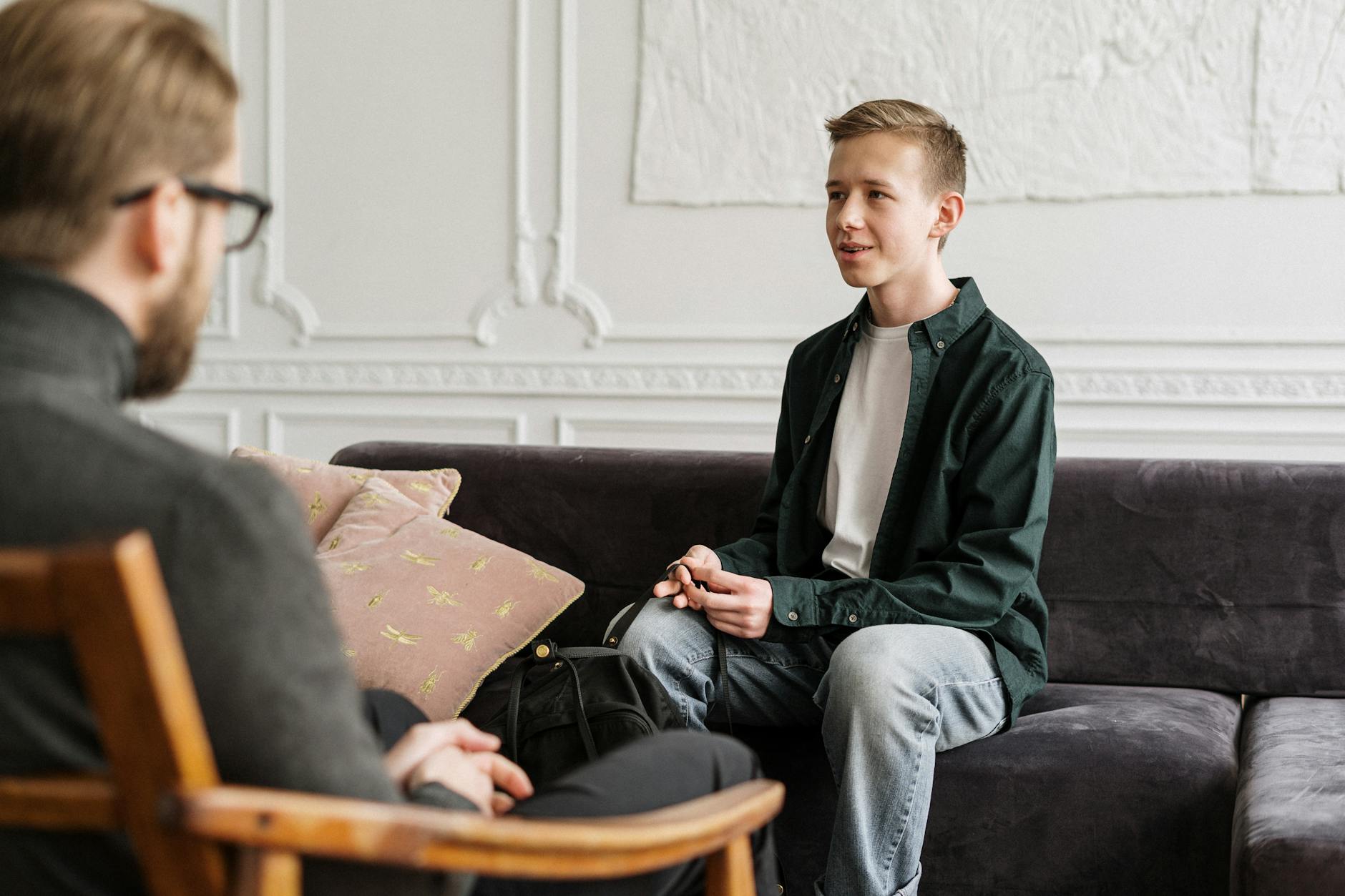
  • OPINION | Out In The Therapy Room

    OPINION | Out In The Therapy Room

    I know what you may be thinking about; you have your own secrets and your own reasons for coming to counselling. Things that you’ve bottled up and repressed for years. Ashamed to talk or speak of who you secretly you’re attracted to.

    You feel that to express these fears they become real, no longer to be ignored. That I’ll judge you on some level. You’ll be less of a man. I won’t value you the same as human being.

    Of course I’m a man as well; maybe I remind you of your father, brother or the boy who used to pick on you at school. You’re nervous about being raw and vulnerable with me, afraid of my response. What you may not have considered is that I am gay too.

    I am the counsellor that you see sat before you. Confident. Calm and friendly. However before I became this person I was sat in the same chair that you are, worrying about the same things. I understand because like many gay therapists, I was a client first. I will also have been in the position of speaking to a therapist about my sexuality – positive or negative- and appreciate how much courage it can take to have this conversation.

    If I told you that I was gay would the worry about telling me about yourself disappear? If you knew about my coming out experiences, would you believe that I could empathise with the struggles you are facing?

    If you stopped caring about my reactions and judgement, Would you begin to care for yourself? You might not have come into counselling to talk about your sexuality but does it feel different to feel that it is not off the cards if you want to. I accept that counsellors do not need to be a man or gay to be able to work with you but knowing that I have walked the same roads as you may bring a different kind of assurance and the feeling that when I say “I understand” that my response is more heartfelt. Unlike talking to your father, brother or friend, there will be no judgment on the things that have happened to you that you still carry today.

    If I told you that I was a member of an ethical body that has concluded that gay “conversion” therapies are unethical and anyone practising them would face disciplinary action. Does that help to assure you of the men and women that have chosen to stand together with regardless of sexuality?

    Of course the questions that are asked here are only for you; I don’t need or expect an answer. But there are Gay Counsellors out there who are proud of their sexuality and confident enough to recognise the power it holds in the counselling relationship. We use the term “Gay affirmative” to show that we embrace the positive aspect of being true to yourself and value the power it holds in the counselling relationship.

    The power comes from letting you know that I can relate to some of the experiences you may choose to bring to the time we share together. I can understand the power in being able to express freely, who I love, how I live and who I am.

    Opinions expressed in this article may not reflect those of THEGAYUK, it’s management or editorial teams. If you’d like to comment or write a comment, opinion or blog piece, please click here.

  • OPINION | Now, but, then

    “It’s a funny old world…” Supposedly the words of Margaret Thatcher to her cabinet on her resignation and, well, I suppose like many, I have found my thoughts turning more reflective points in the last month.

    I’ll state here and now that I was a great admirer of the Iron Lady and, yes, I voted to keep her in back in 1987. We’ll none of us pretend that she was perfect and I’m sure someone will mention Section 28, but how many will recall that she was one of the last three surviving Tory MPs who voted to decriminalise us in the 1960s?

    I think then, perhaps rather naively, that I was rather surprised to be on the receiving end of some really nasty homophobic abuse at a point when so much has changed since that vote almost 50 years ago. We know now that sexuality is innate, not chosen, as hard wired as the colour of one’s eyes. I firmly believe that, had such scientific proof been available when our only scientist Prime Minister was in office, Section 28 would never have been passed. Yet, although knowledge has changed, attitudes haven’t and thank brings me back to the abuse I received.

    It was such a modern form. Not for me the cat-calling in the street, or sneers in the staff room (they wouldn’t dare!); it was over twitter of all places, about as public as one can be in the social media. Now I am no shrinking violet, but there are words one should never use, and that was used in the insult, as was an emoticon of a pile of poo – how erudite! His parents must have been so proud. Yes, I was somewhat shocked and felt “yucky” afterwards and it did make me wonder how it must feel, in this day and age to be confronted face-to-face. For those of you wondering, yes I did forward the tweet both to Stonewall and my local police, strangely though, it appears I would have to make a complaint over the telephone and that’s where I hit that barrier that stops so many from reporting hate crimes. I was embarrassed and too ashamed.

    I realised that I did not want the interference and the intrusion into my world. What if they decided that I was in the wrong for sending a silly message to someone? What if my job came into play – I have to be very careful… What if the police simply did not believe me or thought I was wasting their time? It was, after all said and done, no more than an insult, something I had learned to deal with every day of my secondary school life in the 1980s. But I still felt the same shame I had felt then, somehow, my 44 year old self could no more confront the modern insult than the punch, the trip, the “accidental shove” and mutterings, or the cat-calls of “Are you a gay Christian?” (The “Not The Nine O’Clock News” sketch) bellowed from a common room window. And that was IT, the nub of the problem – fear.

    Back at school, the fear was discovery, I didn’t come out until my late 30s, after a failed marriage and two children; but what was the fear now? The most peculiar part is that I do not actually know. I am always fearful of the impact upon my career, having seen a colleague be forced to fall on his sword because of online indiscretion. I think it was a fear of being judged by others. That is now the fear I must overcome.

    To my long-term shame, I did not go to the Police. I let the fear overcome me and for that I am sorry. I feel I have let-down those who have been subjected to face-to-face abuse. Were I to make a resolution, it would be not to allow my fearful, 1980s teenage self to overcome what I thought was my twenty-teens forty-something person. And to the writer of the abuse, while you may have deleted your tweet, it did go to the LAGLO, Stonewall and was reported by a friend, braver than I. Courage will overcome abuse.


    Opinions expressed in this article may not reflect those of THEGAYUK, its management or editorial teams. If you’d like to comment or write a comment, opinion or blog piece, please click here.

  • OPINION | Pornography in the classroom

    If you are looking for a pleasant evening of entertainment, you appreciate a traditional, old fashioned musical and if you enjoy the slightly twee nature of the MGM classic musicals, then you will enjoy this very well rounded production.

    Predictably this has caused the usual moral outcry from Christian groups and claims that this is sexualising children. On a recent televised debate, I expressed the views that the discussion with teenagers was appropriate and that we cannot deny the existence of the porn industry and its place in modern society.

    Nobody is suggesting that that porn is shown as part of the sex education lessons but knowledge is indeed power and to allow the discussion in the safe classroom environment is healthy. By talking in an open and honest way we are taking the demonization of porn away and allowing teenagers to see it for what it is, an expression of human sexuality. We are equipping them with the skills to make an informed choice. Lessons on drugs and alcohol are common place; these inform and advise about the dangers of addiction. Of course, this in an important aspect of the discussion and education of pornography. For example a young gay man may only have the opportunity to express themselves through pornography and they may be in particular risk of becoming addicted.

    Beyond that it enables us to open into the discussion about body types and imagery. Indeed in gay porn the types typically represented are classically either slim feminine looking “twinks” or smooth muscular jocks. For the young gay man coming to terms with his sexuality and masculinity, it can be confusing and intimidating to feel that they need to confirm to these sexual types. The message being sent is that only these types have active satisfying sex lives and considered desirable. Not everyone is toned, hairless, beautiful and waxed, that is an image that is represented because it the most commercially viable.

    The other discussion that is prevalent within the porn industry is unsafe sex practices and the rise of bareback porn. Nobody in the porn industry is completely reckless and studios that film in this manner insist that performers are regularly tested and validated before filming scenes. However, this is not represented to the average teenager viewing porn across the internet in the seclusion of their bedroom.

    What bareback porn does is normalise reckless sexual behaviour. The latest figures from Public health England indicates a rise of 5% in STD infections in the past year with chlamydia and gonorrhoea being the highest cause reported cases. The discussion of safe sex is already happening but clearly, the message is being lost.

    Pornography can allow young men and woman to explore their fantasies in a safe manner. It may be the case that they are not entirely comfortable with the concept of same-sex attraction or bisexuality. Through viewing porn or reading erotica, it allows the teenager to define and experiment with their own sexual identity. Pornography allows them the space to express this desire without feeling intimidated and free from judgment.

    Returning to the central argument, I have provided reasons as to why it is important for us to engage with teenagers about pornography as part of sex education. As I said before knowledge is power and it is important that we pass that power onto the most vulnerable members of society. If we choose to ignore the porn industry, then we run risk of being naive at best and ignorant at worst, and ignorance is never a lesson we should be teaching.


    Opinions expressed in this article may not reflect those of THEGAYUK, it’s management or editorial teams. If you’d like to comment or write a comment, opinion or blog piece, please click here.

  • OPINION | Closets are for clothes

    “What have you done today to make you feel proud?” Heather Small

    Today I was able to kiss my partner in public and for that, I am proud. I am proud to live in a society where being part of the LGBT community is accepted and I am able to express my feelings for a member of the same sex openly without judgement.

    The Stonewall riot of 1969 in New York City inspired and motivated members of the LGBT community to fight for equality. The gay liberation movement encouraged people to accept and announce their sexuality and has influenced celebration for years to come in the form of Pride Parades.

    Since this time the LGBT community has grown and although the fight for equality still continues we are still further that we were over forty years ago. Although something simple such as showing my partner affection in public may seem small, it stems for years of struggle and fighting for recognition and acceptance.

    I have openly admitted to my parents that I was gay. At a New Year party my Mother looked at me and said,

    “So, I see your in a relationship on Facebook. Who is he?”

    For years I had been dancing and thought no one was watching. In theory, everyone had been watching and they were waiting for was for me to discuss the matter.

    “If you can’t love yourself, how in the hell you gonna love somebody else?” RuPaul

    Although my Nan still refers to my boyfriend as my ‘special friend’ I still know that I have support from my family and friends in terms of my sexuality. I am proud of them for being open minded and accepting.

    Sometimes I wonder what would have happened if my Mother had never questioned my relationship status. Would I have been strong enough to recognise that the closet is just for clothes?


    Opinions expressed in this article may not reflect those of THEGAYUK, its management or editorial teams. If you’d like to comment or write a comment, opinion or blog piece, please click here.