Category: Topics

  • OPINION: When TV Pretends Gay Sex Has No Logistics

    OPINION: When TV Pretends Gay Sex Has No Logistics

    The Missing Reality in Gay TV Sex Scenes like Heated Rivalry

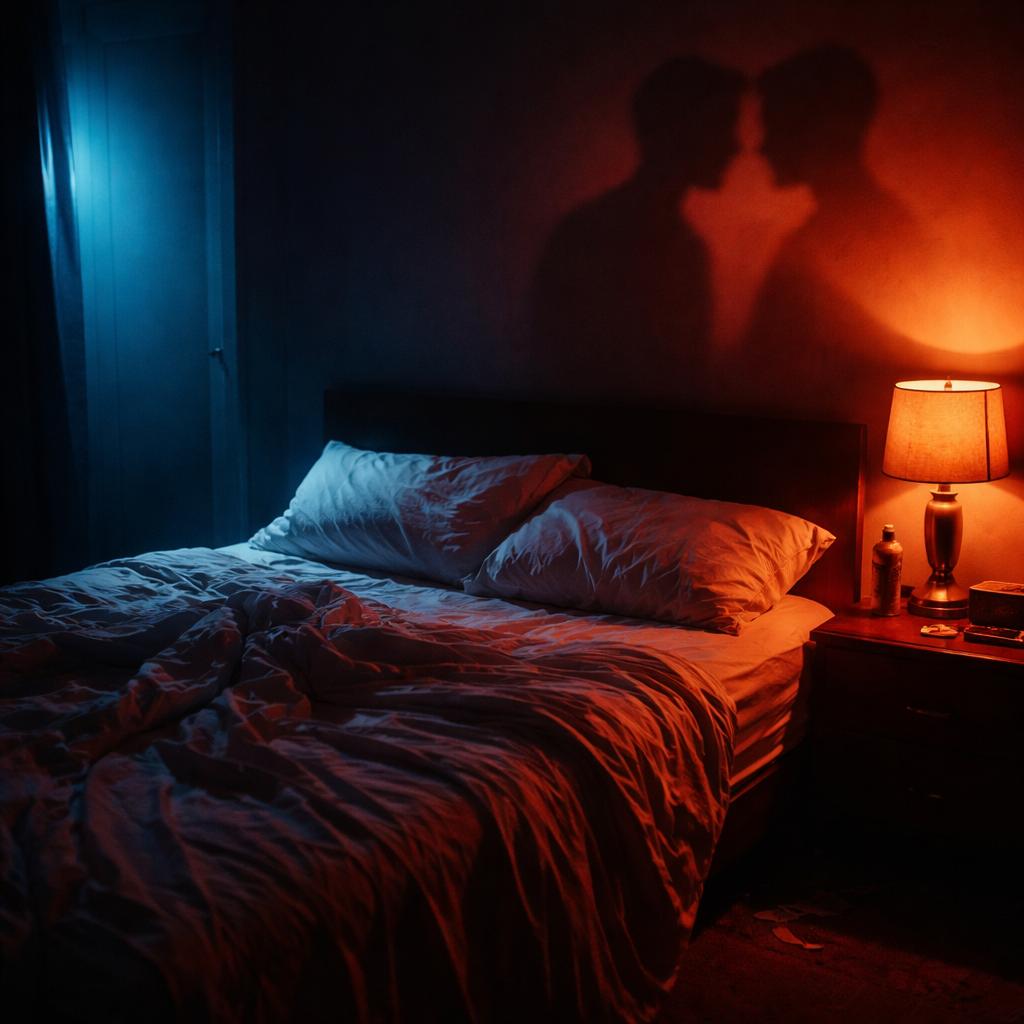
    Television has made real strides in how it portrays gay relationships. Where gay characters were once relegated to subplots or stereotypes, many shows now allow them complexity, intimacy, and genuine sexual agency. Gay sex, in particular, is no longer automatically tragic, shameful, or implied off-screen. That progress matters. But for all this newfound visibility, there remains one oddly persistent fantasy: the idea that penetrative gay sex requires no preparation at all.

    Across television and film, gay sex scenes often follow the same script. Two men come together in a moment of emotional or physical intensity. There is urgency, attraction, sometimes vulnerability—and then, almost immediately, sex happens. Smoothly. Effortlessly. As if the human body is always perfectly prepared for penetration, regardless of timing, context, or reality.

    Anyone familiar with gay or indeed anyone par-taking in anal sex knows this is not how it usually works.

    Preparation is a normal part of many people’s sexual lives, particularly when anal sex is involved. It can take time. It can require planning. It can even influence when and how sex happens. Yet TV narratives consistently erase this aspect, presenting a version of gay intimacy that is permanently spontaneous and frictionless.

    Recent series like Heated Rivalry are far from alone in perpetuating this myth. I sat aghast (clutching my pearls) as Smootie making genius Kip – up early, busying himself in Hunter’s kitchen to make his famed Banana and Blueberry drink – only to be thanked by Hunter with a “can I fuck you” to which the answer is yes, presumably – Kip had the opportunity, before Hunter awoke to brush teeth, floss, morning poop and then douche, before digging into cupboards to find Blueberries, bananas and a nutribullet.

    From prestige dramas to rom-coms, bottoms are routinely portrayed as being perpetually “ready,” no matter the circumstances. After work, in the middle of the night, during emotionally charged reunions—there is never a pause, a negotiation, or even a hint that logistics might play a role.

    The problem isn’t that these shows feature sex. It’s that they strip sex of the realities that many people navigate, creating a polished fantasy that subtly reshapes expectations. For viewers who are young, inexperienced, or still figuring out their relationship to sex, these portrayals can suggest that readiness should be instant—and that anything else is awkward, inconvenient, or somehow undesirable.

    There is also a quiet stigma embedded in this silence. By refusing to acknowledge preparation, television implies that it is too unglamorous or too bodily to belong in a romantic narrative. But bodies are part of sex. Planning is part of care. Communication is part of intimacy. None of these elements diminish desire; in fact, they often deepen trust and connection.

    Importantly, realism doesn’t require graphic detail. No one is asking for explicit depictions or instructional moments. Small narrative choices would suffice: a delayed hookup, a brief exchange about timing, a moment that acknowledges sex sometimes requires coordination. Even subtle signals could normalise the idea that sex is something people plan with each other, not something that simply happens on cue.

    Gay representation on television has matured enough to embrace complexity. It can handle conversations about consent, vulnerability, and emotional stakes. It should also be capable of acknowledging a simple truth: spontaneous desire is real, but sexual readiness isn’t always instantaneous. Recognising that wouldn’t make gay sex on screen less appealing—it would make it more honest.

  • Fairytale of New York, 2020 and still as problematic as ever

    Fairytale of New York, 2020 and still as problematic as ever

    It’s December 2020, and whilst there is some good news in the air surrounding three potential COVID vaccines, and yet, the age-old argument about the Fairytale of New York has reared its ugly head, because for six weeks of the year it’s apparently socially acceptable to be shouting across a bar, or nightclub: “You scumbag, you maggot, you cheap lousy f******”. Oh yes. This one. Again. if you’re looking to start a nasty debate, this is the way to go.

    The argument for whether to play to song including the homophobic slur on the radio rears its head around this time every year for the last few years. However, in 2020, BBC Radio 1 made the decision to play a version of the Christmas classic with the infamous line edited so that it doesn’t offend their key demographic, 15-29, who probably don’t have the attachment of the word being a homophobic insult from a song that was written and released before they were born. BBC Radio 2, however, have made the decision to play it in its original format.

    A statement from the BBC read; “We know the song is considered a Christmas classic, and we will continue to play it this year, with our radio stations choosing the version of the song most relevant for their audience”.

    Bit odd isn’t it? It’s appropriate for the oldies, but not for the youngsters – how does that work?

    I feel I should clear something up right now. I am not suggesting for one minute that it’s only the Oldies that listen to Radio 2, rather than Radio 1, even though I’m still clinging on to their demographic. In fact, I would choose to listen to Radio 2 any day over Radio 1. So, what I find odd and quite frankly disturbing as to why in 2020 – we are even having this debate?

    Don’t get me wrong, I do love the song. I think it’s one of the best Christmas songs to be written, prior to Kelly Clarkson’s “Underneath the Tree”, but what just irks me is the groups of people, arms around each other, gleefully shouting a word that has been used for so many years to insult, belittle, scare and dehumanise LGBT+ people. I find it upsetting that we are still having to have this conversation and that people cannot see that that word still has a sting for many people.

    Personally, it doesn’t particularly bother me; I’ve been called it so many times that it’s water off a ducks back, but at the same time, do I want to be reminded of it every time it comes on the Radio? No! But the sting is still there. It is still a word that holds a lot of resentment and pain for many people. Whilst we’ve worked hard to reclaim words and turn them into positive terms of endearment – for many members of the LGBTQ community, this is just a step too far.

    But what we’ve seen so much of, this year, I think more than in previous years, is that those who are offended by it have been regarded as “snowflakes”, and suggesting that by censoring it, we are denying our culture as Brits. Ah there, it is. The homophobia that nobody is really talking about nowadays. We’re bringing sexuality and gender issues into a “Culture War”. Now that to me is very disturbing. We’ve seen this so-called “Culture War” flare up several times this year, whether it be around trans rights, which are human rights by the way – in case you hadn’t forgotten, or the Black Lives Matters movement. Anything supporting a minority is attacked for going against British values. Maybe I’m naive, but I thought it was more about common decency more than anything.

    People don’t seem to bat an eyelid about songs having words bleeped out for being rude, derogatory or offensive. Maybe the last time I remember was the mild controversy about Britney Spears suggestive “If You Seek Amy”, and even that was given a radio edit to replace a word, or in Scott Mills’ rather comical version; “Amy with Brass”.

    Maybe in 1987, it was okay for a word like “f******” to be heard on the radio; but let’s not forget that Section 28 was also brought in, just a year later. Things change; AND THAT’S OKAY! It’s okay to say now that things were different then, and we should make a positive change for the good of society. Even the song’s performers have said that it’s okay for words to be bleeped out that might cause offence, and Kirsty McColl even performed an alternative version of the song on Top of the Pops just a few years after its release. Nobody complained about it then.

    At the end of the day, nobody is stopping anyone from singing along to it in their car, but I think in the grand scheme of things if we just showed some respect to what everyone else’s opinions and values are, then we maybe wouldn’t have to have this conversation every year. But, honestly, if you’re fighting this hard for the original version of it being played on BBC Radio One; then I think you might need to have a good hard look at yourself. For a country that prides itself on equality and being equal. It should surprise me that we have to have these conversations, however, alas, I am not for one bit surprised. Why do you feel the need to shout that line across the bar? I can assure you that it says more about you, than those of us that wish to hear it censored.

  • COMMENT | What is ‘queer theory’ and why are people using it to become problematic?

    COMMENT | What is ‘queer theory’ and why are people using it to become problematic?

    Until a rather problematic article by Conservative Women writer, Caroline Ffiske appeared online recently, I must admit that I wasn’t very educated on the idea of “Queer Theory”. But apparently, it’s something that we all should familiarise ourselves with because we need to protect our children from it.

    Here we go again. Another homophobic article wrote by a privileged white person who really doesn’t have a fucking clue what they’re talking about.

    So, what exactly is “Queer Theory”. Well, according to Ffiske is it based on the 1960’s neo-Marxist idea that our sexual acts and sexual identities are ‘socially constructed’. Apparently, the focus of ‘queer theory’ is all about the personal and the private and what people deem as normal can be challenged as so form of social construct and that basically what goes on in the bedroom should stay in the bedroom and not be brought out into the light of day. The article then goes on to suggest that sex should remain as an “extraordinarily intimate act which touches our soul and goes to the heart of our human experience”. Clearly, she’s never had a one-night stand. Ffiske also goes on to imply that we are normalising and encouraging sex among teenagers.

    Let’s be very clear about this. Teenagers are going to have sex. They are going to have straight sex, gay-sex, threesomes, oral sex, anal sex because that’s what teenagers do. It’s not about normalising it; it’s a fact of life. I remember being a horny teenager and wanting to bone everything that was on two legs. Well, within reason. But isn’t your teenage years and your early adult years all about – experimenting? It’s about finding what you like and what you look for in a sexual partner. Your teenage years are about discovering who you are as a person. For some, that is quite straightforward, but for others, it’s a struggle. You grow into yourself as a person and sometimes that doesn’t fit with social stereotypes. Surely, we should be encouraging this exploration. We should encourage conversations for teenagers because that’s how we learn and break down social stigmas and prejudice.

    Laying the blame for sexual exploration at the door of the gays

    What Ffiske is actually doing, and probably doesn’t realise it, is laying the blame for encouraging sexual exploration at the door of the gays. Whilst it might be true that gay men can be very promiscuous and have multiple sexual partners during their life, it’s not fair to blame it on them. Historically, the queer theory was born out of a movement of living your life as the way you fit and how you want to. It’s about how you want to identify and isn’t having the choice to do that is the best thing for us to have in society. If you want to identify as a man or a woman or be trans, you’ve got that choice, because you have been struggling with the thoughts inside your head as a kid. It’s not been pushed on you, and the media don’t push it on anyone. It’s about education and allowing conversations to happen. Just because you don’t fit into a box, it doesn’t mean you are a freak and should be banished to an island. You should be allowed to live your own life as you want to. Bollocks to anyone else.

    Ffiske talks about sex, and specifically anal sex as being degrading. She says that “young women feel that they do want to take their virginity seriously and that their psychological well-being is at stake if they are encouraged not to do so”. Let’s look at this in the broader sense. The first time for anyone is going to be something that you remember because let’s be honest – it’s never the best. It’s often clumsy, clunky and extremely uncomfortable, but it’s a part of life. I’m not saying that people don’t take that decision lightly to become sexually active, but it’s not always as black and white as that. Teenagers are hormonal, they are going to have curiosities about sex. Isn’t it more dangerous not to educate them about it? Let’s look at teenage pregnancy in the states, for example, a study in 2019 by the American Journey of Public Health showed that in states where sex education is more abstinence-based, the education actually contributed to an increase in teenage pregnancies.

     Surely if we are not having more open conversations about safe, consensual sex then we’re doing the younger generation a disservice.

    The problem isn’t about over sexualising teenagers. The problem is really that people think they have a right to dictate and decide what’s best of other people when they have really not got a clue about what they might be going through. The ones that that feel threatened by queer theory are those that have absolutely no idea about what being different or being queer is all about. It’s not a walk in the park. It’s often a long dark road with bumps and kinks in it. Discovering where you fit into society. How you are accepted by society and what prejudices you’re gonna encounter.

    I want to side-step for just a second because I think this is important. It’s not just queer equality that is under threat from the right-wing. But equality as a whole is under threat when there are MPs in parliament like Ben Bradley who is calling on more rights for white straight men because he thinks that they are underrepresented. In a speech in the House of Commons this week; Bradley stood up, and with a very straight face, went on to moan that there is a minister for women but not men, complained about more women than men in higher education, and mourned the death of “banter”. He said that; “men are often talked about, all too often, as a problem that must be rectified”. Oh, Ben. Going on to then condemn the Equality Act as being “willfully and regularly misapplied across gender, race, and every other characteristic”. Asserting the importance of “holding the door open for a lady”, expecting a man to “provide for his family”, and “wanting to be a man’s man” who goes “down to the football at the weekend” and has “some banter with the lads”. Bradley then complained; “that banter is now bullying”.

    There is nothing that riles me more than a straight white man complaining that they aren’t represented.

    He’s clearly never experienced prejudice for being a straight white man. Bradley also went to say that he wants “straight equally protected as gay”. Can someone enlighten me, in how many countries you can be executed or imprisoned for being straight? Or how many victims there are of anti-straight hate crimes in the UK? Not surprisingly, the government have also ended funding aimed at reducing homophobic bullying of LGBT+ students in schools in England, just as new research by the Diversity Role Models (DRM) shows that just 27% of students think that their school is a safe space for classmates to be themselves. Leading LGBT+ charity Stonewall has started a new hashtag initiative allowing members of the community to tell people about their experiences at school. Have a read through some of the stories using hashtag #LGBTatSchool.  

    Back to queer theory though, Fiske’s article finishes with a quote from Oscar Wilde saying, “we are all in the gutter, but some of us are looking at the stars”. She thinks that Queer Theory is pulling us all into the gutter and diminishing rather than dignifying. Well, if we’re in the gutter, then the gutter to me is pretty fabulous. Come join us here – because we are living our best lives. But more importantly, take some time to educate yourself. It’s all very well to sit and say that you should do this, or you shouldn’t do that, but that’s not for us to decide – it’s up to the young person

    I’ve said this so many times now, but I just keep coming back to it. Education is the power to change. Educate our young people that there are different types of families. Educate our kids on the importance of safe sex. Encourage conversations between youngsters. Let them make the decisions that they want to make, but make sure they are given the facts. Not what you think is right. And if you feel threatened by queer theory, don’t just blast it as not the normal thing. Take some time to research about that being queer in 2020 is like and what queer relationships genuinely look like. You never know; you might learn something. It’s not about being a snowflake or being ‘woke’ but it’s about teaching our young people that equality a right – not a privilege.

  • 5 things you need to know about fuckboys

    5 things you need to know about fuckboys

    Okay. Show of hands. Who’s had the experience of dating a fuckboy? We all know them! It’s that guy. You know; you know, the one who doesn’t respect you but relies on you all the time. He’s distant. He doesn’t care about your time. He won’t commit. He’s self-absorbed, does stupid things and fucks with other’s emotions. I feel like the majority of the guys I’ve been with or had any form of chemistry with have been fuckboys and it’s had a bit of a negative impact on my dating life, or actually, lack off. I’ve been used so many times by fuckboys that it’s become the norm for me to keep going back to them.

    How do you spot a fuckboy?

    It would be easy if they walked around with a sign above their head saying “Avoid like COVID. I’m gonna text you once in three months, then you’re gonna come over and give me the best head ever”.

    Alas, life isn’t all black and white.

    It was a while before I experienced a true fuckboy. I don’t have any contact with him now, only maybe when I’m a little bit tipsy and I might slide into his DM’s. I’ve met a few since then and developed a keen eye to spot them. So, here are my tips for spotting the fuckboys.

    They will do or say anything to have sex

    fuckboys are all about the sex
    (C) BIGSTOCK

    This is the first big red flag. There’s no romance involved. A true fuckboy will literally do or say anything to get you into bed. These include flattery, gaslighting and grovelling. Nothing is too low for them to try. The worst thing though is that they will do all this whilst actually do the bare minimum whilst doing it. They want to do it all on their terms. They will decide it, they will just sit there and let you crack on. Don’t forget; they don’t call them jobs for nothing.

    They’ll hang out with a lot of men

    Now, this might seem trivial; but they’ll always have a number of guys on the go at the same times. If they’re not committing; it’s probably because they’re playing the field and shagging a couple of blokes at the same time. They like to have options. They want to know that there are people around them that they could have sex with if they wanted it; and well, we all know gay men. They’re randy little blighters and probably be boning a different guy every night.

    They’ll always be a little fragile

    If you tell them you can’t hang out tonight – you’ve just caused world war three. They’ll barrage you with texts about how flakey you are, or you’ll get a torrent of abuse and probably turn it round and accuse you of being a fuckboy. You can’t hold them accountable either; they don’t like that one little bit. Fuckboys are unable to accept any form of responsibilty for their poor behaviour.

    You can’t change a fuckboy

    Don't waste time on trying to change a fuckboy. It won't work!
    CREDIT: © oneinchpunch Depositphotos

    Don’t even start. They won’t change because they do not want to. They will do what they want to do because their world revolves completely around them. They do not care about anyone else but themselves. THEY ARE USERS.

    Fuckboys aren’t nasty, horrible, people

    They just don’t know how to have serious, mature relationships. You should pity them; and get rid of them. It might be hard at the start, but it’s gonna be better for you in the long run. You’re gonna be a stronger person for it. If you recognise some of this behaviour then congratulations; you’ve admitted it. Now you can start some make some changes in your life. Most fuckboys would never acknowledge it, so the fact you actually have, means you have the possibility to change.

    The sad thing is that; fuckboys are out there, and you need to be aware. Also remember, that there are decent guys out who aren’t like that all; and that’s something that we all should covet.

    We are worth more. Remind yourself that.

  • Dad asks the internet for advice after seeing his son kiss his “best friend”

    Dad asks the internet for advice after seeing his son kiss his “best friend”

    After seeing his son kiss another lad in town, one dad took to Reddit to ask on how he should speak to him about it.

    He laid out the situation like this,

    “I saw my son (16) kissing his “best friend”. I didn’t tell my wife because she will probably hate him because of it but how could I? I really love him he’s my son after all and I don’t mind him being gay.

    My question is how can I help him when he comes out and should I tell him to hold it back with his mom?”

    VIA

    Well, let’s just hold on a minute there as we refreeze our melted hearts. This guy might be up for dad of the year award.

    Never ones to fail, guys of the AskGayMen forum, did not hold back on their advice.

    Don’t confront…

    With one suggesting that the dad didn’t “confront him” and that the boy would “tell you when he’s ready… but maybe you can work it into a conversation that you’re okay with it”

    While another suggested that being subtle was everyone’s friend, “just be a lot more subtle than you initially think. It’s probably front and centre in his mind, so he will be very sensitive to the subject”.

    While another echoed. “If I were your son I wouldn’t want to be confronted (that’s just me tho) if I’m not ready to come out I don’t want others outing me, imo you should create a supportive environment and low-key and subtly let your son know that you are lgbtq+ supportive”.

    Confronting the homophobes

    man wearing eyeglasses making a toast
    Confronting homophobes and homophobia in a public setting was suggested by the commentators, to show that he was supportive of the gay community.
    Photo by fauxels on Pexels.com

    On the subject of his wife, one user suggested that the dad should “confront people who say homophobic things or at the very least say you disagree and explain your position. This will show your son that he doesn’t have to be afraid of talking about these kinds of things with you.”

    The dad replied, “I never said anything against it. But I’ll definitely do it the next time.”

    Total. Winner.

  • COMMENT | Are gay people more creative?

    There’s a common speculation gay people are more creative. This is foremost rooted in the observation that gay people are over-represented in creative pursuits. But is this speculation true? And if it is, why are gay people more creative? Let us discuss.

    The idea of over-representation is an interesting one. It emerged anecdotally but has attracted scholarship in recent years.

    In 2016, London School of Economics published their analysis of datasets from the 2008-2010 American Community Survey and the 2008-2009 U.S. National Longitudinal Study of Adolescent Health to comment on this. They found that gay people are “drawn to a different set of occupations”. Among those with the highest proportion of gay workers are creative ones: producers and directors, urban and regional planners, and web developers.

    Their analysis suggests that gay people tend to be attracted to occupations with higher levels of social perceptiveness. This is based on the idea that knowing how to read social cues might be an important skill for gay people to acquire as they are more likely to have experienced the threat of discrimination from a young age.

    Now for a quick lesson in creativity. Creativity is an inherently social process. The idea that it is a solitary process has fallen out of favour. We now appreciate that creativity emerges from dialogue, interaction, and practise with others. Though Kafka worked in solitude, his work was the product of his relationship with his father. His creative output is therefore the product of a social process.

    It is thus unsurprising that the experience of gay people and its impact on social processes may affect their creativity too. At present, there is little hard evidence though. There are only a couple of major studies on sexual orientation and creativity.

    The first, by Christine Charyton, a professor of psychology at The Ohio State University, published in 2007, reviewed the historical, empirical, and present literature existed on the relationship between sexual orientation and creativity. The study concluded that there is little evidence to support that speculation that gay people are more creative.

    The second, carried out by Sultan Idris Education University, published in 2013, assumed that gay men share more typically female personality traits to disentangle the speculation. The idea behind this being that females are more creative than males. However, its findings mirrored the study by Charyton. It concluded that there is no ‘gay advantage’ to being creative.

    Embed from Getty Images Embed from Getty Images Embed from Getty Images

    It is acknowledged that more research is needed to draw definitive conclusions though. Current research is limited and its scope narrow. Indeed, the latter study measured only self-perceived creativity. The idea of being well-qualified to be creative by being skilled in reading social cues is one possible avenue for future research.

    The truth is we don’t really know whether gay people are more creative. The speculation that they are is compelling though. I am left thinking that we need to continue to approach the question from new directions. Are gay people more inclined to creativity because of the escapism it provides? Or is queer culture fundamentally creative in its quest to break the mould?

  • On Bi Visibility Day 2020: People need to get over these bisexual MYTHS already

    On Bi Visibility Day 2020: People need to get over these bisexual MYTHS already

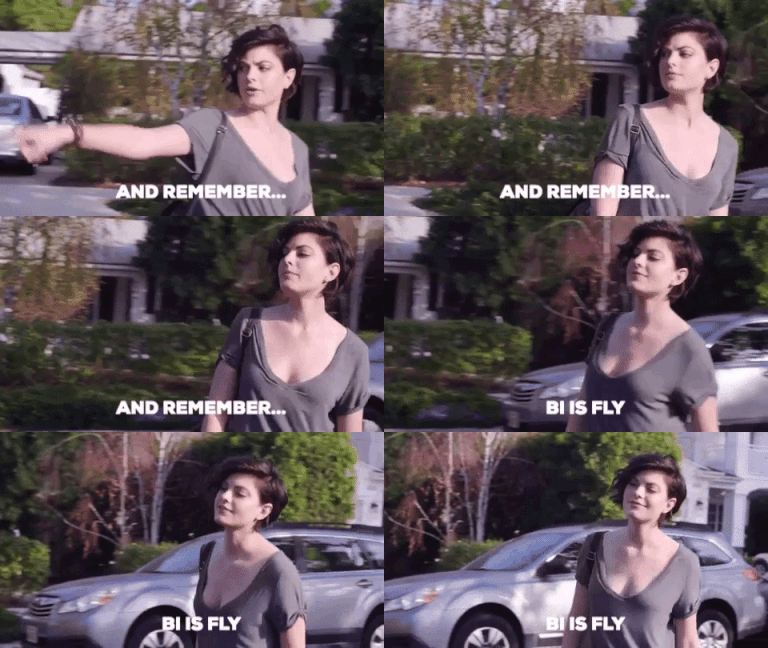
    You wouldn’t think that in 2019 myths about bisexuality would still exist… but oh boy do they! We asked readers who identify as bisexual what comments gave them complete attacks of the eye roll and oh boy did the myths come rolling in…

    So listen up peeps – take note – these are the myths about bisexuality that we need to destroy in 2020!

    Why do gay men take the attitude that bi is just a transitional sexual status … the whole “bi now; gay later” attitude?

    Patrick

    That I want to have sex with everyone. Yikes, and ick NO. We’re not sexual Velociraptors FFS.

    Maggie

    You can be black and bi, white and bi, Asian and Bi and all that’s in between. Bi isn’t binary.

    Thomas

    That bisexuals only like cis men and women. I’m a bi and trans man, and that tells me is that the speaker doesn’t view me as an actual man, or sees bisexuals as inherently genital focused, or both.

    Cato

    That we get laid than more people.

    Sam

    The idea that we will eventually “pick a side” and become either straight or gay.

    ANON

    That bisexuals are oversexed and can not have a monogamous relationship.

    Dave

    We’re not a god-damned trend. This is our life, respect that.

    Jenny

    You can still be bi- even if you’re in a hetero or gay relationship

    AJ

    We don’t have to 50/50 either way. It’s cool to be 70 % more attracted to the same sex and 30 % the other way… Still bisexual!

    Paul

    You can be trans, non-binary and genderfluid and you can be bi… Your gender expression doesn’t affect or dictate your sexuality

    Pam

  • COMMENT | My worst day of school was always the “first day back”

    COMMENT | My worst day of school was always the “first day back”

    If you ever want to know why I can always manage to put my foot in it – at any given opportunity, it goes way back to the multitude of “first-days”

    The last week of August was always hell.

    Except the one between primary and secondary school. That’s because I had, at the age of 10, decided that I didn’t want to follow the rest of my primary school classmates down the normal route of going to the secondary school that ours was a feeder for. Why? Well, every day of my existence at my primary school was filled with homophobic bullying. You see, I was unlike all of the other boys.

    I played with the girls, I despised sports but was surprisingly good at skipping.

    In my first month of primary school, I decided, that the boys’ uniform was far too bland and that the girls’ socks were much more in keeping with my sensibilities. Obviously, as a five-year-old, I had no means of obtaining my own pair of the crochet patterned socks, but I did notice a pair in the lost property. I’ve always had an eye for detail and a bargain bin. I snuck in one lunchtime and, I didn’t steal, I borrowed them.

    I wore them proudly into the schoolyard, leaning up against the playground wall. I was working it. As far as I was concerned, I was the pretty minx in my mother’s magazines. That was the day my bully-free school days ended.

    Whoever said your childhood years are the happiest of your life, clearly wasn’t a queer kid. You grow up quickly when you face that much hate.

    Each “first day back” after the summer holidays became agony. That last week of the summer holiday, was the cruellest. I eeked out every last moment of freedom. Oh yes, I loved getting the new pencil case (from Woolworths) and matching it with my lunchbox (I was never allowed the My Little Pony one, due to fears of exacerbating the bullying problem). I’ve always been a strong believer in creating a brand, but despite my new classroom accessories – I, personally, was never allowed to rebrand. First day back would be groundhog day.

    Then there was the summer of change, between primary and secondary. It was a summer of hope. I was going to go to a new school. Nothing to do with my old one. No one from my primary was going to go. Whilst my former classmates adhered to the feeder system,  I went my own road, backed by my ever, increasingly worried parents.

    But I was one of those damned queer kids that just wouldn’t or actually couldn’t conform. Once again I found myself hanging around with the girls, but not the Mean Girls – these were the year’s before it was “trendy” to have a gay best friend (even though I wasn’t out – or accepting of my own sexuality.

    My football skills were woefully inadequate and the drama block was a magnet.

    I was Baking Off before Bake Off.

    By the end of the first day, I was literally dumped in a bin by a fifth former. That week I was “bin boy”, but soon that gave way to a slew of name-calling. One day my class decided to play “Did you hear?”. It was like an earlier version of Twitter. Someone would start a rumour and whisper into the ear of the next person. That day’s rumour – as I walked towards the form room, was that I had killed myself over the weekend. As I got closer, those rumours had flesh to bone added, the way I had dispensed with myself and how tragic it was for my family. People in class kept this pretence up most of the morning.

    I just didn’t have the skills to deal with bullying. The “tell the teacher” mantra was inadequate and in the days of Section 28 – teachers just didn’t know how to deal with homophobic bullying.

    I showed my taunters that it hurt. I now wish I hadn’t… I wish I had owned every name thrown at me and with a rye smile and a naughty side eye added, “and?”

    Inside I’m crippled.

    I’m always that ten-year-old in my mind – constantly worried about being binned again.

    Perhaps if RuPaul’s Drag Race had started a decade (or two) earlier I could have learned to read each and every person who called me a poof, a queer, a pervert or gay lord. I think that fear of new situations has remained with me, even into adulthood. The only way I seem to be able to get through the situation is to say something… anything… usually something totally inappropriate.

    You see, inside I’m crippled. I’m always that ten-year-old in my mind – constantly worried about being binned again. So I use humour and self-deprecation as a way of dealing with new situations. You see, life gives us constant New Days – or First Day Backs and now… I can always be counted upon to say the most inappropriate things at the right time.

  • DOMESTIC VIOLENCE | Am I A Survivor Yet?

    Well, what if ‘she’ wasn’t a she at all? For too long, the male victims of domestic violence have been just as ridiculed and silenced as women.

    I was nineteen years old, and the only care I had in this world was whether I could afford to go out drinking three nights that week or just the one. I had a lovely little life, a full-time job in a shop, money coming in, and good friends until I went on a night out in Manchester. It’s so melodramatic to say, but it’s true – that night changed my entire life. That night, I met a guy, who I will call He/Him. He was cheeky and confident and broad, and I fancied the pants off him. I ended up back in his bedroom with a group of his mates, all chilling and listening to music until I ended up dropping off to sleep. Nothing happened, and in the morning he took me back to my friend’s house. I left Manchester later that day, and we vowed that we would keep in touch.

    We visited each other once, maybe twice, before I decided I was going to spend the weekend with him in Manchester. There was a party at his place that weekend, and we were all dropping ecstasy like it was going out of style. In fact, a few years later it did go out of style, giving way to an assemblage of other drugs. The next morning I woke up next to him without any memory of the night before, how I’d gotten into bed, or how I was undressed. I should have known there and then. He told me, without an ounce of indignity, that we’d had sex while I was talking to two women who lived in the bedroom wall.

    I laughed.

    Laughed.

    I was nineteen. I can’t recollect what my thoughts on this were at the time, but apparently I saw nothing wrong in this. Now, over a decade later, I know what word I would use to describe this event.

    I don’t know what possessed me. I was having a good time, and I felt freer than I’d ever felt in my life, and I remember saying to him, “I don’t want to go home”, he said “Well, don’t.”

    I didn’t.

    I called my parents and informed them I wasn’t going to come home, and that I’d come back to collect my things. I had absolutely no thought in my mind of what this would do to my Mum and Dad, left in Liverpool wondering what their young son was up to in another city.

    The relationship continued to be fun, and I took more and more ecstasy, replacing alcohol almost completely on nights out. I hadn’t noticed the subtle ways in which he’d already begun to control me: “you don’t need to work, I can look after you”, “don’t wear that, wear this”, “what if you did your hair like this instead”. I got a job anyway as a supervisor in a now-defunct clothing store in Stretford Arndale. The job didn’t last long because of what happened next.

    We were out on a Sunday afternoon in a pub near the house. His friends were there, laughing and joking, and he said something sexual about me. I was mortified, because it was in front of everyone, and they all thought it was normal. I don’t remember what he said, but I remember feeling not just embarrassed, but defenceless. I excused myself and went outside to call my Mum. I explained to her that I wasn’t enjoying Manchester any more and that I wanted to come home.

    After I finished the call, I turned around and there he was – the angriest face on a man that I think I’ve ever seen. I didn’t know what he had to be angry about, and I was about to go back inside when he started shouting. I didn’t know what else to do so I ran off toward the house. I wasn’t used to confrontations. He chased after me, caught me on the main road, bashed my head five times into the metal poles of a fence, and stood over me shouting more abuse.

    Crying, I somehow managed to get to my feet and start running again. I thought I was being clever by taking some back roads toward the house, but these only led back onto the main road where he was waiting. He pushed me to the ground, I remember my jeans ripping, my front teeth scraping the floor, and him shouting “What? What are you looking at?” to two by-passers. They didn’t stop to help. The next part is a haze. I think one of his friends caught up and dragged him off toward the house. I followed some time after. I got to the mirror in the bathroom and saw blood all over my face and head. His friend told me to “wipe it off, he can’t see the blood on you”. I told him he was going to have to look at what he’d done.

    Then, he did something very clever. He came downstairs, took one look at me, started crying, took a knife from the kitchen and went out. Well, that was it. How could I leave a man, clearly emotional, on the streets with a knife, scared that he’d hurt himself. Needless to say, after hours of looking, I found him back at home. Unharmed.


    The next day he apologised. He apologised the next day after each occasion, even after the time he put me in the hospital with suspected broken ribs. They weren’t broken, and I was released with a few pamphlets on domestic violence. I threw them in the bin on the way to the police station to give a false statement to the kindest man I’d met. He told me there was no need to lie, there was no need to do anything but tell the truth and be happy again. I told him it was just two lads fighting, and in the morning he was released.


    Domestic violence isn’t just physical, we all know that; it’s the deliberate emotional and psychological demolition of a person.

    I was one of those people. I was smacked about and strangled and kicked, and had knives to my throat, but I was also told I couldn’t have dinner if I questioned his love for me, that I’d need to “think of what it would do to the relationship” if I learned to drive, or got a job again, the threats that his slightly-dodgy brother would do something to me, my friends or my family if I left.

    There was one last comment, the final straw that broke the proverbial camel’s back, one tiny little comment that made me think ‘you are never going to change.’

    He was talking to his friends in the living room about his ex-boyfriend, who once had sucked water up the hoover that he’d spilt, probably in a rush to do it before getting a smack for being clumsy. And he said, I can hear it now clear as a bell: “He got a hiding for that, I can tell you.”

    It clicked. I wasn’t the only one. I wasn’t the first, and I wasn’t going to be the last. But right then I decided that I wasn’t going to be the one right now.

    Now, I’d left multiple times with the help of friends. But a good friend of mine at the time came all the way from Liverpool to collect me and take me back. I packed my small amount of belongings and I left. You might think this is the end of the story, but it’s not.

    For months, I used to call and text and really long to go back to what I knew. I was beyond any level of damage that I, or my friends, knew how to handle. I’d go out every night drinking and not want to go home, I’d meet men and want them to hurt me. I felt nothing until I felt pain.

    Over ten years later, I sit writing this as a man looking back on a boy he used to know. I feared for that boy’s safety, and more than that, his life.

    He didn’t ask to be a victim of domestic violence, but he chose to survive it. He grew up, and he learned his own worth. True, the wind still blows the dirt and dust and uncovers some ancient archaeological history of that period in his life, but in the main he’s healthy and happy. Those who’ve lived through violent relationships are survivors only in the sense that they are no longer in that situation. You can’t, however, survive a memory that is always with you. You live alongside it. It’s your ghost.

    Over a year ago… I was in an ex’s bedroom, and we had an argument. He turned nasty, and his voice and face completely changed, I thought: “this is it. This is it all over again.” He didn’t hit me, and instead, he looked concerned. It took me a while to realise I was freezing cold and shaking all over. Now, before this, I’d always thought of myself as stronger than ever. But this was a reminder that I am not healed.

    In the years since then I’ve heard ridiculous questions, “why didn’t you just leave? Why didn’t you hit him back? You’re a man too, so it’s not really domestic abuse, is it?”

    Well… you try leaving someone who has made you feel like they’re the only person you can depend on. You lift up your hands and make them into a fist against someone you know you’re physically no match for, and you feel like you love. You try having your food taken off you, being beaten for having a smart mouth, and being told you can only do certain things and speak to certain people. Trust me, it really is domestic abuse. It’s no less of a crime, no less of a heart-breaking, world-shattering situation to have been in just because I’m a man too.

    All of the black eyes and cuts and bruised bones he gave me during those twelve months are healed, but the psychological and emotional scars are too deep to heal completely. I’m always questioning: am I a survivor yet or not? ?️‍?

    @sean_watkin

    For help or advice call Mankind on 01823 334244 or Men’s Advice Line on 0808 8010327

    This article was taken from Issue 20 – download our magazine app now and never miss a future issue and was very published on our website in May 2016. It has been updated with new and relative links.

  • COMMENT | Are you really an ally?; “It’s become clear that passive acceptance of the LGBT+ community is very different from being an active ally who fights to support LGBT+ inclusion”

    COMMENT | Are you really an ally?; “It’s become clear that passive acceptance of the LGBT+ community is very different from being an active ally who fights to support LGBT+ inclusion”

    I think I’ve been rather lucky in my 28 years on this planet, that I have surrounded myself by decent people and I’ve been lucky to know a lot of people that consider themselves to be “allies” of the gay LGBTQ+ community. It isn’t a bad thing by any means – I spend 90 per cent of my time around straight people. I work in a very straight environment and the lockdown has meant that I haven’t spent much time on the scene.

    The term “Ally” gets banded about quite a lot in modern society. It’s a term that can be used to describe many different kinds of relationships. Whether these are business relationships. Countries are geopolitical allies. Even enemies can become allies in the face of a common goal. Today; it’s used to describe somebody who supports a group that they are not a part of.

    The gay community has had several significant allies over the decades since the Stonewall Riots. From celebrities to politicians. From Karen next door to your third cousin who you’ve not seen since you were a child; but it’s become clear that passive acceptance of the LGBT+ community is very different to being an active ally who fights to support LGBT+ inclusion.

    However, in 2020, it seems that our allies in government are becoming few and far between and that is a worrying thing. There are two things that I cannot abide in this world. Hypocrites and Members of the Conservative Party. Unfortunately, these things seem to go together. Allow me to get political for just a few minutes if you will.

    Case in point; Matt Hancock. Early this week, our Health Secretary, who has done a shambolic job at protecting this country from the COVID pandemic, was asked by Kay Burley about whether Tony Abbott, ex-Australian Prime Minister and the man who was tipped for the top job at negotiating post-Brexit trade deals and his views about women, the LGBTQ+ community and the elderly was an appropriate person to represent us on the world stage. During this extremely awkward exchange, Hancock seemingly excused Abbot’s comments because he is an “expert on trade”. Oh, dear.

    Hancock argued at first that he didn’t think that Abbot was a homophobe or a misogynist by saying, “I don’t believe that is true, I haven’t seen any of his (comments)”. Burley, as sharp as ever, fired back “I just told you what he said, I’m sure you don’t support some of his comments, he’s a homophobe and a misogynist”. Hancock’s response was “He’s also an expert in trade”. I mean – come on. You claim to by an ally to the gay community. You wear an NHS Pride Pin on your lapel, and you are still defending someone because “he’s an expert on trade”. The two things don’t go together. It’s like saying that Harold Shipman was a serial killer, but he was an excellent doctor. By not condemning Abbot for his views, then he is endorsing them. He’s also saying that women and the LGBTQ+ community are less valued than trade negotiations.

    Hancock isn’t the only hypocrite in government. Our supposed Prime Minister and I use the word supposed because it’s clear that Dominic Cummings is running the country, after all; why didn’t Cummings get fired for breaking lockdown rules to travel 240 miles to test his eyesight at Barnard Castle? I’m being pedantic, but it’s a fair point to make. We are sacrificed so much for 3 months. We put our lives on hold, but he was given a free pass because it was; “The right thing to do”.

    Then there’s Boris. Oh Boris. Boris Johnson has a long record of controversial comments about women, gay people and ethnic minorities. He is the man who has refused to apologise for calling gay men “tank-topped bum boys”, compared Muslim women to “letterboxes” and labelling black Africans “Picanninnines” with “watermelon smiles”. All quotes from Boris himself. He’s said that they were satirical or taken out of context – but should this be an excuse? – no, because he has chosen to use that language.

    We’ve got Liz Truss, Minister for Women and Equalities, trying to roll back rights for Trans people by making things harder to transition, and protecting safe spaces for women. Cabinet members like Pritti Patel, who actively voted against gay marriage. These people may say that they are our “Allies”, but they are far from it – and it is a scary place to be for the LGBTQ+ community. Remember, that we are not even 20 years out of Section 28, and there is every chance that something like that could be brought back. Oh, and that ban on conversion therapy – we’re still waiting. If you are curious as to how your MP voted on social issues, there is a great website which shows you exactly who vote for what. It’s there in black and white. Either they vote against, or even worse – “we’re not present”. It’s a kick in the teeth.

    Those of us that call out hypocrisy or call out social injustice are often demonised as “woke”. The work “woke” actually means that you are aware of social issues and calling them out; but the right wing has demonised the word and, like the term “Politically Correct”, it now means the complete opposite.  Criticising woke culture is actually just another way of the right playing the victim card, rather than actually acknowledging the bigger picture and attempting to make a change.  The funny thing is though, when those that complain and attack us, when they are challenged on why they feel that way, they don’t actually have a cohesive argument. They rely on a feeling or something that isn’t tangible. To me, it’s not about left or right, being woke or whatever. It’s about common decency to each other.

    Somebody I follow on Twitter posted the following statement and it sums up our government perfectly; “The test of being an #LGBTQI ally isn’t whether you’ll add rainbow colours to your logo in June. The test is, will you stand up for us when we are attacked? Will you distance yourself from those who demean us? Will, you still be our ally when it’s no longer convenient” – and that says it all. The Government clearly do not care about the LGBT community, and we are at a greater risk of having our rights revoked, this means we have to fight and shout louder that we are here, and we deserve to have the same rights as straight people.

    The test of being an #LGBTQI ally isn’t whether you’ll add rainbow colours to your logo in June. The test is, will you stand up for us when we are attacked? Will you distance yourself from those who demean us? Will, you still be our ally when it’s no longer convenient”

    MATTHEW HODSON

    Views like Abbott’s, and those who wish to demean and defame the LGBTQ+ community should be challenged, because we do not deserve to be second class citizens to others. It’s easy to say that you support the LGBTQ+ community because you like to go to gay bars, or you love watching RuPauls Drag Race. But when the chips are down, will you there to support us in our time of need?

    When our government consider bringing back Section 28. When same-sex marriages are no longer allowed because they are not traditional. Or when Trans women are forced to use men’s bathrooms, because they are not seen as women. It’s then you will prove yourself as an ally.

    We may need you soon as you think. When the UK finally transitions out of the EU on New Year’s Eve, the UK will no longer be bound to EU laws such as the European Charter that bans discrimination on the grounds of sexual orientation.

    Our true allies are those who are challenging them and continue to challenge because, in the end, that’s how we educate future generations. It’s not that we’re some left-wing, woke-community. We just want what we deserve; acceptance and equality.

  • COMMENT | I like “Dancing on My Own”; some people are taken aback by that

    COMMENT | I like “Dancing on My Own”; some people are taken aback by that

    “I’m giving it my all, but I’m not the guy your taking home – I keep dancing on my own”.

    This article serves two purposes. It’s both a reflection on one of the greatest pop songs ever written and a larger, more encompassing commentary about independence and quite literally dancing on my own.

    The song, “Dancing on My Own” is quite simply an inherently sad, gay disco anthem – or as I like to call them, a Sad Banger. Written for Swedish songstress Robyn for her 2010 album Body Talk, the anthem features hammer drill throbbing synths and electronic percussion whilst incorporating elements of electro and disco. It can be more easily described as a heartbreak anthem. Its lyrics speak of a person who is alone in a club watching their ex-lover, or someone that they are in love with kissing, or getting with another person – relatable – we’ve all been through that.

    MTV News journalist James Montgomery noted the “thoroughly sad song talks about Robyn losing her man to another woman, but also about the notion of feeling alone in a crowded room, of being lost and unloved and having no choice but to be okay with these things”. It’s the second half of the statement that I wanted to look at a little bit further. Unlike some of Robyn’s Sad-Bangers, “Dancing on My Own” offers the listener very little hope of things ever getting better. You could say that “With Every Heartbeat”, offers a faint little bit of grim optimism to the listener – “Dancing on My Own” offers none of it, thus reflecting the stark reality of relationships and life that we don’t always get what we want.

    More recently Robyn has gone on to elaborate on the theme of the lyric further by saying; “People have so many expectations when they go out, so many wishes about what their night is going to be: if they are going to meet that person, have a fun time with their friends, have a good high, hear good music”. Isn’t this what going out is all about for most people – as people, we long for interaction with other people. For those that are single, it’s the best opportunity to meet someone and develop a real connection of personality – something that in the age of Grindr and Tinder you scarcely find. Robyn then goes on to say; “People get drunk and turn into themselves in away, and they go experience some kind of emotion. But it’s not always about fun. There’s a destructive side to it.”

    I think we can all relate to this last statement. Well, I don’t know about you, but I can. For me, at the end of a long week, going out dancing is a great way to unwind and let my hair down. I look forward to my Saturday nights in the Viaduct Showbar, one of the bars on the Leeds Gay Scene, throwing a few shapes on the dancefloor, whether that being with a few friends, or just by myself. Yeah, I go out by myself. A lot of people might be taken aback by that. I enjoy being independent and for me, this is an extension of my personality. I just cannot refuse the sound of a four-on-the-floor disco beat. Does that make me weird for going clubbing by myself? Is it something you should do with your friends? I must admit that I’ve had some strange looks and comments for going out by myself. I probably come off as a loner. People are probably right for assuming that. I’m incredibly independent, and I have been for a long time. It stems from growing up from feeling a little bit left out from life, friendship groups and events – it’s a reaction to being ostracised by people for who I am.

    To me, it’s a sign of defiance that I’m not going to conform to what your opinion thinks, and what society thinks – it’s a bit of a fuck you really isn’t it?

    I’m a very independent person, and I think that sometimes can be both a blessing and a curse. I’m perfectly happy with being by myself ninety per cent of the time. It means I can look after, and take care of myself, but it also means that I’m not that great at asking for help – which I can completely agree with. I don’t like to ask for help, whether that’s with work, or in my personal life. I have an attitude about me that things don’t keep me down for long and I can bounce back from setbacks pretty quickly, I also struggle to see my weaknesses sometimes. I think it also makes a kinder person because if we use our independence the right way, we can ensure that our lives are taken care off, and extend that further the wide community – but ultimately the problem with being so independent is that it will only reach myself. It doesn’t go very much further than that. They often say that there is a power within a partnership, and I agree with that.

    If you’ve been as independent as I’ve been for so long, you struggle to let people in. It’s difficult to incorporate other people in your life, and relinquish some of the control, because you’re scared, and there is a niggling feeling at the back of your mind that you are ultimately going to be let down. But, we’re not made for doing life by ourselves, and I’m realising that that now as I hurtle towards my thirties. Our greatest strength lies in partnering with others and doing it as a team.

    The destructive side comes with the alcohol I guess.

    It’s widely regarded that increasing alcohol consumption leads to a negative impact on mental health. Alcohol can be linked to people becoming aggressive, anxious or depressed when they’re drunk. There has been a number of occasions where I’ll admit I’ve had a bit too much to drink and it’s lead to me feeling depressed, worthless and other feelings of pain, that we try to mask in our day to day lives – it brings things back to the surface. Alcohol goes one of two ways for me – I either become a very lovable drunk, or I go a bit crazy, often ending up sat on the floor somewhere, an emotional wreck, having to be put into a taxi by a friend, or bouncer.

    I guess that’s why myself and so many people can relate to “Dancing on My Own”. The lyrics are universal. How many times have you been on the dancefloor of a club dancing with a guy and flirting with them, only for a few minutes later you turn around and see them with their tongue down someone else’s throat? I remember this oh so very clearly. I remember being out with a friend not so long ago, who I had a bit a crush on. We had a few drinks before going to a club. We were flirting, all very lovely. I remember going to the bar in this club and turning around and seeing this bloke on the dancefloor with his arms around another woman making out on the dancefloor. My heart sank for a minute.

    It was like a gut punch to the stomach.

    Your brain will then go on to analyse every word, every communication you’ve ever had with that person within the next thirty seconds. What do I do now? Do I leave? Do I go back up to them and break it up? Do I get back at them by flirting with someone else to spite them? Ultimately, it’s the understanding that you’re not going to be the person he takes home that night. You’ve given it your all to get the man – but it’s just not going to happen – maybe he’s just not that into you – and it’s okay.

    Like Robyn sings in the chorus; “I’m right over here – why can’t you see me?” – sometimes you’re crying out for somebody to notice you and give you that boost of self-confidence you crave. But such as life, you can’t always get what you want – and then you just keep dancing – stuck in a never-ending loop until you find what you’re looking for. Ultimately, you accept this as par for the course, and you learn to deal with it in your own way – whether that ends up with a booty call, or a Grindr hook up at some ungodly hour of the night – but the pain doesn’t go away. You’ll remember that gut punch for the rest of your life, and whilst being single you’ll constantly be reminded of that. It’s not a one-off feeling I can guarantee you. You will feel it every time you go out as a singleton. You will be through this every single Saturday night until you meet the one.

    As much as “Dancing on My Own” is both painful and true to life at the same time – there is something very therapeutic about singing that chorus as loud as you possibly can be surrounded by hundreds of other people. It’s a song that everyone will sing along with because everybody’s been through the exact same situation. It’s a universal message that nobody is averse to. It’s a massive fuck you to everybody that has made you feel inferior, hurt you, or even broken your heart. Remember that the next time you listen to it – or hear on a crowded dancefloor whenever we are allowed to. Turn the lyrics on its head and think of it as an anthem of empowerment and let the power of music help you through the hard times.