Category: Theatre

  • THEATRE REVIEW | The Commitments – Sheffield Theatres and National Tour

    ★★★ | Set in Dublin in 1986, The Commitments charts the rise and fall of an unlikely group of misfit musicians who are brought together by young music entrepreneur Jimmy Rabbitte. The hardest working soul band in Dublin start out as friends and skirt on the edge of greatness, but as egos clash, band members squabble, fights break out and passions get in the way, the backstage harmony couldn’t be more different from the harmonies on stage.

    Based on the novel by Roddy Doyle and building on the success of the 1991 film, The Commitments is a story of empowerment through music and of the hopes and aspirations of a group of youngsters trying to break away from the mid-eighties urban decay and from their dead end lives.  Adapted for the stage by Doyle himself, the show is on tour after a successful run in the West End; and with over 20 soul classics in the show, including “Mustang Sally”, “River Deep, Mountain High”, “Mr Pitiful” and “Try a Little Tenderness”, it’s a production that really does have soul music at its heart.

    “There is a story behind every song”, says Jimmy Rabbitt at one of the band’s rehearsals, but ironically this adaptation is fairly light on both plot and social commentary. The narrative skims the surface of the story of the band’s rise to the top and limits the development of the characters in exchange for lively performances of the songs that the audience clearly came to hear. The show, wisely, keeps the ballads to an absolute minimum, and instead employs a set-list of upbeat numbers, blasting open the show with an upbeat rendition of “Proud Mary” and maintaining the energy levels cranked up throughout the duration.

    There is an air of organised chaos to the proceedings, with enough raucous energy to help cover the slightly cumbersome scenery changes, and to keep the pace as enthusiastic as the young cast. There is plenty to like about those on stage. Andrew Linnie’s optimistic and happy-go-lucky portrayal of Jimmy Rabbitte is easy to warm to, whilst Brian Gilligan belts out the songs with aplomb as lead singer, Deco. As an ensemble, the cast really do give it their all, in a fusion of talented musicians and soulful singers who are well cast and who, unlike the fictional band, work well together, and it is during those 20 or so musical numbers scattered over the show’s two hour duration where the show really comes alive.

    Bringing the audience to its feet in the finale with a mini-concert of some soul standards, the music is infectious and the definite strength of the production. There is little effort to weave the songs into the narrative; but quite frankly, this doesn’t matter when the songbook is so toe-tappingly good.

    The Commitments is currently on national tour until April 2017 and details can be found at www.thecommitmentsontour.co.uk . The show was reviewed at Sheffield Theatres, who will soon be launching their new musical Everyone’s Talking About Jamie (www.sheffieldtheatres.co.uk/whats-on/everybodystalking-jamie)


  • THEATRE REVIEW | Tonight with Donny Stixx, The Bunker

    THEATRE REVIEW | Tonight with Donny Stixx, The Bunker

    ★★★★ | Tonight with Donny Stixx, The Bunker

    CREDIT: Savannah Photographic
    CREDIT: Savannah Photographic

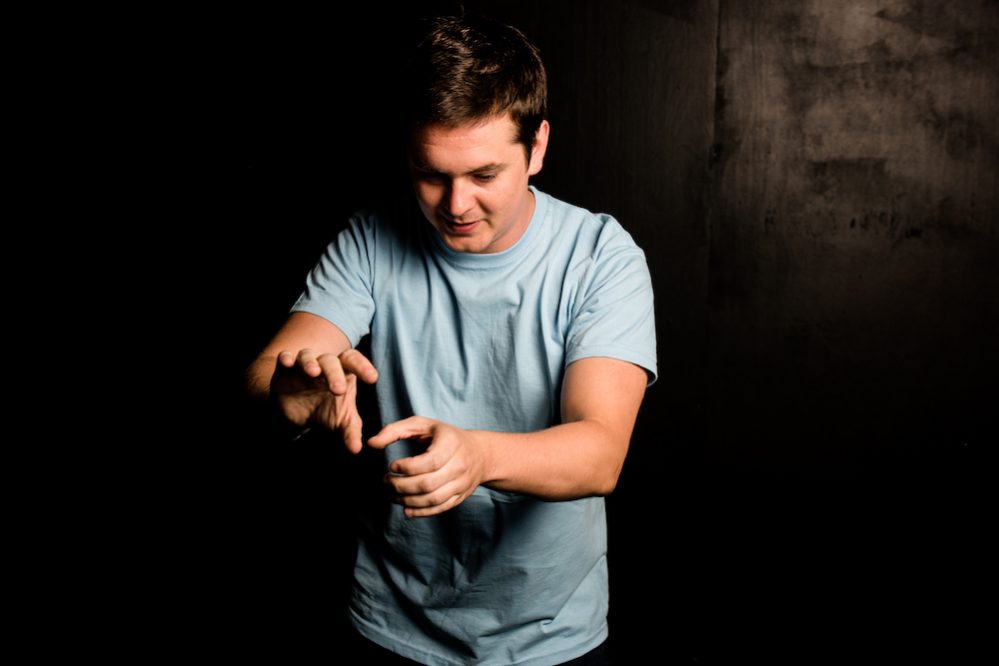
    Donny Stixx is a boy with problems. He’s the product of a troubled background but he’s putting all that behind him for one night of audience questions and answers as he jokes with the audience, winking cheekily and tells us all about his rise to fame and his magic act. Sadly, Donny isn’t as famous for his dated magic show as he is for other things and he’s not known as the most hated boy in England for nothing. His cheesy ‘end of the pier show’ facade soon drops and despite his rage at the questions about the shootings, he’s going to tell us all about it.

    Multi award-winning playwright Philip Ridley is a master at capturing the darker side of the human condition and the story of Donny Stixx is a fine example of his work. Like its companion piece Dark Vanilla Jungle this is a one person show that features a troubled teenager. The script is witty and fast paced and almost dizzying as Donny bombards the audience with his repartee. There’s a cosy and domestic theme to his rambling that draws you in but soon falls apart as a much scarier and uncontained Donny breaks through.

    Director David Mercatali has a fine pedigree of presenting Ridley’s works and this is no exception. Sean Michael Verey (Pramface) hits all the right notes as Donny. He manages to convey both an endearing vulnerability and a truly chilling rage as he interacts with an imaginary audience (don’t worry, there’s a fourth wall). It’s not hard to see why he won awards for this performance at The Edinburgh Fringe. The new space of The Bunker at Southwark is a fine home for a piece like this. It’s an intimate new 110 seat venue in an old underground car park (you may want to take a warm coat) next to The Menier Chocolate Factory (a short walk from London Bridge Station). The sparse staging helps to centre attention on Verey’s powerful performance.

    Donny Stixx raises interesting issues about the nature of the lost and lonely teenager and how society can fail them. If you want an evening that’s funny but as far away from the saccharine highs of a West End musical as can be then this is a must see.

    Tonight with Donny Stixx plays at The Bunker Theatre until 3rd December


    Follow Chris Bridges on Twitter

  • THEATRE REVIEW | The Boys In The Band – West Yorkshire Playhouse, Leeds

    THEATRE REVIEW | The Boys In The Band – West Yorkshire Playhouse, Leeds

    ★★★★| Set in Brooklyn in the late 1960’s , nine gay men gather in an apartment to celebrate a friends birthday. Michael is an alcoholic shopaholic, Harold is a self-depreciating “Jew Fairy” (as he describes himself), Larry and Hank are a couple trying to make their differing views on monogamy fit together and Emory is as camp as they come. Throw into the mix a rather attractive, but dumb, cowboy hustler, a closeted testosterone filled ex-college roommate and copious amounts of booze and pot, and it’s not long before lives unravel, tempers fray and a cruel party game emerges.


    Photo Credit - Darren Bell
    Photo Credit – Darren Bell

    This long overdue revival of Mart Crowley’s classic play is most welcome, and whilst it is no longer as shocking as it was in the late 1960’s, the relevance and impact still resonates today; as, sadly, do the undertones of self-loathing and internalised homophobia. The range of characteristics on show from the main protagonists may seem slightly cliché now, but still manage to reflect a number of the sub groups within the gay community and the issues facing them. The first act is a rather whimsical affair, as the characters arrive and you get to know them, but as the second act progresses, the narrative takes a darker turn, leading to a gripping dénouement.

    The cast is strong all round, with solid performances from the ensemble, particularly Mark Gattis (Sherlock, Doctor Who) puts in an effortless performance as Harold, filled with subtlety and natural aloofness. Ian Hallard (Poirot, Doctors) holds the cast together as Michael, and James Holmes (Miranda, Psychoville) is delightful as Emory, brimming with campery and confidence. And whilst Jack Derges (Andy Flynn in EastEnders) is a vision of physical perfection, he proves he is much more than the token eye candy with an enjoyable performance as the dim witted (and mostly shirtless) cowboy hustler.

    The set is authentic and beautifully detailed, as are the costumes, but even though the fashions and décor have altered, the issues raised have not; and whilst some of the social impact of the play may have lessened with time, the personal impact hasn’t, and the gay audience will recognise aspects of themselves, their peers and their experiences amongst the events of the evening.

    With some sharp one liners, genuine emotion and some top notch performances; don’t miss your last chance to see this this excellent revival before it ends its run. The Boys in the Band is playing at West Yorkshire Playhouse, Leeds, until Saturday 19th November 2016. See www.wyp.org.uk for details.


  • THEATRE REVIEW | An Inspector Calls, The Playhouse Theatre

    THEATRE REVIEW | An Inspector Calls, The Playhouse Theatre

    ★★★★★ | An Inspector Calls, The Playhouse Theatre

    An Inspector Calls
    CREDIT: Mark Mark Douet

    J.B. Priestley’s 1940s play An Inspector Calls had languished somewhat until Stephen Daldry’s (The Crown, Billy Elliot, The Hours) landmark 1992 production.

    The piece was much loved by amateur dramatic societies and small regional theatres, in part due to its seven-person cast and one room staging. Daldry’s revival, almost 25 years ago, at The National Theatre, gave the play a fresh lease of life with a radical new staging and a dramatic set design by Ian MacNeil. Now restaged again in London at The Playhouse Theatre, after long-running regional tours, this stylish and evocative revival is still feeling as fresh and pertinent as it did in the 90s.

    In 1912 the wealthy upper middle-class Birling family are celebrating their daughter’s engagement to the son of a prominent family. The evening in their dining room in Bromley is interrupted by the arrival of Inspector Goole who tells them of the death of a young woman by a particularly gruesome suicide. The family are at first irked by the intrusion on their celebrations but gradually come to see that they each had a role in bringing about the woman’s downfall.

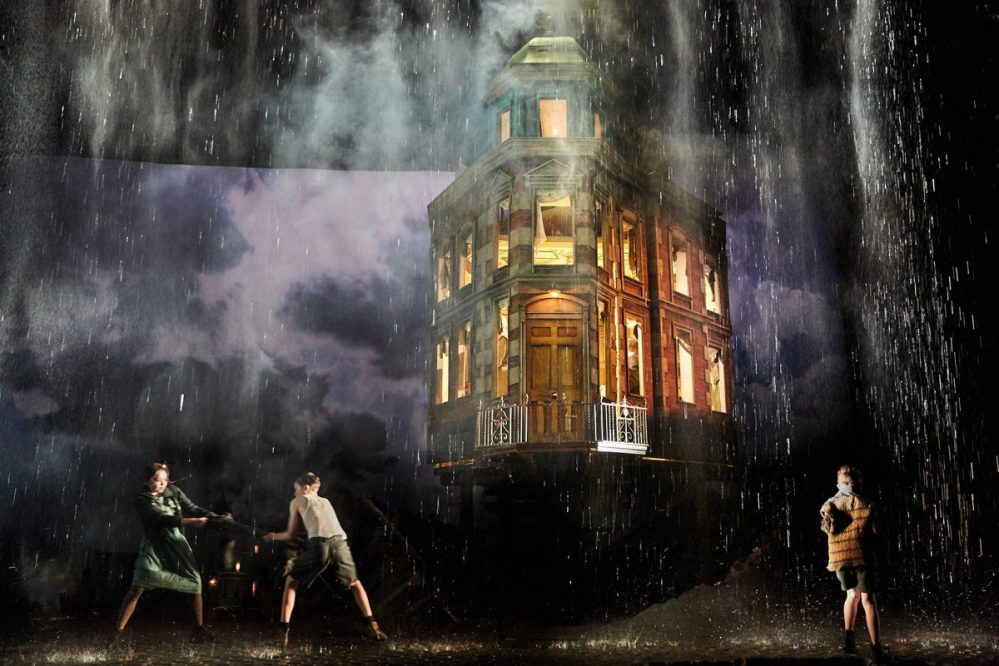
    The stage is dominated by a giant dolls’ house raised high above the stage. This has to be one of the most breathtaking stagings of the last few decades. To describe the workings of the set would ruin the surprises but needless to say, it’s a clever design that enhances and doesn’t swamp the play’s message. Even though the smaller stage of The Playhouse feels a little cramped for the production, it’s still powerful and atmospheric. The cast are strong, and special mention must go to the excellent Barbara Marten as the monstrous Sybil. She imbues a touch of high camp without detracting from the horror of her snobbish coldness.

    Can a revival of a play from seventy years ago, about a family from a hundred years ago still speak to today’s audiences? The answer is a resounding yes. The theme is self-interest, prejudice and how people use others weaker than them to get ahead. With recent world events and the scary rise of far right wing politicians, it couldn’t feel fresher. Or more chilling.

    Follow Chris Bridges on Twitter


    An Inspector Calls plays at The Playhouse Theatre

  • THEATRE REVIEW | Pride and Prejudice, The Birmingham Rep

    ★★★★★ | Pride and Prejudice, The Birmingham Rep

    CREDIT: Johan Persson

    Masterfully personifies Austen’s work of art.

    I remember reading Pride and Prejudice in my early teens, and recall falling in love with characters and the way they came to life on every page. Last night, Simon Reade’s stage adaptation delivered the feeling of nostalgia and I couldn’t help but fall in love again.

    It is quite rare to see a cast where every character, minor or major, stand out equally, and contribute superbly to every scene they are in. This was true of Pride and Prejudice. I was blown away by the humour, the tension, and the vulnerability that every actor was able to portray throughout the production. Matthew Kelly did a sterling job as Mr Bennet, with his on-point comedic timing and powerful voice that rippled through the auditorium. The shining actor was Felicity Montagu who played Mrs Bennet, and what a sensation she was. Felicity was the true embodiment of the role and from minute one she had you in stitches. The dour portrayal of Mr Darcy by Benjamin Dilloway was accomplished and perfect for the character, showing Benjamin’s versatility, for his change of mood when he confesses his love to Elizabeth Bennet was more heartfelt and the audience were drawn in. There were some ‘awwws’ when he professed his true feelings to Elizabeth. Elizabeth Bennet, portrayed by Tafline Steen, was a whirlwind. Headstrong, charismatic, un-lady like, and the Elizabeth I envisioned when I first read the book. This was a typical feeling I had, as every role was expertly crafted to suit the novel, making it a magical experience for the Austen aficionados. Doña Croll’s Lady Catherine De Bourgh was a sensation and the epitome of the high class of the era. Her characterisation was composed, edgy and a little on the dangerous side.

    The set, as well as the props and effects, transported the audience into the early 1800s where ‘things’ were seen of more value than people. Gossip and hearsay were a constant pleasure manifested in the society of the era, and Austen did a brilliant job capturing it. Simon Reade outdid himself by introducing to us the story we cannot help but go weak at the knees at every time.

    I was so impressed by the energy and enthusiasm shown across the production that I want to see it again and again, and haven’t stopped recommending Pride and Prejudice to friends. Perhaps that is why there are scarcely any seats left!


    Pride and Prejudice plays at the Birmingham Rep until 12th November

  • THEATRE REVIEW | The HIV Monologues

    THEATRE REVIEW | The HIV Monologues

    ★★★★★ | The HIV Monologues

    The HIV monologues review
    CREDIT: Dionysis Livanis

    From AIDS to PrEP: Love, Sex & HIV

    If you met a moreish specimen of a man on Grindr, in Rupert St Bar or at a friend’s gatherette and there was immediate trouser-twitching, shimmies to the heart department and your thoughts turned towards naming your first pair French bulldogs – but then, after some time into this meet, said hottie informs you he’s HIV positive – do you know how you’d react?

    Marking twenty years since life-saving HIV medication was introduced to the UK, Patrick Cash has penned a very real production that will send sparks to your neurons, pricking your nervous system: a trio of scenarios that are entwined together touching on the effects of HIV in the 80s up until the current day.

    Alex (Denholm Spurr) – a Labrador puppy intermixed with a male cheerleader with obtuse understanding of the immune-attacking virus – struggles with the idea of being close to someone who’s positive, and barely has enough shrapnel to buy even the smallest tube of lube.  The out-of-work actor gets himself into a sticky situation with the truth.

    Lack of knowledge inflames fear, but understanding can provoke the guardian in all of us.  Irene’s (Charly Flyte) journey nursing AIDS patients is moving and compelling.  Barney (Jonathan Blake – one of the first people to have been diagnosed with AIDS in the UK) learns to live with the deficient insight with HIV in the 80s – a convincing performance.

    A Thunder Looper of emotions: stigma, humour, shame and love – some well-directed tandem acting by Luke Davies – a challenging subject to cover – executed well.

    Two new dates at the King’s Head Theatre as part of their World AIDS Day weekend 20th and 21st November.

  • THEATRE REVIEW | Little Shop of Horrors – Sheffield Theatres and National Tour

    ★★★★| Life isn’t so great at the Mushnik Flower shop down on Skid Row. Mr Mushnik is on the verge of closing his shop, Audrey is dating a semi-sadist dentist and Seymour’s crush on Audrey is going nowhere. But with the arrival of a strange and interesting new plant, things start to change, especially when Seymour realises that the plant, Audrey II, has a taste for human blood. As things start to look up at the flower shop, Audrey II gets bigger and bigger, as does the list of missing people.

    Photo Credit – Matt Martin Photography

    Written by Howard Ashman and Alan Menken, the songwriting partnership behind some of the biggest Disney films, including The Little Mermaid and Beauty and the Beast, Little Shop of Horrors crams in the musical numbers, including “Somewhere That’s Green”, “Suddenly Seymour” and the title track “Little Shop of Horrors”. With a flavour of do-wop, funk and Motown running through it (even including a down on their luck version of The Supremes); and a bouncy and animated feel to the whole thing, this show is tremendous, kooky fun.

    Sam Lupton excelled as Seymour, with a strong, natural vocal performance and a geeky clumsiness; as did Stephanie Clift as Audrey, bringing out the optimistic side of her character whilst maintain her vulnerability. The two leads gel together perfectly, especially with their show-stopping rendition of “Suddenly Seymour” and they are an absolute delight to watch. Romantic leads as good as these two are few and far between. Rounding off the main cast was Rhydian, who played the “slightly” manic dentist, Orin, with enough gusto to keep it his performance just on the right side of caricature, and with his strong operatic voice lending itself to his big number very well. However, the star of the show was Audrey II, the giant plant, who grows and grows and becomes more animated as the story progresses.

    This touring production boasts a thoroughly detailed and well-designed set, with a cartoonish feel and an eye for detail. Add to that some clear, crisp and perfectly balanced audio, an effective lighting design and an all-round top notch cast and you have an impressive show which is highly polished.

    Little Shop of Horrors has gained a cult following over the years and it is easy to see why. At the heart of it is a love story about a guy who will do anything to get the girl of his dreams. The songs are catchy and feel instantly familiar, the story is undemanding, and the script has plenty of moments to make you laugh.

    With a healthy nod to 1950’s B-Movies and a musical mish-mash of styles with everything from Motown to Yiddish Folk Music thrown in there, Little Shop of Horrors is a cracking musical comedy which is pure escapist fun.

    Little Shop of Horrors is currently on national tour and details can be found on their website at www.littleshopuktour.com. The show was reviewed at Sheffield Theatres, whose upcoming production of Everyone’s Talking About Jamie opens soon (https://www.sheffieldtheatres.co.uk/whats-on/everybodystalking-jamie)
  • THEATRE REVIEW | F*cking Men

    THEATRE REVIEW | F*cking Men

    ★★★★ | F*cking Men

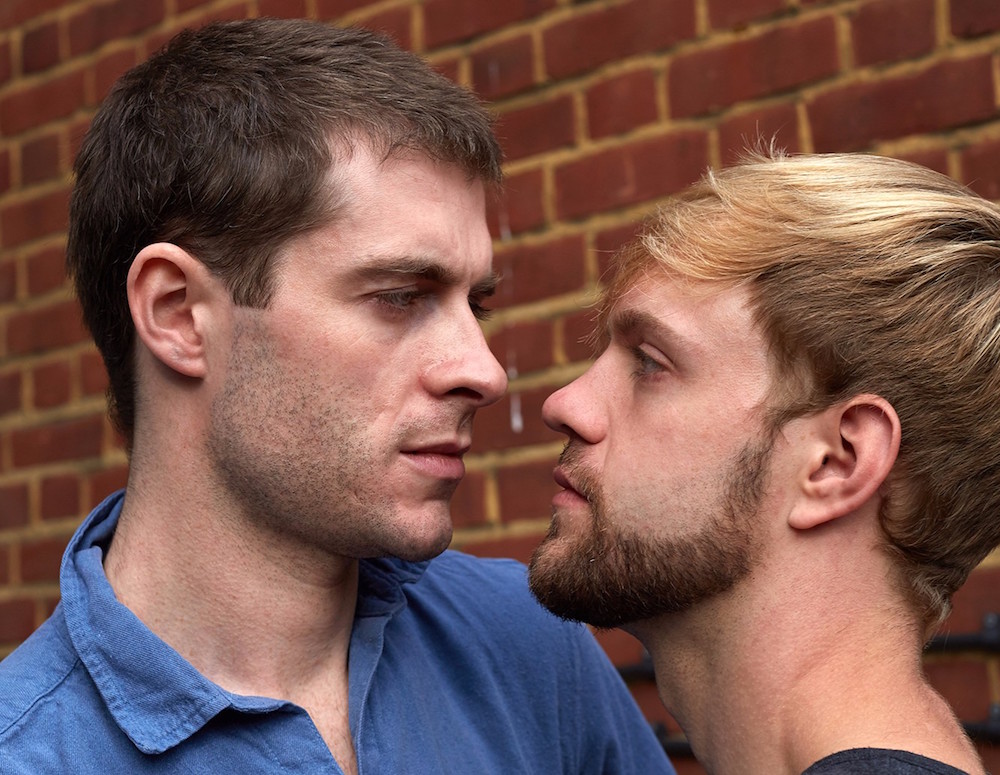
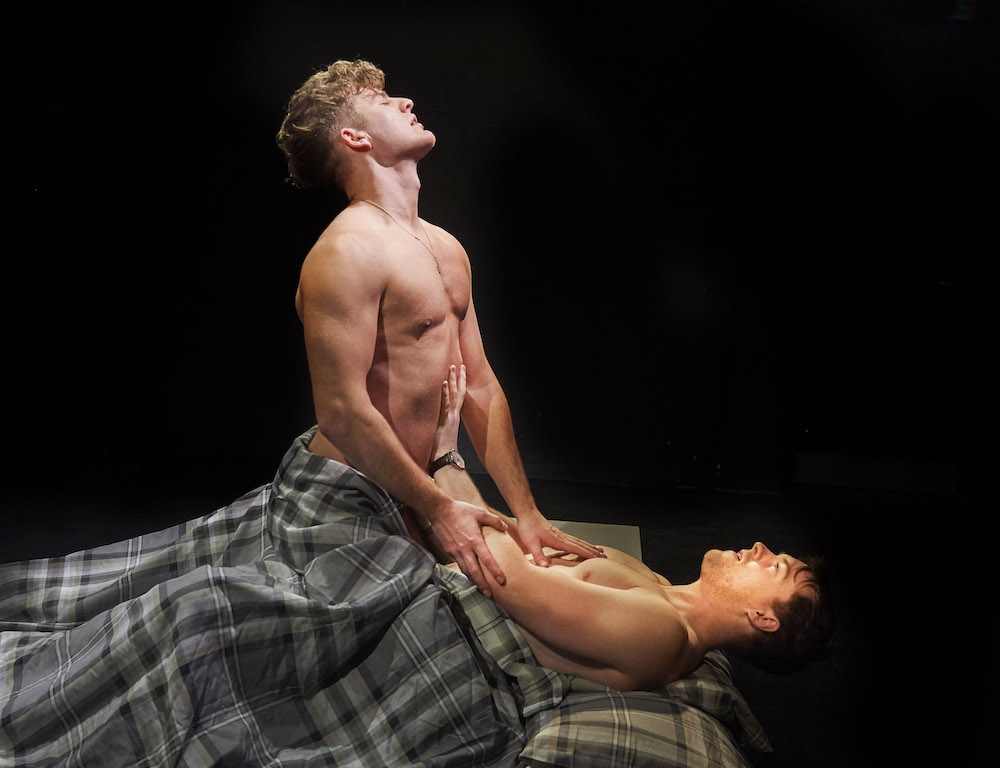
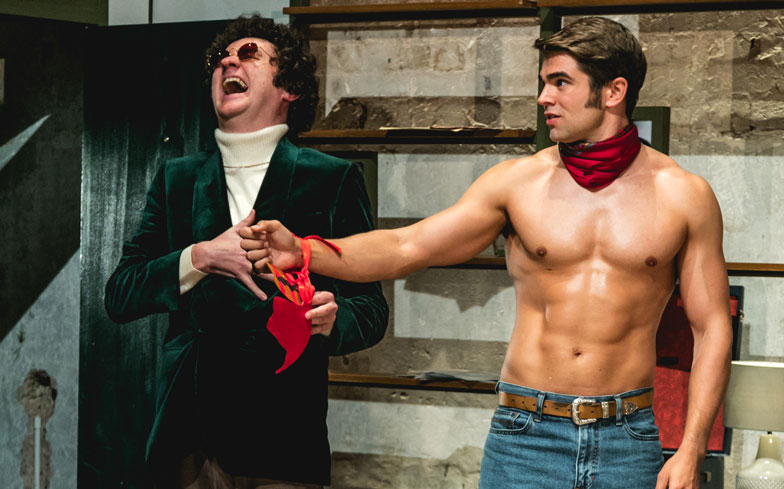
    If you’ve ever heard of the concept of ‘six degrees of separation’ then you’ll already know the theme of Arthur Schnitzel’s classic 1897 play Le Ronde. Couples copulate and the circle goes round with one-half of each couple appearing in the next scene with a new partner and the half of the first couple seen on stage appearing as one-half of the final shagging couple. Joe DiPietro’s updated version of his 2015 play features men f***ing. Lots of them. The three actors take on various roles including a rent boy, a soldier, a Hollywood actor, a married couple and a porn star. It’s a great concept and it actually works.

    The dialogue is sharp and witty and the play is by turns grimy, tender and darkly comedic as well as at times, erotic. Men fumble, fellate and f*** (you’d want your money back if they didn’t, wouldn’t you?). The situations are sometimes familiar, sometimes exotic and DiPietro manages to cover a lot of pertinent issues without being dull or preachy. From the young soldier pretending to himself that having his cock sucked doesn’t make him gay to the couple with intricate rules attached to their open relationship (which, of course, they aren’t abiding to); these are situations that are bound to resonate with a gay audience.

    A couple of the scenes jar slightly and there’s the odd discordant character but mostly these people feel spot on. The three actors are as talented as they’re hot. This is a feast for the intellect as well as the eyes and it’s a thought provoking and wise piece.

    I’d highly recommend getting down to The Vaults at Waterloo to catch this play. David Hare’s 1998 version of La Ronde (The Blue Room which starred a naked Nicole Kidman) was famously described as ‘pure theatrical Viagra’. This is a triple dose of Viagra in a tunnel at Waterloo. Now that’s not something you get offered every day.

    F***ing Men runs at The Vaults Theatre until 4th December

  • COMMENT | Why is it so difficult for men to hold hands in public?

    For the past six years, I’ve been touring a performance called ‘Walking:Holding’  where one person at a time is taken on a walk through the town and invited to hold hands with a range of local participants along the way. Next week I will be presenting this work in Leeds as part of Compass Festival with Live Art Bistro.

    Walking Holding
    CREDIT: Rosanna Cade

    The impetus for the performance came from my own experience of holding hands in same-sex couples and the complexity I discovered in this seemingly simple action. Across six years of touring the work to various towns across Europe, there have been many different experiences and reactions to the piece and the idea of holding hands with strangers. More often than not, there has been a lot of fear and tension around the action of two men holding hands in public.

    Recently there have been two incidents of male audience members attending the performance and then refusing to hold hands with the men on the walk. In two other instances in the past two months, male/male couples have been called names or laughed at while taking part in the performance.

    We have had many discussion around how our culture affects the way in which we view acceptable forms of intimacy in public, and also what we consider to be natural traits for men or women. I’ve worked with men from Nigeria and India, who talk about holding hands between male friends being common as a form of brotherly love. In western society, it seems that physical contact such as holding hands has been framed as feminine and therefore, perhaps, weak.

    Sadly there are many gay men who I talk to as part of the project who don’t feel safe enough to hold hands with other men in public. Ultimately, though, the performance is about challenging the idea that anyone should have to hide who they are, and hopefully inspiring those who haven’t felt confident enough before to change their behaviour.

    We toured to Dublin in 2013, and I felt that there was an accepted sense of homophobia in the city. Two gay men had been beaten up in the city centre about a week before I arrived, and there was a palpable tension in the air following this. A lot of the gay people that I spoke to said they would never feel comfortable expressing their sexuality in public, and carried a certain resignation and acceptance of that. However, for some of them the experience of taking part in Walking:Holding was transformative. Firstly, it broke a threshold – they held hands with another man and nothing bad happened. It also gave them a sense that they should be able to hold hands, that it shouldn’t be a privilege. They said they the experience had given them a whole new perspective.

    Walking Holding
    CREDIT: Rosanna Cade

    Here is an account from a recent participant:

    “I suffer with social anxiety and agoraphobia meaning that I find it hard to leave the house without a purpose. I took part in Walking:Holding in Leith this summer. In the workshop, I was asked to walk outside and hold hands with one of the other male participants. He was the first man I have ever held hands with in daylight since being a child. There may have been some late night occasions when I’ve been drunk, but never in the broad light of day.

    “It’s amazing how daylight illuminates things. It felt like there was a spotlight on us, and everything was heightened. I identify as being a-gendered so don’t feel like a man but I’m aware of what I present. To the outside world, we looked like two big beardy men holding hands. We spoke about how we felt like we were doing something wrong. We both felt frightened but we also felt protected by each other, at the same time as realising we were protecting the other one. This experience was intense but through holding multiple people’s hands across the week of doing the performance it became much less extraordinary and I felt braver with every new hand that I held.

    “The thing that made me the most emotional was that it changed my perception of myself. It gave me more confidence because both men and women were saying we look like we could be in a relationship. It doesn’t mean that now I can just go out and find a partner, but it gave me a kind of confidence that people don’t mind being seen with me – I’m not as bad as I thought I was. They were proud of me of those few moments.

    And from the male artist Laurie Brown who has collaborated with me on the project many times:

    “I’ve been involved with Walking:Holding now for over 5 years, so naturally I’ve held countless strangers hands of all kinds of backgrounds. Being involved with this piece has allowed me to empathise with others on a totally new level. It has challenged every prejudice I had and continue to have, and it reminds me of how massively different people’s experiences are of the same world. It is also a reminder of the immense joy vulnerability can bring. Holding someone’s hand can be really revealing, both of the other person, but also about yourself. When you hold someone’s hand and really focus on that experience it’s impossible to be bored, it’s never simple, and it is never the same.

  • THEATRE REVIEW | Ballet Black Triple Bill – CAST Theatre and National Tour

    ★★★★ | Comprising of a trio of pieces, this mixed programme from Ballet Black combines abstract dance, drama, passion and narrative storytelling in a triple bill of short pieces which amounts to a stunning evening of dance.

    Photo Credit – Bill Cooper

    The piece opened with Cristaux, an abstract piece centring on the beauty of crystals and how mesmerising they can be. The piece was performed by Cira Robinson and Mthbuthuzeli November, who both carried precision, synchronicity and poise in their movement. Robinson’s costume was beautifully decorated with 1500 Swarovski crystals, which glistened in the light as the pair traversed the stage.  Despite the quality of the choreography and performance, this was the weakest of the three pieces, primarily as a result of its soundtrack comprising of tinny bells ringing in a mish-mash of patterns. Despite sitting well with the theme of the piece, the composition held the piece back, which is unfortunate for something which otherwise had a lot for it.

    The second piece, To Begin, Begin was choreographed by Christopher Marney, a former performer with Matthew Bourne’s New Adventures. Warming the stage with subtle lighting comprising of hues of blue and orange; and accompanied by gentile compositions of swathing strings and piano, this piece had a warm, dreamlike quality to it which felt comforting and familiar. The second abstract piece of the evening had a more contemporary slant to it, and knitted together both the traditional and modern movements beautifully; and kept building the momentum with the music and movement. To Begin, Begin was evocative, atmospheric and utterly absorbing.

    Rounding off the programme was Storyville, a narrative driven piece choreographed by Christopher Hampson. Set in 1915, the ballet tells the tale of a young girl who finds herself working in an infamous dancehall in the red light district in New Orleans. Taken advantage of because of her youth and innocence, her spiral into self-destruction cannot be halted, even by a young sailor that she falls in love with. Brimming with passion and sadness, this piece had a clear narrative relayed by well-defined characters. Added into that was a collection of music which was evocative of the time period of the setting and a subtle undertone of fears of voodoo and black magic, reflective of the culture of New Orleans; which both added gravitas to the piece.  Storyville rounded off the evening perfectly.

    Having never seen this company before, for me, the triple bill was a fascinating insight into the company and an impressive taster of what Ballet Black has to offer, leaving me keen to see more from them.  With a consistency of quality, precision and emotion running through the three pieces and with their impressive choreography and presentation, Ballet Black is thoroughly recommended.

    Ballet Black is currently on tour across the UK. Details of the company can be found at www.balletblack.co.uk . Ballet Black were seen at CAST Theatre, Doncaster, who have a variety of art, dance, performance and shows, from West End shows to world premieres, in their upcoming season. Details can be found at www.castindoncaster.com


  • THEATRE REVIEW | The Last Five Years

    ★★★ | The Last Five Years, St James Theatre

    CREDIT: Scott Rylander

    The St James Theatre near Victoria has had a poor recent track record with widely panned shows such as Miss Atomic Bomb and the deeply unfunny comedies “Pig Farm” and “Three Lions” denting their reputation.

    It’s soon to be re-launched as “The Other Palace” (what were they thinking of with that name?). Things may be looking up with the addition of the duo that brought smash hit “In the Heights” to London (artistic director Paul Taylor-Mills and choreographer Drew McOnie) for their first production. Now acquired by Andrew Lloyd-Webber’s Really Useful Company, the intention is that this will be a home for established productions as well new musicals.

    Before the name change, we have the 2001 two-hander “The Last Five Years”. It concerns a New York couple and looks at their failing relationship. Failing actress Cathy tells the story backwards from the point where they split up whilst rising star novelist Jamie tells the story from the time they first meet. There’s a midpoint where their stories match up and they join each other on stage. Told in solo songs, it’s a quirky musical that hasn’t dated much in its style since it was written in 2001 and the form almost works. There is something odd, though, about numbers in which the couple sing to each other but are alone on stage with the other half of the relationship occasionally loping through.

    Star of Les Miserables, Samantha Barks is a gutsy Cathy and can certainly belt out a tune as well as convey emotion. Good-looking “Broadchurch” beau Jonathan Bailey is almost her vocal equal. There are some moving songs, comedic moments and the odd deft touch of lyricism mixed with some heavy-handed metaphors. The main problem lies in connecting with the couple. They appear. They meet. They split up (and do the same in reverse, if you’re watching Cathy’s numbers). We don’t learn an awful lot more. Cathy is a struggling actress who is late a lot. Jamie writes a book and finds success, ultimately neglecting Cathy. It doesn’t feel enough and there’s a limited amount of depth to the story and characterisation that makes the numbers hard to connect with fully. The set is clumsy, pushed and pulled by stagehands with creaky moving parts jerkily appearing and wobbling a la “Crossroads” motel.

    In spite of the flaws: there can’t be many of us who don’t identify with the elation of a fledging relationship or the hideous pain of parting when it all goes wrong. There are some great songs, wry humour and touching moments. There’s a lot to like here (especially the two stars) and hopefully, this is a sign of better things to come (except for the new theatre name).


    The Last Five Years plays at St James Theatre until the 3rd December

    Follow Chris Bridges on Twitter