Category: Theatre

  • THEATRE REVIEW | What Shadows, Birmingham Rep

    ✭✭✭✭ | What Shadows

    CREDIT: Ellie Kurttz

    Is prejudice innate or learned? Is racism okay if everyone is? And is there such thing as racism equality? These are some of the questions that What Shadows evoked, and are still riddling my mind.

    In 1968, Enoch Powell made a speech in Birmingham that created a fissure along the street where it was famously delivered and divided a nation with words that scarred those who became a target of it. The Birmingham Rep put on the production of What Shadows and a troubling moment of history was resurfaced.

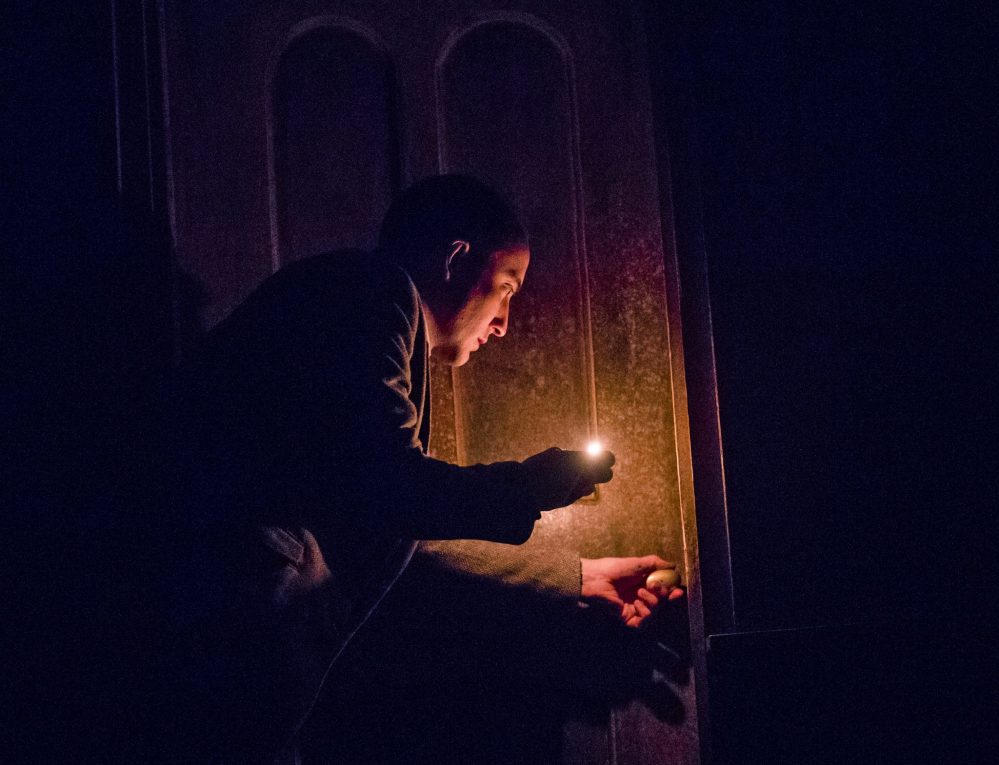
    In the Studio Theatre, real trees had been planted to give the idea of wilderness and lighting cast shadows on the wall for different moments of the play. I found myself staring at them a lot to figure out their purpose, and it dawned on me, halfway through, that the trees were probably the same ones that had witnessed history across the decades that the play was set in. They were the shadows of time.

    Cast-wise, each performer was equal in acting craftsmanship. Most actors multipart played different roles showcasing dexterity and natural flair, which contributed to an extremely believable production that took you on a chronological journey of identity. Chris Hannan, the writer of What Shadows, summoned a mixture of feelings in the audience, and without bias, created a story that made the audience ask and debate inwardly how they felt about their own identity: what is natural for human beings to feel? And, is double standards of racism correct?

    Ian Mcdiarmid not only looked the part but his physicality, as well as his tone of voice, were uncannily accurate. The power and fragility of Enoch was brought out by Ian in a subliminal way, and it was one of those performances that stunned you and made you feel incredibly glad to have had the opportunity to watch it.

    Bríd Brennan played Enoch’s wife, Pamela, and Sofia Nicol, an unrivalled genius of the early 90’s, which were played in a delicate and powerful way. The actor who stood out for me for his passionate, strong and utterly convincing portrayal of the Sultan was Phaldut Sharma. When he begged for his wife, Grace Hughes (Paula Wilcox), to remember him was close to tear-jerking, and the racial divide was felt the strongest when he gave a speech about serving with the Punjabi regiment and in the British Army as well as being a comrade of Enoch’s, and then Enoch’s dismissal and belittling of the sacrifices made by his regiment brought racism home. A superb performance I will never forget.

    Paula Wilcox did a sterling job as Grace Hughes, a lady who lost her husband during the war, and embodied, with impeccable skill, a racist resident in Birmingham who sided with Enoch’s views, but when she got to know the Sultan, the racial tension fell away, and left room for love.

    What Shadows plays at The Birmingham Rep until the 12th November
  • THEATRE REVIEW | Fool For Love, Found 111

    THEATRE REVIEW | Fool For Love, Found 111

    ★★★ | Fool For Love, Found 111

    This revival of Sam Shepherd’s 1983 drama marks the end of Found 111, the intimate Charing Cross Road performance space. Housed in the old St Martin’s College building next to Foyle’s, this odd little space has seen some triumphant plays in the past year. We’ve had Andrew Scott as one of a pair of reclusive brothers burying themselves in their own hoard of junk in The Dazzle, James Norton delusional, semi-naked and sweaty in Bug and Matthew Lewis as a hot shirtless hustler (a long way from Harry Potter’s fellow student Neville Longbottom) in Unfaithful.

    Fool For Love theatre review
    CREDIT: Marc Brennan

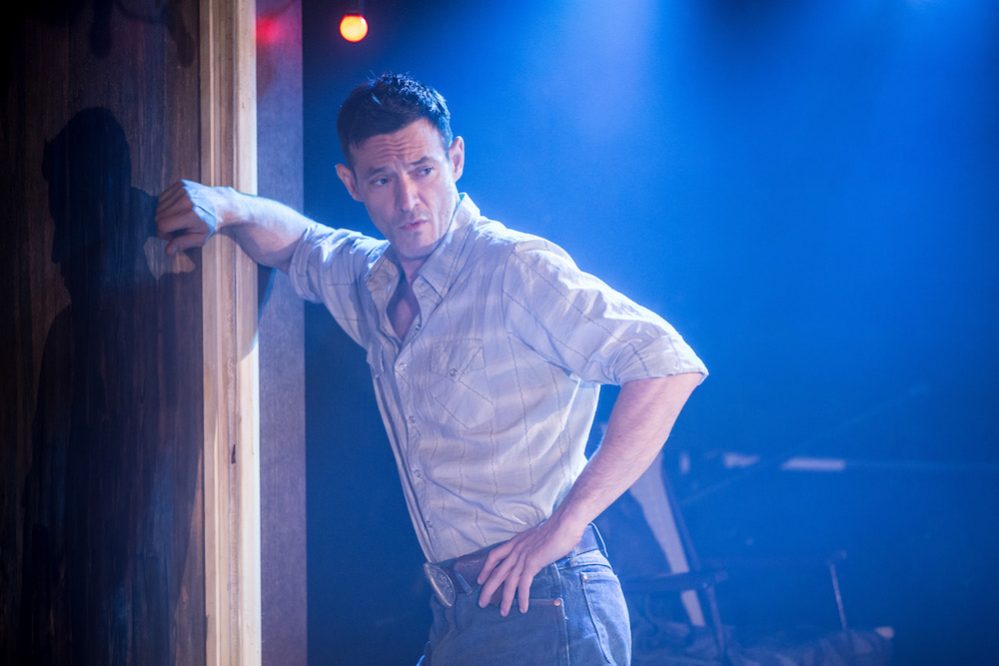
    Fool for Love is a claustrophobic play, suited to the closed, low-ceilinged space and seems a fine choice. Stuntman Eddie and his lover May are acting out the death throes of an on/off relationship in a motel room on the edge of the desert, overlooked by a brooding cowboy. The dialogue is terse as they parry and pace around each other and there are more slamming doors than in a house full of truculent teenagers. It’s a one-act play running at 70 minutes and whilst neither the plot nor theme enthral, the language frequently does.

    Eddie is played to brooding perfection by Ripper Street star Adam Rothenberg. He’s a strutting piece of sexually enthralling, bruised masculinity. His angular face pouts and he cheekily arches eyebrows. He’s also very easy on the eye and is a constant visual draw whenever he’s on stage. Equally strong is Lydia Wilson as May, convincingly showing us a character on the edge, veering between rage and even more rage. The problem is in the chemistry between them. For some reason, it doesn’t entirely work. However strong they are individually, there’s something lacking between them as a pair of long-term lovers. The space doesn’t help. The back of the theatre is opened up into a more expansive space and the atmosphere of an oppressive motel room that was achieved in ‘Bug” doesn’t quite come across here, however, much smoke they pump in.

    Found 111 isn’t going out with a bang (apart from the slamming doors) but nor is it a whimper. This play lies somewhere in between the two. It’s well worth seeing, especially if you’re planning to see Ed Harris in Buried Child at Trafalgar Studios. It fits neatly into the cannon of Shepherd’s work and provides interesting background. Also worth paying cash for is the sight of Adam Rothenberg. Thankfully, the production team are planning on resurfacing in similar quirky spaces that bring theatre away from the proscenium arch and into your lap. Watch this space.

    Fool For Love plays at Found 111 until the 17th December


    Follow Chris Bridges on Twitter

  • THEATRE REVIEW | Side Show at Southwark Playhouse

    ★★★ | Side Show at Southwark Playhouse

    There’s something grimly fascinating about conjoined twins. As a child, I longed for a twin, someone within the family who would be just like me and understand me completely. Conversely, I also found family life constraining and claustrophobic and wanted solitude and escape. Imagine having a twin who you share a body with and the implications of this? It’s a strange notion to consider.

    CREDIT: Pamela Raith

    One of the most fascinating sets of conjoined twins in history was Daisy and Violet Hilton. They were born in Brighton in 1908 and were joined at the pelvis, sharing some blood supply. Displayed in freak shows, they ultimately hit the vaudeville circuit in America and ended up appearing in films. Their personal life was unconventional: they ‘divorced’ their guardian and manager, both married gay men and died alone with one twin dying a few days before the other.

    Russell and Krieger’s 1997 musical Side Show should be a fascinating and moving tale. It is and it isn’t. There are some spectacularly good songs but also some drearily forgettable ones. The musical feels a tad derivative at times with too many echoes of Chicago and Cabaret but at others feels unique and powerful. Daisy and Violet’s story begins at the freak show and the ‘freaks’ act out the events of their life; doubling as reporters, courtroom attendants, wedding guests etc. Again, this could have worked well but the whole show feels less of a missed opportunity but more like an almost achieved opportunity.

    The two leads are the supremely talented musical theatre actresses Louise Dearman (the only actress to have played both Glina and Elphaba in Wicked) and Laura Pitt-Pulford. They carry the show and have an electrifying presence. They’re ably supported by Dominic Hodson and Haydn Oakley as their career propelling prospective suitors. The problem lies in how the rest of the cast are used.

    The ‘freaks’ are dressed in what looks like Halloween costumes made by someone’s mother and they’re all a bit too stagey in their actions and expressions. There are lots of broad gestures and facial contortions whilst they enthusiastically plod through the seen-before choreography. The Southwark Playhouse is a small and intimate space and works well for close-up musical theatre but not when the cast is behaving like it’s The London Palladium and the clothes don’t bear up to scrutiny from anything less than 50 feet away.

    Overall, it’s a show worth catching, if only for the chance to see two of musical theatre’s rising stars perform so beautifully at such close quarters. Just try not to ‘Come Look at the Freaks’ (as the opening and closing songs implore). You might feel embarrassed and not for any of the wrong reasons.

    Side Shows plays at the Southwark Playhouse until 3rd December

    Follow Chris Bridges on Twitter

  • THEATRE REVIEW | The Woman In Black – West Yorkshire Playhouse & National Tour

    THEATRE REVIEW | The Woman In Black – West Yorkshire Playhouse & National Tour

    ★★★★ | Set in an old theatre in the late 1950’s, a solicitor, Arthur Kipps, enlists the assistance of a young actor to tell his story. His tale revolves around a terrifying incident when he was younger, when he travelled to Eel Marsh House to settle the estate of a long standing deceased client. Initially finding a conspiracy of secrecy from the locals, he makes his way across the Nine Lives Causeway, which is cut off at high tide. Alone in the mansion, he is plagued by the sound of a pony and trap, an unexplained banging noise and a door which appears to be locked from the inside. What secrets does the estate hold? What lurks in the swirling mist…? And who is the woman in black he keeps seeing?

    Photo Credit - Tristram Kenton (PR supplied Photograph)
    Photo Credit – Tristram Kenton (PR supplied Photograph)

    This chilling and effective ghost story is beautifully crafted and uses simple techniques to create a very taught atmosphere in the theatre. The lighting design in particular was incredibly well done – who would have thought that a dark stage with just a door highlighted would draw worried mumblings from those around you?

    The production slowly cranks up the tension, which quite literally draws you to the edge of your seat and then throws you back into it with “cattle prod” jolts that elicited genuine screams of fright from the audience. The narrative of the piece draws you in; and the production avoids spoon feeding you the story, leaving you as the audience to create your own horrors in your imagination. The set, staging and props were remarkably effective in their simplicity and created an atmosphere where you held your breath with the central character as he explored the darkness. Setting the show in a theatre made you feel very much part of the story and the dark atmosphere and low level lighting only add to the gloominess and intimacy of the piece.

    The performances from the two leads were both very good, with Matthew Spencer playing the part of The Actor and Young Kipps, and David Acton providing the elderly Kipps and the other characters he comes across. It’s a production which shows just how effective a simply staged double hander could be; and the way in which the audience is manipulated via the events unfolding on stage is testament to the quality of writing behind the show.

    This show is faithful to its original source material, the book by Susan Hill, rather than the 2012 film; and The Woman In Black is well crafted fireside ghost story which proves that there is more to what is unseen than what is seen. This show is a chilling pre-Halloween treat and a perfect way to spend a dark, stormy winter evening.

    The Woman In Black is currently at West Yorkshire Playhouse until 29th October 2016 (www.wyp.org.uk) before continuing on its national tour until June 2017 (http://www.thewomaninblack.com/).

  • THEATRE REVIEW | THE EXORCIST, THE BIRMINGHAM REP

    ★★★★★ | The Exorcist was a frightening occasion with jumps, bumps, and lights were left on in my home.

    Robert Day


    The original ‘The Exorcist’ written by William Peter Blatty brought horror to U.K. cinemas in the 1970’s being banned in most of them, for people fainted, were sick and were left immobilised from the terror. The Birmingham Repertory Theatre developed the play version alongside Bill Kenwright, and playwright John Pielmeier for a U.K. premiere which happened on the 21st October.

    I was stunned immediately by the ambition of the set design and special effects used throughout the play. I previously thought it would be a play that was going to be hard to get a scared out of as you knew what was going to happen, as well as you are not manipulated by the sounds and editing that you normally experience in a film. However, The Birmingham Rep’s ‘The Exorcist’ took you by surprise and you daren’t bat an eyelid. The illusionist setting and apparition of the evil spirit were special effects you would see in a film now. The illusion design was masterfully developed by Ben Hart. The way the walls appeared to move and the dark cloud traveling along the set as the demon were just otherworldly!

    Robert Day


    The performance, delivered by the cast, matched the effects with equal conviction with Regan, in particular, played by Clare Louise Connoly, shining brilliantly. Clare’s multifaceted portrayal of Regan was sublime, and delivered every ounce with dexterity. She surpassed herself when becoming possessed with ambitious physicality and movement that contributed to the eerie ambience of the production.   Jenny Seagrove played Chris, Regan’s mother, and played her emotions very authentically as well as showcasing anger and fear very intelligently.

    Peter Bowl’s Father Merrin stole the show for me. He played the Father quietly, confidently, and made the audience feel at ease as the one who was going to solve the puzzle. An incredibly gifted actor whose short time on stage provided entertainment to the last second, and the audience hung onto every word he said. The flamboyant character Burke, played by Tristram Wymark, had genial comedic timing. A couple of times leaving some audience members in hysterics. Adam Garcia contributed to the sombre mood of the play with his portrayal of Father Karras, whose mother had been ‘taken by the devil’, and had died from the event.

    It was a well-accomplished production, with effects that could not be believed were possible, acting that was on point, with all characters providing an air of mystery and suspense; and the effects that made the audience jump, which to me was a treat that I won’t be forgetting any time soon.


  • THEATRE REVIEW | Sunny Afternoon – Sheffield Lyceum Theatre & National Tour

    ★★★ | Sunny Afternoon

    In this musical biopic, the swinging sixties are brought back to life as Sunny Afternoon tells the story of the early days of the classic British band, The Kinks, as they fight with their management and with each other on the road to fame. Featuring a slew of classic songs, including “Waterloo Sunset“, “You Really Got Me”, “Lola”, “Dedicated Follower of Fashion” and “Sunny Afternoon”, the show charts the on-stage antics, backroom bickering and personal lives of one of Britain’s seminal rock and roll bands.

    Picture Credit : Kevin Cummins

    Whilst the production gives a flavour of the band’s history, the narrative is stripped back to allow for the soundtrack to take pride of place. The show never really provides any detailed  or thorough insight into the band, their relationships or into the music industry of the 60s, but instead offers a show brimming with musical numbers which sit fairly comfortably within the story and remind you just how many great songs the band have done. The musical numbers veer from the tender ballads to some raw and energetic performances, with one of the musical highlights of the show being an acapella version of “Days“.

    Using a wall of speakers, the recording studio style set was visually striking; and a runway from the stage leading out into the audience added gravitas to the concert style feel of the piece and drew the audience in. The costumes accurately reflected the stunning sixties style and period detail littered the set; whilst the lighting design fitted the bill without ever being intrusive.

    Ryan O’Donnell provided a charismatic performance as Ray Davies, bringing with it an air of a thoughtful, reflective and somewhat fame-resistant individual to whom music was the most important thing, which was juxtaposed nicely with Mark Newnham’s confident performance as pill popping, hard drinking and cross-dressing Dave Davies. But what impressed most was the musical talent on display with the cast playing a variety of musical instruments; and in a play which holds the musical numbers out as its key feature, live performances like these really bring the show to life.

    Sunny Afternoon presents as a nostalgic slice of the sixties which benefits from a soundtrack comprising of more hits from the band than you thought you knew; and an interesting, if light, insight into the band which helped define the era.

    Sunny Afternoon is currently on tour around the UK until May 2017 (visit www.sunnyafternoonthemusical.com for details) and is currently playing at Sheffield Lyceum Theatre (www.sheffieldtheatres.co.uk) until 29th October 2016.

  • THEATRE REVIEW | Moby Dick! The Musical

    ★★★★ | You don’t have to be a fan of aquatic placental spout-squirting marine mammals to appreciate Andrew Wright’s take on Moby Dick – but a penchant for choreography that could power a fleet of trawlers, an affection for Glee-style musical numbers and an esteem for the male form, in two beautiful varieties, will help you stay afloat.

    St. Godley’s Academy for Young Ladies are in a bit of financial bother. Headmistress (X Factor’s Anton Stephans) decides to stage a musical version of Herman Melville’s classic novel Moby Dick to keep the shark from the porthole. Think St. Trinian’s meets Peter Pan with a wave of Carry on Cruising – Ofsted would have an algae-ridden-seabed day.

    In amongst the spot-light rivalry, over-the-blouse gropes, double entendres, an inappropriate use of a ruler, African jigs, amateur projector marine displays, dark angel trolly dashes, Sinitta (probably just because it was press night), the occasional can-can and a male striptease – in amongst the pandemonium of jollity is a cast humpbacked-full of enthusiasm, each sperming their own individual clicks, pulses and whistles.

    Ishmael (Rachel Anne Rayham) would give a chorus of orcas a swim for their money with her compelling vocal cords. Anton’s animated boat-race did him no favours with Mr Cowell but worked superbly spurting life into the Headmistress and Ahab. And Glen Facey’s pirouettes, fouettés and fish dives were executed without so much as a splash.

    School uniform isn’t mandatory, and you may be encouraged to dance with the Head, but there’s no Moby about enjoying this Dick – it’s a sure thing.

    Wednesday 12th October – Saturday 12th November 2016 Tuesday to Sunday, 7.30pm
Saturday and Sunday matinees, 2.30pm

    Union Theatre, 204 Union Street, London SE1 0LX – phone: 020 7261 9876

    Tickets are available starting at £15

    Book: www.uniontheatre.biz

  • THEATRE REVIEW | RAGTIME

    ★★★ | RAGTIME, London Theatre

    The US is in turmoil: racial discrimination is rife while immigrants arrive by the boatload to escape feast and famine in their own countries. This could describe present-day US but it’s actually the early 20th century in the new production of Ragtime now playing at The Charing Cross Theatre.

    Ragtime the novel was originally written in 1975 and had its London stage debut in 2003, after it had debuted on Broadway in 1998. The revival of the show was brought back to London’s Regent’s Park Open Air Theatre in 2012. This new version, directed by Thom Southerland, is very ambitious, with a very crowded cast of 24 on a stage barely able to fit in their singing, dancing and acting.

    It’s the turn of the 20th century in New York and we are sung the story of three different groups; an upper class family, African Americans, and Eastern European immigrants, and eventually all their lives will cross in a show that packs a lot in its over two hour running time in a theatre that was too hot and a bit too uncomfortable.

    The upper-class family takes from and centre. It’s the wife, who’s called Mother (Anita Louise Combe) with a young son and a husband who leaves the family behind to go on an exhibition to the North Pole. Then there’s the African Americans, fronted by Coalhouse Walker Jr. (Ako Mitchell), a Harlem musician whose girlfriend Sarah (Jennifer Saayeng) leaves her baby on Mother’s doorstep, but eventually moves in with Mother and is found living there by Coalhouse. Then there’s the immigrants – Tateh (Gary Tushaw) and his daughter (Alana Hinge) – who arrive in the big city with nothing to their name. However they don’t find their American dream in New York so Tateh decides they should go to Boston but right before their trip they meet Mother and her son. And trouble is in store for Coalhouse and Sarah who get harassed by unfriendly locals and it’s at this point when the first half ends.

    The second fails to match the first half’s intensity and drama. It neatly wraps up the storylines, with themes of reunions and acceptance but it’s all a bit of a letdown after the energetic and frantic first half. The cast are all fine, with the excellent vocal chords of Saayeng and Bernadette Bangura. And Combe and Tushaw provide much dramatic acting in their roles, while Samuel Peterson is adorable and perfect as the son on the night I saw it.

    If there ever was a musical that’s full of music, this is the one. It’s a good old classic American story that’s pure red, white and blue – there’s nothing as American as this show. And what a pertinent time to have on display this show of Americana, when the U.S. is going through a most unusual election, and where black men are continuously getting killed, and immigrants from all over the world wanting to live to live there. What took place in the early 20th century is still taking place today.

    Ragtime is now playing at the Charing Cross Theatre until Dec. 10th.


  • THEATRE REVIEW | Safe, London Theatre

    THEATRE REVIEW | Safe, London Theatre

    ★★★ Safe, London Theatre

    The statistics about homelessness people are alarming. 25% of homeless and at risk youth in the UK identify as LGBT, a shockingly high proportion.  Alexis Gregory has made a verbatim theatre piece looking at the subject. He interviewed a group of young adults who had been at risk or homeless and created a powerful set of interwoven monologues.

    CREDIT: Jane Hobson
    CREDIT: Jane Hobson

    Alicia started stealing her family’s painkillers to self-medicate against her confusion and worries about her sexuality.  Spiralling into a cycle of alcohol addiction she hurtles towards homelessness and hits rock bottom. Jack is confused by his gender, growing up as a boy in a girl’s body, suffering anxiety attacks and verbal abuse from his family who refuse to call him by his correct gender or use the right pronouns. Samuel realises that he’s gay at a young age but his ultra-religious Nigerian parents aren’t sympathetic to his sexuality. When he’s outed by his sister he ends up facing a volley of abuse and barrage of prayers along with plans to send him to Africa to ‘cure’ him. Understandably he flees. Alicia (same name, different character) is rejected by her mother and ends up in children’s homes and foster care. Trapped in the wrong body she works as a rent boy to get cash to get by.

    The stories are a mix of pathos, humour and horror. Samuel’s story (told by the talented Michael Fatogun) is laden with wry humour and the vibrant wit of his character comes through. Riley Carter Millington is among the cast and plays Jack. Better known for his portrayal of Kyle Slater in ‘Eastenders’; Riley was the first transgendered actor to play a transgender character in a T.V. soap opera. It’s a strong cast and they’re gifted a beautiful script (or transcript, even). There’s a hint of music with alternating singers at the start of the show (Rudi Douglas did a spine-tingling acapella version of ‘Smalltown Boy’ on the show I saw). There’s also a series of thought provoking 15 minute curated talks each night after the hour-long performance.

    The interspersing of the monologues with interactions of other actors playing subsidiary roles stalls the action and reduces the impact a little but it’s otherwise pitch perfect.

    Troubling and painful as the stories can be there’s ultimately something redemptive about them too. The Albert Kennedy Trust’s work figures highly in their support of young LGBT people in crisis. This is a performance worth catching. There can’t be many LGBT people out there who don’t find something to identify with here, too. These are exceptional stories in one sense but not in another. These are ‘everyman/woman’ stories that are sure to resonate.

    Follow Chris Bridges on Twitter

  • THEATRE REVIEW | Breakfast At Tiffany’s – Sheffield Theatres and National Tour

    ★★ | Based on the classic novel by Truman Capote; which was famously immortalised on the big screen by the 1961 film, Breakfast at Tiffany’s tells the story of an unnamed writer’s obsession with his faux-socialite neighbour, Holly Golightly, as she optimistically flirts, romances and blags her way through life via a series of romantic interludes with a number of well to do men.

    Photo Credit – Sean Ebsworth Barnes

    Based more on the book than on the film, this adaptation by Richard Greenberg has its moments. Firstly, the script, whilst wordy, carries with it an essence of Capote’s work, with rhythmically delivered passages of lengthy text which maintain the feeling of a novella rather than a play. Returning the time frame to the original 1940’s setting, the costumes were both glamorous, and, in the case of Holly Golightly, numerous. The set design was beautifully done, sturdily constructed, versatile and filled with period detail; and the lighting design by Ben Cracknell effectively transported the audience between New York downpours and hazy summer days.

    Matt Barber (Downton Abbey) delivers his role as Fred with enthusiasm and an element of innocence as his character falls for his neighbour’s charms; despite the hint of Fred’s closeted homosexuality running through the piece. Georgia May Foote (Coronation Street) is functional and steady as Holly Golightly. Stepping into such an iconic role was always going to be a tough call for any actress and Foote holds her own, never really excelling, but never falling flat either, although she doesn’t quite pull off the charisma and allure of the character entirely.

    The difficulty with this production is that is it, sadly, just plain dull. Golightly comes across as a self-absorbed, egocentric and, quite frankly, dislikeable character, which makes you wonder just why anyone would become so infatuated with someone so narcissistic. The play is heavy, slow going and overlong, which lacks any of the whimsical lightness and charm of the film version; and whilst the play is more reliant on the novella than the film, comparisons are unavoidable. The pacing and momentum of the piece is patchy; it is clumsy at times, there are a number of unnecessarily loud and messy scenes filled with a variety of unlikeable characters; and the audience warmed more to the scene stealing cat, Bob, than most of the actors on stage.

    For those enamoured with the book, this is a relatively good adaptation, and they will not doubt find much to enjoy within this production, which is a grittier and darker adaptation in keeping with Capote’s writing. For those who are smitten with the film, and despite the publicity shots for the play which are tantalisingly reminiscent of the iconic imagery associated with the movie, there is likely to be some disappointment.

    Breakfast at Tiffany’s is on national tour (see www.breakfastattiffanys.co.uk/ for details) and is currently playing at Sheffield Lyceum Theatre (www.sheffieldtheatres.co.uk) until 22nd October 2016.


  • THEATRE REVIEW | Shopping and F*cking

    ★ | Shopping and F***ing

    What’s not to like about shopping and f***ing? They’re two fine occupations. The answer is a that there’s a hell of a lot not to like in this messy and deeply flawed adaptation of Mark Ravenhill’s 1996 play. This is a world where sex and consumerism are distinctly unfunny, painfully dull and are a chore to watch.

    The play concerns Mark, a heroin addict who’s just failed in rehab, his lover Robbie and their flatmate Lulu. Emotionally deadened and reduced to seeing everything through a lens of consumerism, they’ve lost the ability to connect emotionally. Cue the arrival of Gary, a teenage rent boy who’s the victim of sexual abuse and now wants to be owned and a messy situation with a drug dealer. Events only serve to deepen their jaded worldview.

    Thematically the play has become more, rather than less relevant in the 20 years since it was first staged at The Royal Court. The world feels more mechanical and glassy eyed with the rise in the usage of the Internet. The play should work as well as it did when it was first written. The problem here is that director Sean Holmes’ attempts at a clever staging have swamped the play to such a degree that it’s almost unwatchable and the script feels buried beneath a high sheen.

    The Lyric has been transformed into a TV studio with a change in seating, green screens and cameras. It’s like a 90’s late night crap TV show with bouncy fake enthusiasm crossed with a surreal shopping channel. Runners appear, there are interludes where the cast try to sell tat to the audience and breaks for shameless nostalgia fests with 90’s pop music, one where Robbie gets off his face on E. It feels sloppy and cheap and not in any intentional way. Back projections of porn, scenes of rimming with associated anal bleeding, characters vomiting on stage, karaoke, audience participation, nudity, on-stage sex, drug-use, splatters of body fluid: I’d list more of the multitude of things that this production has thrown clumsily on stage but I’m starting to get flashbacks of boredom.

    It feels sloppy and cheap and not in any intentional way. Back projections of porn, scenes of rimming with associated anal bleeding, characters vomiting on stage, karaoke, audience participation, nudity, on-stage sex, drug-use, splatters of body fluid: I’d list more of the multitude of things that this production has thrown clumsily on stage but I’m starting to get flashbacks of boredom.

    This could have worked and could have been an arch and witty adaptation that slammed home the message of the play and emphasised the caustic wit of the piece. Instead, it just feels juvenile and tiresome with nothing to compel you to watch. It’s about as dull as spending an hour and a half listening to Gary Barlow’s monotone voice (if you hadn’t noticed, the characters are named after Take That).

    Really disappointing work from The Lyric.

    Shopping and F*cking plays at The Lyric until the 5th November

    Follow Chris Bridges on Twitter