Dave Slick who starred in films for gay porn studios, Falcon Studios has died at the age of 26
The actor from Scotsdale, USA, who had starred in films for Falcon Studios, as well as cam-sex site Chaturbate, has died in Chicago, he was just 26-year-old. He was in the Chicago for the Exxxotica Expo convention.
“The missing man was found unconscious and not breathing about 11:35 a.m. Friday in a bathroom on the 100 block of West Jackson in Chicago, police said. He was taken to Rush University Medical Center, where he was pronounced dead”.
Tim Valenti, Naked Sword and Falcon Studios president, said, “He was earnest and ambitious. This is a tragic loss.”
During photos today at FlexSpas Cleveland! ? #towelselfie #almostnaked #behindthescenes #pornlife #menoffalcon #falconstudios #bathhouse #bathhouses #cleveland
A post shared by Dave Slick (@itsdaveslick) on
Tony Dimarco, a director for Falcon said on Twitter, “It’s heartbreaking to hear the news of the passing of DaveSlick@itsdaveslick It’s really hard to process it all. He was a super sweet guy and kind soul. My deepest sympathy’s go out to all his friends and family. Gone too soon, you will be greatly missed.”
It’s heartbreaking to hear the news of the passing of Dave Slick @itsdaveslick It’s really hard to process it all. He was a super sweet guy and kind soul. My deepest sympathy’s go out to all his friends and family. Gone too soon, you will be greatly missed. ? pic.twitter.com/UyOhNsRCgE
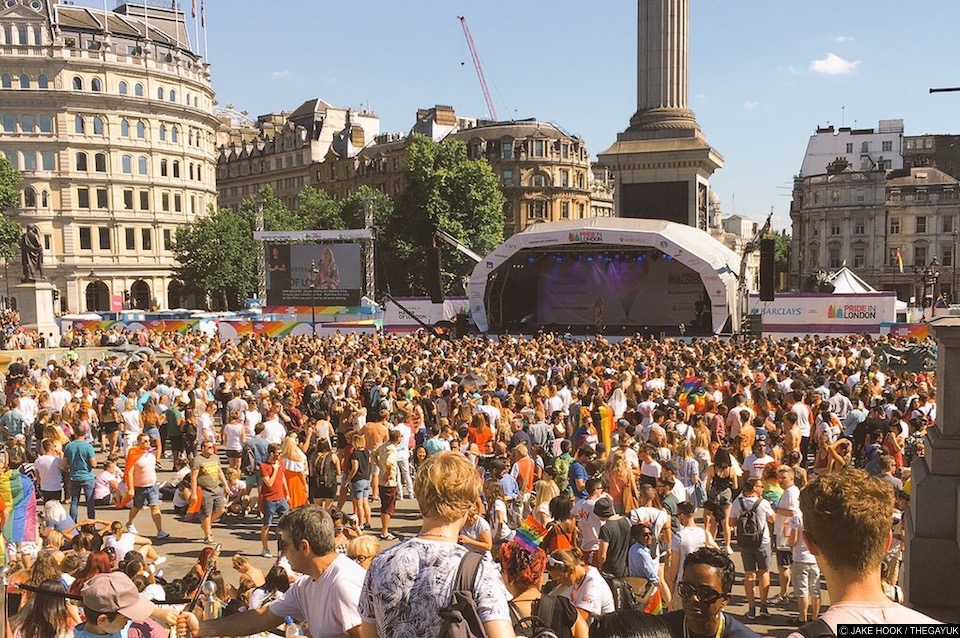
Wondering where the safest and friendliest places to celebrate pride in 2018?
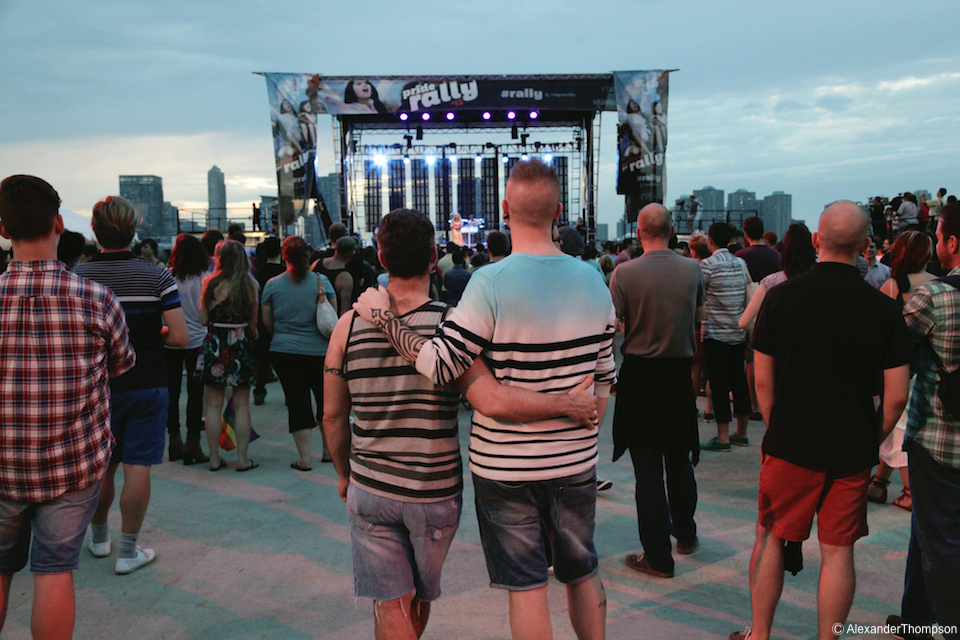
Pride Kickoff Rally 2013, Tribeca, Manhattan
Airbnbreveal the world’s top destinations for an unforgettable Pride this year.
Through a specially commissioned study conducted by ABCD in May 2018, the people-powered hospitality platform with a mission to create a world where anyone can belong anywhere has found out which destinations have the most to offer LGBTQ travellers.
The study looked at 100 cities with the highest Pride attendance worldwide and found out which of these fared best under five different LGBTQ categories, including nightlife and dating. Here are the winning cities and categories:
1. OVERALL WINNER – New York City
The Big Apple not only offers one of the biggest Pride celebrations, it also boasts a bustling nightlife, a busy dating scene, well-established marriage equality and impressive Airbnb stats: the city that sparked the gay Pride movement following the Stonewall riots will welcome over 27,000 guests on Airbnb during Pride Week.
Traditionally a mecca for LGBTQ travellers, it’s no surprise that London topped the ranking for dating. Using data shared with Airbnb by Tinder this May, they discovered that the British capital has the highest per capita usage of LGBTQ Tinder profiles worldwide (via Tinder’s More Genders feature).
Sydney places 9 in the Dating category so why not take your date to Priscilla Queen of the Desert, Australia’s most successful musical? On this Experience, bookable on Airbnb, you’ll get to go behind the scenes and take a sneak peek at the costumes, wigs and make-up from the production that usually only cast and crew get to see.
3. NIGHTLIFE WINNER – New York City
Looking at the number of LGBTQ clubs and bars, New York City is a top destination in this category too.
The city that never sleeps is closely followed in this ranking by 2. Los Angeles, 3. Tokyo, 4. Berlin, 5. Madrid, 6. London, 7. Mexico City, 8. Paris, 9. San Francisco, and 10. Barcelona.
4. PRIDE WINNER – São Paulo, Brazil
Image credit: Ben Tavener / Flickr – https://flic.kr/p/nupESZ
In terms of sheer numbers attending Pride celebrations, São Paulo tops the ranking in this category. Approximately 3 million visitors attended last year’s celebrations.
Liniker, a popular transgender musician from São Paulo, will take guests to some of her favourite local spots and end her experience with a private listening session of her upcoming album.
Airbnb also looked at their list of cities to find out which destinations pioneered LGBTQ marriage equality. In the Netherlands, same-sex marriage was made legal in 2001, making it the first country in the world to do so. This places the cities of Amsterdam, Rotterdam and Utrecht in joint first position.
The Dutch paved the way, but these countries and their respective cities followed closely behind:
6. TRAVEL WINNER – London
For this category, Airbnb looked at cities that had the highest year-on-year growth in Airbnb guest arrivals during Pride. They also identified which cities have the highest number of LGBTQ Experiences on Airbnb and where you can find Airbnb Guidebooks with the highest number of tips for LGBTQ travellers.
160K+guests are expected to check in to an Airbnb during London’s Pride Week
The top city in this ranking is London, followed by 2. Los Angeles, 3. New York, 4. San Francisco, 5. Tokyo, 6. Paris, 7. Montreal, 8. Amsterdam, 9.Berlin, and 10. Barcelona.
Speaking about the overturn, Human Rights campaigner, Peter Tatchell said, “Bermuda’s Supreme Court was right to rule that the repeal of same-sex marriage by the country’s parliament was unconstitutional.
“Under Bermuda’s constitution and its international treaty obligations the state is duty-bound to guarantee equal treatment and non-discrimination to all its citizens.
“This ruling will encourage and empower legal challenges to criminalisation and marriage inequality across the Caribbean, many of which are bound to succeed. It is indicative of the unstoppable global trend towards LGBT+ equal human rights.”
Rights won and loss
In 2017 Bermuda legalised gay marriage after a couple won the right to marry on the island after a Supreme court challenge found that not allowing gay couples to wed would be discrimination.
The couple used the British Overseas Territory of Bermuda’s Human Rights Act to argue their case. They said that not allowing them to marry constituted as discrimination on the basis of their sexuality, something that the act expressly forbids.
2016 Referendum
In 2016 Bermuda held a non-binding referendum on the issue of same-sex marriage and were asked two questions:
“Are you in favour of same-sex marriage in Bermuda?” and “Are you in favour of same-sex civil unions in Bermuda?”
Both votes were lost by 69 percent and 63 percent respectively with just 46.89 percent of the electorate turning out to vote on the issue. The low turn out makes the referendum invalid according to The Royal Gazette.
Research from Public Health England has revealed that there were nearly half a million (422,000) new sexually transmitted infections recorded in 2017. Although this number has been described as “stable” from the previous year, cases of syphilis have rocketed by 20 percent, from 5955 in 2016 to 7137 in 2017.
Worryingly, the highest rates of STIs are occurring in 16 to 24 year-olds, showing that the current sex ed situation in our schooling system is woefully inadequate.
There has been a fall in genital warts reported, which the report says reflects the widespread uptake of the HPV vaccine which is given to girls aged 12-13.
The HPV vaccine is not offered to boys of the same age.
Drops in chlamydia rise in gonorrhoea
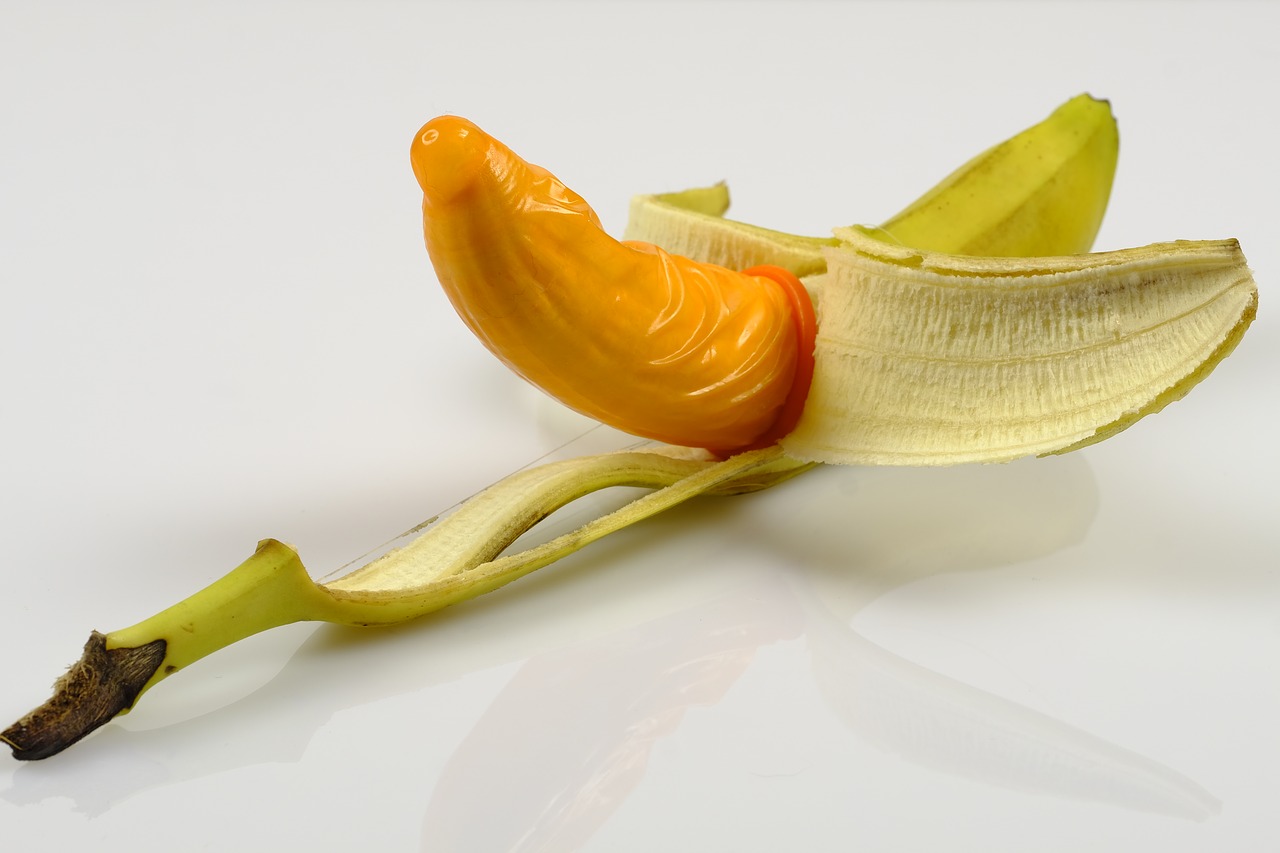
The humble condom remains the best way to protect yourself from sexually transmitted infections. FILE PHOTO / depositphotos.com
The report also shows that there’s been an eight percent decline in chlamydia testing and a two percent drop in chlamydia diagnoses in 15-24-year-olds. However, there was a 22% rise in cases of gonorrhoea in 2017 compared to 2016 (from 36,577 in 2016 to 44,676 in 2017).
Dr Gwenda Hughes, Consultant Scientist and Head of Sexually Transmitted Infection (STI) Section at PHE, said, “Sexually transmitted infections pose serious consequences to health – both your own and that of your current and future sexual partners.
“Consistent and correct condom use with new and casual partners is the best defence against STIs, and if you are at risk, regular check-ups are essential to enable early diagnosis and treatment.”
PHE has recommended, “Those at risk of STIs can access services through sexual health or genitourinary medicine clinics. PHE recommend regular HIV and STI testing for those with new or casual partners. Men who have sex with men who are having condomless sex with new or casual partners should seek testing every three months. Local STI services can be located online via NHS Choices.
*A previous version of this article stated that the research was from NHS England, when in fact it was Public Health England. It has been corrected to reflect this.
The Armed Forces, including representatives from the British Army, the Royal Navy, and the Royal Air Force, are set to join the York Pride Parade on Saturday 9th June.
This is the first time that representatives from any of the Armed Forces have been a part of York Pride. The British Army will also be having a stall at the Knavesmire where York Pride’s main event will commence following the Parade.
Greg Stephenson, Chair of York Pride, said, “We are delighted that the Armed Forces will be joining York Pride on 9th June and we are incredibly thankful for the support we have received from them so far. As a charity, we are committed to promoting LGBT+ inclusivity and fostering a supportive community spirit. We believe that having the Armed Forces marching in the parade symbolises the idea that as a society we should be supporting one another and advocating tolerance and not hate. It’s an incredible thing to see happen and is testament to just how much York Pride has grown over the last few years.”
Captain James Steel said, “It is an honour for me to represent the Army at the York Pride Parade. As a member of the Armed Forces, being able to fly the flag for our own LGBT+ community and the Army as a whole makes me immensely proud. It’s the first time the Services have been involved in this local Pride event, and I’m looking forward to marching alongside my colleagues from the Royal Navy and RAF.”
This year, York Pride will take place on Saturday 9th June. It will begin at approximately 11:45 am outside of the Minster, with the Parade setting off at around 12:00 pm. The main event on the Knavesmire will begin at 13:00 pm.
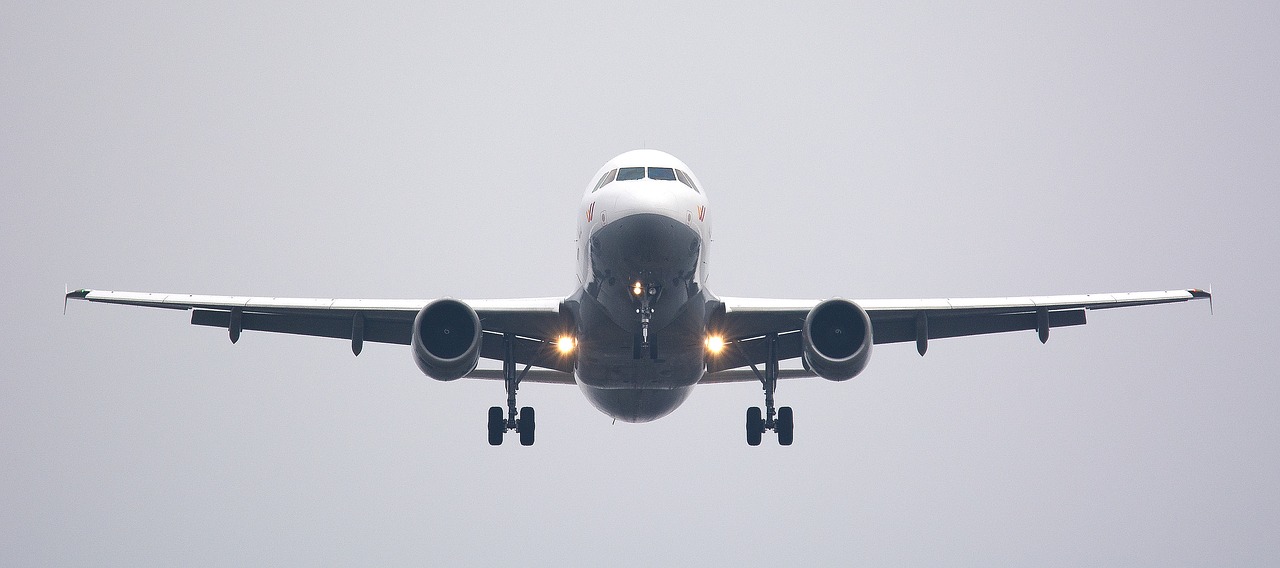
We all know the drill. Before your flight takes off, you’ll most probably be asked to remove your headphones by the flight attendants, and the same again will happen as your plane prepares to land. But they never explain why.
Most people onboard oblige, but some will just pop them earbuds straight back in once the cabin crew have passed by and taken their seats. But a stark warning from an airline pilot on Quora, has us thinking maybe we all need to start doing what we’re told!
Sebastian Lender, who is an airline pilot, advises that if your plane should hit a flock of birds – known as bird strike, and you’re wearing headphones that are banging out the latest Justin Bieber tune, that you won’t hear the warnings from the flight deck or from the cabin crew telling you to brace for impact, which could lead you to receive catastrophic injuries like shattered shins, fractured arms, but perhaps worst of all, that the impact from the “vertical compression broke your back”.
Although rare, bird strike is a real threat to aircraft, particularly during takeoff and landings. One of the most recent high-profile instances of a bird strike causing an aeroplane to crash land was the US Airways Flight 1594, which crash-landed in the Hudson River in New York in 2009.
Luckily no one was killed or severely injured in that particular crash due to the professional actions and instructions from the flight deck and from the cabin crew, but there have been instances were crash landings have caused fatalities and horrifying, life-changing injuries.
So remember when your cabin crew tell you to do something, it’s always for a reason and shouldn’t be ignored.
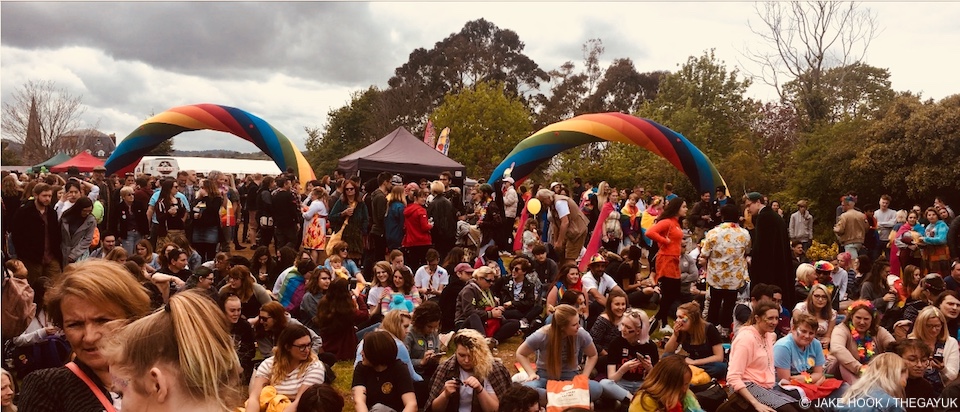
Pride season is finally here! It’s time to dig out the rainbow flags, the glitter and sequins!
In part one of this series on Pride, I’ll be exploring why Pride is so important to us as a community.
In recent years we have made huge progress worldwide in terms of LGBT+ rights. We can get married properly, we are protected in our workplaces and in everyday life. We can adopt or get surrogates to have a baby for us. We are accepted as true, legitimate families and Wales has recently announced that it is going to start teaching about LGBT+ relationships in schools to help children understand about same-sex relationships. We live in a wonderful time and that needs to be celebrated.
We also live in a time where we can be beaten up or murdered for so much as holding the hand of a loved one. We could die or be permanently physically injured or worse for daring to do something as innocent as love. Fair enough, it’s not as dangerous now as it was in the eighties when the AIDS crisis enhanced tensions and hostility towards the LGBT+ community but it’s still bad. It took a lot of work to get us to where we are now and there’s still more to do.
In parts of the Middle East people can be thrown off buildings for simply being suspected of homosexuality. In Russia, gay people are persecuted on a daily basis in the most brutal, horrific ways. In Chechnya, gay people flee for their lives or face being slaughtered by their own families in a “gay purge.” In Uganda, you can be imprisoned for life for being gay, or again, killed. Even Dubai, a glamorous holiday destination, adored by the West is a dangerous place for LGBT+ people. This is just a handful of examples.
Worldwide, LGBT+ people aren’t safe yet they defy their countries laws and hold Pride marches. In the countries mentioned before, and so many more, there are often devastating scenes of cruel attacks. These Pride marches are nothing like ours. Ours are a celebration of what we have and how far we’ve come, theirs are the complete opposite. They are life-threatening political performances where often the events are cancelled last minute for the activists’ safety. On the instances the very brave few go ahead, tragedy often follows close behind.
In 2015, Shira Banki was stabbed to death at a Pride march in Jerusalem by ultra-Orthodox Jewish man, Yishai Schlissel who had committed a similar crime ten years previously and served a decade-long prison sentence. He claimed he was “doing God’s work.” when he murdered Shira three-weeks after being released from prison. Shira was just sixteen years old.
Sadly scenes like this are too common.
This is why we need Pride.
Pride is a symbol of the fight our community have endured and the pain they have suffered to get us to this point. It is an important part of our culture and as we enter Pride season it is vital that we should remember and respect those who afforded us the celebrations we know and love now.
Throughout most of the Western world, Pride is an event where we can go and have fun with friends and family. We can enjoy music and entertainment and march through our respective cities with rainbow flags flying. We march hand in hand with our same-sex boyfriends and girlfriends and husbands and wives. We can freely identify ourselves as we wish and we do it with pride. We do it safely without fear of repercussion and stand in unity alongside people of all backgrounds, races and sexualities: Gay, bi, trans, straight. Pride is for all of us, of all ages and backgrounds to express ourselves honestly and authentically. Even our straight allies are proud to march with us in solidarity and that is a shining example of how far we’ve come. It wasn’t always the case.
In history, it was a criminal offence to be homosexual. If we were caught out for these “crimes” we could be imprisoned or forced to undergo “Conversion Therapy.” War hero, Alan Turing, who created the Enigma machine that helped us win the war was arrested in 1952 for “gross indecency.” He accepted chemical castration as an alternative to going to prison. After all he did for us, and he was treated like a criminal just for being gay. He was essentially tortured with cancer-causing drugs and eventually died a few days before his 42nd birthday from cyanide poisoning. While initial inquests ruled suicide, it has since been decided that his death was from accidental poisoning.
Homosexuality was eventually decriminalised in the UK in 1967 but it wouldn’t be until 2013 that Alan would be posthumously pardoned for his “crimes.”
This is why we celebrate Pride. We celebrate because we can. We do it because of these horrendous laws in the past that prevented LGBT people from being allowed to express themselves. We celebrate our right to exist in a world where we’re making progress and raising awareness of the troubles still faced by other in less fortunate regions across the world.
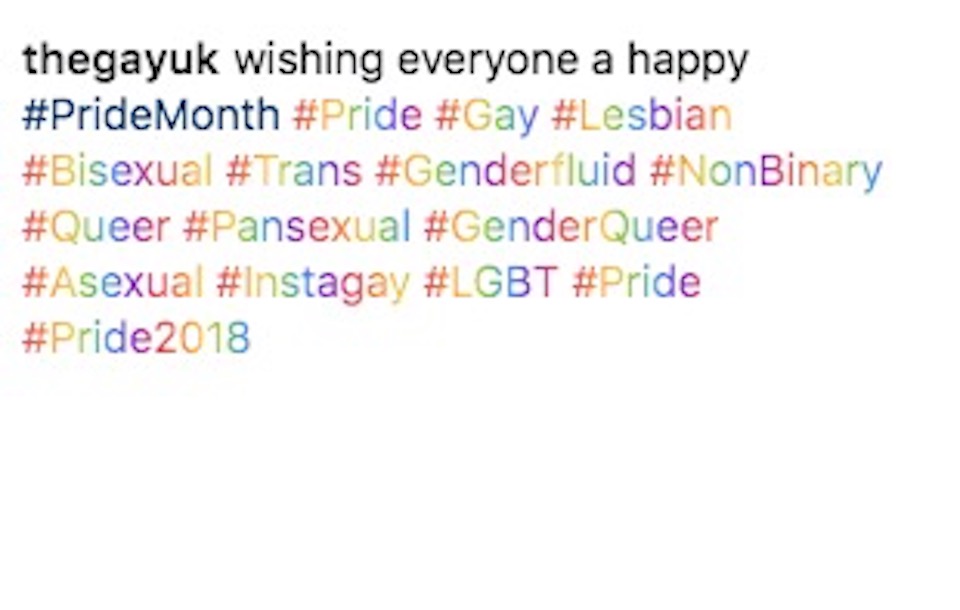
Apparently, the hashtags were approved by LGBT+ charity GLAAD. It’s just a part of the way Instagram is celebrating Pride Month – which is the entire month of June.
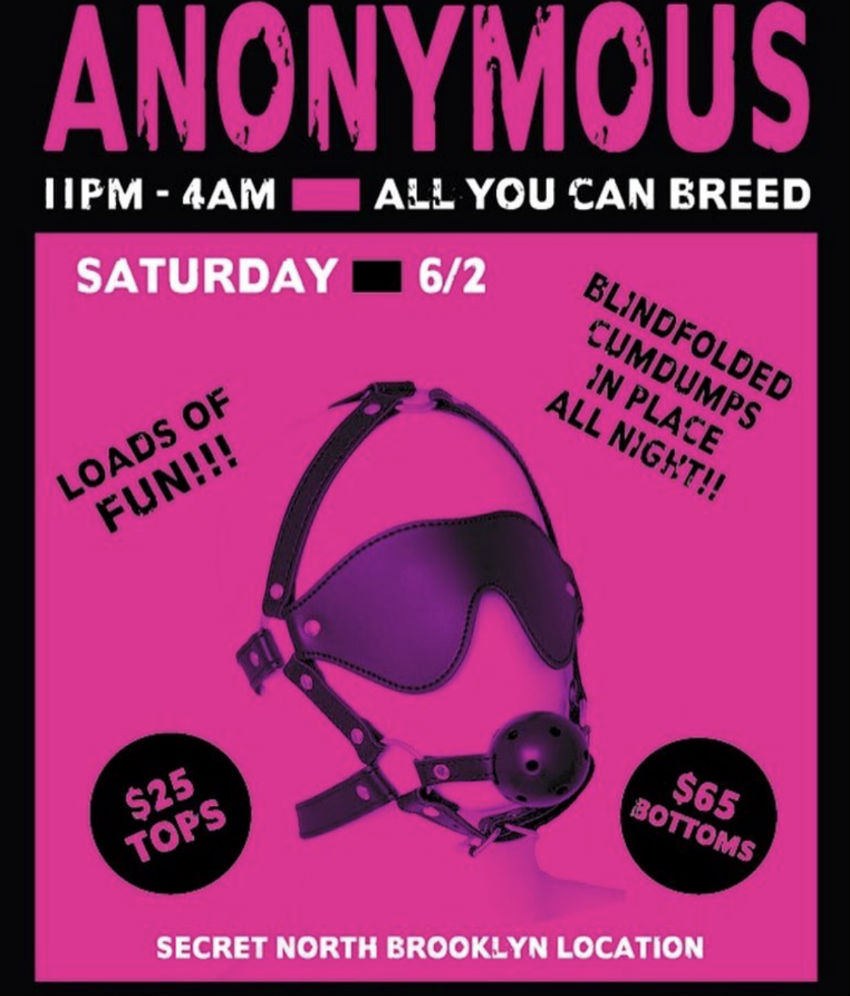
A sex party in New York is charging the bottoms $40 more to attend.
CREDIT: Depositphotos.com
So the deal is: Bottoms (known in this scenario as cumdumps) are blindfolded all night while the tops cum and go, until the bottoms have had their fill (this shiz writes itself).
I mean it sounds like people are getting what they want from the deal, except where the entry charge is concerned. Tops are charged $25 entry while the bottoms are charged $65. If you’re Vers but pay to enter as a top, don’t think you can cheat the system and get a sneaky sesh in.
Speaking to GSN, the promoter of the event which is called Anonymous said, “The way the party works is that bottoms volunteer as a cum-dump. They are placed into position for the entirety of the party and stay there as long as they want. I’m a big old bottom, and this has always been a fantasy of mine, but for it to work – and for the experience to be achieved for the cum-dump bottoms – we need a huge ratio of tops to bottoms, which means discounting admission for anyone who wants to top.
“That’s also part of what the bottoms are paying more for – guaranteed high numbers of tops. We are not proctoring anybody’s sexual identity, we’re just asking which role you’ll prefer to play in this particular fantasy experience.
“If someone is versatile they can play as a top. They just can’t switch over to bottom during the party because the bottoms have already volunteered for a limited number of spots in advance.”
So are they discriminating against someone for their sexual preference? Apparently not it’s all about fulfilling the fantasy.
“That’s also part of what the bottoms are paying more for – guaranteed high numbers of tops”.
Ah, so it’s all about supply and demand. The American Dream!
It seems the safer-sex message isn’t getting through to the under 25s as over 63 percent have admitted to having unprotected sex – leading to a whopping number of new sexually transmitted infections.
According to a recent survey, 15% of under 25s have also admitted to having unsafe sex with two or more partners since arriving at university.
The Student Room recently performed a study on sexual activity among students and found that more than half of sexually active students have never been tested for sexually transmitted infections despite 63% admitting to engaging in unprotected sex.
When asked about sex education received, 40% of students felt it was ‘just average’ while 27% said it was ‘poor’. When it comes to advice and information about sex, the majority of students revealed they found the internet the most helpful.
CREDIT: Janeb13 / Pixaby /CC
So what are the infections students are most likely to get?
According to the latest figures by the NHS, cases of STIs, including HIV, are increasing, with the highest increase seen among young people aged 16-24. This age group accounted for: 63 percent contracted chlamydia, 52 percent got genital warts and 42 percent got herpes.
Even scarier is that not all STIs come with symptoms, so you may not even know you have one. In fact, according to the NHS, around a quarter of people with HIV are oblivious to the fact that they are carrying the disease. If left undiagnosed, the risk of not receiving the proper treatment as well as potentially passing it on to another sexual partner is high.
If you suspect that you or your partner might have an STI, you can get tested at your nearest sexual health centre, GUM centre or even some family planning clinics. That said, going to a clinic to get an STI test can be seen as embarrassing or awkward, especially among young people. A good idea would be to go with a friend for moral support or, even better, your partner, as they will also likely need to get tested.
With 25% of university first years infected with an STI every year, Fresh Student Living provides an insight on how to protect yourself and your partner from the grim reality of STI’s while at university and beyond.
Can You Get Tested For STIs Online?
Due to the perceived stigma attached to being tested for an STI, online testing kits are becoming a popular alternative. According to research by YouGov, demand for STI testing kits over the internet almost doubled in 2016, with more than 417,000 diagnoses of STIs in England that year. But why? There are a few reasons:
– It’s safer
– There’s less drama, and most crucially,
– It’s more private
Known as e-STI testing kits, this new service has been developed to boost testing for gonorrhoea, syphilis, chlamydia and HIV. Kits are ordered over the internet, with sexual health information also made available, then posted out, allowing people to do the test at home and return it by post. The results will then be given either over the phone or via text message. These testing kits make getting tested all the more convenient and private, which is a major concern for all age groups.
Where Can You Get Checked for an STI?
Services and advice about STIs and sexual health are readily available throughout the country. If you need to get yourself tested, you can visit:
· GPs
· Family planning clinics
· Sexual health clinics
· GUM Clinics
· Pharmacies
· University organisations
Free Helplines
· National Sexual Health Helpline – 0300 123 7123
· Childline – 0800 1111
· NHS – 111
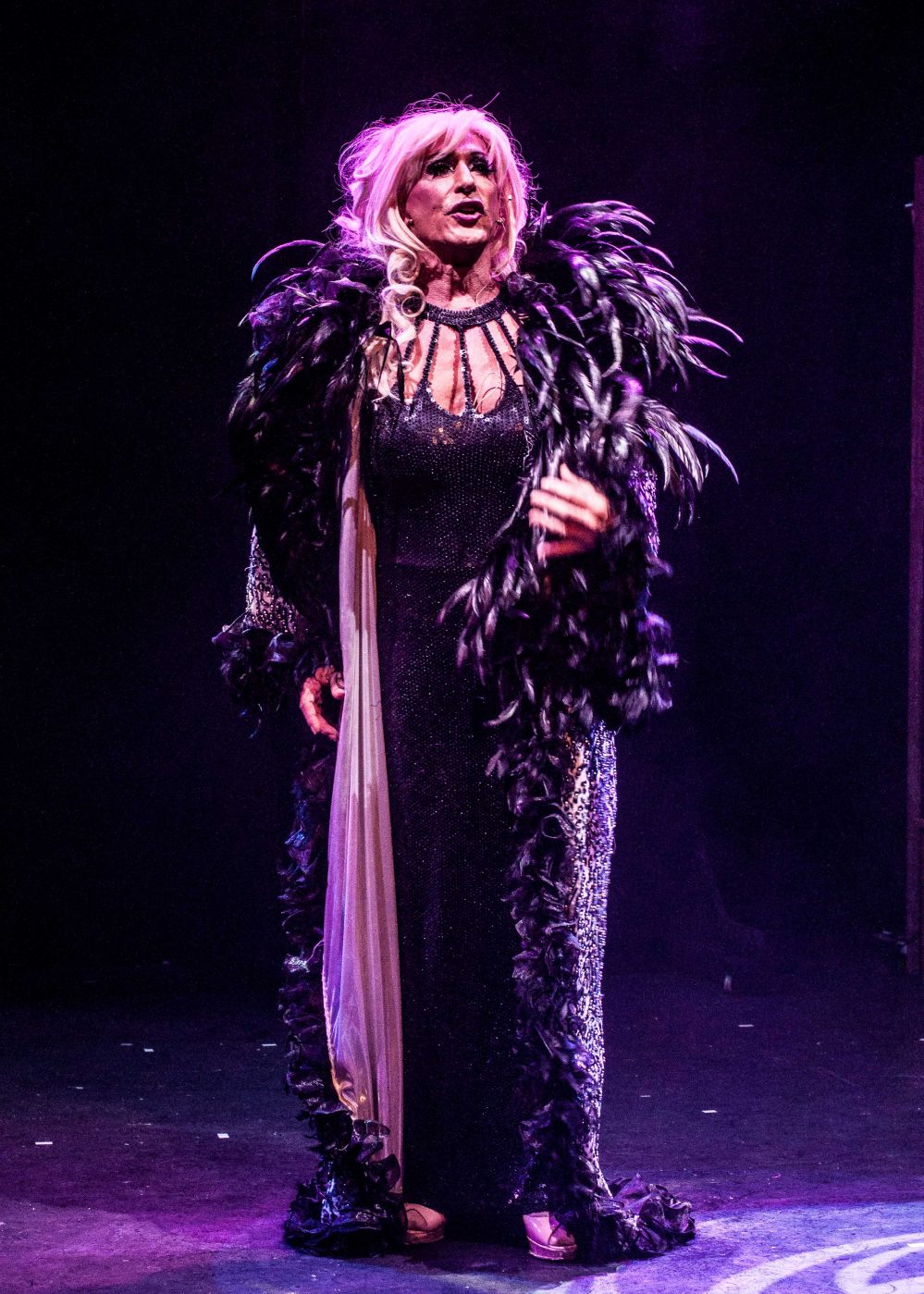
One of Britain’s most enduring drag queens Dave Lynn turns 60 today. He’s fit and still fabulous. In a career path that’s stayed the course for over 40 years, this is the story of how she became the Godmother of Drag in the UK.
PR Provided
Indeed she’s a star of the small and silver screens, stage and is known for her singing prowess. Her appearance in the seminal coming-of-age gay drama, Beautiful Thing in 1996, makes her a legend – but you will have seen Dave Lynn turning up on Coronation Street, EastEnders, Doctors and most recently in Birds Of A Feather as Lesley Joseph’s drag self Proxy Cohen.
Amedure was a man who was shot to death after revealing his attraction to a male acquaintance on a talk show to be broadcast on national TV in America. The programme never actually aired, but the story reverberated around the globe. Explaining why he decided to star in the production he tells me, “I remember the story when it first came out, I think it’s a powerful piece which needs to be remembered.”
We plan to meet at the theatre at five PM, a couple of hours before the show. He arrives late and he’s very apologetic. He’s driven up from Brighton, thanks to the seemingly never-ending Southern Rail strikes. I’m waiting outside the theatre when he calls my mobile, “I can see you…” he coos – “I just have to wait 3 minutes until I can park for free”
It’s 5:27 – and the restrictions end at 5:30 PM.
I look around and across the road stands a fit looking man, dressed in a simple green vest top and shorts showing off some incredible looking muscles. He’s standing next to his flame red car. He is looking intensely at his phone’s clock. “Should I risk it?” he asks looking behind his shoulder for those notorious London traffic wardens. “No”, I say, “the moment you walk away, they’ll pounce like wasps on a barbeque sausage.”
We stand and wait for 3 minutes and It occurs to me that I’ve never seen Dave Lynn the man.
PR Provided
It’s clear to see that Dave is fit, standing around 5’9. He’s of slight build and he has those killer legs on show. Nothing about Dave – the man – gives away his full-time job, entertaining the patrons at gay bars across the South-East. No, nothing gives him away, apart from his eyebrows – so perfectly plucked and shaped.
With 30 seconds to go before 5:30 PM, we risk it and take a short walk to a local coffee shop. We order our £2.80 coffees and like two old friends, within minutes, we’re chatting like we’ve known each other for years. He’s extremely approachable and talkative, despite telling me that out of drag that he’s actually quite shy. We fall into reminiscing about the gay scene of a yesteryear – when there was a surprising number of gay bars in London. Just to put it into context over 100 gay bars have closed since 2000.
My first introduction to Dave Lynn was probably, as for most of us, through the feature film Beautiful Thing. Then there was that drag special episode of The Weakest Link with Anne Robinson, but it’s not until you see Dave Lynn live that you get to experience the character that is ‘Dave Lynn’. His sharp tongue and his incredibly feminine look have given Dave Lynn the edge over his contemporaries. But, there’s a wisdom to the act too. It’s the wisdom which helps a seasoned entertainer know who to pick on in an audience. Oh boy, when she gets going, she gets going. You wouldn’t want to be a heckler in Dave Lynn’s audience. Dave explains that it’s a bit of a talent, “there’s a great ‘wave’ of someone you think would be good. You don’t always get it right. I’ve also got a great habit of going to somebody who’s going to be harder. I hate to be defeated,” he laughs, puts down his coffee and looks intently at me, his left eyebrow raised. Perhaps he’s wondering if I was ever one of those hecklers.
I ask about Dave’s first foray into drag. He tells me that like so many legendary drag queens he started in London. The stage of The Black Cap was the birthing pool for so many of today’s most iconic queens and it’s where he got her break. He laughs as he tells that he was so rushed that he actually hadn’t thought about a name – and was just introduced as “Dave”.
PND Photography
“I was so nervous it didn’t occur to me to have a name. I got a friend to do the makeup, I borrowed stuff from my mum to wear. The name hadn’t occurred to me. When the host said to me, ‘what’s your name?’ I went “Dave”. That was it.”
You might be surprised to know but the Lynn part of the name came from a suggestion by his grandmother whilst sitting with her one evening. He lets me into a secret, “Lynn came from me sitting with my grandma, she was living with us at the time. She said take Mummy’s name, which was Lily strangely enough. So we went to her middle name which is Evelyn and that’s how Dave Lynn came about.”
So it seems that Dave’s drag was a family affair. He revels in the fact that his mother loved his makeup skills so much so that he’d have to go to her house to do hers before making his way to his own show. She was very exacting about Dave’s own makeup. He smiled, remembering, “She did not like me with heavy lips. She did not like me in headdresses.”
Does he remember what he borrowed from his mum that fateful night at The Black Cap?
“I was a big fan of Liza Minnelli, big fan. Huge. In fact, I think she made me want to be in “it” (showbiz) really. So obviously I wanted to do a number by her. I borrowed a gold, lurex halter-neck off mum. She was a wonderful mum.”
After The Black Cap, he was given a stint in the East-end bar, BJ’s White Swan. He started off, surprisingly as a mime act, which gave him the opportunity to observe and learn, “I had seen all the characters and the patter. I was shown Hen-Night patter, basically, us being married to men and what they did…”
By the time Dave Lynn became a talkie as it were, progressing on from mime, his evolved style was considered “dangerous” for the time.
“Everybody said I was dangerous, I started to talk about real stuff, real-life stuff that was part of me. I never ever claimed to be a woman, I just took on what was going on. What I thought. Very rarely were there jokes. I tended to talk about my background, truthfulness. I found wit very much in my family.”
Was his family witty?
“On the Jewish side,” he explains, “I’m not saying this because I love my religion, but I think it’s given me a lovely wit. My mum was great like that. She just said things and I would just laugh at her. My parents together, even their rows were funny. Hysterical.”
Learning his trade, he stumbled upon a winning formula. That ‘danger’ would manifest itself beyond telling jokes, lip-syncs or just singing songs, he went to the audience. “I would actually talk to the audience and go amongst them. I think I was one of first to do that. Nowadays, of course, everybody does that.”
Times have changed in the 40 years that Dave Lynn has been dragging up. Looking back, he tells me that drag was always key to gay bars thriving and was an essential part of gay bar culture. He recalls fondly, “A lot of it was underground. The scene was absolutely fantastic. Getting around was so easy. The world’s busier. I’m really proud that we kept the scene going. It could have died a few times, I’ve seen probably about three generations of people go by. I believe that today is exactly what it should be. I don’t wish for the past.”
I ask what he thinks about the growing number of shuttered gay bars across the UK. He pauses and with a considered tone tells me, “I think what’s happening, this is my opinion, the bars went through a change. It was very much: everybody got dressed up, went out, to have fun, you’d know the drag act. Then it all changed. It got more drinky. That was okay – you could deal with that. Then hours got later, then you had the smoking thing, that changed a lot”.
There was also the 80s and 90s AIDS crisis, did that have an effect on the scene? “I remember going to work one night. I came off (stage) and I said to my friends, God, it’s like a cloud above the audience. It was unreal. But it changed. I found out if you’re on stage that you’re an aunt. They come and talk to you. They needed to be entertained. We needed entertainment.”
He looks down at my phone – which is recording our conversation and says, “Then you had mobile phones” – our relationship with our phones has changed the way we socialise. The jury is still out on whether dating apps are to blame for the decline of the traditional gay scene, but Dave Lynn intimates that it’s more about concentration – that perhaps bars – and drag queens have to work harder to engage with today’s audience.
“I think it needed a kick up the arse. I think it’s up to people now to say “right I’m out for the night, I’m gonna have a good time, I’m gonna put my phone away for half an hour, I’m gonna be part of the act… leave the phone at home because it’s taking over life”
And has drag itself changed?
“I think it’s developed a new life of its own, in the last decade. Since I started where you didn’t really talk about it. I’m happy now to go into a shop to buy high heels, but I remember taking a shopping list and pretending to buy it for ‘my girlfriend’,” he chuckles and leans in, “there are some newbie artists that are a bit too near the mark for me but actually the quality of acts is probably the highest standard I’ve ever seen.”
Our interview is coming to an end, Dave is anxious to get over to the theatre to prepare for the show.
There’s a poster outside and Dave Lynn in all her glittery finery is smiling at us… It’s about 45 minutes before the show. I ask how long it takes to get from man Dave to lady Dave. He chuckles, looking at the poster and tells me he’s “gotten quite quick at it these days”.
As he walks away to his dressing room he looks at me one last time and says with a smile – “It’s been a fascinating career and time.”
I don’t doubt it for a moment.
This interview was taken from Issue 22 of THEGAYUK.













 PND Photography