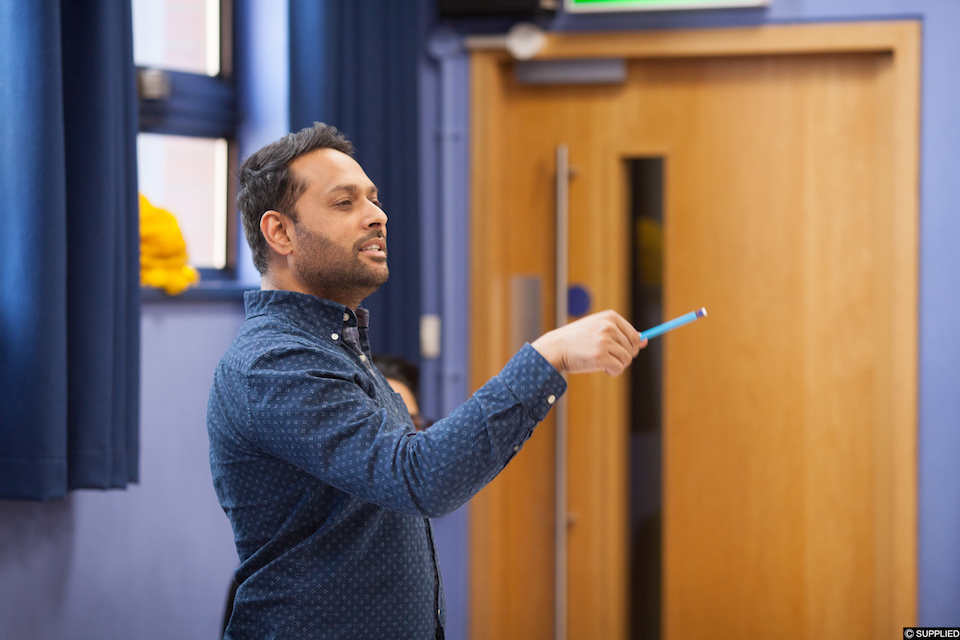
Category: Interview

  • How They Met: George Michael and David Austin

    Director of the George Michael: Freedom, documentary speaks about he and George Michael met and why they created the film.

    How did you come to meet George? What was your relationship with him?

    Well, we were very old friends. Our mothers were best friends. We met at the grand old age of about six months I think it was. Our mothers’ sort of crossed prams in the street and that was when we met. We grew up together and went to school together and wrote our first song together at 6…

    Which was?

    I’ve actually got these recordings because we had this reel to reel that my mother and father had – you know those reel to reel recorders – and from a very young age my mother taught me how to use it so I used to record everything. So, eventually I got a guitar at 6 and George was a drummer, that’s what he started out doing and he sort of played on the pillows and I played the guitar and I’ve got these recordings actually and believe it or not, the first song we wrote was called ‘The Music Maker of the World’. True story.

    So your relationship developed into different roles?

    Well yeah, absolutely, it developed into different roles. Working, writing songs together, performing together and then into the studio and into production and then into management.

    So then, cut to 2015 when we (Jonny Rothery, Channel 4’s Commissioning Editor for Music) first met to start talking about this film… what was the reason for doing it at that time and how did the creative develop from there?

    Well the reason for making the film originally, we’d just finished working on the Symphonica project and I remember we had the launch at a place called Hamiltons in London and George’s publicist approached me and she said you know what the 25th anniversary for Listen Without Prejudice is looming, you need to go and see Sony. She set up some meetings, I went down there, I met with the CEO and realised that they were really into working this project. I talked to George about it and George said to me look we should make a film to support it, because I’m not going to promote it. He said I didn’t promote it the first time round, why am I gonna do it now?! And that’s when we (David and Channel 4) met – 2015.

    And obviously we spent many an afternoon up in your studio in Highgate? I think everyone would probably like to find out more about how you co-directed the film with George and how the creative process worked.

    Well you did, we spent a lot of time up there talking and the way it kind of worked was, initially we were just gonna make the film about the Sony court case and the period leading up to Listen Without Prejudice and just slightly after, so that was kind of the arc of the whole thing. But it soon became apparent that there was a bigger story to tell here, there was the loss of airplay in the US, there was the court case itself, there was Anselmo, there was his mother and once we’d realised that we had this mammoth project ahead of us the first thing that happened was, we discovered, I think it was 75,000 feet of 35mm that David Fincher had shot in the archives of Sony all restored and we started assembling as much of the archive footage as we possibly could and then there was all of George’s private home footage.

    The way it kind of worked was we’ve kind of mapped out exactly how we wanted the film to go, chose who we wanted to shoot for different parts and with that directive, I’d come in and I’d work with everybody, everyday assembling it with the editors that we worked with and I’d go back to the countryside to Goring where George lived, I’d go back every single night, we’d talk about it, we’d be over at the pub, we’d have dinner, every night really for a year and a half we did this and we went through the process of putting the film together. I’d come back the next day to London with directive from George and it was a back and forth thing like that.

    And then, once we’d kind of got the initial assembly together George would come to London and would edit the film which is what he did. Literally the film that you all saw today, was more or less George’s cut, you know apart from putting the lower thirds in, you know a few of the CG bits and the graphics, that was George’s film that you saw.

    And in actual fact, he was editing right up until the 23rd December we had Nile Rogers over in London filming his part and George was due to go back in on the 27th to continue editing which sadly didn’t happen. But he had basically finished working on the film and the what you see, that was his edit. And he was an editor, you know, all those videos throughout his career, he edited them all together. Freeek! he took over the edit from Joseph Khan. Freedom, David Fincher, same again. I mean George’s career is speckled with sacking directors and editors and taking it on himself and he had a great eye for it and the funny thing is we got the film to a certain place and it was great, it really felt great but as soon as George came in and stepped into the studio and started cutting himself, it just took that different corner. And then like I say, we found all this home footage, all his sort of Video 8 stuff and he edited that in, but that was pretty much the process.

    Did he mind looking back at archives and nostalgia?

    No, no he didn’t. I was a bit apprehensive to start with because what actually happened was, I was going through a cupboard one day and I found this little drinks bag, this Harrods cooler bag and I looked at it and opened it up and it had all of his home footage that he’d lost, that he shot himself, which is all that stuff you see in the centre of the film and I talked to him about it and he looked through it and I thought he’d be nervous to, I’d already cut a few little tiny bits of Anselmo into the film and I thought he’d be nervous about that, but he wasn’t he embraced it, he loved it and the more the merrier.

    The other stand out thing in the film is that George recorded a bunch of audio interviews that we placed into the film, mixed in with the archive audio. Tell us about that, because you spent quite a lot of time doing that.

    That’s right, yeah. There were two sets of recordings but the very last one with Kirsty Young in September last year, which is also George’s last interview. Kirsty came down to the house in Goring where George lived in the countryside. He worked with Kirsty before so he had a good rapport and he loved her and she was great. We chose Kirsty because we’d watched the David Attenborough 90th birthday and it was just obvious that she was the one to do it. She was brilliant. She came down, we were only looking for, he was just going to narrate it but this interview opened up and it lasted two and a half hours actually and so we put much of it into the film but actually there’s another hour that we’ve put together that’s going to be in a radio special that we’re putting together.

    You say it started as a straight narration but became a long-form interview so he obviously relaxed into it…

    Yeah well that’s how we started to do it. There are some bits that he did narrate actually but he decided he wasn’t going to sit in front of the film and say “this is what I did on Wednesday”. So we sent the film to Kirsty, Kirsty watched it, put a script together and came down and they did it like that. The interview started, it was very detailed like that, she went through everything that she had to do and then the last hour of it turned in to this general conversation which is where he really opened up and we got a lot of fantastic stuff from it.

    Going back to the body of the film itself, it breaks down into various chapters around a several year period but kind of taken them one by one. The first was the formative years and George’s rise which is kind of, fairly well documented. The court case was fascinating and for me personally, looking at a guy in his mid-20’s to go against a whole industry and at a point of his career where he really should’ve knuckled down and got on with it, that must’ve taken some balls to do. He was obviously driven, but how did he do that? Most of us would’ve just done the album and done as we were told right?

    I think when you’re that age and you have that kind of success. I mean I look at kids like Justin Bieber today and you think my god, look at this multi-million pound industry around them and you look back and you, when you’re in the eye of the storm you don’t realise, you’re just getting on with the job and rolling your sleeves up, I think it all just comes naturally. He was brave to do what he did, that’s for sure but a lot of people would’ve stepped back and would’ve done as they were told. But not George, he felt slighted and he believed in what he was saying and like Elton says, George is a very stubborn person and when George puts his mind to something he goes for it. And it was a big deal the court case, what could’ve come from that would’ve been incredible. Had he of won and had the standard contract changed, an incredibly brave thing to take on.

    Is it something he looked back on in later years with regret that he didn’t win that?

    Yeah, he did actually. He says it in the film and when I was, when we were talking last August about the court case and how we were going to handle it and I didn’t realise this at all but he turned round to me and said how he regretted it, how he wish he’d never taken Sony on in the first place because it dented the armour in his career in America. There was a guy who was firing on all four cylinders and it blew that candle out in the US without a doubt.

    But the stress and the strain at the time would’ve been so bad at the time, he couldn’t have done it. Yes, he regretted it but probably would’ve changed it…

    No, I think also the fact that he’d discovered Anselmo wasn’t well all these things happened at the same time. And what’s really interesting, what people don’t realise is that while this court case was going and he was in the stands, he was holding very close, nobody knew, he hadn’t come out at the time, his boyfriend was dying and he was holding this close to his chest which was incredibly, equally just devastating for him.

    And Anselmo obviously features heavily in the film, it’s something that you could’ve not included and people may not have noticed in terms of the film was originally meant around the album, the creative work but why did George feel it was so important to cover that off?

    I mean, all George’s idea, George’s cut, I would’ve never have gone as far as to use his personal footage… I think it was just something that George wanted to do. He loved Anselmo, he was an incredibly important person in his life and it just came from George’s heart, the way George wanted to do it.

    The film’s got a great array of contributors… Who knew Liam Gallagher was a fan? How did that happen? How did you find out Liam liked George? He doesn’t like anyone.

    Liam’s brilliant right? So we played the Olympics and we came back to the house and we had this party back at the house in Highgate, the house that you see on there, that’s George’s north London home and Liam was there and this story had gone on for ages that he and Noel hadn’t talked for ages so Liam was there and we were trying to get them together, we had a bar at the end of the garden, so we were trying to manoeuvre them both so they’d have to deal with each other and I think it did happen actually. It was a great, great night. Liam kept coming up to me and coming up to George and going “he’s got Lennon; he’s got fucking John Lennon in him man” and that kind of stuck. And then I bumped into Liam a few months after in a pub somewhere and he came up to me and he kept saying the same thing. George bumped into him and he said the same thing “you’ve got John Lennon in you, man” and so when we were doing it, when we were putting the list of people together, George said, we’ve got to get Liam in to talk, and he’s great. Liam had said that he loved ‘Praying for Time’ and thing is, I interviewed Liam actually and he knew his stuff and his contribution was amazing and funny and eloquent and right on the mark.

    How did George feel about people praising him while making the film?

    I mean he was incredibly touched but he was a bit overwhelmed actually. Yeah, I think he was just incredibly touched. These were his friends as well, I think just he was incredibly touched.

    You’ve known George a long time and you said you started writing songs with him as a child, and you’ve written quite a few iconic songs with him for a few albums… I just wondered if you could tell me which is your favourite and how it came about?

    I mean I absolutely love ‘You Have Been Loved’. It came about, we were working on Older, I was living in France at the time, he flew out and asked me to write something acoustically. I did that and just came up with the music… The way George and I used to write, the way we collaborated was, I would always do the music, completely, and then he would take it on do the melody and lyrics on top of it, that’s how we worked. I just came and put an acoustic piece together, flew to London and that kicked off the album. It was the first thing we recorded for the album actually and as the record went on and we hadn’t finished it and were two tracks left on it and we were thinking shit this isn’t good and it was the last thing we finished on the record. But that’s how that came about.

    George worked with many well-known singers throughout his career and he mentioned others that he’d never worked with on records, Madonna, Prince etc. Were they any that he really wanted to record with that he never got the chance to?

    I think probably Adele. He loved Adele, actually. You know, George had stepped back in recent years and hadn’t been as active musically. About three years ago, once he kind of stepped forward again and started writing and putting the film together, he would sing along with Adele actually. I wouldn’t say practice but you know, to warm up along to her, but Adele. I think he loved Lauryn Hill too; yeah he always wanted to sing with Lauryn Hill back in the day. I think him and Barbara Streisand, they talked many times about working together, it just never happened but they talked about working together.

    Apart from showing all the success of George and the talent, I found it very emotional being so honest and truthful and it made you wonder, because where you end and the rest of the story, did he ever find happiness?

    Oh yeah totally – he absolutely did. I mean with Anselmo and later on in his life, he absolutely did.

    I think the fans would like to know that.

    Yes – that’s a good question too – yes he did. He was a very happy, contented man. He found happiness in love; he found happiness in his friends and family. You know, we had a fantastic relationship, yeah he did find happiness.

    The way we decided to finish the film, so we could leave George’s edit, we opened it up with Kate at the beginning just saying a few words, that this was George’s film and it was his final work. You know, we didn’t want to mess with the film when George had finished working on it, so I decided to open it up with Kate just saying a few words, introducing the film. And then just added the performance, Chris [Martin], with the visual that I built for the Brits, Chris went in and re-recorded the duet again and I put it to the visuals so that’s how I kind of wanted to address that in the film.


    You can catch up on George Michael Freedom on Channel 4’s All4

  • INTERVIEW | Red Dwarf writer and creator Doug Naylor

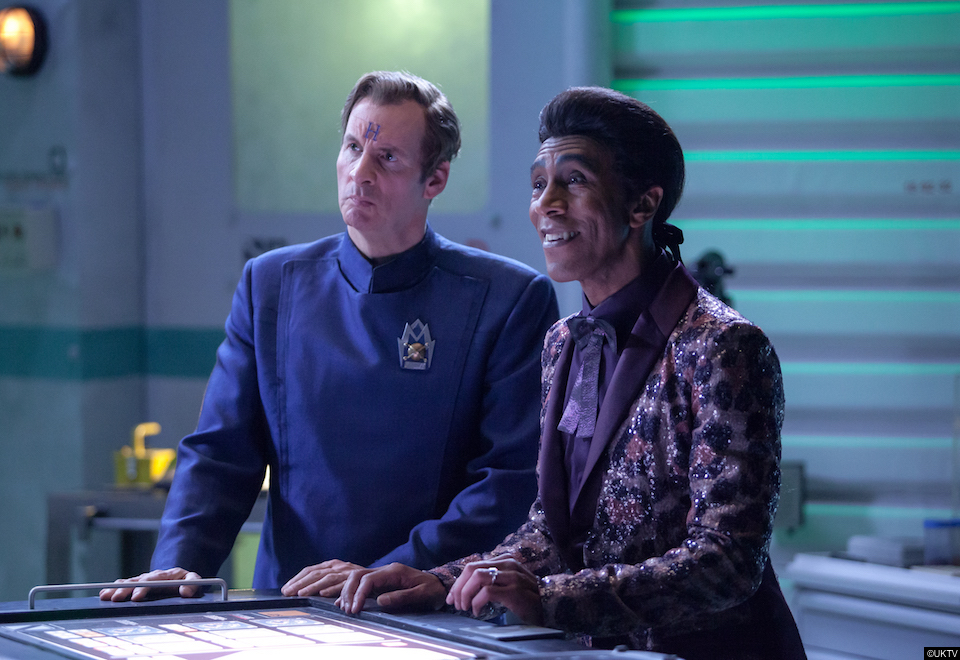
    Awooga! Red Dwarf is back! Tomorrow the Boys From the Dwarf return to Dave at 21.00! As fresh and exciting as it ever was the  Sci Fi comedy explores what would happen if evil was curable. Sadly it soon turns out that the cure might be short-lived as the Boys From the Dwarf find themselves facing their biggest fears.

    The original cast (Chris Barrie, Craig Charles, Danny John-Jules and Robert Llewellyn) as well as guest actor Ryan Gage (The Hobbit, the Musketeers,) are on great form in this fast-paced episode.

    Peppered with zinging one-liners and jokes plus one of the most bizarre jam sessions in history the episode is easily a contender for best comedy of the year.

    Here we talk with writer and creator Doug Naylor about Red Dwarf past, present and future, Ace Rimmer, the fans, anniversary plans and what makes the series so irresistible.

    How did you and Rob Grant come up with the idea of Red Dwarf?
    We wanted to write a character based, characters that were real and people would be able to identify within a science fiction sitcom using sci-fi ideas and tropes as a way of looking into character as we didn’t believe it had ever been done before. Steptoe and son or Porridge in space but with cool SF ideas like Me2.

    Why do you think the series has lasted so long?
    People keep watching it and we love making it and Dave have been amazingly supportive throughout. It’s a great fun show to be a part of and there’s a great teamwork vibe amongst the cast that’s absolutely key. And all of them are brilliantly funny. Not one or two but all of them. And then we have great guest cast too. What’s not to like?

    Which character has changed the most over the years?
    Maybe the Cat but he’s not changed so much as his part has just got bigger and bigger because Danny keeps knocking it out of the park.

    Why do you think Red Dwarf has such a big LGBT and female following?
    Because it’s so damn cool of course.

    What do you think of Red Dwarf slash and fanfic in general?
    I don’t read any fanfic or any RD scripts that are sent to me for legal reasons.

    Was Rimmer intended to come across as asexual or a repressed gay/bi man?
    We wrote a character we wanted to have been massively unsuccessful in the sack and now he was dead and he tortured himself by looking back at all his failures.

    Will Ace (the swashbuckling superhero version of Arnold Rimmer also played by Chris Barrie) ever return?
    The trouble bringing back Ace is lots of people will complain it’s revisiting an old idea and will winge and moan and accuse me of running out of ideas – so to answer your question, yes, almost certainly we’ll bring him back. I haven’t got where I am today by doing what the fans want!!

    Will Kochanski (the love of Dave Lister’s life, who left the crew in a rather mysterious way) return?
    Maybe.

    Will we ever see the botanical gardens (a garden complex set on the ship that has often been mentioned but never seen)?
    If we can afford to.

    Is there anything you can reveal about series 12?
    The 12 stuff is already kind of out there. The last show is one of my faves.

    – The last episode; called Skipper, has been much talked about as it sees the return of the original ships computer Holly as played by Norman Lovett and Arnold Rimmer appears to be time travelling to the setting of the first series.-

    Will there be more Red Dwarf after this?
    Everyone wants to do more and by everyone I don’t mean just me and the cast.

    Are there plans for the 30th anniversary next year?
    30th – we’re in talks with various people about how best to do what we’d all like to do.

    Red Dwarf XII starts on Thursday the 12 of October on Dave!!

    &nbsp

  • INTERVIEW | Amanda Lepore: Always have the highest heels in the room

    Icons draw attention, but none quite like Amanda Lepore. Her blonde hair and highly accentuated form are the stuff of legends. There are no double takes when Lepore walks into the room. Just one look and instantly you’ll recognise that you’re with a commanding presence and a persona that demands that all eyes follow. In 2015 we spoke with Lepore about plans for her new album and how she might be coming to a wedding near you.

    JH: So do you ever get tired of being called fabulous?
    AL: No!

    JH: (Laughs) and that’s it! You dress to impress and it gets a lot of column inches. Tell me a bit about constructing the Ms Lepore look.
    AL: Well, I love makeup, I’m very girly, I really enjoy perfume, and I like to take my time doing makeup and stuff. I’m really good at hair lately, I have a hair stylist too once in a while so that’s really fun and they do a more sculpted type of thing. I do like to show my body off a lot! Even as a child when I was visiting a psychiatrist to get the whole sex change thing, they said I was extremely body conscious because I always wore tight clothes and everything, so it’s just something I liked even before I was in the spotlight.

    JH: You’re a bit of an exhibitionist then?
    AL: Errrm, I think so. I wear what I like too so it’s sort of for myself too.

    JH: Is it important to be talked about?
    AL: I kind of just go with the flow. Before all this happened, I had no idea and I wasn’t a very ambitious type of person so I just went with what the cards were giving me. I guess I’m used to it, and I would probably miss it because I’ve had the taste of it, and I’ve made a career of it. So I guess it’s important at this stage but not initially no. I’ve always liked the attention though. Like when I worked at disco 2000 in the 90s, I was on the Joan Rivers show, and people were writing about me that “I was the girl of the minute” and a “Jayne Mansfield lookalike.” so I would always get them (the newspapers) and read them, so I did like it.

    JH: Is it quite addictive?
    AL: Yes, I think so, and it goes along with how I shaped my career too.

    JH: So what is the first thing you do in the morning and the last thing you do at night?
    AL: Well, the first thing I do is usually order breakfast and coffee and take vitamins. I’m like a vitamin freak. I learned one time, when I went to an Alexander McQueen sample sale, I took the vitamins without eating. Then I threw up. It was really embarrassing, so I had to get a banana from the deli. I learned that you have to eat if I was going to take all the vitamins and hormones. The last thing I do is either wear something sexy for a man or take off my make up and just sleep naked.

    JH: So you say you order breakfast? Do you have room service where you live?
    AL: Errrm no, but there are lots of restaurants and delis in my area. So I tend to just shop in my neighbourhood.

    JH: It’s been a great couple of years in terms of visibility for trans people. How does that feel for someone like you?
    AL: It feels really good, I mean I was ok without being visible and I made myself visible after David LaChapelle. I was always flamboyant about it and made a thing about it but I think it’s good for young people. Especially the super young people with their parents.It’s just much easier to transition and have your parents help. There’s more role models for them as well, there wasn’t really any when I was young, I had no transsexual friends when I first did treatments. It wasn’t until I moved to New York and met other transsexuals, I mean, I would see them at the doctor’s office and everything but I was super young when I went and they were older than me so it just wasn’t really right. I was with a dominant man at the time too so he kept me away from all of that. It’s really important for kids to have a role model.

    JH: You’re part of that visibility obviously and part of the story for young people to have a role model. How does that make you feel?
    AL: Even before the super visibility, I’d always get Facebook messages and people telling me, “Oh, like you gave me the willpower to transition and do it and everything,” so I knew that I was a role model and it would make me feel really good. I felt like I was spreading happiness. It always felt good being out as most transsexuals didn’t want people to know. Like, they would be more blending in the supermarket and like not have their boyfriends know. So, I think I helped make it more visible.

    JH: What’s the best piece of advice you’ve ever been given?
    AL: Go blonde? (laughs) I always remember that when I first transitioned that she (the doctor) said it was good that I was young when I first had hormones. So I always tell people to do it before you’re 24. You can change everything but afterwards, it’s harder to take away certain male characteristics. So, I say, if you do want to do it, you shouldn’t wait.

    JH: And who would you like to musically collaborate with?
    AL: Marilyn Monroe, she’s kind of like an idol. Elvis would be great too!

    JH: Which has been the happiest period of your life?
    AL: I think now, for sure, like things are the best now for me.

    JH: And what is left on your bucket list to be done?
    AL: I want to do more music, but have it more theatrical sort of like a Vegas show or like a Broadway show. Hopefully, I could get bigger audiences and more elaborate stage sets and stuff. That would be a dream! I’d like to do acting too, like a nice juicy role that I’m comfortable with. I think film more than theatre because they have more control over it (laughs).

    JH: Are you a bit of a control freak?
    AL: Yeah!

    JH: What are your three top requirements for being a class A socialite?
    AL: I think it’s really important to look people in the eyes and be nice with everyone because you never know who everyone is. It’s good karma! I think it’s important to smell nice too… And have the highest heels in the room. Just smelling good is the most important I think. Beautiful makeup!

    JH: Is there new music coming?
    AL: Well, there is new music coming out, but I was touring so much that we didn’t finish it. I did four new songs though so I’m excited about the new stuff as well but it’s a little delayed. I’m coming out with a book in spring and I’ll probably have a book tour with that. Also, I’m now an ordained minister so I’m doing weddings too which is really fun. I just married a couple and I can kind of do myself and just dress really glamorous and everything. I can look how I like and dress how I want.


    This interview appeared in Issue 15, October 2015

  • THEGAYUK Meets: Jamie Lambert

    THEGAYUK’s editor Jake Hook meets Jamie Lambert in the rather exquisite surroundings of The Trading House bar and restaurant in the heart of London’s financial district. Taking in the surroundings Jamie looks around at the dark wood panelling and the strange mix of taxidermy animal heads and travel objet d’art that clutters the room. He grins, revealing the whitest set of teeth and remarks that it all looks amazing.

    **interview taken from Issue 20 May 2016**

    THEGAYUK Meets: Jamie Lambert

    Relaxed and confident, Jamie is one fifth of the musical boy- band Collabro who won Britain’s Got Talent in 2014. Since then they’ve released two albums and two tours – all within a year and a half. Soon after winning BGT Jamie came out as gay – in a huge splash in The Sun and is probably one of the last of the boy-banders to reveal their sexuality in this way again – it’s much more en vogue now to take to YouTube and control your coming out message than splash your story in the tabloids.

    His charm and boyish good looks belie a real thinker. He has a comment on everything and isn’t afraid to rock the boat. He says what he thinks – but is never confrontational – it’s a real talent to the point you find it hard to argue anything the man has to say. As he settles into the first set of clothes for today’s shoot, the man is literally a dream to style – I wonder what life is like for the five some under the watchful eye of TV and record execs…

    JH: So you’ve just ended your second tour, the five of you must get up to mischief?
    JL: We prank each other quite a lot, but we’re not really too naughty. Three of the boys have girlfriends, which always keeps them very good. That’s always a sticking point. We have good fun as well. We tend to go on the odd night out as well which is always quite debaucherous. For example, we went on one last year where I had an argument with a bouncer in the toilet and it was all very dramatic. It was great. We really enjoy being away from home for a bit and exploring the band on tour.

    JH: Your management sounds like they don’t tightly reign you in.
    JL: No, not at all. We run ourselves when we’re away.

    JH: Do you think that’s indicative for bands now? Less management involvement and actually letting you take responsibility for yourselves?
    JL: Oh no, I think it’s the opposite. I think people are very tightly controlled now because of social media. For example, we just tend to look after ourselves because we’re very capable. I do think people tend to think that we have more free reign than we do, but management do tend to get very involved. Not with us, with a lot of bands. Especially younger bands. We’re a bit older. We’re mid-twenties. When you have teens like Union J and One Direction, for example, they’re super controlled.

    JH: Why do you think that is?
    JL: I think because they’re naughtier! They’re young lads. I was naughty when I was young. I’m obviously still young now, but it’s one of those things where you think, “Oh, I bet they’re on tour being really off the rails and that’s why their management needs to step in and be really careful.”

    JH: Do you think there’s an expectation, because of your band’s background is musical theatre, that you’re somehow better behaved?
    JL: It’s the expectation. I think it’s not necessarily true. We still like to go out for a good drink, and have fun, and do things, but I do think there is an expectation about being from theatre. I think most people hear, musical theatre, and they think culture, yet most musical theatre, we’re absolutely filthy.

    JH: Do tell? What kind of filth are we talking about?
    JL: I think it’s mainly just attitude towards nightlife. We have fun. We all go out and get drunk. We all tend to get on. That’s the best thing about it, we all tend to have very similar interests. We all tend to get on very well.

    JH: Is your fan-base different from say Union J’s or One Direction’s?
    JL: I think we have similar fans, but I think we extend to a much larger audience in terms of age ranges. We sing a lot of musical theatre, of course, we do a bit of Disney and pop crossovers and stuff, so we have that really big extension of fans. People really love the fact that we have a bit of variety within our music and within our sound, so that’s something we intend to carry on doing.

    JH: You’ve just finished a tour… Do you know if there’s another album in the mix?
    JL: It’s not currently in the mix, but that doesn’t mean that there isn’t one. It just means that we finished BGT in mid-2014 and it’s not even mid-2016. We’ve had two albums out, two tours.

    Actually, I think we want to spend a bit more time with the next one. Actually, take a break and really work on it.

    JH: Do you think that you’ll continue down the musical theatre route or perhaps maybe look at other genres?
    JL: I can imagine we’ll do whatever we feel is right at the time. With the first album, for example, we did more pop crossover but I think the next album, we put that shit down and really think about what we want to do and how we want to present ourselves because people need to grow.

    Music needs to grow. We’re better singers now than we were back then. We’re all a bit more well established and we know more about things. I think it’s really important that we take out time.

    JH: Is there a big contest about who gets to sing which song?
    JL: No, I don’t think there is. We tend to give it to whoever does the best with it. All five of us have good voices, so it tends to split itself rather equally.

    JH: So many music groups now exist because of shows like X Factor and BGT. Do you think a band can exist without that sort of pro le in today’s music business?
    JL: Yes, I do. I think it’s more dif cult. I think it can exist. I think we’re in a culture at the minute where we were lucky because we’re something different. We’re very organic and new. There wasn’t anything like us already. That’s why we were lucky. Also, Britain’s Got Talent came up with our platform. It wasn’t our creator.

    What you have to know about the X Factor is that when you see the ratings last year, it’s gone downhill because people are bored of the same things. When they come back next year, I think they need to do something much different to what they’ve done already.

    JH: Do you think that getting rid of Nick Grimshaw and the presenting duo is actually the problem? I don’t think it is.
    JL: No. I think Nick’s very nice. I think he’s very good. I’m not sure he was the best at it, but he’s under a lot of pressure. I love Louis Walsh.
    I miss Louis Walsh. I’ve met him a few times and he’s a very nice gentleman. Very knowledgeable about the industry and also a good TV personality. Obviously, Simon’s great. I think it is the judges that are the problem, It’s more about the judges than it is about anything else now.

    JH: What would your ultimate lineup be?
    JL: Jennifer Saunders. That would be amazing. Otherwise, I would say, someone who really knows how to sing.
    Jessie J I think is probably a good example. She’s really bloody good at singing. I think someone like that or Ed Sheeran. Great singer. I think people need to respect the panel because the panel needs to know what they’re talking about.

    JH: So we’ll be getting rid of Cheryl then?
    JL: I tell you what, I think she’s a very good judge. She’s a brilliant businesswoman and she’s survived in this industry and has more number ones than any other woman. She’s got consecutive number ones. She knows what she’s doing and she’s a very valuable person to have on the panel I think.

    People criticise her for her singing all the time. To be honest, I don’t really think she is the best singer in the world, but she’s a bloody good business woman and she knows what she’s doing. That I think is to be greatly admired.

    JH: When you came out it was quite a splash. You’re probably one of the last boy band’s members to ever do it the more traditional route of coming out in a big way on the front of a newspaper or magazine… A lot of stars are now taking to YouTube and doing it in their own way.
    JL: Yeah. Let me explain the only reason why I felt like I had to do it was because it was already found out. I was already out as a person. I wasn’t a sort of person who was in the closet. I’ve been out for years. I never really came out. I was just me. The reason I felt like I had to do it was because I thought Dan (Wootton) would handle this perfectly.

    I think The Sun was brilliant about it. I knew they would do a good story, so I thought they were the ones to go with. Let me tell you the issues I have. I think it’s very brave for people to come out via YouTube, but I do dream of a world where that isn’t necessary anymore. I feel like sometimes when people do it, it’s based on a career opportunity. I just think it’s sad that sometimes we have to use it as a kind of publicity when actually we should be so comfortable with ourselves that it shouldn’t matter what everyone else thinks.

    The reason I did choose The Sun, I made them have the headline: My Parents Always Knew rather than Jamie From Collabro Comes Out, because I wasn’t coming out. I’m perfectly happy with myself and I always have been. I think the stars that do it on YouTube are very brave and I give all credit to them, but I do dream of a world where we don’t have to do that anymore.

    JH: I think, in a way maybe coming out in the future will be much subtler. That it’s actually, “ Jamie from Collabro is seeing someone.”
    JL: Exactly. Wouldn’t that be nice?

    JH: It would be interesting, but I think it will always make news because people are always interested in who you’re going to bed with.
    JL: I agree with that. The way that you do it is… I do hope that you don’t have to come out. You’re just spotted somewhere with someone. I think that’s what I dream of. I dream of that. I want that to happen.

    JH: You say you’re out to your family and your parents?
    JL: Friends and everyone. Absolutely everyone knew. I’m not flamboyant. I’m not particularly; obviously, I’m just me. One day I brought a man home from uni and that was it.

    JH: How did your parents react?
    JL: It was very normal. Completely normal. My mum already knew. My dad was under the impression I think. My dad gave me a big hug and that was it. My sister invited him in and my mum cooked for him. That was it really. We just had a great … I’m very lucky. I understand that I’m very lucky in that respect. I have many friends and many exes who haven’t had that kind of support.

    JH: Okay. Now there’s almost this expectation that when a boy band hits the scene that at least one of you will be gay or bi… We’ve seen how it doesn’t really affect sales anymore and that it can actually be a positive thing. Do you think that adds pressure to the other band mates to somehow be different?
    JL: No

    JH: If they were, for instance, gay themselves or bi, would their coming out have to then be managed even more?
    JL: I think that’s the new thing isn’t it? Jamie Hensley was always the gay one in Union J and then suddenly George had to come out as bi. Whether or not I think that was a necessary move. I just wish George had just been pictured with a man. What I love. I’ll tell you who did it bloody brilliant was Harry Styles. That was brilliant.

    JH: Oh, when he said that being female was not a necessary trait in a partner?
    JL: Yeah. I had so much respect for him for that. I’ve absolutely mountains of respect for that boy because he is absolutely one of the most level-headed people I’ve ever met. He just said, “You know what?” She said, “What kind of girl do you like?” He was like, “Well, it’s not really that important.” It was really just a tossed away comment and it was a huge deal to everyone, but everyone said, “Oh, he doesn’t care. Well, neither do we then.”

    Then it’s not important anymore. How bloody wonderful is that? If he wants to date a boy, let him date a boy. He’s a gorgeous man. Very talented. He’s got a lot going for him. Whoever he wants to date, he can date and it’s no one’s business really. Obviously, the papers are going to get involved because it’s who he’s dating, but I’m really glad that he said gender wasn’t important because that was a huge step forward. Someone in that position of power to say something like that. A great amount of power actually.

    JH: Would you like to be the boy?
    JL: Oh, God. Absolutely. Harry’s gorgeous. It’s that laid-back tattooed kind of thing. He’s also just a very nice person. He’s actually very well-known in the industry for being the most approachable member of the band. He remembers everyone’s names. Shakes everyone’s hand. Just very nice, genuine person.

    JH: When you type your name into Google, coming out is the first thing that comes up after Wikipedia. What do you wish would come up first instead of that?
    JL: Well, I’m going to work on that, because actually, I think it’s nice. Well, the other thing that comes up is that I have body dysmorphia. You see that I have an eating disorder. That’s the second thing that comes up and actually, I don’t mind either of those things because I really want to be able to be there for people who… I get letters and DMs and stuff all the time to say, “I’m a man with an eating disorder and your story helped me,” or, “I’m a man who needs to come out,” or a lady who needs to come out, or, “I don’t identify my gender” or whatever is the problem, “and your story’s helped me.”

    That is a huge deal to me because it makes it worth me having fought to get through it in the first place. I’ll never stop replying to things and I’ll never stop. It gives me such a sense of purpose to be here. To be able to use my experiences and the sort of position I’ve gained from being in this band to be able to be there for people who don’t really feel like they have anyone.

    JH: Famously Collabro got naked for a magazine shoot last year. Was that difficult to do?
    JL: It was, but actually I’m at a stage now where I don’t want a six-pack. I don’t want rippling muscles. I’m not that kind of person. I do go to the gym and I do keep myself relatively in shape, but I do that for me and for my health and not for anyone else. If I take myself out in public, the only person who needs to worry about what I look like is me and nobody else.

    I thought, “You know what? I’m just going to take my top off. I’m going to get into a pair of shorts and I’m going to stand with these guys who are really muscly. Who are really slim. They’re a mix of bodies and I’m just going to be there and be proud of myself.” That’s what I was and I am.

    We’re not waxed, v-necks, Geordie Shore, big rippling muscles, and going to the gym every day. We are five very different, very normal guys who have normal bodies and put our faith in music and nothing else. I think that’s really important.

    JH: It must be hard though to see your band mates in the nude…
    JL: We spent all day together actually. It was a bit weird actually.

    JH: Don’t tell me you feel like you’re all brothers.
    JL: No, not really. We think we’re like brothers. We love each other. I think that wasn’t too weird. We see each other naked all the time because we change all the time, so we’re always getting changed into performance outfits. We go to the gym together quite a lot on tour.

    JH: Just one more question, it’s about the Tweet that you sent during X Factor last year, and I loved it by the way. You accused the producers of parading around the gay married couple like animals in a zoo. Do you think that it was contrived?
    JL: That’s one reason why I think the ratings are not as good. It’s all so obviously contrived now. When that program first came out, it was like, “Oh my God, she’s got an amazing voice. Look at her sob story,” and now everything is like, “Look at her sob story. You’ve got to have a sob story to be here.”

    They need to change that around because The Voice is kicking off more. I think they need to be really careful because even The Voice is having more sob stories. We didn’t have a sob story. We refused to have one. BGT was very respectful of that, but with the X Factor, that gay couple, it was, “Look at this cute couple? Aren’t they lovely? By the way, look aren’t they gay? Oh, it’s gays on camera.”

    I thought, “You know, I’m f*cking sick of this,” because it’s nothing to do with their singing. It’s nothing to do with their talent. It was just parading two gay people around on camera like they were elephants in a zoo and everyone going, “Aw, look at the gays.”
    That is so offensive to me.

  • THEGAYUK Meets… Male Fashion Blogger Mr Matthew

    At the beginning of the German Summer, I had the pleasure of visiting the city of Dresden for the local Pride Festival, known locally as Christopher Street Day (CSD) after the street in New York which is home to the infamous Stonewall Hotel.

    I caught up with local fashionista Mister Matthew, to discuss being a male fashion blogger in a small city in Germany. Mister Matthew’s blog (in German) is a great source of fashion advice for men wanting to give their wardrobe a bit of European flair.

    Aaron Holloway: Why did you decide to make a fashion blog?

    Mister Matthew: I always liked to show myself on the internet. But one day, social media was not enough anymore. My boyfriend taught me the idea of creating a place on the internet, where I can do whatever I want, where I can be the boss, the leader. He created a website for me and thought me some things about web hosting. Since that day, it was in May 2014, I have my own Blog. To write about the topic of fashion was quite clear because I always loved to dress myself up. I spend hours and hours with choosing the right piece of clothing. So I made fashion and style the main topics of my Blog. But there are a lot of more things that I am talking about, just like cosmetics, travel, lifestyle, events and so on.

    AH: What makes your blog different from others?

    MM: There are so many female fashion blogger in the scene it is almost scary. As a male fashion blogger, I am a bit more unique, which I like. I do not like to compare myself too much with different bloggers, but if I have to, I need to say that I make a painting for every outfit that I show on my blog, which is quite unique. With my blog and my fashion, I always try to be political or maybe provocatively. For example last year I showed a burka experiment on my Blog, which was quite crazy.

    AH: Is Dresden a fashion city?

    MM: Not really, no. I like the architecture and the sense of art from the city. Dresden is a really nice place to live, but not a fashion city. In relation to London, Paris and Milano, Dresden is just like the people never ever heard of something more than just basic-fashion. Sometimes it’s quite depressing, sometimes It’s good because I can be more unique that way.

    AH: What is your favourite item of clothing?

    MM: My favourite item of clothing is a huge, heavy, beautiful coat. I just love autumn and winter, because I love the fashion in it so much. I could not live without a real good coat. It always looks nice in combination with leather shoes.

    AH: What would you say is the best part of your job?

    MM: The people. My Blog/my job brought me together with so many beautiful people, just like you. Writers, readers, photographers, designer, blogger… the list is endless. I just love to meet or get in contact with people because of my Blog. There have been so many in the last 3 years, it’s insane. I meet the most people because of my Blog at Fashion Weeks or Events.

    AH: What is the best Fashion Event to travel to?

    MM: I think it depends on what kind of fashion and what kind of events do you like. Some people like it bigger, some people like it smaller. For me, Berlin Fashion Week was the best Fashion Event for me to travel to. But I am pretty sure, there will be different events in the future that I’ll like more.

    AH: What is the best perk of being a blogger?

    MM: The benefit I like the most is the fact that I am able to manage my time by myself. I do not have a boss or something. I do not have a strict work plan. That is quite refreshing and after 12 years of school just really cool.

    AH: Are you given the clothes you feature on your blog or are they personal items that you love?

    MM: It’s a mixture of both things. I show a lot of things that I bought for myself, of course. But I also get featured with fashion from different labels and designers. To be honest: I really love it to get fashion for free, because I love fashion so much. And at the end of every month, my money is empty because I freaked out at the shop around the corner.

    AH: What advice would you have for people interested in being a blogger?

    MM: Just be yourself and please: be as much as creative as possible. I think the blogger scene could need a little bit more of creativity.

    AH: Where can we see more of Mister Matthew?

    MM: On my Blog, of course, or at the German television series “Diktator”, that aired a few months ago on German Television.

  • Spotlight on: Corvyx

    Today I start my series called Spotlight On, where I talk about LGBT+ artists who haven’t quite hit the mainstream yet, but who are supremely talented at what they do.

    With nearly 20,000 subscribers on YouTube, my first spotlight is on native New York singer, Anthony Colasuonno, who goes by the performing name Corvyx.

    Corvyx has covered many different artists on his YouTube channel, from Evanesence, to Katy Perry, yet still putting a Corvyx twist on it, both musically, and visually.

    I was lucky enough to get to interview Corvyx and thought I would ask him about his influences and style, and how he came up with his unusual moniker

    https://www.instagram.com/p/BWAgyfuAm0R/?taken-by=corvyxofficial

    Where did the name Corvyx come from?

    Corvyx is a derivative of two big influential factors, Astrology and a particular well known ‘cult’ movie. I was watching The Crow one day and I was fascinated by this beautiful bird in the movie, so I started do research about black birds. Not only did I adore the mythology and the majestic current/past legends that surround Ravens. I found out that the constellation Corvus translates to Raven in Latin, so I just tweaked it a bit and felt an instant connection to it.

    Who are your musical influences/idols?

    I have so many. My musical taste and influences is a big melting pot of genres that range across the board and changes every other week. I’d say the constants have been Michael Jackson, Marilyn Manson, Florence Welch, and P!nk. They are the artists I have grown a fascination with over the years. Their work is transcendent and every single one of these artists has changed the world in some way or another. They are all provocative and seemingly fearless in the face of so much adversity. Being able to perform isn’t the only thing an artist should have in their wheelhouse. Being intelligent, taking a stance and believing in something is a must for me. All of these artists have been the catalysts for change and have raised the bar in some form or another.

    What is your favourite type of song to cover?

    My favourite types of songs to cover are the ones that are painful because a lot of people steer away from them. But in my opinion, these are the best works of art because it confronts something that is real. I love finding the truth in lyrics. If I hear a song or a melody and I have an immediate visceral reaction to it, chances are I’ll love the song. There’s also a flip side to my method of covering a song, I like to take a song that may have some major key tonalities (feel good songs) and seemingly fun melodies and shed light on how dark the lyrical content can actually be if it were sung and interpreted another way.

    Do you want to do more original material?

    I absolutely plan on doing more original material in the very near-future. I’ve been working on a few singles and have big plans for a concept EP as well. Time is all relative!

    https://www.instagram.com/p/BTFYFBPgMuT/?taken-by=corvyxofficial

    Did you have any musical training?

    I’ve done musical theatre for a good portion of my elementary, middle and high school career, but I did not actually receive formal training until college. I started working with various vocal coaches from different walks of life and musical experience starting freshman year of college through to graduation. Most of the training was built upon an operatic and theatrical foundation to discover the “legit” part of my voice. One of my vocal coaches was a countertenor with a ton of experience in opera and although we obviously sound very different when we sing, he taught me to access parts of my voice I never knew I could. I think being well-rounded in ones’ training, regardless of the genre of music he/she sings can only benefit the artist in their technique.

    I love finding the truth in lyrics

    You do a lot of different stylistic looks in your music videos. Where do your ideas come from?

    My style is ever-evolving and changing every single day. I can look back at a video I made a month ago and think “what were you doing guy?” But most of my ideas come from an amalgamation of everything I’m inspired by. I love fashion but I don’t necessarily consider myself a fashion maven. If something is last season, I’ll still wear it if it works for my aesthetic and the vibe of the song. My style is a compromise of what I think looks good and what can accentuate what I want to express in the song. I let the vibe of a song influence what I think I should look like in a music video. The feeling I get while I’m singing very much dictates everything I see around me. Songs are like the seasons and weather to me. The temperature may fluctuate and there could be a chance of rain, but I still remain true to my aesthetic and will probably bring a really kickass umbrella.

    Do you work with many other people to create your music videos/songs?

    I’m lucky enough to have a pool of super creative and talented individuals at my disposal and all the crazy sh*t that goes on in my head wouldn’t be possible without them. To be honest, the production quality for most of what we go looks like it requires hordes of people, but I work with some very headstrong and driven artists (much like myself) with a desire to create the best possible outcome even if our resources are limited (which is most of the time). We don’t have a major record label budget nor do do we have any investors backing the project (yet), so it forces us to think outside the box and push ourselves beyond what our budgets can actually afford. For most of my covers, it’s usually been me and the producer in the studio, and then one or two videographers work on set and also handle post-production.

    Who would be your ultimate performer to work with?

    This is TOUGH. I think ultimately, I’d absolutely love to write and collaborate with any artist that isn’t afraid to get to the truth of it all. I like a balance of poetry, eloquence and raw truth. Metaphors mixed with gut-wrenching melodies. I would love to write and work with Sia.

    The highs are extremely high, and probably better than anything you’ll ever feel

    https://www.instagram.com/p/BSrKs_MgzF7/?taken-by=corvyxofficial

    Would you ultimately like to become successful enough to tour with your music?

    I would love to eventually tour. I think I’d be dead broke from all of the conceptual design I would love to incorporate into my performances. But being able to reach wider audiences and touch people on a different level other than the social media platforms would be absolutely incredible and liberating for me as an artist and a human being.

    What advice would you give to anyone wanting to pursue a venture in music?

    You must be okay with losing and constantly rediscovering yourself. I know that sounds cliché, however, you have to be okay with unveiling things about yourself that you may not always like admitting. The highs are extremely high, probably better than anything you’ll ever feel. But the lows are seemingly endless sometimes. And sacrifice! Sacrifice is probably the biggest part of the entire creative process. You aren’t going to live the same life as most other people. Artists usually don’t have the same social life as others, but you must be willing to live without that and it could feel so isolating. Ultimately the rewards are much more fulfilling than you could ever imagine.

    You can check out Corvyx’s Youtube channel and his fantastic covers and original song Become The Night here

  • INTERVIEW | Pablo Herrera, filmmaker discussing the issues many young gay men still face

    Ravensbourne student Pablo Herrera has generated a lot of interest in his new short film Straight Jacket (We Can’t Stop) and has attracted attention across the industry.

    Set to the music of Miley Cyrus’s “We Can’t Stop” it is a challenging film that questions why so many young gay men are struggling with major issues at a time when there is full equality under the law and the gay community in the UK is celebrating the 50th anniversary of the decriminalisation of homosexuality in England and Wales.

    After viewing it recently the best selling author and leading media commentator Matthew Todd tweeted that Herrera has an ‘exciting and bright future’ having made ‘a provocative and moving film’.

    The 20-year-old was born in Madrid to Ecuadorian parents, moved to London with his mum when he was 16 and is being spoken about as an emerging young talent from within London’s Latin community.

    With no budget available Pablo wrote and directed the five-minute film before editing it on his laptop and it was shown at Ravensbourne’s recent Degree Show and is now available to view on YouTube.

    “London was an amazing city to move to in my teens as it has such an exciting and vibrant Latin community and also offers the opportunity for so many different cultural experiences. I love going to theatre and film festivals or dancing at clubs like Exilio and Walkabout but I have also become far more aware of the huge pressures that a place like this can put young people under.

    The inspiration behind the film for my end of year project came when I read a book called ‘Straight Jacket’ by Matthew Todd, the former editor of Attitude. It had a massive influence on me. The book exposes the major self-destructive issues that affect many gay teenagers and provides analysis and information through stories that I could relate to.

    I wanted to make a short film set to “We Can’t Stop” in an attempt to raise awareness about the way bullying, depression, suicide, bulimia, homelessness, drug abuse and Chemsex are very real problems for some young gay men.

    They can lack the information or role models to help steer them through a period in their lives when they are often facing emotional turmoil and are vulnerable to be exploited, especially when Grindr, Tinder and all the other GPS linked dating apps make it easier and quicker than ever before to meet people.

    I’ve had to deal with some of those issues myself and it can be very frightening, especially when you are 14 or 15 and have no idea where to find advice and support. I think we are encouraged to wear a mask. To pretend that, of course, everything is ok, but inside we are not. That is what I wanted to draw attention to although I hadn’t expected to also end up being the main performer.

    I was planning to show a group of seven or eight gay friends who were happy and having a party in a place where they all felt safe and comfortable together and to then change the mood by introducing the various issues.

    Through someone, I knew I arranged for a group of actors to help me and explained what I was trying to achieve. Then, just a few days before we began filming, the guy who was providing them started sending me messages insisting that I go and have sex with him and implying that I owed him as he had helped me out.

    I was shocked and had no option but to cancel them and step into one of the roles myself. He just didn’t get the irony of the situation or the fact that his behaviour was an example of the very problem I wanted to draw attention to!

    But I’ve been very happy with the reaction and the kind comments so far and am really pleased to have had messages from other young men saying they can empathise with it because I also like films I can relate to or that teach me something.

    Life is Beautiful, for example, helped me to understand that in life you experience a lot of pain and chaos but it is your choice about how you behave and react and to ensure that something good and positive can come out of it.

    A few months ago I saw Tangerine, a very raw and unusual comedy-drama about the life of a transsexual sex-worker in Hollywood. It was filmed on three iPhone 5 smart phones and proves that anyone now has the opportunity to make their own film and without needing a massive budget.

    I wasn’t a big fan of Pedro Almodovar when I was younger but I recently saw Volver and loved the way he created strong female working class characters who survived tough lives in their small town. Those women are seen as independent and determined and that inspired me and made me think of my Mum as she is very strong and was incredibly mature at a young age.

    She was just 16 when she became pregnant and her family threw her out of their home in Ecuador, leaving her to sleep in a park. She reacted by booking a flight to Spain where she had me and created a completely new life for herself so I feel a bond with Almodovar’s representation of characters like her.

    Although passionate about film I had never thought of it as a career option until I took Media Studies at GCSE and won a prize for a charity video I filmed and edited. I realised this was what I wanted to do so I applied for the access course at Ravensbourne and have now been accepted onto their degree course.

    I see film also as a form of therapy for me to express my feelings, frustrations and fears as well as my happiness and ideas and whilst I know I am young and have so much to learn I am currently planning my first feature and am looking forward to meeting and working with many interesting and creative people at university.

    To be a filmmaker and storyteller is my dream and my ambition is simply to make more and make them better and to hope that people can connect with my films and be inspired by them, as I have by so many others.”

    Straight Jacket (We Can’t Stop) by Pablo Herrera can be seen on YouTube

  • 10 things you never knew about Miss Hope Springs

    Hope Springs Eternal.

    The perfect antidote to election fatigue is coming to a town near you. Miss Hope Springs the former international Las Vegas showgirl is currently touring the UK with her new show The Devil Made Me Do It.  Illuminating the stage with sequins and bringing a ray of rainbow sunshine, Miss Hope Springs has a black humour and intricacy of lyrics which will resonate with anyone who has clawed their way to the top and chipped every manicured nail on the way back down.

    More than drag, Hope Springs is a composer, lyricist and comedy cabaret act, with a performance harking back to the good old days of variety shows.  A civilised evening of intelligent entertainment, witty, comedic and heartfelt songs, Miss Hope Springs will treat you to belly laughs and teary eyes in equal entertaining measure.

    A five-star evening out for anyone looking for a break from the norm.

    Shuggie Hughes delves deep into Miss Hope Springs Below:

    1. What should every woman try at least once in her life?

    I think every woman should, at least once in her life, try getting in touch with her deepest inner parts. If, like me, your husband won’t help out then get a professional in to help. It’s good to blow away those cobwebs. My husband Irving said I’m a born psychologist, or is it psychopath? Well I know it’s something to do with the mind.

    2. You have been linked to Manilow and Liberace would you say you have a type?

    I always have a thing for men with that understated masculine energy. Like Noel Coward…and your Julian Clary. He really does something for me! Liberace was just adorable. His subtle sense of style…A little on the macho side for my taste…but still.

    3. What did the devil make you do?

    You’ll have to come and find out for yourself at one of my shows darling. The Devil Made Me Do It is a tell-all musical romp down my own personal memory lane through my original songs and revealing stories from my Ritz to the pits life. And trust me…it’s not always a pretty sight!

    4. What is the best advice you’ve been given?

    ‘They’ll never buy the cow if they can get the milk for free’. I don’t know what it means …but I like the sound of it. My grandmother Elke Seltzer used to say it to me all the time when I was a little girl growing up in Paradise, Nevada (a trailer park) just outside Las Vegas. She was a strip…I mean exotic dancer.

    5. Who is your musical inspiration?

    Well as you know I am a composer and lyricist and my tastes are pretty broad. My influences go from Cole Porter and George Gershwin to bands that are totally ‘down-with-the-kids’ such as The Beatles and The Carpenters. No one can say I haven’t kept up with the times.

    6. What does fame/stardom mean to you?

    It’s a heavy torch to carry sometimes. Especially when you’re doing a quick dash round Lidyl in sequinned kaftan, huge sunglasses and matching turban-kitten heels combo, you know…when you just want to be incognito. People keep staring at me and pointing, often shouting things like ‘There she goes…I saw her she shove half a dozen of them down her Spanx.’ You get used to the attention though. I think it’s rather sweet. I don’t know where I’d be without my fans…

    7. What is on your bucket list?

    Funnily enough. A bucket…Can I have a spade and a plastic crab too? Oh and one of those little flags? Seriously though. I plan to win a Daytime Emmy, an Oscar and the Nobel Peace Prize.

    8. What are the last three items on your credit card statement?

    Vaseline, a macrame plant holder and a crate of Cif.

    9. What quote do you live by?

    ‘Carlos! Open the Sauvignon Blanc and it better be chilled to perfection or else.’ (Carlos is my husband’s delightful hairdresser pal. We all share a camper van in Dungeness. When Irving told me he was getting a little camper I was like ‘I don’t think that’s possible!’

    10. What is one thing you wish you knew when you were younger?

    To start lying about my age sooner. Once I started it was too late to go backwards. I’ve been 39 for 30 years now and I think it might be wearing a bit thin. Listen…I’m no angel…but I get by…and one word of advice for those of you who may find yourself in any kind of trouble…just say Hope told you to say The Devil Made Me Do It!

    Miss Hope Springs is currently touring the UK – Links Below:

    https://www.ents24.com/uk/tour-dates/miss-hope-springs

  • INTERVIEW | Pravesh Kumar – Placing British Asian Drag in the Centre of the Stage.

    Kinky Boots, Priscilla Queen of the Desert and La Cage Aux Folles. There are plenty of shows out there which involve men dressing as women, but there is only one show out there that looks at the subject from a British Asian perspective; “Miss Meena and the Masala Queens”. Looking at the challenges loves, lives and families of British Asian drag queens, director Pravesh Kumar boldly takes a subject which is seldom spoken about amongst the Asian community and places it squarely in the centre of the stage. Pravesh spoke to TGUK about family, heart and sparkle, Bollywood and becoming “fishy”.

    TGUK – Miss Meena and the Masala Queens is certainly unique; can you tell us about the show?

    PK – Without giving too much of the story away, it is about Miss Meena, a once famous and fabulous drag queen, who has lost his sparkle and glitter and who is running a washed up and out of date club. The club is about to close until a new arrival brings back a glimmer of hope, but the arrival of another stranger leads to Miss Meena questioning everything that he ever stood for. It is a joyous show about celebrating diversity and individualism. It is a British Asian story with real heart and sparkle, and most importantly, it is a story which has never been told before.

    TGUK – Was it a difficult show to get off the ground?

    PK – It has been in my head for a while but I wanted to wait until we were really ready to tell it. The LGBT British Asian story is one which is very rarely told, and so it took a long time to get the backers to put their weight behind it. Shows such as these are often seen as niche or too risky, so it did take a while to get the production up and running. A lot of these types of productions end up in small studio theatres, but we are proud to say that we have placed this production on the main stages of theatres.

    TGUK – How authentic are the stories you are telling?

    Originally, the idea for the show came from the fact that I have really wanted to tell this story for a long time. As a gay man, I have been on the gay scene for many years, so from my point of view, it was a really important story for me to tell. Harvey Virdi (the writer) and I were really excited about both the concept and the project. It was a very even collaboration between the two of us, and we spent a year interviewing drag artists, and we very quickly realised what the story would be about. In short, it all comes back to family and the meaning of family. A lot of the artists that we spoke to were people who had been disowned by their families because of their sexuality, so from very early on, we knew that that family would have to be one of the central themes.

    TGUK – How reflective of the British Asian community is the story?

    PK – What is really interesting is that different communities are at different parts of their “gay evolution”; the British Gay Asian community is still at the very early stages. There are other people within the community who are like me, and who are out to their family and friends, but we found that most of the gay men we spoke to were not out to their families. Even though this is a story which is difficult to tell, what really came through in our research was that there are a lot of younger and middle-aged people in the British Asian gay community who were not in touch with their families because of their sexuality. The show does talk about what are often seen as very taboo subjects, and about the experiences of some of the British Asian gay community, but the tone is light enough to get the British Asian communities and the gay communities to engage. There are families coming to the show saying “I would never normally come and see this type of show, but thank you for telling this story”. It is important to be having the conversation about the issues raised in the play and we wanted to make sure that we did not shy away from the truth, and not cover it up. We were really keen to produce a show which played to more than just the converted, we wanted to produce a show which would play to an audience who wouldn’t normally come and see things like this. There is a large gay contingent in our audiences but also a very big Asian family audience coming to see it, so it is really opening up the issue of homosexuality and cross-dressing in the Asian community

    TGUK – How did you involve the Gay community in your preparation for the piece?

    PK – We initially did some work with a well-known British Asian drag queen, who really helped us to get into the Gay community and that led to this being a story which really does come from the heart of the community.  Whenever we do new writing, we try to make sure it is organic and truthful. We have to speak to the people whose story we are telling.  We were trying to find the real truth of the people who were kind enough to talk to us, not just to engage with them on a superficial level.

    TGUK – There are a number of plays doing the rounds at the moment about drag or cross dressing, what makes Miss Meena different?

    PK – It is a play about the human story behind the glam, and it is about people who just happen to be drag queens. It is an untold story of a community which is never really seen on theatre stages. Some of it is Bollywood drag, and that is really unique in itself, but it is more than that, it is also telling a story about something which is part of someone’s personality. The drag is not just cabaret; it is how the characters express themselves as individuals. Whilst the show is entertaining, the sequins and saris are not there just for entertainment or novelty value, it is an intrinsic part of the characters being portrayed.

    TGUK – The show has a number of show stopping Bollywood moments, what do you think is the enduring appeal of Bollywood?

    PK – Bollywood is larger than life, an over the top kind of effervescent musical format that most British Asians are in love with. It’s a really lovely way of expression – just about every drag queen that we saw were inspired by Bollywood Queens. Bollywood is just so colourful, glamorous and sparkly.

    TGUK – Were you tempted to use live singing rather than lip-synching in the show?

    PK – we wanted to stick with the lip syncing, as all of the British Asian drag queens lip-synch – that’s the reality. Whilst the cast of the show can all sing, we wanted to be true to the story we were telling. The musical numbers really are a hugely entertaining and were great fun to put together.

    TGUK – Is there a difference between the British Asian drag queen performances compared to the western drag queen performances?

    PK – I think that there is. Western drag queens often camp up their performances, but with the British Asian scene, the guys are female impersonators, so I think that there is a big difference between British drag and British Asian drag. British Asian drag queens present themselves as essentially female impersonators; they present themselves as being very beautiful, very decadent and inspired by Bollywood, they are not going for the “man in female clothes” look, the parody of people in the public eye or the comedic element of drag, they are trying to look as “fishy” as possible, which is the British Asian drag term for looking as feminine as they possibly can.

    TGUK – Can you sum up the play in three words?

    PK  – I would have to say heartfelt, funny and sparkly.

    Miss Meena and the Masala Queens is playing at West Yorkshire Playhouse, Leeds from the 13th to the 17th June 2017. For details and tickets, visit www.wyp.org.uk .

  • THE BIG GAY ELECTION | Interview: Peter Kyle

    Peter Kyle is used to a fight. He has represented Hove since 2015 – one of the few Labour gains that year. Now he’s standing for reelection against Kirsty Adams, who has come under scrutiny for her views on faith healing and connections to a church which allegedly claims to be able to “cure” gay people.  He has also been famously critical of party leadership, including Labour leader Jeremy Corbyn.

    Ever outspoken, THEGAYUK spoke with Mr Kyle last month. This interview has been edited for length and clarity.

    THEGAYUK MAGAZINE: You were one of the few Labour gains from the Tories in 2015, a real success for the party as the only Labour MP in Sussex. How are you feeling this go-round?

    PETER KYLE: This election has a lot more pressure for me and the team, but a lot less stress. The pressure comes from the fact that there are now a lot of people who are really depending on me and the team to win again. I’m very aware of that pressure. And being only two years in, a lot of people sacrificed an awful lot for us to win the first time, and also to contribute to the work we’re doing here. I desperately want to make sure that I can deliver for them, and that we can keep the whole operation here to serve the community in the way we have.

    But a lot less stress, because in the last election there was a lot of battling with the party who kept sending down a lot of – it was very centrally controlled, and I was rebelling against it all the time, which caused a lot of stress and difficulty for me personally, and some of the people helping me to run the campaign. But this time me and the party are completely on the same page. They’ve been unbelievably helpful and supportive. It feels very different and at times it’s still so surprising because it’s such a swift election, unlike the last one. But I’m certainly relishing it and enjoying it.

    TGUK: It’s interesting to hear you talk about the support you have from the party because last year you called Jeremy Corbyn a “losing leader.” Do you still think that and how have you been handling the issue of the Labour leadership on the doorstep?

    PK: The quote you just referenced actually wasn’t solely linked to Jeremy. When I said that quote, the exact quote was, “I’ll be loyal to a winning vision for Britain, not a losing leader.” And that was in reference to, not just to the situation that the Labour Party was in at the time, which was last summer. It was in reference to the fact that in the past that every time we’ve been asked to be loyal to an individual, and not a vision, then the party has stumbled. I was even referencing Tony Blair and Gordon Brown. Exactly that point when it shifted from being an agenda and a vision for Britain to “who are you loyal to? Are you Tony’s or are you Gordon’s?” then the whole operation, the whole vision, started to fall apart. So that was what I was getting at that point.

    But I do accept there is some relevance to today, and I’ve never recoiled from the fact that I’ve been critical of Jeremy. I didn’t support him in either of his leadership elections. I supported other candidates. I also voted no confidence in him. So it would be completely ludicrous for me to stand here now and say I wouldn’t rather have another leader leading us into this election because my past shows that I would.

    TGUK: Your majority is only 1,236, which is why I imagine you had so many phone calls so early on. Labour is keen to defend this seat. But the Greens have stood down in Brighton Kempton and the Liberal Democrats have stood down in Brighton Pavilion. Any chance they could stand down in favour of you, and would you welcome their support – especially given your opposition to Brexit?

    PK: Well also, don’t forget UKIP have stood down in Hove. You’ve got UKIP, you’ve got Liberals, and you’ve got the Greens all doing deals behind closed doors, and all trying to tell their own supporters whom they should vote for. And then we have the Labour Party, which is the only party which is going out there and just meeting the public and selling a vision to the public and letting the public know who they are, what we stand for, and what we will do if we win their trust. For me, politics starts in a community and it ends in a community. Before I became an MP, I’d set two charities up and I got a doctorate in community development. For me, it is all about the community. The idea that I would try to earn votes by disappearing off into a meeting room and doing a deal is a complete anathema to everything I believe politics should be about, which is about establishing a relationship and earning trust. So I know there is a lot of sort of game playing going on, but at the end of the day, I just think it’s residents and voters who own democracy. It is not political parties.

    TGUK: To piggyback off that, though, doesn’t it sort of make sense if your primary objective is to defeat the Tories to form these electoral pacts? Or is that not your primary objective?

    PK: Well it’s so seductive, and I understand why. But I can’t, as a Labour Member of Parliament or representative go to a voter who has voted for me in the past and say “I want you to vote for someone else.”

    TGUK: Well no, in this case, they would be saying “vote for Peter!”

    PK: No I realise, but I think when you’ve spent so much time door-knocking and talking to people, our job is to get out there and earn the votes. People have fractured and supported different political parties for a reason… And just think – if I was a voter having my dinner and listening to a political party just using my vote as a pawn, as a trading block, as you know, horse-trading my vote. I know exactly how I would feel. It would absolutely drive me crazy that someone would take my vote and assume they can trade it, when I’ve never even met the person. I don’t understand what’s driving it. Can you understand how completely frustrating this would be – or is – for people? …I didn’t go into politics to disenfranchise people and to take the vote away. I went into politics to earn peoples’ votes. So the idea that people could be left with no alternative but to sit at home and not vote for anybody, I don’t know. It’s just, you know, that’s why we can go ‘round and ‘round in circles or we can just do it the old-fashioned way, which is what I like doing. Get out there in communities, tell people who you are, listen to people – because listening is the single most powerful tool in politics – and then put your values and principles to task to solve their problems that they tell you about. For me, it’s simply that straightforward.

    TGUK: Well one of your values has been, as you’ve said, very pro-European. You were against triggering Article 50, even after the referendum vote. Why?

    PK: Because I didn’t see that our country is ready to start the process. And every day since has vindicated the decision I took there. What I was not doing was trying to stop the process of leaving the European Union altogether. What I was doing was just trying to say that if we start this process now, I believe there is a likelihood that my community will be damaged by it, either economically or socially.

    TGUK: So you don’t subscribe to the “now or never” philosophy?

    PK: No. No. We do this when we’re ready because it’s massive. It’s unprecedented. At the time of triggering Article 50, to the best of our knowledge, the European Union has 600 specialist trade negotiators and 3000 support negotiators. As of the latest data coming from our government, we had zero. So we only started hiring trade negotiators late last year. So they could only have been in post a couple months before we start the most complicated set of negotiations our country has ever faced in our history. So is it right to start it at that point, or should we wait a couple months until the team is ready, we know what our negotiation stances are, we understand the breadth of this, this huge endeavour we’re about to undertake. I think it was wise just to wait to get it ready. Triggering Article 50 by the end of March was just totally arbitrary. A totally arbitrary date that Theresa May plucked simply for political expediency and not based on what would get the best results for our country. So could I just blindly walk along with that? I couldn’t.

    TGUK: So much of LGBT equality, from the equal age of consent to military service, was accomplished through European mechanisms (the European Court of Human Rights or the European Court of Justice, in particular). Brexit doesn’t pull us out of the European Court of Human Rights, but the Tories have made overtures to repealing the Human Rights Act in the past. What does Brexit mean for LGBT rights in the UK?

    PK: Well, we already know that Theresa May has said she wants this election to strengthen her negotiating hand with the European Union, in the negotiations. But instantly she has started to talk now about overturning things like the fox hunting ban. So we know for a fact that she is going to use this strong mandate not just for the negotiations. She’s going to use this overwhelming power that she has asked and demanded from the British public to turn the clock back to please people who are ideologically conservative. And what worries me is that we now have this strand of conservatism in this country which is being led by Republican conservatism in the US. It’s starting to talk very openly about small-c conservative values, which include some elements of religious values. I’ve had now several times people starting to talk to me again about whether we should look again at gay marriage.

    TGUK: Are these people on the doorstep?

    PK: Not many. But it’s now – one person has suggested to me that liberal values like gay marriage was one of the reasons they voted for Brexit, and that they’ve been kind of allowed to believe that by UKIP and some conservative elements within the Tory party. So we need to make sure – I think what we need now is a period where we really defend what we’ve achieved in the last couple decades.

    I went to high school in the 80s and I remember vividly Section 28 being read out in school. We were reading a book and the teacher had to read a text that basically clarified that by reading this text they were in no way condoning the actions of the two characters. That’s a state comprehensive school in Sussex. So to go from that which led up to 1996, and then suddenly in 1997 to have such a swift pathway towards a whole bunch of things, using the European Union and civil society campaigning groups like Stonewall and all of the other local ones which were incredible.

    We had such rapid progress that I understand some people were unsettled by it, because rapid change always unsettles people. But we now need a period where we’re not just looking to what we need to achieve in the next ten years.

    TGUK: Her Majesty just gave royal assent to mandatory sex and relationship education, but it doesn’t include LGBT people. My question is are we ever going to have LGBT-inclusive PSHE?

    PK: A school in my constituency here has won a Stonewall Award for equality in education. One of the other schools here has a gay group where – it’s very interesting, it’s not just for students who are gay. It’s for other students to show support for or learn how to talk about gender or sexuality in, not in a sensitive way, but in an inclusive way. I sat in and observed one of these groups and it was absolutely inspiring. Young people sort of, I don’t know, they have a particular way of dealing with these issues which is for people of my age, in their mid-40s, is quite emotional because it’s just so profoundly different to how it was done in my day. Well, it wasn’t done in my day. I grew up, I didn’t know another gay person growing up. So when you read this Section 28 stuff, it has this profound impact on you because you can’t really go talk to anyone else and ask “how do you feel about this?” It was a very isolating experience, whereas in progressive schools now and I believe in a majority of parts of the country now, having a diversity challenge – whatever it might be- is becoming a much more inclusive and shared experience which you can talk about openly and share, even if it’s not an experience shared by others, if you know what I mean?

    TGUK: You’ve advocated outlawing sex in return for housing accommodation – something many people undoubtedly support. But what does this trend tell us about the state of housing in this country, and what can Labour do to fix it?

    PK: Well I mean I live in Brighton and Hove where we have an absolute housing crisis and because not only do we have a housing shortage, we are short by about 13 or 14 000 homes. On top of that, we’ve got two universities. We have a very specific challenge and I think we’re an outlier city when it comes to housing, because other cities are moving in the same direction and we need to be really upfront and honest about this.

    What that means is we have some people who are being made vulnerable by it and these are people who are, I say that young people who grew up in a family with assets will always succeed. If people grew up in a family where the parents own the housing, they have assets, they have capital, then they’re going to succeed in life. But increasingly people who don’t have capital are going to struggle. So if you’re talent rich but capital poor you’re going to really struggle in life, and these are the people who are becoming increasingly susceptible to exploitation. And the sex for rent is the latest incarnation of it.

    The solution is quite simple: we need to build more houses. In a city like Brighton and Hove, we need to build more houses for people who are growing up here, have a connection to the city, because 40 percent of the housing transactions here go to people from London.

    TGUK: I hesitated to bring this up, but I have to ask, what do you make of claims your Tory opponent, Kirsty Adams, believes she healed a deaf man by laying hands on him and praying? Could faith healing replace the NHS?

    PK: The thing that worries me more than this being uncovered is the fact that she did an interview last week where she refused to answer questions about her faith, and she refused to even answer the question about whether she had faith because she said it’s a private matter. I believe that is much more of a worry than the claim to have healed someone by laying her hands on them. The reason is this – if you stand up in front of sixty or seventy thousand people and say “I want to be your advocate, I want to be your voice in the House of Commons,” people need to know what motivates you, what drives you, what is your decision making process?

    That’s why I think it’s absolutely fair for people to ask me if I’m gay or not. I think the line gets blurred when people ask about your history or your sexual history or more intimate details. Then the line gets blurred. Obviously, there is a limit. But faith, sexuality, family background, these are all things that speak to who you are and how you make decisions and what gets you out of the bed in the morning and motivates you in life. These are fundamental parts of your being, and therefore to refuse to even discuss it or acknowledge it in public worries me far more than claims that she can cure the deaf.

    TGUK: What’s the biggest issue facing the LGBT community in this election?

    PK: Hate. I think it’s hate. I think there is, something has happened in our community, in our society in the last few years. I think politicians should use the platform they have to bring people together. Yet in the last few years, very unusually in British politics because – Karl Marx said that Britain is the rock on which the waves of revolution break. And he was right about that, at least. We’re not a revolutionary society. We are actually a phenomenally accepting community.

    Indeed, we accepted him when every other country repelled him. But recently, unusually for us, we’ve had people who have exploited difference for political gain and have actually driven a wedge between groups of people by age, by gender, by sexuality, you know?

    Nigel Farage choosing to sew the seeds of fear about HIV, people living with HIV, during an election period is one of the most hateful things I’ve ever experienced in my life. Instantly when I saw him do it brought tears to my eyes. Tears of anger. That is something we have to stand very firm against because I think it is still there. There are some who are still doing it. And there are some in our society who are susceptible to the lure of the simple answers the peddlers of hate have. And that makes us as a community, as an LGBT community, extremely vulnerable.


  • Interview | Steven Dehler

    Steven Dehler is the blond-haired, blue-eyed model with a super-finely-sculpted physique familiar from a range of magazine covers and photo shoots, especially for underwear brands such as Timoteo, Freedom Reigns and Marco Marco. He also appeared in the steamy car wash Andrew Christian video.

    It’s hard to miss Steven Dehler if you’re in West Hollywood (WeHo) because if he’s not modelling then he’s generally go-go dancing at The Abbey, one of the best-known gay clubs in the world. It’s not uncommon for the likes of Elton John and Lady Gaga to pop in whenever they’re in town.

    THEGAYUK caught up with Steven and found that even in his native Los Angeles, known for its glamour and body beautiful, he stands out from the crowd with his good looks, graceful movement and natural charisma. Steven’s an intelligent guy with many talents – he’s a classically trained pianist – but he’s focussed on his modelling career. As we grab a coffee, Steven, fresh from the gym and glowing beautifully, tells us he’s recently been busy expanding his portfolio and working with a range of photographers. “You change your image just a little bit and all of a sudden everyone wants to shoot with you!”

    We ask what he looks for in a photographer. “I just want to do something that’s different. I can only do so many photoshoots at the beach.”

    The underwear labels he models for are identifiably gay brands, and we ask if being gay has influenced his career in any way. “When I first started modelling they told me not to tell anyone I was gay because they want you to be accessible to everyone and not shut off a female market,” Steven recalls. “Now, it’s a bit different. A lot has happened in the gay community in the last few years, so it’s certainly not a hindrance in the way it might have been ten years ago. Being gay has helped for modelling for gay-oriented things. Male underwear modelling has picked up a lot.”


    https://www.instagram.com/p/BR_Ndjqh4qP/?taken-by=theonlysteven&hl=en

    With thoughts of Steven in underwear now pressing, it’s hard to retain our professional cool, but we ask him if it’s a drag having to maintain his Olympian god-like physique. “It’s a lifestyle,” says Steven. “I work out all year round because it keeps me healthy and sane. I go to the gym, put in my headphones and zone out during my workout. I don’t see it as a chore: I see it as my break from reality.”

    Given his dedication to his profession, we ask if Steven had always intended to model. “No, actually in High School I was very awkward – super skinny with a really bad complexion and completely dorky.” We find this difficult to believe, but Steven elaborates. “When I was in my late teens I met my best friend. She was a model from the age of fourteen. She suggested I get into it and I was like, ‘You’re crazy!’ But then we did a photo shoot together in Palm Springs. After college, I came back to LA and picked it up again.”

    So how did he develop his confidence? “Dancing helped with the quality of shots. At first, you don’t know how to move, but with modelling, you’re always moving, and that takes a while to get comfortable doing.”

    NEXT: PAGE 2/2