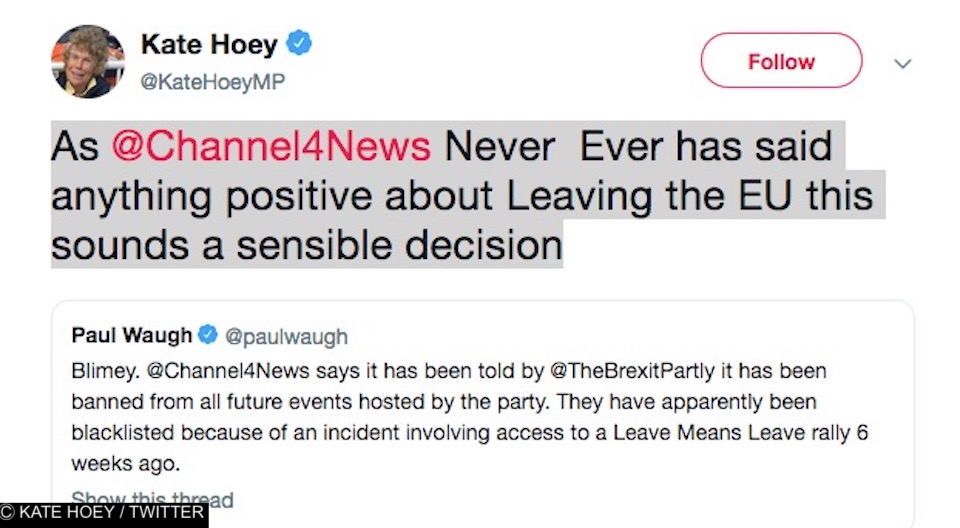
The MP for Vauxhall, Kate Hoey has come under fire for a tweet in which she suggests that an alleged ban on Channel 4 news at political events is a “sensible decision”.
Kate Hoey, the MP for Vauxhall and ardent Brexiteer, despite the majority (over 77 per cent) of her constituency voting remain in the 2016 EU Referendum, has been blasted for a tweet in which she appears to suggest that banning a mainstream broadcaster from attending a political rally was a “sensible idea”.
In a reply to a claim that Channel 4 News had been banned from future Brexit Party events, the MP wrote, “As @Channel4News Never Ever has said anything positive about Leaving the EU this sounds a sensible decision”
The tweet comes off the back off a tweet from Paul Waugh, HuffPost’s executive editor of politics, in which he reveals that he’s heard that the Brexit Party has banned Channel 4 from attending all future events hosted by the party, who counts Ann Widdecombe as one of its star players.
The journalist Patrick Strudwick was quick to comment on the tweet saying, “A member of parliament supporting the suppression of journalism – essential for democracy. This is astonishing.”
A member of parliament supporting the suppression of journalism – essential for democracy. This is astonishing. https://t.co/gqrwlzJYmf
Others were quick to suggest that Hoey was in the wrong, with one adding, “An MP supporting the suppression of journalism? You really should be ashamed of yourself” while another commented, “Censorship is, of course, one of the key weapons of the hard right with which Ms Hoey seems to be more and.more a fellow traveller. How is she still pretending to be a Labour MP?”
A shocking campaign shows how real life homophobia and transphobia is dealt with in minutes by law enforcement, but online hate can fester for years and years.
A brand new campaign has set out to show the impact of online homophobia and transphobia.
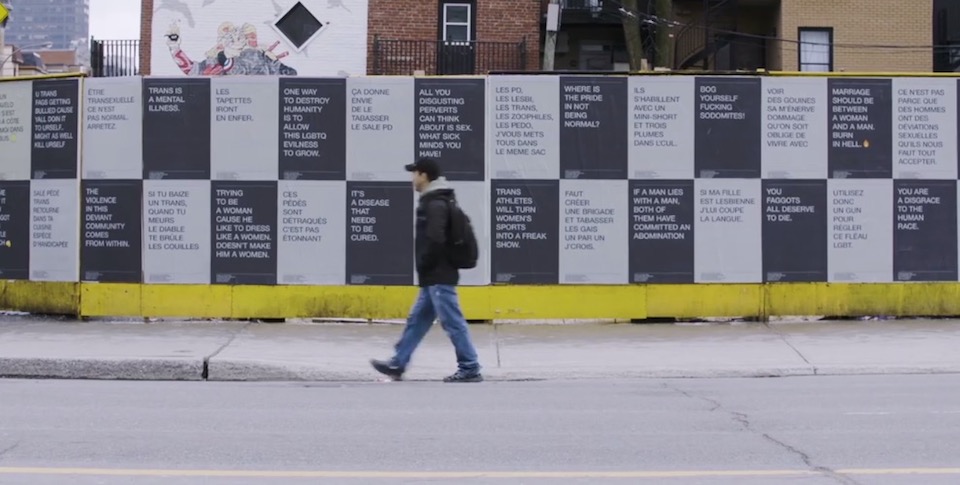
Every day thousands of homophobic and transphobic messages are posted online and some of these vile messages made their way onto a disturbing billboard in real life.
Passersby were shocked by what they read and within twenty minutes the police had been called and the removal of the printed messages was underway.
However, the filmmakers are keen to stress that these same messages still appear online.
The powerful video, filmed in Canada, dubbed “Brutal postings” was created for the International Day against homophobia, biphobia and transphobia and is asking people to flag and report hate they see online.
The video starts with a stark fact, that every 23 seconds an anti-LGBT message is posted online.
Filmmakers set out to show what happens when homophobic and transphobic messages that have been published online are printed onto black and white cards and then pasted to a huge billboard.
The result is a shocking wall of hate, which soon attracts the disgust of passersby, who remark at how vile the words are and that the huge billboard needs to be removed.
Some of the messages target the trans community, while others focused in on the gay community.
Within minutes the police are called and the messages are removed – but why doesn’t that happen online?
This landmark step follows a ruling by the Constitutional Court of Taiwan back in 2017, which ruled that legislation preventing partners of the same sex to marry was unconstitutional and violated gay people’s right to equality.
A civil society campaign in support of marriage equality, led by Marriage Equality Coalition Taiwan, has been gaining strength over the last two years both at local and international levels. Jennifer Lu, the coordinator of the campaign, has been part of OutRight’s Advocacy Week at the United Nations in December 2018 and a speaker at OutSummit, enabling her to address international policymakers directly.
The groundbreaking changes were passed by Parliament despite a referendum held at the end of 2018 which showed that a majority of Taiwanese people did not support gay marriage.
The provisions passed by Parliament today allow for same-sex marriage as well as some adoption rights, and will come into force on May 24.
Jessica Stern, Executive Director of OutRight Action International, commented,”The Parliament of Taiwan made a historic decision today. They stepped up and unequivocally showed that human rights and equality are not subject to public opinion. The Parliament made a decision recognizing that love is love, regardless of gender, and that everyone who wishes to formalize their relationship and benefit from the corresponding protections of the state can do so, regardless of whether their partner is of the same or different gender. With this groundbreaking decision Taiwan becomes the first country in Asia to recognize same-sex marriage. It is incredible that the decision was made on International Day Against Homophobia, Transphobia, Biphobia and Interphobia, sending the strongest possible message against hate and discrimination and for recognition of the human rights of LGBTIQ people.
“But while the Parliament deserve immense credit for taking this brave step in spite of opposition, it could not have happened without the relentless courage and perseverance of LGBTIQ activists in Taiwan. Their success brings hope, and inspiration to LGBTIQ movements in Asia, and around the world.”
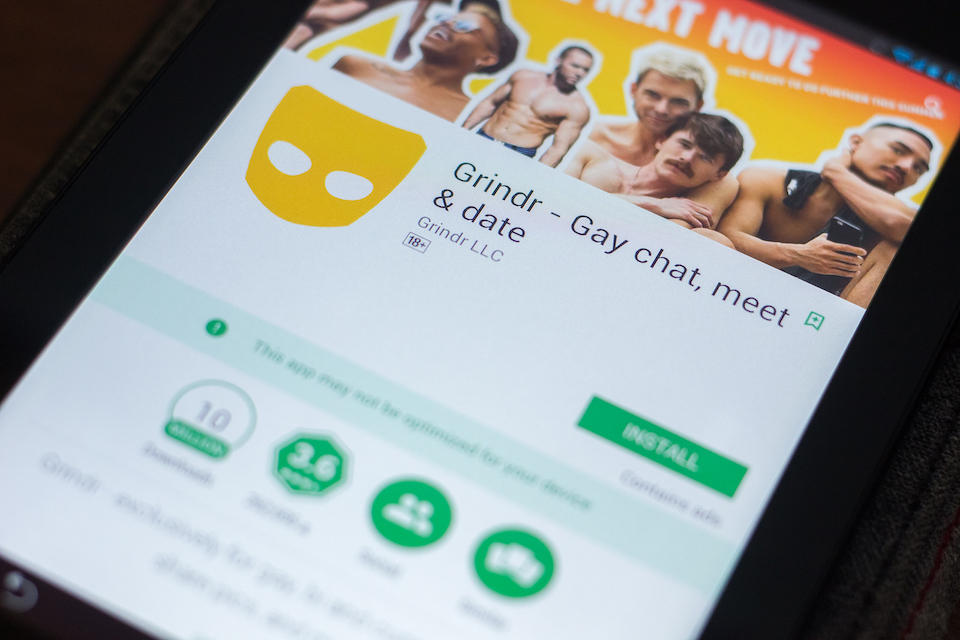
The Committee on Foreign Investment in the US ruled that the treasure trove of data held by Grindr would be a concern for the national security of the United States and is effectively forcing the sale of the company back to a US company. The ruling from the Committee on Foreign Investment also ordered that the firm cannot share any data harvested from the app.
If no buyer is found the company will be forced to give over the app to a trustee.
Scott Chen, wrote, in a deleted (but later reinstated) social media message that it was his belief that marriage should be between and man and a woman.
He said, “There are people who believe that marriage is a holy matrimony between a man and a woman. I agree but that’s none of our business. There are also people who believe that the purpose of marriage is to create children that carry their DNA. That’s also none of our business. There are people that are simply different from you, who desperately want to get married. They have their own reasons.”
Earlier this year Grindr closed its online magazine, Into, which at the time was the world’s most read LGBT+ media brand. It went, according to SimliarWeb, from over 7.5 million unique readers in December 2018 to just over 300,000 last month.
Baptiste Garcia a star for French porn studio French Twinks has died
A star for porn studio, French Twinks, Baptiste Garcia has died. He was in his mid-20s. Taking to Twitter the studio confirmed the star’s death by writing, “It is with the greatest sadness that I learned of the death of Baptiste Garcia, star actor of French Twinks for several years. An adorable boy, endearing and always smiling… Full of beautiful memories, you’re forever in my thoughts. Sincere condolences #RIP”
Baptiste started his career with French Twinks when he was just 18 and had performed in at least 41 scenes for the studio over several years.
The cause of his death has not been announced or made public however fellow porn star Jordan Fox who worked with Baptiste asked the question “how many young gays have to die before we react against drugs..stay alive, stay sober”.
RIP beautiful Baptiste Garcia ?too young to die..i will never forget u…i was lucky to work with u we had a great chemistry.i enjoyed it a lot u was such a cute boy…i’m sad and feel helpless..how many young gays have to die before we react against drugs..stay alive,stay sober pic.twitter.com/jQe0edzz7o
“RIP beautiful Baptiste Garcia too young to die..i will never forget u…i was lucky to work with u we had a great chemistry.i enjoyed it a lot u was such a cute boy…i’m sad and feel helpless..how many young gays have to die before we react against drugs..stay alive,stay sober”
Chris Loan, who was in a relationship with Baptiste said that it was “the best relationship” he had ever had. Taking to Twitter he wrote, that Baptiste was “Cheerful, funny, endearing, cute, smiling, simple and very human.”
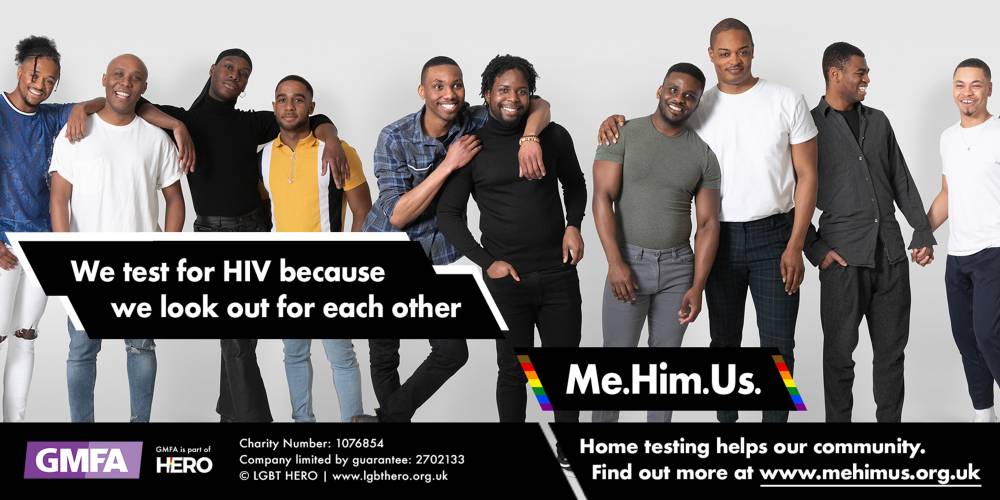
The campaign by GMFA, which was developed by and for black gay and bisexual men, will appear on a digital billboard in Lambeth and on digital advertising hubs across East London.
After the incredible impact of the original Me. Him. Us. campaign in March 2018, GMFA – the gay men’s health project has launched a second phase of the campaign, focusing on community, representation and home HIV testing.
GMFA brought together 17 young black gay men to lead in the latest iteration of the campaign and to effect a positive change in their community, as well as making sure that black gay men are properly represented in sexual health campaigns.
Marc Thompson, Co-Editor of BlackoutUK, who worked as an advisor on the campaign, explains why he came back to the project: “The reason I took part in Me. Him. Us. again was to build on last year’s success. The first Me. Him. Us. campaign focused on the role of the individual, but with the new campaign we have a larger group of men, so it was really about stressing the importance of community involvement and how we can all play a part in ending HIV.
“The day of the photo shoot was powerful and moving. We had 17 black gay men who came together to make a difference in their community. They wanted to make sure that their diversity was represented. It highlighted that the needs of black gay men, and the fact we are disproportionally effected by HIV, is still at the forefront of the work we do. Leading these campaigns and being represented is still incredibly important.”
Activist and writer, Phil Samba who starred in and helped develop last year’s campaign said, “It’s important for us black men to take care of our sexual health and get tested regularly because sadly we are disproportionately affected by HIV.
“We deserve to have the sex we want, which is right for us, with the least amount of harm. If other queer men are the main source of sexual health information for queer men, it is extremely vital that we all teach ourselves and others about all the preventative tools available today, how they work and how to access them. Black queer men especially need to be able to have open and honest conversations destigmatising sexual health among themselves and their friends from different backgrounds.”
Gus, 24, one of the men to lead this year’s campaign, told us why he wanted to take part in Me. Him. Us. “I originally wanted to do the campaign because it’s something fresh and new. You don’t see it every day. It’s nice to finally be represented in a positive way. Usually you don’t see black men in a photo shoot or a campaign when you’re walking down the street. It’s refreshing to be shown in a positive way too, and not just seen in a negative stereotype. It’s something beautiful to be a part of, knowing that we are helping to effect a change.”
Tre, 19, said: “It was empowering to be surrounded by so many young gay black men who are so passionate about spreading awareness of HIV testing. Everyone who took part in the shoot came from a variety of different backgrounds and it’s powerful to see the representation of people from the gay black community from all different parts of the country as well. I think it’s really important for young gay black men, especially for people who might be struggling with their own identity, to see people that look like them on billboards and social media, talking about the important of getting tested.”
Ian Howley, Chief Executive of LGBT HERO, the parent organisation of GMFA said: “When Me. Him. Us. launched last year we saw something I have never seen in HIV prevention. There was a movement behind Me. Him. Us. black gay men felt emotionally connected to this work and helped us spread the campaign’s important message about looking after your own health, your partner’s health and your community’s health to over five million people. So, I was delighted that we were able to continue this important work in partnership with black gay and bisexual men. These men deserve more than one-off campaigns or to be involved in a tokenistic way without any say. And they deserve to create work that is by them, for them, and empowers their community. I hope that through GMFA, LGBT HERO can continue this successful partnership for years to come.”
The Me. Him. Us. campaign will feature on billboards and digital hubs in London and online over the course of the summer.
Milo Yiannopoulos has had his Facebook and Instagram pages removed from the social media giant.
The removal of his account coincided with the removal of other right-wing personalities including Alex Jones, Laura Loomer and Paul Joseph Watson.
Speaking about the banning of various personalities Facebook said that the banned accounts had violated its policies on “dangerous individuals and organizations”, according to The Independent. The platform also said it banned people from praising or supporting proscribed individuals.
Paul Joseph Watson tweeted that he had the “the best media lawyers in London looking over the Facebook issue. I am not an “extremist” or a “dangerous person” and won’t be defamed as one.”
I have the best media lawyers in London looking over the Facebook issue. I am not an "extremist" or a "dangerous person" and won't be defamed as one.
In an article, Watson wrote, “Conservatives and anyone who challenges the leftist orthodoxy are being deplatformed” and asked his followers to support him.
Before his page went offline, Milo Yianouslous was able ask his followers to subscribe to his email mailout.
Facebook’s policy on Dangerous individuals and organisations
This is Facebook’s policy:
“In an effort to prevent and disrupt real-world harm, we do not allow any organisations or individuals that are engaged in the following to have a presence on Facebook:
Terrorist activity
Organised hate
Mass or serial murder
Human trafficking
Organised violence or criminal activity
We also remove content that expresses support or praise for groups, leaders or individuals involved in these activities.
European study of nearly 1,000 gay male couples who had sex without using condoms – where one partner was HIV positive and on suppressive antiretroviral therapy (ART) and the other HIV negative – reports no cases of within-couple HIV transmission over 8 years.
(C) marcbruxel Depositphotos
A European study of 972 gay male serodifferent couples, in which one partner was on suppressive antiretroviral therapy (ART), has found no cases of HIV transmission within couples over 8 years of follow up.
The observational study, which is the largest of its kind and published in The Lancet, provides conclusive evidence that having an undetectable viral load (less than 200 copies/mL) on ART means that the virus is untransmittible.
Over 8 years of follow up in the study, 15 HIV-negative men became infected with HIV, but none of the viruses screened in the newly infected partner were genetically linked to the HIV virus that had infected their main partners, ruling out any within-couple HIV transmissions.
Importantly, the researchers estimate that effective ART prevented around 472 HIV transmissions during the 8 years of the study.
Regular testing is still important
The authors emphasise the importance of regular monitoring and supporting people with long-term adherence to therapy and caution that the effectiveness of ART in preventing HIV transmission is dependent on ensuring that the virus remains undetectable in the blood.
The results support the international U=U (undetectable equals untransmittable) campaign, that has been endorsed by more than 780 HIV organisations in 96 countries, to raise awareness of how scientific evidence shows that effective ART means people living with HIV can have sex without fear of transmitting the HIV virus to others.
“Our findings provide conclusive evidence for gay men that the risk of HIV transmission with suppressive ART is zero,” says Professor Alison Rodger from UCL, UK, who co-led the research. “Our findings support the message of the international U=U campaign, that an undetectable viral load makes HIV untransmittable. This powerful message can help end the HIV pandemic by preventing HIV transmission, and tackling the stigma and discrimination that many people with HIV face. Increased efforts must now focus on wider dissemination of this powerful message and ensuring that all HIV-positive people have access to testing, effective treatment, adherence support and linkage to care to help maintain an undetectable viral load.” [1]
The new study, PARTNER2, assessed the risk of HIV transmission between serodifferent (one partner is HIV-positive, one is HIV-negative) gay male couples not using condoms. The results add to an earlier phase of the PARTNER study, which found that HIV transmission risk for serodifferent heterosexual couples was zero.
The first phase of the PARTNER study, which took place between September 2010 and May 2014 and was published in 2016, recruited and followed up 1,116 serodifferent couples who were not using condoms. Of these, 888 couples, both heterosexual (548 couples) and gay men (340 couples), provided 1,238 eligible years of follow up from 14 European countries. The second phase of the study (PARTNER2) included gay male couples only.
Between September, 2010 and July, 2017, 972 gay couples were recruited, of which 782 provided 1,593 eligible years of follow up—the main reasons couples weren’t included in the analysis were because no condomless sex was reported, they had used pre-exposure or post-exposure prophylaxis (PrEP or PEP), or HIV viral load or HIV test results were not available.
Couples had frequent follow-up (every 6-12 months) to complete confidential questionnaires on their sexual behaviour, to test HIV-negative partners for HIV, and to measure plasma HIV-1 viral load in the HIV-positive partner. If HIV-negative partners became infected with HIV, genetic testing was done to see whether the virus was genetically similar to their study partner’s virus, or was acquired from another sexual partner.
At the start of the study, the couples had already been having sex without condoms for a median of 1 year, and the HIV-positive partners had been on ART for a median of 4 years, with high adherence (98% participants reported 90% adherence).
During an average of 2 years follow-up (per couple), couples had anal sex without condoms a total of 76,088 times (equivalent to about once a week).
During the study, over a third (37%; 288/777) of HIV-negative men reported having sex without a condom with other partners. Around a quarter of HIV-positive (214/779) and HIV-negative (185/779) men reported at least one STI such as syphilis and gonorrhoea (table 2) since their last visit. Only 5% (37/779) of HIV-positive men reported missing ART for more than 4 consecutive days.
The authors note several limitations, including that most HIV-negative gay men were white with an average age of 38 years—yet most HIV transmission occurs in young people aged 25 years or younger. Additionally, the majority of HIV-positive partners had been on suppressive ART for several years, so the authors had limited data on transmission risk during the initial months of ART.
Commenting on the implications of the findings in a linked Comment, Dr Myron Cohen from the UNC Institute for Global Health and Infectious Diseases, USA writes: “These important results serve to inspire and challenge us. Timely identification of HIV-infected people and provision of effective treatment leads to near normal health and lifespan and virtual elimination of the risk of HIV transmission. Yet maximising the benefits of ART has proven daunting, especially for men who have sex with men It is not always easy for people to get tested for HIV or find access to care; in addition, fear, stigma, homophobia, and other adverse social forces continue to compromise HIV treatment. Furthermore, diagnosis of HIV infection is difficult in the early stages of infection when transmission is very efficient, and this limitation also compromises the treatment as prevention strategy…The results of the PARTNER2 study provide yet one more catalyst for a universal test-and-treat strategy to provide the full benefits of antiretroviral drugs. This and other strategies continue to push us toward the end of AIDS.”
A porn star who starred in gay porn has died at the age of 29.
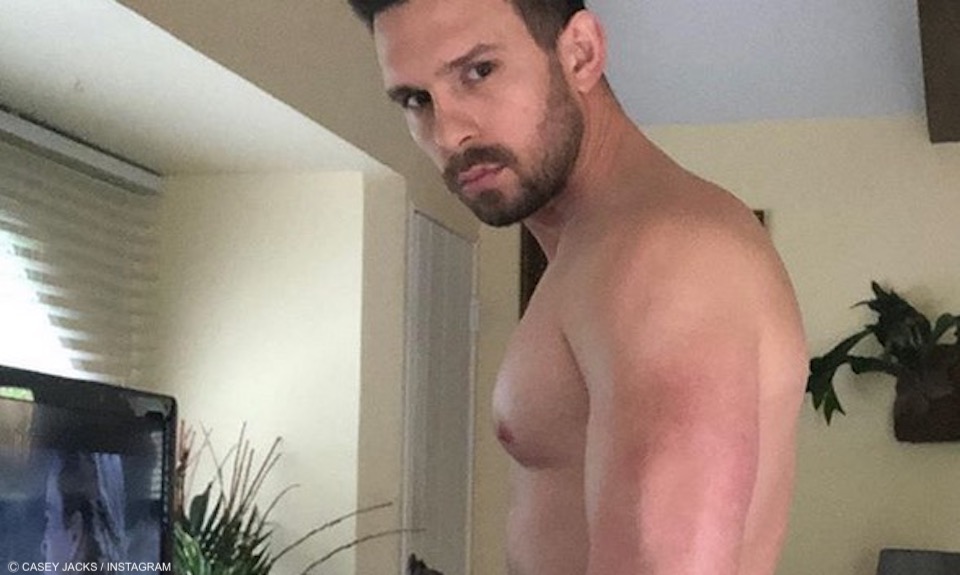
Casey Jacks as died at the age of 29, THEGAYUK has learned. Jacks’ manager, Chris Crisco confirmed the sad news via Twitter, writing, “It’s with a very heavy heart that I write this. Casey Jacks passed away yesterday. His brother just confirmed the news. I will always remember his contagious smile and his amazing personality. Please pray for Casey today.”
It’s with a very heavy ❤️ that I write this. @CaseyJacksXXX passed away yesterday. His brother just confirmed the news. I will always remember his contagious smile and his amazing personality. Please pray for Casey today. I know his #choicetalent family & I will miss him dearly💔 pic.twitter.com/PgbKzi0VbT
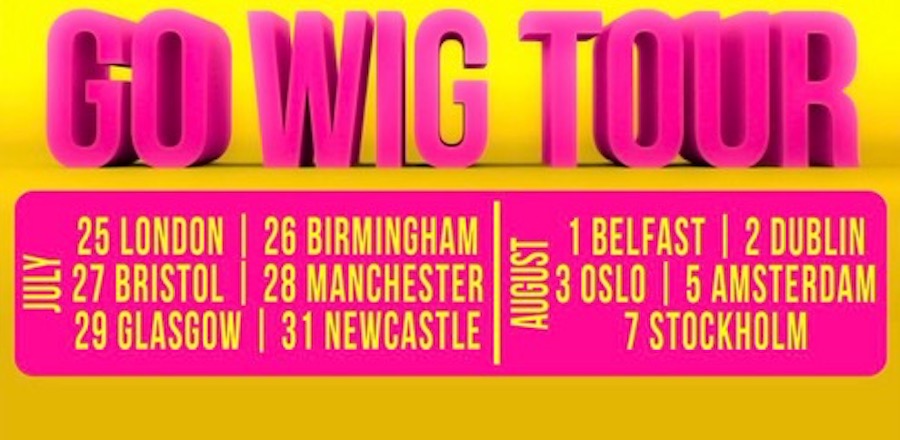
The Go Wig Tour has been cancelled just a day after promoters requested that RuPaul’s name be removed from any advertising.
According to the ticket seller, Ticketmaster, the UK stretch of the Go Wig Tour has been cancelled and asked vendors and outlets who were promoting the UK segment of the tour to remove any promotions of the tour.
Yesterday, in an email seen by THEGAYUK, vendors and outlets were asked to remove any mention of RuPaul and only to use artwork directly associated with the Go Wig Tour. In the update it was announced that Yvie Oddly would also not be appearing.
One of the venues which was due to host the tour the O2 Ritz in Manchester released a statement and said that anyone who had bought tickets for the event would be able to get a refund.
Pride in London joins 17-24-30 NationalHCAW to mark 20 years since Admiral Duncan bombing
On 30th April 1999 a nail bomb attack at the Admiral Duncan pub in Soho killed three people and wounded 79
Soho attack followed two other nail bombings in Brixton on 17th April and Brick Lane on 24th April as part of a homophobic, racist terror campaign
Soho Act of Remembrance marking the 20th anniversary of the attacks will take place at 5pm on Tuesday 30th April outside the Admiral Duncan
Pride in London is joining anti-hate charity 17-24-30 NationalHCAW (National Hate Crime Awareness Week) this Tuesday (30th April) to mark the 20th anniversary of the London nail bombings and remember those killed during the attacks: Nik Moore, Andrea Dykes and John Light.
An Act of Remembrance marking 20 years since the attacks is planned for Tuesday evening, starting outside the Admiral Duncan and then moving round to St Anne’s Gardens on Wardour Street. The latter part will feature speeches from: Rev Simon Buckley, St Anne’s Church; Mark Healey, Founder 17-24-30 NationalHCAW and Cllr Ian Adams, Westminster Council – as well as three poems read by Trudy Howson, LGBT Poet Laureate; Terry Morely, Nik Moore’s aunt and Natalie Patterson, Andrea Dyke’s sister, and performances by the London Gay Men’s Chorus, the Pink Singers and Diversity Choir.
The bombing in Soho followed two connected attacks in other parts of the capital: Brixton on 17th April and Brick Lane on 24th April. Though there were no fatalities, 61 people were injured by the blasts. These attacks were racially-motivated and targeted the black community in south London and the Bangladeshi Muslim community in the East End. Smaller acts of remembrance took place in both locations on the respective dates as part of 17-24-30 NationalHCAW’s April Acts of Remembrance.
Mark Healey, Founder of 17-24-30 NationalHCAW, said, “It’s hugely important that our communities come together to mark the anniversaries of these horrendous events. We have a duty to remember those we lost, to show our ongoing support to those affected by these attacks, and most importantly to educate the next generation to make sure these kinds of attacks never happen again.
“We’re good at dealing with the immediate aftermath of these kinds of attacks but more needs to be done to deal with their longer-term impact on our communities. Some of the survivors and the families affected by these attacks are still suffering and need more support. I hope our April Acts of Remembrance inspire people to get involved, to build stronger links between all our communities and ensure there is no place for hate amongst us.”
The Soho Act of Remembrance will take place at 5pm on Tuesday 30th April outside the Admiral Duncan on Old Compton Street, Soho. So the organisers can gauge how many people will attend, please register here if you plan to join the act of remembrance.