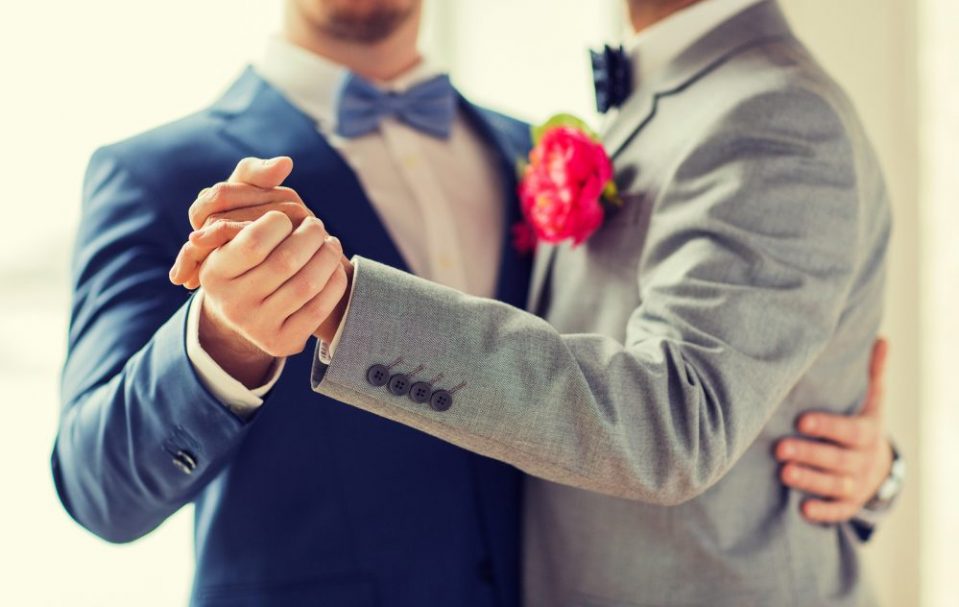
All the latest breaking news on gay and same-sex marriage. Browse The THEGAYUK’s complete collection of features, articles and updates on gay and same-sex marriage.
Just like heterosexual married men are called husbands, men who are in gay marriage are also referred to by this term.
The word “husband” has its roots in Old Norse and Old English. In Old Norse, the word “húsbóndi” meant “master of a house,” and in Old English, “husbonda” referred to the head of a household or the manager of a farm. The term later evolved to specifically refer to a married man, and in modern English, “husband” is commonly used to describe a man who is married or in a committed long-term relationship.
Is a gay man in marriage ever called a wife?
No, a gay man in marriage is not typically called a wife. The term “wife” is traditionally used to refer to a married woman, and while language is always evolving, it’s not common for a man to be called a “wife” in a marriage, regardless of his sexual orientation. Instead, the term “husband” is commonly used to refer to a married man, regardless of his sexual orientation.
However as an inside joke between gay couples, one may be referred to as a wife, or with more feminine language and one may be more commonly referred to in masculine terms. It’s always best to ask how couples may define their identity if in doubt, rather than say the wrong thing and cause offence.
It’s important to use inclusive language that recognizes and respects the diversity of relationships and families.
Although we’ve always used the term “gay marriage” in our reporting, there is another way of terming when two men or two women get married. However, we think that it could actually add to gay and lesbian erasure.
Another name for gay marriage is same-sex marriage, which refers to the legal union of two individuals of the same sex, typically recognized by the state or government as a civil marriage. However, it can lead to the erasure of several communities.
Is the term “gay marriage” acceptable to use?
Firstly because the term same-sex marriage refers to biological sex, which could erase the fact there are some people who consider themselves gay or lesbian, but who might not be biologically male or female but actually may be transgender and be living as a trans man or a trans woman who have not opted for gender reassignment surgeries.
Secondly, the term Same-Sex Marriage also added to gay erasure, simply due to the fact that it leaves gay men and lesbian women out of the title.
Gay erasure is a term used to describe the denial or minimization of the existence or significance of same-sex attraction, relationships, and identities. It can manifest in various ways, such as ignoring or erasing LGBTQ+ representation and history in media, education, and politics, promoting heteronormative standards as the only acceptable ones, or excluding or discriminating against LGBTQ+ individuals and communities. The term is often used in social justice and human rights advocacy to highlight the harm caused by denying or erasing LGBTQ+ experiences and identities.
Does the term “Gay Marriage” add to Bi Erasure?
However there’s also an issue that if the term gay marriage is used then it could lead to bi-erasure, if the two people who are getting hitched also happen to identify as bisexual, but both happen to be same-sex.
Bi erasure is a term used to describe the denial or dismissal of bisexuality as a legitimate sexual orientation. It refers to the erasure, invisibility, and invalidation of bisexual identities, experiences, and relationships, often perpetuated by individuals, institutions, and society at large. Bi erasure can take many forms, including but not limited to assuming that bisexual individuals are confused, promiscuous, or greedy, enforcing binary and heteronormative standards of attraction and behaviour, erasing or ignoring bisexual representation and history in media, education, and politics, or excluding and discriminating against bisexual individuals and communities.
Bi erasure can have significant negative impacts on bisexual people’s mental health, self-esteem, and social acceptance, as well as on the broader fight for LGBTQ+ rights and acceptance.
A brand new law allowed people in same-sex relationships to become legally married on the Isle of Man in 2016.
Chief Minister Allan Bell CBE MHK welcomed the new law and described it as a “historic moment” for the island, which is just off the coast of England.
The Act enables same-sex couples to marry either in a civil ceremony, in a registry office or approved premises, or in religious premises (except those of the Church of England) subject to the agreement of the religious organisation in question.
Mr Bell commented,
“Recognition of marriage for same-sex couples in Manx law is a truly historic moment, showing just how far the Island has travelled over the past 30 years. It sends out a clear message that the Isle of Man today is a modern, open and inclusive society where equal rights are respected. I believe that the values of fairness and tolerance reflected in this legislation are shared by the overwhelming majority of our population.”
The first in the UK to allow heterosexual couples to get civilly partnered
The legislation also makes the Isle of Man the first place in the British Isles to allow opposite-sex couples to enter into civil partnerships as an alternative to marriage. Civil partnerships have been available to same-sex couples in the Isle of Man since 2011.
The Marriage and Civil Partnership Amendment Act took effect from July 22 under an appointed day order made after Royal Assent was announced in Tynwald.
When asked whether the world could ever be forgiven for its “sins” like abortion and gay marriage Robertson was keen to stress that we won’t be forgiven because mankind has broken its covenant with God. Actually we’ve apparently “violated his covenant”.
Because… of course he did.
Using his TV platform, “The 700 Club” Pat was joined by his co-host, Terry Meeuwsen who read out a viewer’s question: “Pat, last week you were talking about COVID-19. You quoted Chronicles 7:14. How can God heal our land and forgive the sins when abortion and same-sex marriage are laws and many people are anti-Israel. Doesn’t this prevent his healing and forgiveness?”
To which Robertson replied,
“You know, I think you put your finger on something very important. You know the Bible says — they turn from their wicked ways. They didn’t get forgiven. They will turn from their wicked ways. And part of what we’ve done is turn.
“We are not turning when we have done terrible things. We have broken the covenant that God made with mankind.
“We have violated his covenant. We have taken the life of the innocent, slaughtered them by the tens of millions. Children made in the image of God. And we have abused the poor.
I mean, we’ve allowed this terrible plague to spread throughout our society. And it’s a small wonder God would hold us guilty. But the answer is, you know, you confess your sins and forsake them. Then he heals the land. It’s not before. You are right”.
In 2013 Robertson was nominated as Bigot Of The Year by the LGBT+ charity Stonewall.
Gay and lesbian couples are now able to get married in all four nations of the UK.
Same-sex marriage is now legal in Northern Ireland – despite repeated attempts by the DUP to thwart legal equality for gay and lesbians in the region.
The subject of same-sex marriage had been voted on at least five times by the Northern Ireland Assembly.
Northern Ireland is the last nation in the United Kingdom to legalise marriage between two people of the same sex. England, Scotland and Wales have permitted same-sex marriage since 2014.
This also means that gay people who are already married will have their marriages recognised in Northern Ireland.
From today, couples in Northern Ireland can register their intent to marry with the authorities with the first actual marriages expected to take place on the 10th February 2020.
Is your relationship on the rocks? Was 2019 a tough year, research has shown that people are rowing about what their other after is posting online!
Just under half of all Brits admit they have secretly checked their partner’s Facebook account and one in five went on to row about what they discovered, new research has revealed.
One in seven said they had contemplated divorce because of their other halves activities on Facebook, Skype, Snapchat, Twitter or WhatsApp.
People are angry at the amount of posting their partners do
CREDIT: monkeybusinessimages-bigstock
Nearly a quarter or the 2,000 married Brits asked, said they had at least one argument a week with their partner because of social media use and 17 per cent said they rowed every day because of it.
The most common reasons for checking their partner’s social media accounts was to find out who their partner was talking to, to keep tabs on them, to check who they were out with and find out if they were telling the truth about their social life.
While 14 per cent said they looked specifically to identify evidence of infidelity.
The research was commissioned by family law specialists Slater and Gordon who have seen an increase in the number of people citing social media use as a cause of divorce year on year.
Andrew Newbury, head of family law at Slater and Gordon said:
“Social media can be a wonderful way of keeping in touch with family and friends, but it can also put added strain on a relationship.
“Five years ago Facebook was rarely mentioned in the context of a marriage ending, but now it has become common place for clients to cite social media use, or something they discovered on social media, as a reason for divorce.
“With more than 556 million people using Facebook each day, the way we live our lives, and our marriages, has drastically changed. We are finding that social media is the new marriage minefield.
“Social media, specifically pictures and posts on Facebook, are now being routinely raised in the course of divorce proceedings.”
It wasn’t just what their partner was doing on social media but also how long they spent on it that was likely to cause marital problems with Facebook usage topping the list of reasons couples argued over social media.
Arguments were also caused because of contact with an ex-partner, sending secret messages and posting inappropriate photos.
One in twenty even complained that their partner didn’t post any pictures of them together which made them upset.
Fifteen per cent of Brits considered social media to be dangerous to their marriage, with Facebook considered the most dangerous, followed by WhatsApp, Twitter and Instagram.
But one in ten admitted they hid images and posts from their partner, while eight per cent admitted to having secret social media accounts.
A fifth of respondents said they felt uneasy about their relationship after discovering something on their partner’s Facebook. 43 per cent said they confronted their spouse immediately about this, but 40 per cent said it took them some time before they felt comfortable to raise it with their partner.
While a third said they kept their social media log-in details a secret from their partners, 58 per cent said they knew their partner’s log-in details, even if their spouse wasn’t aware they knew them.
Andrew Newbury, head of family law at Slater and Gordon said:
“Social media can also make a divorce more difficult. Divorce is already a stressful time for everyone involved and what is being posted on Facebook can antagonise families and make a speedy resolution more difficult to achieve.
“We are now actively advising our clients to be cautious when it comes to using Facebook and all forms of social media because of its potential to damage relationships.”
Five social media tips that could save your relationship.
1. Don’t post in anger.
Your post will be seen by all your friends, family and potentially millions of others. Even if you later delete your post, the damage will have been done.
2. Be respectful.
Don’t complain about your partner or other family members online.
3. Be transparent.
Check with your partner before you post images or information.
4. Check your privacy settings.
You might think someone can’t see a post when they actually can.
5. Take a break and enjoy the moment.
You don’t need to post everything on Facebook, Instagram or Twitter.
Data has revealed that Whitney, ABBA and The Weather Girls top the list of the 10 top songs played at gay weddings.
This data comes from events company Eventopedia, who analysed thousands of songs from Spotify data across all playlists including the terms “gay wedding 2019” and “LGBT wedding” in order to find the most frequently featured and therefore most popular songs for gay weddings in 2019.
The number one spot went to “I Wanna Dance with Somebody (Who Loves Me)” by Whitney Houston, which appeared most often across 2019 Spotify gay wedding playlists and has over 371 million streams on Spotify itself.
The full results are below:
Rank
Song
Artist
Released
Spotify streams
1
I Wanna Dance with Somebody (Who Loves Me)
Whitney Houston
1987
371M
2
Dancing Queen
ABBA
1976
300M
3
It’s Raining Men
The Weather Girls
1983
108M
4
Uptown Funk
Bruno Mars & Mark Ronson
2014
1.0B
5
Dreams
Fleetwood Mac
1977
298M
6
September
Earth, Wind & Fire
1978
526M
7
Best of My Love
The Emotions
1977
62M
8
Born This Way
Lady Gaga
2011
178M
9
I’m Coming Out
Diana Ross
1980
87M
10
Man! I Feel Like A Woman!
Shania Twain
1997
161M
What makes the ideal song for LGBT weddings in 2019?
In contrast, the average perfect first dance song 2019 was released around 2003, far later than the 80s theme of the gay wedding songs. The average song tempo at 112 was also less than gay wedding playlists, as was the length sitting at 3:42 – a whole 24 seconds less.
If we look at average stats of the top 10 gay wedding songs for this year, we can see the average release date is 1988, the average length is 4:06 and the tempo is 120.
The top 10 first dance songs 2019 are listed below:
Rank
Song
Artist
Released
Spotify streams
1
All Of Me
John Legend
2013
997M
2
Can’t Help Falling in Love
Elvis
1969
229M
3
Die A Happy Man
Thomas Rhett
2015
276M
4
Let’s Stay Together
Al Green
1972
190M
5
Say You Won’t Let Go
James Arthur
2016
1.2B
6
A Thousand Years
Christina Perri
2011
554M
7
Make You Feel My Love
Adele
2008
426M
8
Better Together
Jack Johnson
2005
304M
9
Just the Way You Are
Bruno Mars
2010
618M
10
Latch (acoustic)
Sam Smith
2013
38M
What makes the ideal song for LGBT weddings in 2019?
If we look at average stats of the top 10 gay wedding songs for this year, we can see the average release date is 1988, the average length is 4:06 and the tempo is 120.
The research also looked at the top first dance songs used at weddings across the board for 2019 by looking through all playlists on Spotify which included the terms “first dance 2019” to find the most frequently featured songs.
Toby Heelis, Founder of Eventopedia said, “Weddings are often the most significant event of people’s lives, and having the right music to accompany it is just as important. The first dance is a defining moment so making sure we choose the perfect soundtrack is paramount, as is ensuring the balance between being emotional and not being overly cringey.”
Now don’t get me wrong, I know a lot of folks are innocently curious. But when you’re trying to plan your big day, which to you just feels like any other big day out there, the often repetitive questions from enquiring minds can become just a trifle irritating.
And by the way, I haven’t made any of these up – I was asked all of them at least once in the run up to my wedding.
And by the way again, I know number 9 isn’t a question, but it felt worthy of inclusion.
Yes, yes – I think I saw him at the club meetings, he told me all about it. Now don’t get me wrong, I do love the idea of a bucking-bronco in the shape of a glittery aubergine, but it’s not quite the direction we’re going to go in.
No, that’s true – just the knowledge that there’s still a large chunk of the world who would happily see me executed for being who I am is worry enough. Thank you for giving me some perspective.
And then afterwards to finish off:
Did you know that was the first gay wedding I’ve ever been to? It was much more fun than a normal wedding!
Yes, I agree. It really knocked spots off of that boring one I went to last year, with all the shabby-chic birdcages, hilari-not speeches and tawdry wedding tat … oh wait, that was yours wasn’t it?
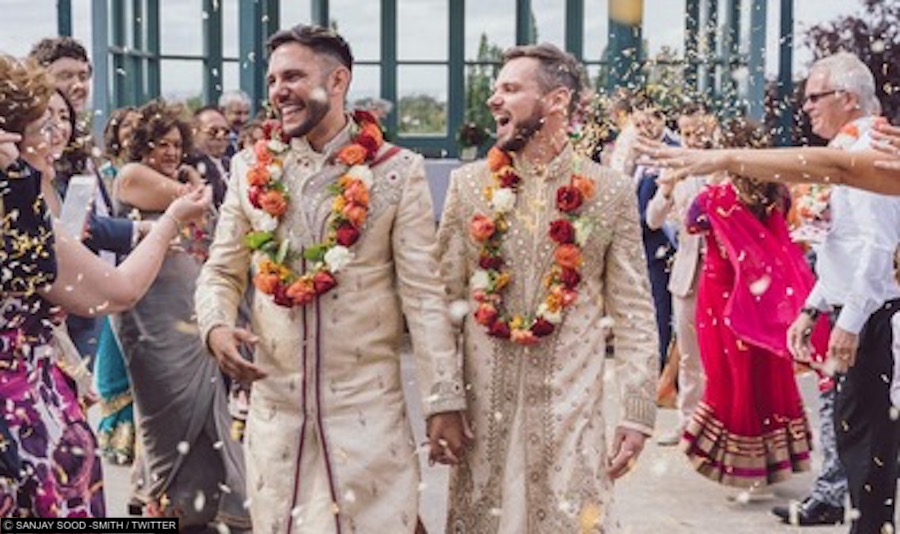
Apprentice star Sanjay got married to his husband in a colour celebration of love.
Taking to social media, TV star Sanjay Sood-Smith, who appeared in season 10 of The Apprentice, revealed that he never thought, growing up, that he’d see the day that he’d be able to marry the man of his dreams.
The pair have been engaged since 2017 when they were holidaying in the South Aegean region in Greece. The couple returned to the idyllic area for their wedding.
He wrote, “This week I got married to my beautiful husband. I feel privileged to have been able to get married when I grew up thinking that I never would be able to.”
He also thanked his place of work, the charity Stonewall, for their part in making same-sex marriage a reality in the UK.
He then shared two amazing photos from his day, which saw him and his partner were both dressed in traditional light coloured Sherwani attire adorned with matching flower garlands and another where the duo’s wedding guests let off a rainbow paint explosion behind them.
Stars and supporters were quick to congratulate the couple with Gogglebox‘s Stephen congratulating the pair, while Gaydio’s Emma Goswell, wrote, “Oh wow! Congratulations darling!”.
Gay marriage or same-sex marriage has been legal in part of the UK since 2013 when the law was changed to allow partners of the same sex to marry. England and Wales were the first nations of the UK to permit same-sex marriage when the law changed in July 2013. Royal Assent was given by the Queen on the 17th July 2013 for English and Welsh same-sex marriages. The first same-sex marriage in England took place on the 13 March 2014.
In Scotland, the legislation took a little longer and gay marriage was given Royal Assent on 12th March with the first weddings taking place on 16th December 2014.
Is gay marriage legal in all parts of the UK now?
In Northern Ireland, same-sex marriage didn’t become law until only recently after a long contentious battle.
The DUP held back LGBT+ rights in Northern Ireland vote against gay marriage every time it became before the courts to become law. In total, they voted against it five times. Eventually, it was made law in 2020.
Northern Ireland made gay marriage legal in January 2020 after a long and drawn-out legal clash between activists, human rights lawyers and the DUP. There were numerous attempts, in fact, there were five attempts to make gay marriage legal in NI since 2012.
The subject of same-sex marriage was voted on five times by the Northern Ireland Assembly. Each time it was blocked by the DUP.
This landmark step follows a ruling by the Constitutional Court of Taiwan back in 2017, which ruled that legislation preventing partners of the same sex to marry was unconstitutional and violated gay people’s right to equality.
A civil society campaign in support of marriage equality, led by Marriage Equality Coalition Taiwan, has been gaining strength over the last two years both at local and international levels. Jennifer Lu, the coordinator of the campaign, has been part of OutRight’s Advocacy Week at the United Nations in December 2018 and a speaker at OutSummit, enabling her to address international policymakers directly.
The groundbreaking changes were passed by Parliament despite a referendum held at the end of 2018 which showed that a majority of Taiwanese people did not support gay marriage.
The provisions passed by Parliament today allow for same-sex marriage as well as some adoption rights, and will come into force on May 24.
Jessica Stern, Executive Director of OutRight Action International, commented,”The Parliament of Taiwan made a historic decision today. They stepped up and unequivocally showed that human rights and equality are not subject to public opinion. The Parliament made a decision recognizing that love is love, regardless of gender, and that everyone who wishes to formalize their relationship and benefit from the corresponding protections of the state can do so, regardless of whether their partner is of the same or different gender. With this groundbreaking decision Taiwan becomes the first country in Asia to recognize same-sex marriage. It is incredible that the decision was made on International Day Against Homophobia, Transphobia, Biphobia and Interphobia, sending the strongest possible message against hate and discrimination and for recognition of the human rights of LGBTIQ people.
“But while the Parliament deserve immense credit for taking this brave step in spite of opposition, it could not have happened without the relentless courage and perseverance of LGBTIQ activists in Taiwan. Their success brings hope, and inspiration to LGBTIQ movements in Asia, and around the world.”